

P0455 on 2000-2004 Chevrolet Express: EVAP Large Leak Causes and Fixes
For a 2000-2004 Chevrolet Express, code P0455 almost always means a large leak in the evaporative emissions (EVAP) system. The most common and cheapest fix is to replace a worn or loose gas cap. If that doesn't work, the next most likely culprits are a failed EVAP vent valve or purge valve, which are known to fail from age and exposure on these vans.
- P0455 means your van has a large EVAP leak. This is an emissions issue, not a mechanical one.
- Always start with the simplest fix: check that your gas cap is tight. If it's old, replace it.
- The next most likely causes are a faulty EVAP vent valve (under the van) or purge valve (in the engine bay).
- You can continue driving, but you will not pass an emissions inspection until the leak is fixed.
- A smoke test is the most definitive way to find a leak if the cause isn't obvious.
What's Unique About the 2000-2004 Chevrolet EXPRESS
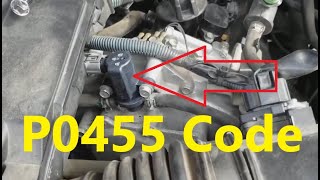
On this generation of Chevrolet Express vans, the EVAP system components, particularly the vent and purge valves, are common failure points due to age and exposure under the chassis. While a loose gas cap is the universal first check for any vehicle with a P0455, these vans have a known history of valve and hose issues that lead to this specific large leak code. 🎬 Watch: A breakdown of common causes for the P0455 code. The provided NHTSA TSB #21-NA-124 confirms that diagnostic steps for EVAP leaks are a known issue for this platform. The vent valve is located near the fuel tank, making it susceptible to road debris and corrosion, while the purge valve is in the engine bay.
Diagnostic Flowchart
Tap your situation to follow the diagnostic path that matches what you're seeing on this vehicle.
Symptoms You May Notice
- Check Engine Light is on
- A noticeable smell of gasoline, especially around the rear of the van or near the filler cap.
- Slight decrease in fuel economy over time.
- Difficulty fueling, where the gas pump nozzle clicks off repeatedly before the tank is full. This can be a symptom of a faulty vent valve.
- Replacing the fuel tank pressure sensor. While this sensor can fail, it will typically trigger other specific codes (like P0452) and is not a common cause for a P0455 large leak code. A faulty sensor would likely show erratic or stuck voltage on a scan tool, rather than the pressure decay indicative of a leak.
Most Likely Causes
- Loose, Damaged, or Incorrect Gas Cap 🔴 High Probability The gas cap is a critical sealing point of the EVAP system. Over time, the rubber O-ring on the cap can dry out, crack, or become dirty, preventing a proper seal. Since it's handled frequently during refueling, it's also easy to forget to tighten it until it clicks at least once. Using a non-OEM or incorrect cap can also cause this code.
How to confirm: Inspect the gas cap for any visible cracks or damage to the seal. Ensure it is tightened until it clicks. If the seal looks worn or damaged, replacement is the best and cheapest first step. Some owners suggest applying a thin layer of Vaseline to the seal as a temporary measure to see if the code disappears.
Typical fix: Tighten or replace the gas cap.
Est. part cost: $10-$30 - Faulty EVAP Vent Valve/Solenoid 🟡 Medium Probability The vent valve (or solenoid) is typically located near the charcoal canister under the vehicle, exposing it to road debris, moisture, and rust. It is normally open and closes to seal the system for a leak test. It often gets stuck open due to internal corrosion or debris, causing a large leak code.
How to confirm: The valve can be tested with a scan tool that can command it to close. A smoke test is the most effective method; with the valve commanded shut, smoke should not escape from it. You can also remove it and apply 12v power to the solenoid terminals to see if it actuates with an audible click. If you can blow through it when it's supposed to be closed (or when it's off the vehicle and energized), it has failed.
Typical fix: Replace the EVAP vent valve solenoid. The ACDelco part 214-2149 is a common replacement for this vehicle range.
Est. part cost: $25-$50 - Faulty EVAP Purge Valve/Solenoid 🟡 Medium Probability Located in the engine bay, the purge valve is normally closed and opens to allow stored fuel vapors into the engine. If it gets stuck open, it creates a constant vacuum leak into the EVAP system, which the computer interprets as a large leak. Sometimes it can get stuck closed, which also prevents the system from drawing a vacuum during its self-test, leading to the same P0455 code.
How to confirm: Remove the valve and try to blow through it. If air passes through, it is stuck open and needs to be replaced. A scan tool can also be used to command the valve open and closed while monitoring system pressure.
Typical fix: Replace the purge valve.
Est. part cost: $20-$45 - Cracked or Disconnected EVAP Hoses ⚪ Low Probability Over many years, the rubber and plastic hoses that connect the fuel tank, charcoal canister, and valves can become brittle and crack, especially at connection points or plastic fittings.
How to confirm: A visual inspection may reveal obvious cracks or disconnected lines, particularly at the seven key connection points outlined in TSB-related discussions. However, smaller cracks can be hard to see. A smoke test is the most reliable way to find the exact location of a hose leak.
Typical fix: Replace the damaged section of hose or reconnect it securely.
Est. part cost: $5-$25
Rare But Worth Checking
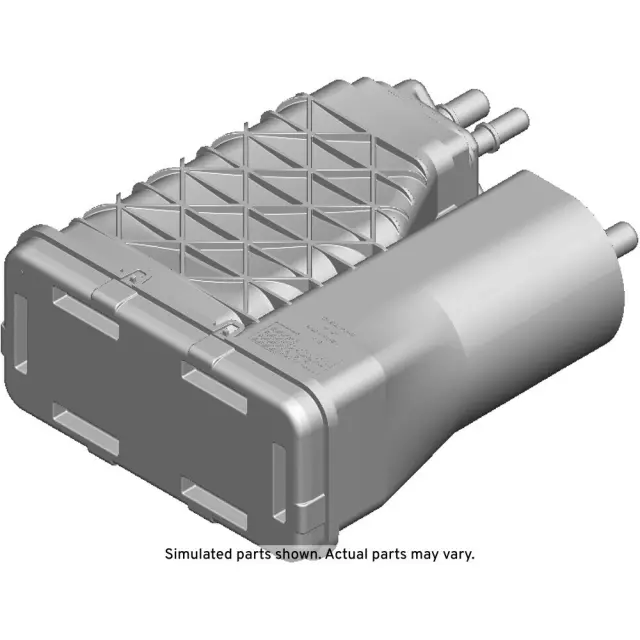
- Cracked Charcoal Canister: The plastic housing of the charcoal canister can crack from age or impact from road debris, creating a large leak. This is less common than valve failures but should be visually inspected, especially after a smoke test points to that area.
- Damaged Fuel Filler Neck: Rust or damage to the metal fuel filler neck can prevent the gas cap from sealing properly, causing a persistent P0455 code even with a new cap. This is a known issue on many GM trucks and vans from this era. A visual inspection for rust or deformity where the cap seals is necessary if the code persists.
Diagnosis Steps
- Check the Gas Cap: Ensure the gas cap is tight and clicks when secured. Inspect the cap's seal for cracks or damage. If in doubt, it's an inexpensive first part to replace.
- Visual Inspection: Look under the vehicle near the fuel tank for the EVAP charcoal canister and vent valve. Check all visible hoses for obvious cracks, disconnections, or damage. Pay close attention to the fuel filler neck for signs of rust or damage that could prevent a good seal.
- Inspect the Purge Valve: Locate the purge valve in the engine bay, typically near the intake manifold. Disconnect it and try to blow through it. If air passes, it's stuck open and must be replaced.
- Test the Vent Valve: The vent valve is located near the charcoal canister in front of the fuel tank. If you have a capable scan tool, command the vent valve to close. If not, you can remove it and apply 12-volt power to its terminals to check if the solenoid clicks and closes. If it doesn't click or remains open when energized, it's faulty.
- Perform a Smoke Test: If the leak source is still not found, the most effective method is to introduce smoke into the EVAP system using a smoke machine. The smoke will exit from the point of the leak, making it easy to identify cracked hoses, a faulty canister, or a bad valve seal. This is the definitive way to find a leak that isn't from a common electrical or mechanical valve failure.
Parts You'll Likely Need
- Fuel Tank Cap
(OEM #GT242 (ACDelco))— This is the most frequent cause of a P0455 code due to a worn seal or improper tightening. It's the first and cheapest part to check and replace.
Trusted brands: ACDelco, Stant, Gates
OEM price range: $20-$35
Aftermarket price range: $10-$25 - Vapor Canister Vent Valve Solenoid
(OEM #25932571)— This valve is prone to failure from getting stuck open due to its location under the vehicle. It's a very common fix for P0455 on GM trucks and vans of this era. The ACDelco service part number is 214-2149.
Trusted brands: ACDelco (214-2149), Dorman (911-070)
OEM price range: $35-$50
Aftermarket price range: $25-$40 - Vapor Canister Purge Valve
(OEM #12581282)— This valve can get stuck open or closed, causing a constant leak or preventing the system from testing. It's another common failure point that directly leads to a P0455 code. The ACDelco service part number is 214-1680.
Trusted brands: ACDelco (214-1680), Bosch, Dorman (911-030)
OEM price range: $30-$50
Aftermarket price range: $20-$45
Related Codes That Often Appear With This One
- P0442 — P0442 indicates a small EVAP leak. Sometimes a component is beginning to fail and may initially set a P0442 before the leak worsens and triggers a P0455. The TSB #21-NA-124 also groups these two codes together as they share the same diagnostic path.
- P0449 — This code specifically points to a fault in the EVAP Vent Valve Solenoid Control Circuit. If you see P0449 along with P0455, it's a very strong indicator that the vent valve or its wiring is the root cause of the problem.
Technical Service Bulletins (TSBs) & Recalls
- 21-NA-124: "diagnostic tips/steps on testing for possible EVAP leaks in the system to correct a customer concern of an MIL Illuminated with DTCs P0442 and/or P0455 Set."
Platform-Specific Known Issues
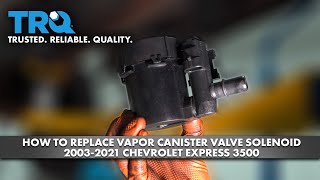
- Vent Valve Location and Replacement: On the Express van, the vent valve is located just in front of the fuel tank, mounted near the charcoal canister. It can be difficult to access without raising the vehicle. A video from 1A Auto shows the replacement process specifically for the Express van, which involves peeling back a heat shield, unclipping the electrical connector, and using screwdrivers to release the hose clamp.
- Rust on Fuel Filler Neck: Owners on forums for similar GM platforms frequently report that a rusted fuel filler neck is the ultimate culprit after replacing the gas cap and valves.
Mechanic-Grade Diagnostic Values
- EVAP Vent Valve/Solenoid Resistance — expected: 20-50 Ohms. Failure: A reading of 0 Ohms (short) or infinite/OL (open circuit).
- EVAP Purge Valve/Solenoid Resistance — expected: 20-50 Ohms (typical). Failure: A reading significantly outside the expected range, or an open/shorted reading, indicates a faulty coil.
- Fuel Tank Pressure (FTP) Sensor Voltage — expected: Approximately 1.5V with the gas cap off (atmospheric pressure). Voltage should decrease as vacuum is applied.. Failure: Voltage that is stuck high or low, or does not change when the system is sealed and vacuum is applied, points to a faulty sensor.
Scan Tool Commands That Help
- Tech2 / GDS2: EVAP Service Bay Test — This function allows a technician to command the vehicle's ECM to run the entire EVAP self-test sequence while the vehicle is stationary, rather than having to perform a specific drive cycle. It will close the vent valve, open the purge valve to create a vacuum, and monitor the FTP sensor to verify system integrity.
- Tech2 / GDS2 / Professional Scan Tool: Vent Valve Solenoid Command (On/Off) — This bidirectional control is used to manually close the normally open vent valve. It is essential during a smoke test to seal the system and also to verify the solenoid's mechanical function by listening for a click.
- Tech2 / GDS2 / Professional Scan Tool: Purge Valve Solenoid Command (%) — This command allows the technician to incrementally open the normally closed purge valve. It can be used to check if the valve is stuck or to introduce smoke/vacuum into the system from the engine side.
Wiring & Ground Locations
- G102 / G103 — G102 is located on the left rear of the engine, and G103 is on the right rear of the engine.. These are primary engine ground points. A poor ground connection at these locations can cause erratic behavior in various engine sensors and solenoids, including the EVAP system components.
- G302 / G303 — Both G302 and G303 are located behind the left kick panel inside the cabin.. These grounds are for the Body Control Module (BCM). While not directly controlling the EVAP test, the BCM communicates with the PCM and a poor ground could cause various electrical issues.
- G400 — Located on the inner left rear frame rail.. This is a major chassis ground near the rear of the vehicle, close to the fuel tank and EVAP canister. A corroded or loose G400 could directly affect the electrical circuit for the vent valve solenoid and fuel tank pressure sensor.
- EVAP Purge Solenoid Connector — On top of the engine, near the throttle body.. This is the connection point for testing the purge solenoid. For a 2003 model, one wire should be Pink (Ignition voltage) and the other is controlled by the PCM.
- EVAP Vent Solenoid Wiring — At the vent solenoid, near the charcoal canister in front of the fuel tank.. This is the connection point for testing the vent solenoid. On many GM vehicles, one wire receives 12V with the key on, and the other wire is the control (ground) side switched by the PCM. Checking for power and the computer's ability to provide ground is a key diagnostic step.
Real Owner Repair Stories
- YouTube channel 'Homie Hektor' (Chevrolet Express Van (year not specified, but similar platform)) — P0455 code present, vehicle would not pass emissions test.
❌ Tried (didn't work) The technician first suspected the vent valve, which is a very common failure point.
✅ What actually fixed it After performing a smoke test and using a scan tool to command the vent valve closed, it was confirmed to be sealing properly. The actual cause was a faulty purge valve that was not sealing, which was replaced to fix the issue.
OEM Part Supersession History
10382105, 15750484, 22728634→25932571— Standard part evolution and consolidation by GM.
Heads up: Part number 25932571 (ACDelco 214-2149) is the common service replacement for a wide range of GM vehicles, including the 2003-2004 Express. However, some vendors note that the part has been redesigned and advise verifying the correct part with a VIN.
Model Year Variations Within This Range
- 2003-2004: In 2003, GM full-size trucks and vans underwent a major electrical system change known as a Mid-Cycle Enhancement. This means wiring diagrams, connector pinouts, and module locations for 2003-2004 models can differ significantly from the 2000-2002 models. Technicians should use a wiring diagram specific to the vehicle's year.
Helpful Videos
Used OEM Parts in Stock
New Aftermarket Parts Available


The information in this article is provided for general reference and educational purposes only. Vehicle specifications, procedures, and part compatibility can vary by production date, trim level, and region. Always consult your vehicle's factory service manual and verify part numbers before purchasing or performing repairs. Safety-critical components such as airbags, seat belts, and braking systems should be installed by a qualified professional.
- Chevrolet EXPRESS:
- 🎬 Helpful Videos
- 🛍️ Shop This Part
- What's Unique About the 2000-2004 Chevrolet EXPRESS
- Diagnostic Flowchart
- Symptoms You May Notice
- Most Likely Causes
- Rare But Worth Checking
- Diagnosis Steps
- Parts You'll Likely Need
- Related Codes That Often Appear With This One
- Technical Service Bulletins (TSBs) & Recalls
- Platform-Specific Known Issues
- Mechanic-Grade Diagnostic Values
- Scan Tool Commands That Help
- Wiring & Ground Locations
- Real Owner Repair Stories
- OEM Part Supersession History
- Model Year Variations Within This Range
- 🎟️ Get 5% Off