

P0455 on 2005-2012 Chevrolet Corvette: EVAP Large Leak Causes and Fixes
For a C6 Corvette, a P0455 code most often points to a loose or faulty gas cap (OEM Part No. 19432733). If tightening or replacing the cap doesn't work, the next most likely culprits are the EVAP vent solenoid (rear of car, OEM Part No. 20907779) or purge solenoid (engine bay, OEM Part No. 214-2149). A new gas cap is under $30, while solenoids can range from $25 to $60.
- P0455 means your Corvette has a large leak in the fuel vapor system.
- Always check the gas cap first. Make sure it's tight and the seal is good. This is the cheapest and most common fix.
- If a new gas cap doesn't solve it, the next parts to check are the EVAP purge valve (engine bay) and vent valve (rear of car).
- A strong fuel smell could indicate a more serious leak at the top of the fuel tank, a known issue for this model.
- A smoke test is the most reliable way to find the leak if it's not one of the common components.
What's Unique About the 2005-2012 Chevrolet CORVETTE

On the C6 Corvette (2005-2013), while common EVAP parts like the gas cap and solenoids are frequent suspects, this platform is also known for a more serious issue. A leak can develop from the top of the fuel tank assembly, a problem noted by owners and acknowledged by dealers. This makes a strong fuel smell after filling up a more significant symptom than on other vehicles, potentially pointing to a more complex repair that requires dropping the fuel tanks. One owner on CorvetteForum specifically mentioned having to have both fuel tanks dropped to replace sending units, a fuel feed line, and a crossover pipe after experiencing a P0455 and fuel smell. The dual-tank design and the location of components like the Fuel Tank Pressure (FTP) sensor on top of the passenger-side tank make access extremely difficult, requiring removal of the drivetrain and fuel tanks for replacement.
Diagnostic Flowchart

Tap your situation to follow the diagnostic path that matches what you're seeing on this vehicle.
Symptoms You May Notice
- Check Engine Light is on
- A noticeable fuel smell, especially after refueling or when the car is parked.
- Audible 'hiss' when removing the gas cap may be absent
- A "Check Gas Cap" message may appear on the Driver Information Center (DIC).
- Replacing the O2 sensors. Oxygen sensors are not related to the EVAP system and will not fix a P0455 code.
- Replacing the fuel tank pressure sensor. While possible, a faulty pressure sensor will typically set its own specific trouble code (e.g., P0452, P0453) and is less common than a physical leak.
Most Likely Causes


- Loose, Damaged, or Incorrect Gas Cap 🔴 High Probability The gas cap is the most frequently handled part of the EVAP system and its seal can wear out or be improperly secured after refueling. This is the most common and cheapest fix.
How to confirm: Inspect the gas cap for cracks or a worn, brittle seal. Ensure it is tightened until it clicks at least once. If in doubt, it's an inexpensive part to replace as a first step. Some owners suggest cleaning the seal and applying a light coat of silicone grease as a temporary measure.
Typical fix: Tighten the existing cap or replace it with a new OEM-spec cap. The OEM part number is 19432733 or the superseded 19435845.
Est. part cost: $15-$35 - Faulty EVAP Vent Valve/Solenoid 🟡 Medium Probability This solenoid, located near the charcoal canister at the rear of the car (passenger side, above the axle), can get stuck open, creating a large leak path. It is a very common failure point after the gas cap is ruled out.
How to confirm: The valve is normally open. With a scan tool, command it closed and see if it holds a vacuum or pressure during a smoke test. It can also be removed and tested with a 12V source; it should click closed when power is applied. If you can blow through it when 12V is applied, it's bad.
Typical fix: Replace the vent valve solenoid. The most common OEM part number is 20907779. 🎬 Watch: How to replace the vent solenoid and clear codes. Some earlier models may require an adapter harness (Part No. 19257603) when using the updated solenoid.
Est. part cost: $25-$50 - Faulty EVAP Purge Valve/Solenoid 🟡 Medium Probability This valve is located in the engine bay, often on the driver's side near the intake manifold, and can get stuck open, allowing un-metered vacuum into the EVAP system.
How to confirm: The purge valve is normally closed. With the engine off, disconnect the valve and try to blow through it. If air passes, it is stuck open and needs replacement.
Typical fix: Replace the purge valve solenoid. The common ACDelco part number is 214-2149.
Est. part cost: $25-$60 - Leaking Fuel Tank or Fuel Pump Module Seal ⚪ Low Probability The C6 Corvette has dual fuel tanks, and leaks can develop at the crossover tube or the fuel pump/sender assembly seals on top of the tanks. This is a known, and expensive, issue. A strong fuel smell after filling the tank is a major indicator.
How to confirm: This is difficult to confirm without a professional smoke test where smoke is injected into the EVAP system. The smoke will be visibly escaping from the top of the fuel tank area, which is often hidden above the rear subframe.
Typical fix: Drop the fuel tank(s) and replace the faulty seal, crossover tube, or the entire fuel pump module if it is cracked.
Est. part cost: $50-$400 (for seals/lines), $400+ (for fuel pump module) - Cracked or Disconnected EVAP Hoses ⚪ Low Probability Rubber and plastic lines can become brittle and crack over time due to heat and age, especially the lines running along the chassis from the engine to the rear of the car.
How to confirm: Visually inspect all accessible EVAP lines between the engine, charcoal canister, and fuel tank. A smoke test is the most effective way to find a small crack or loose connection.
Typical fix: Replace the damaged section of hose.
Est. part cost: $10-$50
Rare But Worth Checking
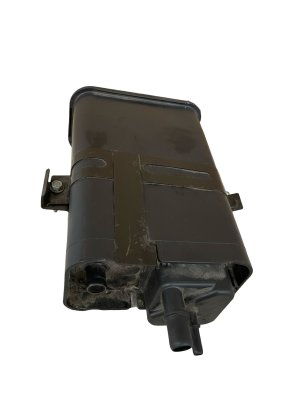
- Cracked Charcoal Canister: The canister itself can be damaged by road debris or become saturated with fuel if the tank is repeatedly overfilled, causing a large leak. This should be visually inspected when checking the vent solenoid, as they are located near each other.
- Damaged Fuel Filler Neck: Rust or damage to the metal filler neck where the gas cap seals can prevent a proper seal, even with a new cap.
Diagnosis Steps
- Read the code with an OBD-II scanner to confirm P0455 is present. Note any other codes like P0442 or P0449.
- Inspect the gas cap. Ensure it's tight (clicks once) and the seal is not cracked or worn. If in doubt, replace it with an OEM cap (ACDelco GT303 / Part No. 19432733), clear the code, and drive for a few days to see if it returns.
- If the code returns, perform a visual inspection of all accessible EVAP hoses in the engine bay and near the fuel tank for obvious cracks or disconnections.
- Locate the EVAP purge solenoid in the engine bay (driver's side). With the engine off, disconnect it and try to blow through it. If air passes, it's stuck open and needs replacement.
- Locate the EVAP vent solenoid at the rear of the vehicle, on the passenger side near the differential. 🎬 See this walkthrough for installing a new vent valve solenoid. Inspect it and its wiring for damage. Use a scan tool to command it closed; if it doesn't click, or if it still allows air to pass when commanded closed (tested with a hand vacuum pump or by blowing), it is faulty.
- If the cause is still not found, a professional smoke test is the most effective next step. This involves injecting vaporized smoke into the EVAP system's service port to visually pinpoint the location of the leak.
- Pay close attention to the top of the fuel tanks during the smoke test, as this is a known leak area on C6 Corvettes. Also check the charcoal canister and fuel filler neck.
Parts You'll Likely Need
- Fuel Cap
(OEM #19432733 (or 19435845))— This is the most common failure point, either from being loose or having a worn-out seal. It is the first and cheapest part to replace.
Trusted brands: ACDelco (GM Original Equipment), Motorad, Stant
OEM price range: $20-$35
Aftermarket price range: $10-$20 - EVAP Canister Purge Valve Solenoid
(OEM #214-2149 (ACDelco))— Located in the engine bay, this valve can get stuck open, causing a constant leak. It's a frequent cause after the gas cap is ruled out.
Trusted brands: ACDelco, Dorman
OEM price range: $40-$60
Aftermarket price range: $25-$45
Related Codes That Often Appear With This One
- P0442 — P0442 indicates a small EVAP leak. It can appear alongside P0455 if the system has multiple leaks of different sizes, or it may be an intermittent code that changes depending on conditions. The official GM TSB #21-NA-124 addresses diagnostics for both codes.
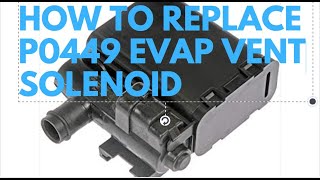
- P0449 — This code specifically points to a fault in the EVAP vent valve solenoid circuit. Since a stuck-open vent valve is a common cause of a P0455 large leak, these two codes often appear together. 🎬 Watch: A helpful guide to fixing the P0449 vent solenoid.
Technical Service Bulletins (TSBs) & Recalls
- Bulletin #21-NA-124: Provides diagnostic advice for technicians on testing for EVAP leaks related to codes P0442 and P0455. It suggests a chronological investigation: 1. Check line installation, 2. Check for line damage, 3. Investigate vent valve, 4. Investigate purge valve.
Platform-Specific Known Issues
- A known issue on C6 Corvettes is a fuel leak from the top of the fuel tank, often at the fuel pump module or crossover tube connections. An owner reported this specific issue to the NHTSA under ODI #11170969 after getting a P0455 code.
- GM issued Technical Service Bulletin #21-NA-124 which provides diagnostic tips for finding EVAP leaks that cause P0455 and P0442 codes on many GM vehicles, including the 2012 model. It advises checking lines and connections before replacing valves.
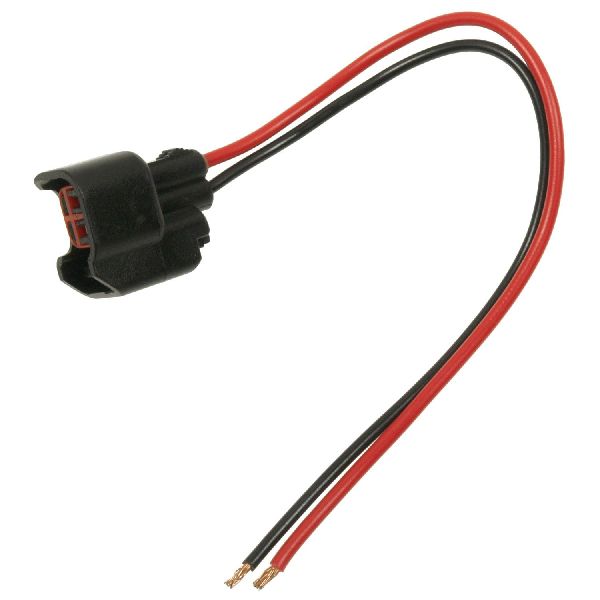
- Due to a part design change, replacing the original vent solenoid on earlier C6 models (e.g., 2005-2006) with the current part (20907779) often requires a wiring harness adapter (GM Part #19257603).
Mechanic-Grade Diagnostic Values
- EVAP Canister Vent Valve/Solenoid Coil Resistance — expected: 10 - 30 Ohms. Failure: A reading of infinite resistance (OL) indicates an open coil, while a reading below 5 Ohms suggests a short. Either requires replacement of the solenoid.
- Voltage to EVAP Vent Solenoid Connector — expected: 12-14 Volts (Battery Voltage). Failure: No voltage at the power pin (with ignition on) points to a wiring issue, blown fuse, or problem with the power distribution, not the solenoid itself.
- Fuel Tank Pressure (FTP) Sensor Voltage — expected: Around 1.5V with the gas cap off (atmospheric pressure). Voltage decreases as vacuum increases and increases as pressure increases.. Failure: A low voltage reading can indicate high pressure in the tank. Specific codes like P0452 (low voltage) or P0453 (high voltage) are more direct indicators of a sensor failure than P0455.
Scan Tool Commands That Help
- Tech2 / GDS2 or equivalent professional scanner: EVAP System Test (or Service Bay Test) — This is a comprehensive, automated test that commands the purge and vent solenoids to seal the system, then uses the FTP sensor to monitor for vacuum decay. It can confirm a leak exists and sometimes differentiate between large and small leaks without a smoke machine.
- Tech2 / GDS2 or equivalent professional scanner: EVAP Vent Solenoid Control — This bidirectional command allows the technician to manually open and close the vent solenoid. It's used during a smoke test to seal the system (commanded closed) or to verify the solenoid's function by listening for a click.
- Tech2 / GDS2 or equivalent professional scanner: EVAP Purge Solenoid Control — Allows manual control of the purge valve (usually in percentage). This is used to check if the valve is physically stuck open or closed and to verify its response to ECM commands.
Wiring & Ground Locations
- G105 / G106 — On the frame rails in the engine compartment, near the headlamps on either side.. These are primary engine bay grounds. While not directly for the rear-mounted EVAP components, poor grounds here can cause erratic behavior in the ECM and other modules that control the EVAP system.
- G402 — On the inner side of the right (passenger-side) frame rail in the rear of the vehicle.. This is a critical ground point for rear-mounted components. The EVAP vent solenoid and charcoal canister are in this vicinity, and a poor connection at G402 could cause a P0449 (vent circuit malfunction) to appear with P0455.
- EVAP Vent Solenoid Connector — At the EVAP vent solenoid, located on the passenger side, near the differential and transmission.. This 2-pin connector is the direct interface for the vent solenoid. The pins should be checked for 12V power and a good ground signal from the ECM. Corrosion or damage here is a common cause of vent circuit codes.
Real Owner Repair Stories
- CorvetteForum user (C6 Corvette (year not specified)) — P0440 code (general EVAP leak), which is closely related to P0455.
❌ Tried (didn't work) Replacing the gas cap.
✅ What actually fixed it A professional smoke test revealed a leak on top of the gas tank. The repair fixed the issue. - CorvetteForum user (2006 C6 Corvette) — P0449 code (EVAP vent circuit) and "check gas cap" message.
❌ Tried (didn't work) Initial diagnosis pointed to common EVAP issues.
✅ What actually fixed it The user replaced the EVAP vent solenoid for the second time in 6 years. The replacement part had a new design and required an adapter harness (GM Part No. 19257603), suggesting an update to address reliability.
OEM Part Supersession History
10386359, 25948082→20907779— The original EVAP vent solenoid was updated to a new design.
Heads up: When replacing an older style vent solenoid with the updated part (20907779), a jumper harness adapter, GM Part No. 19257603, is required to connect the new solenoid to the existing vehicle harness.
Model Year Variations Within This Range
- 2005: The 2005 model year is unique. It has a different, and reportedly weaker, rear differential, a one-year-only E40 ECM, and a 4-speed automatic transmission (vs. 6-speed in later years). While the EVAP system function is similar, the unique computer and potential for other model-year-specific issues can complicate diagnostics.
- 2008+: Starting in 2008, the Corvette received the 6.2L LS3 engine (up from the 6.0L LS2), an upgraded TR-6060 manual transmission, improved steering feel, and a revised interior. While the fundamental EVAP system layout remained, these changes represent a significant refresh of the platform.
Helpful Videos



Used OEM Parts in Stock
New Aftermarket Parts Available


The information in this article is provided for general reference and educational purposes only. Vehicle specifications, procedures, and part compatibility can vary by production date, trim level, and region. Always consult your vehicle's factory service manual and verify part numbers before purchasing or performing repairs. Safety-critical components such as airbags, seat belts, and braking systems should be installed by a qualified professional.
- Chevrolet CORVETTE:
- 🎬 Helpful Videos
- 🛍️ Shop This Part
- What's Unique About the 2005-2012 Chevrolet CORVETTE
- Diagnostic Flowchart
- Symptoms You May Notice
- Most Likely Causes
- Rare But Worth Checking
- Diagnosis Steps
- Parts You'll Likely Need
- Related Codes That Often Appear With This One
- Technical Service Bulletins (TSBs) & Recalls
- Platform-Specific Known Issues
- Mechanic-Grade Diagnostic Values
- Scan Tool Commands That Help
- Wiring & Ground Locations
- Real Owner Repair Stories
- OEM Part Supersession History
- Model Year Variations Within This Range
- 🎟️ Get 5% Off