

P0455 on 2000-2004 Chevrolet Cavalier: EVAP Gross Leak Causes and Fixes
For a 2000-2004 Cavalier, P0455 indicates a large leak in the EVAP system. The most common and cheapest fix is replacing a loose or worn-out gas cap. If that doesn't work, the next most likely culprit is a rusted fuel filler neck preventing a seal. Faulty EVAP vent or purge solenoids are also common causes.
- P0455 signifies a large leak in the emissions system, not a critical engine problem.
- Always start with the simplest and most common fix: check that the gas cap is tight and inspect its seal for damage.
- If a new gas cap doesn't solve the problem, the next most likely culprit on a 2000-2004 Cavalier is a rusted fuel filler neck preventing a good seal.
- Other potential causes include failed EVAP purge or vent valves, which can be diagnosed with a smoke test or by testing the components directly.
- Driving with this code is safe, but you will fail an emissions test and may notice a fuel smell.
What's Unique About the 2000-2004 Chevrolet CAVALIER
The third-generation Cavalier (1995-2005) and its twin, the Pontiac Sunfire, have a relatively simple EVAP system design. There are no exceptionally unique technologies at play. However, these J-body cars are highly susceptible to age-related failures, particularly rust on the fuel filler neck. This rust creates a rough, pitted surface that prevents the gas cap from sealing properly, causing a P0455 code even with a brand-new cap. 🎬 Watch: A simple explanation of P0455 and how to fix it. Owner experiences and repair videos confirm that after checking the gas cap, the filler neck is the most common cause of a persistent P0455 code on this specific platform.
Diagnostic Flowchart
Tap your situation to follow the diagnostic path that matches what you're seeing on this vehicle.
Symptoms You May Notice
- Check Engine Light is on
- A noticeable smell of gasoline, especially after filling the tank or when the vehicle is parked.
- A slight decrease in fuel economy.
- In some cases, difficulty filling the fuel tank (the nozzle clicks off repeatedly) can be a symptom if the vent valve is stuck closed, though this is more commonly associated with other EVAP codes.
- Replacing the purge valve when the vent valve is the actual problem.
- Replacing the gas cap multiple times without inspecting the fuel filler neck for rust, which is the true cause of the poor seal.
Most Likely Causes
- Loose, Damaged, or Incorrect Gas Cap 🔴 High Probability The gas cap seal is a rubber component that degrades and cracks over time. It's also the most frequently handled part of the system, making it easy to forget to tighten it properly or to use a non-compliant aftermarket cap.
How to confirm: Ensure the gas cap is tightened until it clicks at least once. Inspect the rubber seal on the cap for any cracks, tears, or signs of hardening. Check that you are using the correct OEM or equivalent cap for the vehicle.
Typical fix: Tighten the cap. If the seal is bad or the cap is incorrect, replace the gas cap. An OEM cap is often recommended.
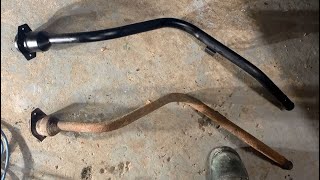
Est. part cost: $10-$30 - Rusted or Damaged Fuel Filler Neck 🔴 High Probability The steel fuel filler neck on these Cavaliers is notoriously prone to rusting, especially in regions that use road salt. Rust creates a rough, uneven surface where the gas cap seals, causing a large leak code even with a brand new, perfectly functioning cap.
How to confirm: Remove the gas cap and visually and physically inspect the lip and surface of the filler neck where the cap seals. Look and feel for rust, pitting, bubbling paint, or deformities. A smoke test will show smoke billowing from the gas cap area if the neck is the problem.
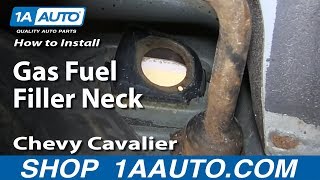
Typical fix: The rusted filler neck must be replaced. This involves removing the rear wheel, disconnecting the neck from the fuel tank hose and the car's body, and installing a new unit. 🎬 See this walkthrough on replacing a rusted fuel filler neck.
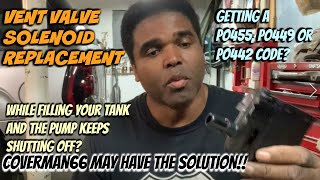
Est. part cost: $50-$100 - Faulty EVAP Vent Solenoid/Valve 🟡 Medium Probability This valve is located underneath the vehicle near the charcoal canister, exposing it to road salt, water, and debris. It can get stuck open due to corrosion or internal failure, creating a large, permanent leak. This is a known issue across many GM vehicles of the era, prompting a TSB.
How to confirm: The valve is normally open. A scan tool can command it closed for testing. With the valve commanded closed, try to blow through it; if air passes, it's faulty. Alternatively, you can apply 12V directly to its terminals to see if it clicks closed. A failure to actuate indicates a bad solenoid.
Typical fix: Replace the EVAP vent solenoid. Per TSB 02-06-04-037, it is also recommended to install a filter relocation kit to move the air intake to a cleaner location (like near the transmission) to prevent future failures from dust contamination. 🎬 Watch: How to replace a faulty EVAP vent valve solenoid.
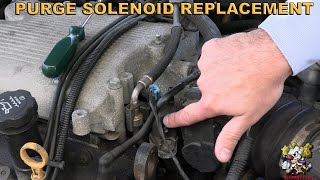
Est. part cost: $25-$60 - Faulty EVAP Purge Solenoid/Valve ⚪ Low Probability Located in the engine bay, this valve is less exposed to the elements but can still fail. If it gets stuck open, it creates a constant vacuum leak into the engine and can contribute to EVAP codes. A stuck-closed valve can also cause a P0455 because the system can't pull a vacuum during its test.
How to confirm: The valve is normally closed with the engine off. Disconnect the vacuum lines and try to blow through it. If air passes, it is stuck open and needs to be replaced. To check for a stuck-closed valve, apply 12V power and see if it opens.
Typical fix: Replace the EVAP purge solenoid.
Est. part cost: $20-$50
Rare But Worth Checking
- Cracked or Disconnected EVAP Hoses: Over time, the rubber and plastic hoses that connect the EVAP system components can become brittle and crack, or a connection could come loose. A visual inspection and/or a smoke test is the best way to find such a leak.
- Cracked Charcoal Canister: The plastic housing of the charcoal canister can crack from age or impact from road debris, creating a large leak. This is less common than valve or hose failures but should be checked if other causes are ruled out.
- Leaking Fuel Tank: While rare, a crack or rusted-through spot on the top of the fuel tank can cause a P0455 code. This is a serious issue that would likely also present a very strong fuel smell. One owner noted that cracks on the top of the tank where tubes attach have been seen on Cavaliers. Another mechanic reported finding a leak on a similar platform (Pontiac Sunfire) where an EVAP hose connects to the top of the tank, requiring the tank to be dropped for the repair.
Diagnosis Steps
- Check the gas cap. Remove it, inspect the seal for damage, and reinstall it, ensuring it clicks several times. Clear the code and drive for a few days to see if it returns.
- If the code returns, perform a detailed visual and tactile inspection of the fuel filler neck's sealing surface for any signs of rust, corrosion, or damage that would prevent the cap from sealing.
- Perform a thorough visual inspection of all accessible EVAP hoses in the engine bay and under the vehicle, looking for obvious cracks, disconnections, or damage.
- Inspect the EVAP canister (located under the rear of the vehicle) and the vent solenoid for any visible cracks or damage.
- If no visual faults are found, the most effective diagnostic method is a smoke test. A mechanic will introduce pressurized smoke into the EVAP system via the service port. The smoke will exit from the location of the leak, making it easy to pinpoint the faulty component (e.g., a cracked hose, a faulty valve, or a leaking filler neck).
- Test the vent and purge solenoids. A bi-directional scan tool can command the valves to open and close to check for proper operation. Without a scan tool, they can be removed and tested with a 12V power source to see if they actuate (click).
Parts You'll Likely Need
- Gas Cap
(OEM #GT261)— This is the most common initial failure point. The seal wears out or the cap is not tightened properly, causing a large leak.
Trusted brands: ACDelco, Stant
OEM price range: $20-$35
Aftermarket price range: $10-$25 - Fuel Filler Neck
(OEM #22615851)— Extremely prone to rusting on the Cavalier and Sunfire, which prevents the gas cap from sealing and is a very common cause for P0455 on this specific vehicle.
Trusted brands: Dorman (p/n 577-931), Spectra Premium, Filler Neck Supply Co (p/n FNSGM03)
OEM price range: $80-$150
Aftermarket price range: $45-$100 - EVAP Canister Purge Solenoid (Purge Valve)
(OEM #214-641 / 214-2246)— This valve, located on the engine, can get stuck open or closed, causing a leak or preventing the system test from running. It's a known failure item on many GM vehicles of this era.
Trusted brands: ACDelco, Dorman (p/n 994-022)
OEM price range: $30-$50
Aftermarket price range: $20-$40 - EVAP Canister Vent Solenoid (Vent Valve) — Located under the car, this valve is exposed to the elements and can fail or get stuck open due to corrosion or dust intrusion, causing a large leak.
Trusted brands: ACDelco (p/n 214-1366), Dorman (p/n 911-034)
OEM price range: $40-$70
Aftermarket price range: $25-$60
Related Codes That Often Appear With This One
- P0442 — P0442 indicates a small EVAP leak. Sometimes a component (like a rusting filler neck) is beginning to fail and may report a small leak before it worsens and triggers the large leak code P0455.
Technical Service Bulletins (TSBs) & Recalls
- 02-06-04-037J
- 21-NA-124
Platform-Specific Known Issues
- TSB for Vent Valve Contamination: GM issued Technical Service Bulletin #02-06-04-037J for many vehicles of this era, addressing frequent EVAP codes (including P0455) caused by dust and debris clogging the EVAP vent valve. While this TSB was for trucks, the principle applies to the Cavalier's similarly exposed vent valve. The fix involves replacing the valve and installing a filter box relocation kit to move the air intake to a cleaner, more protected area.
Mechanic-Grade Diagnostic Values
- EVAP Canister Purge Valve Resistance — expected: 30 to 38 ohms. Failure: A reading outside this range, such as infinite (open circuit) or near zero (short circuit), indicates a faulty solenoid coil.
- EVAP Canister Vent Solenoid Resistance — expected: 48 to 65 ohms. Failure: A reading significantly higher or lower than this range suggests the solenoid coil is bad.
- Fuel Tank Pressure (FTP) Sensor Voltage — expected: Signal voltage varies between 0.1 - 4.9 volts on a 5-volt reference.. Failure: Voltage that is stuck high or low, or does not change when vacuum or pressure is applied during a test, points to a faulty sensor or wiring issue.
Scan Tool Commands That Help
- Tech 2 / Bidirectional Scan Tool: EVAP Service Bay Test — This function allows a technician to manually command the EVAP system components. You can command the vent valve to close and the purge valve to open to create a vacuum, then seal the system to monitor for vacuum decay, directly testing the system's integrity without waiting for a drive cycle.
- Tech 2 / Bidirectional Scan Tool: EVAP Vent Solenoid On/Off — Used to test the function of the vent solenoid. The solenoid is normally open; commanding it 'Closed' or 'On' should cause it to click and seal the EVAP system. If it doesn't actuate, or if it doesn't seal when commanded, the part is faulty.
- Tech 2 / Bidirectional Scan Tool: EVAP Purge Solenoid On/Off (or Duty Cycle %) — Used to test the function of the purge solenoid. The solenoid is normally closed. Commanding it 'On' or to a specific duty cycle should cause it to click and allow vacuum to flow through it. This confirms the solenoid's electrical and mechanical operation.
Wiring & Ground Locations
- G110 — On the rear of the engine block.. This is a primary engine ground. A poor connection at G110 can cause erratic behavior or failure of various engine sensors and solenoids, including those in the EVAP system that rely on a solid ground reference to function correctly.
- EVAP Canister Vent Solenoid Connector — Under the rear of the vehicle, near the charcoal canister, typically above the rear axle.. The wiring at this connector is exposed to road salt and debris, making it prone to corrosion and breakage. A bad connection here will cause a P0455 or other EVAP codes, even if the solenoid itself is good.
- I/P Fuse Block — Behind the lower left side of the dashboard.. This fuse block contains fuses that power the EVAP system components, such as the 'ERLS FUSE 10A' which can be related to the vent solenoid. A blown fuse will cut power to the component, causing a system failure.
Real Owner Repair Stories
- 2CarPros Forum user 'JACK1959' (Chevrolet Sunfire (platform twin to Cavalier)) — P0455 Gross Leak Detected code.
✅ What actually fixed it A smoke test revealed the leak was from the top of the fuel tank where the EVAP hose connects. The technician had to drop the fuel tank to properly re-install the hose, which permanently cleared the code. - Reddit user 'ProtoYoYo' (2004 Chevrolet Cavalier 2.2L) — P0455 code, strong gas smell, code returns shortly after refueling.
❌ Tried (didn't work) Replaced the purge valve (twice)., Replaced the gas cap (twice).
✅ What actually fixed it The user suspected the fuel filler neck was the actual issue because the internal flap was limp and not closing properly, preventing a seal even with a new cap. This aligns with the known high failure rate of the filler neck due to rust on this platform. - YouTube video by Blaine Nojiri (Car with P0455 (specific model not a Cavalier, but demonstrates a common GM fix)) — Failed smog test due to P0455 code.
❌ Tried (didn't work) Initial diagnosis pointed to various potential vacuum leaks.
✅ What actually fixed it The EVAP canister vent solenoid was getting stuck open and not closing. The video demonstrates testing the old valve by applying power and hearing no actuation, while the new valve clicks properly. Replacing this solenoid, located near the charcoal canister, solved the problem.
OEM Part Supersession History
1997278→214-641, 214-2093, 12575746— Standard part evolution and consolidation across multiple GM platforms.
Heads up: The original GM part 1997278 for the EVAP Canister Purge Solenoid has been superseded multiple times. While many aftermarket parts cross-reference, it's crucial to ensure the replacement has the correct bracket and electrical connector for the Cavalier, as this part was used on dozens of different GM vehicles.
Helpful Videos

We Have This Part in Stock



The information in this article is provided for general reference and educational purposes only. Vehicle specifications, procedures, and part compatibility can vary by production date, trim level, and region. Always consult your vehicle's factory service manual and verify part numbers before purchasing or performing repairs. Safety-critical components such as airbags, seat belts, and braking systems should be installed by a qualified professional.
- Chevrolet CAVALIER:
- 🎬 Helpful Videos
- 🛍️ Shop This Part
- What's Unique About the 2000-2004 Chevrolet CAVALIER
- Diagnostic Flowchart
- Symptoms You May Notice
- Most Likely Causes
- Rare But Worth Checking
- Diagnosis Steps
- Parts You'll Likely Need
- Related Codes That Often Appear With This One
- Technical Service Bulletins (TSBs) & Recalls
- Platform-Specific Known Issues
- Mechanic-Grade Diagnostic Values
- Scan Tool Commands That Help
- Wiring & Ground Locations
- Real Owner Repair Stories
- OEM Part Supersession History
- 🎟️ Get 5% Off