

P0455 on 2003-2010 Cadillac Escalade ESV: EVAP Gross Leak Causes and Fixes
P0455 on your Escalade almost always means a large leak in the EVAP system. Start by checking the gas cap—it's the most common and cheapest fix. Ensure it's an OEM ACDelco cap for a reliable seal. If that doesn't solve it, the EVAP vent solenoid, located near the spare tire, is the next most likely culprit due to its exposure to road debris and corrosion.
- Code P0455 on a 2003-2010 Escalade ESV indicates a large leak in the evaporative emissions system.
- Always start with the simplest solution: check that the gas cap is tight. If the problem persists, replace the gas cap with a quality OEM part.
- The two most common parts to fail after the gas cap are the EVAP vent solenoid (under the truck) and the EVAP purge valve (in the engine bay).
- While the code is not critical and won't stop you from driving, it will cause an automatic failure on an emissions test and should be addressed.
- If a new gas cap doesn't fix the issue, a smoke test is the most reliable way to find the source of the leak.
What's Unique About the 2003-2010 Cadillac ESCALADE ESV

The 2003-2010 Escalade ESV spans two GM truck generations, the GMT800 (2003-2006) and GMT900 (2007-2010). While the P0455 code's meaning is consistent, the physical location and part design for key EVAP components, like the vent solenoid, differ between them. A very common issue on these trucks is the failure of the EVAP vent solenoid, which is mounted under the vehicle near the spare tire and exposed to road salt, moisture, and debris, leading to frequent corrosion and malfunction. Another issue seen in these platforms is the charcoal canister breaking down internally, sending carbon pellets into the EVAP lines, which can cause blockages and lead to issues with filling the fuel tank.
Diagnostic Flowchart
Tap your situation to follow the diagnostic path that matches what you're seeing on this vehicle.
Generation note: This range covers the first generation ESV (2003-2006, GMT800 platform) and the second generation (2007-2010, GMT900 platform). The location and part numbers for components like the EVAP vent solenoid and purge valve differ between these generations. For example, later GMT900 models use an updated vent solenoid design that may require a wiring harness adapter if replacing an older original part. Always verify parts with your vehicle's VIN.
Symptoms You May Notice

- Check Engine Light is on
- A noticeable smell of gasoline, especially around the rear of the vehicle
- A "TIGHTEN GAS CAP" message on the driver information center (if equipped)
- Difficulty starting immediately after refueling (if the purge valve is stuck open)
- Fuel pump nozzle clicks off repeatedly when trying to refuel, making it very slow to fill the tank.
- Replacing the fuel tank pressure sensor before performing a smoke test. A physical leak from a hose, valve, or gas cap is far more common and should be ruled out first.
- Replacing oxygen sensors. O2 sensors are part of the exhaust system and have no connection to the EVAP system; replacing them will not fix a P0455 code.
- Using a cheap aftermarket gas cap. Many owners report that only an OEM/ACDelco cap will provide a proper seal and resolve the code.
Most Likely Causes

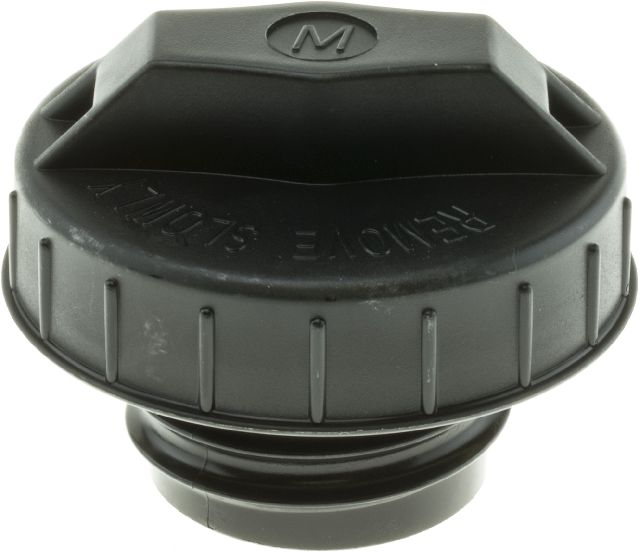
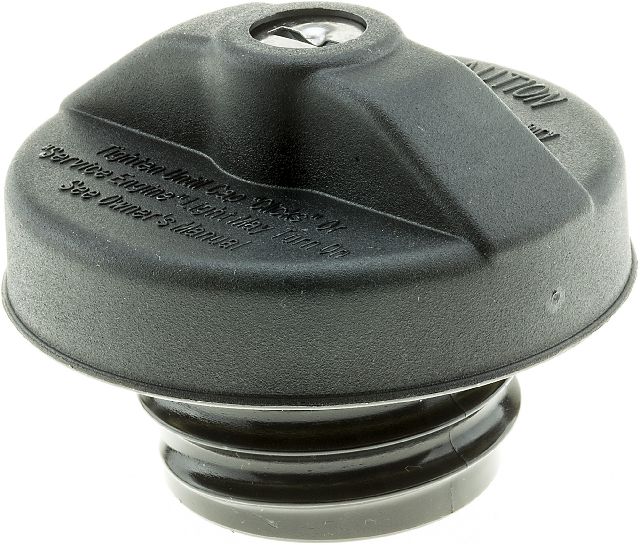
- Loose, Damaged, or Incorrect Gas Cap 🔴 High Probability This is the most common cause for a P0455 code on any vehicle. The cap's seal can wear out, or it may simply not have been tightened properly. Owners on forums strongly recommend using a genuine ACDelco cap, as aftermarket caps are often a source of persistent issues.
How to confirm: Inspect the gas cap for cracks in the seal or damage. Ensure it is tightened until it clicks at least once. Also, clean the sealing surface of the fuel filler neck with a cloth, as dirt and crud can prevent a good seal. Many auto parts stores can test your gas cap for free.
Typical fix: Replace the gas cap. It is highly recommended to use an OEM ACDelco-branded cap for a proper seal. Clear the code and drive for a few days to see if it returns.
Est. part cost: $15 - $35 - Faulty EVAP Vent Solenoid 🔴 High Probability The vent solenoid is located under the truck, often near the spare tire, making it highly susceptible to corrosion and damage from road debris, water, and salt. This is a very common failure point on GM trucks and SUVs of this era, often getting stuck open or closed.
How to confirm: A scan tool can command the valve to open and close. A visual inspection may reveal cracks or heavy corrosion. During a smoke test, smoke will be seen exiting the vent valve if it is stuck open. You can also test it by applying 12V power to see if the solenoid clicks and seals.
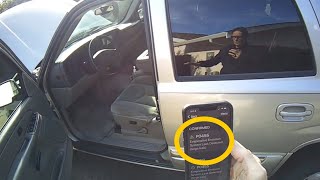
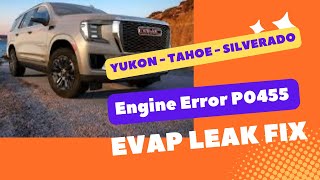
Typical fix: Replace the vent solenoid assembly. The part was updated on later models, and a new wiring harness adapter may be required for the new part to connect to the old vehicle harness. This repair requires lowering the spare tire for access. 🎬 See this walkthrough for replacing the vent valve solenoid.
Est. part cost: $30 - $100 - Faulty EVAP Purge Valve/Solenoid 🟡 Medium Probability This valve, located in the engine bay, can get stuck open or closed over time due to carbon buildup or simple wear. A stuck-open purge valve is a common cause of P0455.
How to confirm: With the engine off, remove the valve and try to blow through it; it should be closed and not allow air to pass. With the engine running, you can disconnect the hose from the charcoal canister side and feel for vacuum; there should be no vacuum at idle until the ECM commands it to open.
Typical fix: Replace the purge valve. This is typically an easy-to-access part on top of the engine, held by a single bolt. 🎬 Watch: Step-by-step guide to replacing the engine bay purge valve.
Est. part cost: $25 - $70 - Cracked or Disconnected EVAP Hose 🟡 Medium Probability The plastic and rubber hoses in the EVAP system become brittle over time due to heat and age, leading to cracks and leaks. This can include the lines near the canister or even vacuum lines in the engine bay.
How to confirm: A visual inspection may reveal obvious breaks, but a smoke test is the most effective way to find a cracked hose. This involves filling the system with a harmless, visible smoke and looking for where it escapes. 🎬 Watch: How to build a smoke tester and find leaks.
Typical fix: Replace the damaged section of the hose or the entire line assembly.
Est. part cost: $10 - $50
Rare But Worth Checking
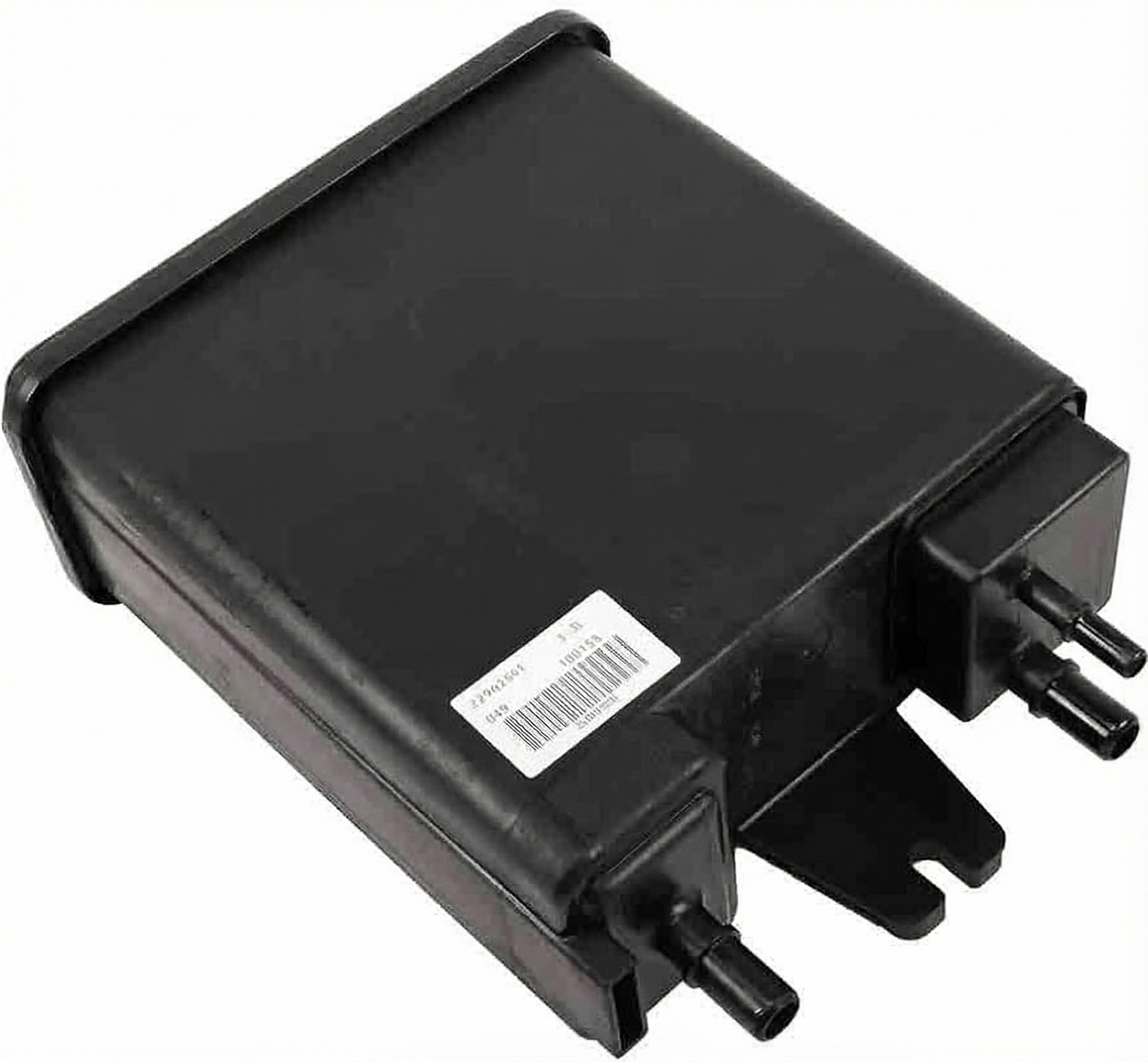
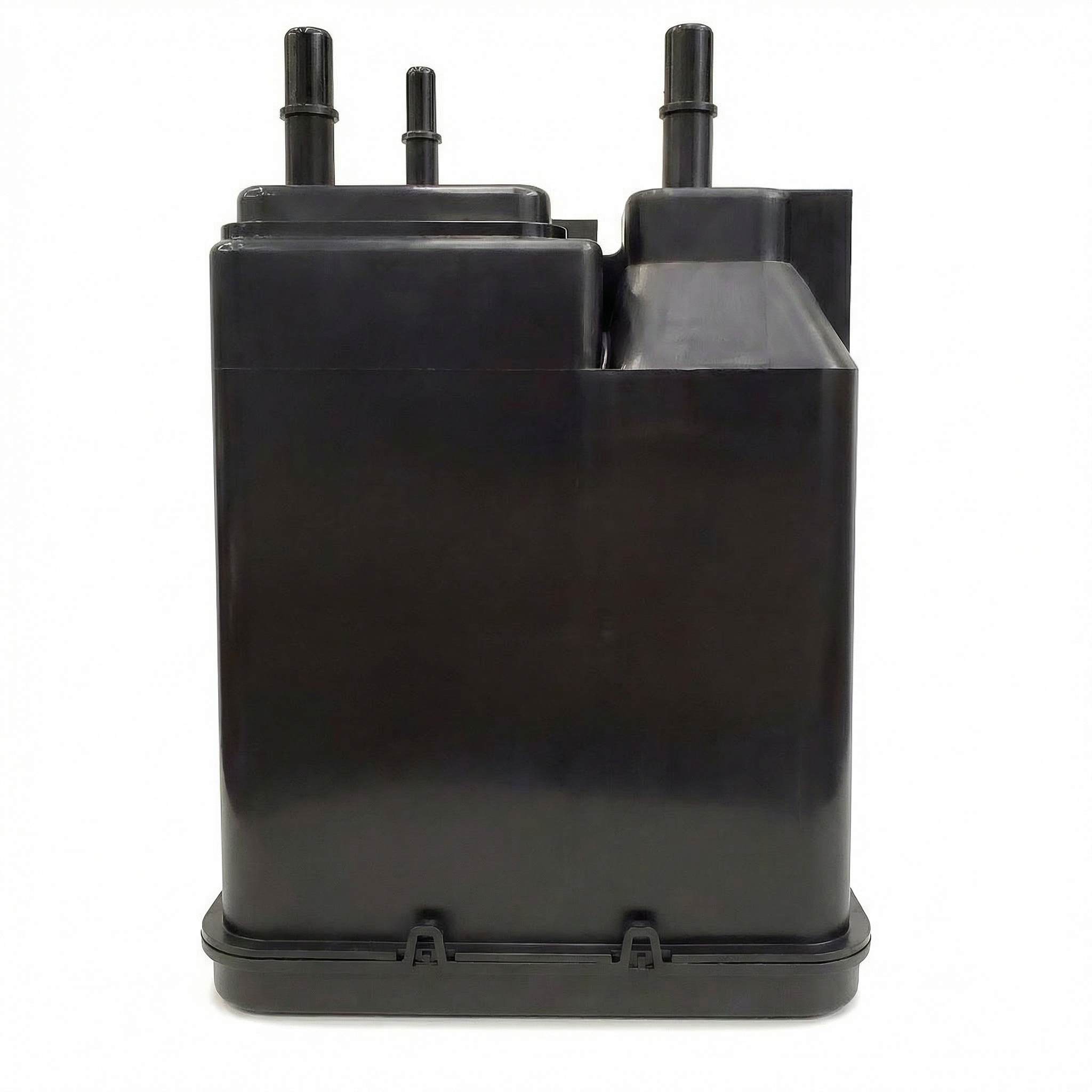
- Cracked EVAP Charcoal Canister: The canister itself, which stores fuel vapors, can be damaged by road debris or develop stress cracks, creating a large leak. In some cases, the canister can fail internally, releasing charcoal pellets that clog the EVAP lines.
- Faulty Fuel Tank Pressure (FTP) Sensor: If the sensor provides incorrect readings to the computer, it can falsely trigger a P0455 code even if no leak exists. This is less common than a physical leak.
- Leaking Fuel Filler Neck: The metal tube leading from the gas cap to the tank can rust and perforate over time, especially in regions that use road salt, causing a large leak. A visual inspection or smoke test will confirm this failure.
- Leaking Fuel Pump Gasket: The large O-ring that seals the fuel pump module to the top of the fuel tank can fail, creating a leak. This was the confirmed fix for at least one owner after replacing multiple other components.
Diagnosis Steps
- Check the gas cap. Remove it, inspect the seal for cracks or brittleness, and clean the filler neck sealing surface. Reinstall the cap, ensuring it clicks several times. Many owners insist on using an OEM ACDelco cap.
- If the code returns, perform a thorough visual inspection of all accessible EVAP hoses under the hood and under the vehicle near the fuel tank. Look for any obvious cracks, breaks, or disconnections.
- Locate and inspect the EVAP vent solenoid, which is typically mounted on or near the charcoal canister by the spare tire. Look for cracks in the plastic housing or heavy rust.
- If no obvious faults are found, a smoke test is the most effective diagnostic step. A mechanic (or DIYer with a smoke machine) will connect a smoke machine to the EVAP system's service port. The smoke fills the system, and any leaks will be visible as a stream of smoke.
- If a smoke test reveals no leaks, the components themselves should be tested. A bi-directional scan tool can be used to command the purge and vent solenoids on and off to verify their operation. You can also manually test the purge valve by removing it and checking if it's stuck open.
- Per TSB 21-NA-124, GM's recommended diagnostic flow is: 1) Check EVAP line connections, 2) Inspect lines for damage, 3) Test the vent valve, 4) Test the purge valve.
- If all else fails, the fuel tank pressure (FTP) sensor may be faulty, or there could be a rarer leak from the fuel pump sealing ring.
Parts You'll Likely Need
- Gas Cap
(OEM #ACDelco GT284 (GMT800), ACDelco GT330 (GMT900))— This is the most frequent and simplest fix for a P0455 code. The seal wears out, and aftermarket caps are notoriously unreliable on these vehicles.
Trusted brands: ACDelco
OEM price range: $25-$35
Aftermarket price range: $15-$25 - EVAP Canister Vent Solenoid Valve
(OEM #ACDelco 214-2149 (GMT800/early GMT900), ACDelco 23481275 (late GMT900))— Located under the vehicle, this part is highly exposed to the elements and is a common failure point, getting stuck open or closed and causing various EVAP codes.
Trusted brands: ACDelco, Dorman
OEM price range: $40-$100
Aftermarket price range: $30-$70 - EVAP Canister Purge Solenoid Valve
(OEM #ACDelco 214-2242)— Located in the engine bay, this valve can fail over time, typically by getting stuck open, which creates a large vacuum leak that the ECM interprets as a P0455.
Trusted brands: ACDelco
OEM price range: $30-$60
Aftermarket price range: $20-$40
Related Codes That Often Appear With This One
- P0442 — P0442 indicates a small EVAP leak. The same faulty component can start as a small leak (P0442) and worsen over time to become a large leak, triggering P0455. TSB #21-NA-124 specifically addresses both codes together.
- P0449 — This code specifically points to a fault in the EVAP vent solenoid's electrical circuit. Since a failed vent solenoid is a primary cause of P0455, it's very common to see these codes appear together.
- P0496 — This code indicates 'EVAP Flow During a Non-Purge Condition,' which often points directly to a purge valve that is stuck open. A stuck-open purge valve is a large leak, which also triggers P0455.
Technical Service Bulletins (TSBs) & Recalls
- 21-NA-124: Diagnostic tip for MIL on with DTC P0442 and/or P0455. Advises checking lines and connections before suspecting valves.
Platform-Specific Known Issues
- GMT800 vs GMT900 Part Differences: The EVAP vent solenoid valve is a key example of part differences. The GMT800 (2003-2006) typically uses a part like ACDelco 214-2149. The GMT900 (2007-2010) uses an updated design, such as ACDelco 23481275, which often requires a separate wiring harness adapter (ACDelco 19257603 or Dorman 911-064 kit) to connect to the vehicle's original wiring. Failure to get the correct part or adapter will prevent a successful repair.
- Owner Experience: The Purge Valve Culprit: On a Tahoe/Yukon forum, an owner of a 2006 model (GMT800) chased multiple EVAP codes. After confirming the purge valve was not responding to commands, they replaced it. This single, relatively inexpensive part resolved the P0455 code and the associated "check gas cap" messages, even though other codes were pointing towards the vent system.
- DIY Repair: Vent Solenoid Replacement: Multiple YouTube videos and forum posts detail the process for replacing the vent solenoid on these trucks. The key steps are to safely support the vehicle, lower the spare tire for access, disconnect one electrical connector and two hoses, and unbolt the assembly (typically a single 13mm bolt). The replacement part often has a slightly different bracket, but bolts into the same location.
Mechanic-Grade Diagnostic Values
- EVAP Purge Valve Solenoid Resistance — expected: 30 to 38 ohms (for non-electronic type). Failure: A reading significantly outside this range, or an infinite reading (open circuit), indicates a failed solenoid coil.
- EVAP Vent Valve Solenoid Resistance — expected: 48 to 65 ohms. Failure: A reading outside this range suggests the solenoid coil is faulty.
- EVAP Vent Solenoid Voltage at Connector — expected: With key-on, one wire should have ~12V (power feed), and the other should also read ~12V (control wire, back-fed through the solenoid coil).. Failure: Reading 0V on the control wire with the connector plugged in suggests an open circuit inside the solenoid itself. Reading 0V on the power feed indicates a wiring or fuse issue upstream.
- Fuel Tank Pressure (FTP) Sensor Voltage — expected: The sensor operates on a 5V reference. The signal wire voltage changes with tank pressure. A common reading with the gas cap off is around 1.5V.. Failure: Voltage that is stuck high (near 5V) or low (near 0V) regardless of pressure changes points to a faulty sensor or wiring issue. Codes P0452 (low voltage) or P0453 (high voltage) often accompany this.
Scan Tool Commands That Help
- Tech2 / GDS2 (GM Dealer Tools) or high-end bidirectional scanner: EVAP Vent Solenoid On/Off Command — This is a primary diagnostic step. Use this to command the normally-open vent valve to close. While closed, you can perform a smoke test to see if the valve is leaking or test the control circuit's response.
- Tech2 / GDS2 or high-end bidirectional scanner: EVAP Purge Solenoid PWM Command — This allows a technician to command the normally-closed purge valve to open by a specific percentage. It's used to verify the valve opens and closes on command and to check for restrictions in the purge line.
- Tech2 / GDS2 or high-end bidirectional scanner: EVAP System Service Bay Test / Leak Test — This automated test runs the vehicle's onboard EVAP leak detection monitor on demand. The scanner will command the vent valve closed, the purge valve open, and monitor the FTP sensor to see if the system can hold a vacuum. It's a way to verify a repair without waiting for a full drive cycle.
Wiring & Ground Locations
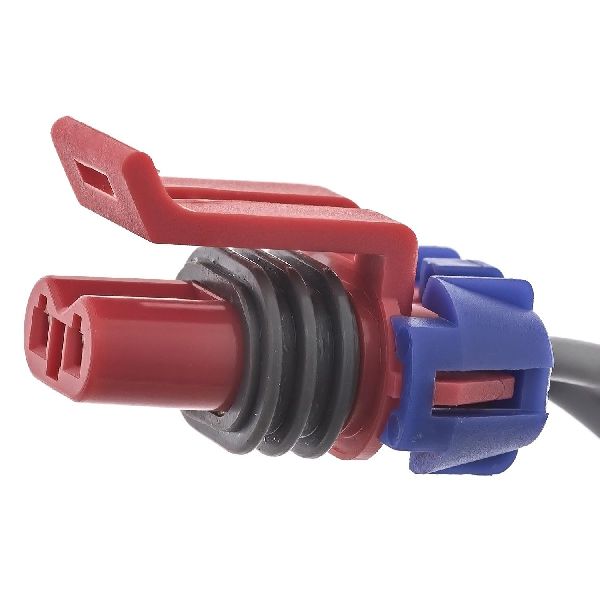
- EVAP Vent Solenoid Connector — At the EVAP vent solenoid, near the spare tire.. This connector and its wiring are highly exposed to road debris and corrosion. One wire is a 12V power feed (often pink), and the other is the control wire (often white) that the ECM grounds to activate the solenoid. A break in either wire will cause a fault.
- Fuel Tank Pressure (FTP) Sensor Connector — On top of the fuel pump module, which is on top of the fuel tank.. The FTP sensor wiring consists of a 5V reference (Gray), a signal wire (Dark Green), and a ground (Black or Tan). Damage to this harness can cause false P0455 codes by sending incorrect pressure readings to the ECM.
- G103 / G104 — G103 is on the front of the passenger side cylinder head. G104 is on the rear of the driver's side cylinder head.. These are primary engine and PCM ground locations. A poor ground connection here can cause erratic behavior from multiple sensors, including those in the EVAP system, leading to false codes.
- G400 / G401 — Located on the rear of the vehicle frame, often behind the left rear tire.. These are the main chassis grounds for the rear of the vehicle. The fuel pump module, FTP sensor, and vent solenoid all rely on a clean ground path. Corrosion at these points is common and can cause intermittent EVAP system faults.
Real Owner Repair Stories
- YouTube user Jose MTZ (2007 Cadillac Escalade ESV) — Check Engine Light with code P0455.
❌ Tried (didn't work) The owner was preparing to do a smoke test, suspecting a complex leak.
✅ What actually fixed it The tether for the gas cap was broken, and upon inspection, the gas cap itself was visibly cracked and broken apart. Replacing the gas cap with a new ACDelco part immediately resolved the issue. - YouTube user Johny Rocket (2007 Cadillac Escalade) — Check Engine Light with P0455.
❌ Tried (didn't work) The owner notes this is the second time the part has failed.
✅ What actually fixed it The owner used a homemade smoke machine to inject smoke into the EVAP system. Smoke was seen pouring out of the EVAP vent solenoid, even when 12V was applied to command it closed. Replacing the faulty EVAP vent solenoid fixed the leak and cleared the code. - Jeep Cherokee Forum (similar GM system principle) (Jeep (principle applies)) — P0455 code.
❌ Tried (didn't work) Initial component checks.
✅ What actually fixed it The owner found a section of the steel EVAP line running from the charcoal canister to the fuel tank was badly rusted and had a hole. This area is exposed to road salt. The leak was found by pressurizing the system with a balloon and listening for the leak, a method that works when a smoke test isn't available. Replacing the rotted steel line with a polyethylene line fixed the code.
"I Checked Everything" — The Actual Cause
- A faulty Fuel Tank Pressure (FTP) sensor can send incorrect data to the ECM, causing it to believe a large leak exists when the system is perfectly sealed. A smoke test would show no leaks, but the code would persist until the sensor is replaced.
- A purge valve that is stuck closed can prevent the EVAP system from pulling a vacuum during its self-test. The ECM may interpret this inability to draw a vacuum as a massive leak, triggering P0455. A standard smoke test with the engine off will not identify this as a leak because the valve is supposed to be closed.
- An internal blockage in an EVAP line, often from charcoal pellets released by a failed canister, can prevent vacuum from reaching the FTP sensor. Similar to a stuck-closed purge valve, this makes the system unable to perform its test, leading to a P0455 code despite no physical leak to the outside atmosphere.
OEM Part Supersession History
ACDelco 214-2149 (or GM 15839552)→ACDelco 23481275 (or GM 22963841)— Updated design for the EVAP Canister Vent Solenoid to improve durability and resistance to water intrusion.
Heads up: The updated solenoid (23481275) has a different electrical connector than the original. When replacing an older style solenoid on a 2007-2008 model with the new part, a wiring harness adapter (GM p/n 19257603) is required.
Model Year Variations Within This Range
- 2003-2006 (GMT800): These models consistently use the earlier style of EVAP vent solenoid (e.g., ACDelco 214-2149) with a rectangular electrical connector. The system is generally simpler.
- 2007-2010 (GMT900): This generation introduced an updated EVAP vent solenoid design around 2009. Early GMT900s (2007-2008) may have the old part, while later models have the new one. Replacing an old part with the new superseded version requires a wiring harness adapter.
Helpful Videos

Used OEM Parts in Stock
New Aftermarket Parts Available


The information in this article is provided for general reference and educational purposes only. Vehicle specifications, procedures, and part compatibility can vary by production date, trim level, and region. Always consult your vehicle's factory service manual and verify part numbers before purchasing or performing repairs. Safety-critical components such as airbags, seat belts, and braking systems should be installed by a qualified professional.
- Cadillac ESCALADE ESV:
- 🎬 Helpful Videos
- 🛍️ Shop This Part
- What's Unique About the 2003-2010 Cadillac ESCALADE ESV
- Diagnostic Flowchart
- Symptoms You May Notice
- Most Likely Causes
- Rare But Worth Checking
- Diagnosis Steps
- Parts You'll Likely Need
- Related Codes That Often Appear With This One
- Technical Service Bulletins (TSBs) & Recalls
- Platform-Specific Known Issues
- Mechanic-Grade Diagnostic Values
- Scan Tool Commands That Help
- Wiring & Ground Locations
- Real Owner Repair Stories
- "I Checked Everything" — The Actual Cause
- OEM Part Supersession History
- Model Year Variations Within This Range
- 🎟️ Get 5% Off