

P0455 on 2002-2009 Cadillac Escalade: EVAP Large Leak Causes and Fixes
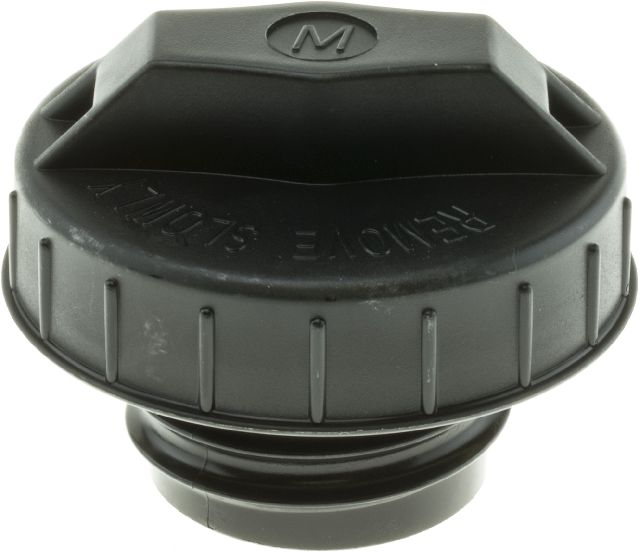
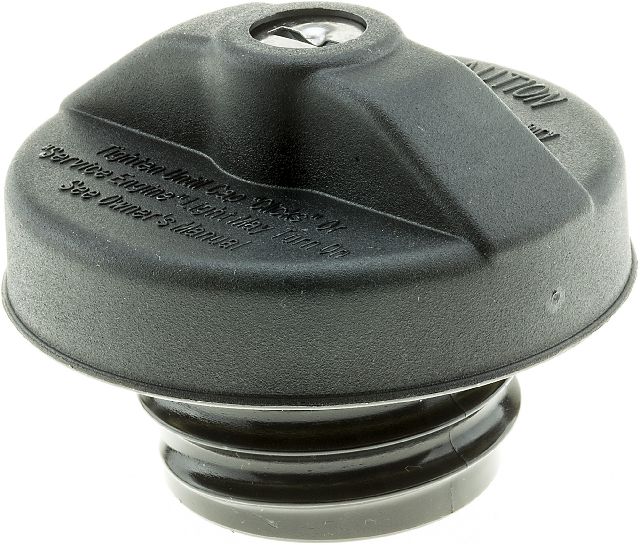
For a 2002-2009 Cadillac Escalade, code P0455 is most often caused by a loose gas cap (check first!) or a failed EVAP vent valve solenoid located near the fuel tank. An OEM replacement gas cap is the ACDelco GT294. The vent valve (e.g., ACDelco 214-2149 for 2004-06 models) is the next likely culprit, costing around $30-$60 for the part.
- P0455 means your Escalade has a large leak in the emissions system designed to control fuel vapors.
- Always check your gas cap first. Make sure it's tight and the seal isn't cracked. This is the cheapest and most common fix.
- If the gas cap is good, the next most likely part to fail is the EVAP vent valve solenoid, located near the spare tire.
- A smoke test is the fastest and most accurate way to find the exact location of the leak.
- You can continue to drive the vehicle, but you will not pass an emissions test until the leak is repaired.
What's Unique About the 2002-2009 Cadillac ESCALADE

On these GMT800 (2002-06) and GMT900 (2007-09) platform trucks, the EVAP components, particularly the vent valve solenoid near the spare tire, are exposed to the elements. This makes them highly susceptible to failure from dirt, moisture, and road debris, leading to P0455 codes more frequently than on other vehicles. While a loose gas cap is always the first suspect, a faulty vent valve is a very common and well-documented point of failure. A popular long-term fix is to install a vent valve relocation kit (like Dorman 911-239) that moves the valve's air filter to a cleaner, more protected location.
Diagnostic Flowchart

Tap your situation to follow the diagnostic path that matches what you're seeing on this vehicle.
Generation note: This guide covers the second generation (2002-2006, GMT800) and the third generation (2007-2009, GMT900) Cadillac Escalade. The EVAP system design and common failure points like the gas cap, vent valve, and purge valve are highly similar across both generations, though some part numbers were updated for the GMT900s.
Symptoms You May Notice

- Check Engine Light is on
- A noticeable smell of gasoline, especially around the rear of the vehicle
- Difficulty filling the fuel tank (the pump nozzle clicks off repeatedly), which can be caused by a stuck-closed vent valve or clogged vent lines.
- In rare cases, a rough idle or difficulty starting immediately after refueling if the purge valve is stuck open, flooding the engine with fuel vapors.
- A 'Tighten Gas Cap' message appearing on the driver information center.
- Replacing the fuel tank pressure sensor before performing a smoke test to find the actual leak.
- Replacing the purge valve (on the engine) when the more common failure point on this platform is the vent valve (under the truck near the tank).
- Repeatedly replacing the vent valve without addressing the root cause, such as a disintegrating charcoal canister sending debris into the new valve or failing to install a relocation kit 🎬 See this walkthrough on replacing the vent valve solenoid. to protect it from contamination.
Most Likely Causes

- Loose, Damaged, or Incorrect Gas Cap 🔴 High Probability This is the most common cause on any vehicle. The seal can wear out over time or the cap may not have been tightened properly after fueling. Many owners have fixed the code simply by replacing a worn-out cap.
How to confirm: Inspect the gas cap for cracks in the plastic or damage to the rubber O-ring seal. Ensure it is tightened until it clicks at least once. An OEM replacement is recommended if the seal is compromised.
Typical fix: Tighten or replace the gas cap. The OEM part is ACDelco GT294.
Est. part cost: $15-$35 - Failed EVAP Vent Valve Solenoid 🔴 High Probability The vent valve is located near the charcoal canister by the spare tire, where it is exposed to road grime and moisture, causing it to fail or get stuck open. This is a very common failure on GM trucks of this era.
How to confirm: A smoke test is the most reliable method; smoke will be seen exiting the valve's vent port. The valve is normally open and should close when commanded by a scan tool or when 12v power is applied to its terminals. A failed valve will often allow smoke to pass through even when commanded closed.
Typical fix: Replace the EVAP vent valve solenoid. The part for 2004-2006 models is often ACDelco 214-2149. Many owners opt to install a relocation kit to prevent future failures.
Est. part cost: $30-$70 - Failed EVAP Purge Valve Solenoid 🟡 Medium Probability This valve, located on the engine's intake manifold, can get stuck open, creating a vacuum leak that the ECM interprets as a large system leak. This failure is notorious for causing hard-starting after refueling.
How to confirm: With the engine off, disconnect the vapor line from the valve and see if you can blow through it. It should be closed. A stuck-open valve will often cause hard starting after refueling and may be accompanied by code P0496. 🎬 Watch: Step-by-step guide to replacing the purge valve solenoid.
Typical fix: Replace the purge valve solenoid.
Est. part cost: $25-$50 - Cracked or Disconnected EVAP Hoses 🟡 Medium Probability Rubber hoses become brittle and crack with age and exposure to heat and cold cycles. Connections, especially at the canister and valves, can also become loose or get damaged.
How to confirm: Perform a visual inspection of all EVAP lines from the engine bay to the fuel tank. A smoke test will quickly reveal leaks from cracked hoses. Pay close attention to the lines connecting to the canister and vent solenoid.
Typical fix: Replace the damaged section of hose.
Est. part cost: $10-$40
Rare But Worth Checking
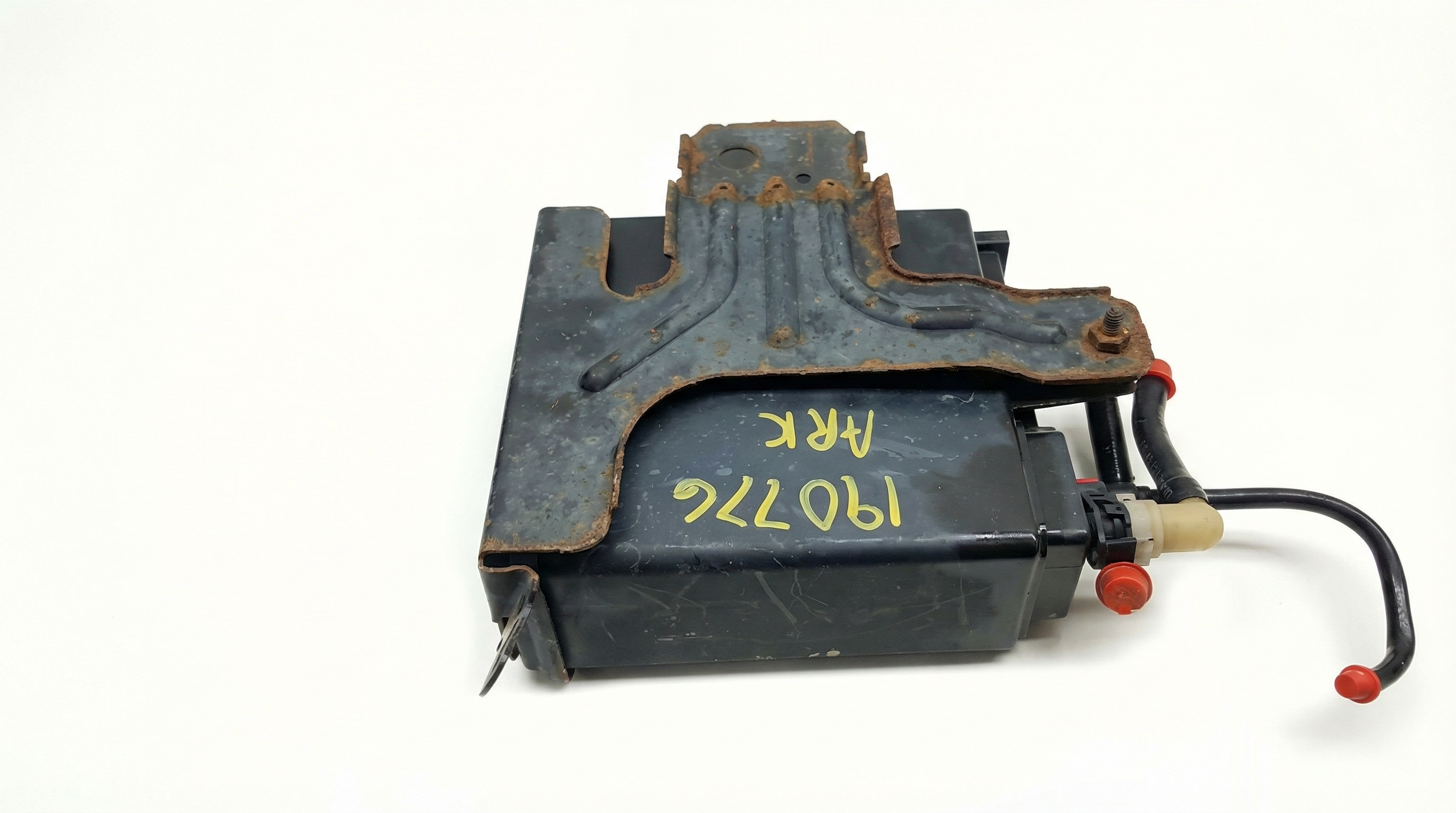
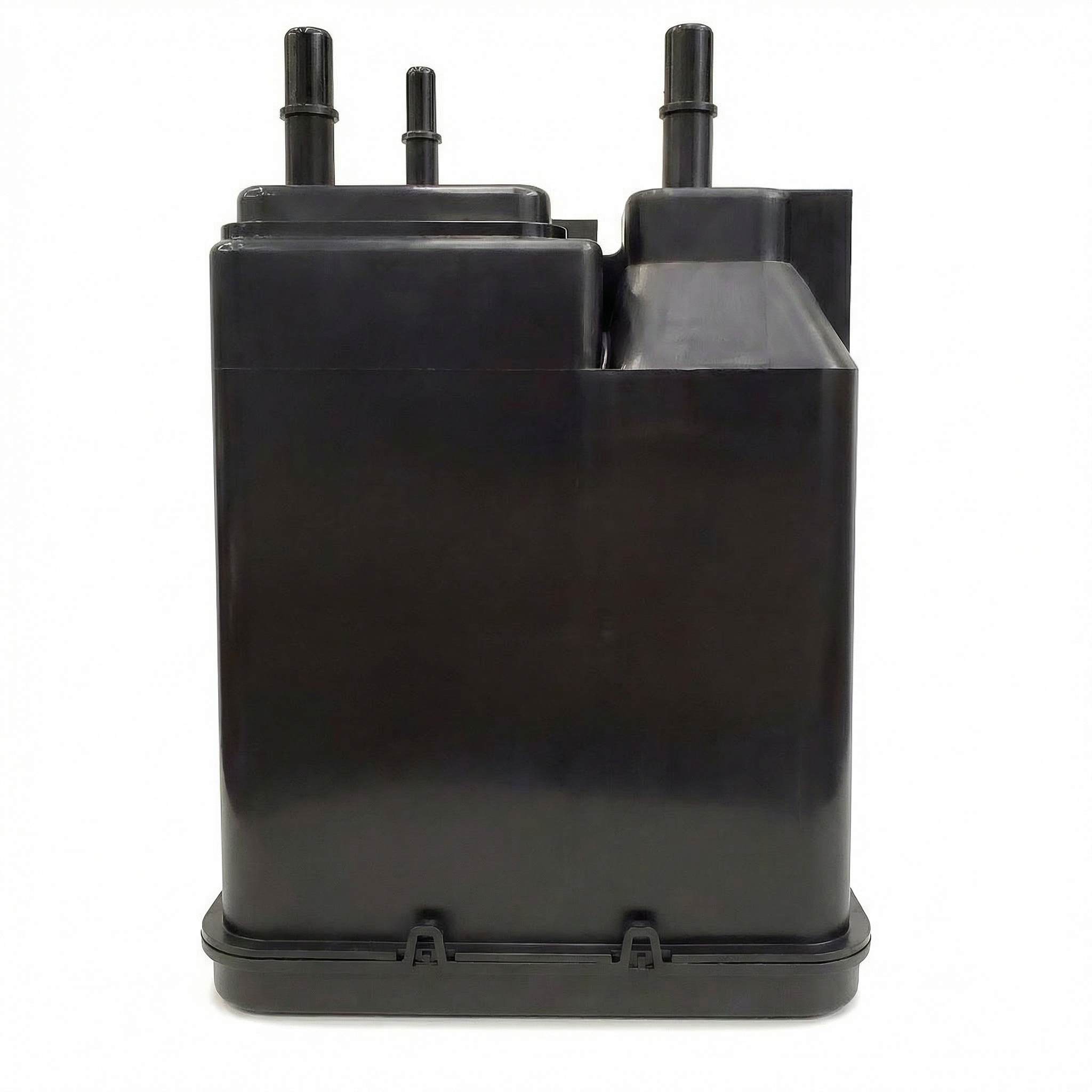
- Cracked Charcoal Canister: The plastic housing of the canister can crack from impact or age. More commonly, the internal charcoal breaks apart, sending pellets into the EVAP lines and clogging the vent solenoid or purge valve, causing persistent and hard-to-diagnose issues.
- Damaged Fuel Filler Neck: Rust or physical damage on the filler neck can prevent the gas cap from creating a proper seal, causing a large leak. This is more common in areas that use road salt. GM issued TSB 15-NA-019 for some 2013-2015 trucks for a fractured filler neck recirculation line connector causing fuel odors and P0455.
- Faulty Fuel Tank Pressure Sensor: While uncommon for P0455 alone, the sensor that monitors system pressure can fail and send incorrect data to the ECM, falsely triggering the code. This usually sets other codes as well and can be difficult to diagnose without a capable scan tool.
Diagnosis Steps
- Check the gas cap. Remove it, inspect the seal for damage, and reinstall it, ensuring it clicks several times. Clear the code and drive for a few days to see if it returns. Many owners report this simple step fixes the issue.
- If the code returns, perform a thorough visual inspection of the EVAP system. Look for any obvious cracks or disconnected hoses, especially around the purge valve on the engine and the vent valve/canister near the spare tire.
- The most effective next step is to perform a smoke test. Introduce smoke into the EVAP service port and look for where it escapes. Common leak points are the vent valve, purge valve, and hose connections. A DIY smoke tester can be made for this purpose. 🎬 Watch: How to build a DIY smoke tester and fix P0455.
- If a smoke machine is not available, you can test the individual components. The vent valve (normally open) is near the tank, and the purge valve (normally closed) is on the engine. Test their operation using a scan tool or by applying 12V power and checking if they actuate correctly.
- Inspect the fuel filler neck for rust or damage that could prevent the gas cap from sealing.
- If no leaks are found, consider the possibility of a failed charcoal canister that may be sending debris into the lines, or a faulty fuel tank pressure sensor, though these are less likely.
Parts You'll Likely Need

- Gas Cap
(OEM #ACDelco GT294)— This is the most common and cheapest fix for P0455. The seal wears out, preventing the system from holding pressure.
Trusted brands: ACDelco, Stant
OEM price range: $20-$35
Aftermarket price range: $15-$25 - EVAP Vent Valve Solenoid
(OEM #ACDelco 214-2149 (fits 2004-2006 GMT800))— A very common failure on GM trucks and SUVs of this era. It gets stuck open due to its location under the truck, causing a large leak.
Trusted brands: ACDelco, Delphi, Dorman, Standard Motor Products
OEM price range: $40-$70
Aftermarket price range: $30-$60 - EVAP Purge Valve Solenoid
(OEM #ACDelco 214-1680 (example, verify by VIN))— Can get stuck open, causing a constant vacuum leak that triggers the code. Often causes hard starting after fueling.
Trusted brands: ACDelco, Bosch, Delphi
OEM price range: $35-$60
Aftermarket price range: $25-$50
Related Codes That Often Appear With This One
- P0442 — P0442 indicates a small EVAP leak. A component that is beginning to fail might first cause a small leak code before it worsens and triggers the large leak code P0455.
- P0449 — P0449 is a specific code for a fault in the EVAP vent valve solenoid control circuit. It often appears with P0455 if the vent valve's electrical circuit has failed, which is a common cause of the leak.
- P0496 — P0496 indicates 'EVAP Flow During a Non-Purge Condition,' which almost always points to a purge valve that is stuck open. This can be interpreted by the system as a large leak, triggering P0455.
Technical Service Bulletins (TSBs) & Recalls
- 21-NA-124: A manufacturer technical service bulletin that provides diagnostic tips for testing EVAP system leaks related to codes P0442 and/or P0455.
- 09-06-04-026: This TSB provides information on identifying non-GM engine calibrations. While not a direct fix, it's part of the standard diagnostic process for dealers to ensure the vehicle's software is correct before troubleshooting other issues.
Platform-Specific Known Issues
- Vent Valve Relocation Kit: Due to the high failure rate of the vent valve from water and dirt intrusion, GM and the aftermarket (e.g., Dorman 911-239) created a service kit. This kit doesn't just replace the valve; it adds a length of hose to move the air intake/filter to a much cleaner, higher location, like inside the frame rail or near the fuel filler neck, drastically increasing the part's lifespan.
- Charcoal Canister Disintegration: A known long-term issue is the charcoal inside the EVAP canister breaking down. These small black pellets can travel through the EVAP lines, clogging the vent and purge solenoids. This can cause recurring P0455 codes even after replacing the valves. The ultimate fix requires replacing the canister and thoroughly blowing out all connected lines to remove the debris.
Mechanic-Grade Diagnostic Values
- EVAP Canister Vent Solenoid Coil Resistance — expected: Approximately 20.2 ohms. Failure: A significantly higher reading (open circuit) or lower reading (short) indicates a failed solenoid coil.
- Conditions for Running DTC P0455 — expected: Ignition voltage: 11-18V; Fuel Level: 10-90%; Barometric Pressure: >74 kPa; Engine Coolant Temp: <35°C (95°F); Intake Air Temp: 4-30°C (39-86°F).. Failure: The self-test will not run if these conditions are not met, which can delay diagnosis.
Scan Tool Commands That Help
- Tech2 / GDS2 or equivalent professional scan tool: EVAP System Test / Vent Solenoid Command — During a smoke test, a technician uses this command to force the normally-open vent valve to close. If smoke still escapes from the vent valve assembly with the valve commanded 'Closed' or 'On' (depending on the tool's terminology), the valve is confirmed to be faulty and leaking.
- Tech2 / GDS2 or equivalent professional scan tool: Purge/Seal — This function seals the entire EVAP system by closing both the vent and purge valves, then allows the technician to monitor the Fuel Tank Pressure (FTP) sensor reading. A rapid drop in vacuum or inability to build vacuum indicates a leak somewhere in the sealed system.
Wiring & Ground Locations
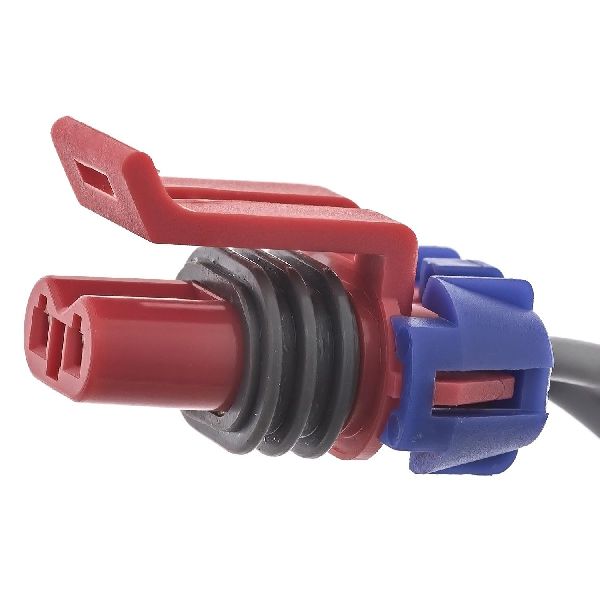
- EVAP Vent Valve Fuse — In the underhood fuse block, labeled 'TCH BATT' (10 Amp) on some GMT900 models.. This fuse supplies power to the vent valve solenoid. If blown, the solenoid cannot be commanded closed, which can cause EVAP test failure and may be accompanied by code P0449.
- G401 — On the left rear body mount.. This is a primary rear-body ground point on GMT900 trucks. A corroded or loose G401 can cause intermittent electrical issues for rear-mounted components, including the EVAP vent solenoid and fuel pump module, potentially leading to incorrect operation and codes.
- G400 — On the left rear body mount (similar to G401).. Another critical rear ground point. Poor grounding can affect the performance of the entire EVAP system located near the fuel tank.
Real Owner Repair Stories
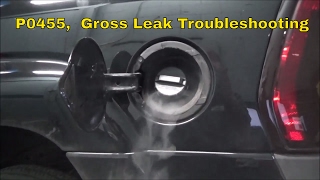
- YouTube video by 'Cadillac Escalade Emissions Gross Leak Repair' (2008 Cadillac Escalade) — Check Engine Light with P0455 (Gross Leak Detected).
❌ Tried (didn't work) The owner had previously replaced the purge valve and the canister vent valve, but the problem returned.
✅ What actually fixed it The owner built a DIY smoke machine and introduced smoke into the system. He commanded the vent valve closed with a battery charger and observed smoke still leaking from the valve's vent port. Replacing the canister vent valve (for a second time) resolved the code. - Tahoe Yukon Forum thread (GM Truck (likely Tahoe/Yukon/Escalade)) — P0455 code and difficulty filling the gas tank (gurgling, pump clicks off).
❌ Tried (didn't work) Replaced gas cap, Replaced charcoal canister, Replaced vapor canister vent valve, Replaced purge solenoid
✅ What actually fixed it The consensus from experienced forum members was that after replacing all those parts, the root cause was charcoal pellets from the original failed canister now clogging the EVAP lines or the fuel tank's FLVV (Fuel Level Vent Valve). The final recommended fix was to drop the fuel tank to thoroughly clean out all lines and inspect the in-tank components. - Reddit post in r/MechanicAdvice (2004 Chevy Colorado (similar GM EVAP system)) — P0455 code after replacing gas cap.
❌ Tried (didn't work) Replacing the gas cap.
✅ What actually fixed it A smoke test was performed while commanding the vent valve closed. No smoke was seen at the canister or gas cap. A borescope revealed smoke leaking from the top of the fuel tank, around the fuel pump module's sealing lock ring. The fix required dropping the tank to replace the fuel pump assembly seal.
"I Checked Everything" — The Actual Cause
- In some cases, a vehicle can pass a smoke test but still set a P0455 code. This can happen if the Fuel Tank Pressure (FTP) sensor is faulty and sending incorrect readings to the ECM, tricking it into thinking there's a leak when there isn't one.
- Another scenario is an intermittent failure of the vent or purge solenoid. The component may function correctly during the test but fail under specific driving conditions. Cycling the valves multiple times with a scan tool during the smoke test can sometimes reveal this.
- If a previous charcoal canister failure occurred, residual charcoal pellets can intermittently block a line or valve, causing a temporary large leak that is not present when the vehicle is stationary for a smoke test. The fix requires dropping the tank and cleaning all lines.
When the Usual Fixes Don't Work
- While replacing the vent valve is a very common fix, it is not always the final solution. In vehicles with high mileage or a history of EVAP issues, the root cause may be a disintegrated charcoal canister. Owners have reported replacing the vent valve multiple times, only for the P0455 code to return. The actual fix in these cases was much more involved: replacing the charcoal canister, the vent valve, and meticulously blowing out all connected EVAP lines with compressed air to clear them of charcoal debris. Failure to clean the lines will cause the new vent valve to become clogged and fail prematurely.
OEM Part Supersession History
Various, e.g., GM 15086429, 19152345→GM 19207762, 19258957, and aftermarket kits like Dorman 911-239— The original vent valve design was highly prone to failure from dirt and water intrusion due to its exposed location.
Heads up: The most important change was the introduction of relocation kits (e.g., Dorman 911-239, GM 19257603). These kits include a new valve, a wiring harness adapter, and a long hose to move the filter/intake to a protected area like the frame rail or behind the tail light. Simply replacing the valve with an old-style part without relocating the filter often leads to repeat failures.
Model Year Variations Within This Range
- 2002-2006 (GMT800): These models typically use EVAP vent valve part numbers like ACDelco 214-2149. The system is slightly different in layout and component specifics compared to the later generation.
- 2007-2009 (GMT900): These models use different part numbers for the vent valve (e.g., Dorman 911-064, ACDelco W0133-2034140). The wiring harness and connectors may also differ. GM issued TSBs like 15-NA-019 for filler neck issues specifically on 2013+ models, but the issue can affect earlier GMT900s.
Helpful Videos
Used OEM Parts in Stock
New Aftermarket Parts Available


The information in this article is provided for general reference and educational purposes only. Vehicle specifications, procedures, and part compatibility can vary by production date, trim level, and region. Always consult your vehicle's factory service manual and verify part numbers before purchasing or performing repairs. Safety-critical components such as airbags, seat belts, and braking systems should be installed by a qualified professional.
- Cadillac ESCALADE:
- 🎬 Helpful Videos
- 🛍️ Shop This Part
- What's Unique About the 2002-2009 Cadillac ESCALADE
- Diagnostic Flowchart
- Symptoms You May Notice
- Most Likely Causes
- Rare But Worth Checking
- Diagnosis Steps
- Parts You'll Likely Need
- Related Codes That Often Appear With This One
- Technical Service Bulletins (TSBs) & Recalls
- Platform-Specific Known Issues
- Mechanic-Grade Diagnostic Values
- Scan Tool Commands That Help
- Wiring & Ground Locations
- Real Owner Repair Stories
- "I Checked Everything" — The Actual Cause
- When the Usual Fixes Don't Work
- OEM Part Supersession History
- Model Year Variations Within This Range
- 🎟️ Get 5% Off