

P0455 on 2011-2018 Buick Regal: EVAP Large Leak Causes and Fixes
On a 2011-2018 Buick Regal, a P0455 code is most often caused by a loose or worn-out gas cap. If tightening or replacing the cap ($10-$25) doesn't fix it, the next most likely culprit is a faulty EVAP Purge Solenoid Valve in the engine bay, a common and relatively inexpensive part to replace. A stuck-closed purge valve can prevent the system from pulling a vacuum during its test, leading the computer to incorrectly assume a large leak exists.
- Always check the gas cap first. It's the most common, cheapest, and easiest fix for P0455.
- If the gas cap isn't the issue, the EVAP purge solenoid in the engine bay is the next most likely culprit and is a straightforward DIY replacement.
- The 2011-2017 models and the 2018 model use different part numbers for the purge solenoid; ensure you buy the correct one for your year.
- A smoke test is the best method to find a leak if the cause is not one of the common components.
- While you can drive with this code, your car will not pass an emissions inspection until it is resolved.
What's Unique About the 2011-2018 Buick REGAL
The Buick Regal from this era shares its Epsilon II platform and EVAP system components with many other General Motors vehicles like the Chevrolet Malibu and Cadillac XTS, which makes parts widely available. However, the most common failure points, aside from the gas cap, are the EVAP purge and vent valves. GM has issued Technical Service Bulletin 21-NA-124 which provides diagnostic tips for P0455 across its vehicle lineup, highlighting the commonality of the issue. The vehicle range also covers two different generations (2011-2017 and 2018+), which use different parts for the same function, so verifying the correct part for your specific year is crucial.
Diagnostic Flowchart
Tap your situation to follow the diagnostic path that matches what you're seeing on this vehicle.
Generation note: This range covers two generations of the Buick Regal. The 2011-2017 models are the fifth generation (sedan) based on the GM Epsilon II platform. The 2018 model year is the sixth generation (Sportback and TourX wagon) on the E2XX platform. While the causes are the same, some parts, like the EVAP purge valve, have different part numbers and locations between generations.
Symptoms You May Notice
- Check Engine Light is on
- A noticeable smell of gasoline, especially around the rear of the car or in a garage.
- A "Tighten Gas Cap" message may appear on the driver information center.
- Slight decrease in fuel economy.
- Inability to use remote start, as some GM vehicles disable this feature when an emissions-related code is present.
- Replacing the charcoal canister when the problem is a much cheaper vent or purge solenoid.
- Replacing EVAP components without first checking for a loose or faulty gas cap.
- Assuming a large leak when the purge valve is actually stuck closed, preventing the EVAP test from running correctly.
Most Likely Causes
- Loose, Damaged, or Incorrect Gas Cap 🔴 High Probability This is the most common cause for a P0455 on any vehicle. The rubber O-ring seal on the cap can dry out, crack, or get dirty over time, preventing a proper seal. Aftermarket or incorrect caps can also cause issues.
How to confirm: Inspect the gas cap for any visible cracks or damage to the seal. Ensure it is tightened until it clicks at least once. Check the fuel filler neck for rust or debris that could prevent a good seal. Some owners suggest applying a thin layer of Vaseline to the seal to see if it temporarily resolves the issue, confirming a bad seal.
Typical fix: Tighten the cap. If the light returns, replace the gas cap. This is an inexpensive and simple first step. After replacement, the code must be cleared with a scan tool or by disconnecting the battery; it will not disappear on its own immediately.
Est. part cost: $10-$25 - Faulty EVAP Purge Solenoid Valve 🟡 Medium Probability This is a very common failure point on many GM vehicles of this era, often causing a P0496 code but also P0455. The valve can become stuck open or, less commonly, stuck closed. A stuck-closed valve prevents the system from pulling a vacuum during the test, which the ECM interprets as a large leak.
How to confirm: The purge valve is located in the engine bay, on top of the engine for the 2.4L. With the engine off, remove the valve and try to blow through it. It is a normally closed valve, so if air passes through, it is stuck open and bad. Alternatively, with a scan tool, you can command the valve to open and close while the engine is running and listen for a clicking sound or feel for vacuum on the canister side.
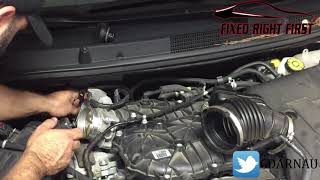
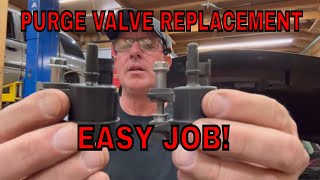
Typical fix: Replacement of the purge solenoid valve. It is typically held by one 10mm bolt and has two hoses and an electrical connector, making it a 5-15 minute DIY job. 🎬 See this Buick purge valve replacement walkthrough
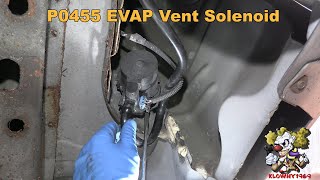
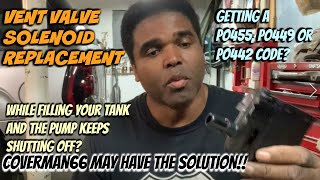
Est. part cost: $20-$75 - Faulty EVAP Vent Solenoid Valve 🟡 Medium Probability Located at the rear of the vehicle near the charcoal canister, this valve is exposed to road grime, moisture, and dust which can cause it to fail or stick open. GM issued TSB 23-NA-073 for vehicles in dusty environments where dust intrusion can plug the vent solenoid and canister.
How to confirm: This valve is normally open and closes when the system performs a leak test. It can be commanded closed with a capable scan tool for testing. A smoke test is the most effective way to confirm a leak at the vent valve. If it fails to close when commanded, it will cause a large leak code.
Typical fix: Replacement of the vent solenoid. Access can be tight, sometimes requiring removal of a wheel well liner. It's typically held by one bolt and has an electrical connector and hose connections.
Est. part cost: $60-$110 - Cracked or Disconnected EVAP Hoses/Lines ⚪ Low Probability Over time, the plastic and rubber hoses in the EVAP system can become brittle and crack, especially any molded elbow joints. A user on a GM forum reported finding a cracked molded elbow hose from the purge solenoid as the root cause.
How to confirm: A thorough visual inspection of all accessible EVAP lines from the engine bay to the charcoal canister in the rear. A smoke test is the definitive method to locate a cracked hose that isn't easily visible.
Typical fix: Replace the damaged section of hose. In some cases, a generic vacuum hose can be used, but molded hoses will require a specific replacement part.
Est. part cost: $5-$50
Rare But Worth Checking
- Cracked EVAP Charcoal Canister: The canister itself can be cracked by road debris or become saturated with fuel if the gas tank is habitually overfilled, which can lead to various EVAP codes.
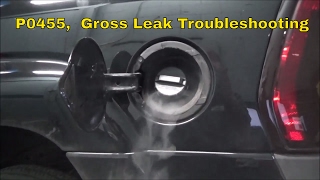
- Leaking Fuel Tank Filler Neck: Rust can perforate the metal filler neck, creating a leak that is large enough to set a P0455 code. This is more common in regions where road salt is used and has been documented on platform-mate vehicles like the Buick Lacrosse and Chevy Malibu. A smoke test is the best way to identify this leak.
- Faulty Fuel Tank Pressure (FTP) Sensor: A faulty sensor can send incorrect readings to the ECM, making it believe a leak exists when one doesn't. This will often, but not always, be accompanied by other FTP sensor-specific codes.
Diagnosis Steps
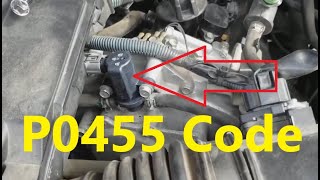
- Read the code with an OBD-II scanner to confirm P0455 is present. 🎬 Watch: Overview of common causes and fixes for P0455
- Inspect the gas cap. Ensure it is tight and clicks. Check the rubber seal for cracks or damage. If in doubt, replace it, clear the codes, and drive for a few days.
- If the code returns, perform a visual inspection of all visible EVAP hoses in the engine bay and under the vehicle, looking for obvious cracks, disconnections, or damage. Pay close attention to molded rubber elbows.
- Locate the EVAP purge solenoid in the engine bay. With the engine off, remove it and try to blow air through it. If air passes, it's stuck open and needs replacement. If it seems okay, use a scan tool to command it on and off with the engine running to verify it clicks and pulls a vacuum.
- If the purge valve is good, the next step is to inspect the vent solenoid near the rear fuel tank/canister. This may require raising the vehicle. Check for damage and verify its operation with a scan tool.
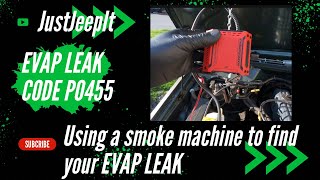
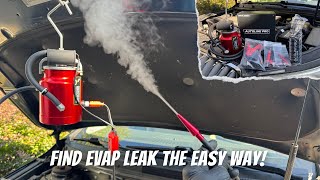
- For a definitive diagnosis of hard-to-find leaks, perform a smoke test. This involves injecting vaporized smoke into the EVAP service port and looking for where it escapes. This is the most effective way to find cracked hoses, a faulty vent valve, a leaking filler neck, or a cracked canister. 🎬 Watch: How to find an EVAP leak with a smoke tester
Parts You'll Likely Need
- Gas Cap
(OEM #95995094)— This is the most frequent and simplest fix for a P0455 code. The seal fails over time.
Trusted brands: ACDelco, Stant
OEM price range: $15-$25
Aftermarket price range: $10-$20 - EVAP Canister Purge Solenoid Valve (5th Gen, 2011-2017)
(OEM #12690512 (may be superseded by 55593172))— A common failure item on GM vehicles of this era. It gets stuck open or closed, causing a large leak or a failed test. Multiple sources confirm this is a common fix for P0496 and P0455.
Trusted brands: ACDelco, Dorman, Standard Motor Products, DIY Solutions
OEM price range: $40-$75
Aftermarket price range: $20-$45 - EVAP Canister Purge Solenoid Valve (6th Gen, 2018)
(OEM #12632174)— This is the equiva
Related Codes That Often Appear With This One
- P0442 — P0442 indicates a small EVAP leak. A component that is beginning to fail might first cause a small leak code before it worsens and triggers the large leak code P0455. The official GM TSB 21-NA-124 for this issue lists both codes together.
- P0449 — This code specifically points to a fault in the EVAP vent solenoid valve circuit, which is a common cause of P0455.
- P0496 — This code indicates 'EVAP Flow During a Non-Purge Condition' and is very commonly caused by a purge valve stuck open on GM vehicles. A stuck-open purge valve is a large leak, which can also trigger P0455.
Technical Service Bulletins (TSBs) & Recalls
- 21-NA-124
- 23-NA-073
Platform-Specific Known Issues
- GM TSB 21-NA-124: General Motors issued Technical Service Bulletin #21-NA-124, which provides diagnostic tips for technicians on finding EVAP leaks that cause DTCs P0442 and P0455. It suggests checking connections, then the vent valve for being stuck open, and finally the purge valve.
- Owner Experience: Cracked Purge Solenoid Hose: A user on GM-Forum.com with a P0455 code found the issue to be a small, cracked molded elbow hose connected to the purge solenoid. They repaired it with a new hose from an auto parts store, which solved the problem. This highlights the need to inspect hoses carefully, not just the major components.
- Owner Experience: Multiple Parts Replaced: On a Buick forums thread, a user with a P0455 that appeared after the car sat for two years had already replaced the purge valve and tried a different gas cap to no avail. Their next step was to locate and test the vent valve solenoid, illustrating the common diagnostic progression.
- GM TSB 23-NA-073: For vehicles operated in extremely dusty environments, GM released a bulletin mentioning that dust can intrude and plug the EVAP canister and vent solenoid, leading to codes like P0455. The fix involves retrofitting a filter assembly, though this is noted as a customer-pay alteration, not a warranty repair.
Mechanic-Grade Diagnostic Values
- Fuel Tank Pressure (FTP) Sensor Voltage during scan tool EVAP test — expected: Should increase to > 3.2 V. Failure: If voltage does not reach 3.2 V, it may indicate a large leak, a blockage in the purge line, or a faulty FTP sensor.
- Fuel Tank Pressure (FTP) Sensor Voltage at rest (system equalized) — expected: ~1.5 V (representing atmospheric pressure). Failure: A reading significantly different from 1.5V with the gas cap off may indicate a biased or faulty sensor.
- EVAP Canister Purge Valve Solenoid Resistance — expected: 30 - 38 Ohms (General Spec). Failure: A reading far outside this range suggests a faulty solenoid coil.
- EVAP Canister Vent Solenoid Resistance — expected: 48 - 65 Ohms (General Spec). Failure: A reading far outside this range suggests a faulty solenoid coil.
Hidden / Shadow Codes Worth Checking
- Diagnostic Pre-Requisites: The ECM will not run the P0455 large leak test if numerous other codes related to critical sensors (MAF, MAP, TPS, ECT, IAT, FTP, VSS) are already present. For example, codes P0107 (MAP Sensor Low), P0452 (FTP Sensor Low), or P0443 (Purge Solenoid Circuit) will inhibit the test. A technician must clear these primary faults before diagnosing P0455. (see via Visible with any standard OBD-II scanner. The service manual lists over 30 prerequisite codes.)
Scan Tool Commands That Help
- GDS2 / Tech2 (or equivalent professional scanner): EVAP System Seal / Unseal — Used to command the EVAP vent valve closed to seal the system for a smoke test or to manually check if the vent valve is functioning.
- GDS2 / Tech2 (or equivalent professional scanner): EVAP Purge Solenoid Valve Control (%) — Used to command the purge valve ON (open) while the engine is running to check for vacuum pull from the engine, or to check if the valve is clicking. This helps determine if the valve is stuck or if the control circuit is working.
- GDS2 / Tech2 (or equivalent professional scanner): EVAP Service Bay Test — This is an automated function that runs the vehicle's own EVAP leak test on command, allowing a technician to monitor FTP sensor data in real-time to see if the system can pull and hold a vacuum, which can quickly confirm or deny a leak.
Wiring & Ground Locations
- Instrument Panel Fuse Block — Located in the dashboard, behind the storage compartment to the left of the steering wheel (2011-2017 models).. Contains fuses that may supply power to the Engine Control Module (ECM), which controls the EVAP system. An electrical issue could originate here.
- G103 — Located on the cowl at the left rear of the engine compartment, above the brake booster.. This is a major ground point for the Body Control Module (BCM), Instrument Panel Cluster (IPC), and Data Link Connector (DLC). While not a direct ground for an EVAP solenoid, a poor connection here can cause a wide range of bizarre electrical issues and communication problems that could interfere with proper diagnosis.
Real Owner Repair Stories
- Jeep Cherokee Forum (analogous repair) (Jeep Cherokee (salt-belt region)) — Persistent P0455 code after replacing other components.
❌ Tried (didn't work) Gas cap replacement, Purge valve check
✅ What actually fixed it The steel EVAP line running from the charcoal canister toward the fuel tank was badly rusted and had perforated, causing a large leak. The owner replaced the rotted steel section with polyethylene tubing to resolve the code. This is a plausible cause on a Regal in a rust-belt state.
"I Checked Everything" — The Actual Cause
- A P0455 can occur even if a smoke test shows no leaks. The ECM triggers the code when it fails to pull the EVAP system into a vacuum within a set time. This can be caused by a blockage in the purge line (e.g., clogged charcoal canister, pinched hose) or a stuck-closed purge valve, which prevents engine vacuum from entering the system for the test. It can also be caused by a faulty Fuel Tank Pressure (FTP) sensor that doesn't correctly report the changing vacuum to the ECM.
OEM Part Supersession History
12610560→12661763, then 12690512, then 12737252— Standard part evolution and design updates by the manufacturer for the 5th Gen (2011-2017) EVAP Purge Solenoid Valve.
Heads up: The latest part number, 12737252, is the current correct service replacement for the previous versions.
Model Year Variations Within This Range
- 2011-2017 vs 2018: The vehicle platform changed from Epsilon II to E2XX in 2018. This means key EVAP components like the purge solenoid valve and vapor canister have different designs and part numbers. The purge valve on the 5th Gen 2.4L is easily accessible on top of the engine, while the location on 6th Gen engines may differ.
Helpful Videos


We Have This Part in Stock

The information in this article is provided for general reference and educational purposes only. Vehicle specifications, procedures, and part compatibility can vary by production date, trim level, and region. Always consult your vehicle's factory service manual and verify part numbers before purchasing or performing repairs. Safety-critical components such as airbags, seat belts, and braking systems should be installed by a qualified professional.
- Buick REGAL:
- 🎬 Helpful Videos
- 🛍️ Shop This Part
- What's Unique About the 2011-2018 Buick REGAL
- Diagnostic Flowchart
- Symptoms You May Notice
- Most Likely Causes
- Rare But Worth Checking
- Diagnosis Steps
- Parts You'll Likely Need
- Related Codes That Often Appear With This One
- Technical Service Bulletins (TSBs) & Recalls
- Platform-Specific Known Issues
- Mechanic-Grade Diagnostic Values
- Hidden / Shadow Codes Worth Checking
- Scan Tool Commands That Help
- Wiring & Ground Locations
- Real Owner Repair Stories
- "I Checked Everything" — The Actual Cause
- OEM Part Supersession History
- Model Year Variations Within This Range
- 🎟️ Get 5% Off