

P0455 on 2005-2012 Buick LaCrosse: EVAP Large Leak Causes and Fixes
For a P0455 code on a 2005-2012 Buick LaCrosse, the most common cause is a loose or faulty gas cap. If that's not the issue, the next most likely culprit is a failed EVAP vent solenoid located near the gas tank. On first-generation (2005-2009) models, this is an easy fix under the car. On second-generation (2010+) models, the fuel tank may need to be dropped for access. A new gas cap costs $15-$30, while a vent solenoid is about $40-$80.
- P0455 means your car has a large leak in the emissions system, but it is safe to drive.
- Always check your gas cap first. Make sure it's tight and the seal is intact. Replacing it is a cheap and easy first step.
- If the gas cap isn't the problem, the EVAP vent solenoid (near the gas tank) is the next most likely part to have failed on your LaCrosse.
- Other possibilities include the purge valve in the engine bay or a cracked hose, which is best found with a smoke test.
- You will not be able to pass an emissions test until this code is resolved.
What's Unique About the 2005-2012 Buick LACROSSE

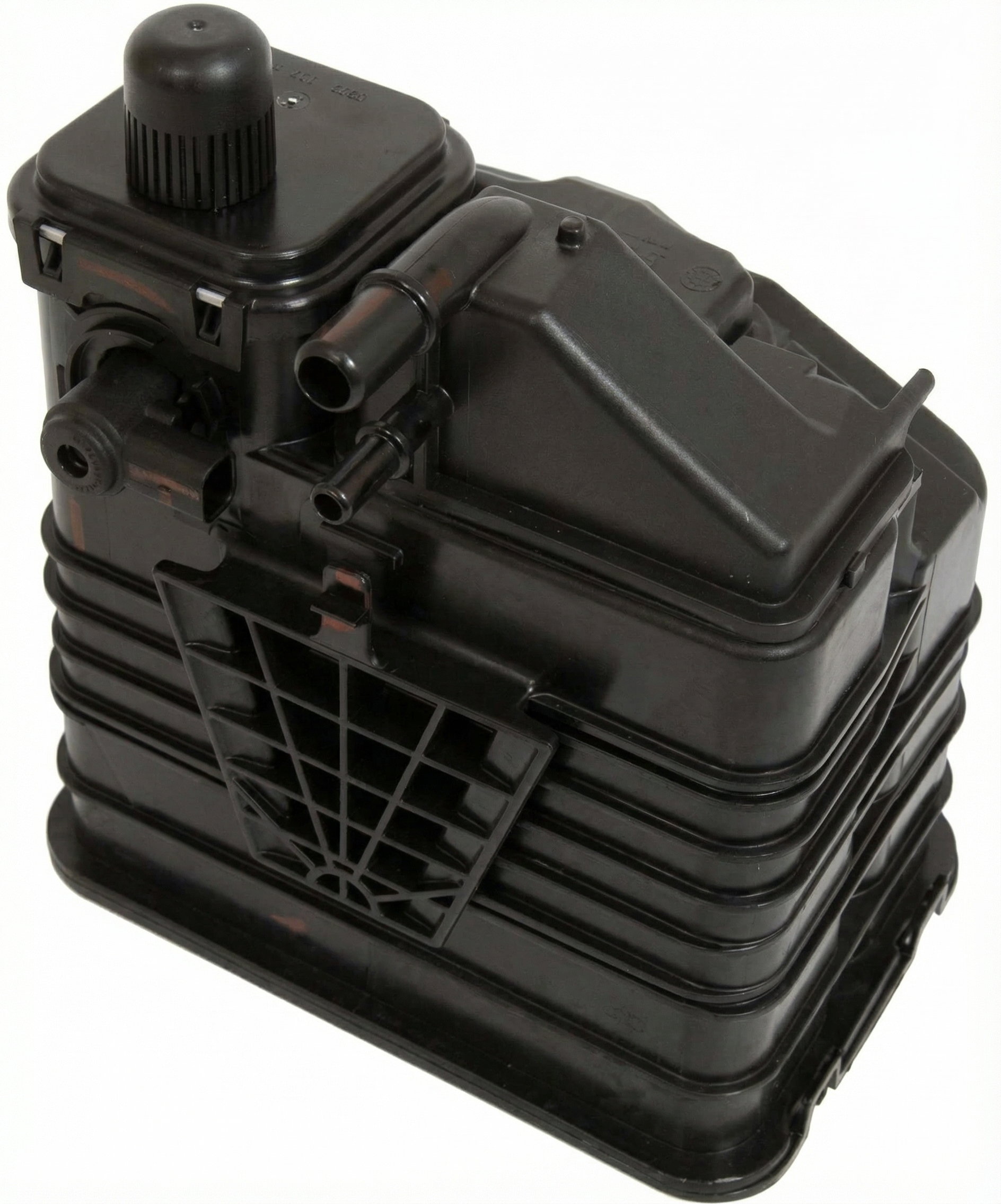
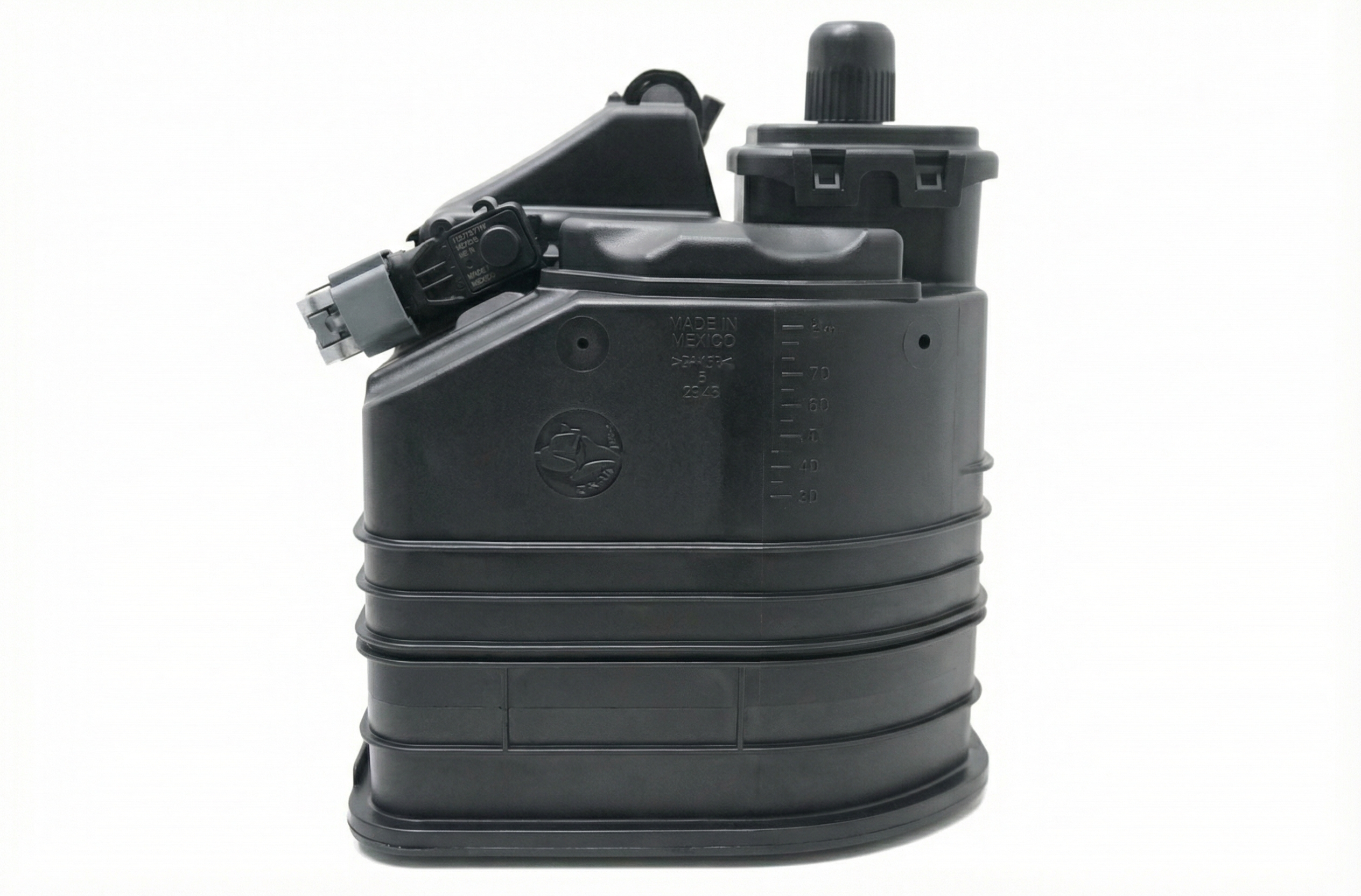
On this generation of GM vehicles, including the LaCrosse, the EVAP vent solenoid is a notoriously common failure point. This part is located at the rear of the vehicle near the charcoal canister and is exposed to road debris and moisture, which can cause it to get stuck open and trigger a P0455 code. A GM technical service bulletin acknowledges that operation in dusty environments can cause dust intrusion that plugs the canister and vent solenoid, leading to this code. While the gas cap is always the first check, many owners of these cars will eventually face a failing vent solenoid.
Diagnostic Flowchart

Tap your situation to follow the diagnostic path that matches what you're seeing on this vehicle.
Generation note: This year range covers two generations of the LaCrosse: the first (2005-2009, W-body platform) and the beginning of the second (2010-2012, Epsilon II platform). While EVAP components are similar, their locations and part numbers differ. For the first-gen, the EVAP vent solenoid is easily accessible under the rear of the car. For the second-gen, some owner and mechanic reports indicate the fuel tank must be dropped to access the vent solenoid, making the repair significantly more involved. Always verify the correct part and procedure for your specific year.
Symptoms You May Notice
- Check Engine Light is on
- A noticeable smell of fuel, especially around the rear of the car or in the garage overnight.
- Difficulty filling the gas tank (pump clicks off repeatedly), which can indicate a malfunctioning or stuck-closed vent valve.
- A "Tighten Gas Cap" message on the driver information center, which may appear before the Check Engine Light.
- The vehicle will fail an emissions inspection.
- Replacing the purge valve in the engine bay when the more common failure is the vent solenoid at the rear of the car.
- Replacing the entire charcoal canister when only the attached vent solenoid has failed.
- Repeatedly replacing the gas cap when the leak is elsewhere, such as a cracked hose or faulty valve.
Most Likely Causes

- Loose, Damaged, or Incorrect Gas Cap 🔴 High Probability This is the most common cause for a P0455 on any vehicle. The rubber seal on the cap can wear out, or the cap may not have been tightened properly. Aftermarket gas caps are also a frequent source of leaks if they don't seal as well as the OEM design.
How to confirm: Ensure the gas cap is tightened until it clicks at least once. Inspect the rubber O-ring for cracks or damage. Check that no part of the tether is caught under the seal. If the seal is worn or the cap is suspect, it's the first part to replace.
Typical fix: Replace the gas cap. This is an inexpensive and simple first step. Clear the code and drive for a few days to see if it returns.
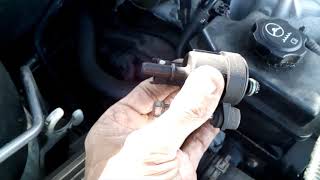
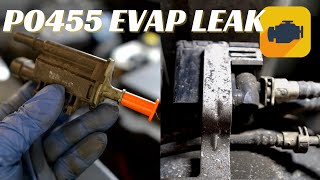
Est. part cost: $15-$30 - Failed EVAP Vent Solenoid (Canister Vent Valve) 🔴 High Probability This is a very common failure on GM vehicles of this era. The solenoid is located under the car near the charcoal canister, where it is exposed to the elements and can get stuck open from dirt and corrosion. A YouTube video specifically shows this repair on a 2006 Buick LaCrosse 3.8L. 🎬 Watch: How to fix common GM EVAP vent solenoid issues.
How to confirm: The valve is located at the rear of the car, near the EVAP canister. A mechanic can command it closed with a scan tool during a smoke test to see if it's sealing. Sometimes, tapping it can temporarily unstick it. On many GM vehicles, a P0449 code will appear along with P0455, pointing directly to this part.
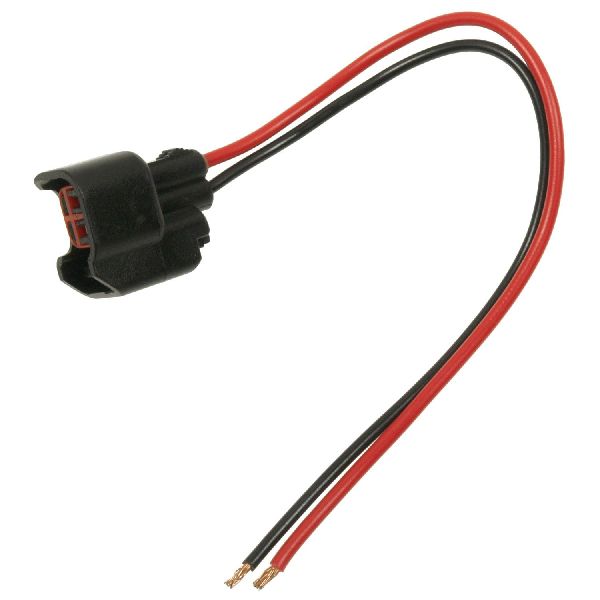
Typical fix: Replacement of the vent solenoid. On Gen 1 models (2005-2009), this is a simple DIY job. On Gen 2 models (2010+), the fuel tank may need to be dropped. Some replacement parts are redesigned and may require a wiring harness adapter (e.g., ACDelco 19257603 for some Gen 1 models).
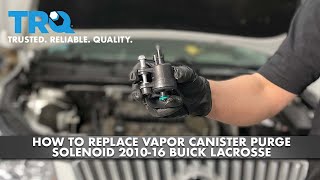
Est. part cost: $40-$80 - Failed EVAP Purge Valve (Purge Solenoid) 🟡 Medium Probability This valve, located in the engine bay, can fail and stick open, creating a direct path from the fuel tank vapors to the engine intake, which the computer sees as a large leak. This can also trigger code P0496. 🎬 See how to locate and replace the 3.6L purge solenoid.
How to confirm: Remove the valve (it's usually on or near the engine intake manifold). With the valve disconnected from power, try to blow through it. If air passes through, it is stuck open and has failed. A mechanic can also command it closed with a scan tool and check if it's holding vacuum.
Typical fix: Replace the purge valve. On the 3.6L V6, it is recommended to use an OEM part, as aftermarket replacements are known to fail quickly.
Est. part cost: $25-$70 - Cracked or Disconnected EVAP Hoses ⚪ Low Probability Over time, rubber and plastic hoses can become brittle and crack. A specific failure noted by an owner was a small, molded elbow hose connected to the purge solenoid splitting open.
How to confirm: A visual inspection may reveal an obvious crack or disconnected line, particularly around the purge solenoid in the engine bay or the vent solenoid/canister at the rear. The most definitive method is a smoke test, which fills the system with vaporized smoke and makes even small leaks visible.
Typical fix: Replace the damaged section of hose or re-secure the connection.
Est. part cost: $10-$50
Rare But Worth Checking
- Cracked Charcoal Canister: The canister itself can develop a crack from road debris or physical damage, creating a large leak. This is less common than sensor or valve failure but should be considered if other components check out.
- Damaged Fuel Filler Neck: Rust or damage on the fuel filler neck can prevent the gas cap from creating a proper seal, even if the cap itself is new. A visual and physical inspection of the neck where the cap seals is recommended.
Diagnosis Steps
- Check the Gas Cap: Remove and reinstall the gas cap, ensuring it clicks several times. Inspect the cap's seal for any cracks or signs of wear. If it's old, damaged, or an ill-fitting aftermarket cap, replace it with an OEM-spec cap. Clear the code and drive for a few days to see if it returns.
- Visual Inspection: Look over the EVAP hoses in the engine bay, especially the small molded hose near the purge solenoid, for cracks. Also inspect lines around the gas tank and charcoal canister for any obvious breaks or disconnections.
- Inspect the Purge Valve: Locate the purge valve in the engine bay. Disconnect it and try to blow through it. If air passes, the valve is stuck open and needs to be replaced.
- Inspect the Vent Solenoid: Locate the vent solenoid near the charcoal canister at the rear of the vehicle. Check its electrical connector and hoses. This is a very common failure point. Remember the access procedure differs by generation.
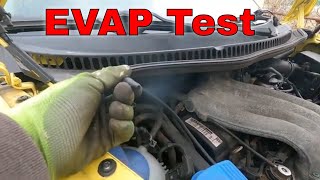
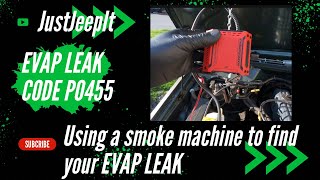
- Perform a Smoke Test: If the leak is not obvious, the most effective diagnostic step is a smoke test. A machine injects harmless, visible smoke into the EVAP system via the service port. The leak will be wherever the smoke escapes. 🎬 Watch: How to find a large leak using a smoke tester. This is the best way to find cracked hoses, a faulty canister, or a leaking fuel filler neck.
Parts You'll Likely Need

- Fuel Cap
(OEM #ACDelco GT284 (fits many 2005-2009 models))— This is the most frequent and simplest fix for a P0455 code. The seal wears out over time, causing a large leak.
Trusted brands: ACDelco, Stant
OEM price range: $20-$35
Aftermarket price range: $15-$25 - EVAP Canister Vent Solenoid
(OEM #ACDelco 214-2324 (Gen 1, 2005-2006), ACDelco 84524035 (Gen 2, 2010-2011))— A very common failure point on this platform. It gets stuck open from dirt and debris, preventing the system from sealing for its self-test.
Trusted brands: ACDelco, Dorman, GM Genuine Parts
OEM price range: $60-$100
Aftermarket price range: $40-$80 - EVAP Canister Purge Valve
(OEM #ACDelco 214-1105 (Gen 1, 3.8L, 2005), ACDelco 12690512 (Gen 2, 3.6L))— Located in the engine bay, this valve can stick open, causing a constant leak that will trigger the P0455 code.
Trusted brands: ACDelco, Bosch, Duralast
OEM price range: $50-$80
Aftermarket price range: $25-$70
Related Codes That Often Appear With This One
- P0442 — P0442 is for a small EVAP leak. You might see this code alongside P0455 if the leak is intermittent or on the borderline between small and large. The GM TSB #21-NA-124 specifically provides diagnostic tips for both codes together.
- P0449 — This code specifically points to a malfunction in the EVAP vent solenoid circuit. If you have P0455 and P0449 together, it's a very strong indication that the vent solenoid or its wiring is the problem.
- P0496 — This code indicates an 'EVAP Flow During a Non-Purge Condition,' which almost always means the purge valve solenoid in the engine bay is stuck open. This can sometimes be interpreted by the ECM as a large leak, triggering P0455 as well.
Technical Service Bulletins (TSBs) & Recalls
- 21-NA-124: A manufacturer TSB providing diagnostic tips for P0442 and P0455. It advises a specific diagnostic order: 1) Inspect all EVAP line connections for proper seating. 2) Inspect lines for damage. 3) Investigate vent valve function. 4) Investigate purge valve function.
- GM Bulletin 'TECHNICAL' (Sept 2023): Notes that vehicles operated in extremely dusty environments can experience dust intrusion into the EVAP system, which can plug the canister and vent solenoid, setting DTCs P0442, P0446, P0455, or P0449.
Platform-Specific Known Issues

- Vent Solenoid Access Varies by Generation: On the first-generation LaCrosse (2005-2009), the vent solenoid is mounted near the charcoal canister and is easily replaced from under the car. On the second-generation (2010-2012), the solenoid may be located in a position that requires lowering or completely dropping the fuel tank for access, making the repair much more difficult.
- Cracked Purge Solenoid Elbow Hose: One owner on a GM forum solved their P0455 code by finding a small, cracked, molded elbow hose right at the purge solenoid in the engine bay. This can be a hard-to-see leak that a smoke test would easily identify.
Scan Tool Commands That Help
- Tech 2 / GDS2: EVAP Purge/Seal — This function commands the purge solenoid ON and the vent solenoid OFF to apply engine vacuum to the EVAP system. The technician can then monitor the Fuel Tank Pressure (FTP) sensor to see if the system holds a vacuum, verifying the integrity of the seals and valves.
- Tech 2 / GDS2: EVAP Canister Vent Solenoid Valve ON/OFF — This bidirectional control allows a technician to manually cycle the vent solenoid. It's used during a smoke test to confirm if the valve is sealing properly when commanded closed or if it's stuck.
- Tech 2: EVAP System Bay Test — This is an automated test that runs the complete EVAP monitor procedure on demand, rather than waiting for the vehicle's drive cycle conditions to be met. It can be used to verify a repair has been successful. Note that GM removed this function for some model years due to accuracy issues, so its availability may vary.
Wiring & Ground Locations
- G101 — Located at the left front of the engine, on the lower block.. This is a primary ground location for the Engine Control Module (ECM). A poor connection at G101 could cause erratic behavior from the ECM, potentially affecting the control and monitoring of the EVAP system components it commands, such as the purge and vent solenoids.
Real Owner Repair Stories
- YouTube video from 'Normal Guy DIY' (GM Vehicle (similar platform/issue)) — P0455 Large EVAP Leak code was present.
❌ Tried (didn't work) The purge solenoid was commanded ON with a scan tool, but no vacuum was being pulled into the system, suggesting a large leak or a blockage.
✅ What actually fixed it The purge solenoid was mechanically stuck closed. While commanded ON by the scan tool, whacking it with a screwdriver handle unstuck the valve, and it immediately began pulling vacuum. The ultimate fix was replacing the faulty purge solenoid.
"I Checked Everything" — The Actual Cause
- A P0455 can set even with no physical leak if the EVAP purge solenoid is mechanically stuck closed. The ECM commands the purge valve to open to draw a vacuum on the tank for the test. If the valve fails to open (even with no electrical fault), no vacuum is generated. The ECM interprets this lack of vacuum change as a massive leak, since it assumes the valve opened as commanded.
OEM Part Supersession History
12690512→12737252— Standard part evolution and potential design improvements.
Heads up: Part 12690512 also replaces previous numbers 12610560 and 12661763.ACDelco 214-2324 (Vent Solenoid)→N/A, but requires adapter in some cases— Design change in the solenoid or vehicle harness.
Heads up: For some first-design vehicles, replacing the original vent solenoid with the second-design part (214-2324) requires ordering and installing a separate wiring harness adapter, GM part #19257603.
Helpful Videos

Used OEM Parts in Stock

New Aftermarket Parts Available


The information in this article is provided for general reference and educational purposes only. Vehicle specifications, procedures, and part compatibility can vary by production date, trim level, and region. Always consult your vehicle's factory service manual and verify part numbers before purchasing or performing repairs. Safety-critical components such as airbags, seat belts, and braking systems should be installed by a qualified professional.
- Buick LACROSSE:
- 🎬 Helpful Videos
- 🛍️ Shop This Part
- What's Unique About the 2005-2012 Buick LACROSSE
- Diagnostic Flowchart
- Symptoms You May Notice
- Most Likely Causes
- Rare But Worth Checking
- Diagnosis Steps
- Parts You'll Likely Need
- Related Codes That Often Appear With This One
- Technical Service Bulletins (TSBs) & Recalls
- Platform-Specific Known Issues
- Scan Tool Commands That Help
- Wiring & Ground Locations
- Real Owner Repair Stories
- "I Checked Everything" — The Actual Cause
- OEM Part Supersession History
- 🎟️ Get 5% Off