

P0455 on 2020-2023 Buick Encore GX: EVAP Large Leak Causes and Fixes
On a 2020-2023 Buick Encore GX, code P0455 most often means you have a large leak in the evaporative emissions (EVAP) system. Before buying parts, inspect the capless fuel filler for debris or damage. If the light returns, the next most likely cause is a faulty EVAP purge valve, which is a relatively inexpensive and accessible part to replace.
- P0455 on your Encore GX means the emissions system has a large leak.
- Always check your gas cap first; make sure it is tight and the seal is not cracked. This is the most common and cheapest fix.
- If the gas cap is not the issue, the EVAP purge valve (solenoid) on the engine is the next most likely part to have failed.
- Driving with this code is not dangerous, but it will cause you to fail an emissions test.
- If the problem isn't the gas cap or purge valve, a smoke test is the best way to find the leak.
What's Unique About the 2020-2023 Buick ENCORE GX
While P0455 is a generic code, the 2020-2023 Encore GX features a capless fuel filler system, which can be a specific point of failure not present on older vehicles with traditional gas caps. Debris in the filler neck or a faulty sealing flap can cause a large leak. Additionally, General Motors has issued a Technical Service Bulletin (TSB #21-NA-124) that covers the 2020-2023 Encore GX for this code, providing dealers with a specific diagnostic hierarchy: check lines and connections first, then the vent valve, and finally the purge valve.
Diagnostic Flowchart
Tap your situation to follow the diagnostic path that matches what you're seeing on this vehicle.
Symptoms You May Notice
- Check Engine Light is on
- A noticeable fuel smell, especially around the rear of the vehicle or near the fuel filler door
- Slightly reduced fuel economy
- Vehicle will fail an emissions inspection
- Difficulty starting the engine immediately after refueling (if the purge valve is stuck open)
- Replacing the fuel tank pressure sensor. While a faulty sensor can cause other EVAP codes, it is not a common cause for a P0455 large leak code.
Most Likely Causes
- Faulty or Debris-Filled Capless Fuel Filler 🔴 High Probability This is the most common cause for P0455 on any modern vehicle with a capless system. The spring-loaded flap and its seal are exposed to dirt and debris, which can prevent it from closing and sealing properly.
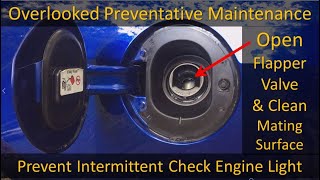
How to confirm: Open the fuel filler door and visually inspect the opening for any dirt, spider webs, or debris that could be holding the flap open. Use a clean rag to wipe the sealing surface. 🎬 Watch: How to clean your capless filler neck and seal. Check the flap for smooth operation. Clear the code and drive for a few days to see if it returns.
Typical fix: Clean the fuel filler neck opening. If the internal seal or spring mechanism is damaged, the entire fuel filler neck assembly may need to be replaced.
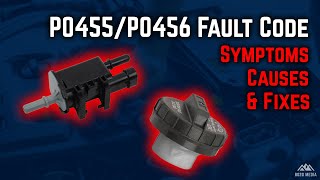
Est. part cost: $0 (for cleaning) - $150 (for filler neck assembly) - Faulty EVAP Purge Valve (Solenoid) 🟡 Medium Probability The purge valve is a very common failure point on many GM vehicles. It can get stuck open, creating a constant vacuum leak that the ECM interprets as a large system leak. This part is shared across many GM models with the 1.2L and 1.3L turbo engines.
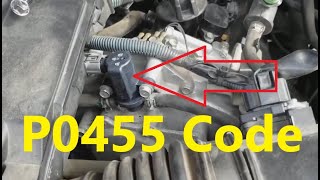
How to confirm: The purge valve is located on the engine. With the engine idling, disconnect the EVAP line running to the valve from the charcoal canister and feel for suction with your finger. There should be no vacuum at idle. If suction is present, the valve is stuck open and must be replaced.
Typical fix: Replace the EVAP purge valve. The part number for the 1.2L/1.3L engine is confirmed as GM P/N 12666845.
Est. part cost: $25-$70 - Cracked or Disconnected EVAP Hose 🟡 Medium Probability Hoses can become brittle and crack over time due to heat and age, or they can be disconnected or improperly seated during other service work. TSB 21-NA-124 specifically calls out checking for unseated tube connections as a primary step.
How to confirm: Visually inspect all accessible EVAP hoses between the charcoal canister (near the fuel tank), the purge valve (on the engine), and the fuel tank. Pay close attention to the connection points. A smoke test is the most effective way to find a leak 🎬 Watch: How to diagnose and fix common EVAP leak causes. that isn't visually obvious.
Typical fix: Replace the cracked hose or reconnect the loose fitting.
Est. part cost: $10-$50 - Faulty EVAP Vent Valve (Solenoid) ⚪ Low Probability The vent valve, typically located near the charcoal canister, is normally open and closes when the system runs a leak test. If it fails to close (gets stuck open), the system cannot seal and will report a large leak. TSB 21-NA-124 lists this as a potential cause after checking lines.
How to confirm: This valve can be tested with a bi-directional scan tool to command it closed. A smoke test will quickly reveal if the vent valve is stuck open, as smoke will exit the valve's vent port.
Typical fix: Replace the vent valve. On many modern GM vehicles, this valve is integrated into the charcoal canister assembly, requiring replacement of the entire canister.
Est. part cost: $40-$150
Rare But Worth Checking
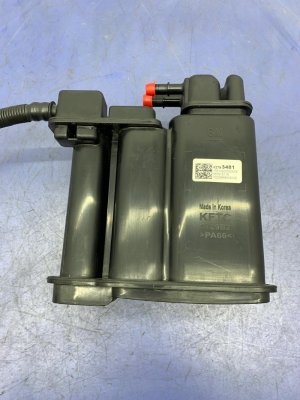
- Cracked EVAP (Charcoal) Canister: The canister itself, a black plastic box usually located near the fuel tank, can be damaged by road debris, leading to a large crack and a P0455 code. Inspect it for any visible damage if other causes are ruled out.
- Stuck-Closed Purge Valve: According to TSB 21-NA-124, a purge valve that is stuck closed can cause a P0455 code. The system interprets the inability to pull a vacuum during the test as a large leak, even though it's actually a blockage.
Diagnosis Steps
- Confirm the P0455 code is present using an OBD-II scanner.
- Inspect the capless fuel filler system. Open the fuel door and carefully clean the sealing area and the flap inside the filler neck, removing any visible debris.
- Clear the code and drive for a few days. If the code does not return, the issue was debris in the filler neck.
- If the code returns, perform a visual inspection of the EVAP purge valve (GM P/N 12666845) and its hoses in the engine bay for obvious cracks or loose connections.
- Follow the diagnostic hierarchy from TSB 21-NA-124: Visually inspect all EVAP lines and connections between the engine and fuel tank, ensuring they are fully seated.
- Test the purge valve. With the engine running at idle, disconnect the hose from the canister side of the valve and check for vacuum. If there is suction, the valve is stuck open and must be replaced.
- If no obvious faults are found, the next step is to test the EVAP vent valve, located near the charcoal canister, to ensure it is not stuck open.
- If the cause is still not apparent, a professional smoke test is the most effective method. This involves filling the EVAP system with a harmless, visible smoke under low pressure to quickly and accurately locate the source of the leak.
Parts You'll Likely Need
- Fuel Filler Neck — Not a replacement part itself, but the capless filler neck is the most common point of failure due to debris. Cleaning is the first step, but if the sealing flap is damaged, the assembly needs replacement.
Trusted brands: ACDelco (GM Genuine)
OEM price range: $100-$150
Aftermarket price range: $70-$120 - Vapor Canister Purge Valve
(OEM #12666845)— A very common failure point on GM vehicles that gets stuck open, causing a leak that triggers P0455 and often P0496. It is explicitly mentioned as a likely cause in service documentation.
Trusted brands: ACDelco, Bosch, Delphi, Dorman
OEM price range: $40-$70
Aftermarket price range: $25-$50
Related Codes That Often Appear With This One
- P0442 — P0442 indicates a small EVAP leak. You might see this code appear alongside or intermittently with P0455 as a leak begins or if the system's self-test has borderline results. TSB 21-NA-124 covers both codes.
- P0496 — This code indicates 'EVAP Flow During a Non-Purge Condition,' which almost always points directly to a purge valve that is stuck open. If you see P0496 with P0455, the purge valve is the most likely culprit.
Technical Service Bulletins (TSBs) & Recalls
- 21-NA-124: Provides diagnostic tips for testing EVAP leaks causing DTCs P0442 and/or P0455. Specifically notes that a large leak (P0455) can be from an unseated tube, damaged tube, stuck-open vent valve, or a stuck-closed purge valve. [⭐ MANUFACTURER TSB — highest authority]
Platform-Specific Known Issues
- A Technical Service Bulletin (TSB #21-NA-124) was issued by GM for the 2020-2023 Buick Encore GX to provide dealers with specific diagnostic tips for finding EVAP leaks related to codes P0442 and P0455. It advises checking lines, then the vent valve, then the purge valve. [⭐ MANUFACTURER TSB — highest authority]
- The capless fuel filler system is a frequent source for this code. Debris lodging in the sealing flap is a common scenario that does not require parts replacement, only careful cleaning.
Mechanic-Grade Diagnostic Values
- EVAP Purge Valve Solenoid Resistance — expected: Approximately 15 to 30 ohms between the two pins on the solenoid.. Failure: A reading far outside this range (e.g., an open circuit or a dead short) indicates a failed solenoid coil.
Hidden / Shadow Codes Worth Checking
- Mode 10 (Permanent DTCs): After a repair is made and the active P0455 code is cleared, the code may still be stored as a 'permanent' or 'Mode 10' code. This code cannot be cleared with a standard scan tool command. (see via This code is stored in a separate memory area of the PCM and is designed to be cleared automatically by the vehicle's computer only after it has run and passed the EVAP monitor test over several consecutive drive cycles (typically after 40 warm-up cycles with no failures reported).)
Scan Tool Commands That Help
- GDS2 / Tech2 (GM Specific): EVAP Service Bay Test — This is a powerful function used to verify a repair without extensive driving. It forces the vehicle's computer to run the entire EVAP monitor self-test sequence while in the service bay. The test requires the technician to follow specific on-screen prompts, which may include holding the engine at a specific RPM for several minutes.
- Bi-directional Scan Tool: EVAP Purge/Seal — This command allows a technician to manually command the purge valve open and the vent valve closed. While monitoring the Fuel Tank Pressure (FTP) sensor, the technician can see if the system is able to pull a vacuum, confirming the purge valve is opening and the rest of the system is sealed.
- Bi-directional Scan Tool: EVAP Vent Solenoid On/Off — This command manually closes the normally-open vent valve. It is used as the first step before performing a smoke test to ensure the system is sealed for pressurization. If smoke immediately exits the vent valve assembly with the valve commanded 'On' (closed), the vent valve is faulty.
Wiring & Ground Locations
- Engine Compartment Fuse Block — Under the hood. To access, squeeze the clips on the cover and lift it up.. Contains the fuses and relays that supply power to the EVAP system components, such as the purge valve. A blown fuse would cause a component to be inoperative.
- Main Engine Ground — Typically a thick cable from the engine block or transmission housing to the chassis. The exact location varies but is critical for all engine sensors and actuators.. While a rare cause for a leak code, a poor engine ground can cause erratic behavior from electronically controlled components like the purge and vent valves. TSB 21-NA-014 for a related code on this platform points to high resistance in a ground circuit as a potential problem.
Real Owner Repair Stories
- General Repair Scenario (Various vehicles, applicable to Encore GX) — Check Engine Light with code P0455.
❌ Tried (didn't work) Replacing the gas cap (or cleaning the capless filler neck).
✅ What actually fixed it A smoke test revealed a visible vapor leak from a cracked rubber hose right where it connected to the charcoal canister. The hose had become brittle with age and heat. Replacing the small section of hose and securing it with a new clamp resolved the leak.
"I Checked Everything" — The Actual Cause
- A critical scenario outlined in GM's own TSB (21-NA-124) is a P0455 code caused by a stuck-CLOSED purge valve. A technician may perform a smoke test, which pressurizes the system, and find zero leaks. This is because the smoke test only checks for physical leaks to the atmosphere; it does not test the function of the valves. The P0455 code sets because the ECM's self-test tries to open the purge valve to draw engine vacuum into the fuel tank. If the valve is stuck closed, no vacuum is generated, and the Fuel Tank Pressure sensor reading doesn't change. The ECM interprets this inability to pull a vacuum as a massive leak, when in fact it's a blockage. The fix is to test the purge valve's operation directly, not just the system's ability to hold pressure.
When the Usual Fixes Don't Work
- While the Pass 2 analysis correctly identifies that replacing the Fuel Tank Pressure (FTP) sensor is a common misdiagnosis for a P0455 leak, it is not an impossible cause. Some repair databases note that a faulty sensor can send incorrect readings, tricking the Engine Control Module (ECM) into believing a large leak exists when one does not. Therefore, if extensive smoke testing and valve functional tests reveal no other cause, testing the FTP sensor's response to known pressures/vacuums becomes a valid, albeit rare, final diagnostic step.
OEM Part Supersession History
12666845→12666845 (current)— This is the current, specified OEM part number for the Vapor Canister Purge Valve for the 1.2L and 1.3L engines in the Encore GX. No supersession history was found.
Heads up: Be cautious of visually similar purge valves like ACDelco P/N 214-2317, which fits other GM models like the Cruze/Sonic but is not the correct part for the Encore GX. Always verify the part number by VIN.
Model Year Variations Within This Range
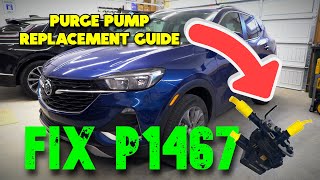
- 2020-2021: Certain 2020-2021 Encore GX models may have a faulty 'evaporative emissions purge pump' (a separate part from the purge valve). GM has issued a Special Coverage program (N232395310) extending the warranty on this specific part to 15 years or 150,000 miles. This can cause EVAP codes like P0496 and may be related to a P0455 condition.
Helpful Videos

Used OEM Parts in Stock



New Aftermarket Parts Available


The information in this article is provided for general reference and educational purposes only. Vehicle specifications, procedures, and part compatibility can vary by production date, trim level, and region. Always consult your vehicle's factory service manual and verify part numbers before purchasing or performing repairs. Safety-critical components such as airbags, seat belts, and braking systems should be installed by a qualified professional.
- Buick ENCORE GX:
- 🎬 Helpful Videos
- 🛍️ Shop This Part
- What's Unique About the 2020-2023 Buick ENCORE GX
- Diagnostic Flowchart
- Symptoms You May Notice
- Most Likely Causes
- Rare But Worth Checking
- Diagnosis Steps
- Parts You'll Likely Need
- Related Codes That Often Appear With This One
- Technical Service Bulletins (TSBs) & Recalls
- Platform-Specific Known Issues
- Mechanic-Grade Diagnostic Values
- Hidden / Shadow Codes Worth Checking
- Scan Tool Commands That Help
- Wiring & Ground Locations
- Real Owner Repair Stories
- "I Checked Everything" — The Actual Cause
- When the Usual Fixes Don't Work
- OEM Part Supersession History
- Model Year Variations Within This Range
- 🎟️ Get 5% Off