

P0455 on 2013-2020 Buick Encore: EVAP Large Leak Causes and Fixes
For a 2013-2020 Buick Encore, code P0455 most often means you have a loose gas cap or a faulty EVAP purge valve. Always check the gas cap first for a free fix. If that's not it, a replacement purge valve (Part No. 55573017) is a very common repair, costing around $35-$70 for the part. If both P0455 and P0496 are present, the purge valve is almost certainly the culprit.
- P0455 means your Encore has a large leak in the emissions system that contains fuel vapors.
- Always check your gas cap first. Make sure it's tight and the seal isn't cracked. This is a free and easy fix.
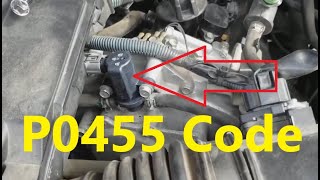
- The most common failed part for this code on the Encore is the EVAP purge valve, located on top of the engine.
- If the gas cap and purge valve are good, the next likely culprits are the vent solenoid near the tank or a cracked hose, which can be found with a smoke test.
- A rare but documented issue is a spider nest inside the EVAP canister, as noted in a GM service bulletin.
What's Unique About the 2013-2020 Buick ENCORE

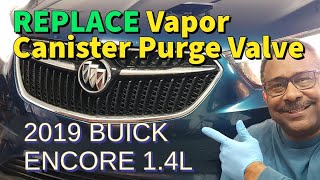
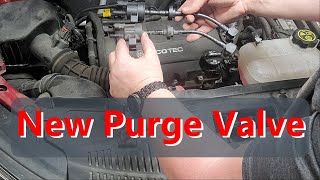
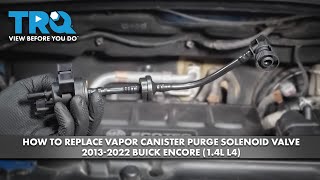
While P0455 is a generic code, the Buick Encore and its platform mates (Chevy Trax, Sonic, Cruze) using the 1.4L engine have specific weak points. The EVAP purge valve, located on top of the engine, 🎬 Watch: Step-by-step guide to replacing the purge valve solenoid. is a very frequent failure item that gets stuck open or closed. Additionally, GM has issued a Technical Service Bulletin (TSB 17-NA-383) for these models related to spiders building nests inside the EVAP canister vent port, which can block the system and trigger this code. This makes checking the purge valve and the canister area near the fuel tank more important steps on the Encore than on many other vehicles.
Diagnostic Flowchart

Tap your situation to follow the diagnostic path that matches what you're seeing on this vehicle.
Symptoms You May Notice
- Check Engine Light is on
- A noticeable smell of fuel, especially around the rear of the vehicle or in the garage overnight.
- Slightly reduced fuel economy in some cases
- Difficulty starting or rough idle immediately after refueling.
- Gas cap warning message on the dashboard, if equipped.
- Replacing the fuel tank pressure sensor. While possible, this sensor is more likely to set its own specific fault codes (like P0452) if it fails.
- Immediately replacing the EVAP canister. The canister itself is usually just a charcoal-filled box; the failure is more often in the attached vent solenoid or the connecting hoses.
Most Likely Causes

- Loose or Faulty Gas Cap 🔴 High Probability This is the most common cause for a P0455 code on any vehicle. The rubber O-ring on the cap can become hard, cracked, or worn over time, preventing a proper seal.
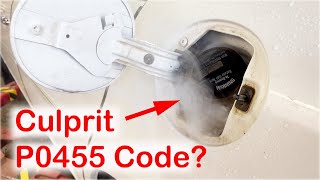
How to confirm: Ensure the gas cap clicks at least three times when tightened. Inspect the rubber O-ring on the cap for cracks, stiffness, or damage. A smoke test will definitively show a leak from the cap area if it's faulty. Also, inspect the fuel filler neck for rust or debris that could prevent a good seal.
Typical fix: Tighten the cap correctly. If the seal is bad, replace the gas cap. An OEM ACDelco cap is recommended for best fit.
Est. part cost: $15-$30 - Faulty EVAP Purge Valve/Solenoid 🔴 High Probability This is a very common failure part on the 1.4L engine used in the Encore and its platform mates. The valve can get stuck open, creating a constant vacuum leak, or get stuck closed, preventing the system from pulling a vacuum during its self-test.
How to confirm: The purge valve is located on the intake manifold, behind the engine. A definitive test involves removing it and trying to blow through it; if air passes, it's stuck open and bad. If it's suspected of being stuck closed, a capable scan tool can command it open; if no change in engine RPM or fuel tank pressure is observed, it has failed. This failure often triggers code P0496 as well.
Typical fix: Replace the EVAP purge valve. This is a straightforward repair with simple electrical and hose connections that can be done with basic tools.
Est. part cost: $35-$70 - Faulty EVAP Canister Vent Solenoid 🟡 Medium Probability This valve, located near the EVAP canister by the fuel tank, can get stuck open due to dirt, debris, or age, preventing the system from sealing for its test. TSB #17-NA-383 specifically notes that spiders can build nests in the canister's fresh air port, affecting this component's operation.
How to confirm: The valve can be commanded closed with a capable scan tool while performing a smoke test. If smoke exits from the vent valve, it has failed. Since this valve is normally open, smoke will exit from it during a test unless it is commanded shut electronically. Visual inspection for debris or spider webs is also recommended per the TSB.
Typical fix: Replace the EVAP canister vent solenoid. It is located near the fuel tank and may require lifting the vehicle for access.
Est. part cost: $50-$150 - Cracked or Disconnected EVAP Hoses ⚪ Low Probability The plastic and rubber lines can become brittle and crack over time, especially the molded elbow hoses connected to the purge valve. A disconnected line after recent service is also possible.
How to confirm: A thorough visual inspection of all EVAP lines from the engine bay to the fuel tank is the first step. The most effective method is a smoke test, which forces low-pressure smoke into the EVAP system, making any leaks visible as streams of smoke.
Typical fix: Replace the damaged section of hose or the entire line assembly. Small cracks in plastic fittings can sometimes be temporarily sealed, but replacement is the correct repair.
Est. part cost: $20-$100
Rare But Worth Checking
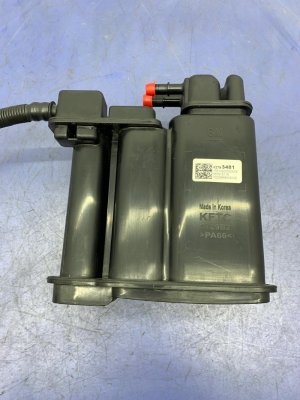
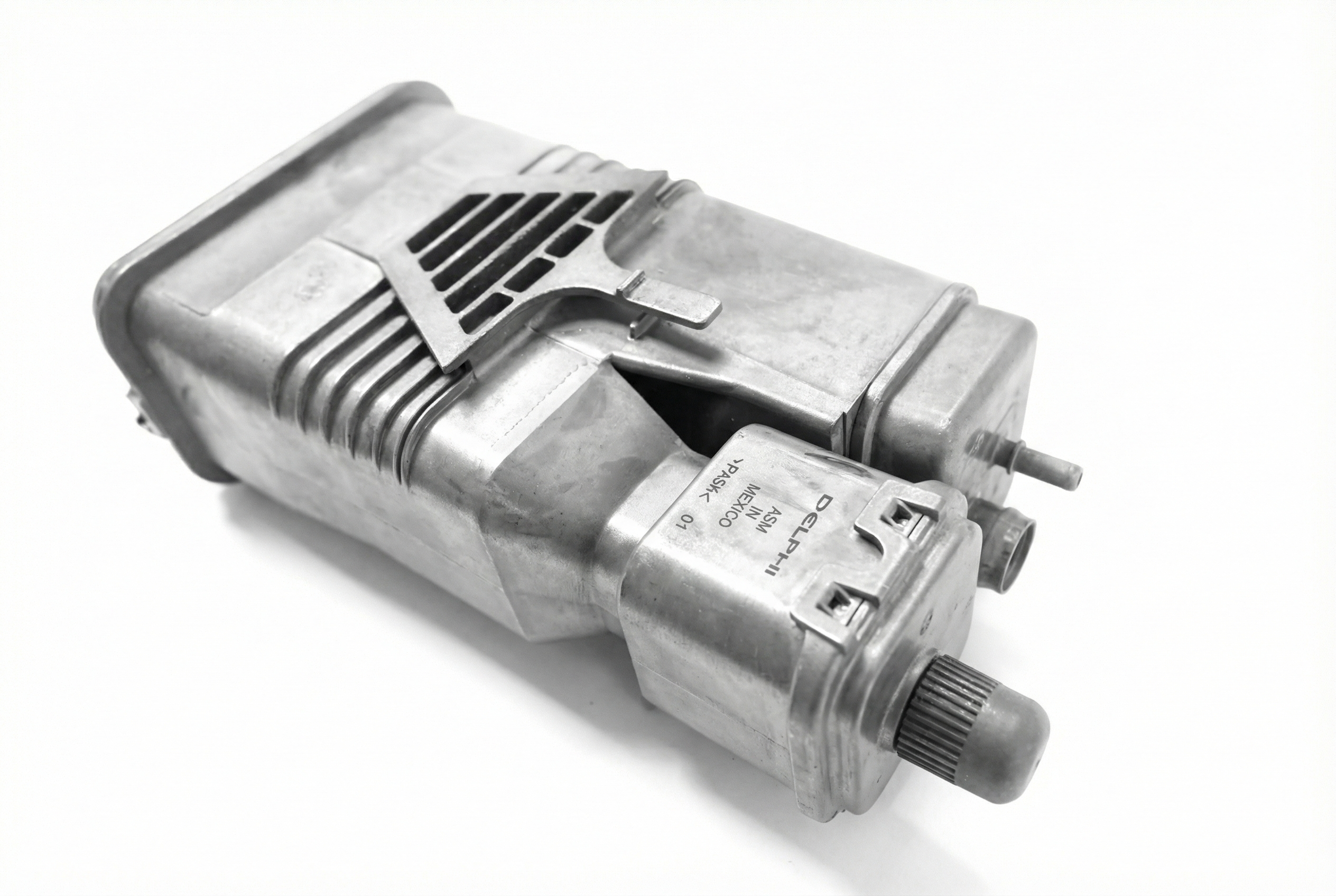
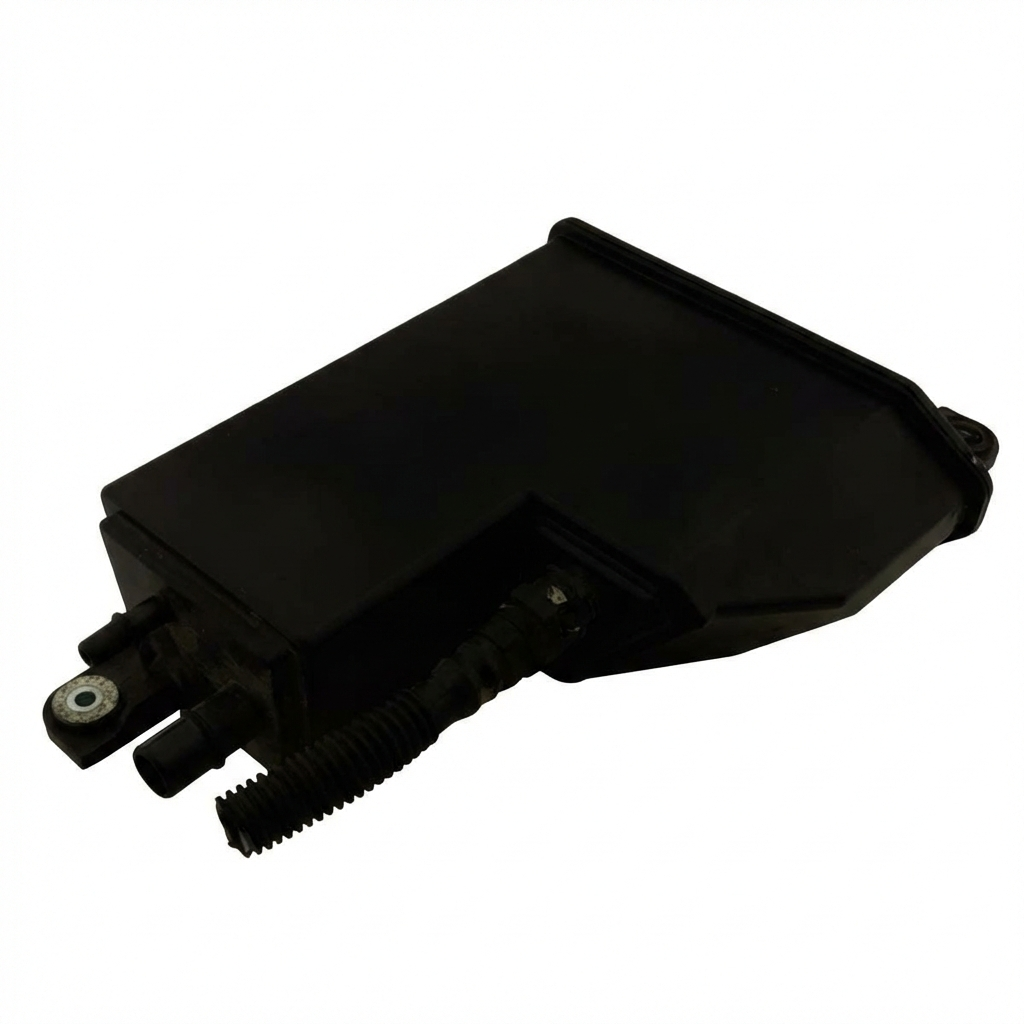
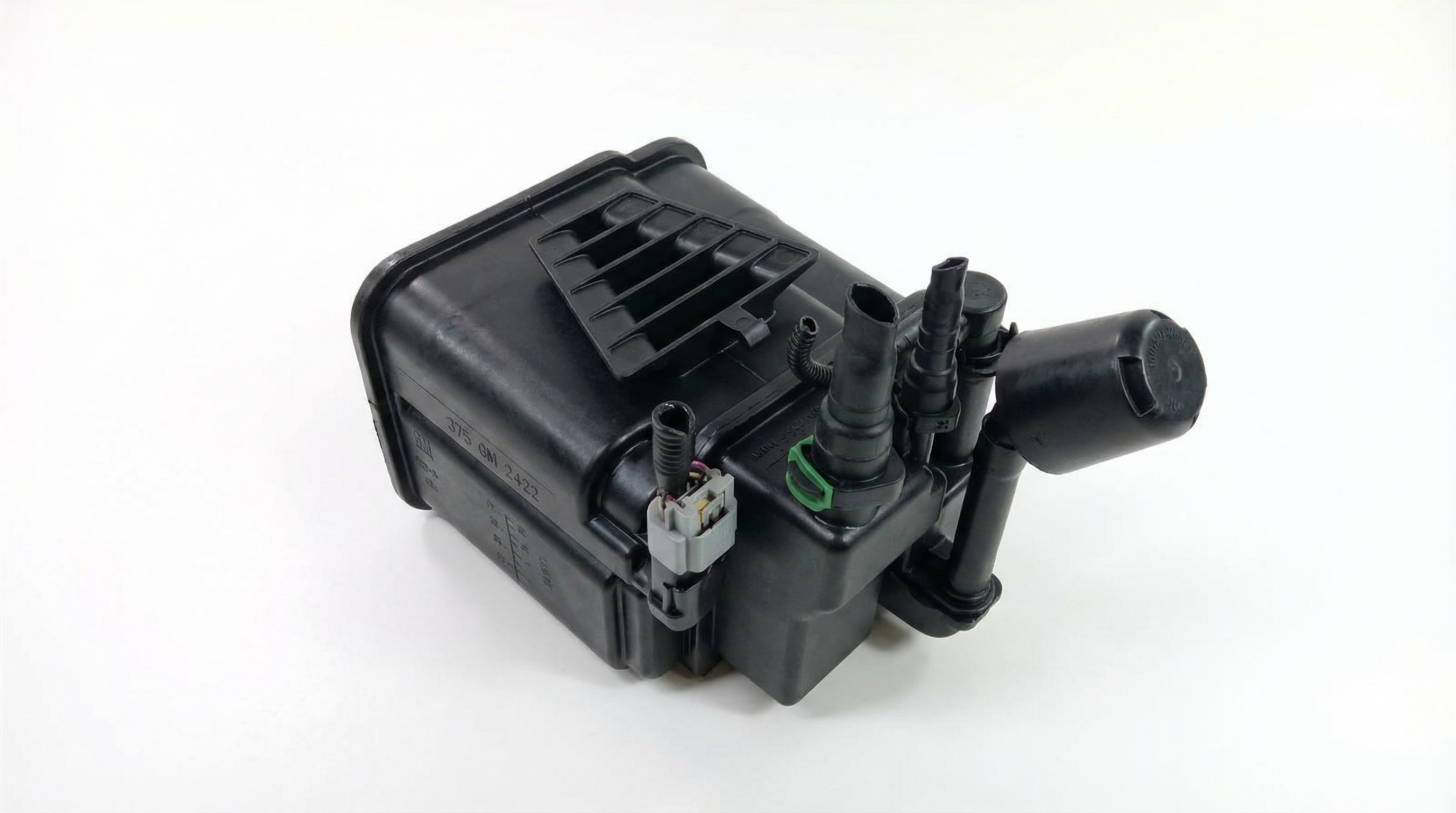
- Spider Nest in EVAP Canister: While rare overall, this is a documented issue for GM vehicles, including the Encore, as cited in TSB #17-NA-383. Spiders can build nests within the EVAP canister's fresh air inlet port, causing a restriction that can lead to a P0455 or P0446 code. This requires inspection and likely replacement of the canister assembly.
- Cracked EVAP Charcoal Canister: The canister itself can be damaged by road debris, leading to a crack and a large leak. This is uncommon but possible and would be easily found with a smoke test.
- Leaking Fuel Filler Neck: Corrosion or damage to the metal tube leading from the gas cap to the tank can cause a leak that will trigger P0455. This is more common in areas that use road salt and can be confirmed by a smoke test showing smoke escaping from around the filler neck area.
Diagnosis Steps
- Check the gas cap. Remove it, inspect the seal for cracks or damage, and reinstall it, ensuring it clicks several times. Clear the code and drive for a few days to see if it returns.
- If the code returns, visually inspect the EVAP purge valve and its hoses in the engine bay. The purge valve is located on the intake manifold. Check for cracked plastic or disconnected lines.
- Test the purge valve. Remove the valve. If you can blow air through it, it is stuck open and must be replaced. This is a very common failure.
- Visually inspect the undercarriage for the EVAP canister, vent solenoid, and hoses near the fuel tank. Look for any obvious cracks, damage, or disconnected lines. Check the vent port for spider webs per TSB 17-NA-383.
- If no obvious issues are found, perform a smoke test. This is the most effective method. Inject pressurized smoke into the EVAP system's service port. The smoke will escape from the leak's location, making it easy to pinpoint. Remember to command the vent solenoid closed with a scan tool during the test, as it is normally open.
- Based on the smoke test results, replace the leaking component, whether it's a hose, the purge valve, the vent solenoid, the gas cap, or the fuel filler neck.
Parts You'll Likely Need
- Vapor Canister Purge Valve
(OEM #55573017)— This is the most common part to fail on the Encore for this code. It gets stuck open or closed, causing a leak or preventing the system test from running correctly.
Trusted brands: ACDelco (GM Original Equipment), Dorman, TRQ
OEM price range: $50-$70
Aftermarket price range: $35-$55 - Fuel Cap
(OEM #ACDelco GT330 (example, verify by VIN))— A worn-out seal on the gas cap is a very common cause of a large EVAP leak across all vehicles.
Trusted brands: ACDelco, Stant
OEM price range: $20-$30
Aftermarket price range: $15-$25 - Vapor Canister Vent Valve/Solenoid
(OEM #85123399 (example, verify by VIN))— This valve near the tank can fail or get clogged (sometimes by spiders), preventing the system from sealing. It's the second most likely valve to fail after the purge valve. TSB #17-NA-383 also points to this area.
Trusted brands: ACDelco, Dorman
OEM price range: $60-$100
Aftermarket price range: $40-$80
Related Codes That Often Appear With This One
- P0442 — P0442 indicates a small EVAP leak. Sometimes a leak can be borderline, or there may be multiple leaks, causing both codes to appear together. TSB #21-NA-124 addresses diagnostic strategies for both P0442 and P0455.
- P0496 — P0496 indicates 'EVAP Flow During a Non-Purge Condition,' which almost always points directly to a faulty purge valve that is stuck open. If you have P0455 and P0496 together, the purge valve is the most likely culprit.
- P0449 — This code specifically relates to a malfunction in the EVAP Vent Solenoid control circuit. If seen with P0455, it strongly suggests the problem is with the vent solenoid or its wiring near the fuel tank.
Technical Service Bulletins (TSBs) & Recalls

- 21-NA-124: Diagnostic tip for MIL Illuminated - DTCs P0442 and/or P0455 Set
- 17-NA-383: MIL Illuminated with DTC P0446 or P0455 Set Due to Spiders Nesting in EVAP Canister
Platform-Specific Known Issues
- TSB #17-NA-383: GM has identified an issue where spiders can build nests in the EVAP canister vent, causing a restriction and triggering P0455 or P0446. The fix involves inspecting and potentially replacing the EVAP canister assembly.
- TSB #21-NA-124: This bulletin provides technicians with advanced diagnostic tips for pinpointing EVAP leaks that cause P0455 and P0442, indicating this is a common enough issue to warrant special manufacturer guidance.
Mechanic-Grade Diagnostic Values
- EVAP Canister Vent Valve Solenoid Resistance — expected: 20 - 50 Ohms. Failure: A reading of 0 Ohms (short) or infinite/OL (open circuit) indicates a failed coil.
- EVAP Canister Vent Solenoid Connector Voltage (backprobed, plugged in) — expected: Approximately 12V on the power wire and 12V on the control wire (read through the solenoid's coil) when the valve is inactive (commanded OFF).. Failure: If the control wire shows 0V or ground when not commanded ON by the PCM, the wire is shorted to ground. If there is no voltage on the power wire, check the fuse and wiring.
Scan Tool Commands That Help
- GM GDS2 / Tech2: EVAP Service Bay Test — This is a dealer-level function used to force the EVAP monitor to run in the service bay, rather than having to perform a full drive cycle. It allows a technician to verify a repair is successful immediately. The test will only initiate if the fuel level is between 15-85% and engine coolant temp is below 158°F (70°C).
- Bidirectional Scan Tool: EVAP Purge/Seal — This command allows the technician to manually close the EVAP Vent Solenoid and open the Purge Solenoid to check for blockages or test the Fuel Tank Pressure sensor's response.
- Bidirectional Scan Tool: EVAP Vent Solenoid On/Off — Used during a smoke test to close the normally-open vent solenoid. If smoke still exits the vent with the solenoid commanded 'On' (closed), the solenoid has failed.
Wiring & Ground Locations
- X50A Fuse Block - Underhood — The main fuse box in the engine compartment.. Contains fuse F3UA (5A), which supplies power to the Q13 Evaporative Emission Vent Solenoid Valve. A blown fuse here will cause a vent solenoid circuit code and may contribute to a P0455.
- G103 — On the cowl at the left rear of the engine compartment, typically above the brake booster.. This is a major ground point for the Body Control Module (BCM). The BCM is involved in the logic for EVAP system tests, and a poor ground here can cause a wide range of difficult-to-diagnose electronic issues, including potential EVAP faults.
- EVAP Vent Solenoid Connector — At the EVAP canister vent solenoid, near the fuel tank.. This 2-wire connector (typically with a Green/Violet control wire) is exposed to the elements and can corrode. Testing for 12V power and ground signal from the PCM at this connector is a key diagnostic step for vent valve issues.
Real Owner Repair Stories
- YouTube channel 'I Fix a P0455 Code' (Chevrolet HHR (platform mate with similar EVAP system)) — P0455 Check Engine Light
❌ Tried (didn't work) Replacing the EVAP purge valve solenoid, Replacing the gas cap
✅ What actually fixed it The vapor line running from the EVAP canister at the rear of the car to the engine was found to be cracked and leaking. Replacing this entire fuel vapor line resolved the code after a few drive cycles. - Reddit user spr1980, r/BuickEncore (2017 Buick Encore) — EVAP system issue (likely P0496 and/or P0455), hard to start after filling the gas tank.
❌ Tried (didn't work) Initial diagnosis by mechanic was inconclusive.
✅ What actually fixed it The user identified that a faulty EVAP purge valve is a very common issue causing these exact symptoms. The problem was resolved by replacing the purge valve, a cheap and easy DIY job.
"I Checked Everything" — The Actual Cause
- A faulty Fuel Tank Pressure (FTP) sensor can cause a P0455 code even with no physical leak. The sensor may provide incorrect data to the ECM, making the computer believe a large leak exists when the system is actually sealed. This is often missed because technicians focus on finding a physical leak with a smoke machine. If a smoke test shows no leaks, but the code persists, testing the FTP sensor's voltage output against specifications is the next step. A bad FTP sensor will typically set its own codes (P0451-P0454), but not always.
OEM Part Supersession History
55573017→55573017 (current)— This part number has remained stable for the specified vehicle range.
Heads up: Be cautious of other GM purge valve part numbers (e.g., 12703879, 25207556). These are often for the newer Buick Encore GX, which uses a different engine (1.3L) and a different style of 'purge pump'. They are not compatible with the 2013-2020 Encore's 1.4L engine. Always verify by VIN.
Model Year Variations Within This Range
- 2013-2020: The core EVAP system components, including the failure-prone purge valve (55573017) and general system layout, are consistent across the entire first generation of the Buick Encore with the 1.4L engine. No significant variations affecting the diagnosis of P0455 have been noted within this model year range.
Helpful Videos
![How to Fix P0455 Engine Code in 3 Minutes [2 DIY Methods / Only $4.61]](https://img.youtube.com/vi/b-o1a2XuVN4/mqdefault.jpg)


Used OEM Parts in Stock
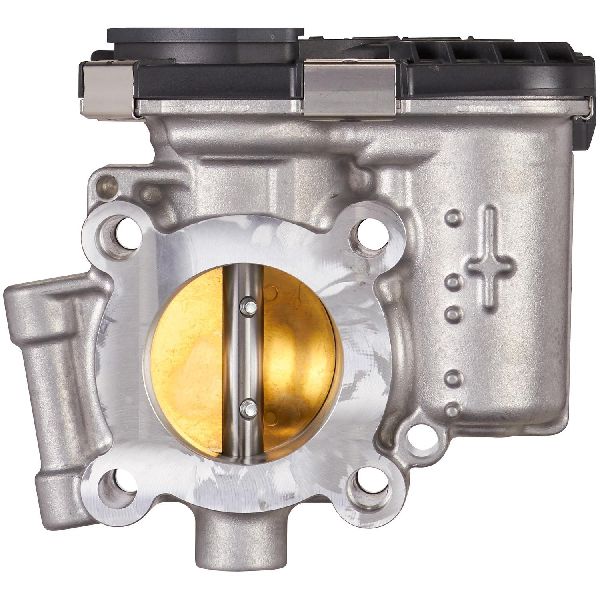
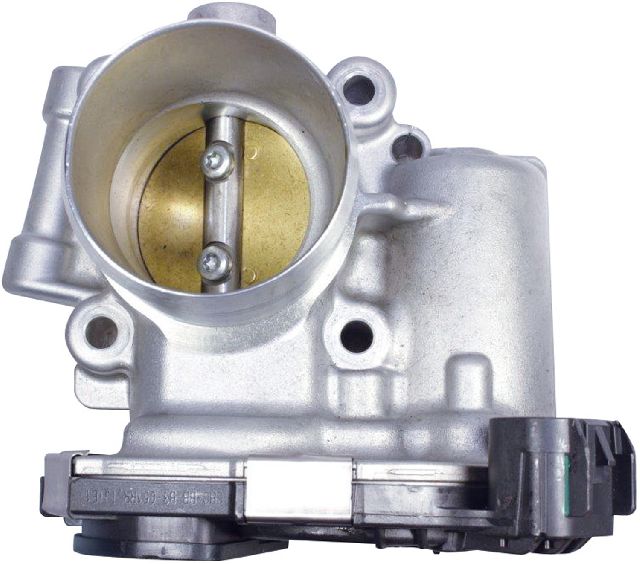
New Aftermarket Parts Available


The information in this article is provided for general reference and educational purposes only. Vehicle specifications, procedures, and part compatibility can vary by production date, trim level, and region. Always consult your vehicle's factory service manual and verify part numbers before purchasing or performing repairs. Safety-critical components such as airbags, seat belts, and braking systems should be installed by a qualified professional.
- Buick ENCORE:
- 🎬 Helpful Videos
- 🛍️ Shop This Part
- What's Unique About the 2013-2020 Buick ENCORE
- Diagnostic Flowchart
- Symptoms You May Notice
- Most Likely Causes
- Rare But Worth Checking
- Diagnosis Steps
- Parts You'll Likely Need
- Related Codes That Often Appear With This One
- Technical Service Bulletins (TSBs) & Recalls
- Platform-Specific Known Issues
- Mechanic-Grade Diagnostic Values
- Scan Tool Commands That Help
- Wiring & Ground Locations
- Real Owner Repair Stories
- "I Checked Everything" — The Actual Cause
- OEM Part Supersession History
- Model Year Variations Within This Range
- 🎟️ Get 5% Off