

P0455 on 2016-2023 Buick Enclave: EVAP Large Leak Causes and Fixes
On a 2016-2023 Buick Enclave, code P0455 is most often caused by a loose or faulty gas cap. If the cap is secure, the next most likely culprits are a failed EVAP purge valve in the engine bay or a bad vent valve near the gas tank. A new gas cap costs $15-$30, while the valves are typically $30-$60 each. On 2018+ models, the purge valve is a very frequent failure point.
- Always check your gas cap first. Make sure it's tight and the seal is in good condition. This is the cheapest and most common fix.
- For 2018 and newer Enclaves, the EVAP purge valve (in the engine bay) is the next most likely failure. It's a common problem on the 3.6L engine.
- If the gas cap and purge valve are good, the vent valve (near the gas tank) is the next part to inspect.
- A smoke test is the most reliable way to find the leak if it's not one of the common components.
What's Unique About the 2016-2023 Buick ENCLAVE

The 2016-2023 Buick Enclave spans two vehicle generations, with the second generation (2018-2023) built on the C1XX platform being particularly prone to this code. On these later models with the 3.6L engine, the EVAP purge and vent valves are known to fail with regularity, often around 75,000 miles. While a loose gas cap is always the first thing to check, owners of the second-generation Enclave should strongly suspect one of these two valves as the root cause if the gas cap isn't the issue. A very common secondary symptom tied to a bad purge valve on this platform is difficulty starting immediately after refueling.
🎬 Watch: Why your Enclave starts hard after getting gasDiagnostic Flowchart

Tap your situation to follow the diagnostic path that matches what you're seeing on this vehicle.
Generation note: This range covers the end of the first generation (2016-2017, Lambda platform) and the second generation (2018-2023, C1XX platform). While the causes are similar, some parts, like the EVAP purge valve, have different part numbers for the second generation, with a split between 2018-2019 and 2020-2024 models. The purge valve is a more frequent point of failure on the second-generation models. GM has issued special coverage programs for the purge valve on certain years, including N192210240 for 2016-2018 models and N232395300 for 2019 models, which may cover replacement at a dealer.
Symptoms You May Notice
- Check Engine Light is on
- A faint smell of fuel, especially around the gas cap or rear of the vehicle.
- Slight decrease in fuel economy in some cases
- Vehicle will fail an emissions inspection.
- Difficulty starting or rough idle immediately after refueling (strong indicator of a bad purge valve).
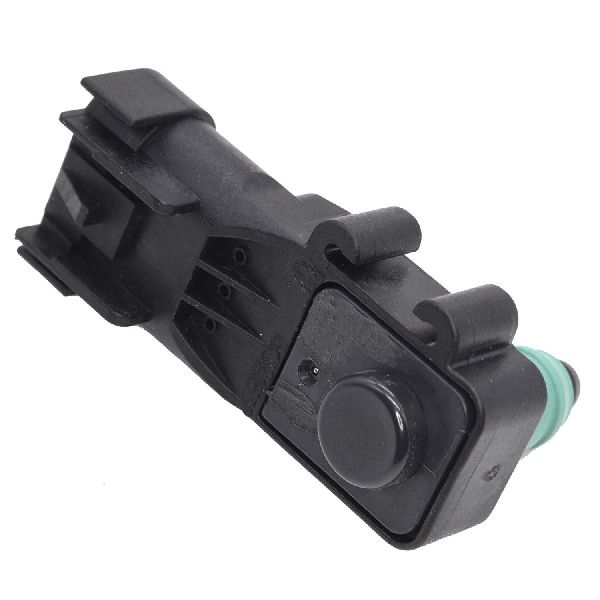
- Replacing the fuel tank pressure sensor. While this sensor is part of the EVAP system, its failure typically results in different trouble codes (like P0451, P0452) and is not a common cause for a large leak code. A scan tool can be used to monitor the sensor's voltage (typically around 1.5V at rest) to ensure it's not stuck or skewed.
Most Likely Causes


- Loose, Damaged, or Incorrect Gas Cap 🔴 High Probability This is the most common cause on all vehicles. The rubber O-ring on the cap can dry out, crack, and fail to create a proper seal over time. Some later models (2019+) are capless and the sealing flap can be compromised by debris.
How to confirm: Ensure the cap is tightened until it clicks several times. Inspect the cap's seal for cracks, stiffness, or damage. Check the fuel filler neck for rust or debris that could prevent a good seal. For capless systems, inspect the sealing door for debris.
Typical fix: Tighten or replace the gas cap.
Est. part cost: $15-$30 - EVAP Purge Valve/Solenoid Failure 🔴 High Probability This is a very common failure point on the 3.6L engine, especially in the 2018+ models, often failing around 75,000 miles. The valve can get stuck open, creating a permanent leak in the system and often causing rough starting after refueling as fuel vapors flood the engine.
How to confirm: The purge valve is located in the engine bay. On 2018+ models, it is tucked behind the engine. With the engine running, disconnect the vapor line from the valve and feel for suction with your finger; a properly working purge valve is normally closed at idle and should have no vacuum. You can also remove the valve and try to blow through it; if air passes, it has failed and is stuck open.
Typical fix: Replace the purge valve. It is typically mounted on or near the engine's intake manifold and held by one 10mm bolt.
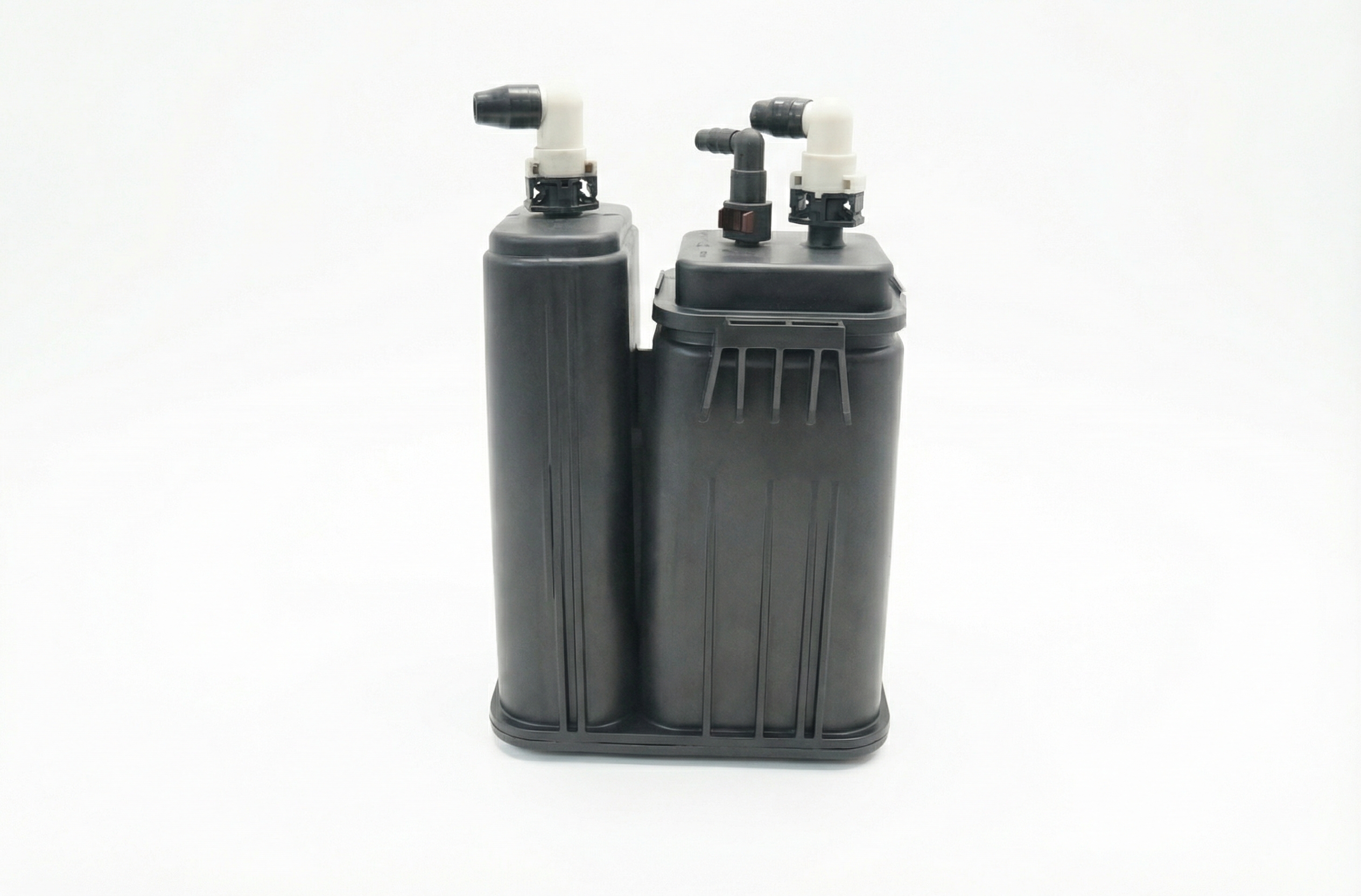
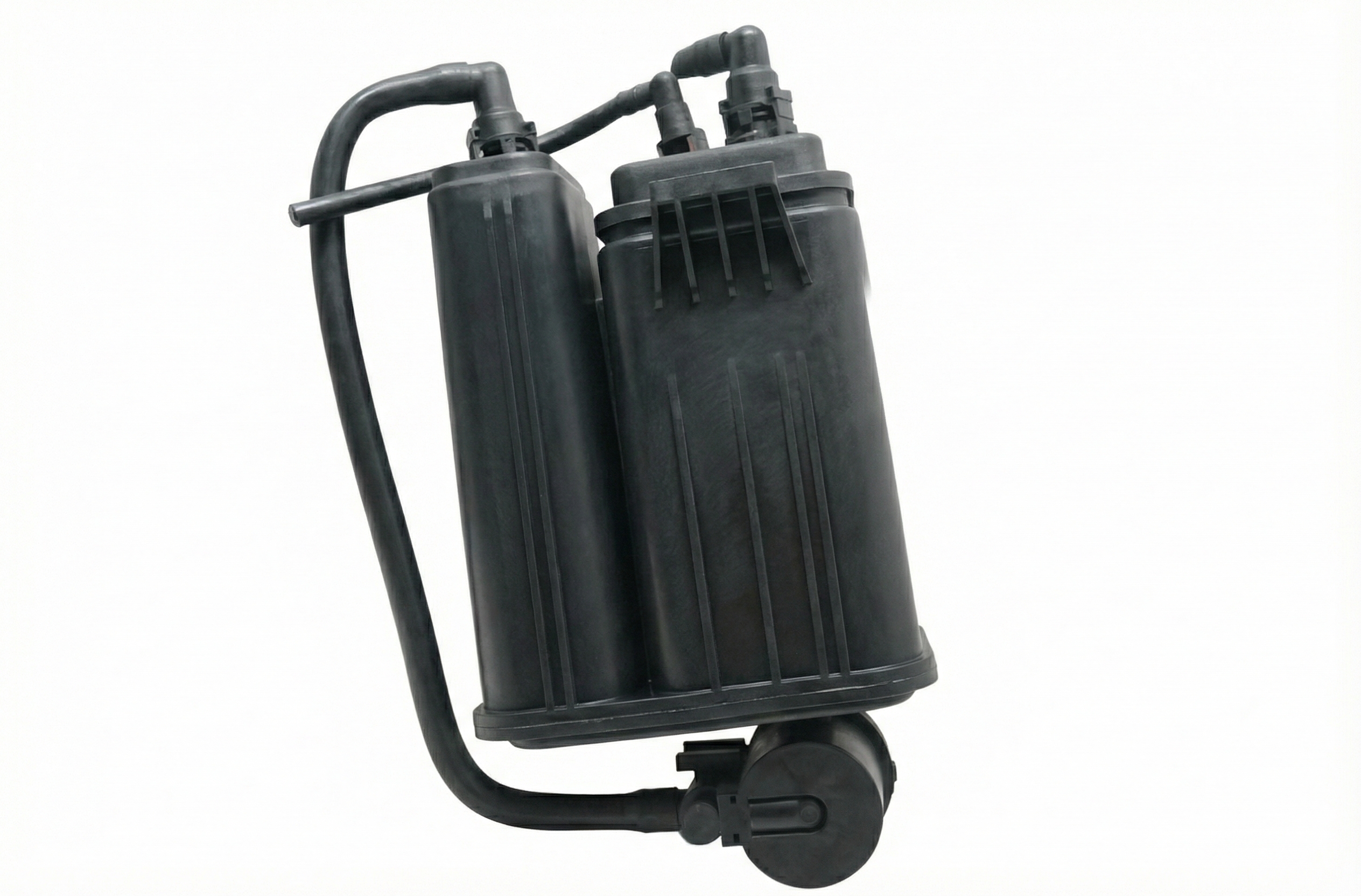
Est. part cost: $30-$60 - EVAP Vent Valve/Solenoid Failure 🟡 Medium Probability Located underneath the vehicle near the charcoal canister, this valve is exposed to road debris and moisture, which can cause it to fail or get stuck open. It is the second most common valve to fail on this platform.
How to confirm: This valve is normally open and closes when commanded by the computer during an EVAP test. Diagnosis often requires a bi-directional scan tool to command the valve closed while performing a smoke test. If smoke escapes from the vent valve when it's commanded shut, it has failed. Replacement involves twisting the old valve out of the canister and twisting the new one in.
Typical fix: Replace the vent valve/solenoid assembly, which attaches directly to the charcoal canister.
Est. part cost: $40-$75 - Cracked or Disconnected EVAP Hoses ⚪ Low Probability Rubber and plastic hoses can become brittle and crack over time due to age and heat cycles. GM TSB #21-NA-124 specifically calls out checking for improperly seated or damaged EVAP lines as a primary diagnostic step.
How to confirm: Visually inspect all accessible EVAP lines between the engine bay, the charcoal canister, and the fuel tank. A smoke test is the most effective way to find a small crack or disconnected fitting that isn't obvious.
Typical fix: Replace the damaged section of hose.
Est. part cost: $10-$50
Rare But Worth Checking
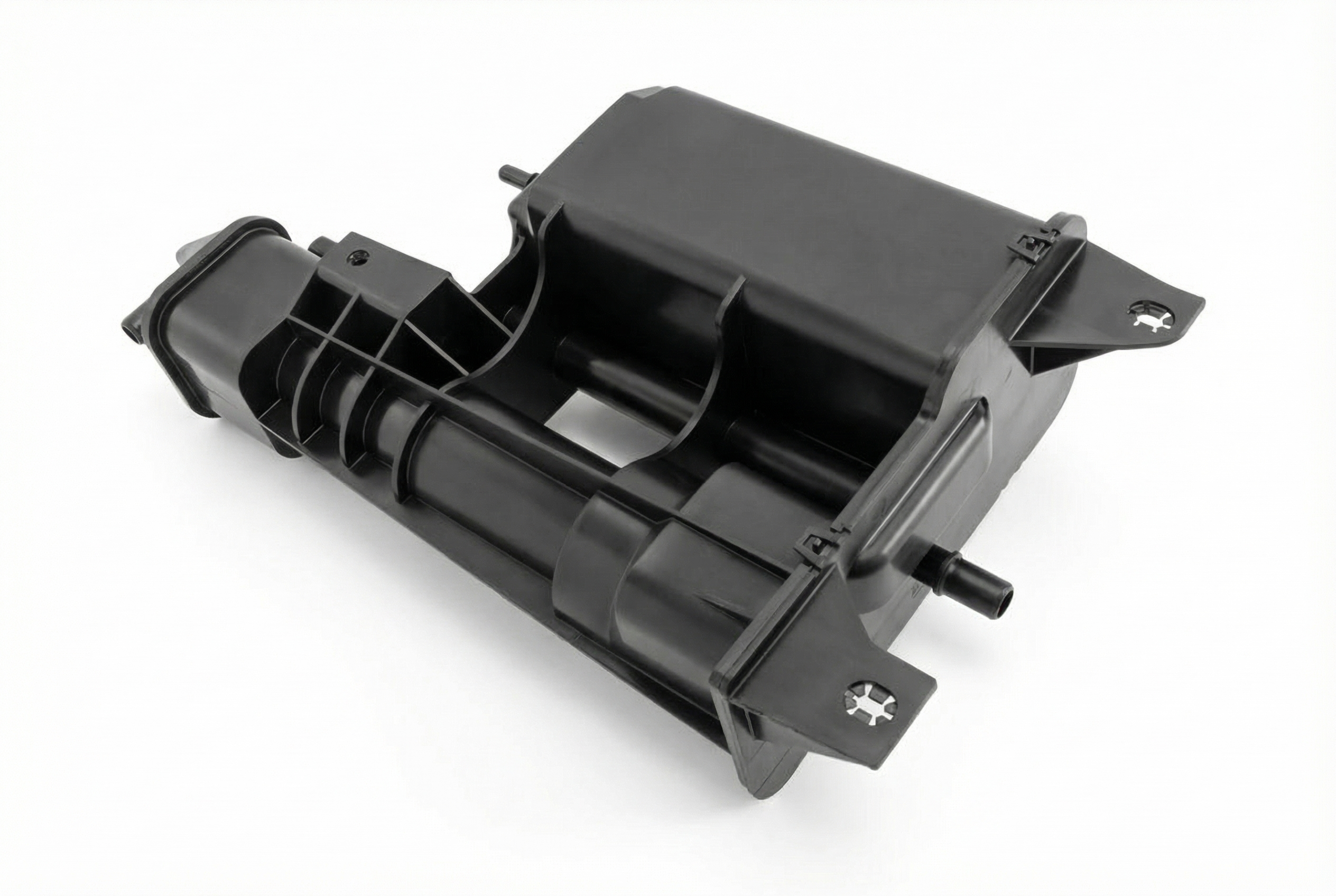
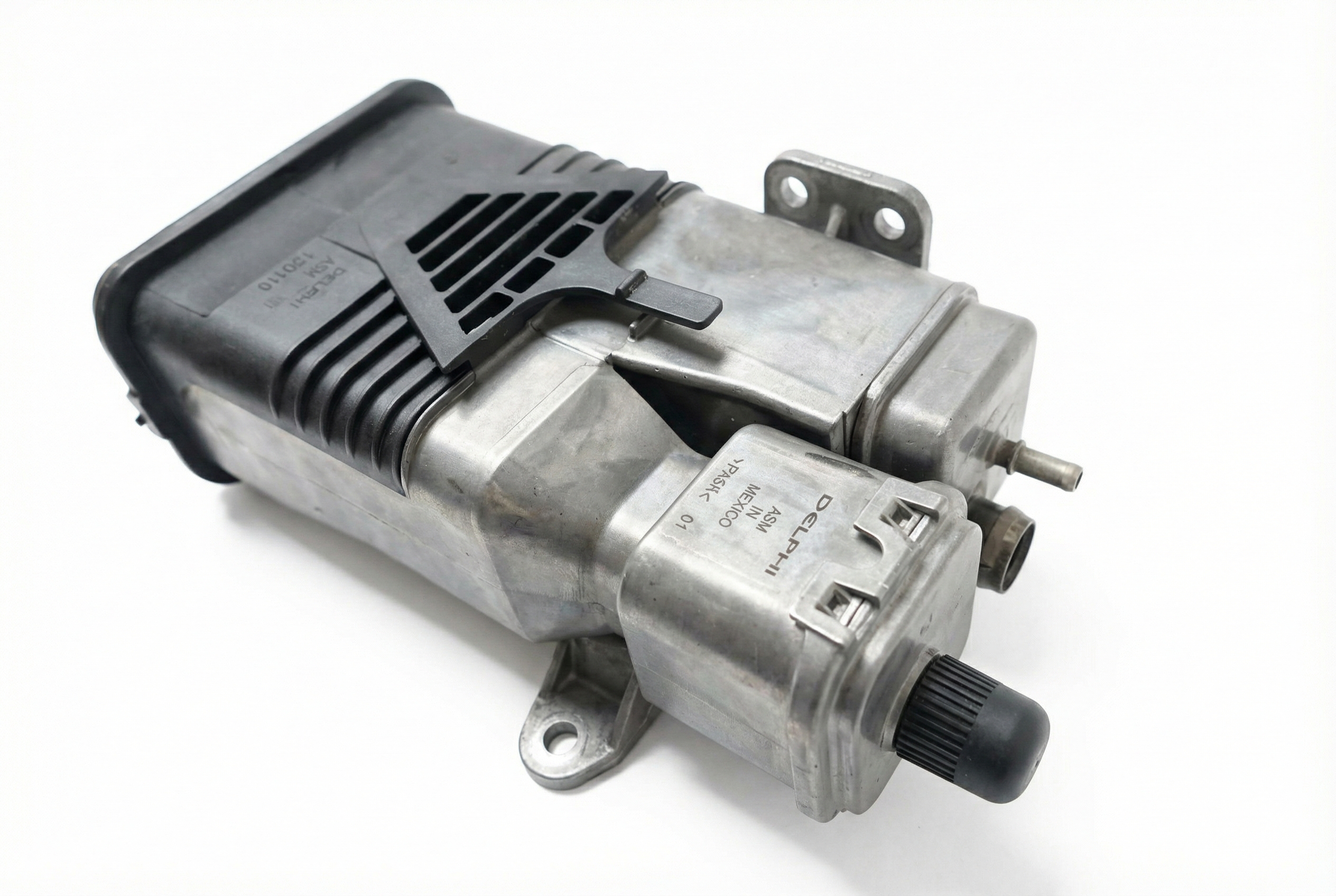
- Cracked EVAP Charcoal Canister: The plastic housing of the canister itself can develop a crack from road debris or age. TSB #PIE0528 specifically mentions issues with the canister assembly. A smoke test will reveal smoke leaking directly from the canister body if it is cracked. Over-filling the gas tank can also saturate the canister with raw fuel, causing it to fail.
- Damaged Wiring Harness: In some cases, a damaged wire leading to the vent solenoid can prevent it from closing, causing the system to fail its pressure test and log a P0455 code. This is less common than component failure but should be considered if new parts don't solve the issue. GM has issued bulletins for other models regarding engine harness chafing that can lead to various electrical issues and codes.
- Rusted or Damaged Fuel Filler Neck: The metal tube leading from the gas cap to the fuel tank can rust through over time, especially in salt-belt regions, creating a large leak that bypasses the cap seal entirely. This is often missed during diagnosis that focuses only on valves and hoses.
Diagnosis Steps
- Check the Gas Cap: Remove, inspect the seal for damage, and reinstall it, ensuring it clicks multiple times. For capless systems (2019+), check the seal on the filler neck flap for debris. Clear the code and drive for a few days to see if it returns.
- Inspect Visible Hoses: Perform a visual inspection of all accessible EVAP hoses in the engine bay and around the canister for obvious cracks, disconnections, or damage, as recommended by TSB #21-NA-124.
- Test the Purge Valve: Locate the purge valve on the engine. With the engine running, disconnect the line coming from the fuel tank and check for vacuum. If vacuum is present at idle, the valve is faulty. This is the most common failure part besides the gas cap.
- Test the Vent Valve: This is more difficult without a scan tool. The valve is normally open and located near the gas tank, attached to the charcoal canister. A bi-directional scan tool is needed to command it closed to check its function.
- Perform a Smoke Test: If the cause is not obvious, the most reliable diagnostic method is to use an EVAP smoke machine. This involves feeding low-pressure smoke into the system's service port and commanding the vent valve closed with a scan tool. The leak will be revealed by the escaping smoke. This is the best way to find cracked hoses, a bad canister, or a faulty vent valve.
Parts You'll Likely Need
- EVAP Purge Valve / Solenoid
(OEM #12690512 (2018-2019), 12737252 (2020+))— A very common failure item on the 3.6L engine, especially on 2018+ models, causing a leak when stuck open. Failure often causes a P0496 code and difficulty starting after refueling.
Trusted brands: ACDelco, Dorman, Standard Motor Products
OEM price range: $40-$60
Aftermarket price range: $25-$45 - Fuel Cap
(OEM #GT330 (ACDelco, for 1st Gen))— The most common and easiest fix. The seal fails over time, preventing the system from holding pressure. Note: 2019+ models may have a capless fuel filler system.
Trusted brands: ACDelco, Stant
OEM price range: $20-$35
Aftermarket price range: $15-$25 - EVAP Vent Valve / Solenoid
(OEM #85123399)— The second most common valve to fail. Its location under the car exposes it to the elements, causing it to stick open. This part number is cited for 2018+ models.
Trusted brands: ACDelco, Dorman, Wells
OEM price range: $50-$75
Aftermarket price range: $30-$50
Related Codes That Often Appear With This One
- P0442 — P0442 is for a 'small' EVAP leak. Sometimes a deteriorating component will first cause a small leak code before it worsens and triggers the 'large' leak P0455 code. They share the same common causes and are often mentioned together in TSBs like #21-NA-124.
- P0496 — This code indicates 'High Purge Flow' and almost always points directly to a faulty purge valve that is stuck open or leaking internally. It is very common to see P0496 alongside P0455 on these GM vehicles, and often causes the 'hard start after fueling' symptom.
- P0449 — This code specifically relates to a malfunction in the EVAP vent valve/solenoid control circuit. If you have P0449 along with P0455, the vent valve or its wiring is the primary suspect.
Technical Service Bulletins (TSBs) & Recalls
- 21-NA-124: Diagnostic Tip for Malfunction Indicator Lamp (MIL) Illuminated - DTC P0442 and/or P0455 Set.
- PIE0528: Engineering informational bulletin requesting information on EVAP canister performance issues related to codes P0442, P0455, P0446, etc.
Platform-Specific Known Issues
- Frequent Purge Valve Failure on 2nd Gen (2018+): On second-generation Enclaves (2018+), the EVAP purge valve is considered a common wear item, with failures often occurring around 75,000 miles. Owners on forums for the Enclave and its platform-mate, the Chevy Traverse, frequently report resolving P0455 and P0496 codes, along with hard starting after fueling, by replacing this valve.
- Capless Fuel Filler Seal Issues: Some owners of 2019+ models with the capless fuel filler system have reported P0455 codes. The issue can be an improperly sealing flap, which may be caused by debris or damage to the seal on the filler neck. Careful inspection of the capless mechanism is required.
- Owner Repair Story: Purge Valve Solved P0455 and Hard Starts: An owner on an AgTalk forum with an '08 Enclave described a classic symptom: the vehicle would crank for a long time but struggle to start only after refueling. The repair that solved the problem was replacing the 'EVAP purge valve'. This experience is echoed in many YouTube repair videos for the Enclave and its siblings.
Mechanic-Grade Diagnostic Values
- EVAP System Self-Test Enable Criteria — expected: Fuel level between 15-85%; Engine Coolant Temp (ECT) and Intake Air Temp (IAT) between 39-86°F (4-30°C) at startup.. Failure: The EVAP monitor will not run its self-test if these conditions are not met, preventing diagnosis or verification of a fix.
- Fuel Tank Pressure (FTP) Sensor Voltage — expected: Approximately 1.5V with the gas cap off (atmospheric pressure). Voltage should decrease when a vacuum is pulled on the tank.. Failure: Voltage that is stuck high (e.g., near 5V) or low (near 0V), or does not change when pressure changes, indicates a faulty sensor or wiring issue.
Scan Tool Commands That Help
- GDS2 / Professional Bi-Directional Scanner: EVAP Vent Valve Solenoid Command — This is critical during a smoke test. The vent valve is normally open, so it must be commanded closed to seal the system and allow the smoke to build pressure, revealing the source of the leak.
- GDS2 / Professional Bi-Directional Scanner: EVAP System Test — This automated test commands the purge and vent valves to seal the system and uses the FTP sensor to check if vacuum is achieved and held, confirming a leak is present without needing a smoke machine for initial verification.
- OBD-II Scanner: Check Readiness Monitors — After a repair, checking the EVAP readiness monitor confirms if the vehicle has successfully completed its internal self-test. If the monitor is 'Ready' and the Check Engine Light is off, the fix is verified. Note that it may take several drive cycles over multiple days for this monitor to complete.
Wiring & Ground Locations
- Engine Compartment Fuse Block — Located in the engine compartment, this fuse block contains fuses for various engine control components.. A blown fuse for the EVAP purge or vent solenoid circuit would cause a control circuit code (like P0449) but could be investigated if a valve is unresponsive.
- Engine Wiring Harness Chafe Points — On some GM platforms, the engine harness can rub against sharp edges on the cylinder head, brackets, or shock towers.. Though not specific to the Enclave in the bulletins found, harness chafing is a known GM issue that can cause shorts or open circuits in the wiring to EVAP components, leading to persistent or difficult-to-diagnose codes.
Real Owner Repair Stories
- YouTube user, channel '2018 Buick Enclave | Purge Valve Solenoid Replacment' (2018 Buick Enclave) — Check Engine Light
✅ What actually fixed it The owner suspected a stuck-open purge valve. After removing the part, he confirmed it was faulty by blowing through it and hearing air leak. The new part did not allow air to pass. Replacing the purge valve fixed the issue and the light stayed off after 300 miles. - Reddit user on r/AskMechanics (2012 Chevrolet Traverse LT (sister platform)) — Check Engine Light with P0455, intermittent 'Tighten Gas Cap' message on dash.
❌ Tried (didn't work) Replaced gas cap with a new AC Delco part., Previously replaced the vent canister purge solenoid for a P0449 code.
✅ What actually fixed it The user's post details the unsuccessful attempts. While the final fix isn't posted by the original user, the symptoms strongly point to either a faulty purge valve (not yet replaced) or a leak in the fuel filler neck, which can also trigger the 'Tighten Gas Cap' message. - Go-Parts.com article citing Reddit user surfteach1 (2019 Chevrolet Traverse (sister platform)) — Check Engine Light with P0455, also showed a fuel sensor code at one point.
❌ Tried (didn't work) Replaced the EVAP purge valve/solenoid under the hood.
✅ What actually fixed it The actual cause was the EVAP vent solenoid located near the fuel tank in the rear of the vehicle. Replacing this part resolved the code.
OEM Part Supersession History
12690512→12737252— Standard part evolution and update by the manufacturer.
Heads up: Part 12690512 was used on 2018-2019 models. The newer part 12737252 is listed for 2020+ models but may be backward compatible. Older numbers 12610560 and 12661763 were also replaced by this chain.
Model Year Variations Within This Range
- 2016-2017 (First Gen) vs 2018-2023 (Second Gen): The EVAP purge valve location is different. On 2016-2017 models, it is on top of the engine intake, making it very easy to access. On 2018-2023 models, it is located behind the engine, requiring removal of the air intake tube for access.
- 2019+: Beginning in 2019, some Enclave models were equipped with a capless fuel filler system. This system can still cause a P0455 if the spring-loaded flap is damaged or prevented from sealing by dirt or debris.
- 2016-2019: GM has issued Special Coverage Programs (similar to an extended warranty) for the frequently failing purge valve. Owners should check with a GM dealer using their VIN. Known programs are N192210240 (for 2016-2018 models) and N232395300 (for 2019 models).
Helpful Videos
![How to Fix P0455 Engine Code in 3 Minutes [2 DIY Methods / Only $4.61]](https://img.youtube.com/vi/b-o1a2XuVN4/mqdefault.jpg)
Used OEM Parts in Stock

New Aftermarket Parts Available



The information in this article is provided for general reference and educational purposes only. Vehicle specifications, procedures, and part compatibility can vary by production date, trim level, and region. Always consult your vehicle's factory service manual and verify part numbers before purchasing or performing repairs. Safety-critical components such as airbags, seat belts, and braking systems should be installed by a qualified professional.
- Buick ENCLAVE:
- 🎬 Helpful Videos
- 🛍️ Shop This Part
- What's Unique About the 2016-2023 Buick ENCLAVE
- Diagnostic Flowchart
- Symptoms You May Notice
- Most Likely Causes
- Rare But Worth Checking
- Diagnosis Steps
- Parts You'll Likely Need
- Related Codes That Often Appear With This One
- Technical Service Bulletins (TSBs) & Recalls
- Platform-Specific Known Issues
- Mechanic-Grade Diagnostic Values
- Scan Tool Commands That Help
- Wiring & Ground Locations
- Real Owner Repair Stories
- OEM Part Supersession History
- Model Year Variations Within This Range
- 🎟️ Get 5% Off