

P0455 on 2006-2013 BMW 3-Series: EVAP Large Leak Causes and Fixes
For the 2006-2013 BMW 3-Series (E90/E91/E92/E93), a P0455 code is most often caused by a worn-out or loose gas cap or a failed DMTL pump. Start by inspecting and tightening the gas cap, or replacing it for ~$25, as the seal degrades over time. If that doesn't resolve the issue, the Diagnostic Module Tank Leakage (DMTL) pump, a known failure point on this platform, is the next likely culprit, costing around $100-$150 for the OEM Bosch part.
- P0455 on your E90 3-Series means there's a large leak in the emissions system that contains fuel vapors.
- The most likely cause is a simple, inexpensive bad gas cap. Always check and replace this first.
- If the gas cap isn't the fix, the second most likely cause is a failed DMTL pump, a known weak spot on this car.
- You can continue to drive the car without harming the engine, but you will fail an emissions test.
- A smoke test is the best way to find the exact source of the leak if it's not the gas cap.
What's Unique About the 2006-2013 BMW 3-Series
While a loose gas cap is a common cause on any car, the E90-generation BMW 3-Series has a particularly common failure point in its EVAP system: the Diagnostic Module Tank Leakage (DMTL) pump. This Bosch-made pump is responsible for pressurizing the system to check for leaks. It is known to fail frequently, with owners on forums like Bimmerpost often reporting replacements. The failure can be the internal motor, a crack in the plastic housing, or even issues with the wiring leading to the pump. Its high failure rate makes it a primary suspect for code P0455 on these cars, often more likely than cracked hoses or other components.
Generation note: This guide covers the E90 (Sedan), E91 (Wagon), E92 (Coupe), and E93 (Convertible) generation of the BMW 3-Series, sold from 2006 to 2013. The EVAP system components, including those for the N52/N54/N55 engines and the specific DMTL pump, are largely identical across these body styles, leading to the same common failure points.
Symptoms You May Notice
- Check Engine Light is on
- A faint to strong smell of fuel, especially around the rear of the car, in the garage after parking, or near the rear driver's side wheel well.
- No noticeable impact on vehicle performance or drivability.
- Your car will fail an emissions/smog test.
- A subtle whooshing sound when opening the gas cap may be absent if the system is not sealed.
- Replacing the fuel pump when the issue is the fuel pump's sealing O-ring.
- Immediately replacing the DMTL pump without first checking or replacing the much cheaper and more common failure point, the gas cap.
- Replacing the DMTL pump when the actual fault is a broken or corroded wire in the harness leading to the pump.
Most Likely Causes
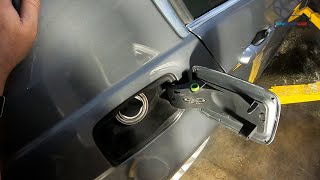
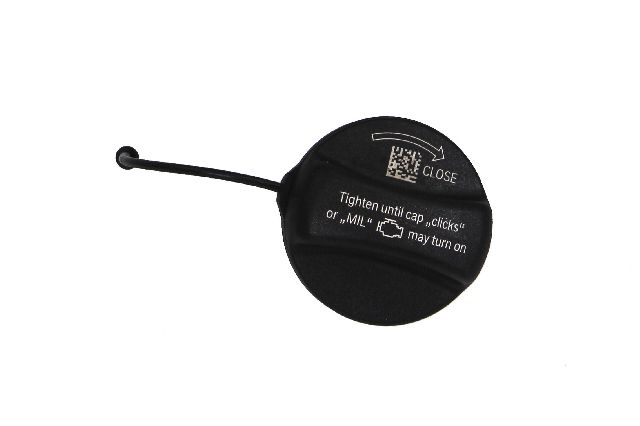
- Loose or Faulty Gas Cap 🔴 High Probability The rubber O-ring seal on the gas cap degrades, cracks, and hardens over time from countless cycles of opening/closing and exposure to fuel vapors, leading to a poor seal. Even the tether getting caught under the cap can cause a leak.
How to confirm: Inspect the gas cap's rubber seal for cracks, stiffness, or visible damage. Ensure the cap is tightened until it clicks multiple times. If the seal is suspect, replacement is the best and cheapest confirmation method.
Typical fix: Replace the gas cap with a new OEM (Genuine BMW) or high-quality OEM-equivalent part. This is the first step everyone should take.
Est. part cost: $20-$40 - Failed DMTL (Diagnostic Module Tank Leakage) Pump 🔴 High Probability The DMTL pump is a known weak point on this BMW platform. The internal motor can seize from age or contamination (e.g., from overfilling the gas tank), the plastic housing can crack, or the wiring connector can corrode, causing a leak or electrical fault.
How to confirm: After ruling out the gas cap, this is the next most likely cause. A smoke test is the definitive way to confirm a physical leak, where smoke will be seen leaking from the pump itself. The pump is located in the rear driver's side wheel well area, attached to the charcoal canister. A BMW-specific scanner may also show codes like P1447 (2A17), which points directly to a DMTL pump electrical fault.
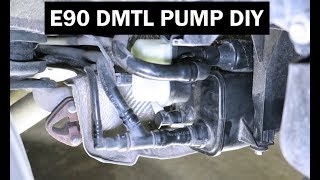
Typical fix: Replace the DMTL pump. It is held on by three screws and has one electrical and two hose connections. Some owners have had success temporarily fixing it by cleaning and lubricating the internal vane pump, but replacement is the reliable solution. 🎬 See this step-by-step DMTL pump replacement guide
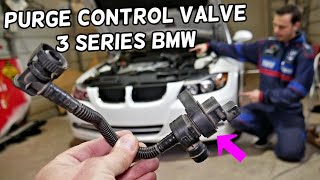
Est. part cost: $100-$180 - Faulty EVAP Purge Valve (Fuel Tank Vent Valve) 🟡 Medium Probability This solenoid valve, located in the engine bay, can get stuck open, creating a permanent large leak path to the intake manifold. This is a common failure on many BMWs of this era, including the N52, N54, and N55 engines.
How to confirm: With the engine off, remove the valve and try to blow through it. If air passes through, it is stuck open and faulty. Alternatively, with the engine running and the valve's electrical connector unplugged, feel for vacuum at the inlet port; there should be none.
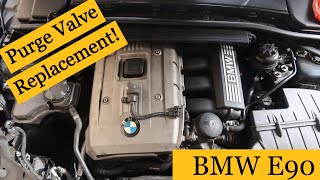
Typical fix: Replace the purge valve solenoid. It's typically a simple replacement with two hoses and one electrical connector. 🎬 Watch: How to replace the fuel tank vent valve
Est. part cost: $40-$90 - Cracked or Disconnected EVAP Hoses ⚪ Low Probability
How to confirm: A smoke test is the most effective method. Visually inspect all accessible EVAP lines running from the fuel tank, to the charcoal canister, and up to the purge valve in the engine bay for brittleness and cracks, especially at connection points.
Typical fix: Replace the specific section of cracked or broken hose. This can range from simple vacuum lines to more complex pre-formed plastic lines.
Est. part cost: $10-$50
Rare But Worth Checking
- Leaking Fuel Pump or Fuel Level Sensor Seal: The large O-ring that seals the fuel pump and/or level sender units to the top of the fuel tank can fail. This is located under the rear seat cushion. A smoke test will show smoke billowing from under the seat if this is the cause, and a strong fuel smell may be present inside the cabin.
- Cracked Charcoal Canister: Physical damage from road debris can crack the plastic housing of the charcoal canister itself, creating a large leak. This is usually obvious during a visual inspection or smoke test, as it's located near the DMTL pump in the rear wheel well area.
Diagnosis Steps
- Read the code with an OBD-II scanner to confirm P0455 is the primary code.
- Inspect the gas cap. Is it on tight? Does the rubber seal look cracked, brittle, or worn? Ensure it clicks several times when tightened. If there is any doubt, replace it. This is the cheapest and most common fix.
- Clear the code after replacing the gas cap and drive for a few days to allow the EVAP monitor to run. The monitor often runs when the fuel level is between 1/4 and 3/4 full.
- If the light returns, the next step is a professional smoke test. This involves injecting low-pressure smoke into the EVAP system to visually identify the source of the leak. 🎬 Watch: Professional EVAP leak diagnosis and smoke test walkthrough
- Connect the smoke machine to the EVAP service port or, more commonly, the purge valve line in the engine bay.
- Check for smoke leaking from common failure points in this order: the DMTL pump and its filter (rear driver's side wheel well), the charcoal canister and its connections, the purge valve (engine bay), the seals for the fuel pump/sending units under the rear seat, and the fuel filler neck.
- If no leak is found, the DMTL pump itself may need to be commanded closed with a diagnostic tool during the smoke test to check the integrity of the rest of the system.
- Once the leak is identified, replace the faulty component.
Parts You'll Likely Need
- Gas Cap
(OEM #16117222391)— This is the most frequent cause of P0455. The seal wears out over time, causing a leak. It's an inexpensive first step in diagnosis.
Trusted brands: Genuine BMW, Blau
OEM price range: $30-$40
Aftermarket price range: $20-$30 - DMTL Pump
(OEM #16137193479)— This is a very common failure point specific to this BMW platform that causes a large EVAP leak. The original part has been superseded multiple times.
Trusted brands: Bosch (OEM), Dorman, Genuine BMW
OEM price range: $150-$200
Aftermarket price range: $85-$150 - EVAP Purge Valve / Fuel Tank Vent Valve
(OEM #13907618643)— Can become stuck open, creating a constant large leak. It's a relatively common failure and easy to replace in the engine bay.
Trusted brands: Bosch (OEM), Genuine BMW
OEM price range: $70-$90
Aftermarket price range: $40-$60
Related Codes That Often Appear With This One
- P0442 — This code indicates a small EVAP leak. You might see this if a large leak component (like a gas cap seal) is just beginning to fail, or if there are multiple smaller leaks in the system.
- P1447 — This is a BMW-specific code for 'DMTL Pump Current Too High,' which points directly to an electrical failure or seizure of the DMTL pump motor, a common cause of P0455.
- 2A15 — This is a BMW-specific code for a 'fine leak' detected by the DMTL system. It can sometimes accompany a P0455 if the system is struggling to differentiate the leak size or if there are intermittent issues.
Technical Service Bulletins (TSBs) & Recalls
- While no specific TSB for P0455 was found, BMW has issued bulletins for related fine-leak codes (e.g., 2A15, 2A16) which can be precursors or related to the same faulty components. There are no widespread recalls specifically for the DMTL pump or other common P0455 causes on this platform.
Platform-Specific Known Issues
- Owner Experience: DMTL Pump Replacement: On the e90post.com forum, a user with a 2007 335i reported a 'Service Engine Soon' light and the dealer diagnosed a bad DMTL pump. Another user with a 2006 330i experienced the code after overfilling the gas tank, theorizing that liquid fuel contaminated the pump. They temporarily fixed it by disassembling and lubricating the internal vane pump, but replacement is the long-term solution.
Mechanic-Grade Diagnostic Values
- EVAP Purge Valve (Tank Vent Valve) Solenoid Resistance — expected: 27 - 29 Ohms. Failure: A significantly higher reading (e.g., over 100 Ohms) or an open circuit indicates a bad solenoid coil.
Hidden / Shadow Codes Worth Checking
- P1447 / 2A17: DMTL Pump, switching solenoid: current too high during stray air measurement. This points directly to an electrical failure or seizure of the DMTL pump motor. (see via BMW-specific scan tools like ISTA, INPA, or advanced aftermarket scanners.)
- P2402 / 3225: DMTL leakage diagnosis pump, activation: Short circuit to B+ (positive battery terminal). This indicates a wiring issue or an internal short in the pump. (see via BMW-specific scan tools like ISTA or INPA.)
- P240A / 2A18: DMTL Pump Heater, activation: Open Circuit. This points specifically to a fault in the pump's internal heater element or its wiring. (see via BMW-specific scan tools like ISTA or INPA.)
- 2B3A: A general DMTL system fault code that often leads to replacing the pump. (see via BMW-specific scan tools.)
Scan Tool Commands That Help
- ISTA (Rheingold): EVAP System Test Plan — This is the guided diagnostic procedure. It will walk the user through a full system test, commanding the DMTL pump, its internal valve, and heater on and off to isolate the fault, and interpreting the results from the fuel tank pressure sensor.
- INPA: DMTL Pump Activation — To directly command the DMTL pump to run. This is useful to audibly confirm if the pump motor is working at all. The function is typically found under the engine control module (e.g., MSV70/MSV80/MSD80) -> Activations -> Diagnostic Testing or End-of-Line test.
Wiring & Ground Locations
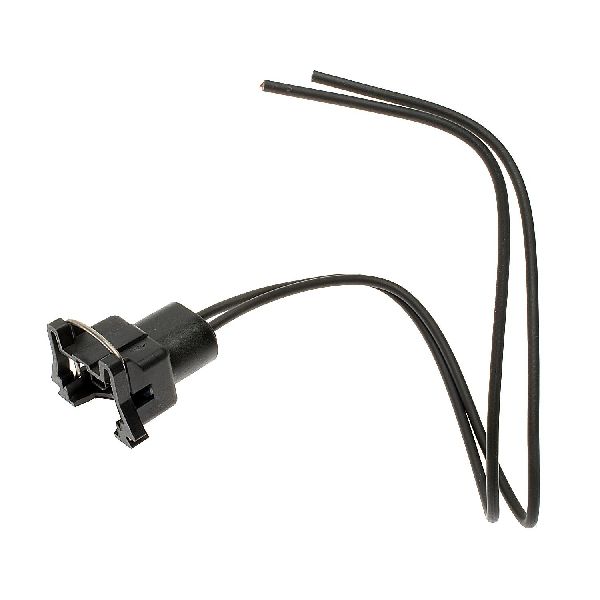
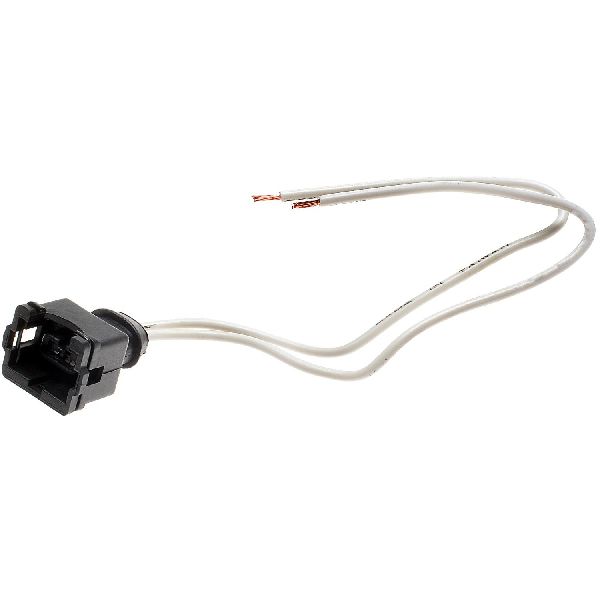
- DMTL Pump Connector (X1714) — At the DMTL pump, located inside the rear driver's side wheel well area, attached to the charcoal canister.. This is the single connection for the pump. Testing for power, ground, and signal continuity at these pins is crucial before replacing the pump. Pin 4 is power, while pins 1, 2, and 3 are separate ground signals from the DME for the pump, heater, and valve respectively.
- Main Engine Ground Strap — Connects the driver's side engine mount bracket to the vehicle's chassis rail, underneath the car.. This strap is notorious for corrosion and fraying. A poor ground can cause a host of intermittent and difficult-to-diagnose electrical issues, including faults in the DME which controls the EVAP system. While not a direct cause of P0455, checking its condition is a wise step when chasing any electrical gremlins.
Real Owner Repair Stories
- Bimmerpost Forum User (2008 BMW 335i) — Check Engine Light with code P240A / 2A18 (DMTL Pump Heater Circuit Open).
❌ Tried (didn't work) Visual inspection of the pump and nearby wiring.
✅ What actually fixed it The diagnosed cause was a break in the Black/Red wire that provides the ground signal to the DMTL pump's heater (Pin 2 at the connector). The fix is to test continuity from the DME to the pump connector and repair the broken wire, which often breaks near the pump due to exposure. - Bimmerpost Forum User (2011 BMW 335i (E92 N55)) — Check Engine Light with code for 'DMTL leakage diagnosis pump, activation: Short circuit to B+.'
❌ Tried (didn't work) Replacing the DMTL pump, Replacing the gas cap
✅ What actually fixed it The thread concluded without a definitive fix from the original poster, but it serves as a critical real-world example that replacing the most common parts (gas cap, DMTL pump) does not always resolve electrical faults like a short circuit. The next step would be tracing the wiring harness for a short. - YouTube video by 'The Beamer Barn' (BMW E92 335i) — Check Engine Light with code 2B3A (DMTL system fault).
❌ Tried (didn't work) Initial diagnosis pointed away from gas cap.
✅ What actually fixed it Replacing the DMTL pump with a new Bosch unit resolved the code.
"I Checked Everything" — The Actual Cause
- If a smoke test shows no leaks but a P0455 code persists, the fault is likely not a physical leak. The cause is often electrical, such as a failed Fuel Tank Pressure Sensor providing false readings to the ECU, or an internal electrical failure in the DMTL pump (like a seized motor or open heater circuit) that prevents the test from running correctly. In these cases, diagnosis requires a BMW-specific scan tool to read shadow codes and test component wiring with a multimeter, rather than a smoke machine.
When the Usual Fixes Don't Work
- In multiple documented cases, owners have replaced both the gas cap and the DMTL pump—the two most common culprits—only for the P0455 or a related electrical fault code (like 'short circuit to B+') to persist. This strongly indicates the underlying problem was not the components themselves but rather a fault in the wiring harness between the DME (engine computer) and the DMTL pump. A break or short in this long run of wire, especially near the rear wheel well where it's exposed to road debris and moisture, can prevent the pump from functioning and trigger the code. This highlights the necessity of performing electrical continuity checks before assuming a component is bad, even a common failure item.
OEM Part Supersession History
16136752551, 16136764191→16137193479— Standard part evolution and design updates by the manufacturer.
Heads up: The newer part number is a direct replacement for the older ones. The OEM is Bosch, part number 026122201V.
Model Year Variations Within This Range
- 2006-2013: A key difference exists between standard ULEV (N52, N54, N55 engines) and SULEV (N51 engine) models. SULEV (Super Ultra Low Emission Vehicle) models have a more complex emissions system to meet stricter standards, which can include a different fuel tank, fuel pump, and other EVAP components that are covered under a longer emissions warranty (often 15 years/150,000 miles in certain states). While the P0455 causes are often the same, SULEV owners should check their warranty coverage before paying for repairs.
Diagnostic Flowchart
Other Known Issues on This Vehicle
Issues unrelated to this code that are worth knowing about as an owner of this generation:
- High-Pressure Fuel Pump (HPFP) Failure (N54 Engine) 🔴 High — Extremely common on 2007-2010 models with the N54 twin-turbo engine. Failure often occurs between 40k-80k miles. (Ref: BMW issued a recall and extended the warranty to 10 years/120,000 miles for this part.)
- Electric Water Pump & Thermostat Failure (N52/N54/N55) 🔴 High — Very common failure, typically between 60,000 and 90,000 miles. Failure can be sudden and lead to engine overheating.
- Oil Filter Housing Gasket (OFHG) Leak (N52/N54/N55) 🟠 Medium — Extremely common leak point, often starting around 60,000-80,000 miles. Leaking oil can drip onto the serpentine belt, causing it to slip or fail, which can lead to severe engine damage if the belt is ingested by the crank seal.
- Valve Cover Gasket (VCG) Leak (N52/N54/N55) 🟠 Medium — Very common oil leak, usually appearing after 70,000 miles. The heat from the engine causes the gasket to become brittle and crack.
- Turbocharger Wastegate Rattle (N54 Engine) 🟠 Medium — A very common issue where the wastegate actuator rod wears, causing a distinct rattling noise on deceleration. It can lead to low boost fault codes. Often starts around 50,000 miles. (Ref: BMW extended the warranty for this issue on some vehicles to 8 years/82,000 miles.)
- Fuel Injector Failure (N54 Engine) 🔴 High — Common on the N54 engine, leading to misfires, rough idle, and poor performance. BMW has released multiple updated versions (Index 12 being the latest reliable version).
Used vs. New Parts: Buying Guide for This Vehicle
When a used part is the smart pick: Used parts are a reasonable option for purely structural components like the charcoal canister (if visually inspected for cracks) or pre-formed EVAP hoses from a low-mileage, non-corroded donor vehicle. For electronic or mechanical parts like the DMTL pump or purge valve, a used part is a significant gamble due to their known failure rates.
Donor-vehicle mileage cap: roughly under 60000 miles for the part to have meaningful remaining life.
What to inspect on the donor part:
- Check plastic components for any signs of becoming brittle, discolored, or cracked.
- Inspect electrical connectors for green or white corrosion on the pins.
- Ensure rubber hoses are still pliable and not hardened or swollen.
- Verify the donor car is from a dry climate to minimize corrosion risk.
OEM-only on this vehicle (don't cheap out):
- Gas Cap: Aftermarket gas caps are a frequent source of EVAP codes. It is highly recommended to use a Genuine BMW part (16117222391) to ensure a perfect seal.
Aftermarket brands forum-validated for this vehicle:
- Bosch: Bosch is the Original Equipment Manufacturer (OEM) for both the DMTL pump and the EVAP purge valve. Buying a Bosch-branded part is identical to the Genuine BMW part but is often available at a lower cost.
Brands owners have reported issues with on this vehicle:
- Unbranded/White-box parts: For critical emissions components like the DMTL pump and purge valve, unbranded parts from online marketplaces are a high risk for premature failure or incorrect operation, leading to the code returning.
Real Owner Stories
Aggregated from forums and TSBs cited above. Mileages and costs reflect what owners reported in those sources.
2007 BMW 335i
Symptoms: Service Engine Soon light was illuminated.
What fixed it: The dealer diagnosed and replaced a bad DMTL pump.
Source hint: e90post.com forum thread cited in Owner Experience: DMTL Pump Replacement
2006 BMW 330i
Symptoms: Experienced the code after overfilling the gas tank.
What fixed it: Temporarily fixed by disassembling and lubricating the internal vane pump, though replacement is the recommended long-term solution.
Source hint: e90post.com forum thread cited in Owner Experience: DMTL Pump Replacement
BMW 3-Series (E90 platform)
Symptoms: Recurring DMTL pump failures.
What fixed it: The owner discussed the possibility of a clogged charcoal canister or wiring issues being the root cause rather than the pump itself.
Source hint: e90post.com: A user with recurring DMTL pump failures discusses the possibility of a clogged charcoal canister or wiring issues
Related OBD-II Codes
Frequently Asked Questions
Where is the DMTL pump located on my 2006-2013 BMW 3-Series?
Can overfilling my gas tank cause the P0455 code on my E90?
Are there any BMW-specific codes I should look for alongside P0455?
What is the first part I should replace to fix a large EVAP leak on my 3-Series?
How can I test the EVAP Purge Valve on my N52 or N54 engine?
Is there a recall for the DMTL pump or EVAP system on this platform?
Helpful Videos

Used OEM Parts in Stock


New Aftermarket Parts Available


The information in this article is provided for general reference and educational purposes only. Vehicle specifications, procedures, and part compatibility can vary by production date, trim level, and region. Always consult your vehicle's factory service manual and verify part numbers before purchasing or performing repairs. Safety-critical components such as airbags, seat belts, and braking systems should be installed by a qualified professional.
- BMW 3-Series:
- 🎬 Helpful Videos
- 🛍️ Shop This Part
- What's Unique About the 2006-2013 BMW 3-Series
- Symptoms You May Notice
- Most Likely Causes
- Rare But Worth Checking
- Diagnosis Steps
- Parts You'll Likely Need
- Related Codes That Often Appear With This One
- Technical Service Bulletins (TSBs) & Recalls
- Platform-Specific Known Issues
- Mechanic-Grade Diagnostic Values
- Hidden / Shadow Codes Worth Checking
- Scan Tool Commands That Help
- Wiring & Ground Locations
- Real Owner Repair Stories
- "I Checked Everything" — The Actual Cause
- When the Usual Fixes Don't Work
- OEM Part Supersession History
- Model Year Variations Within This Range
- Diagnostic Flowchart
- Other Known Issues on This Vehicle
- Used vs. New Parts: Buying Guide for This Vehicle
- Real Owner Stories
- 2007 BMW 335i
- 2006 BMW 330i
- BMW 3-Series (E90 platform)
- Related OBD-II Codes
- Frequently Asked Questions
- 🎟️ Get 5% Off