

P0452 on 2015-2016 Jeep Renegade: EVAP Pressure Sensor Circuit Low Causes and Fixes
On a 2015-2016 Jeep Renegade, code P0452 most often points to a faulty fuel tank pressure sensor or its wiring. The sensor is located on top of the fuel tank and may require dropping the tank to replace. Expect to pay around $60 for the part and $338-$372 for a professional repair. Before replacing parts, check for PCM software updates per TSB #18-061-16 REV. C.
- P0452 on a Jeep Renegade means the computer sees an abnormally low voltage from the fuel tank pressure sensor, often indicating a faulty sensor, a wiring short, or a software issue.
- A key first step for 2016 models is to check if TSB 18-061-16 REV. C (PCM update) has been performed, as it specifically addresses this code.
- The most common fix is replacing the fuel tank pressure sensor, which is on top of the fuel tank and may require dropping the tank to access.
- While driving is generally safe, the vehicle will not pass an emissions test until the issue is resolved.
What's Unique About the 2015-2016 Jeep RENEGADE
For the 2015-2016 Jeep Renegade, the P0452 code is explicitly mentioned in a Technical Service Bulletin (TSB #18-061-16 REV. C) alongside other EVAP codes. This TSB recommends a PCM software update to improve diagnostic accuracy, suggesting that in some cases, the code may be triggered by a software anomaly rather than a hard part failure. Unlike some vehicles where a loose gas cap is a primary trigger for many EVAP codes, P0452 on the Renegade is more specifically tied to the electrical circuit of the pressure sensor itself. Some owners have also anecdotally reported the code appearing after driving through deep standing water, suggesting a potential for moisture intrusion in the sensor's wiring harness.
Diagnostic Flowchart
Tap your situation to follow the diagnostic path that matches what you're seeing on this vehicle.
Symptoms You May Notice
- Check Engine Light is on.
- A faint fuel smell may be noticeable in rare cases.
- No other drivability symptoms are typically present.
- In some cases, difficulty refueling (fuel pump nozzle clicks off repeatedly) may occur.
- Replacing the gas cap when the problem is electrical.
- Replacing the EVAP purge or vent solenoids, which are less likely to cause a specific 'low input' code for the pressure sensor. A user on a Jeep forum replaced the canister purge valve without resolving the P0452 code.
Most Likely Causes
- Faulty Fuel Tank Pressure Sensor 🔴 High Probability The sensor is an electronic component that can fail internally over time, causing it to send a constant low voltage signal (near 0 volts) to the PCM regardless of actual tank pressure.
How to confirm: Using a scan tool, observe the live data for the fuel tank pressure sensor. If the voltage reads extremely low (often near 0 volts) regardless of actual tank pressure 🎬 Watch: Two simple DIY methods to fix the P0452 code. (e.g., when the gas cap is removed), the sensor is likely bad. You can also test the sensor's reference voltage (should be ~5V), ground, and signal wires with a multimeter.
Typical fix: Replace the fuel tank pressure sensor. This sensor is located on top of the fuel pump module. Access may be possible through an inspection panel under the rear seat, but often requires the fuel tank to be lowered for access. 🎬 See this walkthrough on how to test and replace the sensor.
Est. part cost: $55-$75 - Wiring or Connector Issue 🟡 Medium Probability The wiring harness leading to the fuel tank is exposed to road debris, moisture, and potential chafing against the chassis or other components. This can cause corrosion in the connector or a short-to-ground on the signal wire. One owner of a related Jeep platform found an EVAP hose had a hole worn in it from rubbing against the back of the valve cover, causing a persistent code.
How to confirm: Visually inspect the wiring harness and connector going to the fuel tank pressure sensor for any signs of damage, corrosion, or loose pins. Trace the harness as far as possible, looking for areas where it might rub against the frame or suspension components. Use a multimeter to check for a short to ground on the signal wire.
Typical fix: Repair the damaged section of wiring or clean/replace the connector. Secure the harness away from any potential chafe points.
Est. part cost: $5-$50 - Loose or Faulty Gas Cap ⚪ Low Probability While more commonly associated with leak codes (P0455/P0456), a very poor seal could theoretically contribute to erratic pressure readings. However, it is not the primary cause for a 'low input' electrical code like P0452.
How to confirm: Ensure the gas cap clicks several times when tightened. Inspect the cap's seal for cracks or deterioration. Given the Renegade's capless system, inspect the spring-loaded flap for proper sealing and debris.
Typical fix: Clean the capless fuel filler neck seal. If a traditional cap is used, tighten or replace it.
Est. part cost: $15-$30
Rare But Worth Checking
- Faulty Powertrain Control Module (PCM): This is extremely rare and should only be considered after all other possibilities, including wiring, the sensor itself, and available software updates (TSB 18-061-16 REV. C), have been exhaustively tested and ruled out.
- Driving Through Deep Water: One owner on a forum reported the P0452 code appeared after driving through approximately 4 inches of standing water, suggesting that water intrusion into the sensor connector or a related part of the EVAP harness could be a possible trigger.
Diagnosis Steps
- Use an OBD-II scanner to confirm P0452 is the active code and check for any other related EVAP codes listed in TSB 18-061-16 REV. C.
- Check with a dealer if the PCM software update from TSB 18-061-16 REV. C has been performed, especially if multiple EVAP codes are present.
- Inspect the capless fuel filler neck for debris and ensure the seal is intact and closing properly.
- Visually inspect the wiring harness and connector leading to the fuel tank pressure sensor. Look for any obvious signs of damage, corrosion, or chafing. The sensor is on top of the fuel tank.
- With a scan tool, monitor the live data for the fuel tank pressure (FTP) sensor voltage. A reading near zero volts that does not change when the fuel filler is opened points towards a short or a faulty sensor.
- If you have access, use a multimeter to test the sensor's connector. You should find a 5-volt reference, a good ground, and a signal wire. Check for a short to ground on the signal wire.
- If the wiring and PCM software are confirmed to be good, and the sensor is receiving proper power and ground but the signal is incorrect, the fuel tank pressure sensor is faulty and needs to be replaced.
Parts You'll Likely Need
- Fuel Tank Pressure Sensor
(OEM #53329337)— This sensor is the most common failure point for a P0452 code, as it directly measures the pressure value that the code reports as out of range.
Trusted brands: Mopar, Carquest, Wells, Standard Motor Products
OEM price range: $65-$80
Aftermarket price range: $58-$75
Related Codes That Often Appear With This One
- P0455 — Indicates a large EVAP leak. A faulty pressure sensor can sometimes cause the system to incorrectly diagnose a leak because it provides inaccurate data to the PCM.
- P0456 — Indicates a small EVAP leak. Similar to P0455, a bad sensor can lead to a misdiagnosis of a leak. The TSB for the Renegade lists P0452 and P0456 together. 🎬 Watch: Diagnosing related EVAP leak codes on a Jeep Renegade.
- P0440 — A general EVAP system failure code that can be triggered by the same root causes as P0452. It is also listed in TSB 18-061-16 REV. C.
- P0441 — Indicates incorrect purge flow, which can be flagged if the pressure sensor isn't providing accurate data during the purge cycle. Also listed in the same TSB.
Technical Service Bulletins (TSBs) & Recalls
- 18-061-16 REV. C: Lists P0452 - EVAP Pressure Switch Stuck Closed as one of several codes addressed by a PCM software update for 2016 models with the 2.4L engine to improve diagnostic and system enhancements.
Platform-Specific Known Issues
- A Technical Service Bulletin (TSB #18-061-16 REV. C) exists for the 2016 model year that lists P0452 among several other potential EVAP and engine codes. The bulletin addresses a software update for the Powertrain Control Module (PCM) to improve diagnostic accuracy and system enhancements. If you have multiple codes stored along with P0452, checking if this software update has been performed is a critical first step before replacing parts.
- The wiring harness to the fuel tank is susceptible to damage from road debris and moisture. One owner reported the code appearing after driving through standing water, indicating a potential weakness in the harness's weather sealing.
Mechanic-Grade Diagnostic Values
- FTP Sensor Reference Voltage — expected: ~5.0 Volts. Failure: 0V indicates an open in the supply wire from the PCM or a faulty PCM.
- FTP Sensor Signal Voltage (Key On, Engine Off, Gas Cap Off) — expected: Typically 2.5V - 3.5V, representing atmospheric pressure.. Failure: A reading below 0.5V, especially near 0V, indicates a short to ground or a faulty sensor.
- FTP Sensor Ground Circuit Resistance — expected: < 1.0 Ohm. Failure: High resistance (e.g., > 5 Ohms) indicates a corroded or broken ground connection.
- FTP Sensor Signal Wire Continuity Test — expected: < 1.0 Ohm. Failure: Infinite resistance (OL) indicates an open circuit (broken wire) between the sensor connector and the PCM.
Scan Tool Commands That Help
- wiTECH (Chrysler/Jeep Dealer Tool): Small Leak Verification Test (SLVT) — This is a mandatory test when diagnosing P0456 (small leak) but is also useful for P0452. It forces the EVAP system to pressurize and can help verify if the pressure sensor is responding correctly or if a leak is causing the low reading. It is the only dealer-approved method to confirm a fix without extensive drive cycles.
- High-End Bidirectional Scanner (e.g., iCarsoft CR MAX BT, Autel): EVAP System Leak Test / Purge & Vent Solenoid Activation — Allows the technician to command the purge and vent solenoids to close, sealing the system. While monitoring FTP sensor voltage, this can confirm if the sensor is capable of reading pressure changes or if it is stuck at a low voltage, isolating the fault to the sensor/circuit.
Wiring & Ground Locations
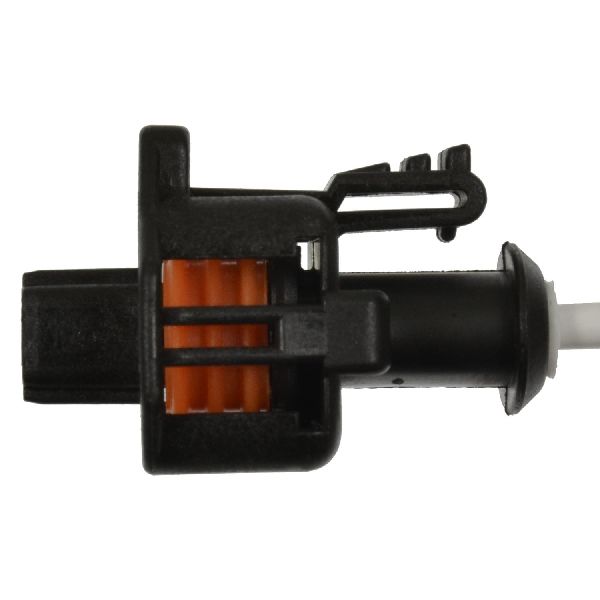
- Fuel Tank Pressure Sensor Connector (2016 2.4L) — On top of the fuel tank, part of the fuel pump module assembly.. This is the primary connection point to test for power, ground, and signal. A wiring diagram for the 2016 Renegade 2.4L shows a White/Black wire for the 5-volt supply. Damage or corrosion here is a direct cause of P0452.
- G104 - Engine Ground — Typically located on the rear of the engine block, often shared by multiple sensors including O2 heaters.. While not directly for the FTP sensor, poor engine grounds are a notorious issue on Jeeps, causing widespread electrical problems. A bad G104 can introduce electrical noise or voltage drops that affect various sensor readings, including those in the EVAP system. It is known to get corroded and break.
- G300 / G301 - Cabin Grounds — Located under the driver (G301) and passenger (G300) side seats, beneath the carpet.. These ground points serve numerous modules and components in the rear of the vehicle. While less likely to be the primary cause, a corroded G300/G301 could contribute to intermittent electrical issues for rear-mounted components like the fuel pump module and its integrated sensors.
Real Owner Repair Stories
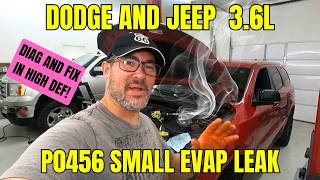
- YouTube - 'Jeep, Dodge, Chrysler 2012 to 2019 Evap Small Leak Fixed P0456 p0440' (Jeep/Dodge/Chrysler (2012-2019), specific model not stated but uses the same ESIM system.) — Check Engine Light with EVAP codes P0456 and P0440.
❌ Tried (didn't work) Visual inspection of EVAP lines in the engine bay showed no obvious cracks.
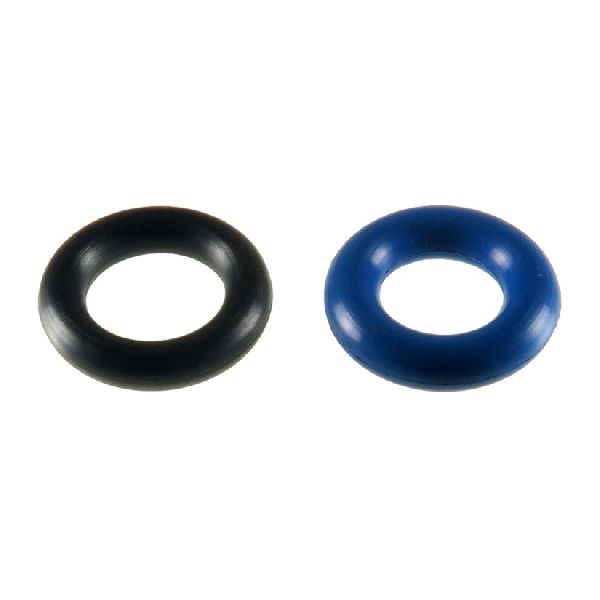
✅ What actually fixed it After a smoke test revealed a leak from the EVAP System Integrity Module (ESIM) on the charcoal canister, the cause was found to be a failed O-ring on the ESIM. Replacing the ESIM and its O-ring resolved the leak and the codes. This is a common failure point that can cause various EVAP codes.
OEM Part Supersession History
4861961AA, 4861961AB, 4861961AC→4861961AD— Part revision and improvement.
Heads up: These part numbers refer to the 'Detector Evaporative System Integrity Module' (ESIM), which is a related EVAP component. A failure here can cause various EVAP codes. Using the latest revision (AD) is recommended.
Helpful Videos


![How to Fix P0452 Engine Code in 3 Minutes [2 DIY Methods / Only $4.53]](https://img.youtube.com/vi/KzoZ5DSiZVo/mqdefault.jpg)
We Have This Part in Stock



The information in this article is provided for general reference and educational purposes only. Vehicle specifications, procedures, and part compatibility can vary by production date, trim level, and region. Always consult your vehicle's factory service manual and verify part numbers before purchasing or performing repairs. Safety-critical components such as airbags, seat belts, and braking systems should be installed by a qualified professional.
- Jeep RENEGADE:
- 🎬 Helpful Videos
- 🛍️ Shop This Part
- What's Unique About the 2015-2016 Jeep RENEGADE
- Diagnostic Flowchart
- Symptoms You May Notice
- Most Likely Causes
- Rare But Worth Checking
- Diagnosis Steps
- Parts You'll Likely Need
- Related Codes That Often Appear With This One
- Technical Service Bulletins (TSBs) & Recalls
- Platform-Specific Known Issues
- Mechanic-Grade Diagnostic Values
- Scan Tool Commands That Help
- Wiring & Ground Locations
- Real Owner Repair Stories
- OEM Part Supersession History
- 🎟️ Get 5% Off