

P0452 on 2012-2015 Ford Focus: Causes for EVAP Pressure Sensor Low Input
On a 2012-2015 Ford Focus with the 2.0L engine, P0452 often points to a larger issue than just a bad sensor. It's frequently seen with other codes like P1450 due to a stuck canister purge valve causing the fuel tank to deform. Check for related recalls (18S32) and TSBs (19-2364) before replacing parts. The complete fix, often covered by the recall, involves a new purge valve, a PCM software update, and potentially a new fuel tank if damage has occurred.
- P0452 on a 2012-2015 Focus is a strong indicator of a known issue covered by Ford Safety Recall 18S32.
- Do not simply replace the Fuel Tank Pressure (FTP) sensor. The most likely cause is a stuck-open canister purge valve.
- Check for other codes like P1450, P0460, and P0443. Their presence makes the recall-related issue highly probable.
- Before spending any money, check with a Ford dealer to see if the recall is open for your vehicle, as the repair may be free.
- A visual inspection of the fuel tank for deformation is a key diagnostic step for this specific problem.
What's Unique About the 2012-2015 Ford FOCUS

For the 2012-2015 Ford Focus with the 2.0L GDI engine, P0452 is rarely an isolated code. It is a well-documented symptom of a larger problem addressed by Ford Safety Recall 18S32 (NHTSA #18V735) and multiple Technical Service Bulletins. The root cause is often a canister purge valve (CPV) that sticks open, creating excessive vacuum in the fuel system. This constant vacuum can physically deform the plastic fuel tank, leading to erratic fuel gauge readings, stalling, and a specific cluster of diagnostic codes, including P0452 and P1450. Therefore, diagnosis must go beyond the FTP sensor itself and investigate the entire fuel vapor system for this known, widespread issue.
Diagnostic Flowchart
Tap your situation to follow the diagnostic path that matches what you're seeing on this vehicle.
Symptoms You May Notice
- Check Engine Light is on
- Inaccurate or erratic fuel gauge.
- Inaccurate Distance to Empty (DTE) calculation.
- Engine stalling, especially without warning while driving.
- Difficulty starting the engine, particularly after refueling (crank-no-start).
- Fuel odor near the vehicle.
- Rough idle.
- Replacing only the FTP sensor without checking the canister purge valve or for a deformed fuel tank. The new sensor may fail again or the code may return if the underlying high-vacuum condition is not corrected.
- Replacing the gas cap. While a loose or faulty capless fuel filler can cause other EVAP codes (like P0455 or P0457), it is not a typical cause for a P0452 'low input' circuit code, which indicates excessive vacuum or an electrical fault.
Most Likely Causes

- Stuck-Open Canister Purge Valve (CPV) 🔴 High Probability This is a widely documented failure for this platform, leading to Safety Recall 18S32. A faulty CPV creates excessive vacuum, deforming the fuel tank and triggering P0452 along with P1450. The original PCM software was not adept at detecting the stuck valve, allowing the condition to persist and cause damage.
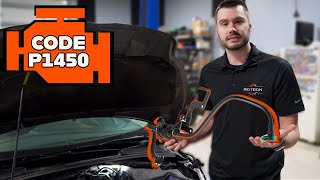
How to confirm: With the engine running, unplug the electrical connector from the purge valve. Place your finger over the port that leads to the intake manifold. If you feel any vacuum, the valve is stuck open and has failed. 🎬 Watch: A simple guide to diagnosing and repairing the P1450 code.
Typical fix: Replace the canister purge valve and its associated tube assembly. 🎬 See this walkthrough on how to replace the purge valve assembly. Then, the PCM software must be updated by a Ford dealer as specified in Recall 18S32 to properly detect this failure in the future. In severe cases, the fuel tank and carbon canister may also need replacement if they are damaged.
Est. part cost: $40-$90 - Deformed Fuel Tank 🟡 Medium Probability As a direct result of a faulty canister purge valve, the plastic fuel tank can be sucked inward by excessive vacuum, which can damage the integrated fuel pump module and FTP sensor.
How to confirm: Visually inspect the fuel tank from underneath the vehicle. It may appear concave or 'sucked in'. Ford's recall documentation considers a deformation of more than 1 inch (25mm) to be significant, requiring replacement.
Typical fix: Replacement of the fuel tank is required if deformation is significant. This is often done in conjunction with replacing the purge valve and updating the PCM software under the recall.
Est. part cost: $600-$1200 - Faulty Fuel Tank Pressure (FTP) Sensor 🟡 Medium Probability The sensor can fail electrically on its own, but it is often damaged by the fuel tank deformation or becomes faulty as a secondary effect of the primary purge valve issue. It's crucial to rule out the purge valve first.
How to confirm: Monitor the FTP sensor voltage via a scan tool; a reading near 0 volts or a negative value indicates a problem. Test the sensor's 5V reference, ground, and signal wires for continuity and proper voltage.
Typical fix: Replace the FTP sensor. On many Focus models, the sensor is integrated into a fuel vapor tube assembly on top of the tank, requiring the fuel tank to be dropped for access.
Est. part cost: $50-$150 - Damaged Wiring or Connector ⚪ Low Probability The wiring harness to the FTP sensor, located on top of the fuel tank, is susceptible to damage from road debris, corrosion, or rodents. The Focus and Fiesta platforms are also known for issues with a grounding point, which can cause various electrical faults.
How to confirm: Visually inspect the wiring harness leading to the FTP sensor for breaks, corrosion, or short circuits. Perform a continuity test on the signal, power, and ground wires from the sensor connector to the PCM.
Typical fix: Repair the damaged section of the wiring harness and secure it away from potential hazards. Replace the connector if corroded. Ensure all ground connections are clean and tight.
Est. part cost: $10-$30
Rare But Worth Checking
- Faulty Powertrain Control Module (PCM): This is extremely rare. The PCM should only be considered after all other possibilities, including the specific TSBs and recalls for this vehicle, have been thoroughly exhausted. A PCM failure is not a common cause for this specific code on this platform.
Diagnosis Steps
- Check for Recalls: First, use your VIN to check if Safety Recall 18S32 is open for your vehicle. A Ford dealer must perform this repair for free, which includes a PCM software update and inspection/replacement of the purge valve and fuel tank.
- Scan for All Codes: Use an OBD-II scanner to confirm P0452 and look for the other related codes, especially P1450. The presence of P1450 strongly points to the known purge valve issue.
- Test the Canister Purge Valve (CPV): Locate the CPV in the engine bay. Unplug its electrical connector. Start the engine. Check for vacuum on the valve's inlet port with your finger or a gauge. If vacuum is present, the valve is stuck open and must be replaced.
- Inspect Fuel Tank: Visually inspect the bottom of the fuel tank for signs of deformation or collapse. It may look like it has been sucked upwards. Significant deformation requires tank replacement.
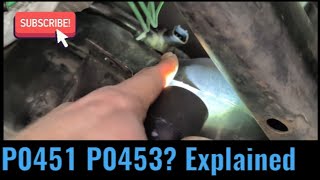
- Inspect FTP Sensor Circuit: If the purge valve tests good, use a scan tool to observe the FTP sensor voltage (V). A reading near 0V or negative voltage with the key on, engine off, points to a sensor or wiring issue. 🎬 Watch: Understanding what goes wrong with Ford Focus EVAP pressure sensors. Inspect the wiring harness on top of the fuel tank for any visible damage.
- Follow TSB/Recall Procedure: If the known issue is suspected, the official Ford procedure should be followed, which prioritizes testing the CPV, reprogramming the PCM, and inspecting the tank for deformation.
Parts You'll Likely Need

- Canister Purge Valve / Vapor Management Valve Assembly
(OEM #BV6Z-9D289-E (replaces BV6Z-9D289-D))— This is the most common failure point that causes P0452 and P1450 on this vehicle by sticking open. It is often sold as an assembly with the vapor tube.
Trusted brands: Motorcraft (OEM), Dorman, Carquest
OEM price range: $60-$100
Aftermarket price range: $40-$70 - Fuel Tank — Required if the original tank is deformed by the excessive vacuum caused by the stuck purge valve. This is a secondary, but common, consequence of the primary purge valve failure.
- Fuel Tank Pressure (FTP) Sensor — May fail on its own or be damaged by the tank deformation. It's often replaced as a precaution if the tank is dropped, but it is not usually the root cause of P0452 on this specific vehicle.
Related Codes That Often Appear With This One
- P1450 — Unable To Bleed Up Fuel Tank Vacuum. This code is a direct indicator of the excessive vacuum condition caused by a stuck purge valve and is the most common companion code to P0452 on this vehicle, as noted in recall 18S32.
- P0456 — Evaporative Emission System Leak Detected (Very Small Leak). Often appears as part of the cluster of codes related to the fuel tank deformation issue.
- P0460 — Fuel Level Sensor 'A' Circuit. Triggered by the fuel tank deformation physically affecting the fuel level sending unit inside the tank.
- P0443 — Evaporative Emission System Purge Control Valve Circuit. This indicates an electrical fault with the purge valve itself, which is the root cause of the larger issue.
- P2196 — O2 Sensor Signal Biased/Stuck Rich (Bank 1, Sensor 1). Also listed in the TSBs, likely caused by the engine management system trying to compensate for the un-metered fuel vapors being drawn into the intake manifold from the stuck purge valve.
- P0420 — Catalyst System Efficiency Below Threshold. This code is also listed in the TSBs as appearing alongside the EVAP issues, potentially as a long-term consequence of the rich fuel mixture caused by the EVAP fault.
Technical Service Bulletins (TSBs) & Recalls
- 18S32 / NHTSA 18V735: Safety recall for stuck canister purge valve causing fuel tank deformation and potential stalling. The fix involves a PCM reprogram and, if necessary, replacement of the purge valve and/or fuel tank.
- TSB 19-2364: Supersedes earlier TSBs and provides updated service procedures related to the EVAP system issue and associated codes.
- TSB 16-0062 & 15-0034: Earlier bulletins describing the cluster of DTCs (including P0452) associated with the faulty purge valve and erratic fuel gauge. [NHTSA citations from pass 1]
Platform-Specific Known Issues
- Owner Experience: The Full Cascade Failure: An owner on Reddit with a 2014 Focus detailed their experience where the check engine light came on, and the dealer diagnosed a bad 'Vapor management valve'. This failure led to the fuel tank collapsing, which in turn required the fuel pump to be replaced. The total quoted repair cost was $1,900. This highlights how a single, relatively inexpensive valve failure can lead to a very expensive series of repairs if not addressed promptly under the recall.
- The Recall Repair Process: According to Ford's recall notice (18S32), the dealer procedure is to first reprogram the Powertrain Control Module (PCM). The new software is better able to detect a stuck purge valve. They then check for fault codes. If codes are present or there's other evidence of a leaking CPV, they will replace the valve. Finally, they inspect the fuel tank, carbon canister, and fuel delivery module, replacing them as necessary, free of charge.
Mechanic-Grade Diagnostic Values
- FTP Sensor Voltage (KOEO, at atmospheric pressure) — expected: ~2.6V. Failure: A reading below 0.22V will trigger DTC P0452. A reading near 0V or a negative value points to a short to ground or a faulty sensor.
- FTP Sensor 5V Reference Voltage — expected: ~5.0V. Failure: No voltage indicates an open in the reference circuit from the PCM or a PCM fault.
- Canister Purge Valve Solenoid Resistance — expected: 20-30 Ohms. Failure: A reading outside this range indicates a failed solenoid coil.
- FTP Sensor Signal Wire to Ground Resistance (sensor and PCM disconnected) — expected: Greater than 1 MΩ (Megaohm). Failure: Low resistance indicates a short to ground in the signal wire.
Scan Tool Commands That Help
- Ford IDS (Integrated Diagnostic System): EVAP System Test — This is the dealer-level functional test that commands the purge and vent solenoids to check for leaks and proper system operation. It can verify if the system is capable of holding a vacuum.
- Ford IDS (Integrated Diagnostic System): Datalogger - FTP_V (PID) — Used to monitor the live voltage from the Fuel Tank Pressure sensor. A technician would watch this value (expecting ~2.6V at rest) to see if it drops unexpectedly, indicating a stuck purge valve pulling vacuum at idle.
- Forscan: Service Functions -> PCM -> EVAP System Test — Forscan, a powerful aftermarket tool, replicates the dealer-level EVAP test. It allows a DIY user or independent shop to command the system to seal and check for pressure changes without needing the expensive IDS setup.
- Forscan: Live Data - PID: FTP — Similar to the IDS datalogger, this allows monitoring of the fuel tank pressure to diagnose intermittent issues or confirm the effects of a stuck-open purge valve.
Wiring & Ground Locations
- Canister Purge Valve (CPV) / Vapor Management Valve — In the engine bay, on the driver's side of the engine, mounted near the intake manifold. It is an assembly with tubes running to the intake and back towards the firewall.. This is the most common point of failure. Its location is accessible for testing (checking for vacuum while running) and replacement.
- Fuel Tank Pressure (FTP) Sensor — On top of the fuel tank, often integrated into a fuel vapor tube assembly. Access typically requires lowering the fuel tank.. The sensor's location makes it susceptible to wiring damage from road debris and makes testing its connector more labor-intensive.
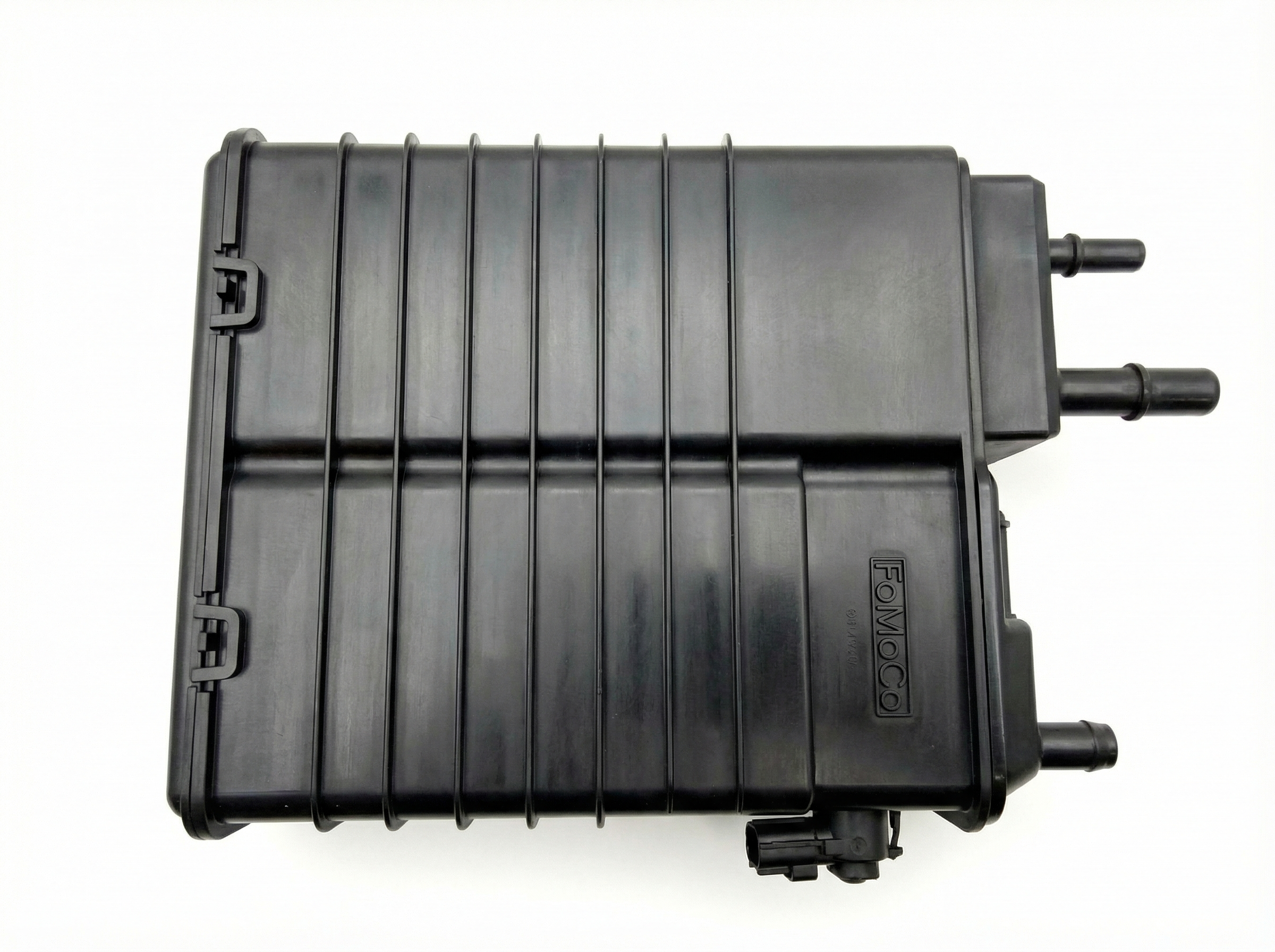
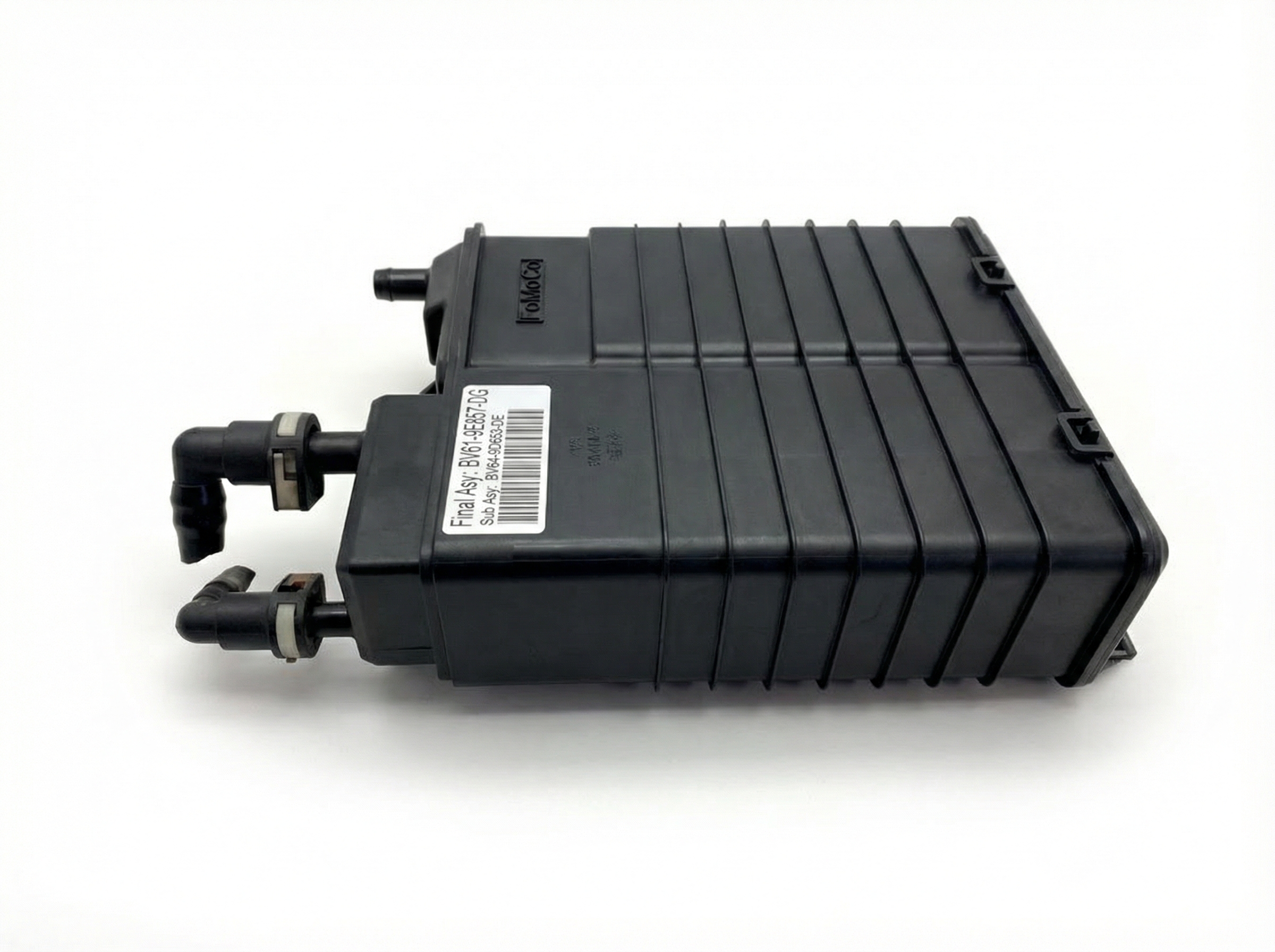
- Vapor Canister / Charcoal Canister — At the rear of the vehicle, near the fuel tank, typically above the rear subframe.. This component can become saturated with fuel if the purge valve fails, requiring replacement as part of the recall repair. It also houses the vent solenoid.
- PCM Connector E (80-Pin) — At the Powertrain Control Module (PCM), located in the engine bay.. Pin 63 on this connector is the 5V reference (VCC6) for the FTP sensor. This is a key test point for checking continuity if the sensor isn't receiving power.
Real Owner Repair Stories
- Fiesta ST Forum (Ford Fiesta ST (shares similar EVAP components and issues)) — Check engine light with P1450, stuttering/stalling after refueling, smell of gasoline.
❌ Tried (didn't work) Initially tried replacing just the purge valve solenoid itself, but found it impossible to swap the old nylon lines onto the new valve.
✅ What actually fixed it Replacing the entire purge valve and line assembly solved the codes and drivability issues. However, another user noted the problem returned after about a year, suggesting the replacement part may also be prone to failure over time. - Reddit r/MechanicAdvice (2014 Ford Focus SE) — Difficulty filling the gas tank (pump clicks off), Check Engine Light with P1450.
❌ Tried (didn't work) Replaced the canister purge valve with an aftermarket part from O'Reilly's. The code cleared and the car drove fine for 100-150 miles, but the CEL came back on with the same P1450 code and the refueling issue persisted.
✅ What actually fixed it The user's story was unresolved at the time of posting, but highlights a common scenario where an aftermarket purge valve may not fix the issue or could be faulty out of the box. The user confirmed they did not feel a vacuum on the old valve, which is the standard test, complicating the diagnosis. This points towards either a faulty new part or a deeper issue like a blocked canister or vent solenoid.
OEM Part Supersession History
BV6Z-9D289-D→BV6Z-9D289-E— Standard part revision by the manufacturer, likely for improved durability or to address the known sticking issue.
Heads up: The new part (BV6Z-9D289-E) is the correct direct replacement for the original. No incompatibility is noted.
Model Year Variations Within This Range
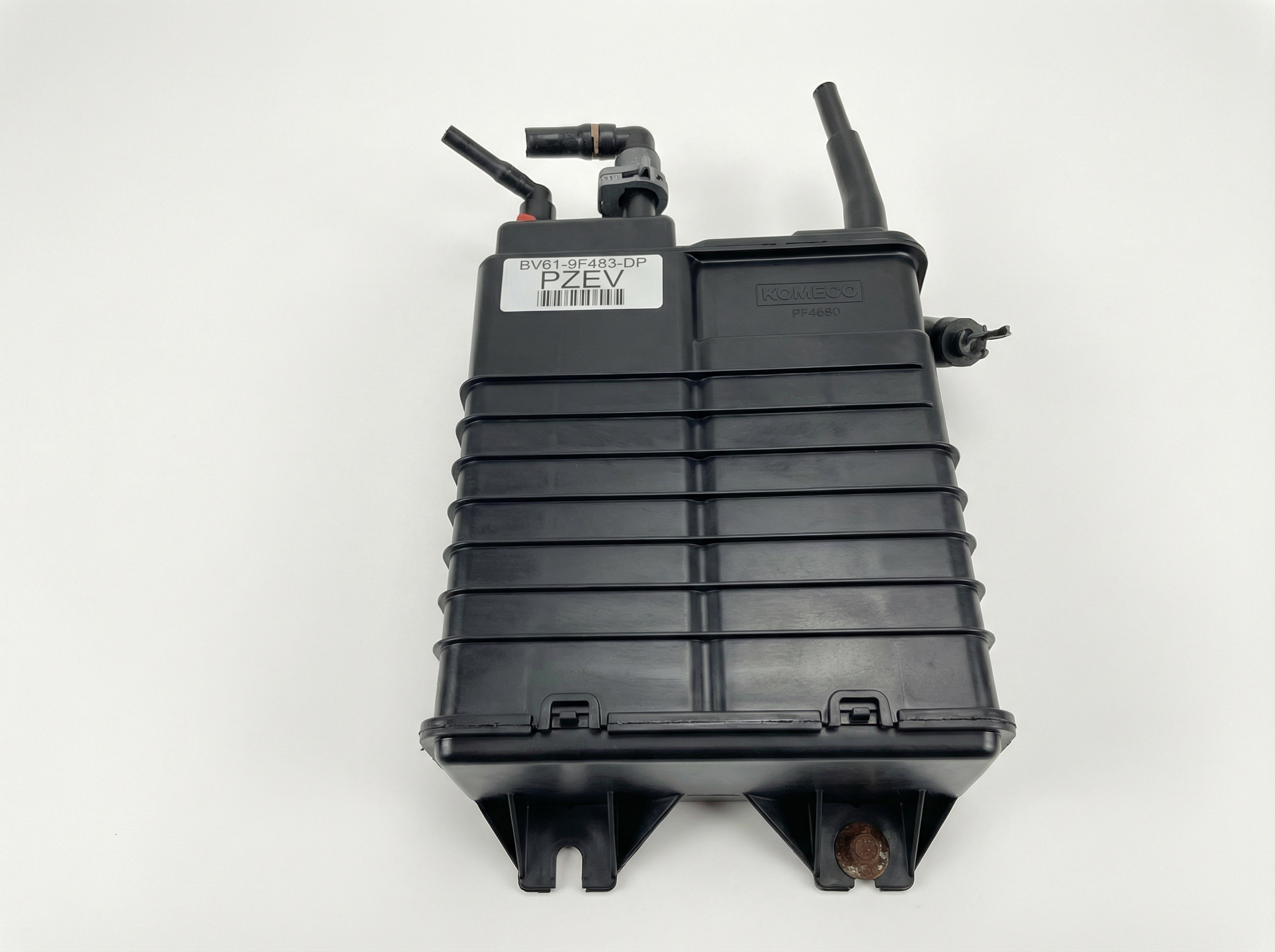
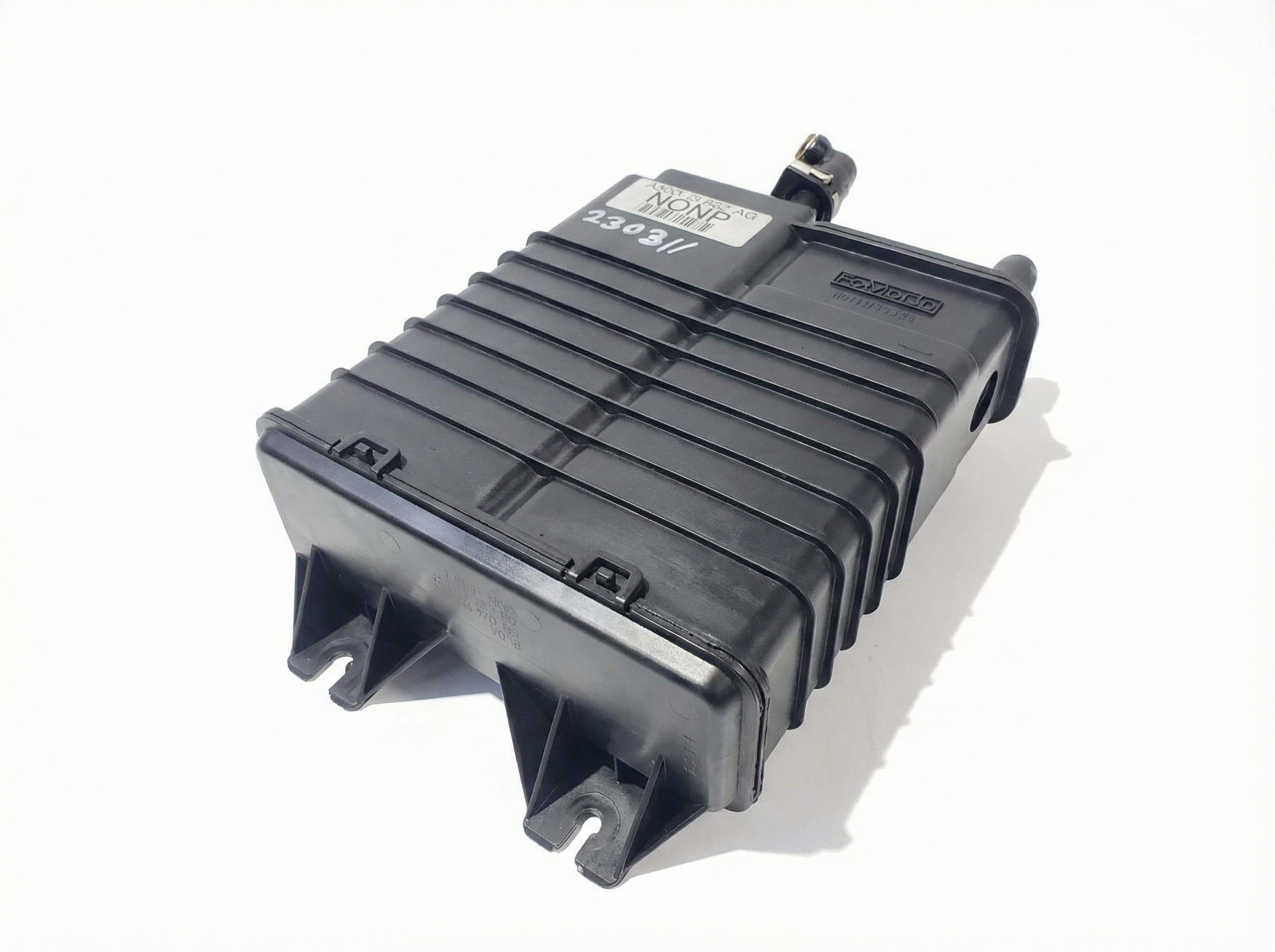
- 2012-2018: While the P0452 code and its primary cause (stuck purge valve) apply across the 2012-2015 range (and up to 2018), the most critical variation is not by year, but by emissions certification. Vehicles can be either Federal (Non-PZEV) or PZEV (Partial Zero Emission Vehicle), which uses a different, non-interchangeable vapor canister. This was consistent across the model years.
Helpful Videos


Used OEM Parts in Stock


New Aftermarket Parts Available


The information in this article is provided for general reference and educational purposes only. Vehicle specifications, procedures, and part compatibility can vary by production date, trim level, and region. Always consult your vehicle's factory service manual and verify part numbers before purchasing or performing repairs. Safety-critical components such as airbags, seat belts, and braking systems should be installed by a qualified professional.
- Ford FOCUS:
- 🎬 Helpful Videos
- 🛍️ Shop This Part
- What's Unique About the 2012-2015 Ford FOCUS
- Diagnostic Flowchart
- Symptoms You May Notice
- Most Likely Causes
- Rare But Worth Checking
- Diagnosis Steps
- Parts You'll Likely Need
- Related Codes That Often Appear With This One
- Technical Service Bulletins (TSBs) & Recalls
- Platform-Specific Known Issues
- Mechanic-Grade Diagnostic Values
- Scan Tool Commands That Help
- Wiring & Ground Locations
- Real Owner Repair Stories
- OEM Part Supersession History
- Model Year Variations Within This Range
- 🎟️ Get 5% Off