

P0452 on 2019-2020 Dodge Challenger: EVAP Pressure Switch Stuck Closed Causes and Fixes
This code indicates the EVAP system pressure sensor is sending an abnormally low voltage to the computer. The most common cause on a 2019-2020 Challenger is a faulty fuel tank pressure sensor itself, which costs around $25-$60 for the part. Replacing it can be a simple DIY job if accessible, but may require lowering the fuel tank.
- P0452 on a 2019-2020 Challenger almost always points to a problem with the fuel tank pressure sensor or its wiring, not a system leak.
- This is a known issue acknowledged by Dodge in at least two Technical Service Bulletins.
- Do not replace the gas cap; it is not the cause for this specific circuit code.
- Diagnosis involves checking the sensor's voltage with a scan tool (expect <0.5V) and testing the wiring harness for a 5V reference and good ground before replacing the sensor.
- The repair is DIY-friendly for those comfortable with removing a wheel and wheel well liner, with the correct Mopar part number being 68525698AA.
What's Unique About the 2019-2020 Dodge CHALLENGER
For the 2019-2020 Challenger, this code is well-documented by Dodge through Technical Service Bulletins (TSBs). The issue is common enough that TSB #25-003-20 and #1807422 were issued, specifically calling out P0452. This indicates a known pattern of failure rather than a random one-off problem. TSB #25-003-20, which also applies to the Dodge Charger and Chrysler 300, points to a potentially kinked EVAP purge line on vehicles built between May and June 2020 as a cause for both P0452 and P0441. The fuel tank pressure sensor on these models is typically located near the fuel filler neck, accessible after removing the rear driver's side wheel and splash shield, which can make diagnosis more straightforward than on vehicles where it's mounted directly on top of the fuel pump inside the tank.
Diagnostic Flowchart
Tap your situation to follow the diagnostic path that matches what you're seeing on this vehicle.
Symptoms You May Notice
- Check Engine Light is on
- Inability to pass an emissions inspection
- Possible faint fuel odor
- Rarely, difficulty starting immediately after refueling 🎬 See this quick guide on what the P0452 code means.
- Replacing the gas cap. A bad gas cap typically causes a leak detection code like P0455 (large leak) or P0456 (small leak), not a sensor circuit code like P0452.
- Replacing the EVAP purge valve or vent solenoid. While these can be related to other EVAP codes, P0452 specifically points to a low voltage input from the pressure sensor circuit. The exception is the kinked line mentioned in TSB #25-003-20.
Most Likely Causes
- Faulty Fuel Tank Pressure (FTP) Sensor 🔴 High Probability This is a known issue for this platform, as documented in manufacturer TSBs. The sensor itself can fail internally due to age or contamination, causing it to send a constant low voltage signal.
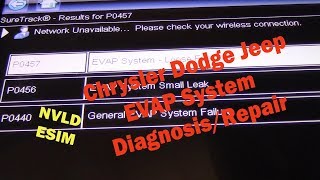
How to confirm: Using a scan tool, observe the FTP sensor voltage. 🎬 Watch: Step-by-step EVAP system diagnosis for Dodge and Chrysler vehicles. It should be stuck at a very low reading (e.g., under 0.5 volts) and not change when the gas cap is removed. A healthy sensor should read around 1.3-2.5 volts with the cap off (atmospheric pressure). If the wiring tests okay (5-volt reference and good ground are present), the sensor is bad.
Typical fix: Replace the fuel tank pressure sensor. The Mopar part number is often cited as 68525698AA (which supersedes 4593949ab).
Est. part cost: $25-$60 - Wiring or Connector Issue 🟡 Medium Probability The sensor is located behind the rear wheel, exposing its wiring harness to road debris and moisture, which can lead to corrosion, frayed wires, or loose pins over time.
How to confirm: Visually inspect the connector and wiring going to the FTP sensor for any signs of corrosion, fraying, or breaks. Use a multimeter to check for continuity and ensure there isn't a short to ground on the signal wire. Also confirm the presence of a 5-volt reference and a good ground at the connector with the key on.
Typical fix: Repair the damaged section of the wiring harness or clean/replace the connector.
Est. part cost: $5-$50 - Kinked EVAP Purge Line ⚪ Low Probability TSB #25-003-20 specifically identifies a kinked or improperly routed EVAP purge line as a potential cause on some 2020 models built between May 19, 2020, and June 22, 2020.
How to confirm: Visually inspect the EVAP purge line in the engine bay for any kinks or sharp bends, particularly near the brake booster tube, as shown in the TSB documentation.
Typical fix: Reroute the line to remove the kink. If the line is damaged, it may need to be replaced along with the purge valve assembly.
Est. part cost: $0-$100
Rare But Worth Checking
- Faulty Powertrain Control Module (PCM): This is extremely rare. The PCM should only be considered after all other possibilities, including the sensor and its entire circuit, have been exhaustively tested and ruled out.
Diagnosis Steps
- Read the codes with an OBD-II scanner and confirm P0452 is present. Note any other EVAP codes.
- Use the scanner's live data function to monitor the 'Fuel Tank Pressure' or 'FTP Sensor Voltage'. The reading will likely be very low (e.g., 0.1-0.5V).
- Turn the engine off and remove the gas cap. The pressure reading on the scan tool should change to reflect atmospheric pressure (typically 1.3V to 2.5V). If it remains stuck at the low value, it points towards a sensor or circuit issue.
- Locate the FTP sensor. On the Challenger, it's typically behind the driver-side rear wheel well liner, near the filler neck.
- Inspect the sensor's electrical connector and wiring for any visible damage, corrosion, or loose pins.
- Disconnect the sensor. With the key on, use a multimeter to test the harness connector. You should find a 5-volt reference wire, a ground wire, and the signal wire. If the 5-volt reference or ground is missing, trace the wiring back to find the open or short. If both are present, the problem is either the signal wire is shorted to ground or the sensor itself has failed.
- If wiring tests good, the fuel tank pressure sensor is the culprit and should be replaced. The Mopar part is commonly 68525698AA.
- For 2020 models, also inspect the EVAP purge line in the engine bay for kinks as per TSB #25-003-20.
Parts You'll Likely Need
- Fuel Tank Pressure Sensor
(OEM #68525698AA)— This sensor is the most frequent point of failure for this specific code on this vehicle, as supported by manufacturer TSBs and owner forums. It supersedes older part numbers like 4593949ab.
Trusted brands: Mopar, Duralast Gold, Autopart Premium, NTK
OEM price range: $45-$70
Aftermarket price range: $25-$60
Related Codes That Often Appear With This One
- P0441 — As noted in TSB #25-003-20, a faulty pressure sensor or a kinked purge line can provide incorrect data, leading the PCM to also flag an issue with the purge system's performance.
- P0456 — A faulty sensor might report pressure values that trick the PCM into thinking a small leak exists, as mentioned in TSB #1807422. If you see both codes, diagnosing the P0452 first is recommended.
- P0455 — Similar to P0456, a sensor that is completely failed or stuck may lead the system to incorrectly flag a large leak, as seen in TSB #1807422.
Technical Service Bulletins (TSBs) & Recalls
- 25-003-20: Notes that P0452 (EVAP Pressure Switch Stuck Closed) may be set along with P0441. The bulletin involves inspecting for a kinked EVAP purge line on 2020 models with the 3.6L engine.
- 1807422: Lists P0452 (EVAP Pressure Switch Stuck Closed) as a potential code alongside several other EVAP system leak codes for 2019 models.
Platform-Specific Known Issues
- TSB #25-003-20 was released for 2020 models (Challenger, Charger, 300) with the 3.6L engine, explicitly linking P0452 with P0441 due to a potentially kinked EVAP purge line for vehicles built between May and June 2020.
- TSB #1807422 for 2019 models also lists P0452 "EVAP Pressure Switch Stuck Closed" in conjunction with various EVAP leak codes (P0455, P0440, P0456), pointing to a faulty sensor as a common root cause.
Mechanic-Grade Diagnostic Values
- FTP Sensor Live Data Voltage (Key On, Engine Off, Gas Cap On) — expected: ~1.3V to 2.5V (varies by atmospheric pressure and fuel temp). Failure: Stuck below 0.5V, often near 0.0V - 0.2V.
- FTP Sensor Harness 5V Reference Pin Voltage — expected: ~5.0 Volts. Failure: Voltage significantly lower than 5.0V (e.g., 0V) indicates an open or short in the reference circuit from the PCM.
- FTP Sensor Harness Ground Pin Resistance to Chassis — expected: Less than 1.0 Ω. Failure: High or infinite resistance (OL) indicates a bad ground connection.
- FTP Sensor Signal Wire Resistance to Ground — expected: Greater than 1 MΩ (Megaohm). Failure: Low resistance (near 0 Ω) indicates the signal wire is shorted to ground.
Wiring & Ground Locations
- FTP Sensor Connector — Behind the driver's side rear wheel well liner, near the fuel filler neck. It is a 3-pin oblong connector.. This is the primary connection point for testing the sensor and its circuit. Its location makes it susceptible to damage from road debris and moisture.
- FTP Sensor Wiring Harness — Runs from the sensor behind the wheel well, along the vehicle body towards the PCM.. This harness is a known point of failure due to chafing or damage, which can cause a short to ground on the signal wire, directly triggering P0452.
Real Owner Repair Stories
- Chrysler Pacifica Forum User (2008 Chrysler Pacifica (shares EVAP system design principles)) — Stalling, loss of RPMs, and MIL with P0452.
❌ Tried (didn't work) Throttle body cleaning
✅ What actually fixed it A shop found a chafed wiring harness where insulation had worn through, causing wires to short together. Repairing the wires resolved the code and drivability issues. - Reddit user m3talc0re (2002 Chevrolet Silverado (demonstrates a universal P0452 wiring failure)) — P0452 code present.
❌ Tried (didn't work) Initial diagnosis with basic scan tool was inconclusive.
✅ What actually fixed it The signal wire (green wire) in the 3-wire harness was found to be cut/broken near where it emerged from the main harness loom above the gas tank. Repairing the broken wire fixed the issue. - YouTube - ivanthetrailblazer mechanic (2014 Dodge Challenger RT (with P0456, a related EVAP code)) — P0456 (EVAP Small Leak) code.
❌ Tried (didn't work) A full EVAP system smoke test, which showed no leaks.
✅ What actually fixed it The EVAP System Integrity Monitor (ESIM) switch was faulty. The technician tested the switch with a multimeter and found it was stuck in a closed-loop state even with no pressure/vacuum applied. Replacing the ESIM resolved the code.
"I Checked Everything" — The Actual Cause
- A very common scenario on Chrysler/Dodge vehicles is for an EVAP code (like P0452, P0456, etc.) to be present, but a smoke test reveals no leaks. In these cases, the fault often lies with the EVAP System Integrity Monitor (ESIM), also known as a leak detection pump. This component uses a weighted switch to detect pressure changes. It can fail internally, becoming stuck and sending false signals to the PCM, even though the system itself is perfectly sealed. Technicians can test the ESIM off the vehicle with a multimeter to see if the switch opens and closes correctly when pressure or vacuum is applied.
OEM Part Supersession History
4593949ab→68525698AA— Standard part revision and update by the manufacturer.
Model Year Variations Within This Range
- 2020: Per TSB #25-003-20, vehicles built between May 19, 2020, and June 22, 2020, may have an improperly routed/kinked EVAP purge line in the engine bay, which can cause P0452 along with P0441. This is a specific manufacturing issue, not a design change.
Helpful Videos
![What is P0452 Engine Code [Quick Guide]](https://img.youtube.com/vi/BggQzfolRh8/mqdefault.jpg)
![How to Fix P0452 Engine Code in 3 Minutes [2 DIY Methods / Only $4.53]](https://img.youtube.com/vi/KzoZ5DSiZVo/mqdefault.jpg)
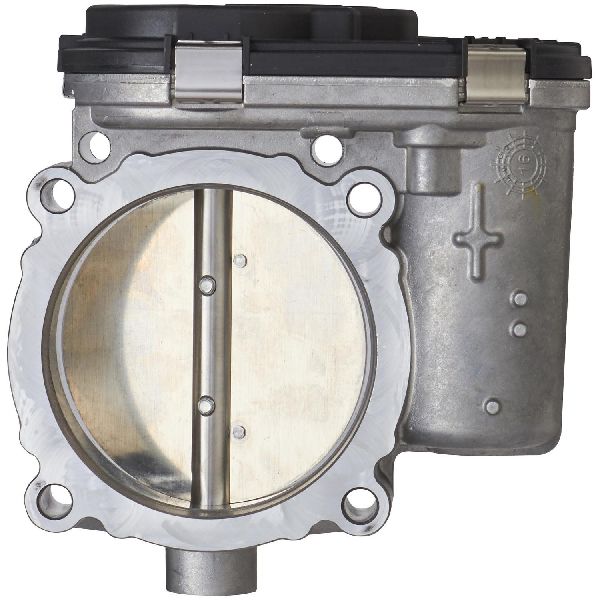
We Have This Part in Stock



The information in this article is provided for general reference and educational purposes only. Vehicle specifications, procedures, and part compatibility can vary by production date, trim level, and region. Always consult your vehicle's factory service manual and verify part numbers before purchasing or performing repairs. Safety-critical components such as airbags, seat belts, and braking systems should be installed by a qualified professional.
- Dodge CHALLENGER:
- 🎬 Helpful Videos
- 🛍️ Shop This Part
- What's Unique About the 2019-2020 Dodge CHALLENGER
- Diagnostic Flowchart
- Symptoms You May Notice
- Most Likely Causes
- Rare But Worth Checking
- Diagnosis Steps
- Parts You'll Likely Need
- Related Codes That Often Appear With This One
- Technical Service Bulletins (TSBs) & Recalls
- Platform-Specific Known Issues
- Mechanic-Grade Diagnostic Values
- Wiring & Ground Locations
- Real Owner Repair Stories
- "I Checked Everything" — The Actual Cause
- OEM Part Supersession History
- Model Year Variations Within This Range
- 🎟️ Get 5% Off