

P0451 on 2019-2021 Ford Ranger: EVAP Pressure Sensor Fault Causes & Fixes
On a 2019-2020 Ford Ranger, code P0451 is most often caused by a software glitch in the powertrain control module (PCM). The primary fix is a software update from a Ford dealer, as outlined in Technical Service Bulletin 21-2010. If software is not the cause, the fuel tank pressure (FTP) sensor is the next most likely culprit, though replacement is labor-intensive.
- For 2019-2020 Rangers, your first step should be to check if TSB 21-2010 (PCM update) has been performed.
- This code points to a sensor *performance* issue, not necessarily a leak in the system.
- Do not replace the EVAP purge valve without performing proper diagnostic tests first, as it is a common misdiagnosis.
- If software isn't the issue, the most likely failed part is the Fuel Tank Pressure (FTP) sensor itself, located on top of the fuel tank.
What's Unique About the 2019-2021 Ford RANGER
For the 2019-2020 Ford Ranger specifically, this code is frequently a "ghost" code caused by overly sensitive software logic in the powertrain control module (PCM), not an actual part failure. Ford directly addresses this in a Technical Service Bulletin (TSB 21-2010), which calls for a PCM software update as the primary corrective action. This makes it crucial to check the vehicle's software status before replacing any physical parts, a step confirmed by multiple owners on forums.
Diagnostic Flowchart
Tap your situation to follow the diagnostic path that matches what you're seeing on this vehicle.
Symptoms You May Notice
- Check Engine Light is illuminated
- FordPass App notification of an emissions system issue
- Possible faint fuel odor (rare)
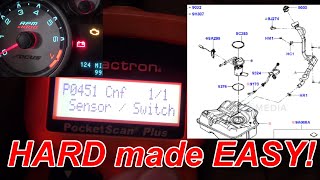
- Failure to pass an emissions inspection 🎬 Watch: Understanding the causes and fixes for the P0451 code
- Replacing the EVAP canister purge valve. Ford issued a Special Service Message (SSM 50306) for the 2019-2021 Ranger (among other models) stating that returned purge valves were often fully functional. It advises technicians to perform full system leak tests using the FDRS scan tool before replacing this part for P0451.
Most Likely Causes
- Powertrain Control Module (PCM) Software 🔴 High Probability Specifically for 2019-2020 models, Ford issued TSB 21-2010 indicating that software parameters could incorrectly trigger DTC P0451. A forum user confirmed that having this TSB performed and the PCM updated resolved their issue.
How to confirm: A Ford dealer or a qualified shop with access to Ford's diagnostic system (FDRS) can check if the PCM has the latest software version and if TSB 21-2010 applies and has been completed.
Typical fix: Reprogramming the PCM with the updated software provided by Ford. This is a dealer-only or specially-equipped shop repair.
Est. part cost: $0 - Faulty Fuel Tank Pressure (FTP) Sensor 🟡 Medium Probability The sensor itself can fail electronically or become contaminated, leading to incorrect voltage signals being sent to the PCM. This is the most common physical part to fail for this specific code. Accessing it is difficult, requiring either lowering the fuel tank or lifting the truck bed. 🎬 Watch: How to lift the bed for easier sensor access
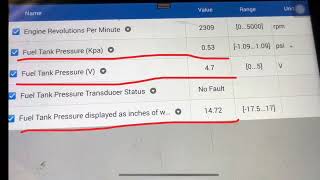
How to confirm: Using a scan tool, monitor the FTP sensor's live data (voltage or pressure). The reading should be stable and change predictably when the gas cap is removed. If the reading is stuck, erratic, or doesn't change, the sensor is likely faulty. The voltage should be around 2.5V at atmospheric pressure (cap off). 🎬 See how to test and replace a Ford pressure sensor
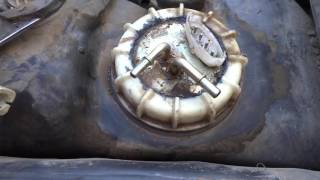
Typical fix: Replace the fuel tank pressure sensor. On the Ranger, this sensor is located on top of the fuel tank, often as part of the fuel pump assembly.
Est. part cost: $50-$150 - Wiring or Connector Issue ⚪ Low Probability The wiring harness leading to the FTP sensor on top of the fuel tank is exposed to the elements, making it susceptible to corrosion, moisture intrusion, or physical damage from road debris. A poor connection at a pigtail on the frame rail has been found to be the culprit on older Ranger models.
How to confirm: Visually inspect the wiring and connector for the FTP sensor. Check for corrosion, broken wires, or a loose connection. Use a multimeter to check for proper voltage (typically a 5V reference), ground, and signal continuity back to the PCM.
Typical fix: Repair the damaged section of the wiring harness or clean/replace the connector.
Est. part cost: $5-$50 - Loose or Faulty Fuel Cap ⚪ Low Probability While a loose cap typically triggers a large leak code (like P0455 or P0457), a cap with a failing seal can sometimes cause erratic pressure fluctuations that the sensitive FTP sensor interprets as a performance fault. For the capless system, debris or ice in the filler neck can prevent a proper seal.
How to confirm: For capless systems, inspect the filler neck for debris or damage and clean it. Ensure the internal flap seals correctly. For traditional caps, inspect the gas cap and its seal for any cracks or damage. Ensure it is tightened correctly until it clicks.
Typical fix: Clean the filler neck or tighten/replace the fuel cap.
Est. part cost: $15-$40
Rare But Worth Checking
- Blocked EVAP Canister or Vent Solenoid: A blockage in the EVAP system, such as a stuck-closed vent valve or a clogged charcoal canister, can cause abnormal pressure buildup that the FTP sensor reports, triggering P0451. This is less common because these components usually have their own dedicated fault codes.
Diagnosis Steps
- Check for Technical Service Bulletins (TSBs): For a 2019-2020 Ranger, the first step is to determine if TSB 21-2010 (PCM software update) is applicable and has been performed. This may require a call to a Ford dealer with your VIN.
- Inspect the Fuel Filler Neck: For the capless system, ensure the filler neck is free of debris, dirt, or ice that could prevent a proper seal.
- Scan and Monitor Live Data: Use an OBD-II scanner to read the Fuel Tank Pressure (FTP) sensor data. The value should be close to 0 inches of water (or ~2.5V) with the engine off and the filler neck open. Observe if the reading is stuck or erratic while the engine is running.
- Inspect Sensor and Wiring: Visually inspect the FTP sensor and its electrical connector on top of the fuel tank. Access may require lowering the tank or lifting the bed. Look for any signs of corrosion, damage, or loose connections.
- Test Sensor Circuit: If the reading is abnormal, use a multimeter to verify the sensor is receiving a 5-volt reference and has a good ground connection.
- Perform an EVAP Smoke Test: If the sensor and wiring appear to be functioning correctly, a smoke test can be used to check the entire EVAP system for any physical leaks in hoses, the canister, or valves that could cause irrational pressure readings.
Parts You'll Likely Need
- Fuel Tank Pressure (FTP) Sensor
(OEM #BU5Z-9C052-A (Motorcraft))— This is the sensor that directly reports the data causing the P0451 code. If not a software issue, it is the most likely physical component to have failed.
Trusted brands: Motorcraft, Bosch, Dorman
OEM price range: $80-$150
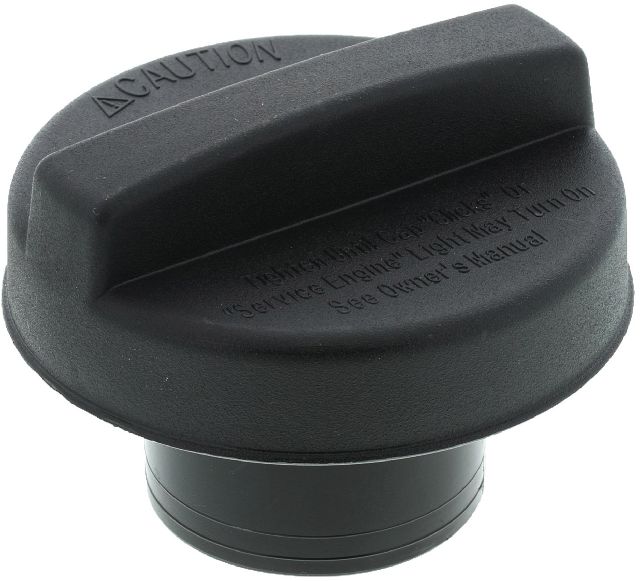
Aftermarket price range: $50-$100 - Fuel Cap — A simple and inexpensive part to replace. A worn seal can cause pressure regulation issues that may lead to a P0451 code. Not applicable to capless systems, where cleaning the filler neck is the equivalent step.
Trusted brands: Motorcraft, Stant
OEM price range: $25-$40
Aftermarket price range: $15-$25
Related Codes That Often Appear With This One
- P0456 — Stands for 'EVAP System Small Leak Detected.' TSB 21-2010 explicitly mentions that P0451 and/or P0456 can appear together due to the same PCM software issue on 2019-2020 Rangers.
- P0455 — Stands for 'EVAP System Gross Leak Detected.' This can appear with P0451 if there is a significant physical issue, like a broken FTP sensor mount or a very loose gas cap.
- P0496 — Stands for 'EVAP Flow During a Non-Purge Condition.' This code is mentioned alongside P0451 in SSM 50306, suggesting a potential overlap in diagnostic paths, though often pointing towards a purge valve issue.
Technical Service Bulletins (TSBs) & Recalls
- TSB 21-2010: Addresses P0451 and P0456 on 2019-2020 Rangers caused by PCM software, requiring a reprogram.
- SSM 50306: Advises against premature replacement of the EVAP canister purge valve for P0451 on 2019-2021 Rangers.
Platform-Specific Known Issues
- TSB 21-2010: Some 2019-2020 Ranger vehicles may exhibit an illuminated MIL with DTC P0451 and/or P0456 due to PCM software parameters. The fix is a PCM reprogram.
- SSM 50306: Warns against unnecessarily replacing the EVAP canister purge valve on 2019-2021 Rangers for code P0451, as returned parts were found to be functional. It recommends proper system testing first.
Mechanic-Grade Diagnostic Values
- Fuel Tank Pressure (FTP) Sensor Signal Voltage (KOEO, fuel cap off) — expected: ~2.5 - 2.62 Volts DC. Failure: Voltage is stuck high (near 5V), low (near 0V), or does not change when vacuum is applied.
- FTP Sensor Reference Voltage — expected: 5.0 Volts DC. Failure: Voltage is significantly lower than 5V (e.g., 3.5V), indicating a possible PCM or wiring issue.
- FTP Sensor Ground Circuit — expected: Near 0 Volts / Good continuity to chassis ground. Failure: Voltage is present on the ground wire or there is high resistance to a known good ground.
- FTP Sensor Voltage during EVAP Leak Test (Scan Tool PID) — expected: Stable at approximately 1.2 - 1.6 Volts. Failure: Voltage does not become stable or does not reach the target range during the test.
Hidden / Shadow Codes Worth Checking
- Mode 6, TID $26-$2B: These Test IDs (TIDs) monitor different phases of the EVAP system leak test. The raw data can be converted to a pressure reading in inches of H2O to see exactly what the PCM is measuring. (see via An advanced OBD-II scan tool capable of displaying Mode 6 data. The formula (Raw Value - 32,768) * 0.00195 = inches of H2O can be used to interpret the reading.)
Scan Tool Commands That Help
- Ford IDS / FDRS: EVAP System Leak Test — This is a guided, bidirectional test recommended by Ford TSBs to command the purge and vent solenoids and monitor the FTP sensor response to properly diagnose the entire system for leaks or component failures before replacing parts.
- Advanced OBD-II Scanner: Monitor EVAP PIDs (EVAPPDC, EVAPCV, FTP V) — Used during a drive cycle to manually observe if the EVAP canister purge duty cycle (EVAPPDC) and canister vent (EVAPCV) are commanding correctly and if the FTP voltage (FTP V) responds as expected.
Wiring & Ground Locations
- FTP Sensor Connector — On top of the fuel tank, connected to the FTP sensor or fuel pump assembly.. This 3-wire connector provides power, ground, and signal for the sensor. It is a common point for corrosion or damage due to its exposed location.
- Frame Rail Pigtail Connector — On the frame rail near the fuel tank, connecting the main body harness to the fuel tank harness.. On older models, this connector was a known failure point due to being poorly seated or corroded, causing an intermittent loss of signal from the FTP sensor.
- Chassis Ground Points — Various points on the frame or body. One accessible point is using the bolts for the cargo tie-down handles in the bed. Another is the main battery ground bolt on the chassis behind the driver-side headlight.. A poor ground for the FTP sensor circuit will cause incorrect voltage readings. A technician can use these known good ground points to test the integrity of the sensor's ground wire.
Real Owner Repair Stories
- The Ranger Station forum user (2000 Ford Ranger) — DTC P0453 (High Input), but diagnostic principle is identical for P0451.
❌ Tried (didn't work) Replaced vapor management valve, Replaced charcoal purge valve
✅ What actually fixed it Found a pigtail connector on the frame with wires going to the tank that was not fully seated. After applying dielectric grease and ensuring it was fully connected, the ground reading became correct and the code was resolved. - MaverickTruckClub forum user (2023 Ford Maverick EcoBoost (shares EVAP system components and logic with Ranger per SSM 50306)) — DTC P0451 and P0496
❌ Tried (didn't work) Initial diagnosis was unclear.
✅ What actually fixed it The dealer replaced a part listed as "Hose - Connecting 1" under part number NZ6Z-9D333-H. The repair notes stated they "removed and replaced fuel tank pressure sensor," indicating this part number is likely an assembly that includes the sensor and a connected hose/tube.
Model Year Variations Within This Range
- 2019-2020: These model years are specifically covered by TSB 21-2010, which identifies a software glitch as a primary cause for P0451. A PCM reprogram is the prescribed fix.
- 2021: The 2021 model year is NOT included in TSB 21-2010. Therefore, a P0451 code on a 2021 Ranger is much more likely to be caused by a physical component failure (FTP sensor, wiring, connector) rather than a software issue.
Helpful Videos
We Have This Part in Stock


The information in this article is provided for general reference and educational purposes only. Vehicle specifications, procedures, and part compatibility can vary by production date, trim level, and region. Always consult your vehicle's factory service manual and verify part numbers before purchasing or performing repairs. Safety-critical components such as airbags, seat belts, and braking systems should be installed by a qualified professional.
- Ford RANGER:
- 🎬 Helpful Videos
- 🛍️ Shop This Part
- What's Unique About the 2019-2021 Ford RANGER
- Diagnostic Flowchart
- Symptoms You May Notice
- Most Likely Causes
- Rare But Worth Checking
- Diagnosis Steps
- Parts You'll Likely Need
- Related Codes That Often Appear With This One
- Technical Service Bulletins (TSBs) & Recalls
- Platform-Specific Known Issues
- Mechanic-Grade Diagnostic Values
- Hidden / Shadow Codes Worth Checking
- Scan Tool Commands That Help
- Wiring & Ground Locations
- Real Owner Repair Stories
- Model Year Variations Within This Range
- 🎟️ Get 5% Off