

P0451 on 2020-2022 Ford Explorer: Causes and Fixes for EVAP Pressure Sensor Faults
On a 2020-2022 Ford Explorer, code P0451 is most often caused by a poor wiring connection at connector C1198 on the driver's side frame, as noted in multiple Ford TSBs. This connector is located on the driver's side lower frame area, underneath the brake lines near the electric brake booster, and is prone to water intrusion. Before replacing the Fuel Tank Pressure (FTP) sensor, inspect this connector for corrosion. If the sensor is faulty, expect to pay $40-$80 for a replacement part like the Mo
- For a 2020-2022 Explorer with code P0451, your first step should be to inspect the wiring at connector C1198 on the driver's side frame.
- Do not replace the canister purge valve without confirming it has failed; Ford TSBs indicate it is often replaced by mistake for this code.
- If wiring is not the issue, the Fuel Tank Pressure (FTP) sensor is the next most likely cause.
- The vehicle is safe to drive, but the issue needs to be fixed to pass an emissions test and ensure the fuel vapor recovery system is working correctly.
What's Unique About the 2020-2022 Ford EXPLORER

For the 2020-2022 Ford Explorer (and its platform-mate, the Lincoln Aviator), this code has a well-documented history tied to a specific manufacturing vulnerability. Ford issued multiple Technical Service Bulletins (TSBs) pointing to a problematic wiring harness connection at connector C1198. This connector is located on the driver's side lower frame area underneath the brake lines near the electric brake booster and is susceptible to water and corrosion, causing erratic signals. This issue can cause the P0451 code and other EVAP codes to appear, leading technicians to mistakenly replace parts like the canister purge valve when the actual fault is in the wiring. This makes checking connector C1198 a crucial first step before any parts are replaced.
Diagnostic Flowchart

Tap your situation to follow the diagnostic path that matches what you're seeing on this vehicle.
Symptoms You May Notice
- Illuminated Check Engine Light (Malfunction Indicator Lamp - MIL)
- Possible failure to pass a state emissions inspection.
- A faint fuel odor (this is rare for P0451 but can occur if a related EVAP leak code is also present).
- In rare cases with related EVAP faults, difficulty starting after refueling.
- Replacing the EVAP canister purge valve. Ford TSB #SSM 50306 specifically warns that returned purge valves for this code are often found to be fully functional, indicating misdiagnosis is common across many Ford models, including the Explorer.
Most Likely Causes

- Wiring Harness Connection Issue at Connector C1198 🔴 High Probability Ford has identified this as a common issue in TSBs #SSM 51247 and #SSM 50348 for 2020-2022 Explorers and Aviators. The connection can become compromised by water and corrosion, leading to erratic signals from multiple sensors that share this connection.
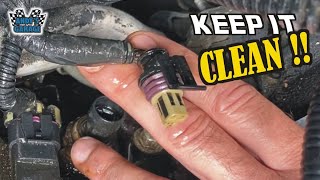
How to confirm: Locate connector C1198 on the driver's side lower frame area, underneath the brake lines that route near the electric brake booster (EBB). Disconnect it and inspect the pins and wiring for corrosion, moisture, or damage. Pin fit concerns are also common.
Typical fix: Clean the connector pins thoroughly with electrical contact cleaner. If pins are damaged, the connector may need to be re-pinned or replaced. 🎬 Watch: Professional tips for rebuilding damaged electrical connectors After cleaning/repair, apply dielectric grease to the connector seals to prevent future water intrusion.
Est. part cost: $0-$25 for cleaning supplies, dielectric grease, or minor wiring repair materials. - Faulty Fuel Tank Pressure (FTP) Sensor 🟡 Medium Probability This is the sensor directly implicated by the code definition. Over time, sensors can fail electronically or become inaccurate.
How to confirm: Using a scan tool with live data capability, monitor the FTP sensor voltage. It should be around 2.5V at atmospheric pressure (gas cap off). If the reading is stuck, erratic, or doesn't change when a vacuum is applied to the system, the sensor is likely bad.
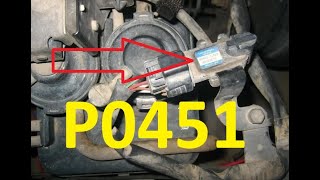
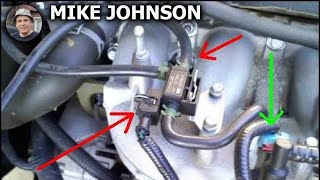
Typical fix: Replace the Fuel Tank Pressure sensor. The sensor is typically located on top of the fuel tank or on an EVAP line connected to the tank.
Est. part cost: $40-$80 - Loose or Faulty Gas Cap / Capless Filler Neck Issue ⚪ Low Probability While a loose cap typically triggers a large leak code like P0455 or P0457, a cap that is failing to seal intermittently could potentially cause an erratic pressure reading that sets P0451. For the capless system on these Explorers, debris or a faulty flap in the filler neck can cause similar issues.
How to confirm: Inspect the capless fuel filler neck for debris, damage, or a flap that isn't sealing correctly. Using the funnel provided with the vehicle to open and close the flap several times can sometimes clear debris.
Typical fix: Clean the fuel filler neck. If the sealing flap is damaged, the entire filler neck assembly may need replacement.
Est. part cost: $0-$200 - Damaged EVAP Hoses or Lines ⚪ Low Probability Hoses can become cracked or disconnected, but this usually results in a leak-specific code (like P0455/P0456) rather than a sensor performance code. However, an intermittent blockage or crack could cause irrational readings.
How to confirm: Visually inspect all accessible EVAP hoses between the charcoal canister, purge valve, and fuel tank. A smoke test is the most effective way to find a hard-to-see leak.
Typical fix: Replace the damaged section of hose.
Est. part cost: $10-$50
Rare But Worth Checking
- Faulty Powertrain Control Module (PCM): This is extremely rare. The PCM should only be considered after all other possibilities, including wiring and sensors, have been exhaustively tested and ruled out.
- Water Intrusion into PCM or other modules: On other Ford platforms, water leaks into the cabin or cowl area have been known to damage the PCM or Body Control Module (BCM), causing a cascade of electrical issues and seemingly unrelated codes. While not specifically documented for this P0451 issue, it's a known Ford problem pattern.
Diagnosis Steps
- Read all Diagnostic Trouble Codes (DTCs) with an OBD-II scanner. Note any other codes present, especially those listed in the TSBs (P04F0, P008A, P0455, P0456, P0496, P018C).
- Inspect the capless fuel filler neck for debris and proper operation of the sealing flap.
- Crucially, locate and inspect the wiring harness connection at connector C1198. This is on the driver's side lower frame area, underneath the brake lines near the electric brake booster. Disconnect it and check for any signs of corrosion (green or white powder), moisture, or damaged/bent pins. This is the most likely cause according to Ford TSBs.
- If corrosion is found at C1198, clean the connector and pins with an electrical contact cleaner. If pins are severely damaged, the connector may need to be repaired or replaced. Apply dielectric grease to the seal before reconnecting to prevent future moisture intrusion.
- If the connector is clean and in good condition, use a scan tool to observe the live data for the Fuel Tank Pressure (FTP) sensor. With the gas cap removed (or filler neck funnel inserted), the reading should be stable near 0 inches of water (approx. 2.5 volts).
- If the reading is stuck high or low, or is fluctuating erratically, the sensor is the primary suspect.
- Before replacing the sensor, verify its power, ground, and signal wires to rule out a wiring break elsewhere in the harness. The TSB notes that three voltage reference (VREF) wires pass through C1198.
- If the sensor and wiring test good, a smoke test of the EVAP system may be necessary to check for intermittent leaks that could cause irrational readings.
Parts You'll Likely Need
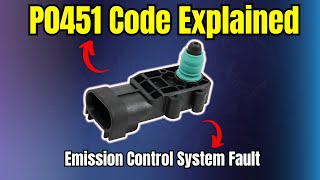
- Fuel Tank Pressure Sensor
(OEM #CX-2380)— This sensor is what the code directly refers to. If wiring is confirmed to be good, the sensor itself is the next logical point of failure.
Trusted brands: Motorcraft, Bosch, Standard Motor Products
OEM price range: $60-$100
Aftermarket price range: $40-$80 - Electrical Connector Repair Kit / Dielectric Grease — Needed to fix the most common cause of the issue: corrosion at connector C1198.
Trusted brands: Motorcraft, Permatex
OEM price range: $20-$50
Aftermarket price range: $5-$20
Related Codes That Often Appear With This One
- P04F0 — EVAP System High-Pressure Purge Line Performance. Mentioned in TSBs SSM 51247 and 50348 as a code that can appear alongside P0451 due to the C1198 connector issue.
- P0455 — Indicates a large EVAP leak. Also mentioned in the TSBs as being related to the C1198 wiring fault.
- P0456 — Indicates a small EVAP leak. Also mentioned in the TSBs as being related to the C1198 wiring fault.
- P0496 — Indicates an EVAP flow issue during a non-purge condition. Also mentioned in the TSBs as being related to the C1198 wiring fault.
- P008A — Low Pressure Fuel System Pressure - Too Low. This code is also listed in TSB SSM 51247, indicating the C1198 connector issue can affect fuel pressure readings as well.
- P018C — Fuel Pressure Sensor 'B' Circuit Range/Performance. Also listed in TSB SSM 51247, pointing to the shared wiring problem at C1198.
Technical Service Bulletins (TSBs) & Recalls
- SSM 51247: Notes that P0451 and other EVAP/fuel codes (P04F0, P008A, P0455, P0456, P0496, P018C) can be caused by a wiring issue at connector C1198.
- SSM 50348: Also points to connector C1198 as the likely cause for P0451 and a host of other EVAP DTCs.
- SSM 50306: Warns technicians not to replace the EVAP canister purge valve for a P0451 code without further testing, as returned parts are often found to be functional.
Platform-Specific Known Issues
- Multiple Ford Technical Service Bulletins (#SSM 51247, #SSM 50348) point to a wiring harness connection at connector C1198 on the driver's side lower frame as a primary cause for P0451 and other related EVAP codes. This is due to its location making it prone to water intrusion and corrosion.
Mechanic-Grade Diagnostic Values

- Fuel Tank Pressure (FTP) Sensor Signal Voltage (KOEO) — expected: ~2.5 - 2.7 Volts with fuel cap off (at atmospheric pressure).. Failure: Voltage is stuck high (near 5V), low (near 0V), or does not change when vacuum is applied.
- FTP Sensor Reference Voltage — expected: 5 Volts on the reference wire at the sensor connector.. Failure: Voltage is significantly lower than 5V or absent, indicating a wiring issue upstream (potentially at C1198) or a PCM fault.
- FTP Sensor Ground Circuit — expected: Good continuity to ground (near 0 ohms).. Failure: High resistance on the ground wire, indicating a poor ground connection which can cause erratic sensor readings.
- FTP Sensor Response to Vacuum — expected: Voltage should decrease from ~2.5V towards ~1.5V as a slight vacuum is applied with a hand pump.. Failure: Voltage does not change, or changes erratically, when vacuum is applied, indicating a failed sensor.
Scan Tool Commands That Help
- Ford Diagnosis and Repair System (FDRS) / IDS: Full System EVAP Leak Test — To have the vehicle's PCM run a comprehensive, automated test of the entire EVAP system to check for leaks after initial checks (like C1198) are performed. TSB SSM 50306 recommends this before replacing parts.
- Ford Diagnosis and Repair System (FDRS) / IDS: EVAP Purge Valve Leak Test (CPV Check) — To specifically test the canister purge valve's ability to seal, helping to rule it out as a cause, as recommended by TSB SSM 50306.
- Ford Diagnosis and Repair System (FDRS) / IDS: On-Board Evap Test — This is a built-in scan tool function that commands the system to pull a vacuum and monitors the FTP sensor to see if it holds, confirming if a leak is present at the time of testing.
Wiring & Ground Locations
- C1198 — On the driver's side lower frame area, located underneath the brake lines that are routed near the electric brake booster (EBB).. This is the primary known failure point for P0451 on this vehicle. It is exposed to the elements, leading to water intrusion and corrosion. TSB SSM 51247 notes that three separate Voltage Reference (VREF) circuits pass through this single connector, explaining why its failure can cause multiple, seemingly unrelated DTCs.
- Fuel Tank Pressure (FTP) Sensor — Typically mounted on top of the fuel tank or on an EVAP line attached to the tank.. This is the sensor the code directly references. Its wiring (power, ground, signal) runs from the PCM, partly through connector C1198, to the sensor itself. A fault can be the sensor or its wiring.
OEM Part Supersession History
CX-2380→No supersession found.— N/A
Heads up: The part number CX-2380 is listed for many Ford models over a wide range of years, but it is crucial to verify fitment for the specific 2020-2022 Explorer application.
Helpful Videos

We Have This Part in Stock


The information in this article is provided for general reference and educational purposes only. Vehicle specifications, procedures, and part compatibility can vary by production date, trim level, and region. Always consult your vehicle's factory service manual and verify part numbers before purchasing or performing repairs. Safety-critical components such as airbags, seat belts, and braking systems should be installed by a qualified professional.
- Ford EXPLORER:
- 🎬 Helpful Videos
- 🛍️ Shop This Part
- What's Unique About the 2020-2022 Ford EXPLORER
- Diagnostic Flowchart
- Symptoms You May Notice
- Most Likely Causes
- Rare But Worth Checking
- Diagnosis Steps
- Parts You'll Likely Need
- Related Codes That Often Appear With This One
- Technical Service Bulletins (TSBs) & Recalls
- Platform-Specific Known Issues
- Mechanic-Grade Diagnostic Values
- Scan Tool Commands That Help
- Wiring & Ground Locations
- OEM Part Supersession History
- 🎟️ Get 5% Off