

P0449 on 2019-2020 Jeep Wrangler: EVAP Vent Circuit Malfunction Causes and Fixes
P0449 on a 2019-2020 Jeep Wrangler indicates an electrical fault in the EVAP vent valve circuit. The most common fix is replacing the EVAP vent solenoid/valve assembly, which can get clogged or fail electrically. On the JL Wrangler, this solenoid is often integrated into the charcoal canister assembly. This is a DIY-friendly repair with the part costing between $30 and $150, depending on if the entire canister is replaced.
- P0449 points specifically to an electrical problem in the EVAP vent valve circuit, not a physical leak in the system.
- The most likely cause is a failed EVAP vent solenoid, which is a relatively inexpensive and accessible part for a DIY repair.
- Before replacing the solenoid, always check the fuse and inspect the wiring harness for damage, especially on a vehicle like a Wrangler that may see off-road use.
- You can safely drive with this code, but you will fail an emissions inspection, so it should be addressed.
- Do not automatically replace the gas cap for this code; it is not a likely cause for a P0449 circuit fault.
What's Unique About the 2019-2020 Jeep WRANGLER
On the Jeep Wrangler JL (2018+), the EVAP system components are highly susceptible to contamination from dust, mud, and water, a common scenario for a vehicle designed for off-roading. Forum users on jlwranglerforums.com frequently report this code appearing after driving in dusty conditions or through water. While P0449 is a generic electrical fault code, its occurrence on a Wrangler is often directly linked to the harsh environments they are subjected to, leading to clogged valves, damaged wiring, or corroded connectors near the rear axle. A General Motors TSB for a similar issue on their trucks specifically calls out that operating in dusty environments can plug the canister and vent solenoid, causing this code, a logic that applies directly to the Wrangler's typical use case. A critical distinction for this platform is its use of an Evaporative System Integrity Module (ESIM) instead of a traditional vent solenoid. The ESIM is a mechanical device using weights and a diaphragm, so P0449 points to a fault in its internal switch circuit, not a solenoid coil.
Diagnostic Flowchart
Tap your situation to follow the diagnostic path that matches what you're seeing on this vehicle.
Symptoms You May Notice
- Check Engine Light is on.
- A faint fuel odor may be noticeable.
- Difficulty refueling (the gas pump nozzle clicks off before the tank is full).
- Slightly rough idle in some cases.
- Replacing the gas cap. While a faulty gas cap can cause other EVAP codes like P0455 (large leak) or P0457, P0449 specifically points to an electrical circuit fault, not a system leak.
Most Likely Causes
- Faulty EVAP Vent Valve/Solenoid 🔴 High Probability The vent solenoid on the JL Wrangler is part of the EVAP canister assembly, located on the driver's side frame rail, just forward of the rear axle. This location makes it extremely vulnerable to dirt, dust, and moisture from off-roading, which can cause the internal coil to fail or the valve to get stuck.
How to confirm: Use a multimeter to check the resistance of the solenoid. A good solenoid should have a resistance between 20-30 ohms; a reading of infinite ohms (open circuit) or near-zero ohms (short) indicates failure. You can also try applying 12V power and ground to the solenoid terminals to see if it clicks open and closed.
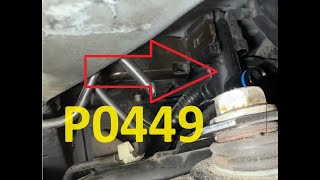
Typical fix: Replace the EVAP vent valve/solenoid. 🎬 Watch: A guide to diagnosing vent valve circuit faults. On the JL Wrangler, this often means replacing the entire charcoal canister assembly as the solenoid may not be sold separately.
Est. part cost: $30-$150 - Damaged Wiring or Connector 🟡 Medium Probability The wiring harness leading to the vent solenoid runs underneath the vehicle and can be damaged by road debris, snagged during off-roading, or can suffer from corrosion at the connector due to water exposure.
How to confirm: Visually inspect the wiring harness and connector for any signs of damage, fraying, or green corrosion. Use a multimeter to check for 12V power on one pin and a good ground at the connector with the key on. The ground is supplied by the PCM to activate the solenoid.
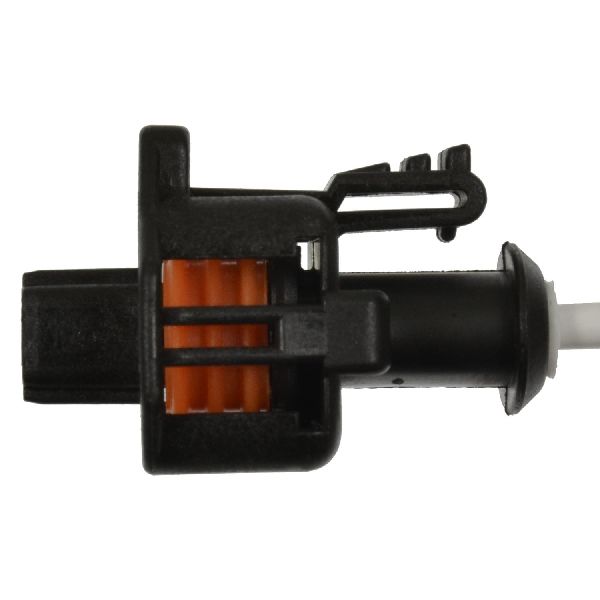
Typical fix: Repair the damaged section of wire or replace the connector pigtail. The Mopar connector repair kit is part number 68316931AA.
Est. part cost: $10-$45 - Blown Fuse ⚪ Low Probability A short circuit in the vent valve or its wiring can cause the corresponding fuse to blow as a protective measure.
How to confirm: Check the vehicle's Power Distribution Center (fuse box) in the engine compartment. On the JL Wrangler, this is often fuse F51 (20A), labeled for emissions components. Check the fuse box lid for the exact location.
Typical fix: Replace the blown fuse. If the new fuse blows immediately, it indicates a persistent short circuit that must be found and repaired.
Est. part cost: $1-$5
Rare But Worth Checking
- Faulty Powertrain Control Module (PCM): This is very rare. The PCM is the last component to suspect after all other possibilities (solenoid, wiring, fuses) have been thoroughly ruled out.
Diagnosis Steps
- Read the fault codes with an OBD-II scanner to confirm P0449 is present and note any other codes.
- Check the fuse for the EVAP system in the engine bay fuse box (Power Distribution Center). Specifically check fuse F51 (20A). Replace if blown.
- Locate the EVAP canister assembly on the driver's side frame rail, forward of the rear axle. The vent solenoid is attached to it.
- Inspect the electrical connector and wiring going to the solenoid for any visible damage, corrosion, or loose connections.
- With the ignition on, use a multimeter to verify that there is battery voltage on the power wire at the connector.
- If power is good, test the solenoid itself. Disconnect it and check its resistance with a multimeter; it should be between 20-30 ohms. An open circuit (infinite resistance) or shorted (near 0 ohms) means it's bad.
- Command the vent solenoid to close using a bi-directional scan tool. Listen for an audible click. If it doesn't respond, and the wiring is confirmed good, the solenoid is faulty.
- If the solenoid tests good and the wiring is intact, the problem may be an intermittent connection or, in very rare cases, a fault in the PCM driver circuit.
Parts You'll Likely Need
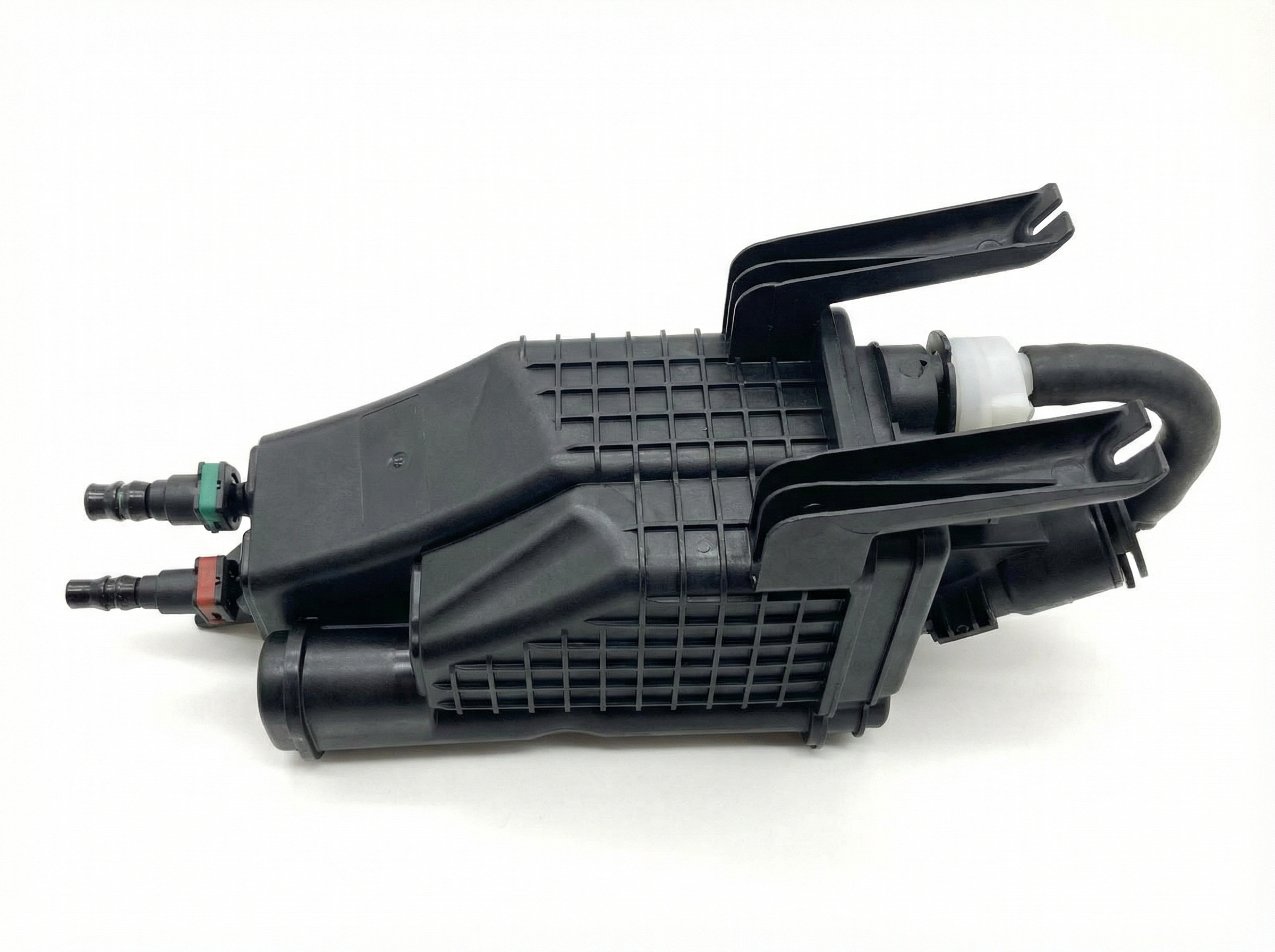
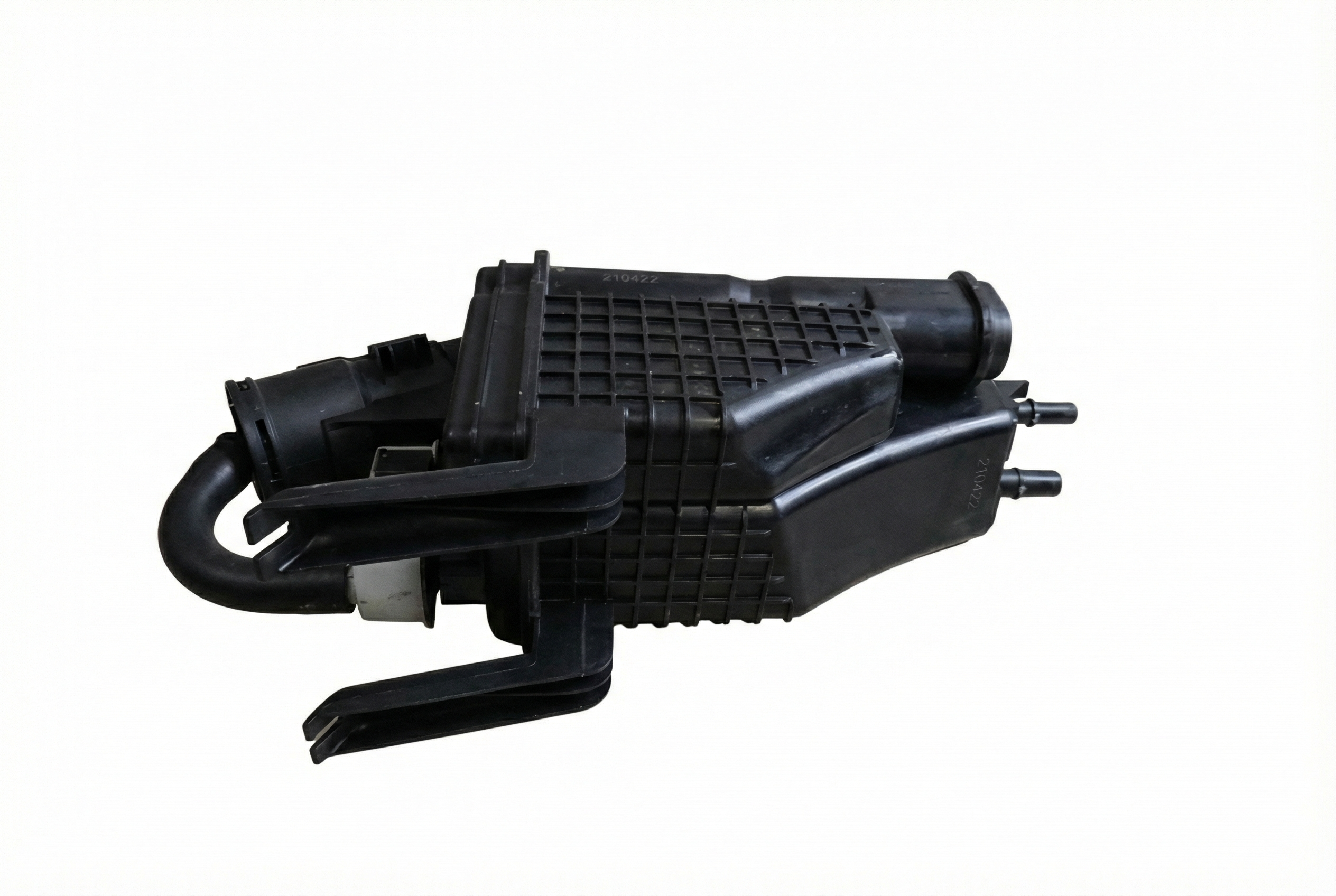
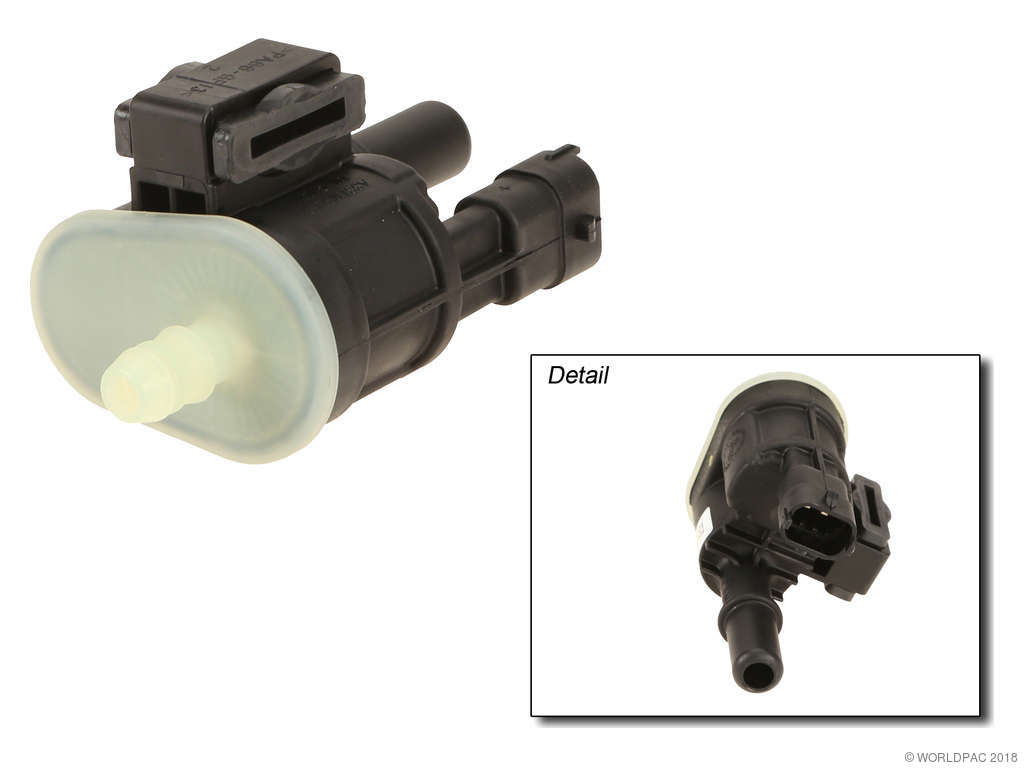
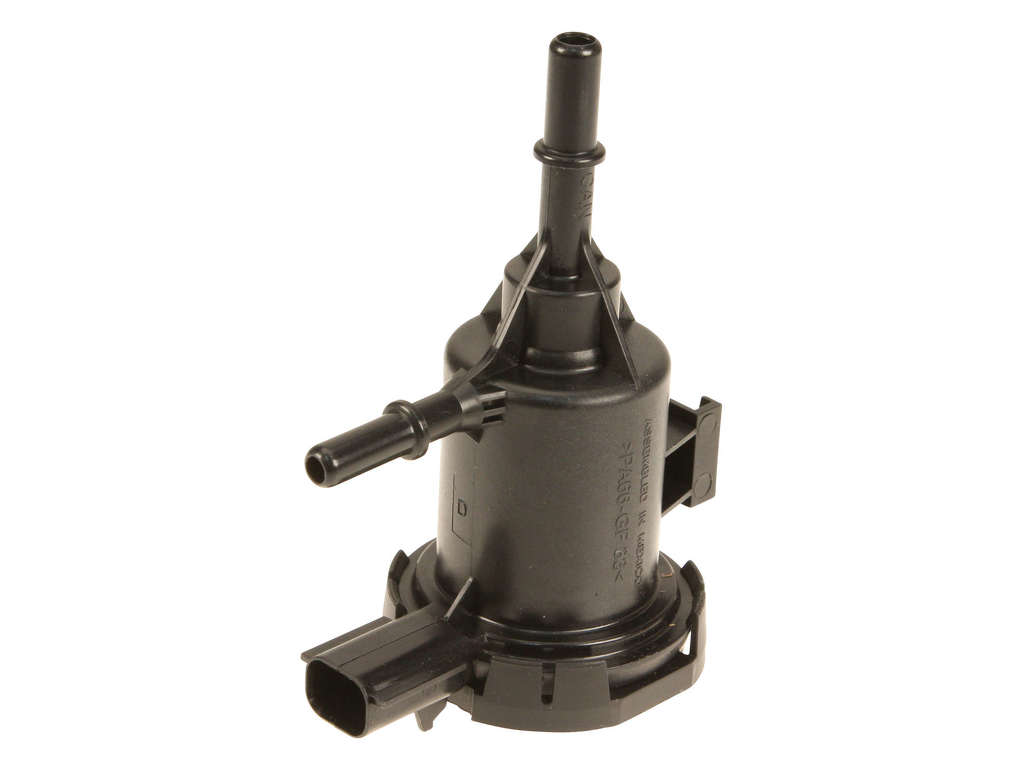
- EVAP Canister with Vent Valve Solenoid
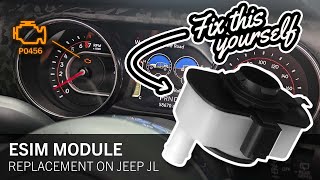
(OEM #68446931AA (Verify with VIN))— This is the most common failure point for a P0449 code. On the JL, the solenoid is often integrated with the canister and not sold separately. The entire assembly is replaced to fix the faulty valve. 🎬 See this walkthrough on replacing the ESIM module.
Trusted brands: Mopar, Dorman, Standard Motor Products
OEM price range: $120-$180
Aftermarket price range: $80-$140
Related Codes That Often Appear With This One
- P0441 — Incorrect Purge Flow. The provided NHTSA TSB S2025000002 specifically mentions that P0449 can be found with P0441 on these vehicles.
- P0443 — Purge Control Valve Circuit. The provided NHTSA TSB S2025000002 also links P0449 with P0443, suggesting a potential related issue within the EVAP system's electrical controls.
- P0455 — Large EVAP Leak. If the vent valve fails in the closed position or the circuit fails, the system may interpret this as a leak during its self-test, triggering a large leak code.
Technical Service Bulletins (TSBs) & Recalls
- S2025000002: Mentions that P0449 can be found along with P0441 and P0443. It's primarily an Airbag Control Module flash update, but the service procedure includes checking for and addressing these PCM codes, indicating a known pattern of EVAP system faults that may be addressed by software logic updates.
Platform-Specific Known Issues
- A Technical Service Bulletin (TSB #S2025000002) for 2019-2020 model year Jeeps notes that a check engine light may be present with fault codes P0441, P0443, or P0449 stored in the PCM. This is part of a larger software update.
- Owners on forums like jlwranglerforums.com frequently report the P0449 code appearing immediately after off-road activities, particularly in dusty environments or after water crossings, which points to the vulnerability of the vent solenoid's location.
Mechanic-Grade Diagnostic Values
- ESIM Ground Circuit Resistance — expected: Less than 1.0 ohm. Failure: Resistance greater than 1.0 ohm indicates a corroded or loose ground connection that needs to be cleaned or tightened.
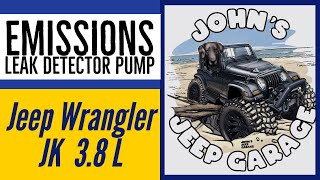
- ESIM Internal Switch Function — expected: Switch changes state (closes) when a slight vacuum is applied.. 🎬 Watch: How the ESIM leak detector pump works. Failure: The switch does not close when vacuum is applied, indicating it is stuck. The switch should also hold vacuum without leaking down.
Scan Tool Commands That Help
- Advanced Bi-Directional Scanner (e.g., wiTECH, Autel, iCarsoft): EVAP System Test / Vent Solenoid Command — While this vehicle uses an ESIM instead of a vent solenoid, a scan tool can still command the *purge* solenoid to operate during diagnosis. More importantly, the tool is used to monitor the live data from the ESIM switch (open/closed state) while performing other tests, like a smoke test or manually applying vacuum, to confirm its operation.
Wiring & Ground Locations
- G915A / G915B — Rear body grounds, located in the vicinity of the rear of the vehicle where the EVAP canister is mounted.. The ESIM requires a solid ground to accurately report its switch status to the PCM. A corroded or loose ground at these points can cause an open or high-resistance circuit, triggering a P0449 code. These grounds are shown on the official JL ground location layout.
- ESIM Connector — On the Evaporative System Integrity Module (ESIM), which is attached to the EVAP canister. On the JL Wrangler, the canister is located in the rear passenger-side wheel well, behind the fender liner.. This 2-pin connector provides power and the signal path for the internal switch. It is highly vulnerable to corrosion and wire damage from road debris and off-roading, which can directly cause a P0449 circuit fault.
Real Owner Repair Stories
- YouTube channel 'Evolved Jeeping' (2019 Jeep Wrangler Rubicon JL) — Persistent Check Engine Light with code P0456 (small EVAP leak), which later was joined by P0455 (large EVAP leak).
❌ Tried (didn't work) Re-securing the gas cap., Replacing the gas cap., Replacing the ESIM module., Replacing the purge valve solenoid.
✅ What actually fixed it The final fix was replacing the aging main and auxiliary batteries. The low voltage from the old batteries was apparently causing a sensor in the EVAP system to give a false reading, triggering the leak codes. After battery replacement, the codes did not return. - JLwranglerforums.com user report (Jeep Wrangler JL) — Check Engine Light with P0456 error code.
❌ Tried (didn't work) Replacing the gas cap and resetting the code.
✅ What actually fixed it The owner noticed the EVAP canister itself was cracked after inspecting the inner fender and seeing an indentation from running over something. The canister was sealed with JB Weld, which resolved the code.
"I Checked Everything" — The Actual Cause
- In a well-documented case on a 2019 Wrangler JL, an owner chased an intermittent P0456 EVAP leak code for months. After replacing the gas cap, ESIM, and purge valve without success, the final root cause was discovered to be low system voltage from the aging stock batteries. Replacing the main and auxiliary batteries provided a stable voltage to the EVAP system sensors and permanently resolved the fault code, which had been a false positive triggered by the electrical issue, not a physical leak.
When the Usual Fixes Don't Work
- A critical point of counter-evidence to generic P0449 repair guides is that the 2019-2020 Jeep Wrangler does not use a conventional EVAP vent solenoid. It uses an Evaporative System Integrity Module (ESIM), which is a non-solenoid, mechanical switch. Therefore, common diagnostic advice to 'check the solenoid's coil resistance' or 'apply 12V and listen for a click' is invalid for this vehicle and will lead to confusion and misdiagnosis. The P0449 code on a JL Wrangler points specifically to an electrical fault in the circuit for the ESIM's internal switch. Diagnosis must focus on checking the wiring to the ESIM, the integrity of its ground connection, and the functionality of the switch itself, often tested with a hand-held vacuum pump.
Model Year Variations Within This Range
- 2019-2020: No significant changes to the 3.6L V6 engine's EVAP system or the use of the ESIM module have been documented between the 2019 and 2020 model years. The primary powertrain difference was the introduction of an optional 3.0L EcoDiesel in 2020, but the base gas engine's systems remained consistent.
Helpful Videos
Used OEM Parts in Stock
New Aftermarket Parts Available


The information in this article is provided for general reference and educational purposes only. Vehicle specifications, procedures, and part compatibility can vary by production date, trim level, and region. Always consult your vehicle's factory service manual and verify part numbers before purchasing or performing repairs. Safety-critical components such as airbags, seat belts, and braking systems should be installed by a qualified professional.
- Jeep WRANGLER:
- 🎬 Helpful Videos
- 🛍️ Shop This Part
- What's Unique About the 2019-2020 Jeep WRANGLER
- Diagnostic Flowchart
- Symptoms You May Notice
- Most Likely Causes
- Rare But Worth Checking
- Diagnosis Steps
- Parts You'll Likely Need
- Related Codes That Often Appear With This One
- Technical Service Bulletins (TSBs) & Recalls
- Platform-Specific Known Issues
- Mechanic-Grade Diagnostic Values
- Scan Tool Commands That Help
- Wiring & Ground Locations
- Real Owner Repair Stories
- "I Checked Everything" — The Actual Cause
- When the Usual Fixes Don't Work
- Model Year Variations Within This Range
- 🎟️ Get 5% Off