

P0449 on 2020 Jeep Gladiator: EVAP Vent Circuit Causes and Fixes
P0449 on a 2020 Jeep Gladiator indicates an electrical fault in the EVAP vent solenoid circuit. The most common fix is replacing the entire vapor canister assembly, as the solenoid is integrated into it. Before replacing parts, thoroughly inspect the wiring and connector to the canister for any damage, as this is a common failure point due to its exposed location.
- P0449 is an electrical circuit code, not a leak code. Do not start by replacing the gas cap.
- The most likely causes are a faulty vent solenoid or, just as likely, damaged wiring leading to it.
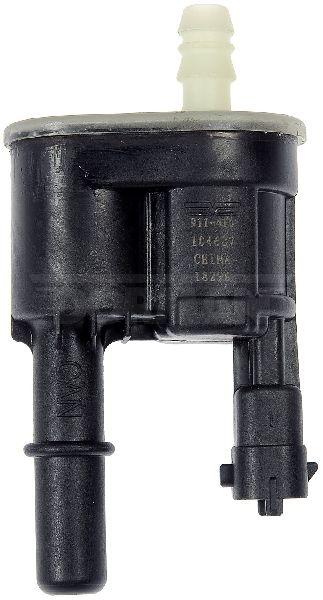
- On the 2020 Gladiator, the vent solenoid is part of the complete vapor canister assembly (Mopar part 68350418AD, which supersedes older versions) and must be replaced as a single unit.
- Always inspect the wiring and connector underneath the vehicle for damage before buying parts, as its exposed location makes it a common and cheaper fix.
- A TSB exists for this exact code on this vehicle, indicating it's a known issue that may have a specific diagnostic procedure from the manufacturer.
What's Unique About the 2020-2020 Jeep GLADIATOR
On the 2020 Jeep Gladiator (JT platform) and its platform-mate, the Jeep Wrangler (JL), the EVAP vent solenoid is not sold separately by Mopar. It is integrated into the larger vapor canister assembly. Therefore, a confirmed internal failure of the solenoid itself requires replacing the entire canister unit (Mopar Part #68350418AD). This differs from many other vehicles where the vent solenoid can be purchased and replaced as a standalone part.
Diagnostic Flowchart
Tap your situation to follow the diagnostic path that matches what you're seeing on this vehicle.
Symptoms You May Notice
- Check Engine Light (Malfunction Indicator Lamp) is on
- Possible faint fuel odor near the rear of the vehicle.
- Difficulty refueling (gas pump nozzle clicks off repeatedly), though less common with a circuit fault than a stuck-closed valve.
- Inability to use remote start, as many vehicles disable this feature when a Check Engine Light is active.
- Replacing the gas cap. A bad gas cap typically causes EVAP leak codes (like P0455, P0456, P0457), not a circuit malfunction code like P0449.
- Replacing the EVAP Purge Valve/Solenoid. The purge valve is a different component located in the engine bay under the engine cover and is associated with different trouble codes (e.g., P0496, P0443).
Most Likely Causes
- Faulty EVAP Vent Solenoid (Part of Vapor Canister Assembly) 🔴 High Probability The vent solenoid is an electromechanical part with a coil that can fail internally (open or short circuit). On the Gladiator, it is serviced as part of the complete vapor canister assembly, which is a known replacement item across many Jeep models.
How to confirm: Use a bi-directional scan tool to command the vent solenoid open and closed. Listen for an audible click from the canister. If it doesn't click and the wiring is confirmed good, the solenoid has failed. You can also test the resistance of the solenoid coil with a multimeter; an infinite reading indicates an open circuit, while a very low reading suggests a short. A good solenoid should have a resistance between 20-30 ohms. Compare to manufacturer specifications if available.
Typical fix: Replace the entire vapor canister assembly. 🎬 Watch: Step-by-step Jeep vapor canister replacement walkthrough.
Est. part cost: $200-$300 - Damaged Wiring or Electrical Connector 🟡 Medium Probability The vapor canister and its wiring are located underneath the truck, mounted to the frame rail near the driver's side rear wheel. This exposed location makes them highly susceptible to damage from road debris, moisture, corrosion, and flexing during off-road use, which is a primary use case for the Gladiator.
How to confirm: Visually inspect the wiring harness for chafing, breaks, or corrosion, paying close attention to where the harness routes over the frame. Unplug the connector and check for corroded or bent pins. Use a multimeter to test for battery voltage on the power wire and a good ground on the ground wire at the connector with the key on. A test light connected between the two pins should illuminate when the valve is commanded on with a scan tool. A common failure is a broken wire inside the insulation right at the connector, which requires physically tugging on the wires to find.
Typical fix: Repair the damaged section of wire or replace the connector pigtail.
Est. part cost: $10-$50 - Blown Fuse ⚪ Low Probability
How to confirm: Check the vehicle's fuse box (in the engine bay) for any fuses related to the EVAP system or emissions components. A YouTube video on a similar P0449 case noted this as a key diagnostic step to perform early. 🎬 Watch: A mechanic's guide to diagnosing a stubborn P0449 code.
Typical fix: Replace the blown fuse. If the fuse blows again, it indicates a short circuit in the wiring or the solenoid itself that must be diagnosed.
Est. part cost: $1-$5
Rare But Worth Checking
- Faulty Powertrain Control Module (PCM): This is very rare and should be considered a last resort. The PCM should only be replaced after all other possibilities, including the component and its entire circuit (power, ground, and continuity back to the PCM), have been thoroughly tested and ruled out.
Diagnosis Steps
- Scan for Codes: Read the codes with an OBD-II scanner to confirm P0449 is present and check for any other related codes.
- Check Fuses: Inspect the fuse panel in the engine bay for any blown fuses labeled for the EVAP system. This is a quick and easy first check.
- Locate and Inspect: Locate the vapor canister under the truck, mounted to the frame rail near the driver's side rear wheel. Perform a thorough visual inspection of the entire wiring harness leading to the canister. Look for signs of physical damage, chafing against the frame, melting, or corrosion. Inspect the electrical connector for bent, loose, or corroded pins. A common failure point is a wire breaking inside the insulation right at the connector, which may not be visible. Gently tug on each wire at the connector to check for breaks.
- Test the Circuit at the Connector: Disconnect the harness from the vent solenoid. Turn the ignition to the 'ON' position. Use a multimeter or a 12V test light. One pin in the connector should have battery voltage (typically 12V). The other pin is the control wire from the PCM, which provides ground when the solenoid is commanded on.
- Command the Solenoid: If you have a bi-directional scan tool, command the vent solenoid to cycle on and off. Listen for an audible click from the canister area. If it clicks, the solenoid is likely working, and the problem is likely intermittent or a wiring issue (like a poor connection).
- Bench Test or Resistance Test: If the solenoid does not click, remove the vapor canister assembly. You can test the solenoid's resistance with a multimeter. A reading of infinity (OL) means an open coil, while a very low reading indicates a short. A healthy solenoid for this platform should measure between 20-30 Ohms. You can also try to power it directly with a 12V source 🎬 See how to bench test EVAP vent valve systems. to see if it actuates.
- Replace the Vapor Canister Assembly: If the solenoid is confirmed to be faulty, the entire vapor canister assembly must be replaced.
Parts You'll Likely Need
- Vapor Canister Assembly
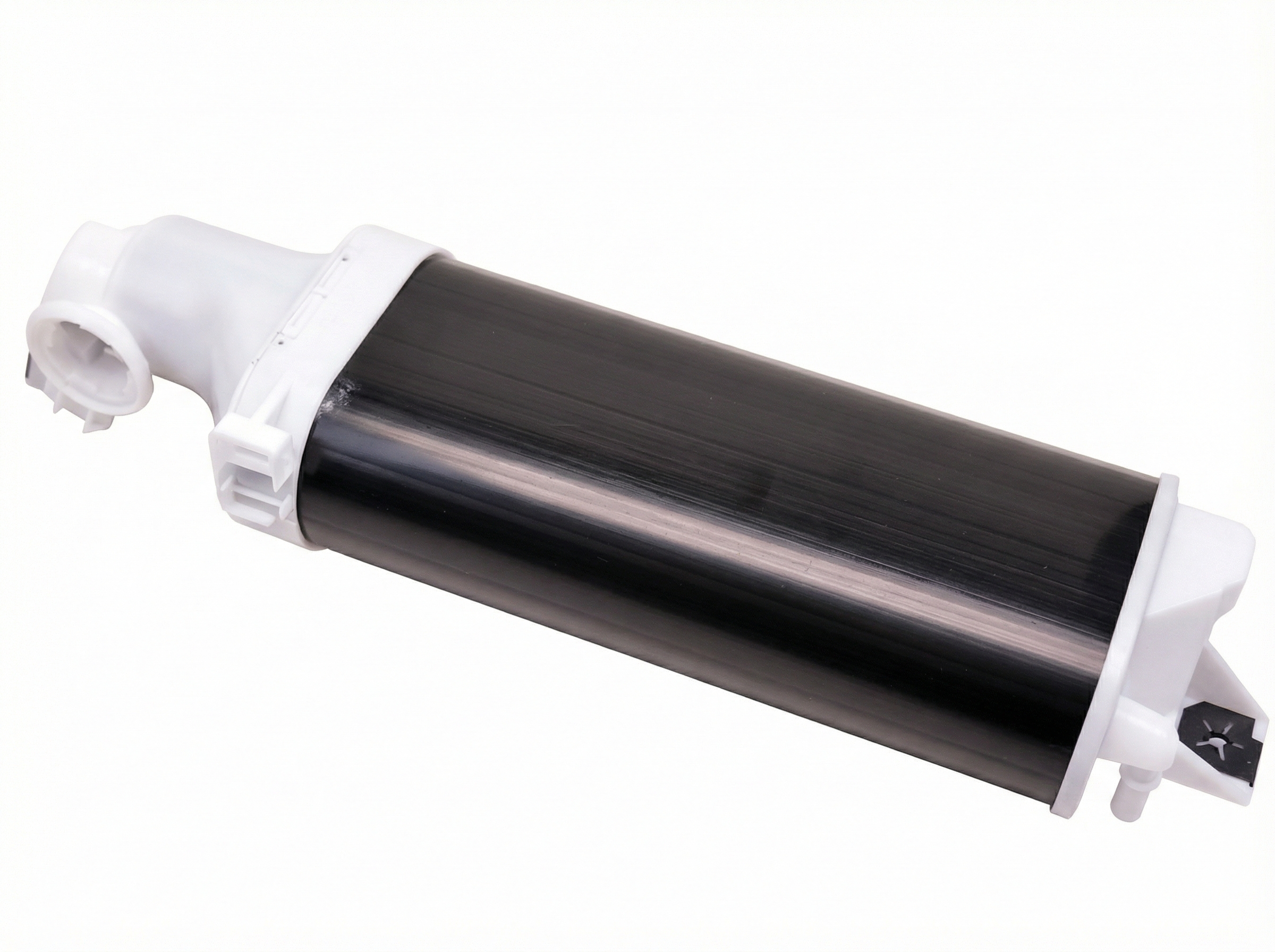
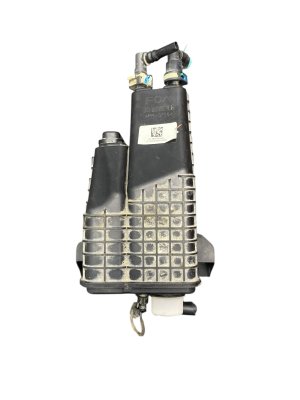
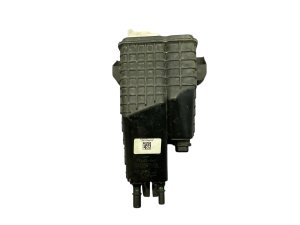
(OEM #68350418AD)— This assembly contains the integrated EVAP vent solenoid, which is the most common point of failure for a P0449 code. This part number supersedes previous versions 68350418aa, 68350418ab, and 68350418ac. It is confirmed to fit 2020-2023 Gladiator models.
Trusted brands: Mopar
OEM price range: $200-$300
Aftermarket price range: $150-$250
Related Codes That Often Appear With This One
- P0441 — Incorrect Purge Flow. A related TSB (S2025000002) notes that P0441 can appear with P0449 on this vehicle.
- P0443 — Purge Control Valve Circuit. The same TSB (S2025000002) also lists P0443 as a potential accompanying code, indicating a broader electrical issue within the EVAP system.
Technical Service Bulletins (TSBs) & Recalls
- S2025000002: Addresses a check engine light with active or stored faults for P0441, P0443, or P0449. The bulletin likely guides technicians through a specific electrical diagnostic path.
Platform-Specific Known Issues
- A Technical Service Bulletin (TSB #S2025000002) was issued for 2020 Jeep Gladiators for the check engine light being on with EVAP codes P0441, P0443, or P0449 stored in the PCM. The existence of a TSB suggests this is a recognized issue by the manufacturer.
- As a first-year model, the 2020 Gladiator had a higher number of TSBs and owner complaints related to various electrical systems and build quality issues compared to later model years. This P0449 fault can be considered one of several potential 'early model year' gremlins.
Mechanic-Grade Diagnostic Values
- EVAP Vent Solenoid Coil Resistance — expected: 20 - 30 Ohms. Failure: An infinite (OL) reading indicates an open circuit; a near-zero reading indicates a shorted circuit.
- Voltage at EVAP Vent Solenoid Connector (Key On, Engine Off) — expected: Approximately 12V on the power supply wire, 0V on the control wire.. Failure: Reading 12V on both the power and control wires suggests an open circuit in the wiring harness between the solenoid and the PCM.
Scan Tool Commands That Help
- Bi-directional Scan Tool (e.g., wiTECH, Autel, etc.): EVAP Vent Solenoid Open/Close Test or Output Control — Use this command to functionally test the solenoid. While commanding the solenoid to change state (e.g., from its normally open position to closed), you should hear an audible click from the component. A lack of a click, when power and ground are verified as good, confirms a failed solenoid.
Wiring & Ground Locations
- Frame Ground Points — On the frame rails, located on each side above the spare tire.. The EVAP canister assembly is located in the rear of the vehicle, and its circuit relies on a solid chassis ground. Corrosion or a loose connection at these nearby ground points can cause high resistance or an open circuit, triggering a P0449 code.
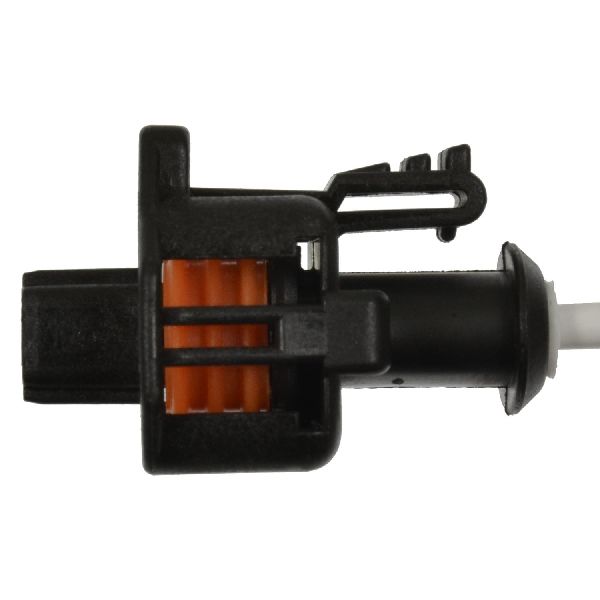
- Vent Solenoid Connector — The 2-pin electrical connector on the EVAP vapor canister assembly, located near the driver's side rear wheel.. This connector and its wiring are highly exposed. A common, hard-to-find failure is a wire breaking *inside* the insulation, right at the connector. A visual inspection will look fine, but tugging on the wire will reveal the break. This causes an open circuit and a P0449 code.
Real Owner Repair Stories
- YouTube Channel 'ScannerDanner' (General Motors Truck (demonstrates a universally applicable P0449 diagnostic)) — Check Engine Light with code P0449.
❌ Tried (didn't work) The vehicle owner had already replaced the EVAP vent solenoid, but the code returned immediately.
✅ What actually fixed it A broken wire inside the insulation of the wiring harness, right at the connector for the vent solenoid. The break was not visible and was only found by physically pulling on the individual wires, which revealed the broken copper strands. The connector pigtail was repaired to fix the issue.
"I Checked Everything" — The Actual Cause
- A smoke test is not the correct procedure for a P0449 code. This code indicates an electrical circuit malfunction (open, short, high resistance), not a physical leak in the system that a smoke test is designed to find. Codes like P0455 (large leak) or P0456 (small leak) would warrant a smoke test.
OEM Part Supersession History
68350418AA, 68350418AB, 68350418AC→68350418AD— Standard part revision by the manufacturer to improve reliability or address a known issue.
Heads up: No incompatibility is noted. The latest part number (68350418AD) is the correct service replacement for all previous versions on the 2020 Gladiator.
Helpful Videos

Used OEM Parts in Stock
New Aftermarket Parts Available


The information in this article is provided for general reference and educational purposes only. Vehicle specifications, procedures, and part compatibility can vary by production date, trim level, and region. Always consult your vehicle's factory service manual and verify part numbers before purchasing or performing repairs. Safety-critical components such as airbags, seat belts, and braking systems should be installed by a qualified professional.
- Jeep GLADIATOR:
- 🎬 Helpful Videos
- 🛍️ Shop This Part
- What's Unique About the 2020-2020 Jeep GLADIATOR
- Diagnostic Flowchart
- Symptoms You May Notice
- Most Likely Causes
- Rare But Worth Checking
- Diagnosis Steps
- Parts You'll Likely Need
- Related Codes That Often Appear With This One
- Technical Service Bulletins (TSBs) & Recalls
- Platform-Specific Known Issues
- Mechanic-Grade Diagnostic Values
- Scan Tool Commands That Help
- Wiring & Ground Locations
- Real Owner Repair Stories
- "I Checked Everything" — The Actual Cause
- OEM Part Supersession History
- 🎟️ Get 5% Off