

P0449 on 2016-2020 GMC Sierra 2500: EVAP Vent Solenoid Circuit Fixes
On a 2016-2020 GMC Sierra 2500, code P0449 almost always points to a failed EVAP Vent Solenoid, often due to dust or dirt contamination. The solenoid is located under the truck on the driver's side frame rail near the fuel tank and is a straightforward DIY replacement for around $30-$80. A wiring issue at the connector is the second most likely cause. For 2020 models, a faulty Fuel Pump Control Module (FPCM) is also a common cause when P0449 appears with P0498/P0499.
- P0449 on a Sierra 2500 is an electrical fault code for the EVAP vent solenoid, not a leak code.
- The most common cause is a failed vent solenoid, which is often contaminated by dust and dirt due to the truck's operating environment.
- The repair is DIY-friendly, with the part located near the fuel tank and typically costing under $80.
- Do not confuse the vent solenoid (rear of truck) with the purge solenoid (in the engine bay).
- If you frequently drive in dusty conditions, consider the filter relocation/upgrade kit mentioned in TSB 23-NA-073 to prevent the problem from happening again.
What's Unique About the 2016-2020 Gmc SIERRA 2500

Heavy-duty trucks like the Sierra 2500 are often used in dusty environments like farms, construction sites, or on gravel roads. This usage exposes a known weakness in the EVAP system. General Motors has issued a Technical Service Bulletin (TSB 23-NA-073) acknowledging that dust can get into the EVAP canister and clog the vent solenoid, directly causing the P0449 code. The solenoid's location on the driver's side frame rail also makes its wiring connector highly susceptible to corrosion and damage from road spray and debris.
Diagnostic Flowchart

Tap your situation to follow the diagnostic path that matches what you're seeing on this vehicle.
Generation note: This year range covers the end of the third generation (K2XX platform, 2015-2019) and the beginning of the fourth generation (T1XX platform, 2020-present). The EVAP vent solenoid is a common failure point on both generations. The TSB regarding dust intrusion specifically includes model years up to 2024, indicating the issue persists across the generation change. Part numbers for the solenoid can differ between these generations; for K2XX models, ACDelco 23481275 is common, while older parts like 214-2149 may have been used and require a wiring adapter for replacement.
Symptoms You May Notice

- Check Engine Light is on
- Difficulty filling the fuel tank (gas pump nozzle clicks off repeatedly)
- A 'whoosh' sound of air escaping when opening the gas cap
- Slight fuel odor near the rear of the truck
- Service StabiliTrak light may occasionally illuminate in conjunction with the check engine light.
- Replacing the gas cap. While a loose or faulty gas cap can cause other EVAP codes (like P0455 for a large leak), it does not cause a P0449 circuit code.
- Replacing the EVAP Purge Solenoid. The purge solenoid is located in the engine bay and has its own set of diagnostic codes (e.g., P0496). P0449 specifically refers to the vent solenoid circuit at the rear of the vehicle.
Most Likely Causes

- Failed EVAP Vent Solenoid 🔴 High Probability As noted in TSB 23-NA-073, the vent solenoid is highly susceptible to contamination from dust and dirt, common in truck operating environments, causing it to stick or fail electrically. Its exposed location on the frame rail leads to frequent failures.
How to confirm: Use a scan tool to command the vent solenoid to open and close; listen for a clicking sound from under the driver's side of the truck. If there's no click, test for power and ground at the solenoid's electrical connector. If power and ground are present, the solenoid has failed. Resistance across the solenoid pins should be between 20-30 ohms.
Typical fix: Replace the EVAP vent solenoid. It is mounted to the driver's side frame rail, often near the fuel tank.
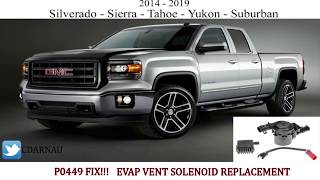
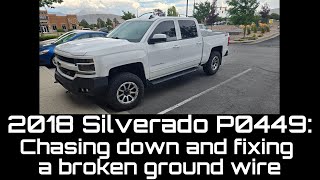
Est. part cost: $30-$80 - Damaged Wiring or Corroded Connector 🟡 Medium Probability The wiring harness to the vent solenoid is located under the truck and is exposed to road debris, moisture, and corrosion, which can lead to a break in the circuit, particularly right at the connector. 🎬 See how to diagnose and repair a broken wiring harness. Forum users often report finding a broken wire after replacing the solenoid didn't fix the issue.
How to confirm: Visually inspect the wiring harness and connector leading to the vent solenoid for any breaks, chafing, or green/white corrosion on the pins. Gently tug on the wires at the back of the connector to see if one is broken internally. Use a multimeter to check for continuity from the solenoid connector back towards the control module. Check for 12V on the power wire (typically red) and a switched ground on the control wire (typically white).
Typical fix: Repair the damaged section of wire or replace the connector pigtail. ACDelco PT2160 is a common replacement connector.
Est. part cost: $15-$40 - Clogged EVAP Canister due to Dust Intrusion 🟡 Medium Probability Per TSB #23-NA-073, vehicles operated in dusty environments can ingest enough dirt to clog the entire EVAP canister, which in turn causes the vent solenoid to fail and set a P0449 code. This is a known issue for work trucks.
How to confirm: Inspect the EVAP canister and its associated hoses for excessive dirt or dust. If the vent solenoid has been replaced and the code returns quickly, the canister is the likely cause.
Typical fix: Replace the EVAP charcoal canister. GM also recommends a customer-paid alteration to install an auxiliary filter kit (GM Part No. 23103351 or 86792068) to prevent recurrence.
Est. part cost: $150-$250 - Blown Fuse ⚪ Low Probability
How to confirm: Check the vehicle's fuse box diagrams for the fuse related to the emissions or EVAP system (often labeled 'EMISS' or similar, e.g., F62 in the underhood fuse block) and inspect it to see if it has blown.
Typical fix: Replace the blown fuse. If it blows again, this indicates a short circuit in the system that needs to be diagnosed.
Est. part cost: $1-$5
Rare But Worth Checking
- Faulty Fuel Pump Control Module (FPCM): On newer T1XX platform trucks (2020+), the FPCM controls the vent solenoid. A known failure pattern is an internal fault in the FPCM that sets P0449 along with P0498 and P0499. If these codes appear together, the FPCM is a strong suspect after checking wiring. 🎬 Watch: Fixing P0449 and FPCM issues on 2019-2021 trucks.
- Faulty Engine Control Module (ECM): This is extremely rare. The ECM should only be considered after all other possibilities, including the solenoid, wiring, canister, and FPCM (on applicable models), have been thoroughly tested and ruled out.
Diagnosis Steps
- Read the code with an OBD-II scanner and confirm P0449 is present. Note any other codes, especially P0446, P0455, P0498, or P0499.
- Visually inspect the gas cap to ensure it is tight, but do not replace it for this code.
- Locate the EVAP vent solenoid and charcoal canister. On most Sierra trucks, they are mounted to the driver's side frame rail near the spare tire and in front of the fuel tank. You may need to lower the spare tire for better access.
- Inspect the electrical connector and wiring going to the vent solenoid for any obvious damage, corrosion, or loose connections. Pay close attention to the wires right where they enter the back of the connector.
- If you have a capable bidirectional scan tool, command the vent solenoid to close. You should hear an audible click from the solenoid. If it clicks, the problem is likely intermittent or the canister itself is clogged. If it does not click, proceed to the next step.
- Disconnect the solenoid and use a multimeter to check for battery voltage and ground at the connector with the key on. The power wire (typically red) should have ~12V. The control wire (typically white) is ground-side switched by the FPCM/ECM.
- If power and ground are present at the connector but the solenoid doesn't click, the vent solenoid is faulty and needs to be replaced.
- If the solenoid and wiring seem okay, inspect the canister and vent hoses for blockages from dirt or dust, as described in TSB 23-NA-073.
Parts You'll Likely Need
- Vapor Canister Vent Valve Solenoid
(OEM #23481275)— This is the most common failure point for a P0449 code. The internal solenoid coil fails or the valve gets stuck from debris. This part number is common for the K2XX (2015-2019) and T1XX (2020+) models. Older models may have used part 214-2149, which may require a wiring adapter.
Trusted brands: ACDelco, GM Genuine Parts
OEM price range: $50-$80
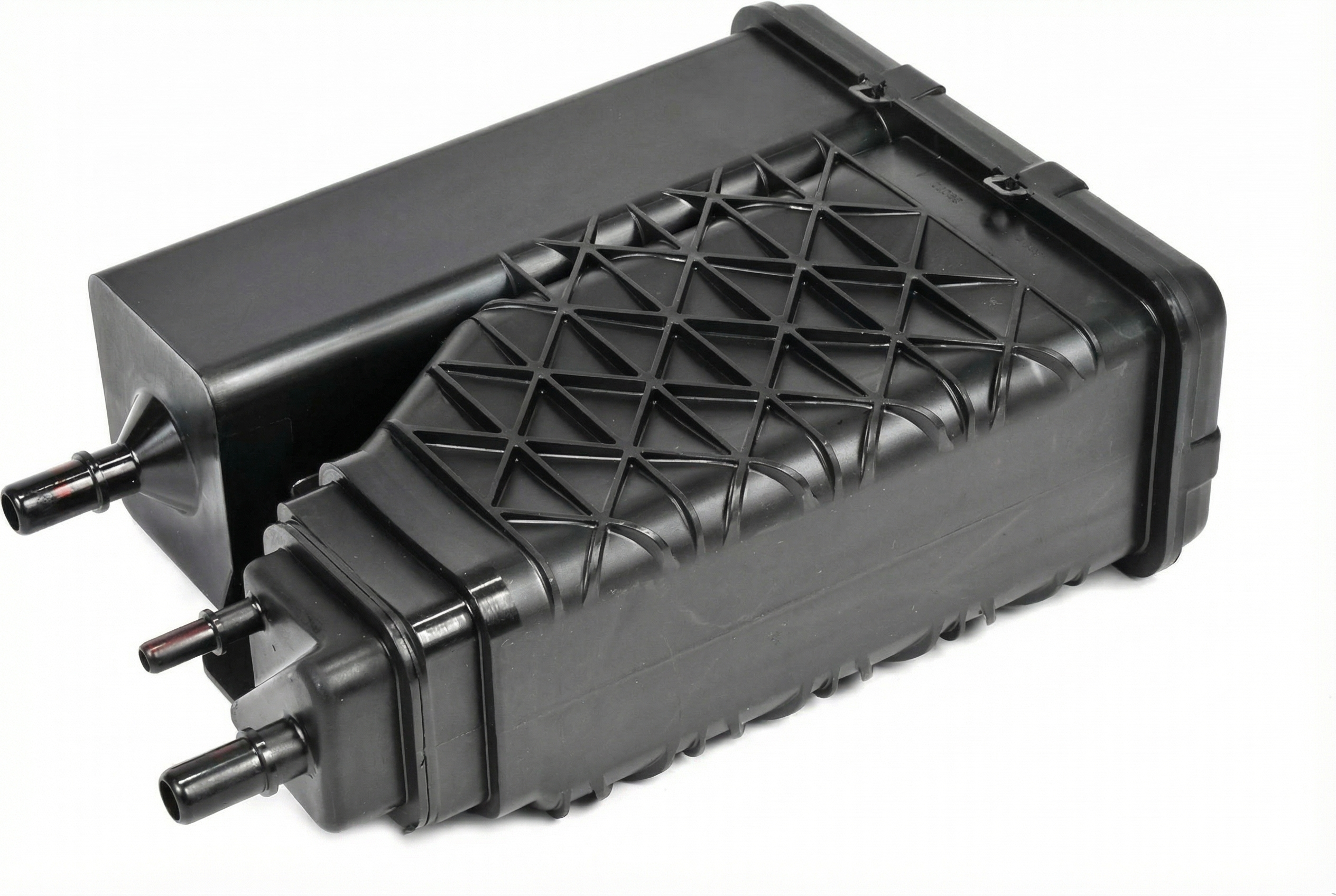
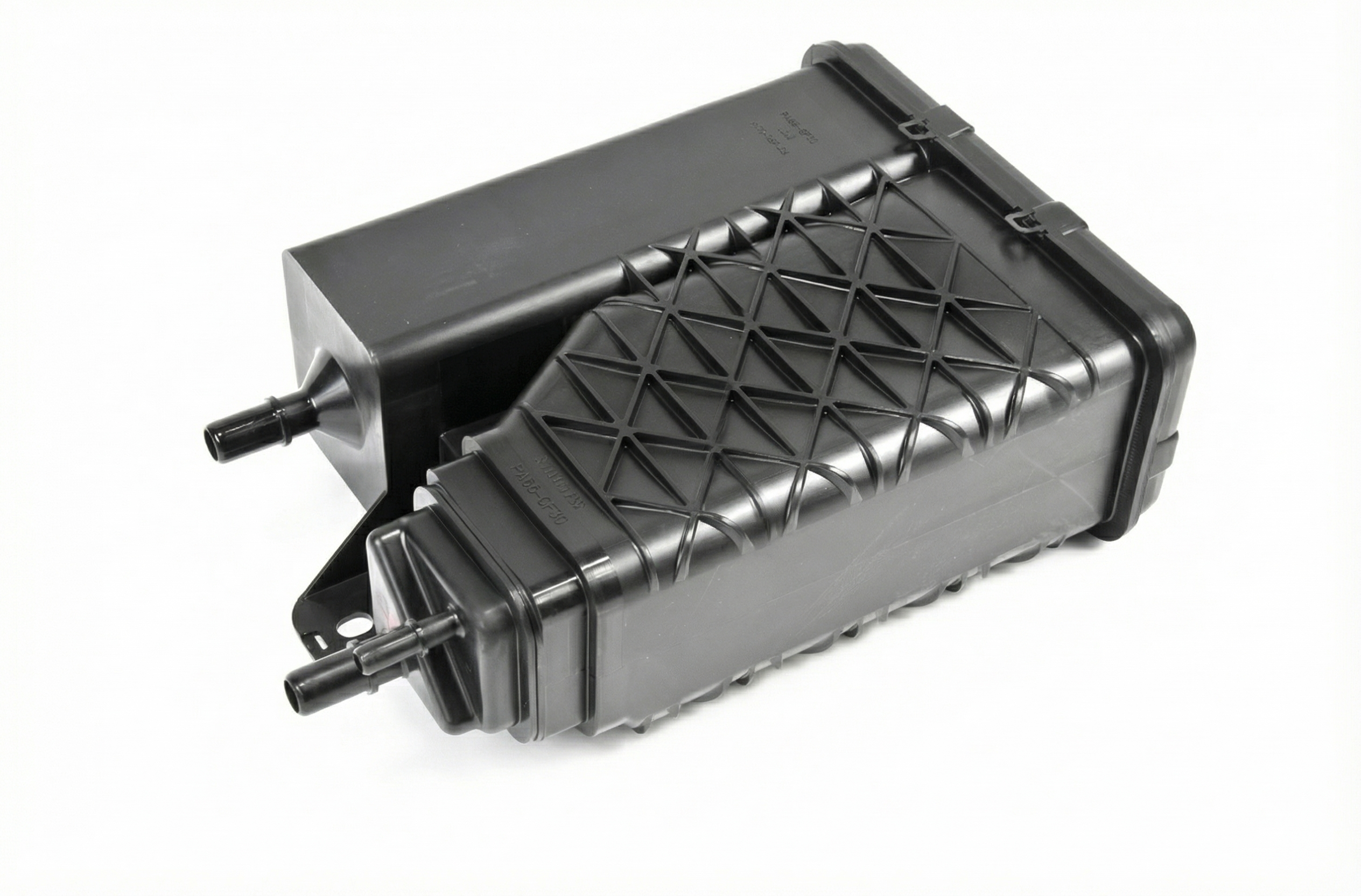
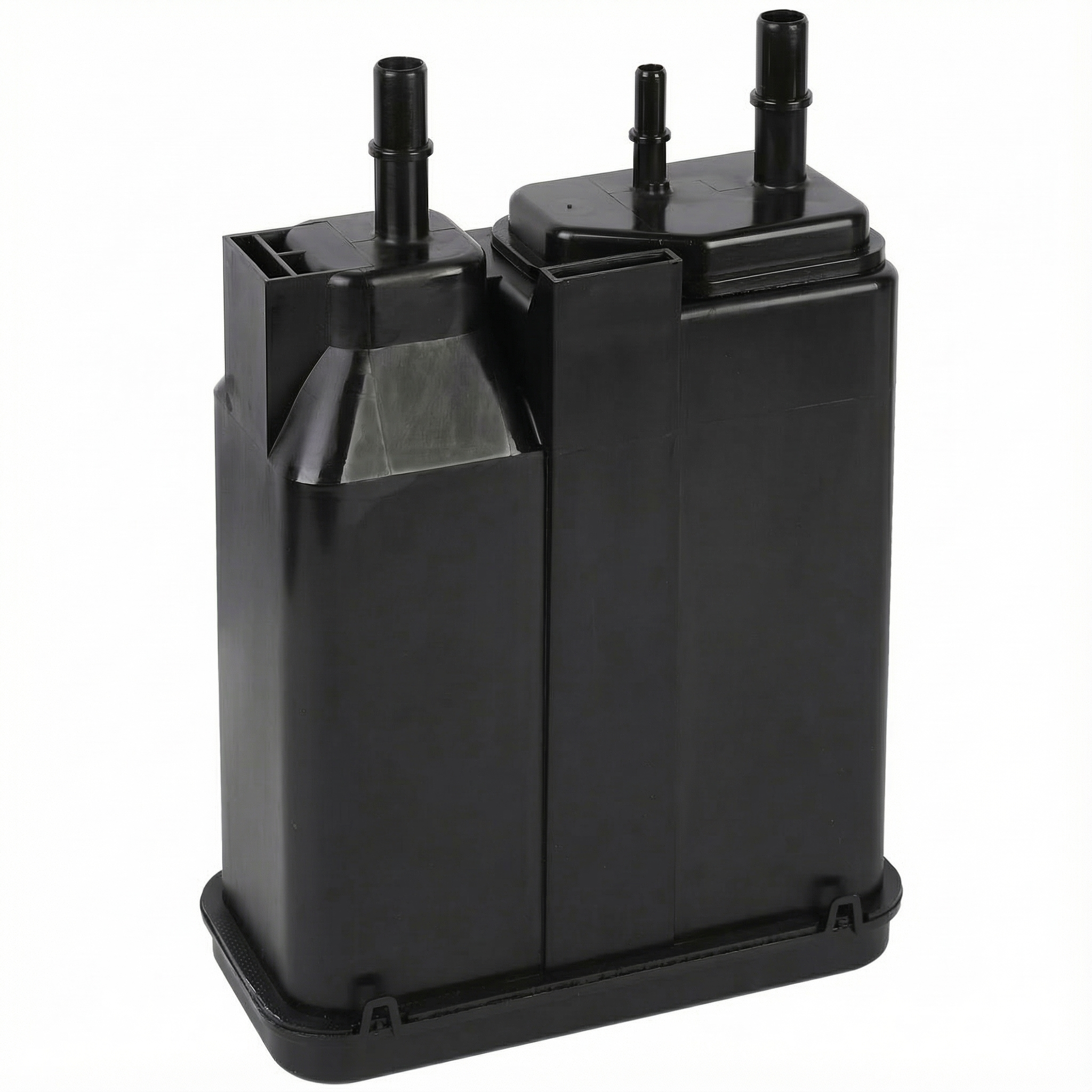
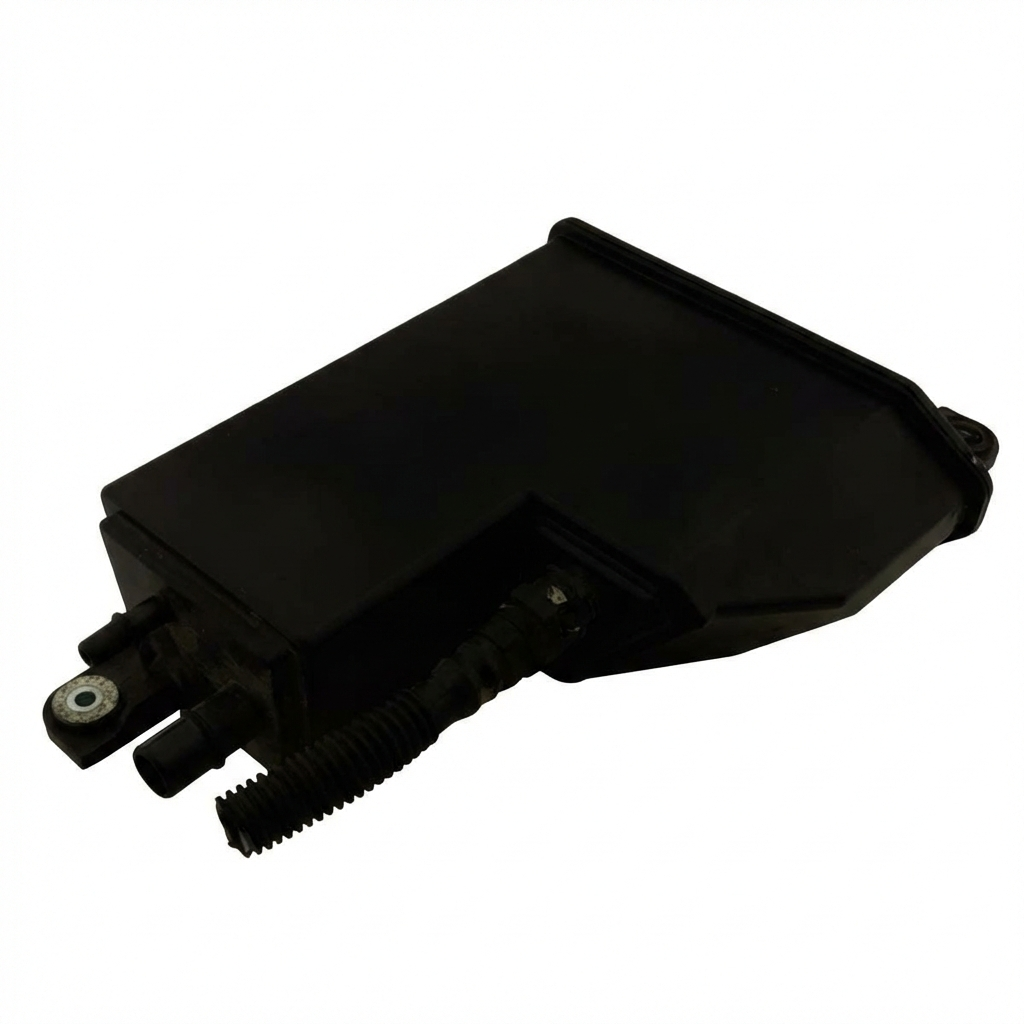
Aftermarket price range: $30-$60 - EVAP Charcoal Canister — Required if the canister is internally clogged with dust, which is a known issue on these trucks per TSB 23-NA-073. Often, the vent solenoid is part of the canister assembly or replaced with it.
Trusted brands: ACDelco, GM Genuine Parts
OEM price range: $200-$300
Aftermarket price range: $150-$250 - EVAP Canister External Filter Kit
(OEM #86792068)— This is the official GM fix outlined in TSB 23-NA-073 to prevent dust from re-contaminating the new canister and solenoid. It relocates the air intake and adds a serviceable filter. This is a customer-paid alteration, not a warranty repair.
Trusted brands: GM Genuine Parts
OEM price range: $70-$100
Related Codes That Often Appear With This One
- P0446 — This code indicates an EVAP Vent Control System Performance issue. It often appears with P0449 because the same root cause (a stuck or clogged vent solenoid) can trigger both a circuit fault and a performance fault.
- P0455 — This code indicates a large leak in the EVAP system. If the vent solenoid is stuck open due to a mechanical failure, the system will fail its pressure test and log a large leak code alongside the P0449 circuit code.
- P0498 / P0499 — On 2020 and newer models, these codes for the EVAP vent solenoid control circuit low/high voltage often appear with P0449. When seen together, they strongly point to a failed Fuel Pump Control Module (FPCM) which controls the solenoid on the T1XX platform.
Technical Service Bulletins (TSBs) & Recalls
- 23-NA-073: Evaporative DTCs P0442, P0446, P0455 or P0449, Caused by Dust Intrusion into the Evaporative Canister.
Platform-Specific Known Issues
- TSB 23-NA-073: This bulletin directly addresses P0449 on 2019+ models used in dusty environments. It confirms that dust intrusion clogs the EVAP canister and vent solenoid and provides a procedure for installing an auxiliary filter to prevent recurrence.
Mechanic-Grade Diagnostic Values
- EVAP Vent Solenoid Coil Resistance — expected: 20 to 30 Ohms. Failure: Infinite resistance (open circuit) or near-zero resistance (short circuit).
- Voltage at Vent Solenoid Connector (Key On, Engine Off) — expected: Approximately 12V on the power wire (typically Red/Green or Red).. Failure: 0V on the power wire indicates a blown fuse (e.g., F62 underhood) or an open in the power feed wire.
- Control Wire Voltage at Vent Solenoid Connector (Key On, Commanded OFF) — expected: The control wire (typically White) is ground-side switched by the FPCM or ECM. Voltage will vary depending on test conditions.. Failure: An unexpected voltage reading (e.g., constant ground or constant 12V when it should be switching) points to a wiring issue or a faulty control module (FPCM/ECM).
Scan Tool Commands That Help
- GDS2 / Professional Scan Tool: EVAP Vent Solenoid Output Control — Use this bidirectional command to manually open and close the vent solenoid. A lack of an audible click from the solenoid when commanded points directly to a failure in the solenoid itself or its immediate electrical circuit (power/ground).
- GDS2 / Professional Scan Tool: EVAP Service Bay Test — This is a comprehensive automated test that runs the entire EVAP system through its self-diagnostic sequence. It's useful after a repair to confirm the fix or if the cause of the code is not immediately obvious, as it tests both electrical function and for system leaks.
Wiring & Ground Locations
- Vent Solenoid Connector — Under the truck on the driver's side, attached to the EVAP vent solenoid near the charcoal canister and fuel tank.. This is the primary point for electrical testing. Pin 2 (often Red/Green) should have 12V power with the key on. Pin 1 (often White) is the control wire, which is grounded by the FPCM/ECM to activate the solenoid. Wires frequently break or corrode right at this connector.
- Fuel Pump Control Module (FPCM) — On 2020+ T1XX models, it is located on the frame rail, often near the EVAP canister.. On newer trucks, this module, not the main ECM, directly controls the vent solenoid. A failure inside the FPCM is a known cause for P0449, especially when accompanied by P0498 and P0499.
- Rear Frame Grounds (G400 series) — Bolted to the frame in the rear of the vehicle, often behind the rear tires.. The EVAP system components are grounded to the frame in this area. While a specific ground for the vent solenoid circuit isn't commonly cited as the failure point, a corroded or loose main ground in the G400-series can cause intermittent and difficult-to-diagnose electrical issues for any nearby components. GM uses a numbering system where 'G4xx' grounds are in the rear of the vehicle.
Real Owner Repair Stories
- Go-Parts.com forum user summary (2018 Sierra) — Check Engine Light with code P0449.
❌ Tried (didn't work) Replacing the EVAP vent solenoid.
✅ What actually fixed it The ground wire (white wire) was found to be corroded and broken internally, right at the back of the vent solenoid connector. Repairing the wire by installing a new pigtail connector (ACDelco PT2160) resolved the code. - YouTube channel Jon's Garage (2019 Chevy Silverado (T1XX Platform)) — Check Engine Light with codes P0449, P0498, and P0499.
❌ Tried (didn't work) Testing the EVAP vent valve (found to be working correctly)., Testing the EVAP purge valve (found to be working correctly).
✅ What actually fixed it The Fuel Pump Control Module (FPCM) had failed internally. Replacing the FPCM and clearing the codes resolved the issue. This is noted as a common problem on 2019+ trucks when all three codes appear together.
"I Checked Everything" — The Actual Cause
- Because P0449 is a circuit malfunction code, a smoke test will almost always come back clean. The test is designed to find physical leaks in the EVAP hoses and components, not electrical faults. If a smoke test passes but P0449 is present, it confirms the problem is electrical (solenoid coil, wiring, connector, or control module) and not a system leak.
OEM Part Supersession History
25932571 (or ACDelco 214-2149)→23481275— Part consolidation and design updates by GM to improve durability against dust and moisture contamination.
Heads up: When replacing the older style solenoid (214-2149) with the newer design (23481275) on some models, a wiring harness adapter pigtail (GM part #19257603) may be required due to a change in the connector style.
Model Year Variations Within This Range
- 2016-2019 (K2XX Platform): The EVAP vent solenoid circuit is controlled directly by the Engine Control Module (ECM). The most common fixes are the vent solenoid itself or the wiring to it. The common solenoid part is ACDelco 23481275.
- 2020 (T1XX Platform): The EVAP vent solenoid circuit is controlled by the Fuel Pump Control Module (FPCM), not the ECM. An internal failure of the FPCM is a common cause of P0449, often appearing with codes P0498 and P0499.
Helpful Videos

We Have This Part in Stock

The information in this article is provided for general reference and educational purposes only. Vehicle specifications, procedures, and part compatibility can vary by production date, trim level, and region. Always consult your vehicle's factory service manual and verify part numbers before purchasing or performing repairs. Safety-critical components such as airbags, seat belts, and braking systems should be installed by a qualified professional.
- Gmc SIERRA 2500:
- 🎬 Helpful Videos
- 🛍️ Shop This Part
- What's Unique About the 2016-2020 Gmc SIERRA 2500
- Diagnostic Flowchart
- Symptoms You May Notice
- Most Likely Causes
- Rare But Worth Checking
- Diagnosis Steps
- Parts You'll Likely Need
- Related Codes That Often Appear With This One
- Technical Service Bulletins (TSBs) & Recalls
- Platform-Specific Known Issues
- Mechanic-Grade Diagnostic Values
- Scan Tool Commands That Help
- Wiring & Ground Locations
- Real Owner Repair Stories
- "I Checked Everything" — The Actual Cause
- OEM Part Supersession History
- Model Year Variations Within This Range
- 🎟️ Get 5% Off