

P0448 on 2016-2018 Nissan Maxima: Causes and Fixes for the EVAP Vent Valve Code
This code usually means the EVAP vent control valve has failed or its circuit is shorted. However, on this Maxima, a known software glitch covered by a Technical Service Bulletin (TSB) can prevent the code from being cleared after repair. The most likely fix is replacing the EVAP vent valve and then having a dealer perform a software update to allow the permanent code to be erased.
- P0448 on a 2016-2018 Maxima indicates a short in the EVAP vent valve circuit.
- The most common physical cause is a failed EVAP vent control valve, located on the charcoal canister at the rear of the car.
- A key symptom, besides the Check Engine Light, is the gas pump repeatedly shutting off during refueling.
- CRITICAL: A known software glitch (Nissan TSB NTB19-045b) will likely prevent the code from being cleared after you replace the part. A Nissan dealer must reprogram the ECM to finalize the repair.
What's Unique About the 2016-2018 Nissan MAXIMA

For the 2016-2018 Maxima, this code is complicated by a known software issue documented in Nissan Technical Service Bulletins (TSBs). The ECM's software can improperly store a permanent version of this trouble code (P-DTC) due to calibration errors. This means that even after you replace a faulty part, the check engine light may not turn off until a Nissan dealer reprograms the ECM. The TSB explicitly states the reprogram's purpose is to update how the permanent DTC is stored and allowed to be erased, not to fix the initial cause of the code. This software flaw is a critical, platform-specific issue that can lead to a frustrating and confusing repair process if not addressed.
Diagnostic Flowchart
Tap your situation to follow the diagnostic path that matches what you're seeing on this vehicle.
Symptoms You May Notice
- Check Engine Light is on.
- Difficulty filling the fuel tank (gas pump shuts off repeatedly).
- A faint fuel smell from the rear of the vehicle is possible.
- Rough idle, especially after refueling, has been reported in some cases.
- Replacing the gas cap. While a loose or faulty gas cap can cause other EVAP codes (like P0455 or P0456), it is not a cause for P0448, which specifically points to an electrical circuit fault. 🎬 Watch: A quick overview of P0448 causes and common fixes.
Most Likely Causes

- Faulty EVAP Canister Vent Control Valve 🔴 High Probability Across many Nissan models, this valve is prone to failure from dust and debris clogging the mechanism or from internal electrical shorts in the solenoid coil.
How to confirm: Locate the valve on the charcoal canister at the rear of the vehicle. Test for 12V power and ground at the connector. You can also apply 12V directly to the valve's pins to see if it clicks open and closed; a lack of clicking indicates failure. A multimeter can be used to check the resistance of the valve's coil; a reading near 0 ohms indicates a short.
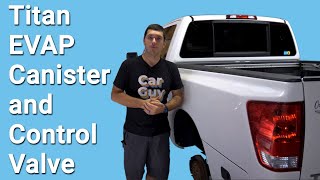
Typical fix: Replace the vent control valve. 🎬 See this walkthrough on how to replace the vent solenoid. In many cases, replacing the entire charcoal canister assembly is a more durable repair, as the canister itself may be contaminated with dust or charcoal particles.
Est. part cost: $40-$100 - ECM Software Requires Update (TSB) 🔴 High Probability Nissan issued TSBs #NTB19-045b and #P9328_P9343_P934 for this specific issue. The ECM software has a flaw in how it handles and clears this permanent DTC. This applies to the Maxima as well as other VQ35DE-equipped vehicles like the Altima and Murano.
How to confirm: A Nissan dealer can check your vehicle's VIN against the TSBs. If a physical repair is performed and the code cannot be cleared with a standard scan tool, the TSB almost certainly applies. The TSB requires the technician to first diagnose and repair the physical fault before reprogramming.
Typical fix: A Nissan dealer must reprogram the Engine Control Module (ECM) using their proprietary CONSULT diagnostic tool. This is typically done after the physical fault has been repaired.
Est. part cost: $0 (if under warranty/campaign) to $150-$250 (dealer labor) - Shorted or Damaged Wiring 🟡 Medium Probability The wiring harness runs underneath the vehicle and is exposed to road debris and moisture, which can cause corrosion, chafed insulation, or physical damage over time.
How to confirm: Visually inspect the wiring harness leading to the EVAP vent control valve for any breaks, chafing, or corrosion at the connector. Use a multimeter to check for continuity and shorts to ground between the ECM and the valve connector.
Typical fix: Repair or replace the damaged section of the wiring harness or the connector itself. Applying dielectric grease to the connector during reassembly can help prevent future moisture intrusion.
Est. part cost: $10-$50 - Clogged EVAP Charcoal Canister ⚪ Low Probability A known issue on some Nissan platforms is that the EVAP system can draw in dust, which clogs the charcoal canister and causes the vent valve to fail. A Nissan TSB for other models (NTB07-060a) even suggests installing a filter kit to prevent this.
How to confirm: When the vent valve is removed, inspect the port on the canister for black charcoal pellets or excessive dirt/dust. In one documented case, an owner fixed the code by removing the canister and blowing compressed air through it to clear the blockage.
Typical fix: Replace the entire EVAP charcoal canister assembly. This is often done along with the vent valve.
Est. part cost: $150-$300
Rare But Worth Checking
- Faulty PCM/ECM Driver Circuit:
Diagnosis Steps
- Scan for other DTCs. Note if P0101, P0087, or P2008 are also present, as this strengthens the case for the TSB-related software issue.
- Check the fuse for the EVAP system. A blown fuse will cause a circuit fault.
- Locate the EVAP canister and vent control valve at the rear of the vehicle, near the fuel tank. It is often behind a plastic shield in the driver's side rear wheel well area.
- Visually inspect the wiring harness and connector going to the vent control valve. Look for any signs of damage, corrosion, or loose connections.
- With the key on, use a multimeter to confirm that 12-volt power and a good ground are present at the connector. The ECM typically controls the ground side.
- If wiring is good, test the valve itself. You can often hear a click by applying 12 volts directly to the valve's terminals. If it doesn't click, or if its resistance is near zero ohms, it has failed.
- If the valve is removed, inspect the canister port for dust or debris. A significant blockage points to a clogged canister.
- Post-Repair: After replacing any faulty parts, attempt to clear the code with a standard OBD-II scanner. If the code persists as a 'permanent' DTC, contact a Nissan dealer. Reference TSB #NTB19-045b and ask them to verify if the ECM reprogram applies to your vehicle's VIN to fix the code-clearing issue.
Parts You'll Likely Need

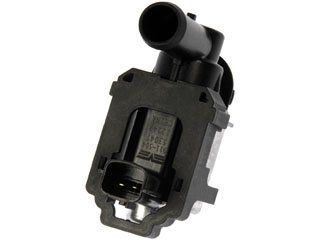
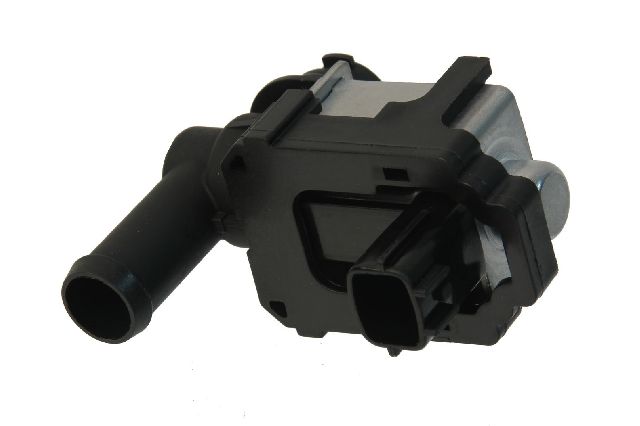
- EVAP Canister Vent Control Valve
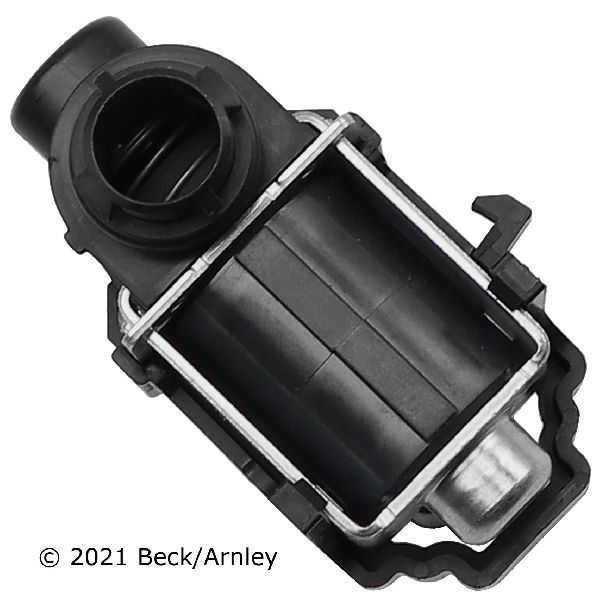
(OEM #14935-JF02C)— This is the component directly implicated by the code's definition and is a very common failure item on Nissans due to clogging or electrical failure. This part number supersedes several previous versions including 14935-JF00A, 14935-JF00B, 14935-JF00C, and others.
Trusted brands: Nissan (OEM), Dorman, Standard Motor Products (SMP)
OEM price range: $60-$90
Aftermarket price range: $30-$60 - EVAP Vapor Canister Assembly
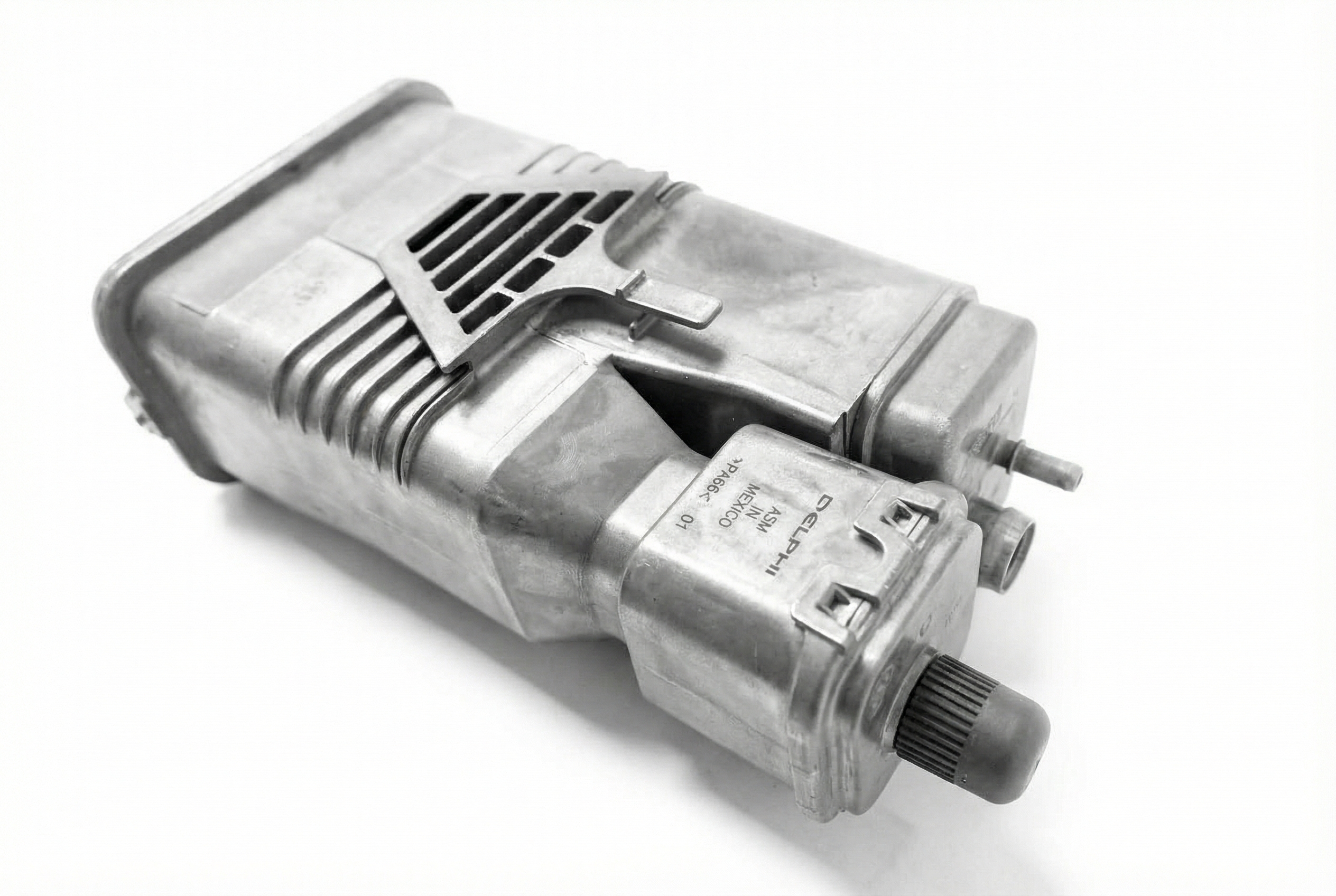
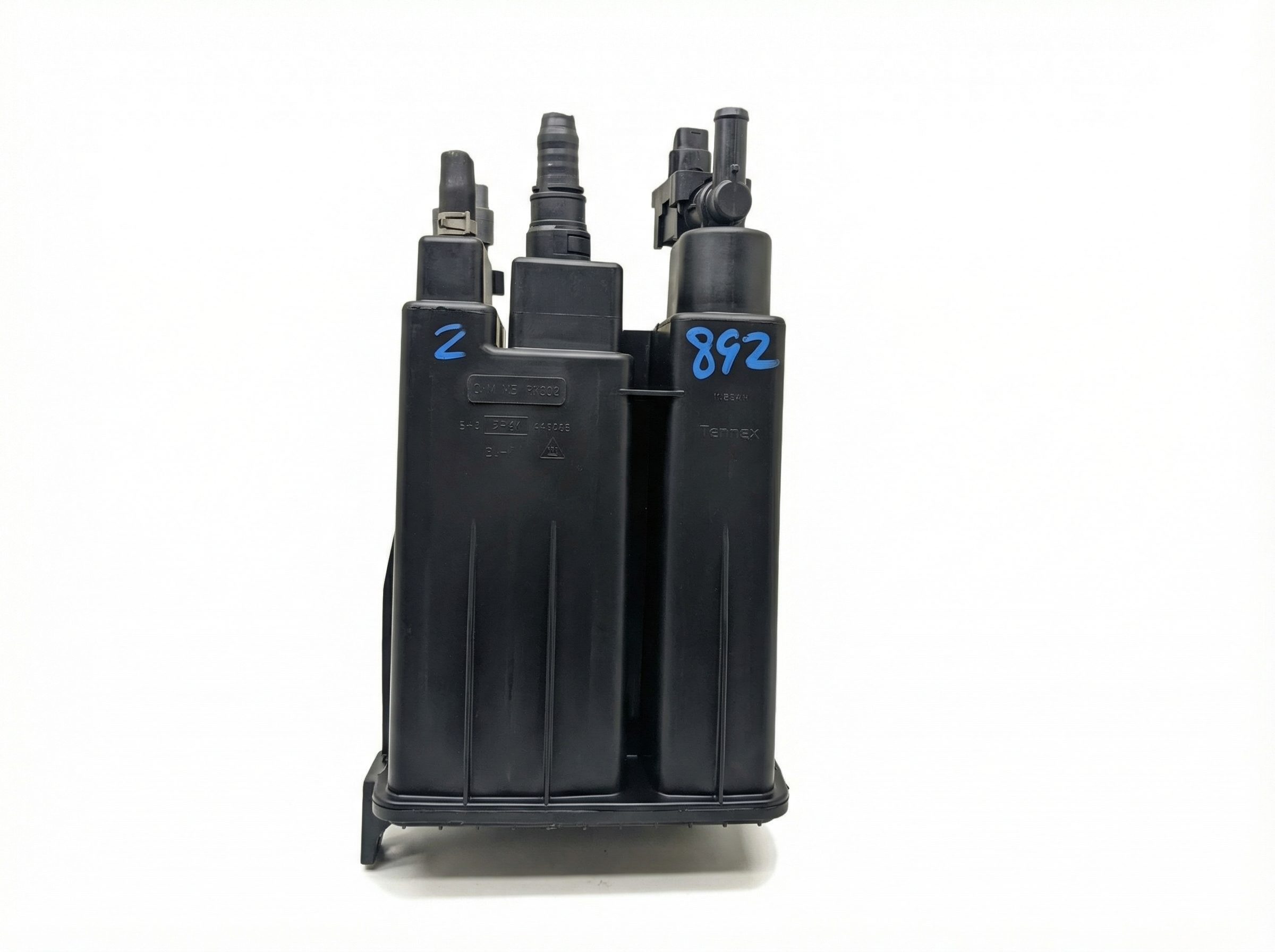
(OEM #14950-7Y00C (for 2016-2017 models), 14950-4RA0A (for 2018 models))— The charcoal canister can become saturated with dust and debris, causing the new vent valve to fail prematurely. Replacing the entire assembly is often the most complete and long-lasting repair.
Trusted brands: Nissan (OEM), Dorman, TRQ
OEM price range: $280-$370
Aftermarket price range: $150-$220
Related Codes That Often Appear With This One
- P0101 — This Mass Air Flow (MAF) sensor code is listed in the same Nissan TSBs (NTB19-045b, P9328_P9343_P934) and may be triggered by the same ECM software issue.
- P0087 — This Fuel Rail Pressure code is also listed in the Nissan TSBs (NTB19-045b, P9328_P9343_P934) related to the ECM software glitch.
- P2008 — This Intake Manifold Runner Control code is also mentioned in the applicable Nissan TSBs (NTB19-045b, P9328_P9343_P934).
- P0447 — This code indicates an 'open' circuit for the same vent control valve, whereas P0448 indicates a 'short'. They point to the same component but a different electrical failure mode.
Technical Service Bulletins (TSBs) & Recalls
- NTB19-045b: MIL ON WITH DTC P0087, P0101, P0448, OR P2008
- P9328_P9343_P934: VOLUNTARY EMISSIONS RECALL CAMPAIGN 2016-18 MAXIMA, MURANO, ALTIMA; P-DTC
Platform-Specific Known Issues
- A primary issue for this vehicle is an ECM software flaw addressed by Nissan TSB #NTB19-045b. The bulletin states that after a physical repair for P0448 is performed, the ECM may fail to clear the permanent DTC. A dealer reprogram is required to update how the ECM stores and erases the code.
- For vehicles originally sold or registered in California, a separate campaign (#P9328_P9343_P934) was issued to proactively reprogram the ECM to prevent it from improperly storing a permanent P0448 code due to calibration errors.
Mechanic-Grade Diagnostic Values
- Fuel Tank Pressure (FTP) Sensor Voltage (Key On, Engine Off) — expected: ~1.5V to 2.5V at atmospheric pressure. Failure: Voltage stuck near 0V or 5V indicates a sensor or wiring fault. The voltage should change when vacuum or pressure is applied during testing.
Scan Tool Commands That Help
- Nissan CONSULT-III / CONSULT-IV: EVAP System Test (Active Test) — This is the factory-level function to command the vent valve to open or close manually. It is used to definitively test if the valve is responding to commands from the ECM, which isolates the fault to the valve itself or the wiring.
- Professional Bi-Directional Scan Tool (Autel, Snap-on, CGSULIT, etc.): Vent Valve Control / EVAP System Test — Similar to the factory tool, this command allows for manual actuation of the vent valve. A technician can command the valve closed and listen for a click, or use it in conjunction with a smoke machine to test the system's seal.
Wiring & Ground Locations

- EVAP Canister Vent Control Valve Connector — On the EVAP canister, which is located at the rear of the vehicle, typically in the driver's side rear wheel well area, sometimes behind a protective shield.. This is the connector where voltage and ground tests must be performed to diagnose the circuit. Corrosion or damage here is a common cause of the P0448 short circuit code.
Real Owner Repair Stories
- YouTube channel 'Alger Adventures' (2012 Nissan Pathfinder (similar EVAP system design)) — Check Engine Light with code P0448.
❌ Tried (didn't work) Initial diagnosis pointed to a bad solenoid.
✅ What actually fixed it The owner removed the EVAP canister and vent solenoid, finding them caked with dirt and dust. He tested the solenoid with a 12V source and confirmed it still clicked. He then used compressed air to thoroughly blow out the dust from both the canister and the solenoid. After reassembly, the code was cleared and did not return after 3,000+ miles of driving. - Reddit user 'ashevillain7' (2015 Nissan Frontier (similar EVAP system design)) — P0448 code and difficulty filling the gas tank, especially in cold/rainy weather.
❌ Tried (didn't work) Driving to see if the code would clear on its own., One shop wanted to replace many unnecessary parts listed in a TSB, including the fuel filler neck.
✅ What actually fixed it A different shop correctly diagnosed the issue based on the refueling symptom. They replaced only the EVAP canister and the vent solenoid. The Check Engine Light turned off immediately after the repair.
"I Checked Everything" — The Actual Cause
- This diagnostic pattern is generally not applicable to a P0448 code. A smoke test is designed to find physical leaks in the EVAP system (which trigger codes like P0455, P0456, etc.). P0448, however, is an electrical code indicating a 'Circuit Shorted'. The diagnosis relies on electrical testing (checking for voltage, ground, and shorts in the wiring) rather than smoke testing.
OEM Part Supersession History
14935-JF00A, 14935-JF00B, 14935-JF00C, 14935-JF00D, 14935-JF00E, 14935-JF01B, 14935-JF01C→14935-JF02C— Part has been updated by the manufacturer over time for improved reliability.
Heads up: The newest part number, 14935-JF02C, is the correct replacement for all previous versions.
Model Year Variations Within This Range
- 2016-2017 vs 2018: The OEM part number for the complete EVAP Vapor Canister Assembly is different. For 2016-2017 models, use part number 14950-7Y00C. For 2018 models, use part number 14950-4RA0A.
Helpful Videos

Used OEM Parts in Stock



New Aftermarket Parts Available


The information in this article is provided for general reference and educational purposes only. Vehicle specifications, procedures, and part compatibility can vary by production date, trim level, and region. Always consult your vehicle's factory service manual and verify part numbers before purchasing or performing repairs. Safety-critical components such as airbags, seat belts, and braking systems should be installed by a qualified professional.
- Nissan MAXIMA:
- 🎬 Helpful Videos
- 🛍️ Shop This Part
- What's Unique About the 2016-2018 Nissan MAXIMA
- Diagnostic Flowchart
- Symptoms You May Notice
- Most Likely Causes
- Rare But Worth Checking
- Diagnosis Steps
- Parts You'll Likely Need
- Related Codes That Often Appear With This One
- Technical Service Bulletins (TSBs) & Recalls
- Platform-Specific Known Issues
- Mechanic-Grade Diagnostic Values
- Scan Tool Commands That Help
- Wiring & Ground Locations
- Real Owner Repair Stories
- "I Checked Everything" — The Actual Cause
- OEM Part Supersession History
- Model Year Variations Within This Range
- 🎟️ Get 5% Off