

P0446 on 2020-2024 GMC Sierra 3500: EVAP Vent Circuit Causes and Fixes
P0446 on a 2020-2024 GMC Sierra 3500 most often points to a faulty EVAP vent valve/solenoid or a clogged EVAP canister. A common cause is dust intrusion, as noted in GM Technical Service Bulletin #23-NA-073, which recommends retrofitting an external filter. Expect to pay $30-$80 for a new vent solenoid (if available separately) and $250-$400 for a new EVAP canister.
- P0446 on a 2020-2024 Sierra 3500 is very likely related to the EVAP vent valve or canister.
- A GM Technical Service Bulletin (#23-NA-073) points to dust clogging the EVAP system as a primary cause for this code on trucks used in dusty environments.
- The most common fixes are replacing the EVAP vent solenoid or the entire charcoal canister assembly.
- Before replacing parts, check the wiring and connector for damage or corrosion, as the components are located in an exposed area under the truck.
- This is a DIY-friendly repair for most owners with basic tools, and it does not make the truck unsafe to drive in the short term.
What's Unique About the 2020-2024 Gmc SIERRA 3500
For the 2020-2024 GMC Sierra 3500, a significant factor for the P0446 code is its use in demanding environments. General Motors issued a Technical Service Bulletin (TSB #23-NA-073) specifically mentioning that vehicles operated in extremely dusty conditions can suffer from dust getting into the EVAP system. This dust can clog the EVAP canister and the vent solenoid, directly causing this code. The TSB outlines a procedure to retrofit an external filter to the vent hose to prevent this from happening again. Importantly, GM states this is a customer-pay alteration, not a warranty repair, and the added filter is considered a maintenance item that should be checked periodically.
Diagnostic Flowchart
Tap your situation to follow the diagnostic path that matches what you're seeing on this vehicle.
Symptoms You May Notice
- Check Engine Light is on
- Difficulty filling the fuel tank (gas pump clicks off repeatedly)
- Slight fuel odor near the vehicle
- Hissing sound when opening the gas cap after driving
- Replacing the gas cap. While a bad gas cap can cause other EVAP codes like P0455 (gross leak), it is not a primary cause for P0446, which specifically points to a vent control circuit or restriction issue.
- Replacing the purge valve/solenoid. The purge valve is located in the engine bay and typically sets other codes like P0496 when it fails. P0446 is specific to the vent valve and its path located near the fuel tank.
Most Likely Causes
- Dust Intrusion Clogging EVAP Canister and Vent Valve 🔴 High Probability As per GM TSB #23-NA-073, these trucks are often used in dusty environments, which can lead to the EVAP system ingesting dust and debris, clogging the canister and vent valve.
How to confirm: Inspect the EVAP canister and vent hose inlet for excessive dirt or dust. If the canister is very difficult to blow through, it is likely clogged. The TSB recommends a specific repair procedure to add an external filter to prevent recurrence.
Typical fix: Replace the EVAP canister and vent valve. Install the filter kit as described in TSB #23-NA-073 to prevent recurrence. This involves splicing a filter (GM Part # 86792068) into the vent line using heater hose and clamps.
Est. part cost: $250-$450 - Faulty EVAP Vent Valve/Solenoid 🔴 High Probability The vent solenoid is located underneath the truck near the fuel tank, where it is exposed to road debris and moisture, leading to mechanical failure (sticking open or closed) or electrical issues. On these newer trucks, it is often integrated into the canister assembly and not sold as a separate component.
How to confirm: Use a capable OBD-II scanner to command the vent valve to open and close; a clicking sound should be audible. You can also apply 12V power and ground directly to the solenoid to test its function if it is accessible. Check the wiring and connector for corrosion or damage.
Typical fix: Replace the EVAP vent valve/solenoid. It is often sold as part of the charcoal canister assembly on this platform.
Est. part cost: $30-$80 (if available separately), otherwise included with canister cost. - Damaged or Clogged EVAP Hoses 🟡 Medium Probability Insects can build nests in the vent hose, or the hoses can become brittle and crack over time. Simple blockages from spider webs or dirt can also trigger the code without any part failure.
How to confirm: Visually inspect all hoses connected to the charcoal canister and vent valve for cracks, blockages, or disconnections. A smoke test can effectively reveal any hidden leaks. Some owners have had success simply blowing compressed air through the lines to clear unseen blockages.
Typical fix: Clean out any blockages with compressed air or a shop vac. Replace the damaged section of hose if cracked or broken.
Est. part cost: $10-$50
Rare But Worth Checking
- Faulty Fuel Tank Pressure Sensor: A faulty fuel tank pressure (FTP) sensor can get stuck at a certain reading, providing bad data to the computer. The ECU interprets this stuck pressure reading as a blocked vent (since pressure doesn't change when the vent is commanded open) and sets P0446, even though the vent system may be working perfectly. This can occur without setting a specific code for the FTP sensor itself.
- Damaged Wiring or Connector: The wiring to the vent solenoid can become damaged or corroded due to its location under the vehicle. Always check the connector and harness for opens, shorts, or corrosion before replacing parts. GM has also issued engineering bulletins to investigate loose grounds at points G110 and G114 on the T1XX platform, which could affect EVAP components.
Diagnosis Steps
- Check for other codes: Scan the vehicle for any other related EVAP codes to get a fuller picture of the issue.
- Inspect the Gas Cap: Although not the most likely cause, ensure the gas cap (or capless filler neck) is secure and the seal is intact.
- Visually Inspect the EVAP System: Raise the vehicle and locate the charcoal canister and vent solenoid near the fuel tank. Look for obvious damage, disconnected hoses, or heavy accumulation of dirt/mud, especially around the vent hose inlet.
- Try the 'Gas Cap Trick': A forum-suggested diagnostic is to loosen the gas cap before a cold start. If the P0446 code does not reappear as quickly, it suggests a true blockage in the system. If the code returns just as quickly, it may point towards a faulty Fuel Tank Pressure sensor providing bad data.
- Test the Vent Solenoid: Use a bi-directional scan tool to command the vent solenoid on and off. Listen for an audible click. If no scanner is available, you can remove the solenoid and apply 12V power to see if it actuates.
- Check the Vent Solenoid Circuit: If the solenoid doesn't respond, check for 12V power at the connector with the key on. Then check for continuity on the ground wire back to the ECU. Inspect the connector for corrosion.
- Inspect/Clear the Lines: One owner reported success after spending over $1,000 at a dealer by simply disconnecting the EVAP hoses and blowing them out with a shop vac and compressed air to clear hidden debris or spider webs.
- Inspect the Charcoal Canister: If the vent solenoid and wiring are good, the canister itself may be clogged. Disconnect the hoses and try to gently blow air through it. If it is restricted, it needs replacement.
- Perform a Smoke Test: If a leak is suspected but not visible, injecting smoke into the EVAP system is the fastest way to find the source of the leak.
Parts You'll Likely Need
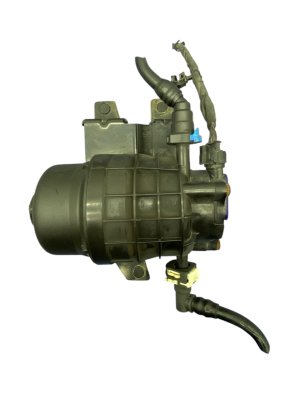
- EVAP Vapor Canister
(OEM #85107747 (replaces 84050713))— Often becomes clogged with dust on these trucks, as identified in TSB #23-NA-073, necessitating replacement. The vent valve is frequently integrated into the canister assembly on this platform.
Trusted brands: ACDelco, Dorman
OEM price range: $350-$450
Aftermarket price range: $250-$350 - EVAP Vent Hose Filter Kit (per TSB 23-NA-073)
(OEM #Filter: 86792068. Also requires 3/4" heater hose, clamps, and a 3/4" to 5/8" connector.)— This is the official fix recommended by GM to prevent a recurrence of dust intrusion. The filter is spliced into the vent line to protect the new canister and vent valve.
Trusted brands: ACDelco/GM Genuine Parts
OEM price range: $45-$60 for the filter, plus cost of hose/clamps.
Aftermarket price range: N/A - EVAP Canister Vent Valve/Solenoid — This is the component directly implicated by the P0446 code. It can fail electrically or mechanically. However, for the 2020-2024 Sierra 3500, it is typically not sold separately and is replaced with the entire canister assembly.
Trusted brands: ACDelco, Standard Motor Products, Dorman
OEM price range: $50-$90 (if available)
Aftermarket price range: $30-$60 (if available)
Related Codes That Often Appear With This One
- P0442 — Indicates a small EVAP leak. Both can be triggered by the dust intrusion issue described in TSB #23-NA-073.
- P0455 — Indicates a large EVAP leak. Both can be triggered by the dust intrusion issue described in TSB #23-NA-073.
- P0449 — This is another code for the EVAP Vent Solenoid Control Circuit, very similar to P0446. Both can be triggered by the dust intrusion issue described in TSB #23-NA-073.
Technical Service Bulletins (TSBs) & Recalls
- 23-NA-073: Provides repair information for EVAP DTCs P0442, P0446, P0455, or P0449, caused by dust intrusion into the evaporative canister. It details a procedure to install an external filter.
Platform-Specific Known Issues
- GM Technical Service Bulletin #23-NA-073 directly addresses P0446 on these vehicles. It states that operation in dusty environments can cause dust to enter the EVAP system, plugging the canister and vent solenoid. The bulletin provides a procedure for retrofitting an external filter (Part No. 86792068) to the vent hose. The procedure involves cutting the original corrugated vent hose, attaching a new section of 3/4" rubber heater hose to the new filter, and securing it with clamps, then routing it in the original location. This is considered a customer-pay modification, not a warranty item.
Mechanic-Grade Diagnostic Values
- EVAP Vent Valve/Solenoid Coil Resistance — expected: 20 - 50 Ohms. Failure: A reading outside this range (e.g., infinite for an open circuit, or near zero for a short) indicates a faulty solenoid coil.
- Fuel Tank Pressure (FTP) Sensor Voltage (Key On, Engine Off, Gas Cap Off) — expected: 1.3 - 1.7 Volts. Failure: A voltage that is stuck and does not change (e.g., stuck at 0.2V) even when pressure is released indicates a faulty sensor.
- FTP Sensor Live Data (Scan Tool) — expected: Pressure reading (e.g., inches of H2O) should drop to near zero when the gas cap is removed.. Failure: If the pressure reading remains high (e.g., 7.28 in H2O) after removing the gas cap, the FTP sensor is stuck and providing a false reading.
Scan Tool Commands That Help
- GDS2 / Tech 2 or equivalent professional scanner: EVAP Vent Solenoid Command (Venting / Not Venting) — This bidirectional control is used to manually command the vent solenoid open and closed. A technician can listen for an audible click from the solenoid and watch for a corresponding change in FTP sensor voltage to confirm the solenoid and its circuit are working.
- GDS2 / Tech 2: EVAP System Service Bay Test — Located under 'Special Functions,' this test forces the EVAP monitor to run, allowing a technician to verify that a repair has been successful without having to perform a full drive cycle.
Wiring & Ground Locations
- G110 / G114 — These are ground connections on the T1XX platform frame.. GM issued an Engineering Information bulletin (PIE0548) to investigate loose connections at these specific grounds on 2019-2020 models. A poor ground can cause intermittent or faulty operation of various components, including the EVAP system, leading to codes like P0446.
- EVAP Vent Solenoid Connector — At the EVAP canister vent solenoid, under the truck near the fuel tank.. The wiring at the connector consists of a power wire (often red) and a control wire (often white) that is grounded by the ECM to activate the solenoid. Checking for 12V power and a functioning ground signal at this connector is a primary electrical diagnostic step.
Real Owner Repair Stories
- Commenter on YouTube video by 'HVAC Mechanic' (Chevy/GMC truck, year not specified but modern.) — Check engine light for P0446, unable to pump gas without the nozzle clicking off.
❌ Tried (didn't work) Dealer replaced gas cap, Dealer replaced EVAP canister, Dealer replaced fuel pressure sensor, Dealer replaced vent valve (some parts twice)
✅ What actually fixed it The owner disconnected all hoses going to the canister and vent valve and blew them out with a shop vac and compressed air. This cleared a hidden blockage (suspected spider web or debris) that was causing the restriction. The light went off and the refueling issue was resolved. - YouTube video by 'Eli TheOBDTech' (2003 GMC Sierra 1500 (demonstrates a common GM issue applicable to newer models)) — Check Engine Light with code P0446.
❌ Tried (didn't work) Initial diagnosis points to vent valve, but experience suggests otherwise.
✅ What actually fixed it The Fuel Tank Pressure (FTP) sensor was faulty, showing a stuck voltage and pressure reading on the scan tool that did not change when the system was purged or vented. Replacing the FTP sensor resolved the code.
"I Checked Everything" — The Actual Cause
- A very common scenario for a persistent P0446 code is that the system passes a smoke test (indicating no leaks), yet the code returns. The root cause is often a faulty Fuel Tank Pressure (FTP) sensor. The sensor gets electrically stuck, reporting a constant pressure to the ECU. When the ECU commands the vent valve open to release pressure, it sees no change from the faulty sensor and incorrectly concludes there is a blockage in the vent path, triggering the P0446 code.
When the Usual Fixes Don't Work
- While the most common fixes involve replacing the canister or adding the TSB filter kit, a significant number of real-world cases are resolved only after addressing issues that a smoke test would not find. In one documented case, after a dealership replaced nearly every component of the EVAP system at a cost of over $1,000, the actual fix was simply blowing out the EVAP lines with compressed air to clear a hidden spider web. In other cases, the true culprit was a faulty Fuel Tank Pressure (FTP) sensor providing incorrect data, tricking the computer into thinking there was a vent blockage. These instances highlight the need to diagnose beyond the most obvious causes before replacing expensive components.
OEM Part Supersession History
84050713→85107747— Standard part revision and update by the manufacturer.
Model Year Variations Within This Range
- 2020-2024+: The dust intrusion issue addressed by TSB 23-NA-073 is persistent across the entire generation. The TSB has been updated multiple times to include the latest model years (up to 2025), indicating the original EVAP system design was not altered to fix the problem in later years of this generation.
Helpful Videos


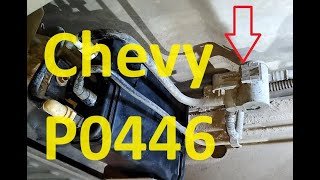
We Have This Part in Stock



The information in this article is provided for general reference and educational purposes only. Vehicle specifications, procedures, and part compatibility can vary by production date, trim level, and region. Always consult your vehicle's factory service manual and verify part numbers before purchasing or performing repairs. Safety-critical components such as airbags, seat belts, and braking systems should be installed by a qualified professional.
- Gmc SIERRA 3500:
- 🎬 Helpful Videos
- 🛍️ Shop This Part
- What's Unique About the 2020-2024 Gmc SIERRA 3500
- Diagnostic Flowchart
- Symptoms You May Notice
- Most Likely Causes
- Rare But Worth Checking
- Diagnosis Steps
- Parts You'll Likely Need
- Related Codes That Often Appear With This One
- Technical Service Bulletins (TSBs) & Recalls
- Platform-Specific Known Issues
- Mechanic-Grade Diagnostic Values
- Scan Tool Commands That Help
- Wiring & Ground Locations
- Real Owner Repair Stories
- "I Checked Everything" — The Actual Cause
- When the Usual Fixes Don't Work
- OEM Part Supersession History
- Model Year Variations Within This Range
- 🎟️ Get 5% Off