

P0446 on 2021-2025 GMC Sierra 2500: EVAP Vent Circuit Causes and Fixes
On a 2021-2025 GMC Sierra 2500, code P0446 is most often caused by a faulty EVAP vent valve or a clogged EVAP canister, especially if the truck is operated in dusty conditions. A specific GM Technical Service Bulletin (TSB #23-NA-073) addresses this exact issue by recommending the installation of an auxiliary filter, a repair that is typically paid for by the customer.
- P0446 on a 2021-2025 Sierra 2500 points to a problem with the EVAP vent circuit, usually near the fuel tank.
- The most likely cause is a faulty or clogged EVAP vent valve solenoid.
- If you drive in dusty conditions, the charcoal canister itself may be clogged, as documented in GM TSB #23-NA-073. The official fix is adding a filter, which is a customer-pay repair.
- This is a DIY-friendly repair for most home mechanics, with the vent valve being relatively accessible and inexpensive.
- Do not confuse the vent valve (by the tank) with the purge valve (in the engine bay).
What's Unique About the 2021-2025 Gmc SIERRA 2500
For this generation of GMC Sierra 2500, a primary factor for the P0446 code is environmental. GM has officially recognized that operating these trucks in very dusty environments can lead to dust getting into the EVAP system. This dust can clog the charcoal canister and the vent solenoid, triggering this code. A Technical Service Bulletin (TSB #23-NA-073) was issued to address this specific problem by retrofitting a filter to the EVAP vent hose. Importantly, the TSB specifies this is a customer-pay alteration, not a warranty repair, and the added filter becomes a periodic maintenance item.
Diagnostic Flowchart
Tap your situation to follow the diagnostic path that matches what you're seeing on this vehicle.
Symptoms You May Notice
- Check Engine Light is on.
- Difficulty filling the fuel tank (the pump may shut off repeatedly). This is a very strong indicator of a vent path blockage.
- A faint fuel odor near the vehicle.
- A whooshing sound from the fuel tank area when opening the gas cap, indicating pressure buildup.
- Replacing the purge valve solenoid on the engine. The P0446 code specifically points to the vent circuit, which is located near the fuel tank and charcoal canister, not the purge valve in the engine bay. A Reddit user reported repeatedly replacing the purge valve without fixing the P0446 code, highlighting this common mistake.
Most Likely Causes
- Clogged or Failed EVAP Canister Vent Valve/Solenoid 🔴 High Probability As identified in TSB #23-NA-073, the vent valve is susceptible to becoming clogged with dust and debris, especially in rural or off-road conditions. The solenoid can also fail electrically, become stuck, or even develop physical cracks in its housing causing a leak.
How to confirm: Locate the vent valve near the charcoal canister. Test the solenoid with a scan tool that has bidirectional controls to command it open and closed. You can also apply 12V directly to the solenoid to see if it clicks and operates correctly. Visually inspect the valve and its hoses for blockages or cracks. A YouTube comment from an owner notes it's possible to access and replace the valve without fully removing the truck bed.
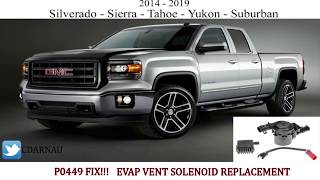
Typical fix: Replace the EVAP canister vent valve assembly.
Est. part cost: $40-$100 - Clogged EVAP Charcoal Canister 🟡 Medium Probability Dust intrusion is a known issue for these trucks. The charcoal canister can become saturated with dust, preventing proper airflow for the EVAP system to function.
How to confirm: Disconnect the hoses from the canister and attempt to blow air through it. If there is significant resistance, the canister is likely clogged. A smoke test may also reveal a blockage.
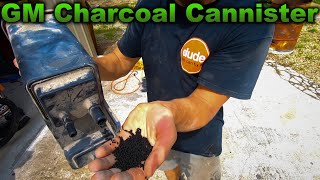
Typical fix: Replace the charcoal canister. 🎬 Watch: Step-by-step guide to replacing the charcoal canister. If the vehicle is frequently in dusty environments, perform the modification outlined in TSB #23-NA-073 to add an external filter. In some cases, a simple blockage from a spider web or debris in the lines can be the cause. One owner successfully fixed the code and fueling issues by disconnecting the EVAP lines and blowing them out with an air compressor.
Est. part cost: $150-$250 - Damaged or Blocked EVAP Hoses ⚪ Low Probability
How to confirm: Visually inspect all EVAP hoses running from the tank to the canister and to the vent valve. Look for cracks, kinks, or blockages from dirt or insect nests. A smoke machine is the most effective tool for finding leaks or blockages in the hose network.
Typical fix: Replace the damaged section of hose. As a first step, some owners have had success clearing blockages by blowing compressed air through the lines.
Est. part cost: $10-$50 - Faulty Wiring or Electrical Connection ⚪ Low Probability
How to confirm: Inspect the wiring harness and connector at the vent valve for damage, corrosion, or loose pins. Use a multimeter to check for 12V power and a good ground at the connector with the key on.
Typical fix: Repair the damaged wiring or clean/replace the connector.
Est. part cost: $5-$30
Rare But Worth Checking
- Faulty Fuel Tank Pressure (FTP) Sensor: The FTP sensor reports pressure readings to the computer. If it provides incorrect data (e.g., it's stuck reading high pressure), the computer may falsely believe there is a vent problem. A quick test is to view the FTP sensor data on a scan tool, then open the gas cap. The pressure reading should drop to near zero. If it remains high, the sensor is likely faulty.
- Loose or Faulty Gas Cap: While more commonly associated with small leak codes (like P0442 or P0456), a gas cap that is not sealing correctly can sometimes contribute to general EVAP system faults. Always ensure the cap is tight and the seal is intact.
Diagnosis Steps
- Read the code with an OBD-II scanner and check for any other pending or active codes.
- Inspect the gas cap to ensure it is tight and the seal is in good condition.
- Visually inspect the EVAP canister, vent valve, and all associated hoses under the truck (near the spare tire/fuel tank) for obvious damage, cracks, or blockages.
- Check the electrical connector at the vent valve for power (12V) and ground using a multimeter.
- If you have a capable scan tool, command the vent valve to open and close. Listen for an audible click. If it doesn't respond, the valve is likely faulty.
- As a more advanced check, monitor the Fuel Tank Pressure (FTP) sensor reading on your scan tool. Open the gas cap. The reading should drop to near zero. If it stays high, the FTP sensor may be bad.
- If the valve operates but the code persists, perform a smoke test on the EVAP system to check for blockages in the canister or vent hoses.
- As a low-cost first attempt at a fix, disconnect the EVAP lines at the canister and use an air compressor to blow through the lines toward the front of the vehicle and into the fuel filler neck to dislodge any simple debris.
- If the vehicle is frequently used in dusty conditions, strongly consider performing the filter addition outlined in TSB #23-NA-073.
Parts You'll Likely Need
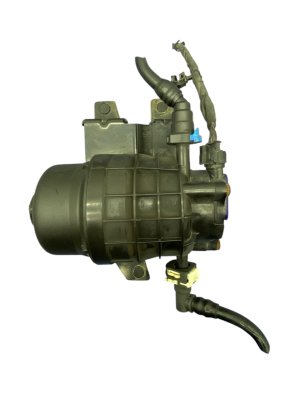
- EVAP Vapor Canister Vent Valve Solenoid
(OEM #23481275)— This is the most common failure point for the P0446 code, either by becoming clogged with debris or failing electrically.
Trusted brands: ACDelco, GM Genuine Parts
OEM price range: $60-$100
Aftermarket price range: $40-$70 - EVAP Charcoal Canister — Can become clogged with dust, especially on trucks used in dusty environments, as noted in TSB #23-NA-073.
Trusted brands: ACDelco, GM Genuine Parts
OEM price range: $200-$300
Aftermarket price range: $150-$220 - EVAP Canister Vent Hose Filter Kit
(OEM #See TSB for components)— This is the official GM-recommended fix per TSB #23-NA-073 for vehicles operated in dusty environments to prevent recurring P0446 codes. The TSB outlines a procedure using several parts to construct the filtered line. The filter itself is often an ACDelco GF824. Aftermarket relocation kits also exist for this purpose.
Trusted brands: GM Genuine Parts, ACDelco
OEM price range: $50-$100 (for components)
Aftermarket price range: $30-$60
Related Codes That Often Appear With This One
- P0449 — This code also relates directly to the EVAP vent valve/solenoid control circuit and is often triggered alongside P0446. TSB #23-NA-073 explicitly lists both codes as resulting from the same dust intrusion issue.
- P0442 — Indicates a small leak in the EVAP system. A faulty vent valve that isn't sealing properly can be interpreted as a small leak.
- P0455 — Indicates a large leak in the EVAP system. If the vent valve is stuck open, the system cannot seal for its pressure test, resulting in a large leak code. This code is also mentioned in TSB #23-NA-073.
Technical Service Bulletins (TSBs) & Recalls
- 23-NA-073: Provides a procedure to install an additional filter in the EVAP vent line to correct for DTCs P0442, P0446, P0455, or P0449 caused by dust intrusion into the evaporative canister.
Platform-Specific Known Issues
- TSB #23-NA-073: Dust Intrusion Clogging EVAP System: GM issued this bulletin specifically for 2020-2025 HD trucks (and other models) that set EVAP codes like P0446 due to dust intrusion into the canister. The fix involves retrofitting an inline filter to the canister vent hose to prevent debris from entering the system. The TSB clearly states this is a customer-pay alteration and that the added filter should be periodically inspected and replaced as a maintenance item to prevent the issue from reoccurring.
Mechanic-Grade Diagnostic Values
- Fuel Tank Pressure (FTP) Sensor Voltage (Key On, Engine Off, Gas Cap Off/System at atmospheric pressure) — expected: 1.3V to 1.7V (typically ~1.5V). Failure: A voltage that is stuck high (e.g., 2.8V or 4.8V) or low (e.g., 0.2V) and does not change when the gas cap is removed indicates a faulty sensor or wiring issue.
- EVAP Vent Valve Solenoid Resistance — expected: 10 - 30 Ohms. Failure: A reading of 0 Ohms indicates a short circuit, while an infinite reading (OL) indicates an open circuit. Either requires replacement of the solenoid.
- Fuel Tank Pressure (FTP) Sensor Circuit Test (Connector Unplugged) — expected: 5V reference from PCM on one pin, ground on another pin.. Failure: Absence of 5V or ground indicates a wiring problem between the sensor and the PCM.
- DTC P0446 Set Condition (Scan Tool Data) — expected: Fuel tank pressure less than -10 inches H2O for 30 seconds.. Failure: This is the specific threshold the PCM uses to determine a vent path restriction and set the code.
Scan Tool Commands That Help
- GM Tech 2 / GDS2 or equivalent professional scan tool: EVAP System Purge/Seal Test — This function, often found under 'Special Functions' or 'Output Controls', allows a technician to manually command the purge and vent solenoids to seal the system and draw a vacuum. It's used to verify the mechanical operation of the valves and check the system's ability to hold a vacuum, which is essential for diagnosing P0446.
- GM Tech 2 / GDS2 or equivalent professional scan tool: EVAP Vent Solenoid On/Off Command — This is a direct bidirectional control to test the vent solenoid itself. A technician can command the valve to open and close while listening for an audible click from the solenoid near the canister. If no click is heard, it points to a faulty solenoid or a wiring issue.
Wiring & Ground Locations
- Rear Frame Grounds (G4xx) — On GM trucks, ground points are identified with a 'G' number. Grounds in the rear of the vehicle, which would serve the EVAP system components, typically start with 'G4xx'. For example, G403. The exact location is on the frame rail near the rear of the vehicle, often near the spare tire or fuel tank.. The EVAP vent solenoid requires a solid ground to operate correctly. A corroded or loose frame ground in the rear of the truck can cause intermittent or total failure of the vent solenoid circuit, leading to a P0446 code.
- Fuel Tank Pressure (FTP) Sensor Connector — On top of the fuel tank. Access typically requires lowering the tank or lifting the truck bed.. This 3-wire connector provides the FTP sensor with a 5V reference, a ground, and returns a signal voltage to the PCM. Technicians test for 5V and ground at this connector to rule out wiring issues before condemning the sensor.
Real Owner Repair Stories
- YouTube Channel 'Valley Mobile Automotive' (2006 Chevy Silverado 2500) — Check Engine Light with code P0446.
❌ Tried (didn't work) Initial diagnosis pointed to a vent solenoid or blockage because the FTP sensor voltage was stuck high (4.8V), which the computer interpreted as a restriction.
✅ What actually fixed it The Fuel Tank Pressure (FTP) sensor was faulty and stuck at a high voltage reading. Replacing the FTP sensor brought the voltage back to the correct atmospheric reading (~1.43V) and also allowed the previously unresponsive vent solenoid to be commanded on by the computer. The faulty sensor data was preventing the computer from even attempting to operate the vent solenoid. - YouTube Channel 'GoTech' (GMC Sierra (older model, but diagnostic principle is identical)) — Check Engine Light with code P0446. Vehicle was at a shop for a second opinion after a previous vent solenoid replacement didn't fix the issue.
❌ Tried (didn't work) Replacing the EVAP vent solenoid.
✅ What actually fixed it The Fuel Tank Pressure (FTP) sensor was faulty, reading a steady 2.2 volts even with the gas cap off. It never dropped to the expected ~1.5 volts for atmospheric pressure. Replacing the FTP sensor (which was accessible without dropping the tank on this model) resolved the issue. The video notes that the sensor voltage was not low enough to trigger a specific FTP sensor fault code (P0452), making it a tricky diagnosis.
OEM Part Supersession History
Multiple, including 10382080, 15844701, 20995472, 25966403→23481275— Part consolidation and design updates over many model years.
Heads up: While 23481275 is the current part, some older applications may require a jumper harness (p/n 19257603) to adapt from a Packard style connector to the newer USCAR connector on the valve.
Helpful Videos
We Have This Part in Stock



The information in this article is provided for general reference and educational purposes only. Vehicle specifications, procedures, and part compatibility can vary by production date, trim level, and region. Always consult your vehicle's factory service manual and verify part numbers before purchasing or performing repairs. Safety-critical components such as airbags, seat belts, and braking systems should be installed by a qualified professional.
- Gmc SIERRA 2500:
- 🎬 Helpful Videos
- 🛍️ Shop This Part
- What's Unique About the 2021-2025 Gmc SIERRA 2500
- Diagnostic Flowchart
- Symptoms You May Notice
- Most Likely Causes
- Rare But Worth Checking
- Diagnosis Steps
- Parts You'll Likely Need
- Related Codes That Often Appear With This One
- Technical Service Bulletins (TSBs) & Recalls
- Platform-Specific Known Issues
- Mechanic-Grade Diagnostic Values
- Scan Tool Commands That Help
- Wiring & Ground Locations
- Real Owner Repair Stories
- OEM Part Supersession History
- 🎟️ Get 5% Off