

P0446 on 2014-2021 GMC Sierra 1500: EVAP Vent Circuit Causes and Fixes
On 2014-2021 Sierra 1500s, P0446 is almost always caused by a faulty EVAP vent solenoid or a clogged vent hose due to dust, a known issue covered by GM TSB #23-NA-073. The most common fix is replacing the vent solenoid, which costs about $40-$100 for the part. In some cases, a faulty Fuel Tank Pressure sensor can also trigger this code.
- P0446 on a 2014-2021 Sierra 1500 strongly points to a problem with the EVAP vent solenoid or its associated hose.
- A very common cause is the vent hose getting clogged with dust, an issue so frequent that GM issued a service bulletin (23-NA-073) for it.
- A primary symptom, besides the Check Engine Light, is the gas pump repeatedly shutting off during refueling.
- The most likely repair is replacing the vent solenoid, and for long-term reliability, adding the TSB-recommended filter kit is a wise investment.
What's Unique About the 2014-2021 Gmc SIERRA 1500

GMC Sierra 1500 trucks and their platform mates (Chevy Silverado, Tahoe, Yukon), especially those used in dusty or rural environments, are highly susceptible to debris clogging the EVAP system's vent hose and solenoid. This is a well-documented problem, leading General Motors to issue Technical Service Bulletin #23-NA-073. This TSB outlines a procedure to retrofit an auxiliary filter kit to prevent dust intrusion. Therefore, unlike in many other vehicles, P0446 on a Sierra is very often a mechanical blockage rather than a purely electrical failure.
Diagnostic Flowchart

Tap your situation to follow the diagnostic path that matches what you're seeing on this vehicle.
Generation note: This range covers two generations of the GMC Sierra 1500: the third generation (K2XX; 2014-2018) and the fourth generation (T1XX; 2019-2021). The primary cause related to dust intrusion clogging the EVAP vent system is a known issue on models from both generations, as confirmed by TSB #23-NA-073 which applies to models from 2019-2024.
Symptoms You May Notice

- Check Engine Light is illuminated
- Difficulty filling the fuel tank (gas pump nozzle clicks off repeatedly)
- A faint fuel odor may be present
- A 'whoosh' sound may be absent when opening the gas cap after driving
- Replacing the gas cap. While a faulty gas cap can cause other EVAP codes like P0455 (large leak), it is rarely the direct cause of P0446, which specifically points to a vent circuit/restriction issue.
- Replacing the purge valve first. The purge valve (in the engine bay) is a common failure item, but for P0446 on this specific truck, the vent valve (near the tank) and its associated plumbing are far more likely to be the culprit.
Most Likely Causes

- Faulty or Clogged EVAP Vent Solenoid 🔴 High Probability The vent solenoid is located under the truck near the spare tire, making it vulnerable to road debris and dust, which can cause it to stick closed or fail electrically. This is the most frequently cited cause in owner forums and repair videos.
How to confirm: Use a bidirectional scan tool to command the valve open and closed; you should hear an audible click. You can also apply 12V power directly to the solenoid to test its function. Visually inspect the solenoid's filter screen for heavy dirt accumulation.
Typical fix: Replace the vent solenoid valve. It is often mounted to the charcoal canister. Many owners recommend using an OEM ACDelco part to avoid issues with restrictive aftermarket designs.
Est. part cost: $40-$100 - Blocked EVAP Vent Hose or Filter 🔴 High Probability As documented in GM TSB #23-NA-073, the vent hose air inlet is prone to ingesting dust and dirt, especially in rural or off-road conditions, leading to a blockage. Spiders are also known to build nests in the line, causing a complete obstruction.
How to confirm: Disconnect the vent hose from the canister and attempt to blow low-pressure compressed air through it. If it's blocked, no air will pass. Visually inspect the hose for dirt, debris, or insect nests.
Typical fix: Clean or replace the vent hose. GM's official fix per TSB #23-NA-073 is to retrofit an external filter kit (GM Part No. 84619125) and relocate the air intake to a cleaner area, often higher up in the chassis or into the engine bay.
Est. part cost: $20-$50 for a hose, plus $50-$80 for the filter kit. - Failed or Clogged Charcoal Canister 🟡 Medium Probability If the vent hose is clogged, the canister itself can become saturated with dust, leading to an internal blockage. It can also fail internally, causing charcoal pellets to break loose and clog the vent solenoid and lines, a situation often preceded by persistent refueling issues.
How to confirm: Perform a smoke test on the EVAP system. If the vent solenoid is commanded open and no smoke exits from the vent, the canister or vent path is blocked. If you tap on the canister and hear rattling, the charcoal media may have broken apart.
Typical fix: Replace the entire charcoal canister assembly. This is often done along with the vent solenoid, as they are frequently sold together and a failed canister will quickly destroy a new solenoid.
Est. part cost: $150-$300 - Faulty EVAP Fuel Tank Pressure (FTP) Sensor 🟡 Medium Probability The FTP sensor can fail by getting stuck on a specific pressure reading. Even if the vent system is working perfectly, the ECM will see a pressure reading that doesn't change when the vent valve opens, leading it to incorrectly flag a P0446 for a blocked vent.
How to confirm: With a scan tool, observe the FTP sensor reading (in volts or inches of water) with the engine off. Remove the gas cap. The reading should change to atmospheric pressure (approx. 1.5V). If the reading remains fixed, the sensor is bad.
Typical fix: Replace the fuel tank pressure sensor. On these trucks, it is located on top of the fuel tank, which often requires lowering the tank or lifting the bed for access.
Est. part cost: $30-$60 - Damaged Wiring or Electrical Connector ⚪ Low Probability The wiring to the vent solenoid is under the vehicle and can be damaged by road debris, moisture, or corrosion, especially at the connector.
How to confirm: Visually inspect the harness for damage. Use a multimeter to check for 12V power and a good ground at the solenoid's electrical connector with the key on.
Typical fix: Repair the damaged section of wire or replace the connector pigtail.
Est. part cost: $15-$40
Rare But Worth Checking
- Stuck-Open Purge Valve: The purge valve is located in the engine bay. If it sticks open, it can interfere with the EVAP system's ability to create a vacuum during self-tests, sometimes leading to a P0446 code, though other codes are more common.
Diagnosis Steps
- Read the code with an OBD-II scanner and check for any other related codes. Note the freeze-frame data.
- Check the Fuel Tank Pressure (FTP) sensor reading on the scanner. With the engine off, remove the gas cap. If the pressure reading does not change, the FTP sensor is likely faulty and the primary suspect.
- If the FTP sensor responds correctly, raise and safely support the vehicle. Locate the charcoal canister and vent solenoid, typically near the spare tire.
- Visually inspect the vent solenoid connector and wiring for any signs of damage, corrosion, or loose connections.
- Inspect the vent hose that runs from the canister for any clogs, nests, or dirt blockages. Disconnect it and try to blow through it. Check the filter box at the end of the line, which is often mounted to the transmission crossmember or frame rail.
- If you have a bidirectional scanner, command the vent solenoid to close and open. Listen for an audible click. If there is no click, test the solenoid directly by applying 12V and ground to its pins.
- Using a multimeter, check for 12-volt power at the vent solenoid connector with the key in the 'ON' position. Check for a good ground connection as well.
- If the solenoid clicks and the hose is clear, the canister itself is likely clogged. A professional smoke test is the best way to confirm a blockage within the canister.
Parts You'll Likely Need
- Vapor Canister Vent Valve / Solenoid
(OEM #23481275)— This is the most common failure point for code P0446, either by sticking mechanically or failing electrically. This part number is widely cited for the K2XX generation (2014-2018).
Trusted brands: ACDelco, Dorman (911-099)
OEM price range: $70-$110
Aftermarket price range: $40-$80 - EVAP Vent Hose Filter Kit (TSB Retrofit)
(OEM #84619125)— This is the preventative part recommended by GM in TSB #23-NA-073 to stop dust from entering and clogging the EVAP system in the future. It relocates the air source. Some older kits were part number 23103351.
Trusted brands: ACDelco
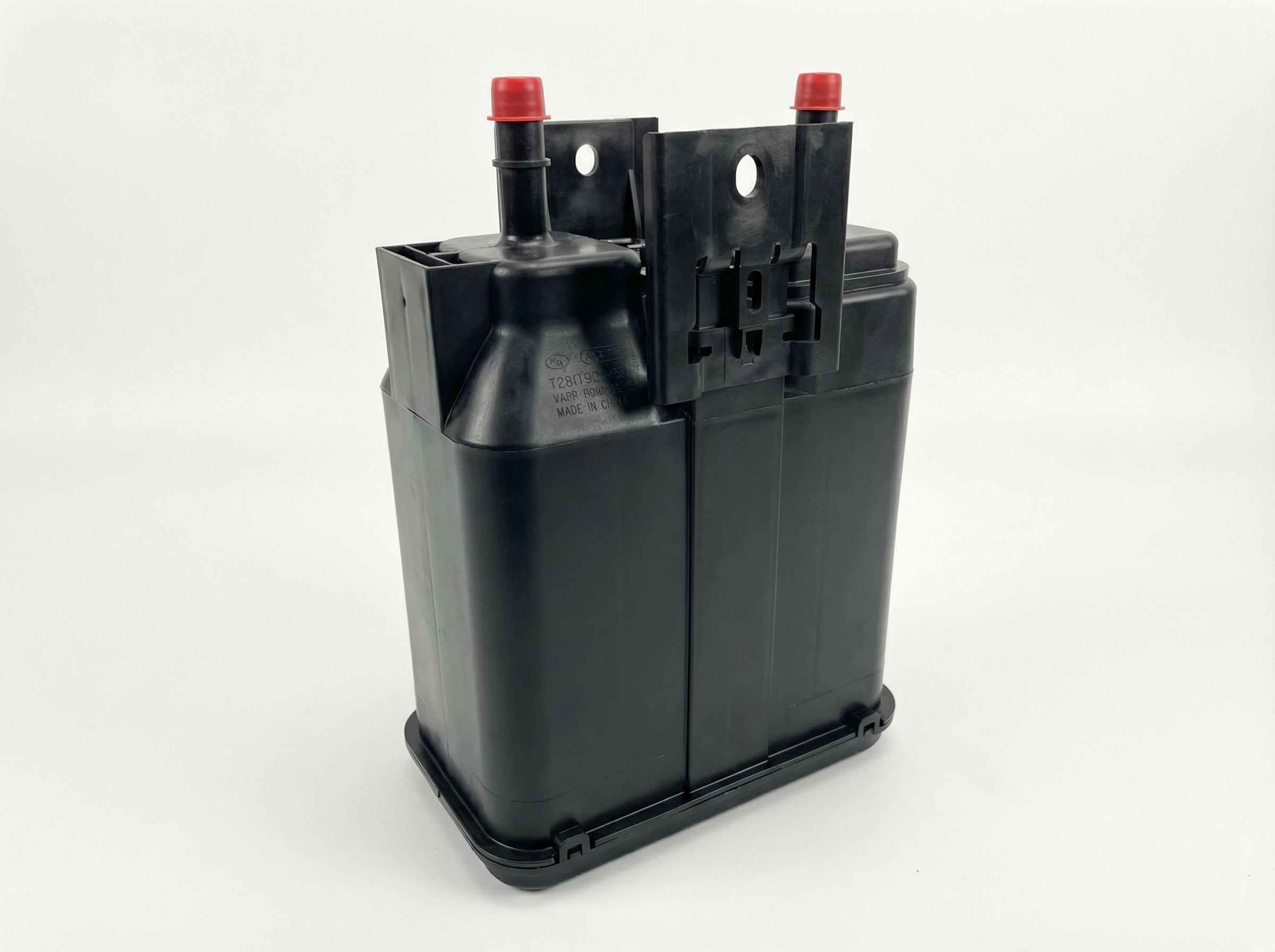
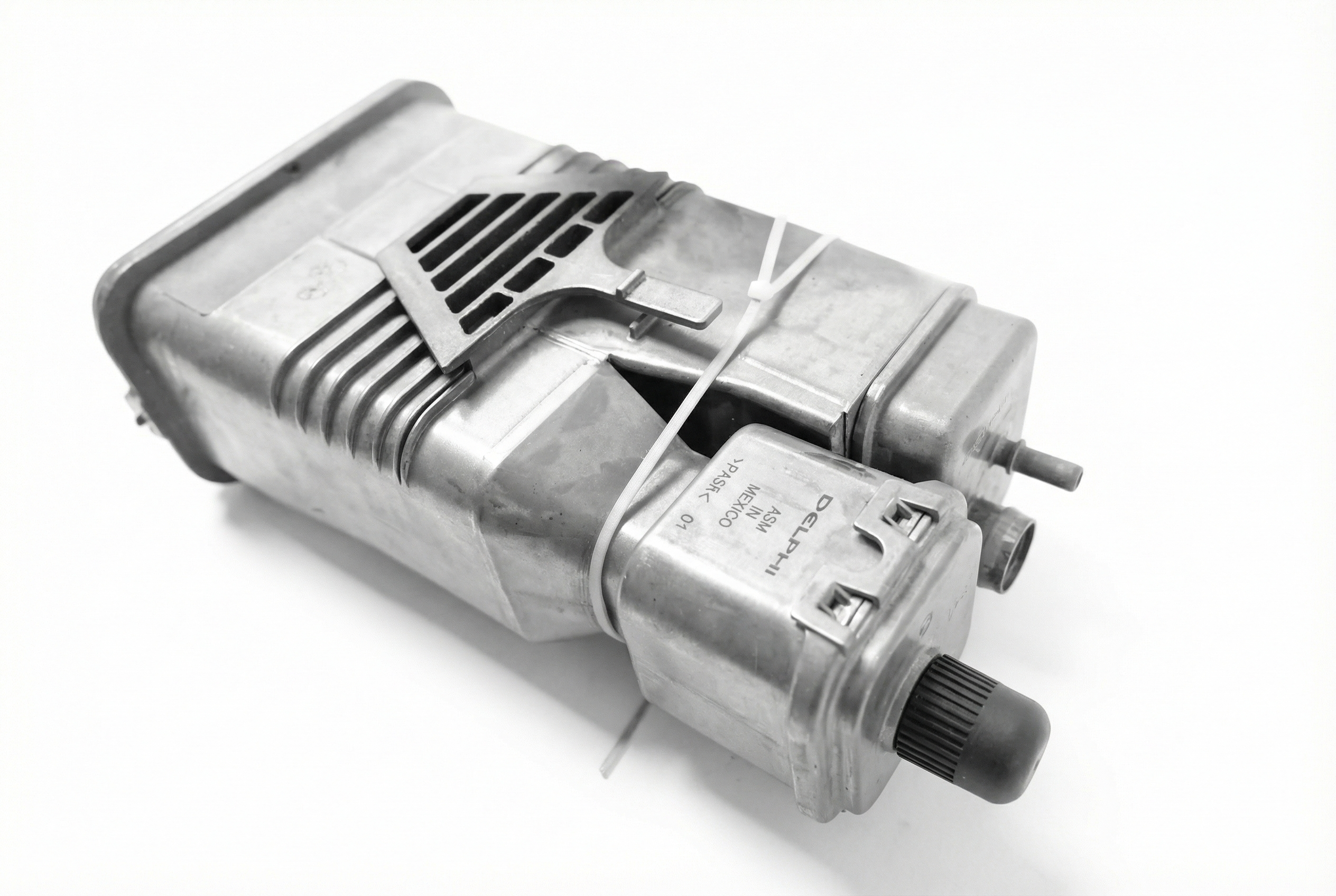
OEM price range: $50-$80 - Vapor Canister
(OEM #84613138)— Replaced if it is clogged with dust or if its internal charcoal media has broken down and contaminated the EVAP system. This part number is often associated with the T1XX generation (2019+).
Trusted brands: ACDelco, Dorman
OEM price range: $200-$300
Aftermarket price range: $150-$220 - Fuel Tank Pressure Sensor
(OEM #22991077)— Replaced when it provides incorrect readings, tricking the ECM into setting a P0446 code. This part number is cited for 2015-2019 models.
Trusted brands: ACDelco, Standard Motor Products
OEM price range: $30-$60
Aftermarket price range: $20-$40
Related Codes That Often Appear With This One
- P0449 — P0449 (EVAP Vent Solenoid Control Circuit) is very similar to P0446 and often indicates the same failure of the vent solenoid or its circuit. TSB #23-NA-073 lists it as a code caused by the same dust intrusion issue.
- P0455 — P0455 (EVAP System Leak Detected - Large Leak) can appear alongside P0446 if the vent valve is stuck open or if the system is clogged, as noted in TSB #23-NA-073.
- P0442 — P0442 (EVAP System Leak Detected - Small Leak) is also mentioned in TSB #23-NA-073 as a potential related code caused by dust intrusion.
Technical Service Bulletins (TSBs) & Recalls
- 23-NA-073: Addresses DTCs P0442, P0446, P0455, or P0449 caused by dust intrusion into the EVAP canister and recommends a filter retrofit. This is a customer-pay repair.
- 15-06-04-002: An older bulletin that also notes the connection between a Malfunction Indicator Lamp (MIL), difficulty fueling, and EVAP codes including P0446.
Platform-Specific Known Issues
- Dust Intrusion into EVAP System (TSB #23-NA-073): GM Technical Service Bulletin #23-NA-073 explicitly states that on these trucks, codes P0446, P0442, P0455, or P0449 can be caused by dust intrusion into the evaporative canister and vent solenoid, particularly when operated in dusty environments. The official fix, which GM notes is a 'customer pay alteration' and not a warranty repair, involves installing an auxiliary air filter (P/N 84619125) and routing a new hose to a cleaner location away from the undercarriage dust.
Mechanic-Grade Diagnostic Values
- EVAP Vent Solenoid Coil Resistance — expected: 20 to 50 Ohms. Failure: A reading outside this range indicates a faulty solenoid coil.
- Fuel Tank Pressure (FTP) Sensor Voltage (Key On, Engine Off, Gas Cap Removed) — expected: 1.3V to 1.7V. Failure: A voltage that is stuck high (e.g., 4.8V) or low (e.g., 0.2V) and does not change when the cap is removed points to a faulty sensor.
- EVAP Vent Solenoid Power Supply (at connector) — expected: ~12V (Battery Voltage) on the power wire with key on. Failure: Lack of 12V indicates a problem in the power supply circuit, such as a blown fuse or broken wire.
Scan Tool Commands That Help
- GDS2 / Professional Scan Tool: EVAP Vent Solenoid ON/OFF Command — Used to functionally test the vent solenoid. Commanding it ON (closed) and OFF (open) should produce an audible click from the solenoid, confirming it is mechanically actuating.
- GDS2 / Professional Scan Tool: EVAP System Service Bay Test — This is a comprehensive automated test that commands the purge and vent solenoids to close and then monitors the FTP sensor to see if the system can hold a vacuum and vent correctly. It's used to verify the integrity and function of the entire system after a repair or during diagnosis.
Wiring & Ground Locations
- EVAP Vent Solenoid Connector — Under the vehicle, near the charcoal canister, which is typically mounted on the frame rail near the spare tire.. This connector is exposed to road debris and moisture, making it a common point for corrosion or wire damage that can cause an open or short in the vent control circuit, directly triggering P0446.
- EVAP Vent Hose Filter Box — On many K2XX (2014-2018) models, the remote filter box for the vent hose is mounted to the transmission crossmember, on the driver's side.. This filter is the primary air intake for the EVAP system and is the component that most often gets clogged with dust and dirt, as noted in TSBs. Its location makes it susceptible to clogging, which directly causes a vent restriction.
Real Owner Repair Stories
- GM Forum user '2kg4u' (2000 Pontiac Bonneville SSEI (Similar GM EVAP system logic)) — P0446 code
❌ Tried (didn't work) Replaced gas cap, Replaced Vent valve solenoid, Inspected canister and hoses, Replaced purge valve
✅ What actually fixed it Replacing the Fuel Tank Pressure (FTP) sensor finally resolved the P0446 code. - Commenter on YouTube video 'Causes and Fixes Chevy/GMC P0446 Code' (Chevy/GMC Truck (model/year not specified)) — Check engine light on, unable to pump a single gallon of gas without the nozzle shutting off.
❌ Tried (didn't work) Dealer diagnosis, Replacing gas cap, Replacing EVAP canister, Replacing fuel pressure sensor, Replacing vent valve
✅ What actually fixed it The owner took off all lines going to the canister and vent valve and used a shop vac/compressor to blow through all the lines and the fuel filler neck. This cleared a hidden blockage (like a spider web) and fixed both the code and the refueling issue.
"I Checked Everything" — The Actual Cause
- In cases where a smoke test reveals no leaks, the P0446 code is often not caused by a leak but by either a functional blockage or an incorrect sensor reading. A common scenario is a faulty Fuel Tank Pressure (FTP) sensor that is 'stuck' on a certain pressure reading. Even though the vent valve operates and the system is sealed, the computer sees no change in pressure and incorrectly flags a vent restriction. Another possibility is an intermittent blockage from debris or spiderwebs in the vent line that doesn't show up during a static test but causes a restriction during the EVAP monitor's self-test.
When the Usual Fixes Don't Work
- While the vent solenoid and clogged canister are the most common culprits, a significant number of owners have chased this code by replacing those parts, only to find the true cause was a faulty Fuel Tank Pressure (FTP) sensor. The sensor fails in a way that it reports a static, unchanging pressure. The truck's computer interprets this lack of change during the EVAP test as a blocked vent, leading to a P0446 code even when the entire vent system is functioning perfectly. A key diagnostic step that is often skipped is to observe the FTP sensor data on a scan tool while removing the gas cap; if the voltage/pressure reading doesn't change, the FTP sensor is the likely cause, not the vent solenoid.
OEM Part Supersession History
10382080, 20995471, 25932566, and others→23481275— Part consolidation and potential design updates over the years for the K2XX platform and earlier models.
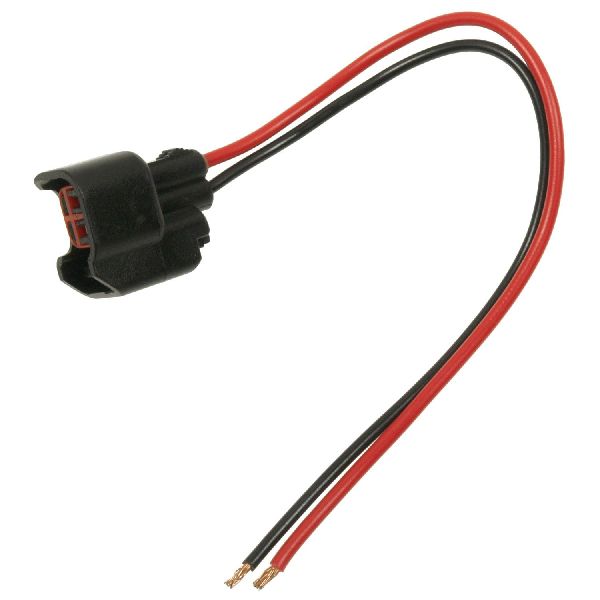
Heads up: Part number 23481275 is the widely accepted replacement for most 2014-2018 Sierra/Silverado trucks. However, some early 2014 models or specific configurations might require a harness adapter (jumper harness #19257603) to connect the new USCAR-style connector to the older Packard-style vehicle harness.
Model Year Variations Within This Range
- 2014-2018 (K2XX): These models most commonly use the vent solenoid part number 23481275. The remote vent filter is often located on the transmission crossmember.
- 2019-2021 (T1XX): The EVAP system design was updated. While still prone to dust intrusion per TSB #23-NA-073, the part numbers for the canister and vent solenoid may differ from the previous generation. For example, canister 84613138 is associated with these later models.
Helpful Videos


Used OEM Parts in Stock



New Aftermarket Parts Available


The information in this article is provided for general reference and educational purposes only. Vehicle specifications, procedures, and part compatibility can vary by production date, trim level, and region. Always consult your vehicle's factory service manual and verify part numbers before purchasing or performing repairs. Safety-critical components such as airbags, seat belts, and braking systems should be installed by a qualified professional.
- Gmc SIERRA 1500:
- 🎬 Helpful Videos
- 🛍️ Shop This Part
- What's Unique About the 2014-2021 Gmc SIERRA 1500
- Diagnostic Flowchart
- Symptoms You May Notice
- Most Likely Causes
- Rare But Worth Checking
- Diagnosis Steps
- Parts You'll Likely Need
- Related Codes That Often Appear With This One
- Technical Service Bulletins (TSBs) & Recalls
- Platform-Specific Known Issues
- Mechanic-Grade Diagnostic Values
- Scan Tool Commands That Help
- Wiring & Ground Locations
- Real Owner Repair Stories
- "I Checked Everything" — The Actual Cause
- When the Usual Fixes Don't Work
- OEM Part Supersession History
- Model Year Variations Within This Range
- 🎟️ Get 5% Off