

P0446 on 2012-2017 Chevrolet Sonic: EVAP Vent Circuit Causes & Fixes
On a 2012-2017 Chevy Sonic, P0446 is most often caused by a blockage in the EVAP system, famously due to spiders nesting in the EVAP canister vent hose, an issue documented in GM TSBs #17NA383 and #PIC6250B. The fix is typically to replace the EVAP canister and vent valve assembly (GM Part #95174448, superseded by #42784330). Expect to pay $45-$120 for the parts.
- For the 2012-2017 Chevy Sonic, P0446 is very frequently caused by spiders building nests in the EVAP canister's vent line.
- The most reliable fix is often to replace the entire EVAP canister assembly, which is located near the fuel tank.
- Do not confuse this with the EVAP purge valve (which causes code P0496) located on top of the engine.
- This is a relatively simple DIY repair that does not require advanced tools, with a difficulty of 2 out of 5.
What's Unique About the 2012-2017 Chevrolet SONIC
The Chevrolet Sonic and its platform mates (Buick Encore, Chevy Trax) on the GM Gamma II platform are unusually susceptible to P0446 due to a specific design vulnerability. Spiders are known to build nests inside the EVAP canister's fresh air inlet port, creating a blockage that restricts airflow. This issue is so well-documented that General Motors issued multiple Technical Service Bulletins (TSBs #17NA383, #PIC6250B) advising technicians to inspect for and replace the entire EVAP canister if spider nesting is found.
Diagnostic Flowchart
Tap your situation to follow the diagnostic path that matches what you're seeing on this vehicle.
Generation note: Technically, there is only one generation of the Chevrolet Sonic (2012-2020), which is based on the GM T300 platform. The 2017-2020 models are a Mid-Cycle Enhancement (MCE) or facelift. Because the underlying mechanical and structural components are nearly identical, this P0446 issue and its common causes apply to all model years from 2012 to 2020.
Symptoms You May Notice
- Check Engine Light is on
- Difficulty starting the engine or a rough idle immediately after filling the gas tank
- Gas pump nozzle clicks off repeatedly before the tank is full
- Slight decrease in fuel economy
- A faint smell of fuel is possible but less common with this specific code
- Replacing the gas cap. While a loose or faulty gas cap can cause other EVAP codes (like P0455 for a large leak), it is not a typical cause for P0446, which points to a vent restriction, not a system leak.
Most Likely Causes
- Spider Nest or Debris Blocking EVAP Canister/Vent 🔴 High Probability As documented in GM Technical Service Bulletins #17NA383 and #PIC6250B, the design of the EVAP canister's fresh air inlet on the Sonic, Trax, and Encore is attractive to spiders, leading to nests that block airflow and trigger P0446 or P0455.
How to confirm: Visually inspect the EVAP canister's vent hose and inlet port for spider webs, nests, or other debris. The canister is located at the rear of the vehicle, behind the driver's side wheel. Blowing low-pressure compressed air through the lines can also reveal a blockage.
Typical fix: Replace the entire EVAP canister assembly. GM recommends replacing the canister, not just cleaning it, if a restriction is found.
Est. part cost: $50-$120 - Failed EVAP Vent Valve Solenoid 🟡 Medium Probability
How to confirm: The vent valve is a solenoid that can be tested. With a capable scan tool, command the valve to open and close; you should hear a click. You can also apply 12V power directly to the solenoid's terminals to see if it actuates. When de-energized, the valve should be open, allowing air to pass through.
Typical fix: Replace the EVAP vent valve. On the Sonic, this valve is integrated into the charcoal canister and is replaced as a single assembly.
Est. part cost: $45-$100 - Failed EVAP Purge Valve ⚪ Low Probability The purge valve on the Sonic is a known common failure item, but it typically causes code P0496 (High Purge Flow), not P0446. A failure here is less likely for a P0446 code but is still part of the same system.
How to confirm: Remove the purge valve (located on top of the engine) and try to blow through it. If air passes through when it is disconnected, it is stuck open and faulty.
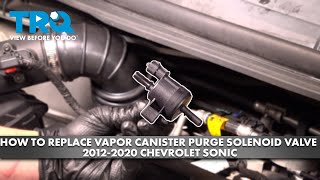
Typical fix: Replace the purge valve solenoid. This is an easy, 10-minute job located on the engine. 🎬 Watch: How to replace the purge solenoid valve
Est. part cost: $25-$50 - Damaged or Clogged EVAP Hoses ⚪ Low Probability
How to confirm: Visually inspect all EVAP hoses running from the fuel tank to the canister and to the engine for cracks, kinks, or blockages. A smoke test is the most effective way for a professional to find hidden leaks or restrictions.
Typical fix: Replace the damaged section of hose.
Est. part cost: $10-$30
Rare But Worth Checking
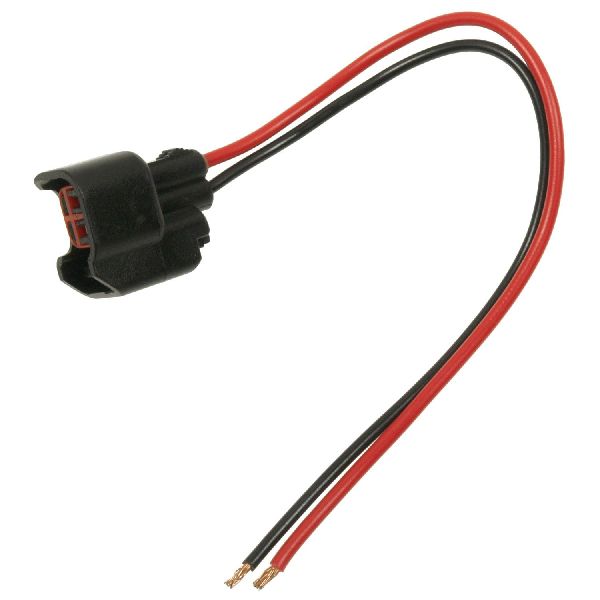
- Wiring Harness Issue: A short or open in the wiring to the vent valve solenoid can mimic a failed valve. Check for 12V power at the connector with the key on and check for continuity on the ground/signal wire back to the ECM.
- Faulty Fuel Tank Pressure Sensor: A bad pressure sensor can send incorrect data to the computer, leading it to believe there is a vent problem when there isn't one. This is uncommon and should be checked after all other possibilities are exhausted.
- Saturated Charcoal Canister: In some cases, particularly on older vehicles, the charcoal pellets inside the canister can break down or become saturated with fuel, creating an internal blockage. One owner on a forum noted that even after passing tests, replacing a canister that had a foul, non-fuel smell resolved the P0446 code.
Diagnosis Steps
- Read the code with an OBD-II scanner to confirm P0446 is present.
- Inspect the gas cap to ensure it is tight, although this is an unlikely cause.
- Raise and support the vehicle to access the EVAP system. The canister is located behind the driver's side rear wheel, near the fuel tank.
- Locate the EVAP charcoal canister and its vent hose. Visually inspect the vent hose inlet for spider webs, dirt, or other blockages, as this is the primary known issue (TSB #17NA383, #PIC6250B).
- Disconnect the vent hose and attempt to blow through it to check for restrictions.
- If a blockage is found or suspected, replace the EVAP canister assembly per GM's recommendation.
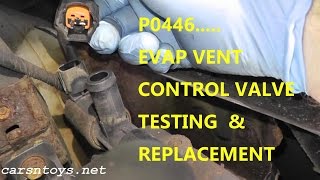
- If no blockage is found, test the vent valve solenoid. Use a scan tool to command it open and closed, listening for a click. Alternatively, apply 12V power and ground to its terminals to check for actuation. 🎬 See how to test and replace the vent control valve
- If the vent valve does not operate, replace the canister assembly as the valve is integrated.
- If the valve works, check the wiring harness for power and ground. One pin should have 12V with the key on.
- As a final, less likely check, inspect the purge valve on the engine and the fuel tank pressure sensor.
Parts You'll Likely Need
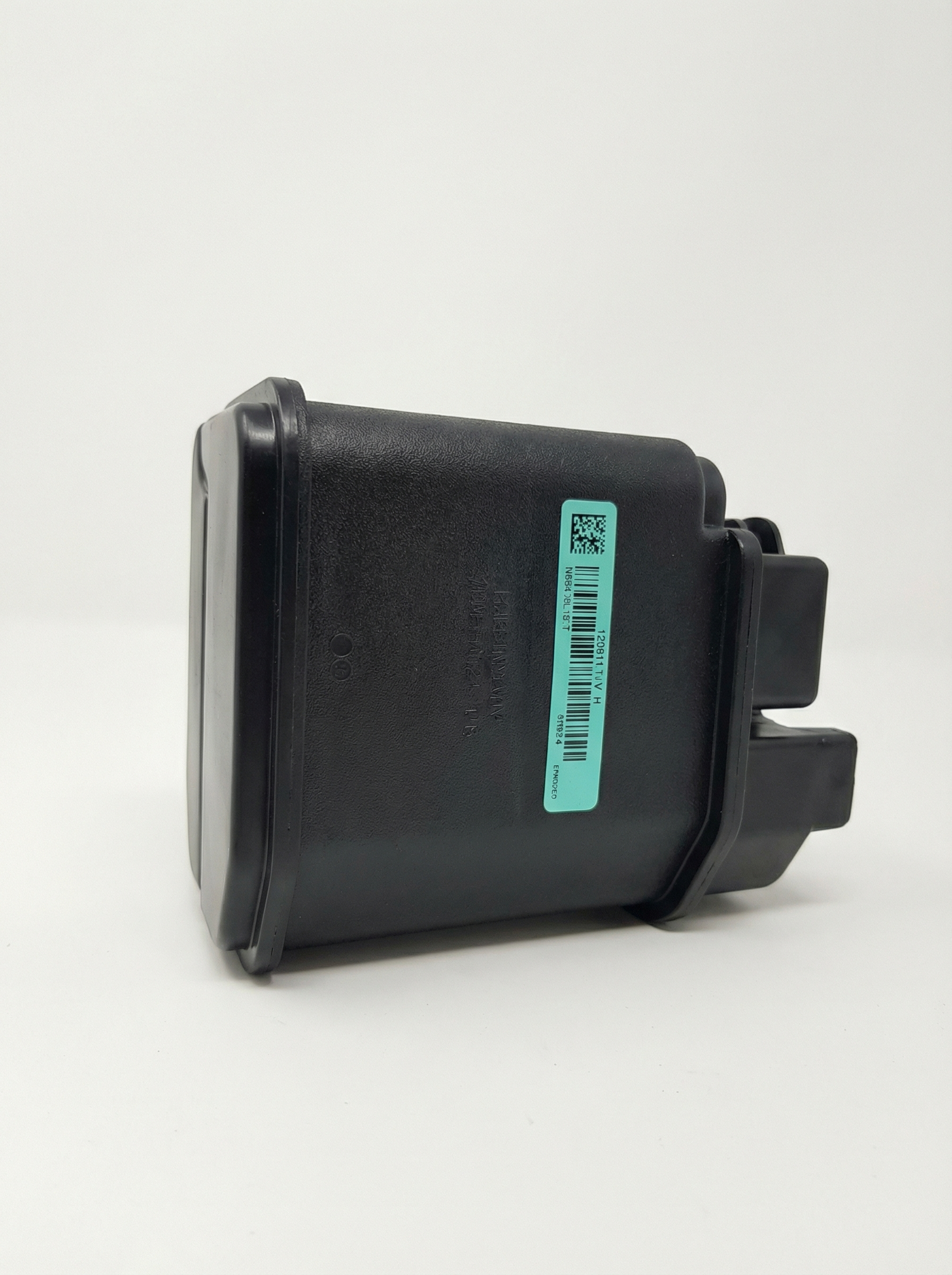
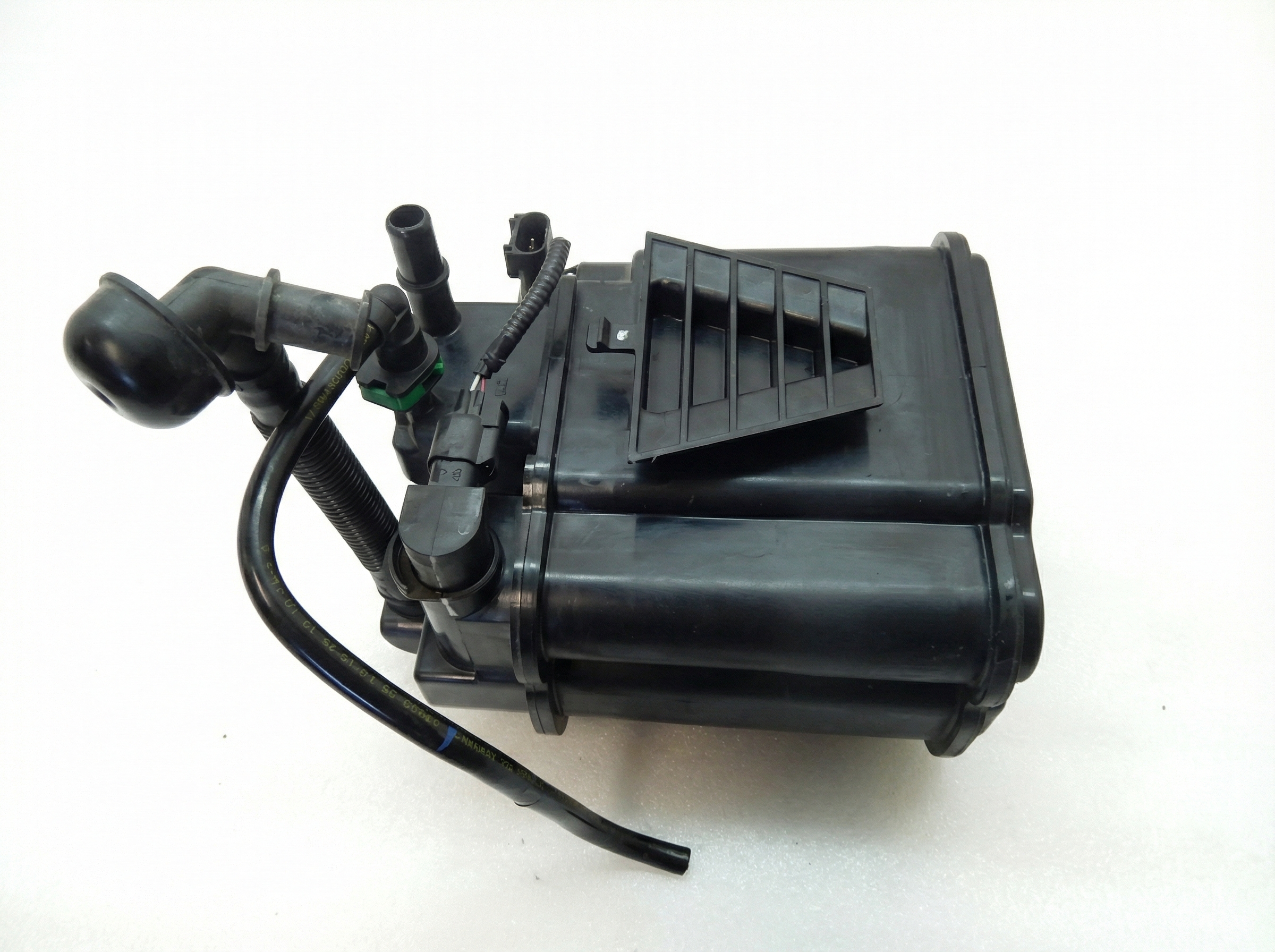
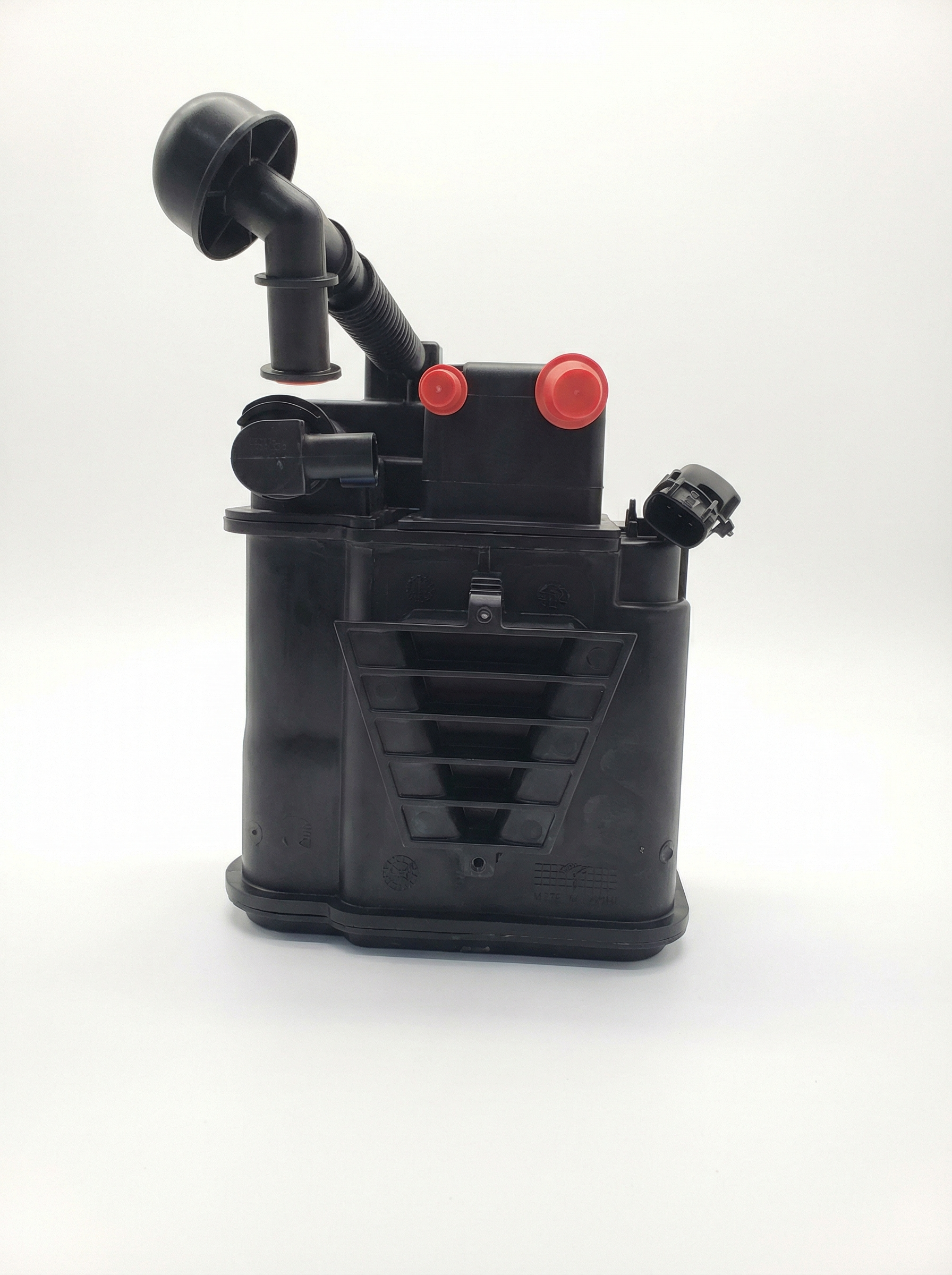
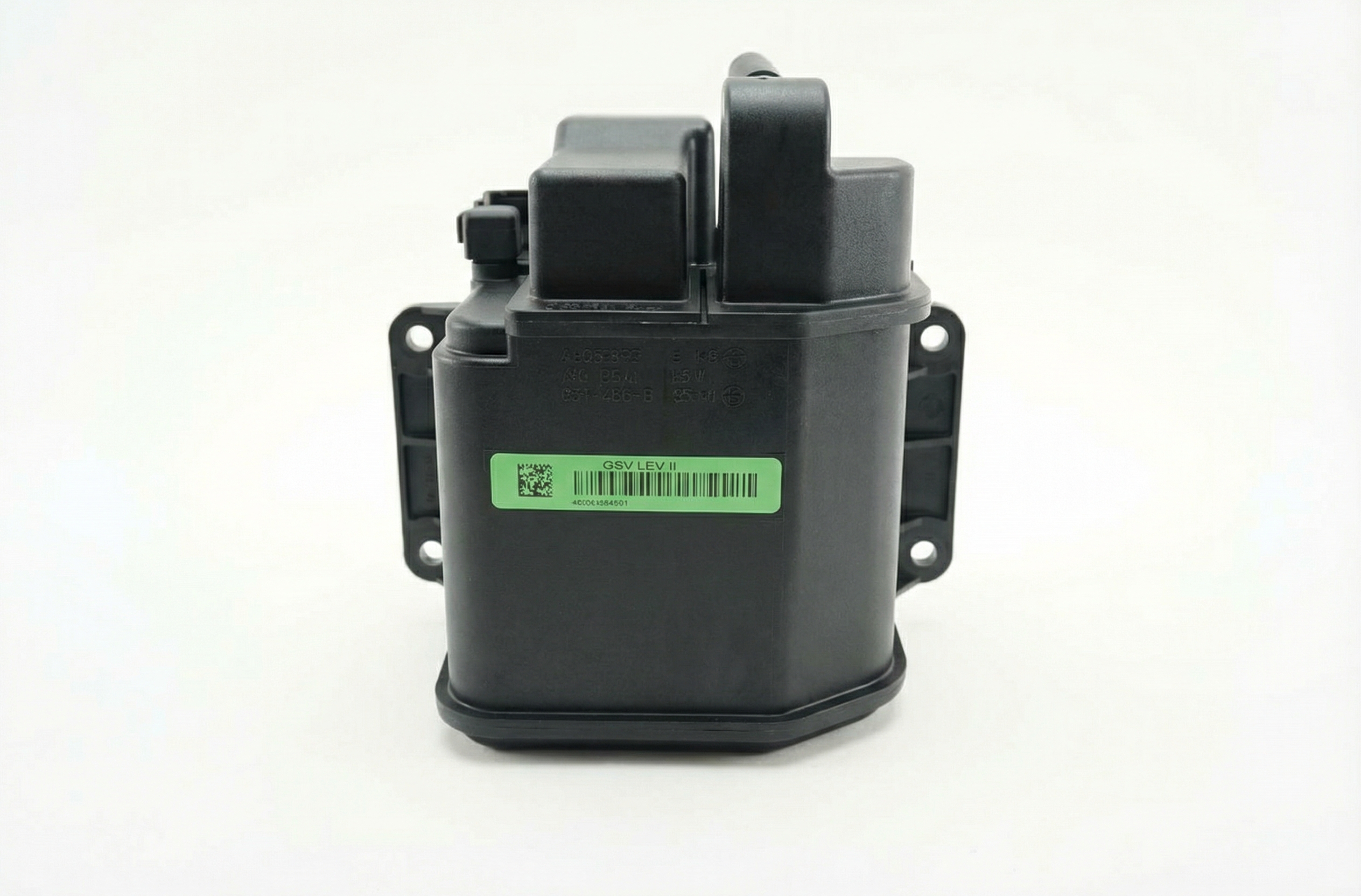
- EVAP Vapor Canister Kit
(OEM #95174448)— This is the most common fix for the 2012-2017 Sonic due to the high probability of internal blockage from spider nests, as documented by GM TSBs. The vent valve is integrated into this part. TSB PIC6250B specifies this part number for the Sonic.
Trusted brands: ACDelco (GM Genuine), Dorman, Standard Motor Products
OEM price range: $80-$120
Aftermarket price range: $50-$90 - EVAP Vapor Canister Vent Valve / Solenoid
(OEM #22865590)— This part number is often listed for GM vent valves but for the Sonic, the valve is integrated into the canister (95174448). This part is NOT the correct one for a Sonic, as the entire canister assembly must be replaced. Pass 1 was incorrect in suggesting this could be purchased separately.
Trusted brands: ACDelco, Dorman, SKP
OEM price range: $45-$70
Aftermarket price range: $20-$45
Related Codes That Often Appear With This One
- P0455 — A large leak detected. This can sometimes appear alongside P0446 if the system is unable to properly test itself due to the vent blockage, as noted in TSB #17-NA-383.
Technical Service Bulletins (TSBs) & Recalls
- 17-NA-383: Supersedes PIC6250B. Provides procedure to replace the evap canister for vehicles with Malfunction Indicator Lamp (MIL) Illuminated with DTC P0446 or P0455 Set due to spiders laying a nest within the canister. Affects 2012-2017 Sonic, 2013-2017 Encore, and 2013-2017 Trax.
- PIC6250B: Preliminary information bulletin for technicians about vehicles with a check engine light and DTC P0446. Advises replacing the Evaporative Emissions System canister if spider nesting is found in the fresh air inlet port. Lists specific part numbers for affected vehicles.
Platform-Specific Known Issues
- GM Technical Service Bulletin #17NA383 specifically calls out replacing the EVAP canister on vehicles with P0446 or P0455 due to spiders laying nests within the canister. It explicitly states to inspect the fresh air inlet port.
- GM Technical Service Bulletin #PIC6250B (later superseded by 17-NA-383) reiterates the issue, advising technicians to replace the EVAP canister if spider nesting is found. It also lists the specific part number for the Sonic canister kit (95174448).
Mechanic-Grade Diagnostic Values
- EVAP Vent Valve Solenoid Resistance — expected: 10 - 50 Ohms. Failure: An infinite reading indicates an open coil; a reading significantly outside the expected range indicates a fault.
- EVAP Vent Valve Solenoid Connector Voltage — expected: 12V at one pin with Key On, Engine Off. Failure: No voltage indicates a power supply issue, likely the fuse or wiring.
- Fuel Tank Pressure (FTP) Sensor Signal Voltage — expected: 0.1V to 4.9V. Failure: On GM vehicles, a low voltage indicates high pressure, while a high voltage indicates low pressure (vacuum). A sensor stuck at a specific voltage regardless of gas cap position can indicate a failed sensor.
Hidden / Shadow Codes Worth Checking
- P0446 with descriptive text: While not a unique code, advanced scanners may provide manufacturer-specific details alongside the generic code, such as 'Chevrolet: Vent Valve Circuit Low Voltage'. (see via Professional-grade scan tools like iCarsoft CR Pro+ or GM's GDS2.)
Scan Tool Commands That Help
- GDS2 / Professional Scan Tool: EVAP Vent Valve Activation Test — To functionally test the vent solenoid. The command will attempt to open and close the valve, and the technician should listen for an audible click to confirm mechanical operation.
- GDS2 / Professional Scan Tool: EVAP Service Bay Test — To run a complete system check. The tool commands the purge and vent valves in sequence to create a vacuum in the tank and monitor the FTP sensor to see if the system can hold a vacuum, confirming the integrity of the entire system.
- Professional Scan Tool: Canister Backpressure Test — To specifically check for a clogged charcoal canister. The tool commands the vent valve open and monitors system pressure; high pressure indicates a blockage within the canister.
Wiring & Ground Locations
- Fuse F15 (Underhood) — In the under-hood fuse box, position number 15.. This 10A fuse supplies power to the EVAP Vent Solenoid. If this fuse is blown, the solenoid will have no power, causing a P0446 circuit code.
- Circuit 1310 (White Wire) — Runs from the Engine Control Module (ECM) to the EVAP canister vent solenoid.. This is the control wire that the ECM uses to provide a ground path to energize (close) the normally-open vent solenoid. A break or short in this wire will cause a circuit malfunction code.
Real Owner Repair Stories
- Sonic Owners Forum user (Chevrolet Sonic (year not specified)) — Check Engine Light with EVAP code P0449 (related vent circuit fault).
❌ Tried (didn't work) Replacing the EVAP vent solenoid/valve assembly.
✅ What actually fixed it The dealership found that the Engine Control Module (ECM) was not correctly switching the ground signal to the solenoid. Replacing the ECM under warranty resolved the code permanently. - YouTube user 'TheAlexMan's Videos' (2000 Toyota Tacoma (demonstrates a universal diagnostic technique)) — Check Engine Light with P0446.
❌ Tried (didn't work) Visual inspection showed nothing obvious.
✅ What actually fixed it After confirming the valves worked with a 9V battery, the user applied low air pressure to the canister and sprayed it with soapy water. Bubbles revealed a physical crack in the canister's plastic housing. Sealing the crack with 5-minute epoxy fixed the issue and the code did not return.
"I Checked Everything" — The Actual Cause
- In a documented case for a related EVAP vent code (P0449) on a Chevy Sonic, the problem persisted after replacing the vent solenoid. A smoke test would have passed as there were no leaks. The actual cause was a faulty Engine Control Module (ECM) that was not providing the ground signal to activate the new solenoid. The fix was replacing the ECM.
OEM Part Supersession History
95174448→42784330— Standard part number update by the manufacturer.
Model Year Variations Within This Range
- 2012-2020: No significant variations have been identified for the EVAP canister or vent valve system related to code P0446. The primary cause (spider nests), the part number (and its supersession), and the fuse location appear consistent across the entire generation, including the 2017 facelift.
Helpful Videos
Used OEM Parts in Stock
New Aftermarket Parts Available


The information in this article is provided for general reference and educational purposes only. Vehicle specifications, procedures, and part compatibility can vary by production date, trim level, and region. Always consult your vehicle's factory service manual and verify part numbers before purchasing or performing repairs. Safety-critical components such as airbags, seat belts, and braking systems should be installed by a qualified professional.
- Chevrolet SONIC:
- 🎬 Helpful Videos
- 🛍️ Shop This Part
- What's Unique About the 2012-2017 Chevrolet SONIC
- Diagnostic Flowchart
- Symptoms You May Notice
- Most Likely Causes
- Rare But Worth Checking
- Diagnosis Steps
- Parts You'll Likely Need
- Related Codes That Often Appear With This One
- Technical Service Bulletins (TSBs) & Recalls
- Platform-Specific Known Issues
- Mechanic-Grade Diagnostic Values
- Hidden / Shadow Codes Worth Checking
- Scan Tool Commands That Help
- Wiring & Ground Locations
- Real Owner Repair Stories
- "I Checked Everything" — The Actual Cause
- OEM Part Supersession History
- Model Year Variations Within This Range
- 🎟️ Get 5% Off