

P0446 on 2013-2019 Chevrolet Silverado 3500: EVAP Vent System Causes and Fixes
On a 2013-2019 Silverado 3500, P0446 is almost always caused by a faulty EVAP vent solenoid or a canister clogged with dust. The most effective fix is to replace the vent solenoid and often the canister, and to install a filter relocation kit to prevent it from happening again. Expect to pay $150-$350 for parts.
- P0446 on a Silverado 3500 almost always points to a problem with the EVAP vent system near the fuel tank, not the purge valve in the engine bay.
- The most common cause is the vent solenoid and/or charcoal canister being clogged with dust, a known issue for these trucks.
- A key symptom, besides the Check Engine Light, is the fuel nozzle repeatedly shutting off when you try to refuel.
- Before replacing parts, use a scan tool to check the Fuel Tank Pressure sensor reading; if it's stuck high (above 2.0V with the gas cap off), the sensor itself may be the problem.
- For a long-term fix, especially if you drive in dusty conditions, install a vent filter relocation kit when you replace the solenoid.
What's Unique About the 2013-2019 Chevrolet SILVERADO 3500

Silverado trucks, particularly those used in rural or dusty conditions, are highly prone to ingesting dust and debris into the EVAP vent system. This is a well-documented issue, leading General Motors to issue multiple Technical Service Bulletins (TSBs) like #23-NA-073 and #15-06-04-002. The common failure point is the vent solenoid and the attached filter getting clogged, which then allows dust to saturate and block the charcoal canister. This leads to the P0446 code and often makes the truck difficult to refuel. The official long-term fix often involves not just replacing parts, but relocating the vent's air intake to a cleaner location, like higher up in the frame or into the engine bay.
Diagnostic Flowchart

Tap your situation to follow the diagnostic path that matches what you're seeing on this vehicle.
Generation note: This range covers two generations: the second generation (GMT900, 2013-2014 models) and the third generation (K2XX, 2015-2019 models). The P0446 issue related to dust clogging the EVAP vent system is common and well-documented across both generations and their platform mates.
Symptoms You May Notice

- Check Engine Light is on
- Difficulty filling the fuel tank (gas pump nozzle clicks off repeatedly).
- A faint fuel odor near the rear of the truck.
- Reduced fuel economy
- Whooshing sound from the fuel tank when removing the cap (indicating pressure or vacuum buildup)
- Replacing the gas cap. A bad gas cap typically causes a small or large leak code (like P0442 or P0455), not a vent circuit/blockage code like P0446.
- Replacing the EVAP Purge Solenoid. The purge solenoid is located in the engine bay and controls vapor flow to the engine. It typically sets different codes (like P0443 or P0496). P0446 specifically points to the vent side of the system near the tank.
Most Likely Causes

- Clogged or Faulty EVAP Vent Solenoid 🔴 High Probability The vent solenoid's filter is located near the fuel tank in an area highly exposed to road debris and dust. GM TSBs #23-NA-073 and #15-06-04-002 directly address this issue, noting dust intrusion is a primary cause of failure. The filter clogs, and the solenoid itself can fail electrically or get stuck.
How to confirm: Use a scan tool with bidirectional controls to command the vent solenoid to close. You should hear an audible click. If it doesn't click, test for power and ground at the connector. If power and ground are present when commanded, the solenoid has failed. A user on ChevroletForum.com replaced the valve but still had refueling issues, indicating the problem can extend beyond just the valve.
Typical fix: Replace the EVAP vent solenoid and its integrated filter. It is highly recommended to also install a filter relocation kit (like GM part #19207762) to move the air intake to a cleaner location, like the upper frame rail or engine bay, to prevent recurrence.
Est. part cost: $40-$100 - Clogged Charcoal Canister 🔴 High Probability As per TSB #23-NA-073, dust that gets past the clogged vent solenoid filter directly enters and clogs the charcoal canister, creating a blockage. This is especially common on trucks used on farms, construction sites, or dirt roads. A user on the ScannerDanner forum confirmed that even a canister that seems to flow air can be restricted enough to cause the code.
How to confirm: If the vent solenoid is confirmed to be working but the system still won't vent (symptom: hard to fill with fuel), the canister is likely clogged. Disconnecting the lines and attempting to blow low-pressure air through it may reveal a restriction compared to a new part.
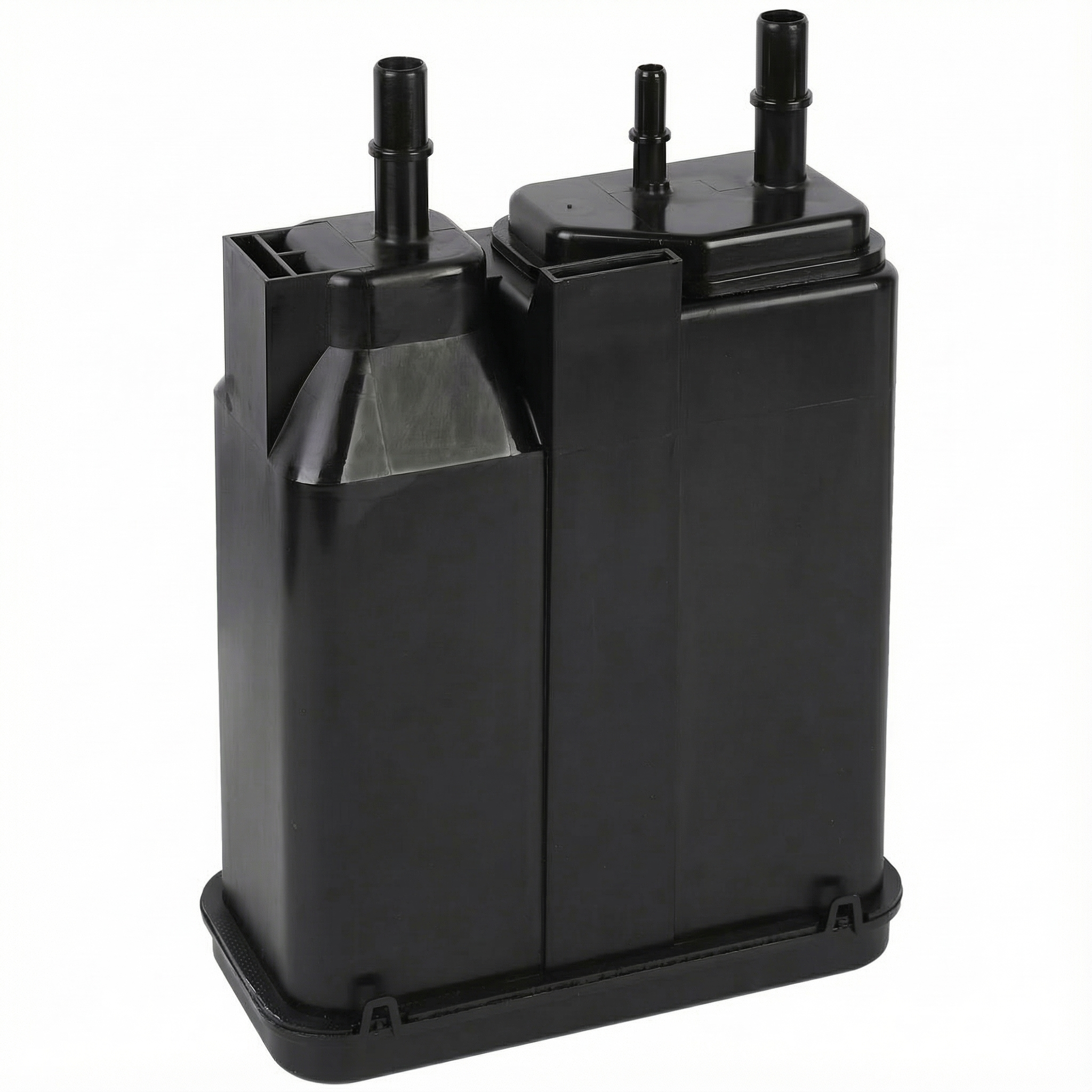
Typical fix: Replace the charcoal canister. This is often done at the same time as the vent solenoid and is considered a best practice to ensure a complete repair.
Est. part cost: $100-$250 - Faulty Fuel Tank Pressure (FTP) Sensor 🟡 Medium Probability The sensor can fail and send an incorrect, fixed voltage to the ECM. A high voltage reading (e.g., 4.8V) tricks the computer into thinking the tank is constantly pressurized, leading it to believe the vent is blocked and setting a P0446.
How to confirm: With a scan tool, monitor the FTP sensor voltage with the gas cap off. A normal reading at atmospheric pressure is around 1.4V-1.6V. If the reading is stuck high (e.g., above 4.5V) or low (e.g., 0.2V) and doesn't change when the cap is removed, the sensor is bad.
Typical fix: Replace the Fuel Tank Pressure sensor. On these trucks, it is located on top of the fuel pump module inside the fuel tank, but can often be accessed by reaching between the filler neck and tank without fully dropping the tank.
Est. part cost: $30-$70 - Damaged or Blocked EVAP Vent Hose ⚪ Low Probability The hose running from the canister to the vent solenoid can become clogged with mud, debris, or even spider webs. It can also be pinched or cracked from road debris or improper service.
How to confirm: Visually inspect the entire length of the vent hose for kinks, damage, or blockages. A smoke test is the most effective way to pinpoint a restriction or a hard-to-see crack. One owner on a forum found blowing out all the EVAP lines with compressed air cleared a hidden blockage and resolved the code after replacing multiple parts.
Typical fix: Clean or replace the damaged section of the hose. If replacing, consider using 5/8 inch fuel-rated hose and clamps as a durable alternative to the factory plastic lines.
Est. part cost: $20-$50
Rare But Worth Checking
- Wiring Harness Damage: The wiring to the vent solenoid runs along the frame and can be damaged by road debris, corrosion, or animal chews, causing an open or short in the circuit. Always check for 12V power and a ground signal from the ECM at the solenoid connector before replacing the part itself.
- Faulty Engine Control Module (ECM): This is extremely rare. The ECM's driver circuit for the vent solenoid could fail, but this should only be considered after all other components (solenoid, canister, sensor) and wiring have been exhaustively tested and confirmed to be good.
Diagnosis Steps
- Read the code with an OBD-II scanner and confirm P0446 is present. Note any other codes, like P0449, P0455, or P0452.
- Check the gas cap to ensure it is tight and the seal is not cracked, though this is an unlikely cause for P0446.
- Using a scan tool, monitor the Fuel Tank Pressure (FTP) sensor voltage with the gas cap removed. The reading should be approximately 1.4-1.6 volts at atmospheric pressure. If it's stuck high (e.g., 4.8V) or low (e.g., 0.2V), the FTP sensor is likely faulty and is the root cause.
- If the FTP sensor reads correctly, use the scan tool's bidirectional controls to command the EVAP vent solenoid ON and OFF (closed and open). Listen for a distinct clicking sound from the solenoid near the fuel tank.
- If no click is heard, access the vent solenoid connector. Check for battery voltage on the power wire and for a ground signal from the ECM on the other wire when commanded by the scan tool.
- If power and ground are present but the solenoid doesn't click, the vent solenoid is bad and must be replaced.
- If the solenoid clicks, the issue is likely a physical blockage. Visually inspect the vent hose for clogs from dirt, mud, or insects. A YouTube repair video shows a filter completely packed with dirt.
- If the hose is clear, the charcoal canister is the most likely culprit, being clogged internally with dust. Replacement is the only reliable fix. A forum user on ChevroletForum.com noted that even after replacing the vent valve, refueling was difficult until the canister was also addressed.
- After repair, clear the codes and perform a complete EVAP drive cycle to ensure the fix is complete and the monitor runs successfully.
Parts You'll Likely Need
- EVAP Canister Vent Solenoid Valve
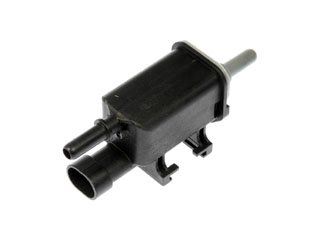
(OEM #23103351)— This is the most common failure point, either failing electrically or becoming clogged with dust. This part is often a combined valve and filter assembly.
Trusted brands: ACDelco, Dorman
OEM price range: $60-$110
Aftermarket price range: $30-$70 - EVAP Charcoal Canister
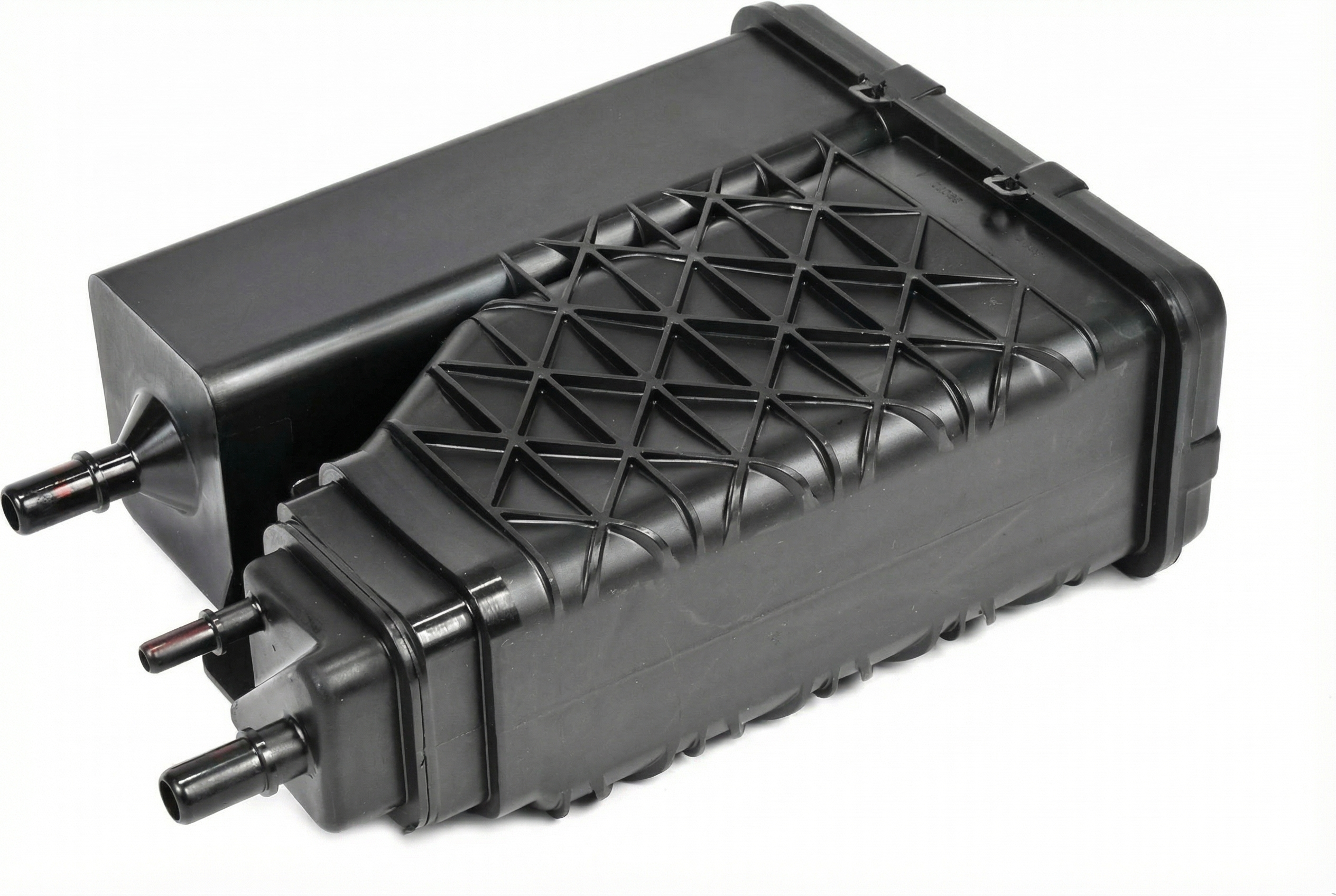
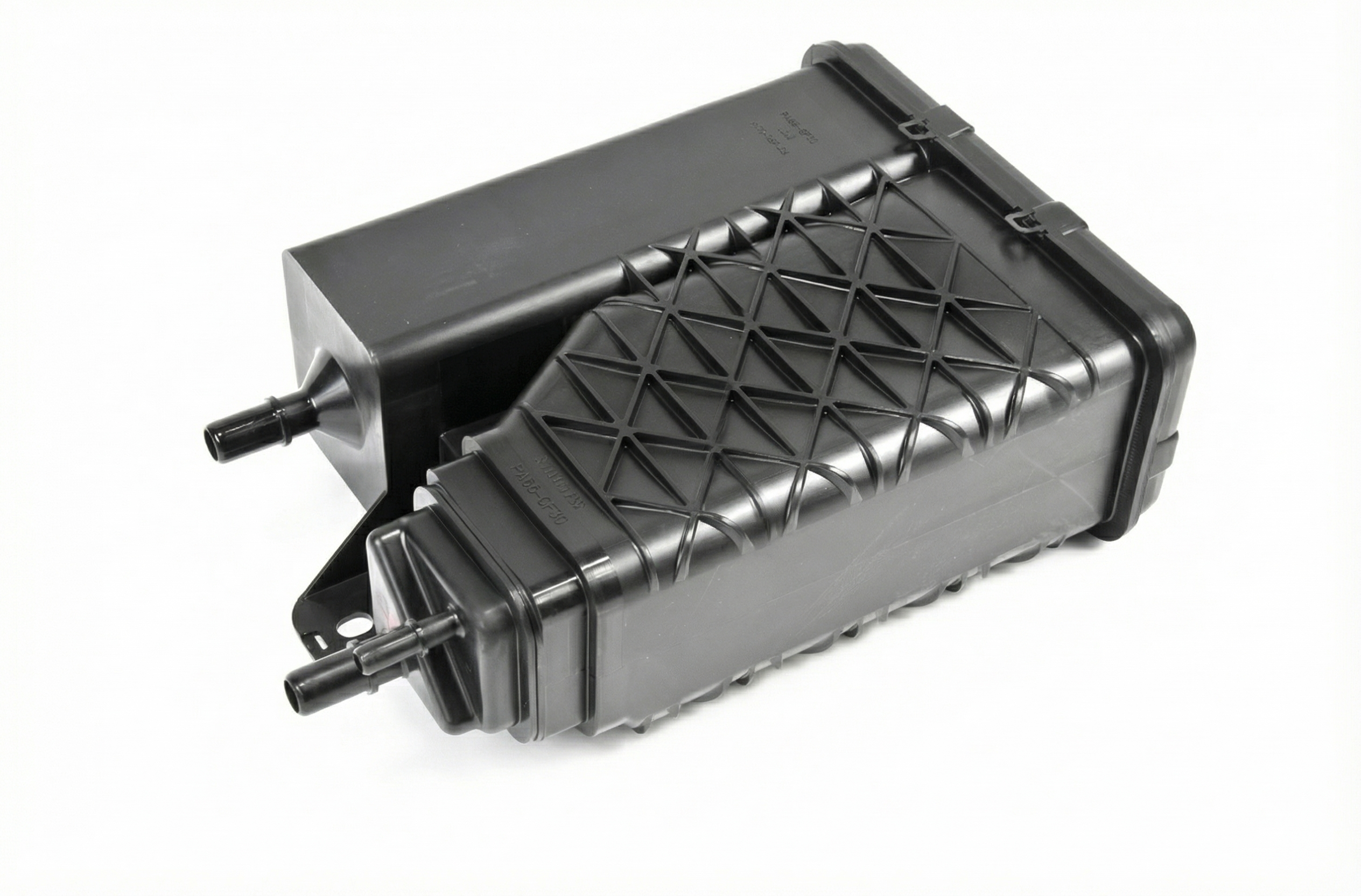
(OEM #84106546)— Often gets clogged with dust that gets past the vent filter, causing a restriction that triggers P0446. TSB #23-NA-073 directly addresses this failure mode.
Trusted brands: ACDelco, Dorman
OEM price range: $100-$250
Aftermarket price range: $80-$180
Related Codes That Often Appear With This One
- P0449 — P0449 is a more specific code for an EVAP Vent Solenoid Control Circuit Malfunction. They often appear together as they point to the same component and are listed together in GM TSBs.
- P0455 — A large EVAP leak code. This can sometimes be triggered along with P0446 if the vent valve is stuck open or the system is otherwise compromised. TSB #15-06-04-002 lists this as a related code.
- P0442 — A small EVAP leak code. TSBs #23-NA-073 and #15-06-04-002 list this code alongside P0446 as a possible result of dust intrusion issues.
- P0452 — This code indicates Fuel Tank Pressure Sensor Circuit Low Voltage. It may appear if the FTP sensor fails by shorting to ground, which can sometimes be misinterpreted by the ECM as a vent fault.
Technical Service Bulletins (TSBs) & Recalls
- TSB #23-NA-073: Addresses DTCs P0442, P0446, P0455, or P0449 caused by dust intrusion into the canister. Recommends installing an auxiliary filter.
- TSB #15-06-04-002: Also addresses MIL illumination and difficulty refueling with codes P0442, P0446, P0455, or P0449 due to dust/water intrusion at the vent solenoid.
- TSB #02-06-04-037H: An older, but relevant TSB that also discusses this common dust intrusion issue on GM trucks.
Platform-Specific Known Issues
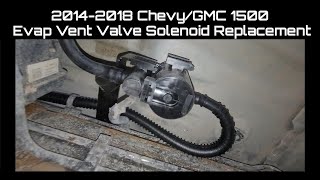
- Real-World Repair Story: Clogged Filter and Solenoid: A YouTube video for a 2018 Silverado with refueling issues (but no code yet) shows a complete replacement of the vent valve solenoid assembly. Upon removal, the filter and intake hose were found to be completely packed with dust and dirt, confirming the common failure mode. The owner reported no further refueling problems after the replacement.
- Real-World Repair Story: Faulty FTP Sensor: A diagnostic video on a Chevy Silverado with P0446 showed the Fuel Tank Pressure sensor was reading a constant 4.8V, even with the gas cap off. The normal reading should be around 1.5V. The ECM interpreted this false high pressure as a vent blockage. Replacing only the FTP sensor resolved the code. The technician was able to replace the sensor without dropping the fuel tank by accessing it from near the filler neck.
Mechanic-Grade Diagnostic Values
- Fuel Tank Pressure (FTP) Sensor Voltage — expected: 1.4V to 1.6V with gas cap off (at atmospheric pressure).. Failure: A reading stuck high (e.g., 4.8V) or very low (e.g., 0.2V) indicates a faulty sensor or wiring issue.
- EVAP Vent Solenoid Resistance — expected: 20 to 50 Ohms. Failure: A reading outside this range indicates a failed solenoid coil.
- FTP Sensor 5V Reference Circuit — expected: Approximately 5 volts on the gray wire at the sensor connector with key on, engine off.. Failure: No voltage suggests a broken wire between the ECM and the sensor.
Scan Tool Commands That Help
- GDS2 / Tech2: EVAP Service Bay Test — This is a guided diagnostic routine that commands the purge and vent solenoids and monitors the FTP sensor to verify the entire system's function after a repair. It's the fastest way to confirm a fix and run the EVAP monitor without performing a full drive cycle. The test requires specific conditions, such as fuel level between 15-85% and a cold engine.
- GDS2 / Tech2 / High-End Bidirectional Scanner: EVAP Vent Solenoid ON/OFF — Used during initial diagnosis to command the vent solenoid closed. The technician should listen for an audible click from the solenoid near the canister. If no click is heard, it points to a potential failure in the solenoid itself or its circuit (power/ground).
Wiring & Ground Locations
- Frame Ground (General) — On the passenger side frame rail, often near the front wheel well area.. The main body and engine wiring harnesses use several ground points along the frame. Corrosion or looseness at these grounds can cause intermittent electrical issues for various components, including the EVAP system. A video for 2014-2018 Silverados shows a critical ground point on the passenger side frame that can become corroded.
- Vent Solenoid Connector — At the EVAP vent solenoid, near the charcoal canister by the fuel tank.. This is the direct connection point for testing. The connector should have a power wire (often red with a green stripe) and a ground control wire from the ECM (often white or black). A broken ground wire at this connector is a known failure point.
Real Owner Repair Stories
- Valley Mobile Automotive, YouTube (2006 Chevrolet Silverado 2500) — Check Engine Light with code P0446.
❌ Tried (didn't work) Initially suspected a bad vent solenoid because it would not activate when commanded by the scan tool.
✅ What actually fixed it The Fuel Tank Pressure (FTP) sensor was faulty and stuck reading 4.8V. This incorrect high-pressure reading caused the ECM to stop sending the ground signal to activate the vent solenoid as a software-driven precaution. Replacing the FTP sensor restored the correct voltage reading (1.43V with cap off), which then allowed the ECM to properly command the vent solenoid, resolving the P0446 code. - Reddit user on r/Silverado (2015 Silverado 5.3L with 170,000 miles) — P0446 code present for several years, recently developed a hard start / extended crank symptom.
❌ Tried (didn't work) Replaced battery, starter, and spark plugs to address the hard start, but the issue remained.
✅ What actually fixed it The user's mechanic diagnosed that the P0446 code, indicating a restricted EVAP vent solenoid or canister, was the likely cause of the hard start. The story highlights the connection between a long-ignored EVAP code and eventual driveability symptoms.
"I Checked Everything" — The Actual Cause
- In many cases for P0446, a smoke test will pass because the code indicates a restriction or blockage, not necessarily a leak. A technician on the ScannerDanner forum noted a case on a '16 Silverado 3500 where a smoke test passed, but the FTP sensor was sending faulty data, which was the root cause of the code, not a leak or a physical blockage.
OEM Part Supersession History
Multiple older numbers→23103351— This part number is a common service replacement for the EVAP canister vent solenoid assembly on a wide range of GM trucks, including the 2013-2019 Silverado 3500. It often includes the valve and a filter box.
Heads up: Some aftermarket listings mention two visually similar valves (e.g., 911-099 and 911-237) that differ by a 1mm vacuum port diameter. It is crucial to verify the correct part number for the specific vehicle application to avoid fitment issues.
Model Year Variations Within This Range
- 2013-2014 (GMT900) vs 2015-2019 (K2XX): While the vehicle range spans two distinct generations (GMT900 'classic' and K2XX), the fundamental design of the EVAP system and the common failure mode (dust intrusion clogging the vent solenoid and canister) are consistent across both platforms. The TSBs and recommended repairs, including the filter relocation kit, apply to both generations. Part numbers for the vent solenoid and canister may differ, so VIN verification is essential.
Helpful Videos

Used OEM Parts in Stock


New Aftermarket Parts Available


The information in this article is provided for general reference and educational purposes only. Vehicle specifications, procedures, and part compatibility can vary by production date, trim level, and region. Always consult your vehicle's factory service manual and verify part numbers before purchasing or performing repairs. Safety-critical components such as airbags, seat belts, and braking systems should be installed by a qualified professional.
- Chevrolet SILVERADO 3500:
- 🎬 Helpful Videos
- 🛍️ Shop This Part
- What's Unique About the 2013-2019 Chevrolet SILVERADO 3500
- Diagnostic Flowchart
- Symptoms You May Notice
- Most Likely Causes
- Rare But Worth Checking
- Diagnosis Steps
- Parts You'll Likely Need
- Related Codes That Often Appear With This One
- Technical Service Bulletins (TSBs) & Recalls
- Platform-Specific Known Issues
- Mechanic-Grade Diagnostic Values
- Scan Tool Commands That Help
- Wiring & Ground Locations
- Real Owner Repair Stories
- "I Checked Everything" — The Actual Cause
- OEM Part Supersession History
- Model Year Variations Within This Range
- 🎟️ Get 5% Off