

P0446 on 2016-2020 Chevrolet Silverado 2500: EVAP Vent Control Circuit Fixes
On a 2016-2020 Silverado 2500, code P0446 is most often caused by a faulty or clogged EVAP vent valve solenoid, located near the fuel tank. Dust and debris clogging the system is a known issue, as noted in GM Technical Service Bulletin #23-NA-073, which recommends installing a filter relocation kit. Replacing the vent solenoid and inspecting the charcoal canister for contamination is the most common and effective fix.
- P0446 on a 2016-2020 Silverado 2500 almost always points to a problem with the EVAP vent valve or its associated hoses, located near the fuel tank.
- The most common cause is clogging from dust and road debris, an issue acknowledged by GM in a Technical Service Bulletin.
- Symptoms include a Check Engine Light and, most notably, the fuel pump nozzle shutting off repeatedly during refueling.
- Replacing the EVAP vent valve is a common DIY repair that can be done in about an hour with basic tools.
- When replacing the valve, it's wise to also inspect the charcoal canister for contamination and replace it if necessary to prevent a recurring problem.
What's Unique About the 2016-2020 Chevrolet SILVERADO 2500

For this generation of Silverado HD trucks, a primary factor leading to code P0446 is the vehicle's susceptibility to dust and debris intrusion, especially when driven in rural, agricultural, or off-road environments. General Motors has acknowledged this with a technical bulletin (TSB #23-NA-073) that specifically mentions dust getting into the EVAP canister and causing various EVAP codes, including P0446. The official GM correction for this condition is to install an auxiliary filter or a filter relocation kit, which moves the air intake for the EVAP system to a cleaner location, like higher up in the engine bay. This is often a customer-pay repair, not covered under warranty.
Diagnostic Flowchart
Tap your situation to follow the diagnostic path that matches what you're seeing on this vehicle.
Generation note: The 2016-2020 range covers two generations of the Silverado 2500 HD: the third generation (K2XX platform, 2016-2019) and the fourth generation (T1XX platform, 2020). While the EVAP system components are similar, their exact location and part numbers may differ slightly. The issue of dust intrusion and vent valve failure is common to both generations and is covered by the same TSB. A key difference is that on 2019+ models, the Fuel Pump Driver Module (FPDM) may supply power to the vent solenoid, whereas earlier models may source power from an underhood fuse block.
Symptoms You May Notice
- Check Engine Light is on
- Difficulty filling the fuel tank (gas pump nozzle clicks off frequently)
- A faint smell of gasoline near the truck.
- Audible humming or buzzing from the vent solenoid area after shutdown
- Replacing the gas cap. While a bad gas cap can cause other EVAP codes (like P0455 for a large leak), it is not a typical cause for P0446, which specifically points to a vent circuit/restriction issue, not a system-wide leak.
- Replacing the EVAP Purge Valve. The purge valve is located in the engine bay and controls vapor flow to the engine. P0446 is related to the vent valve, which is located near the fuel tank. The purge valve has its own codes, like P0496.
Most Likely Causes

- Faulty or Clogged EVAP Vent Valve/Solenoid 🔴 High Probability As per TSB #23-NA-073, these trucks are prone to dust and debris clogging the vent valve and its filter, causing it to stick open or closed. The valve's location under the truck makes it vulnerable. The valve can also fail electrically or develop cracks in its plastic housing.
How to confirm: Locate the vent valve near the charcoal canister by the fuel tank. With a capable scan tool, command the valve to open and close; listen for a clicking sound. You can also apply 12V directly to the solenoid to test its mechanical function. A multimeter can be used to check for resistance between the two pins on the solenoid; an open circuit (infinite resistance) or a short (zero resistance) indicates failure. A typical resistance value is between 15-30 ohms. Visual inspection for cracks or heavy dust contamination is also key.
Typical fix: Replace the EVAP vent valve solenoid. It is highly recommended to also install the filter relocation kit (per TSB #23-NA-073) to prevent the new valve from failing prematurely due to the same dust issue.
Est. part cost: $30-$80 - Blocked EVAP Canister or Vent Hose 🟡 Medium Probability The same dust and debris that clogs the valve can also saturate the charcoal canister or block the vent hoses, leading to a restriction that triggers P0446. In some cases, the charcoal pellets inside the canister can break down and create a blockage.
How to confirm: Disconnect the hoses from the canister and vent valve and inspect for dirt, spider webs, or other blockages. A smoke test is the definitive method to confirm a restriction in the system; if the machine shows high pressure and low flow when trying to push smoke through the vent path, a blockage is present.
Typical fix: Clean or replace the blocked hoses. If the canister is saturated with fuel or clogged with debris, it must be replaced. If replacing the canister due to dust, the filter relocation kit is essential.
Est. part cost: $150-$300 for a canister 🎬 See this walkthrough on how to replace the EVAP canister yourself.
- Damaged Wiring or Electrical Connector ⚪ Low Probability The wiring to the vent solenoid is located under the truck and is exposed to the elements, road debris, and corrosion. Other GM bulletins for similar platforms (e.g., #21-NA-149) note potential for the main engine harness to chafe on the frame, shock tower, or control arms, which could affect the vent solenoid circuit.
How to confirm: Visually inspect the wiring harness leading to the vent solenoid for any signs of damage, chafing, or corrosion at the connector pins. Use a multimeter to check for 12V power and a command ground from the ECM at the connector when the valve is commanded on by a scan tool.
Typical fix: Repair the damaged section of the wiring harness or replace the connector pigtail. Secure the harness away from any sharp edges or moving parts to prevent future damage.
Est. part cost: $10-$30
Rare But Worth Checking
- Faulty Fuel Tank Pressure (FTP) Sensor: A faulty FTP sensor can send incorrect data to the ECM. For example, if the sensor is stuck reading a high pressure (e.g., 4.8V) when the tank should be at atmospheric pressure (~1.5V), the ECM may incorrectly assume the vent path is blocked and set a P0446, even if the vent solenoid is working perfectly. This should be considered if replacing the vent valve does not fix the code.
- Faulty Fuel Pump Driver Module (FPDM): On some newer GM trucks (2019+), the Fuel Pump Driver Module, located on the frame rail, supplies the voltage for the EVAP vent solenoid. A fault within this module, often due to corrosion from trapped moisture, could interrupt power to the vent circuit, potentially causing a P0446 code along with other seemingly unrelated electrical issues.
- Faulty Powertrain Control Module (PCM): This is extremely rare, but the PCM itself can fail. This should only be considered after all other possibilities, including wiring and other modules, have been exhaustively ruled out.
Diagnosis Steps
- Read the code with an OBD-II scanner and confirm P0446 is present. Note any other accompanying codes.
- Perform a visual inspection of the EVAP system under the truck, near the fuel tank. Look for the charcoal canister, vent valve, and all connected hoses. Check for obvious cracks, damage, heavy dust/mud accumulation, or loose connections.
- Inspect the vent valve's fresh air intake filter/hose for blockages from dirt, dust, or insect nests. This is a very common point of failure.
- If you have a capable scan tool, monitor the Fuel Tank Pressure (FTP) sensor reading with the gas cap off. It should read close to atmospheric pressure (approx. 1.5-2.5V). A reading stuck high (e.g., 4.5V+) or low could indicate a faulty FTP sensor, which can falsely trigger a P0446.
- Using the scan tool, command the EVAP vent solenoid to close (0% or OFF). Listen for an audible click from the valve. If there is no click, proceed to electrical checks.
- If the valve does not activate, disconnect the electrical connector. Check for 12V power on one pin and ground on the other (the ECM provides the ground to activate it). If power/ground is missing, trace the wiring back towards the PCM or FPDM to find the fault.
- If power and ground are present but the valve doesn't click, the vent solenoid is faulty and should be replaced. You can also check the solenoid's resistance with a multimeter; a typical value is 15-30 ohms.
- If the valve clicks but the code persists, the issue is likely a physical blockage. Use a smoke machine to pressurize the system through the vent hose. If smoke does not flow freely out of the fresh air intake, there is a restriction in the vent valve, canister, or hoses that must be found and cleared.
Parts You'll Likely Need

- EVAP Vapor Canister Vent Valve Solenoid
(OEM #23481275, 25932566)— This is the most common failure point for code P0446, either due to electrical failure or clogging from dust and debris.
Trusted brands: ACDelco (GM Genuine), Dorman (p/n 911-064), Standard Motor Products
OEM price range: $50-$90
Aftermarket price range: $30-$60 - EVAP Vapor Canister
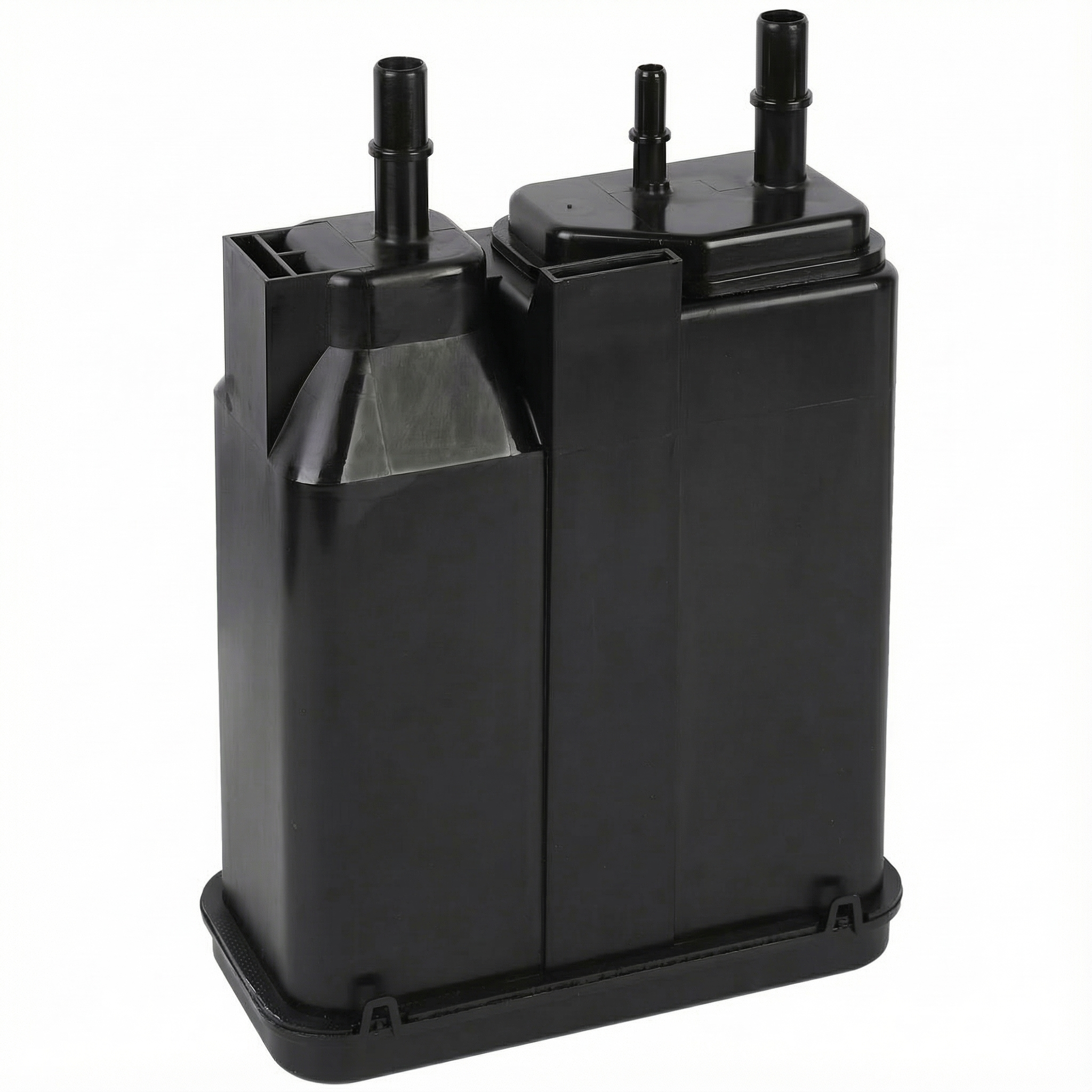
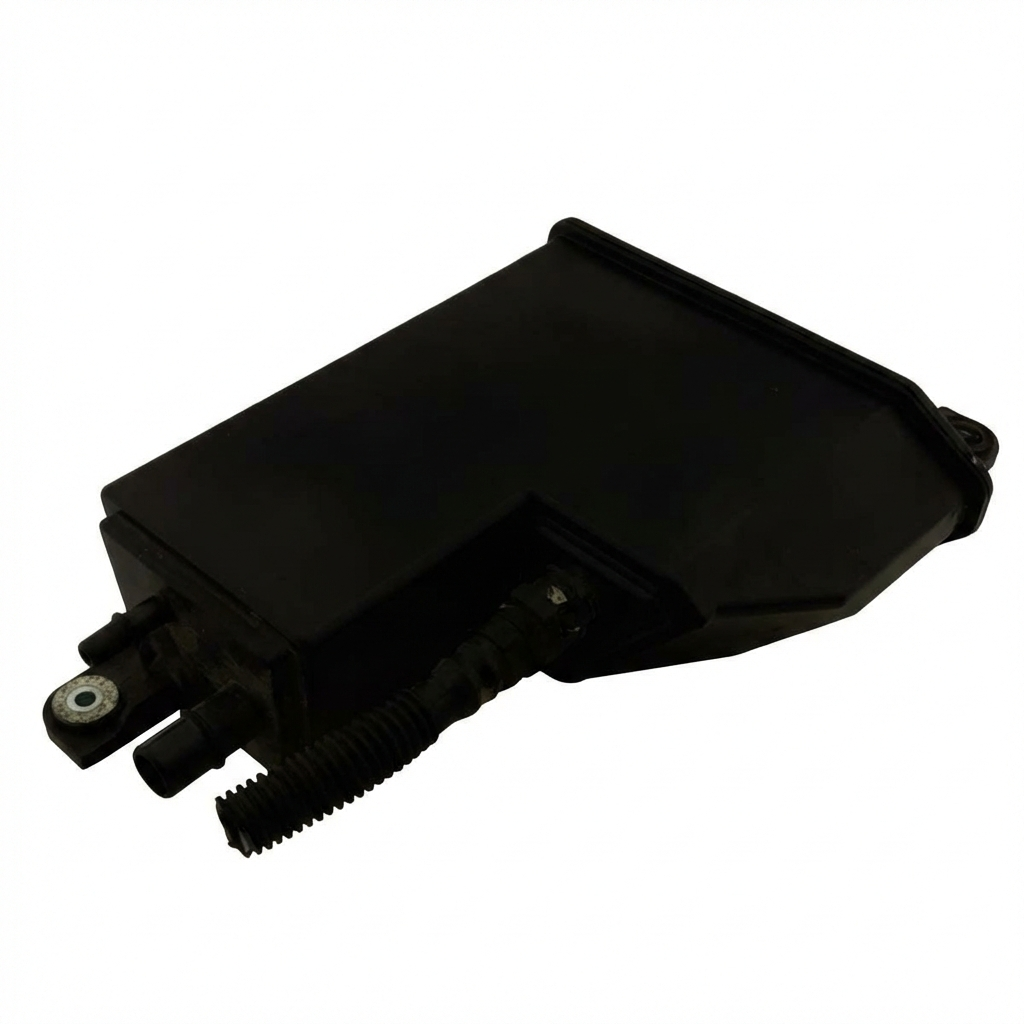
(OEM #84639274)— If the vent valve failed due to excessive dust, the canister is likely contaminated as well and should be replaced to prevent a repeat failure of the new valve.
Trusted brands: ACDelco (GM Genuine), Dorman
OEM price range: $150-$250
Aftermarket price range: $100-$180 - EVAP Canister Vent Hose Filter Relocation Kit
(OEM #23279957)— Recommended by TSB #23-NA-073 to prevent repeat failures from dust intrusion by moving the system's air intake to a cleaner location.
Trusted brands: ACDelco (GM Genuine)
OEM price range: $40-$70
Aftermarket price range: $25-$50
Related Codes That Often Appear With This One
- P0449 — This code specifically indicates an EVAP Vent Solenoid Control Circuit Malfunction and is very closely related to P0446. They often appear together and point to the same faulty component.
- P0455 — Indicates a large leak in the EVAP system. This can be triggered if the vent valve is stuck open or if its housing is cracked. It is also mentioned in TSB #23-NA-073.
- P0442 — Indicates a small leak in the EVAP system. This code is also mentioned alongside P0446 in TSB #23-NA-073 as a possible result of dust intrusion.
Technical Service Bulletins (TSBs) & Recalls
- 23-NA-073: Evaporative DTCs P0442, P0446, P0455 or P0449, Caused by Dust Intrusion into the Evaporative Canister.
Platform-Specific Known Issues
- TSB #23-NA-073: This bulletin directly addresses customer concerns about EVAP codes P0442, P0446, P0455, or P0449 caused by dust intrusion into the evaporative canister. The recommended fix is to install an auxiliary fresh air filter and relocate the intake hose to a cleaner, higher location away from the dusty undercarriage. This is noted as a customer-pay alteration, not a warranty repair.
Mechanic-Grade Diagnostic Values
- Fuel Tank Pressure (FTP) Sensor Voltage — expected: 1.3V to 1.7V with Key On, Engine Off, and gas cap removed (atmospheric pressure).. Failure: Voltage is stuck at a fixed value (e.g., 0.2V, 2.2V, or 4.8V) and does not change.
- EVAP Vent Solenoid Coil Resistance — expected: 15 to 30 Ohms.. Failure: A reading of 0 Ohms (short circuit) or infinite/OL (open circuit).
- EVAP System Test Vacuum Level (DTC Set Condition) — expected: Fuel tank pressure remains near atmospheric when the vent path is open.. Failure: The PCM detects a vacuum level of less than -10 inches of H2O for 30 seconds during a vent path test, indicating a restriction.
Scan Tool Commands That Help
- GDS2 / Tech2: EVAP Service Bay Test — This is a dealer-level automated test that forces the EVAP monitor to run, verifying a repair without needing to perform a full drive cycle. It commands the vent and purge valves and monitors FTP sensor response to confirm the system is sealed and venting correctly. Note: The test has preconditions, such as fuel level being between 15-85% and a cold engine.
- Professional OBD-II Scan Tool: EVAP Vent Solenoid On/Off Command — This is a fundamental bidirectional control used during initial diagnosis. Commanding the valve on and off while listening for a click confirms if the solenoid is receiving the command and is mechanically functional. Absence of a click points to a wiring or solenoid failure.
Wiring & Ground Locations

- G401 / G403 — On the rear frame rail, typically on the driver's side near the spare tire or fuel pump module.. This is a major chassis ground point for multiple rear-mounted components, including potentially the EVAP vent solenoid and Fuel Pump Driver Module. Corrosion or a loose connection at this ground can cause an open in the vent solenoid circuit, leading to a P0446.
- EVAP Vent Solenoid Connector — Directly on the EVAP vent solenoid, near the charcoal canister under the truck.. This is the primary point for electrical testing. One pin should have 12V with the key on (power feed, often from the FPDM on 2019+ models), and the other pin is the control wire that the ECM/PCM grounds to activate the solenoid.
- Fuel Pump Driver Module (FPDM) / Chassis Control Module (CCM) — On the driver's side frame rail, often near the spare tire area.. On 2019+ T1XX platform trucks, this module may provide the power feed for the EVAP vent solenoid. A failure of this module, often due to water intrusion and corrosion, can cut power to the vent circuit and cause P0446.
Real Owner Repair Stories
- YouTube channel "Chevy Silverado Evap P0446 Diagnosis and Fix" (2006 Chevrolet Silverado 2500 (similar K2XX system principles)) — Check Engine Light with code P0446. Scan tool showed FTP sensor voltage stuck at 4.8V.
❌ Tried (didn't work) Initial diagnosis pointed towards a blocked vent or bad vent solenoid because the ECM would not command the vent solenoid to activate.
✅ What actually fixed it The Fuel Tank Pressure (FTP) sensor was faulty and stuck at a high voltage reading. The ECM's logic prevented it from activating the vent solenoid as a safety measure due to the invalid pressure reading. Replacing the FTP sensor restored the correct voltage (~1.4V), which then allowed the vent solenoid to be commanded by the ECM, fixing the P0446 code. - YouTube channel "Fast Tip Friday EP1: Chevy P0446 code" (2017 Chevrolet Tahoe (identical EVAP system)) — P0446 code, especially after driving on dusty roads.
❌ Tried (didn't work) Blowing out the vent filter box with it still attached to the truck did not resolve the code.
✅ What actually fixed it The entire vent hose and filter box assembly was completely impacted with fine silt and dust. The fix required removing the assembly, taking apart the filter box, and thoroughly cleaning out both the hose and the filter elements. The video demonstrates a large amount of dirt falling out, confirming the TSB's claims about dust intrusion being the root cause. - Reddit user post on r/ChevyTrucks (2020 Chevrolet Silverado Custom 5.3L) — Check Engine Light with EVAP codes (P0498/P0499, related to vent circuit), remote start not working, 'Service Trailer Brake System' warning, intermittent backup camera.
❌ Tried (didn't work) Diagnosing it as a simple EVAP component failure.
✅ What actually fixed it The Fuel Pump Control Module (FPCM) mounted to the frame was heavily corroded on its back side from trapped moisture. Replacing the FPCM and clearing the codes resolved all the issues simultaneously, including the EVAP codes, remote start, and trailer brake warnings.
"I Checked Everything" — The Actual Cause
- In cases where a smoke test shows no leaks and the vent valve clicks with a scan tool, the root cause can be a faulty Fuel Tank Pressure (FTP) sensor. If the sensor is stuck on a high or low reading, the ECM may interpret this as a blockage and set P0446, even though the physical vent path is clear.
OEM Part Supersession History
25932566 (and others)→23481275— Part consolidation and design updates by GM over many model years.
Heads up: Some older vehicles using part number 23481275 may require a wiring harness adapter (p/n 19257603) if the original connector is different.
Model Year Variations Within This Range
- 2016-2019 (K2XX Platform): The EVAP vent solenoid is typically powered via a circuit originating from the underhood fuse block. Diagnosis focuses on the solenoid, wiring, and canister.
- 2020 (T1XX Platform): The EVAP vent solenoid may receive its power from the Fuel Pump Driver Module (FPDM) or a similar chassis module as part of the Global B electrical architecture. Diagnosis for a P0446 must also include checking the health and wiring of the FPDM.
Helpful Videos
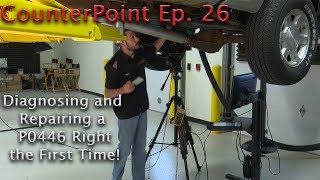
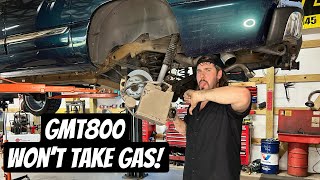
Used OEM Parts in Stock
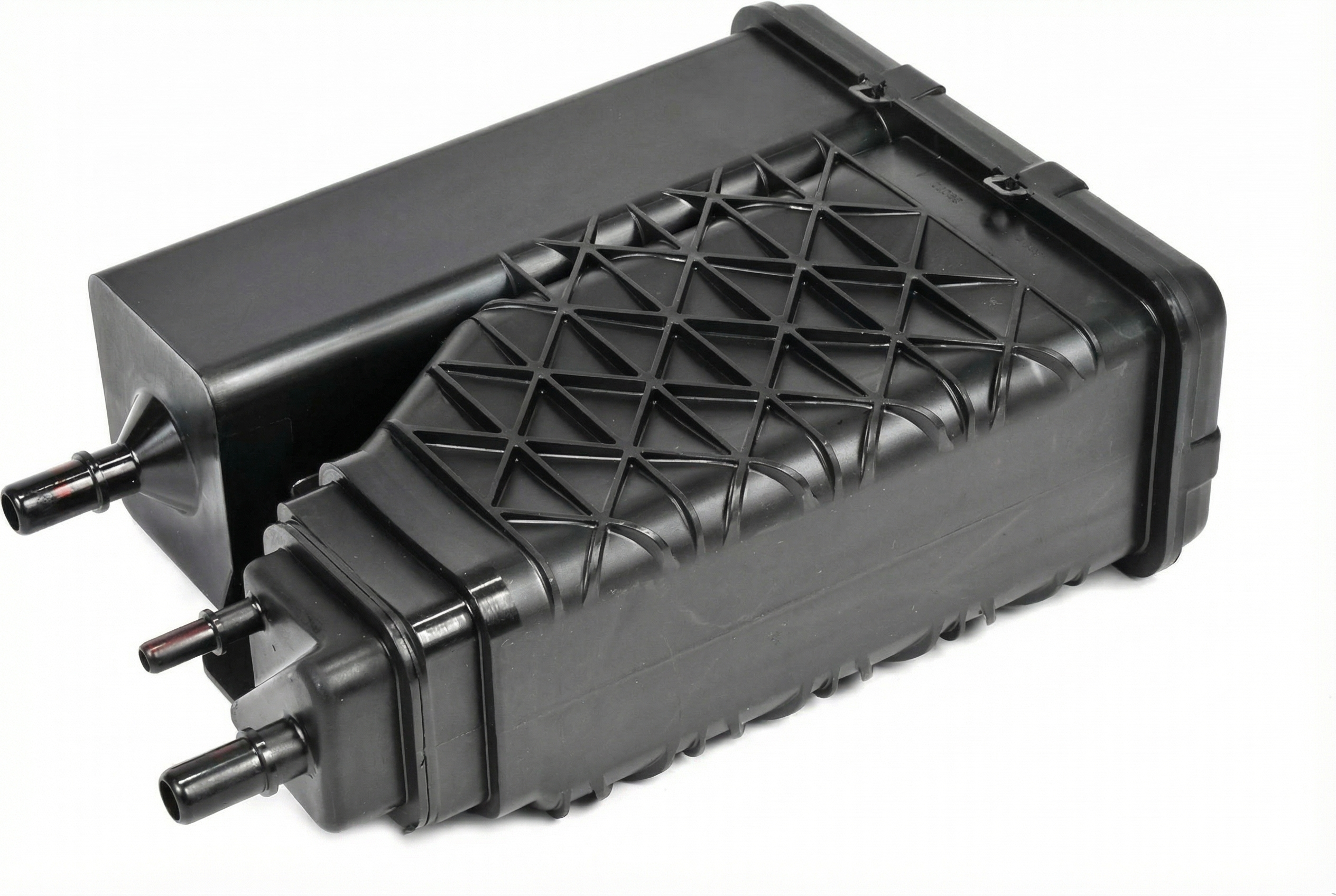
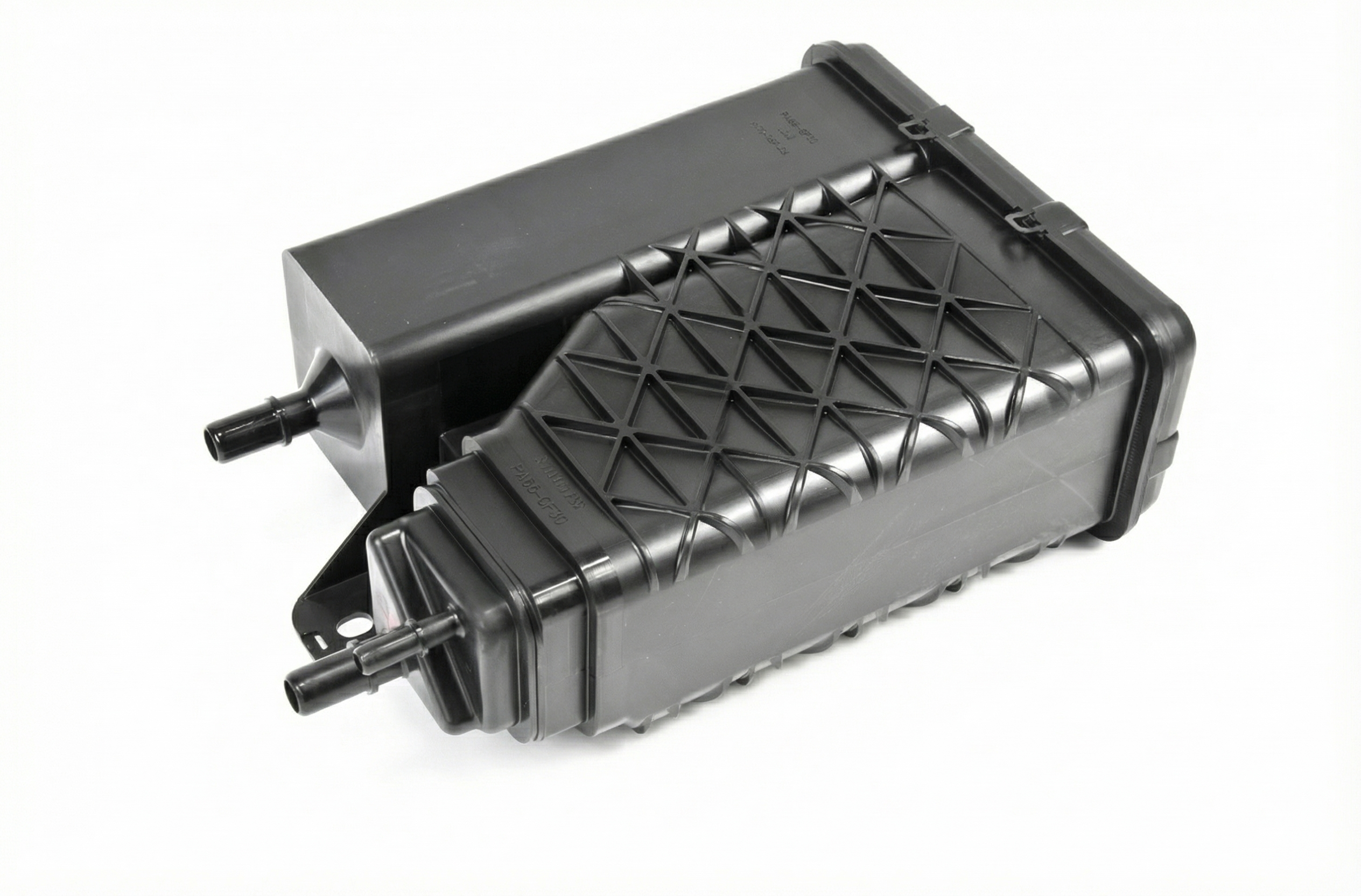

New Aftermarket Parts Available


The information in this article is provided for general reference and educational purposes only. Vehicle specifications, procedures, and part compatibility can vary by production date, trim level, and region. Always consult your vehicle's factory service manual and verify part numbers before purchasing or performing repairs. Safety-critical components such as airbags, seat belts, and braking systems should be installed by a qualified professional.
- Chevrolet SILVERADO 2500:
- 🎬 Helpful Videos
- 🛍️ Shop This Part
- What's Unique About the 2016-2020 Chevrolet SILVERADO 2500
- Diagnostic Flowchart
- Symptoms You May Notice
- Most Likely Causes
- Rare But Worth Checking
- Diagnosis Steps
- Parts You'll Likely Need
- Related Codes That Often Appear With This One
- Technical Service Bulletins (TSBs) & Recalls
- Platform-Specific Known Issues
- Mechanic-Grade Diagnostic Values
- Scan Tool Commands That Help
- Wiring & Ground Locations
- Real Owner Repair Stories
- "I Checked Everything" — The Actual Cause
- OEM Part Supersession History
- Model Year Variations Within This Range
- 🎟️ Get 5% Off