

P0446 on 2011-2015 Chevrolet Silverado 2500: EVAP Vent Circuit Causes and Fixes
On a 2011-2015 Silverado 2500, P0446 is almost always caused by a faulty or clogged EVAP vent solenoid located near the fuel tank. This is a common failure due to dust and debris, confirmed by GM TSB #15-06-04-002. The fix is replacing the vent solenoid valve, often with a relocation kit to protect the new part. This repair costs about $40-$115 for the part and is a straightforward DIY job.
- P0446 on your Silverado 2500 almost always points to a problem with the EVAP vent valve/solenoid near the fuel tank, not the gas cap.
- A primary symptom, besides the Check Engine Light, is the fuel pump nozzle shutting off constantly when you try to refuel.
- The most likely cause is the vent solenoid getting clogged with dust and dirt due to its location under the truck.
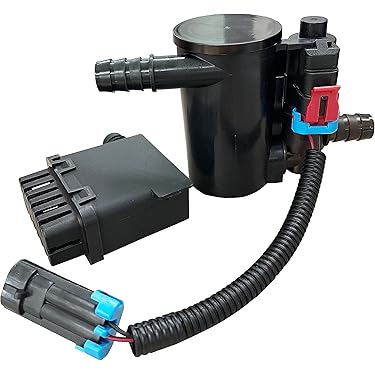
- The repair is DIY-friendly and typically involves replacing the vent solenoid (Part #23481275), which often comes in a kit to relocate the air filter to a cleaner spot.
- Before buying parts, check the vent hose and its filter for simple blockages like mud or insect nests, as cleaning them out can sometimes fix the problem for free.
What's Unique About the 2011-2015 Chevrolet SILVERADO 2500

On these Silverado HD trucks, the EVAP vent solenoid is notoriously prone to failure. Its location near the spare tire exposes it to a high amount of dust, mud, and water, especially on work trucks or vehicles driven on unpaved roads. This debris clogs the valve's filter, causing it to stick closed and trigger a P0446 code. The problem is so common that General Motors issued a Technical Service Bulletin (TSB #15-06-04-002) acknowledging the issue and linking it directly to the symptom of being difficult to refuel. The recommended fix often includes a service kit to relocate the vent's air filter to a cleaner, more protected location higher up in the chassis.
Diagnostic Flowchart

Tap your situation to follow the diagnostic path that matches what you're seeing on this vehicle.
Generation note: The 2011-2015 year range covers two Silverado 2500 generations: the 2nd Gen (GMT900, 2007-2014) and the 3rd Gen (K2XX, 2015-2019). The cause of P0446 and the primary fix—replacing the vent solenoid near the fuel tank—are consistent across both generations covered in this range. TSB #15-06-04-002 explicitly covers models from 2011 through 2015, confirming the problem spans these years.
Symptoms You May Notice
- Check Engine Light is on
- Difficulty filling the fuel tank (gas pump nozzle clicks off repeatedly)
- Audible 'whoosh' sound when opening the gas cap (pressure or vacuum release)
- Possible faint fuel odor
- Audible clicking or buzzing from the vent solenoid area that is inconsistent or absent when commanded by a scan tool
- Replacing the gas cap. A bad gas cap typically causes an EVAP leak code (like P0455 or P0457), not a vent circuit/blockage code like P0446.
- Replacing the EVAP Purge Valve/Solenoid. The purge valve is located on or near the engine, while P0446 relates to the vent valve/solenoid located at the rear of the vehicle near the fuel tank. Confusing the two is a common mistake.
Most Likely Causes

- Faulty or Clogged EVAP Vent Solenoid 🔴 High Probability The solenoid is mounted near the fuel tank, where it is highly susceptible to clogging from road dust and debris. This is a well-documented failure pattern confirmed by GM Technical Service Bulletin #15-06-04-002.
How to confirm: Use a scan tool to command the vent solenoid to close; you should hear an audible click. If it doesn't click, test for 12V power and ground at the connector with the key on. If power is present but the solenoid doesn't actuate, it is faulty.
Typical fix: Replace the EVAP vent solenoid valve. It is often sold as a kit (e.g., Dorman 911-239) with a new filter and hose to relocate the air intake to a cleaner location, such as higher up along the frame rail or above the transmission, to prevent repeat failures.
Est. part cost: $40 - $115 - Blocked EVAP Vent Hose or Filter 🟡 Medium Probability The vent hose's air inlet filter, a small black box, is located in an exposed area under the truck, allowing it to become clogged with mud, dirt, or even insect nests, which restricts airflow.
How to confirm: Disconnect the vent hose from the charcoal canister and the filter box. Attempt to blow low-pressure compressed air through the hose and filter; if air does not pass freely, there is a blockage. Visually inspect the filter box for packed-in dirt.
Typical fix: Clean the hose and filter box with compressed air. If the filter is degraded or the hose is damaged, they must be replaced. Many owners opt to install the relocation kit during this repair to prevent future clogs.
Est. part cost: $0 - $50 - Damaged Wiring or Electrical Connector ⚪ Low Probability The wiring runs underneath the truck and is exposed to the elements, which can lead to corrosion on the connector pins or physical damage to the wires from road debris or improper jacking.
How to confirm: Visually inspect the wiring harness and connector for the vent solenoid. Check for chafed or broken wires and green/white corrosion on the connector pins. Use a multimeter to check for continuity and verify 12V at the connector with the key on.
Typical fix: Repair the broken wire or replace the corroded connector pigtail.
Est. part cost: $15 - $40 - Clogged Charcoal Canister ⚪ Low Probability Consistently over-filling the fuel tank ('topping off') can force liquid gasoline into the canister, saturating the charcoal pellets and causing a blockage. Extreme dust can also overwhelm the system's filter and clog the canister itself.
How to confirm: After confirming the vent solenoid and hoses are clear, the canister is the next likely restriction. A smoke test is the definitive method; a technician will introduce smoke into the EVAP system and observe if it fails to flow through the canister vent port.
Typical fix: Replace the charcoal canister assembly. This is more expensive and should only be done after ruling out the more common vent solenoid failure.
Est. part cost: $150 - $250
Rare But Worth Checking
- Faulty Fuel Tank Pressure (FTP) Sensor: A failing FTP sensor can provide incorrect pressure readings to the computer, causing it to misinterpret the state of the vent valve and set a P0446 code. A key symptom is the pressure reading on a scan tool not changing (e.g., stuck at a high value) even when the gas cap is removed. Many owners have replaced the vent solenoid multiple times only to find the FTP sensor was the true culprit. One owner noted you can often access it without dropping the tank by reaching up between the filler neck and the tank.
- Faulty Engine Control Module (ECM): In very rare cases, the driver circuit within the ECM that controls the vent solenoid can fail. This should only be considered after all other possibilities, including wiring and sensors, have been exhaustively ruled out.
Diagnosis Steps
- Read the code with an OBD-II scanner to confirm P0446 is present and check for any other related codes.
- Visually inspect the EVAP vent solenoid, charcoal canister, and surrounding hoses under the truck near the spare tire. Look for obvious cracks, damage, or loose connections.
- Locate the vent hose filter (often a small black box connected by a rubber hose) and check its inlet for blockage from mud, dirt, or insect nests.
- Use a scan tool with bidirectional controls to command the vent solenoid closed. Listen for a distinct 'click'. If it clicks, the solenoid is likely working electrically, and the problem is a physical blockage. If it does not click, proceed to electrical checks.
- Disconnect the electrical connector at the vent solenoid. Use a multimeter to verify that one pin has 12-volt power with the key on.
- If power is present but the solenoid does not click when commanded, the solenoid has failed and needs to be replaced.
- If power is not present, inspect the wiring for breaks and check the associated fuse in the vehicle's fuse box.
- If the vent solenoid and hoses are confirmed to be working and clear, check the Fuel Tank Pressure (FTP) sensor data with a scan tool. With the gas cap off, the pressure should be near 0 inches of water and the voltage around 1.5V. If the reading is stuck high (e.g., 7 in H2O or 4.8V), the FTP sensor is likely faulty.
- If all else fails, perform a smoke test on the EVAP system to find a restriction in a line or within the charcoal canister itself.
Parts You'll Likely Need

- Vapor Canister Vent Solenoid Valve
(OEM #23481275)— This is the most common failure point for code P0446 on this vehicle due to clogging from dust and debris. It is often sold as part of a kit that includes a relocation hose and filter.
Trusted brands: ACDelco (GM Genuine), Dorman (e.g., 911-064), Standard Motor Products (e.g., CP516) 🎬 See this step-by-step vent solenoid replacement walkthrough
OEM price range: $75 - $115
Aftermarket price range: $40 - $80
Related Codes That Often Appear With This One
- P0449 — This code is for 'EVAP Vent Valve/Solenoid Control Circuit' and is nearly identical to P0446. Some model years or software versions may use one code over the other for the same essential fault, and they are often listed together in TSBs.
- P0455 — This code for a 'Large EVAP Leak' can sometimes appear with P0446 if the vent valve is stuck open, preventing the system from sealing properly for a leak test.
- P0442 — This code for a 'Small EVAP Leak' may accompany P0446 for the same reason as P0455, if the valve is not sealing correctly.
Technical Service Bulletins (TSBs) & Recalls

- Bulletin #15-06-04-002: Addresses MIL illumination for DTCs P0442, P0446, P0455, or P0449 and difficulty filling the fuel tank, caused by debris in the EVAP system.
- Bulletin #02-06-04-037H: An older TSB for classic models that provides detailed instructions on replacing the vent valve and relocating the filter box, which is the same principle applied to the 2011-2015 models.
Platform-Specific Known Issues
- A GM Technical Service Bulletin (TSB #15-06-04-002) was issued for customer concerns of the Malfunction Indicator Lamp being on with code P0446 (among others) and the fuel tank being hard to fill. The bulletin points to dust and debris intrusion into the EVAP system and recommends a repair that may include relocating the vent filter.
Mechanic-Grade Diagnostic Values
- EVAP Vent Solenoid Coil Resistance — expected: 10 - 50 Ohms. Failure: A reading of 0 Ohms indicates a shorted coil; an infinite (OL) reading indicates an open circuit.
- EVAP Vent Solenoid Connector Voltage (Power Wire) — expected: ~12V (Battery Voltage) with Key On, Engine Off.. Failure: No voltage indicates a blown fuse (check F57 on 2015+ K2XX models) or a break in the power wire.
- Fuel Tank Pressure (FTP) Sensor Voltage — expected: Uses a 5V reference. Signal wire should read approx. 2.5V with KOEO and gas cap on. Voltage should change when applying light vacuum or pressure.. Failure: Voltage is stuck high (>4.0V) or low (<0.5V) and does not change when the gas cap is removed.
- Fuel Tank Pressure (FTP) Sensor Live Data (Scan Tool) — expected: Near 0 inches of H2O with the gas cap removed.. Failure: Reading remains high (e.g., 7.2 in H2O) with the gas cap off, indicating a faulty, stuck sensor.
Hidden / Shadow Codes Worth Checking
- Mode $06, Test ID for Vent Performance: This is not a shadow code but the underlying test data for P0446. The ECM runs a test by closing the vent valve and opening the purge valve to create a vacuum. It then closes the purge valve and opens the vent valve, timing how long it takes for the vacuum to dissipate. A time that exceeds the calibrated threshold indicates a restriction and sets the P0446 code. (see via A professional scan tool capable of displaying Mode $06 data.)
Scan Tool Commands That Help
- GDS2 / Tech2 / Professional Scan Tool: EVAP Vent Solenoid On/Off Command (Bidirectional Control) — This is a primary diagnostic step to test the electrical integrity of the vent solenoid circuit. Commanding the solenoid 'On' (closed) should produce an audible click and seal the vent. If it clicks, the wiring and solenoid coil are likely good, and the problem is a physical blockage. If it does not click, it points to a wiring fault, fuse issue, or failed solenoid.
Wiring & Ground Locations
- G300 — Below the driver's door, on the body mount (for 2014 GMT900 models).. The EVAP system wiring harness runs along the frame rail. A poor ground at this nearby location can cause intermittent or faulty operation of the vent solenoid.
- ECM Pin 66 (on some models) — At the Engine Control Module (ECM) connector.. A 2014 GM truck wiring diagram identifies Pin 66 as the 'EVAP Canister Vent Solenoid Control' circuit. This is the specific pin for the ground-side switched signal from the ECM to the solenoid, essential for end-to-end continuity testing.
- EVAP Fuse (F57 on K2XX) — In the underhood fuse block.. For 2015 models (K2XX platform), fuse F57 is often the power source for the EVAP vent solenoid. If there is no 12V power at the solenoid connector, this fuse is the first place to check.
Real Owner Repair Stories
- YouTube Commenter on 'Causes and Fixes Chevy/GMC P0446 Code' (Chevy/GMC Truck, year unspecified) — Check engine light on, could not pump a single gallon of gas without the nozzle shutting off.
❌ Tried (didn't work) Replacing gas cap, Replacing charcoal canister, Replacing fuel pressure sensor, Replacing EVAP vent valve (some parts replaced twice at a dealership)
✅ What actually fixed it After all part replacements failed, the owner disconnected all lines to the canister and vent valve and blew them out with a compressor/shop vac. They also blew air through the fuel filler neck. The code cleared the next day and the truck could be refueled normally, suggesting a hidden blockage (like a spider web) was the true cause. - TomsFoolery on YouTube (Chevy Silverado, year unspecified) — Check Engine Light with codes P0449 (EVAP Vent Solenoid Control Circuit) and P0455 (Large Leak).
❌ Tried (didn't work) Initial diagnosis
✅ What actually fixed it Upon removing the original vent solenoid, a large crack was visible in the metal body of the solenoid itself. Replacing the physically broken vent solenoid (Dorman P/N 911-099) fixed the circuit fault and cleared both codes.
"I Checked Everything" — The Actual Cause
- A common scenario for P0446 is when all tests for a physical blockage (like a smoke test or blowing air through lines) come back clean. The actual cause is often a faulty Fuel Tank Pressure (FTP) sensor. The sensor gets stuck reporting a constant pressure (e.g., 7.2 in H2O) to the ECM. When the ECM commands the vent valve open to release pressure, it sees no change from the faulty sensor and incorrectly concludes the vent path is blocked, setting code P0446. A technician can confirm this by observing live scan tool data for the FTP sensor; if the pressure reading doesn't drop to zero when the gas cap is removed, the sensor is bad.
OEM Part Supersession History
Multiple (e.g., 10382080, 25932566, etc.)→23481275 (current GM/ACDelco part number)— GM regularly updates service parts to integrate new materials and technologies.
Heads up: The part number 23481275 has replaced a long list of previous numbers, including: 10382080, 15286109, 15286148, 15286149, 15286150, 15844699, 15844700, 15844701, 15893884, 20995471, 20995472, 25932566, 25962085, 25962086, and 25966403. When sourcing an OEM part, ensure it is the latest number.
Model Year Variations Within This Range
- 2011-2014 (GMT900): These models are part of the GMT900 platform. Wiring diagrams and ground locations (like G300) are specific to this generation.
- 2015 (K2XX): This model year marks the start of the K2XX platform. While the P0446 cause is similar, component specifics like the fuse for the EVAP circuit (F57 in the underhood block) may be different from the earlier generation.
Helpful Videos
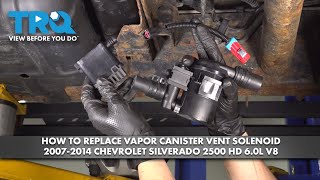
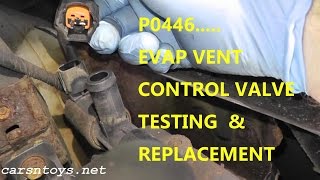
Used OEM Parts in Stock
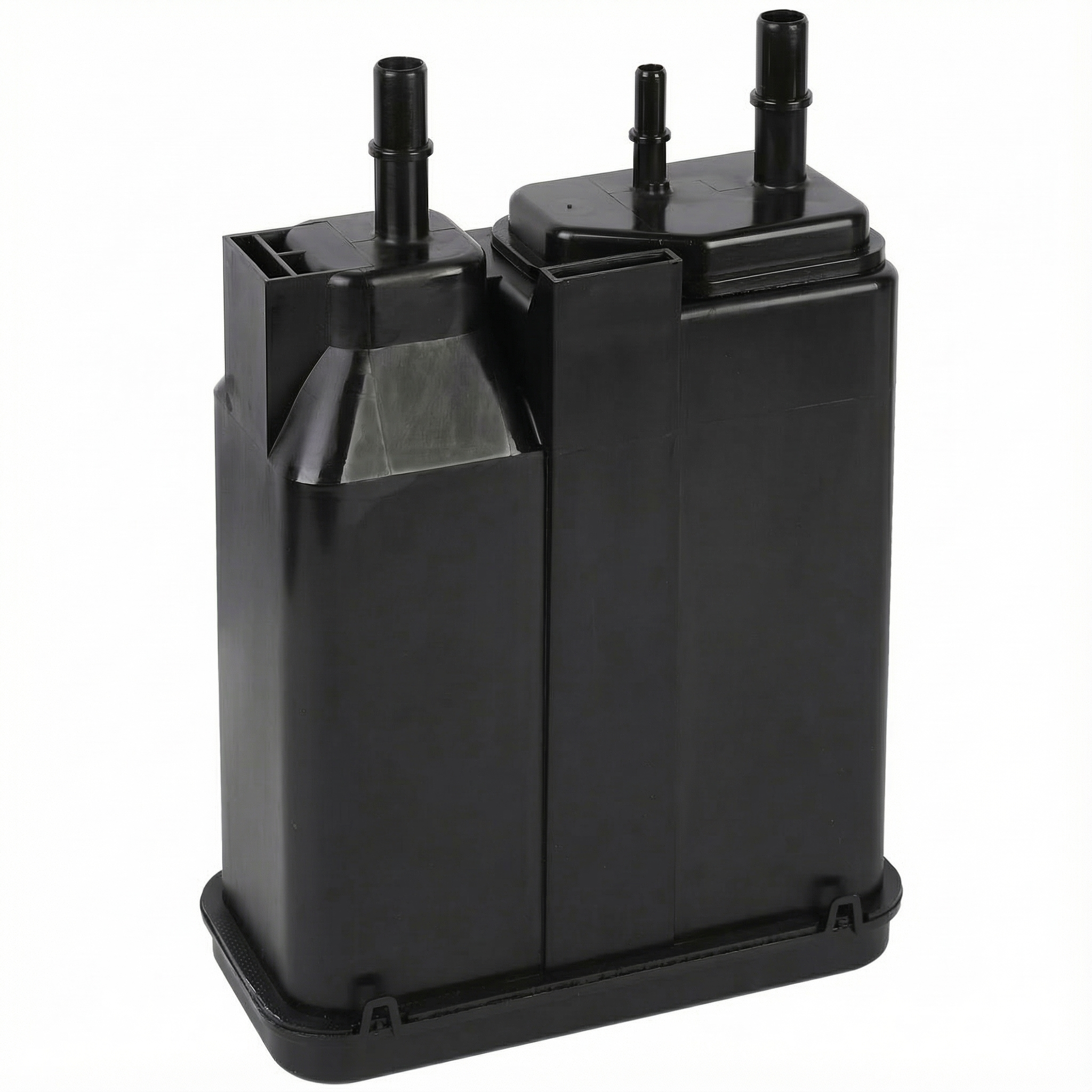
New Aftermarket Parts Available


The information in this article is provided for general reference and educational purposes only. Vehicle specifications, procedures, and part compatibility can vary by production date, trim level, and region. Always consult your vehicle's factory service manual and verify part numbers before purchasing or performing repairs. Safety-critical components such as airbags, seat belts, and braking systems should be installed by a qualified professional.
- Chevrolet SILVERADO 2500:
- 🎬 Helpful Videos
- 🛍️ Shop This Part
- What's Unique About the 2011-2015 Chevrolet SILVERADO 2500
- Diagnostic Flowchart
- Symptoms You May Notice
- Most Likely Causes
- Rare But Worth Checking
- Diagnosis Steps
- Parts You'll Likely Need
- Related Codes That Often Appear With This One
- Technical Service Bulletins (TSBs) & Recalls
- Platform-Specific Known Issues
- Mechanic-Grade Diagnostic Values
- Hidden / Shadow Codes Worth Checking
- Scan Tool Commands That Help
- Wiring & Ground Locations
- Real Owner Repair Stories
- "I Checked Everything" — The Actual Cause
- OEM Part Supersession History
- Model Year Variations Within This Range
- 🎟️ Get 5% Off