

P0446 on 2011-2018 Chevrolet Silverado 1500: EVAP Vent Control Circuit Causes and Fixes
Code P0446 on a 2011-2018 Silverado almost always points to a faulty EVAP Vent Control Valve/Solenoid, located near the charcoal canister by the spare tire. It often gets clogged with dust or fails electrically. A common symptom is the gas pump nozzle clicking off during refueling. Expect to pay $30-$70 for an aftermarket part (like Dorman 911-082) and $80-$110 for an OEM part (ACDelco 23481275), with a DIY difficulty of 2/5. GM has issued TSBs recommending a filter kit for dusty environments.
- P0446 on a 2011-2018 Silverado is most often caused by a bad EVAP vent solenoid.
- Key symptoms are a Check Engine Light and the gas pump repeatedly shutting off during refueling.
- The repair is straightforward for a DIYer and involves replacing the vent solenoid located near the spare tire.
- Always check the vent hoses for dirt, dust, or insect nests, as blockages are a common secondary cause.
- Don't confuse the vent solenoid (at the rear) with the purge solenoid (in the engine bay).
What's Unique About the 2011-2018 Chevrolet Silverado 1500
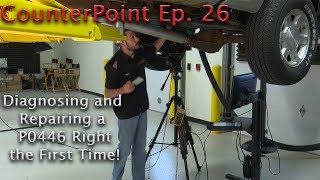
On Chevrolet and GMC trucks, P0446 is a very common code, often caused by the location of the EVAP vent components. The vent solenoid and canister are mounted under the truck, making them highly susceptible to contamination from dust, dirt, and road debris, especially if the vehicle is used on job sites or unpaved roads. This vulnerability is so well-known that GM has issued technical service bulletins (TSBs) specifically addressing P0446 caused by dust intrusion. 🎬 Watch: Expert guide on diagnosing GM vent system performance issues. Owners frequently experience symptoms like the fuel nozzle clicking off repeatedly during refueling, which is a direct result of the vent system being unable to properly release pressure from the tank. To combat the dust issue, GM released a filter kit (Part #23103351) under TSB 15-06-04-002, which relocates the air intake for the vent system to a less exposed area.
Diagnostic Flowchart

Tap your situation to follow the diagnostic path that matches what you're seeing on this vehicle.
Generation note: This range covers two Silverado 1500 generations: the end of the 2nd Gen (GMT900, 2011-2013) and the 3rd Gen (K2XX, 2014-2018). While the fundamental cause (vent solenoid failure) is common to both, the exact part number for the vent solenoid may differ. Always verify the part with your truck's VIN before purchasing. The issue is so common it affects platform mates like the GMC Sierra, Tahoe, Suburban, and Escalade.
Symptoms You May Notice

- Check Engine Light is on
- Difficulty filling the fuel tank (fuel pump nozzle clicks off repeatedly)
- Possible faint fuel odor
- Extended crank time on startup (less common, but reported by owners)
- Replacing the gas cap. A bad gas cap typically causes a small or large leak code (like P0455 or P0442), not a vent circuit code like P0446.
- Replacing the EVAP Purge Solenoid. The purge solenoid is located in the engine bay, while the P0446 code refers to the vent solenoid located at the rear of the vehicle near the fuel tank.
Most Likely Causes

- Failed EVAP Vent Solenoid/Valve 🔴 High Probability The solenoid is located under the vehicle near the spare tire, where it is exposed to road grime, dust, and moisture, causing it to stick or fail electrically. This is a well-documented issue on GM trucks. The metal solenoid body can develop cracks over time, leading to failure.
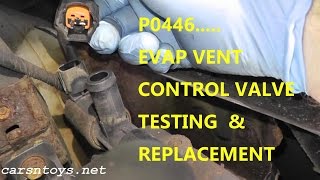
How to confirm: Use a scan tool to command the vent solenoid to open and close; you should hear an audible click. Alternatively, you can remove the solenoid and bench-test it by applying 12V (or a 9V battery) to the pins; a healthy solenoid will click open/shut. If it doesn't click, test for 12V power and ground at the connector with the ignition on. If power and ground are present but the valve doesn't operate, it has failed.
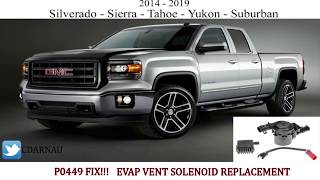
Typical fix: Replace the EVAP vent solenoid. It is often sold as an assembly with a new hose. Many owners opt for the ACDelco part over cheaper aftermarket versions which have reports of premature failure.
Est. part cost: $30-$110 - Blocked EVAP Canister or Vent Hose/Filter 🟡 Medium Probability As noted in TSB #23-NA-073, dust and debris can be drawn into the vent hose and its filter, clogging the system and the charcoal canister itself. This is especially common for vehicles operated in dusty environments.
How to confirm: Visually inspect the vent hose for blockages, kinks, or insect nests. Disconnect the hose from the canister and attempt to blow through it with compressed air. If the hose is clear, the canister itself may be clogged with dust or saturated with fuel from overfilling the gas tank. A clogged canister is a likely culprit if a new vent solenoid doesn't fix the refueling issue.
Typical fix: Clean or replace the vent hose. GM issued a TSB with a filter kit (Part #23103351) to relocate the vent intake to prevent this. In severe cases, the charcoal canister must be replaced. Some mechanics recommend proactively routing the vent hose to a higher, cleaner location like the engine compartment.
Est. part cost: $20-$50 (hose), $150-$300 (canister) - Damaged Wiring or Connector ⚪ Low Probability
How to confirm: Visually inspect the wiring harness leading to the vent solenoid for any signs of chafing, corrosion, or breaks. Check for a secure connection at the solenoid. Use a multimeter to check for continuity and voltage at the connector with the ignition on.
Typical fix: Repair the damaged section of wire or replace the connector pigtail.
Est. part cost: $15-$30
Rare But Worth Checking
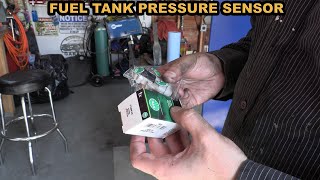
- Faulty Fuel Tank Pressure (FTP) Sensor: While less common for this specific code, a faulty FTP sensor can send incorrect pressure readings to the ECM, leading it to misinterpret the vent system's status. A key symptom is the pressure value on a scan tool being stuck at a fixed number (e.g. 4.8V), not changing when the gas cap is removed. The normal reading with the gas cap off should be around 1.4-1.6 volts. This may also trigger other EVAP codes like P0451 or P0452.
- Faulty Engine Control Module (ECM): This is extremely rare. The ECM is the last component to suspect after all other parts of the circuit have been thoroughly tested and confirmed to be working.
Diagnosis Steps
- Read the code with an OBD-II scanner and confirm P0446 is present. Note any other codes.
- Visually inspect the EVAP vent solenoid, charcoal canister, and all associated hoses under the truck, typically located near the spare tire. Look for obvious damage, cracks, or blockages.
- If you have a capable bidirectional scan tool, command the EVAP vent solenoid to close (it's normally open). Listen for a distinct click from the solenoid. If you don't have a scan tool, you can remove the solenoid and bench test it with a 9V or 12V power source.
- If no click is heard, disconnect the electrical connector from the solenoid. With the ignition on, use a multimeter to verify battery voltage (around 12V) on the power wire.
- Check the ground side of the circuit. The ECM provides the ground to activate the solenoid. A test light connected to battery positive should light up when probing the ground wire while the solenoid is commanded on by the scan tool.
- If power is present but the solenoid doesn't click when commanded or bench-tested, the solenoid itself is faulty and needs replacement.
- If the solenoid clicks but the code persists (and you have trouble fueling), disconnect the vent hose and check it and the canister inlet for blockages from dirt, dust, or spider webs. Blowing compressed air through the lines is a common diagnostic step.
- If the circuit and components test good, check the Fuel Tank Pressure (FTP) sensor readings on your scan tool. With the gas cap off, the pressure should read near zero and the voltage should be around 1.5V. If it's stuck high (e.g., 4.8V), the FTP sensor is likely faulty.
- If all else fails, the issue may be an intermittent connection or, rarely, a problem with the ECM.
Parts You'll Likely Need
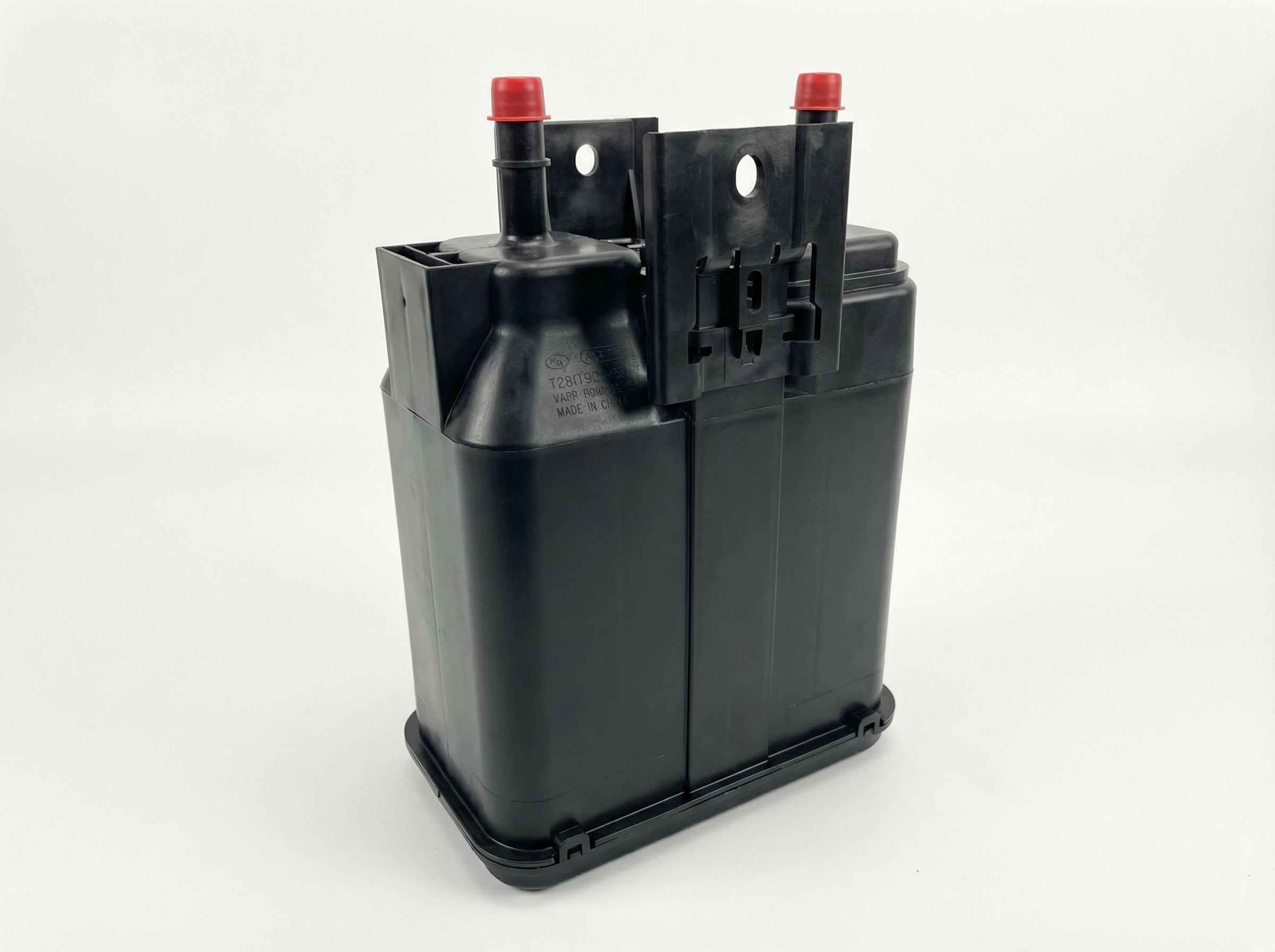
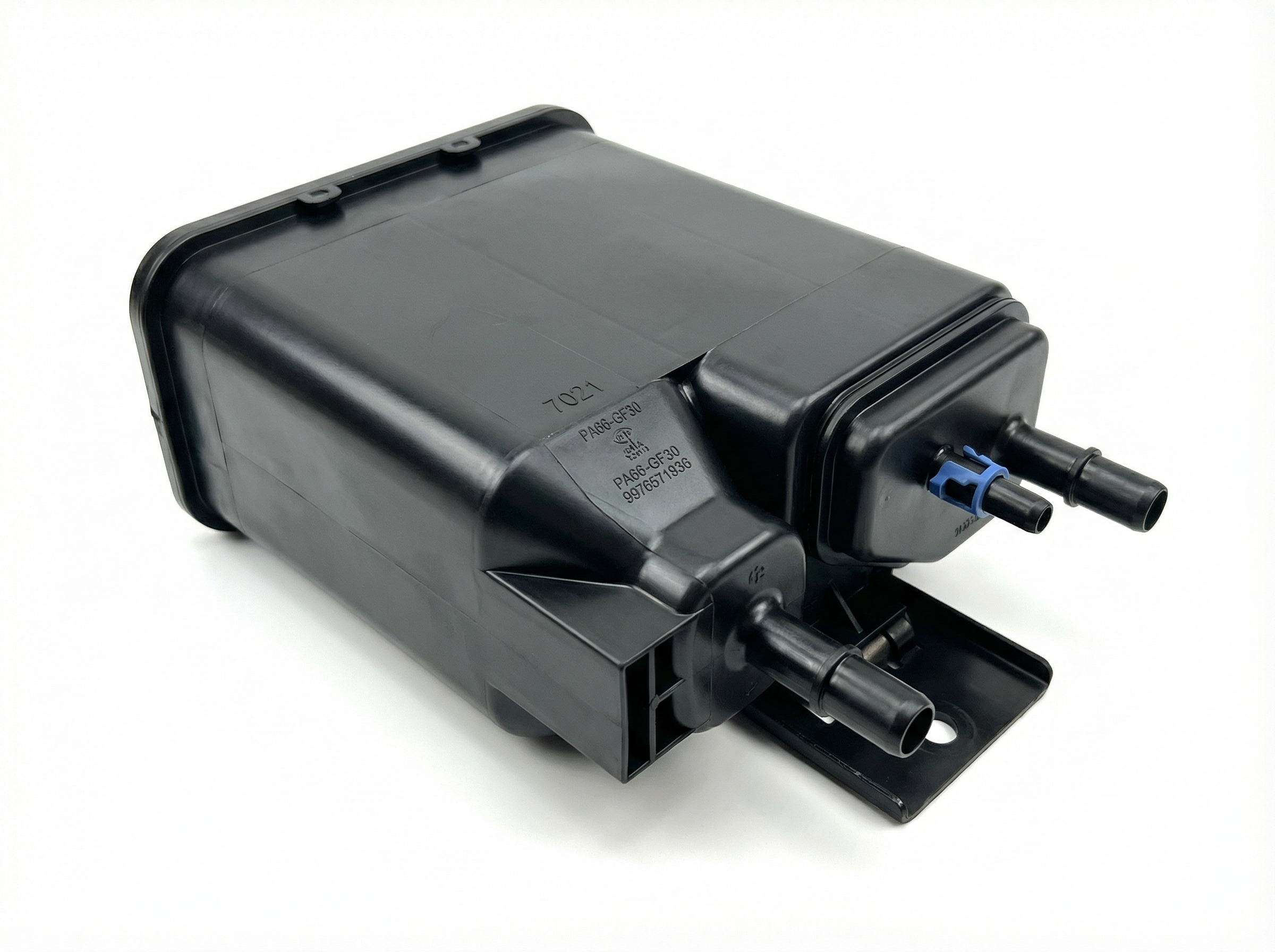
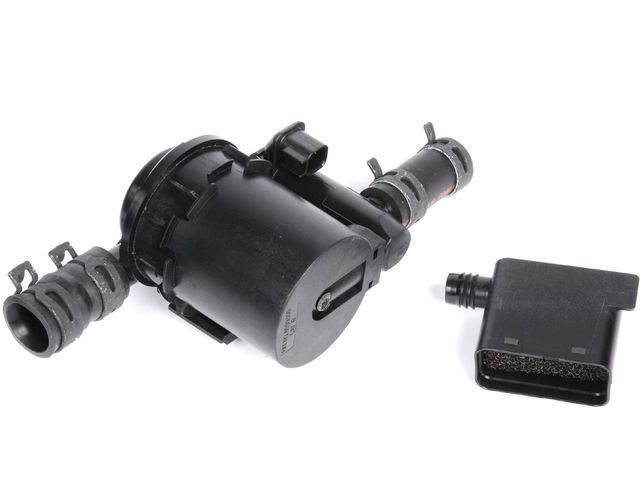
- EVAP Vapor Canister Vent Solenoid
(OEM #23481275)— This is the most common failure point for code P0446. It gets stuck or fails electrically due to its exposed location under the truck.
Trusted brands: ACDelco (OEM), Dorman (e.g., 911-082), Standard Motor Products
OEM price range: $80-$110
Aftermarket price range: $30-$70 - EVAP Canister Vent Filter Kit
(OEM #23103351)— Recommended by GM in TSB 15-06-04-002 to prevent recurring P0446 codes caused by dust intrusion. This kit relocates the vent's air filter to a cleaner location.
Trusted brands: ACDelco
OEM price range: $50-$75
Aftermarket price range: N/A - EVAP Vent Solenoid Connector
(OEM #PT2160)— The original connector can become brittle or corroded, leading to a poor electrical connection. It's often replaced along with the solenoid.
Trusted brands: ACDelco, Standard Motor Products
OEM price range: $25-$40
Aftermarket price range: $10-$20
Related Codes That Often Appear With This One
- P0449 — On many GM vehicles, P0449 is an identical code for the EVAP Vent Solenoid Control Circuit. It's very common to see either P0446 or P0449 for the same fault.
- P0455 — An EVAP System Gross Leak Detected code can appear if the vent valve is stuck open, creating a large leak that the system detects during its self-test.
- P0442 — An EVAP System Small Leak Detected code can also be triggered if the vent valve is not sealing correctly.
Technical Service Bulletins (TSBs) & Recalls
- 23-NA-073: Notes P0446 can be caused by dust intrusion into the EVAP canister and provides a procedure for retrofitting a filter.
- 15-06-04-002: Connects P0446 with the symptom of the fuel tank being hard to fill and recommends a filter relocation kit.
Platform-Specific Known Issues
- A GM Technical Service Bulletin (TSB) for older Silverados notes that driving in dusty environments can cause dust to enter the canister vent hose, leading to a restriction that sets code P0446.
- TSB #15-06-04-002 directly links P0446 with customer complaints of the fuel tank being hard to fill, confirming the connection between this code and the refueling issue. It recommends installing a filter kit (P/N 23103351) to relocate the vent filter.
- TSB #23-NA-073 for later model trucks also points to dust intrusion into the evaporative canister as a cause for P0446, indicating a persistent design vulnerability.
Mechanic-Grade Diagnostic Values
- Fuel Tank Pressure (FTP) Sensor Voltage (KOEO, gas cap off) — expected: 1.3V to 1.7V (typically ~1.5V). Failure: A reading stuck high (e.g., 4.8V) or low (e.g., 0.2V) indicates a faulty sensor or wiring issue.
- EVAP Vent Solenoid Coil Resistance — expected: 20 to 50 Ohms. Failure: A reading outside this range indicates a faulty solenoid coil.
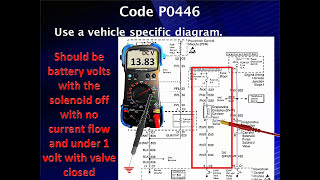
- EVAP Vent Solenoid Control Circuit Voltage (Commanded ON) — expected: Less than 1V is typical. Failure: Voltage remaining near battery voltage when commanded ON indicates an open circuit or faulty ECM driver.
- EVAP Vent Solenoid Control Circuit Voltage (Commanded OFF) — expected: Near battery voltage (12V). Failure: Low or no voltage indicates a problem with the power supply to the solenoid.
Scan Tool Commands That Help
- GM GDS2 / High-End Bidirectional Scanner: EVAP Vent Solenoid ON/OFF Command — This is the primary bidirectional test for P0446. It allows a technician to directly command the vent solenoid on and off to listen for a click and to test the circuit's electrical integrity with a test light or multimeter.
- GM GDS2 / High-End Bidirectional Scanner: EVAP System Test — This automated test will not run if a circuit fault like P0446 is present. It is used *after* the P0446 fault is repaired to verify the entire system can seal and hold pressure, ensuring there are no other underlying leak codes like P0442 or P0455.
Wiring & Ground Locations
- G110 — Left front lower side of the engine block.. This is a major engine block ground. While not exclusive to the EVAP system, poor engine grounds can cause a variety of erratic electrical issues and incorrect sensor readings. Ensuring G110 and other primary grounds are clean and tight is a crucial step when diagnosing stubborn electrical fault codes.
- Vent Solenoid Connector — At the EVAP vent solenoid, near the charcoal canister by the spare tire.. This connector is the primary test point. For diagnosis, you test for 12V power on one pin (Key On) and a switching ground from the ECM on the other pin when the solenoid is commanded on via a scan tool.
Real Owner Repair Stories
- YouTube Commenter (Chevrolet/GMC Truck) — Check engine light for P0446, unable to refuel without the pump constantly clicking off.
❌ Tried (didn't work) Replaced gas cap, Replaced charcoal canister, Replaced fuel pressure sensor, Replaced vent valve solenoid (some parts replaced twice)
✅ What actually fixed it The owner disconnected all EVAP lines going to the canister and vent valve and used a compressor/shop vac to blow air through all the lines, including the fuel filler neck. This cleared a hidden blockage (potentially a spider web or debris) that a smoke test and parts replacement did not resolve.
"I Checked Everything" — The Actual Cause
- In one documented case, a user had replaced the vent solenoid, gas cap, and even the ECM, and performed a smoke test which showed no leaks. The code P0446 persisted. The issue was only resolved after blowing out all EVAP lines with compressed air, suggesting a physical blockage or restriction that did not present as a typical leak.
OEM Part Supersession History
Multiple (e.g., 15844699, 20995472, 25962085)→23481275— GM regularly updates service parts to integrate new materials and technologies. This part has a long history of supersessions.
Heads up: Part 23481275 is the common service replacement for many 2011-2018 models, but always verify with VIN. Earlier GMT900 (pre-2014) trucks may have used different original designs.
Model Year Variations Within This Range
- 2011-2013 (GMT900) vs 2014-2018 (K2XX): While the function is identical, the physical shape and part number of the EVAP vent solenoid can differ between the two generations. For example, some 2011-2013 models may use a part like Dorman 911-099, while 2014-2018 models use a part like Dorman 911-709 or the OEM ACDelco 23481275. The connector may also be different. It is critical to verify the correct part for the specific model year.
Helpful Videos

Used OEM Parts in Stock


New Aftermarket Parts Available



The information in this article is provided for general reference and educational purposes only. Vehicle specifications, procedures, and part compatibility can vary by production date, trim level, and region. Always consult your vehicle's factory service manual and verify part numbers before purchasing or performing repairs. Safety-critical components such as airbags, seat belts, and braking systems should be installed by a qualified professional.
- Chevrolet SILVERADO 1500:
- 🎬 Helpful Videos
- 🛍️ Shop This Part
- What's Unique About the 2011-2018 Chevrolet Silverado 1500
- Diagnostic Flowchart
- Symptoms You May Notice
- Most Likely Causes
- Rare But Worth Checking
- Diagnosis Steps
- Parts You'll Likely Need
- Related Codes That Often Appear With This One
- Technical Service Bulletins (TSBs) & Recalls
- Platform-Specific Known Issues
- Mechanic-Grade Diagnostic Values
- Scan Tool Commands That Help
- Wiring & Ground Locations
- Real Owner Repair Stories
- "I Checked Everything" — The Actual Cause
- OEM Part Supersession History
- Model Year Variations Within This Range
- 🎟️ Get 5% Off