

P0446 on 2013-2017 Buick Encore: EVAP Vent Malfunction Causes and Fixes
On a 2013-2017 Buick Encore, code P0446 is most often caused by spiders nesting in the EVAP canister's fresh air inlet, blocking the vent system. This blockage prevents the fuel tank from venting properly, often causing the gas pump to click off repeatedly during refueling. The official GM fix is to replace the entire EVAP canister assembly, which can cost between $150 and $300 for the part.
- For the 2013-2017 Buick Encore and its platform mates (Chevy Sonic/Trax), code P0446 is very frequently caused by spiders building nests in the EVAP canister vent.
- A primary symptom of this specific issue is the gas pump repeatedly clicking off during refueling.
- The official GM fix is to replace the entire EVAP canister assembly, not just clean it out.
- Before ordering parts, visually inspect the canister's vent port for webs or debris.
- Do not confuse the vent valve (near the gas tank) with the purge valve (in the engine bay), which causes different codes.
- This is a DIY-friendly repair for those comfortable working under their vehicle, though access can be tight.
What's Unique About the 2013-2017 Buick ENCORE
The Buick Encore, along with its sibling vehicles the Chevy Sonic and Trax, has a well-documented and unusual vulnerability to code P0446: spiders. GM issued multiple Technical Service Bulletins (TSBs) stating that spiders are known to build nests and lay egg sacs inside the EVAP canister's fresh air inlet port. This physical blockage directly causes the vent restriction that triggers the P0446 code. 🎬 Watch: Understanding the causes and fixes for the P0446 code. While other cars can get this code from a faulty valve or wiring, the spider nest issue is a uniquely common and confirmed root cause for this specific GM platform.
Diagnostic Flowchart
Tap your situation to follow the diagnostic path that matches what you're seeing on this vehicle.
Symptoms You May Notice
- Check Engine Light is on
- Difficulty refueling; gas pump nozzle clicks off repeatedly
- A 'whoosh' sound of air escaping when opening the gas cap
- Slight decrease in fuel economy
- Difficulty starting the engine immediately after refueling
- A faint fuel odor near the vehicle
- Replacing the gas cap. While a bad gas cap can cause other EVAP codes (like P0455 or P0457 for large leaks), it is not a typical cause for a P0446 vent restriction code.
- Replacing the purge valve. The purge valve (located in the engine bay) controls vapor flow to the engine, while P0446 relates to the vent valve (located near the gas tank). A faulty purge valve typically sets other codes like P0496.
Most Likely Causes
- Spider Nest Blocking EVAP Canister Vent 🔴 High Probability The design of the EVAP canister's fresh air inlet on this platform is highly susceptible to spiders building nests, which physically blocks the vent path. This is confirmed by GM Technical Service Bulletins #17NA383 and #PIC6250B, which explicitly name spiders as the cause.
How to confirm: Visually inspect the EVAP canister's fresh air inlet port for spider webs, nests, egg sacs, or other debris. The canister is located near the fuel tank, typically on the driver's side. You may need to remove a plastic vent cap to see the port clearly.
Typical fix: Replace the entire EVAP canister assembly. GM's TSBs advise replacement rather than attempting to clean the old unit, as webbing can be deep inside the canister.
Est. part cost: $160-$290 - Faulty EVAP Vent Valve/Solenoid 🟡 Medium Probability Like any vehicle, the solenoid can fail electrically or become mechanically stuck over time due to exposure to road debris and moisture. However, on this platform, it's often condemned when the real issue is a spider blockage.
How to confirm: If no blockage is found, the vent valve itself may be faulty. A scan tool with bidirectional controls can command the valve open and closed to check for a response (an audible click). The valve can also be removed and tested by applying 12V power to its terminals to see if it actuates.
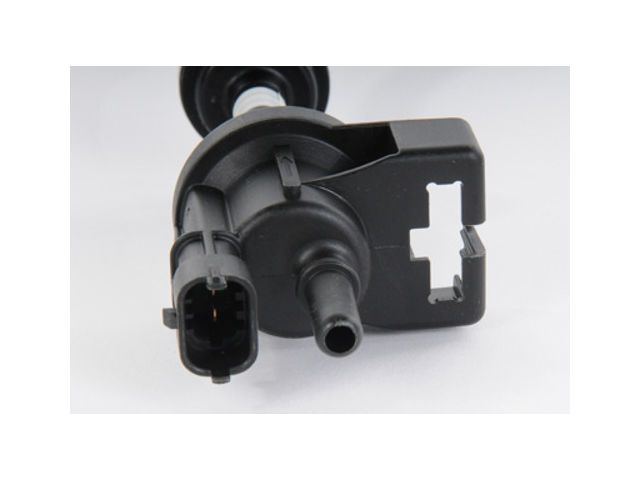
Typical fix: The vent valve is integrated with the charcoal canister on the Buick Encore, requiring the replacement of the entire canister assembly.
Est. part cost: $160-$290 - Clogged or Damaged EVAP Hoses ⚪ Low Probability
How to confirm: Inspect all rubber and plastic hoses running to and from the EVAP canister and vent solenoid for cracks, kinks, or blockages. A smoke machine can be used to pressurize the system and quickly reveal any hidden leaks or restrictions.
Typical fix: Replace the damaged section of hose.
Est. part cost: $10-$40 - Damaged Wiring to Vent Solenoid ⚪ Low Probability
How to confirm: Inspect the wiring harness and connector at the vent solenoid for corrosion, breaks, or shorts. Use a multimeter to check for 12V power and ground at the connector with the key on.
Typical fix: Repair the damaged section of wiring or replace the connector pigtail.
Est. part cost: $15-$50
Rare But Worth Checking
- Cracked Fuel Filler Neck:
Diagnosis Steps
- Scan the vehicle for any other accompanying codes. Note if P0455 is also present, as this strengthens the spider nest diagnosis per TSB 17-NA-383.
- Gain access to the underside of the vehicle near the fuel tank to locate the EVAP canister. It is typically on the driver's side.
- Following GM's TSB, carefully inspect the fresh air inlet port on the EVAP canister for any signs of spider webs, egg sacs, or other blockages. You may need to remove a small plastic cover to see the port.
- If a blockage is found, the recommended repair is to replace the entire EVAP canister assembly.
- If no blockage is visible, inspect the wiring and connector going to the vent solenoid for any damage or corrosion. Check for 12V power at the connector with the ignition on.
- If power is present, use a scan tool with bidirectional controls to command the vent solenoid to open and close. Listen for an audible click from the valve. If there is no click, the solenoid has likely failed.
- If you do not have a scan tool, you can remove the canister assembly and apply 12V and ground directly to the valve's pins to test for actuation.
- Inspect all associated EVAP hoses for cracks, kinks, or blockages.
- For a definitive diagnosis of the entire system, perform a smoke test. With the vent valve commanded closed, a smoke machine can fill the system and will reveal any cracks in hoses, the canister, or the fuel filler neck.
Parts You'll Likely Need
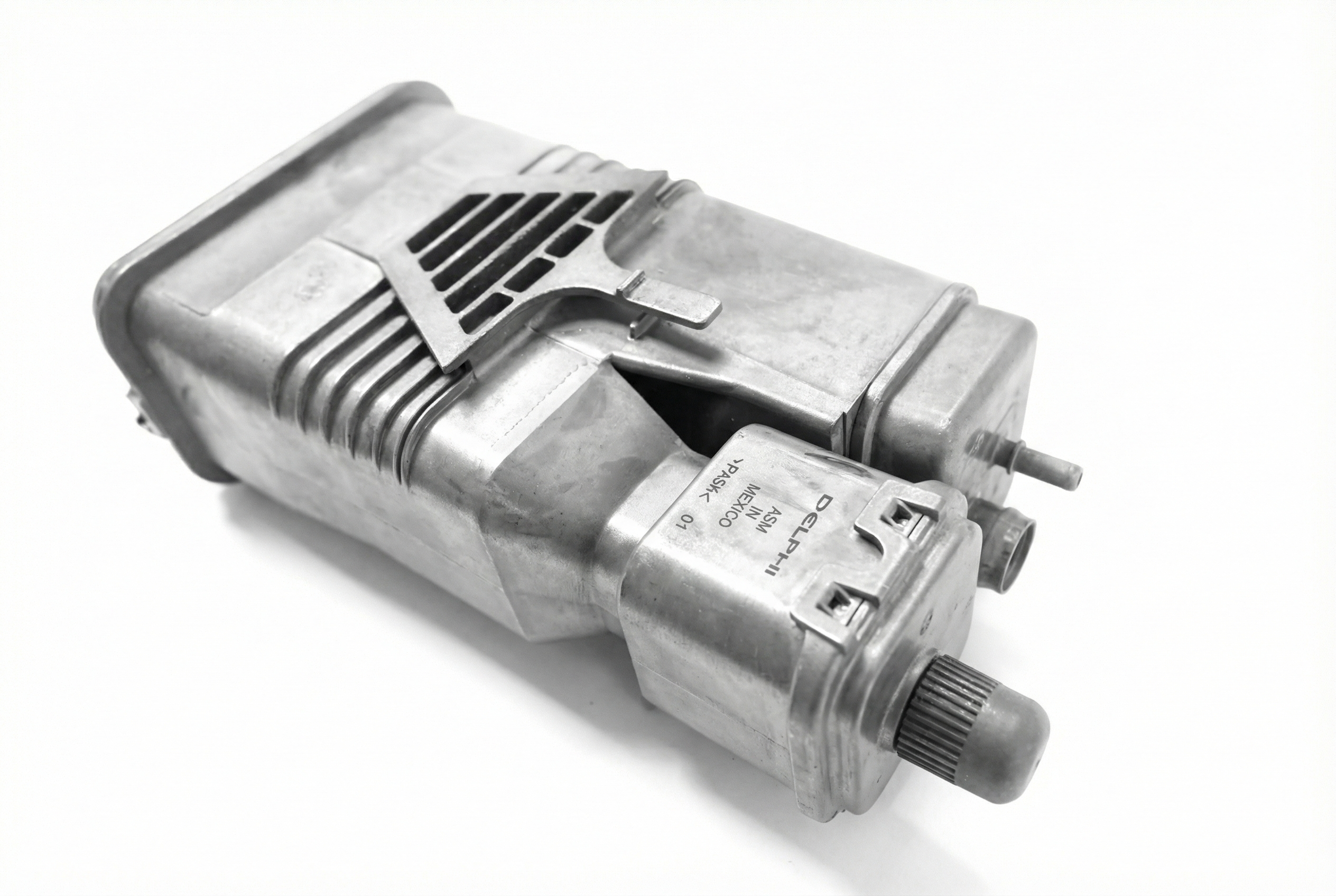
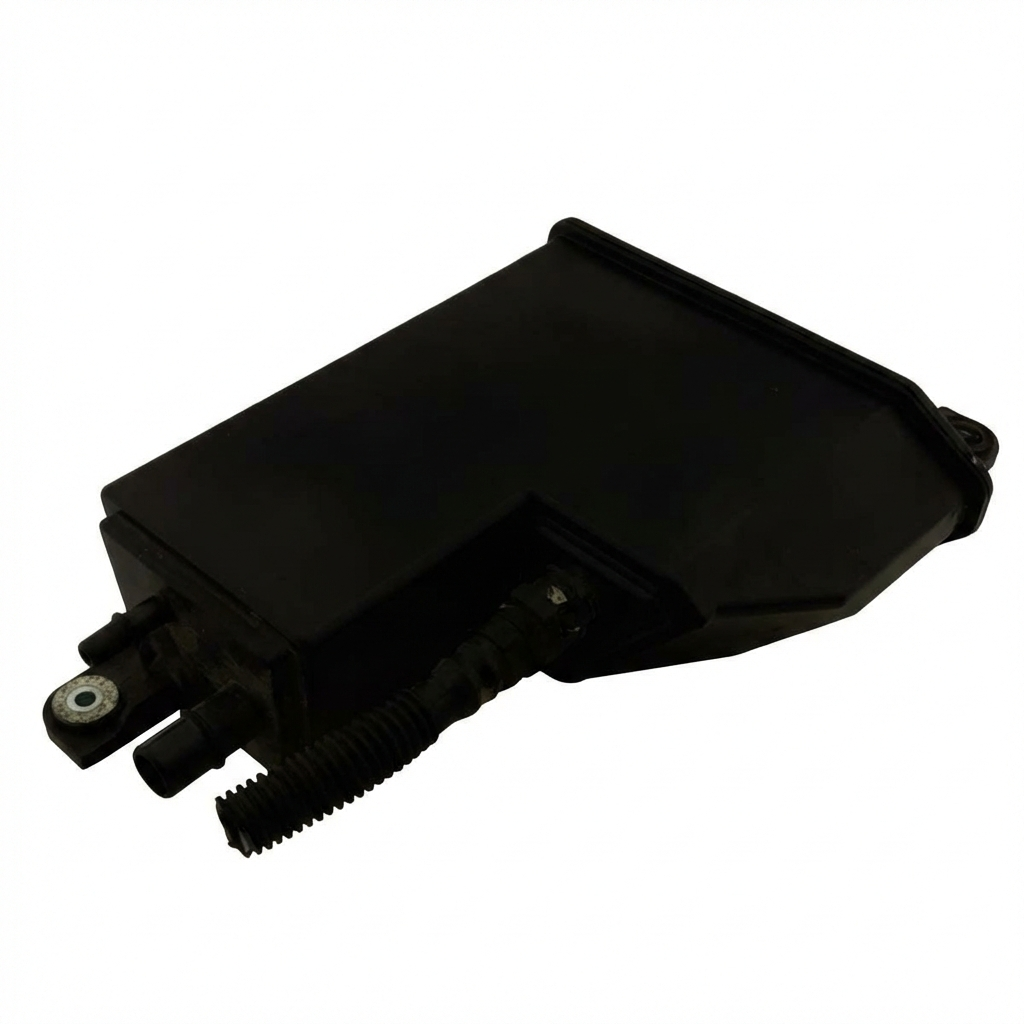
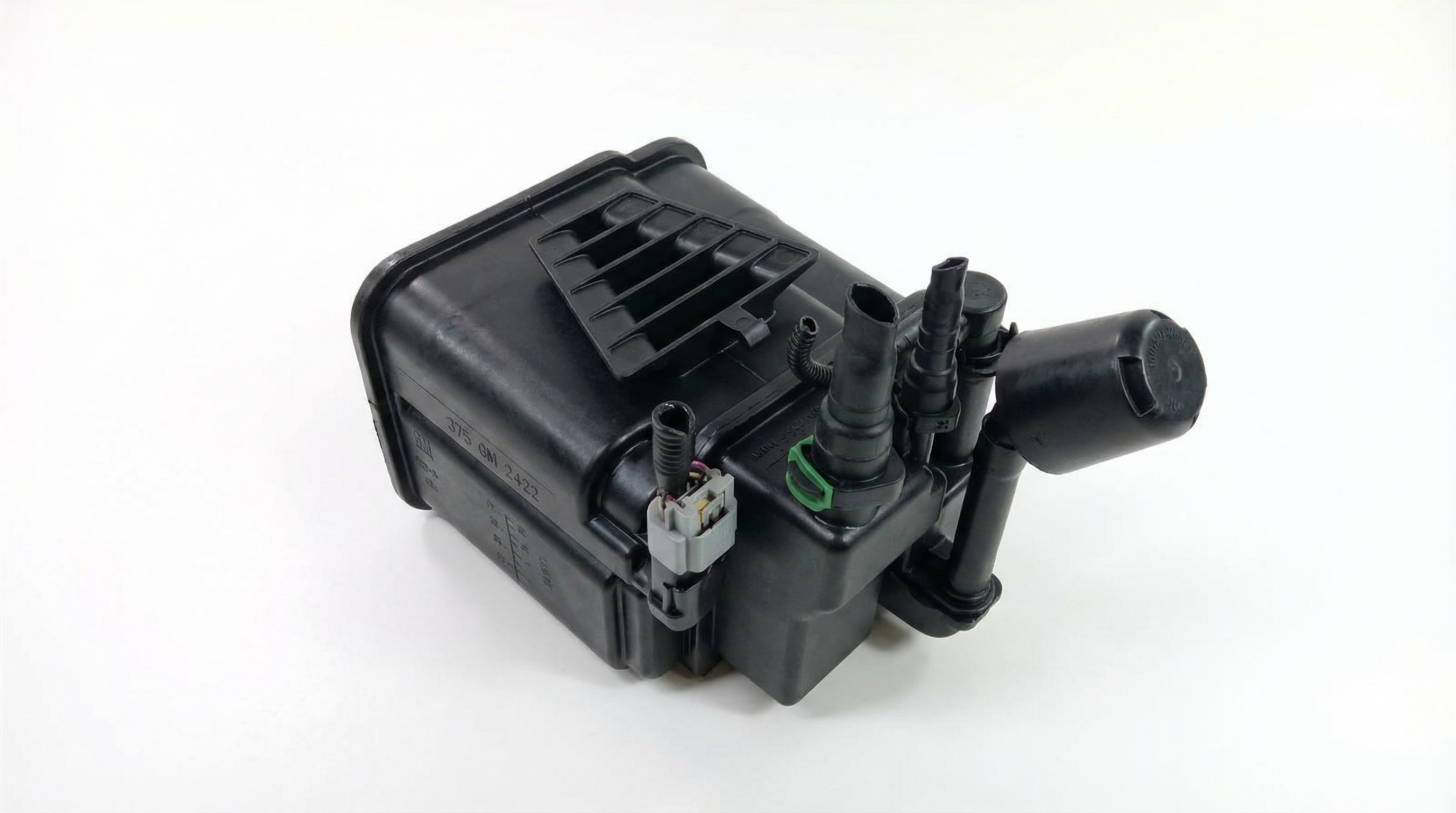
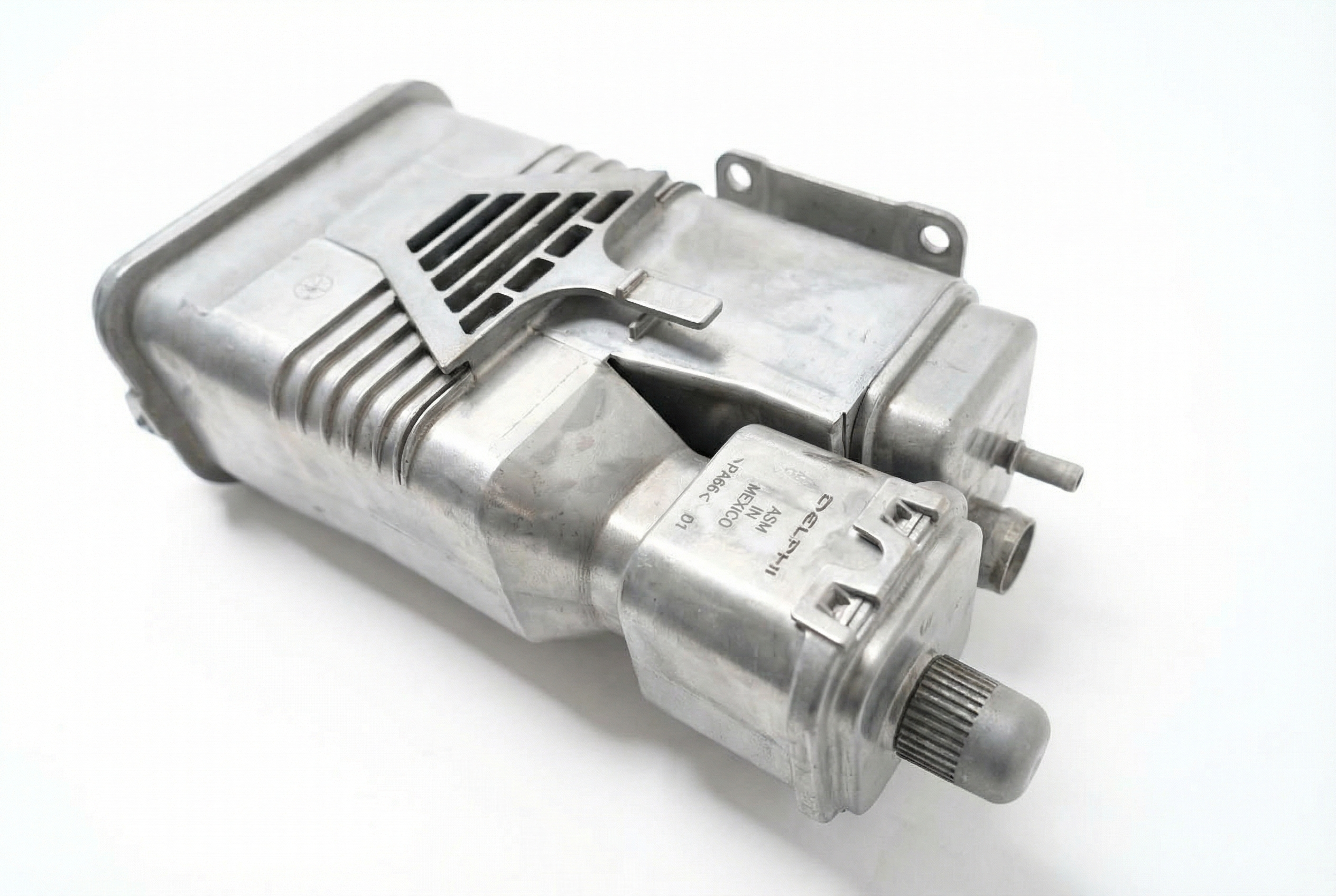
- EVAP Vapor Canister
(OEM #95128163 (superseded by 42933886))— This is the most common fix for a P0446 on this vehicle, as it directly addresses the spider nest issue described in GM TSBs. The vent solenoid is integrated into this assembly.
Trusted brands: ACDelco, GM Genuine
OEM price range: $250-$290
Aftermarket price range: $160-$220
Related Codes That Often Appear With This One
- P0455 — This code indicates a large EVAP leak. GM TSB #17-NA-383 notes that a severe blockage from a spider nest can sometimes be interpreted by the system as a large leak (as the system can't pull a vacuum during its self-test), causing both codes to appear.
Technical Service Bulletins (TSBs) & Recalls
- PIC6250B: Check engine light- P0446- Check EVAP canister for restriction.
- 17-NA-383: Malfunction Indicator Lamp (MIL) Illuminated with DTC P0446 or P0455 Set due to spiders laying a nest within the canister.
Platform-Specific Known Issues
- GM issued Technical Service Bulletin #PIC6250B for 2013-2017 Buick Encore models (among others) specifically for code P0446 caused by a 'restriction in fresh air inlet port caused by spiders.' The bulletin advises technicians to inspect the EVAP canister for spider nesting and replace the canister if found.
- A similar, updated TSB, #17-NA-383, also points to spiders laying nests within the canister as the cause for P0446 or P0455, with the prescribed fix being the replacement of the EVAP canister. This bulletin supersedes PIC6250B.
Mechanic-Grade Diagnostic Values
- Fuel Tank Pressure (FTP) Sensor Voltage — expected: 1.3 - 1.7 Volts with the gas cap removed (sensor at atmospheric pressure).. Failure: A reading stuck at a low voltage (e.g., 0.2V) or a high voltage indicates a faulty sensor or wiring issue.
- P0446 Code Setting Threshold — expected: Fuel tank pressure must remain above -10 inches of H2O during the EVAP system test.. Failure: If the ECU detects a fuel tank pressure less than (more vacuum) -10 inches of H2O for 30 seconds during a test cycle, it will set code P0446.
Scan Tool Commands That Help
- GDS2 / Tech2 (or equivalent professional scan tool): EVAP Vent Solenoid open/close test — This bidirectional command is used to manually actuate the vent solenoid. A technician can command the valve closed and listen for an audible 'click' to confirm the solenoid is mechanically functioning, which helps isolate a physical blockage or an electrical fault.
Wiring & Ground Locations
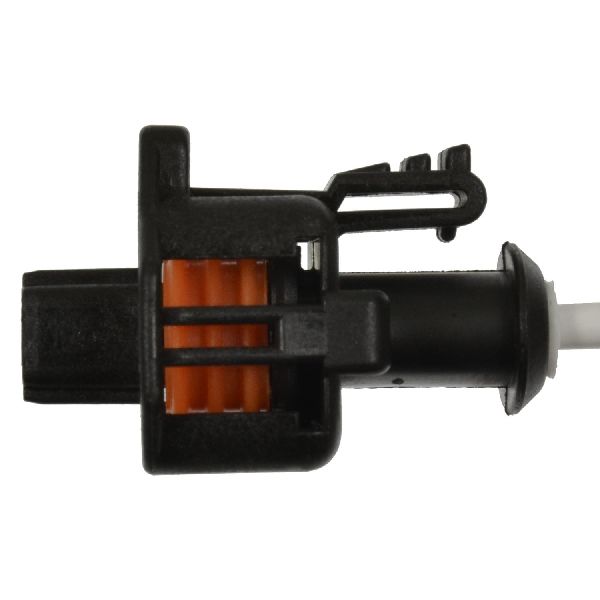
- EVAP Vent Solenoid Connector — On the EVAP canister assembly, near the fuel tank.. This is a 2-terminal female connector that provides power and ground to the vent solenoid. One pin should have 12V with the key on, and the other is the ground controlled by the ECU. Checking for power here is a primary step in diagnosing a circuit fault.
- Fuel Tank Pressure (FTP) Sensor Connector — Typically mounted on top of the fuel tank or on the fuel pump module.. This 3-wire connector provides the ECU with the pressure reading that determines if the vent system is working. On similar GM models, the wires are for 5V reference (Gray), ground (Tan), and the signal return to the ECU (Dark Green). Testing these wires can rule out a faulty sensor.
Real Owner Repair Stories
- GM Forum user post (2000 Pontiac Bonneville SSEI (similar GM EVAP system logic)) — Persistent P0446 code.
❌ Tried (didn't work) Replaced gas cap, Replaced EVAP vent valve, Inspected canister and hoses, Replaced purge valve
✅ What actually fixed it Replacing the Fuel Tank Pressure (FTP) sensor resolved the code.
"I Checked Everything" — The Actual Cause
- In some cases, the EVAP system can pass a smoke test (indicating no physical leaks), yet the P0446 code persists. A documented cause for this scenario is a faulty Fuel Tank Pressure (FTP) sensor. The sensor provides incorrect pressure data to the computer, causing the computer to believe there is a vent restriction even when all hoses and valves are functioning correctly.
When the Usual Fixes Don't Work
- While the spider nest blockage is the most common cause for P0446 on this platform, it is not the only cause. In instances where replacing the EVAP canister does not resolve the code, or where no blockage is found, the root cause may be electrical. A documented, though less common, fix involves replacing the Fuel Tank Pressure (FTP) sensor. This sensor can send erroneous data to the ECU, mimicking the symptoms of a vent restriction. Technicians should verify FTP sensor readings with a scan tool before concluding a costly repair if the primary evidence of a blockage is missing.
OEM Part Supersession History
95128163→42933886— While not officially stated by GM, part supersessions often occur to address known failure points. Given the multiple TSBs regarding spider nests causing P0446, it is highly probable that the updated part number includes a design modification, such as a finer mesh screen or a redesigned vent path, to mitigate insect intrusion.
Model Year Variations Within This Range
- 2013-2017: The primary cause (spider nests) and the corresponding fix (replacing the EVAP canister assembly, P/N 42933886) are consistent across the entire 2013-2017 model year range for the Buick Encore. No significant variations in the EVAP system related to this code have been noted within this generation.
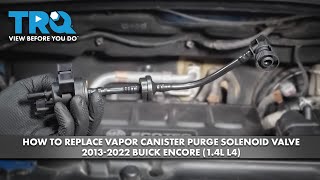
Helpful Videos

Used OEM Parts in Stock
New Aftermarket Parts Available


The information in this article is provided for general reference and educational purposes only. Vehicle specifications, procedures, and part compatibility can vary by production date, trim level, and region. Always consult your vehicle's factory service manual and verify part numbers before purchasing or performing repairs. Safety-critical components such as airbags, seat belts, and braking systems should be installed by a qualified professional.
- Buick ENCORE:
- 🎬 Helpful Videos
- 🛍️ Shop This Part
- What's Unique About the 2013-2017 Buick ENCORE
- Diagnostic Flowchart
- Symptoms You May Notice
- Most Likely Causes
- Rare But Worth Checking
- Diagnosis Steps
- Parts You'll Likely Need
- Related Codes That Often Appear With This One
- Technical Service Bulletins (TSBs) & Recalls
- Platform-Specific Known Issues
- Mechanic-Grade Diagnostic Values
- Scan Tool Commands That Help
- Wiring & Ground Locations
- Real Owner Repair Stories
- "I Checked Everything" — The Actual Cause
- When the Usual Fixes Don't Work
- OEM Part Supersession History
- Model Year Variations Within This Range
- 🎟️ Get 5% Off