

P0443 on 2011-2016 Hyundai Elantra: EVAP Purge Valve Circuit Causes and Fixes
On a 2011-2016 Elantra, code P0443 almost always points to a bad EVAP purge control valve. It's an inexpensive part and a very easy DIY fix, typically costing $30-$60 for an aftermarket part and taking less than 30 minutes to replace. The OEM part number is 28910-2E000.
- P0443 is an electrical circuit code, not a gas cap or leak code.
- The most likely part you'll need to buy is the EVAP Purge Control Valve (OEM part # 28910-2E000).
- This is a highly DIY-friendly repair that can be done in under 30 minutes with basic tools (a 10mm socket/wrench).
- Always check the wiring and connector for damage before buying a new part.
- Clearing the code with a scanner after the repair is necessary to turn off the Check Engine Light.
What's Unique About the 2011-2016 Hyundai Elantra
For the fifth-generation (MD/UD) Elantra, the P0443 code is a very common and straightforward issue. Unlike other vehicles where this code might lead to complex wiring diagnostics, on this platform it overwhelmingly points to the purge control valve solenoid failing internally. There are no widespread TSBs or recalls for this specific problem, reinforcing that it's a simple component failure rather than a systemic design flaw. This makes it a high-confidence, low-cost DIY repair for most owners, often completed in under 20 minutes.
Symptoms You May Notice
- Check Engine Light is on
- Slightly rough idle, especially if the valve is stuck open
- Difficulty starting the engine immediately after refueling
- Slight decrease in fuel economy
- A faint fuel odor
- A 'whooshing' sound from the gas tank when removing the cap (if the valve is stuck closed)
- Replacing the gas cap. A bad gas cap will cause an EVAP *leak* code (like P0455 or P0456), not a *circuit* code like P0443.
- Replacing the charcoal canister. While part of the EVAP system, the canister is rarely the cause of a circuit-specific code like P0443.
Most Likely Causes
- Faulty EVAP Purge Control Valve 🔴 High Probability The internal solenoid coil windings can fail over time, creating an open or short in the circuit that the PCM detects. This is the most common failure for this code on this vehicle.
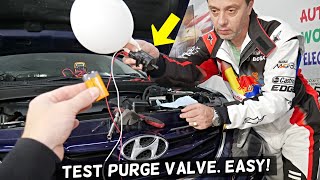
How to confirm: Disconnect the electrical connector and measure the resistance across the two pins 🎬 Watch: How to test the solenoid with a multimeter on the valve with a multimeter. Compare the reading to the manufacturer's specification (typically 15-30 ohms). An infinite reading (open) or zero reading (short) confirms a bad valve.
Typical fix: Replace the purge control valve. On the 2011-2015 models, it slides onto a metal bracket on the side 🎬 See this 1.8L Elantra purge valve replacement walkthrough of the intake manifold.
Est. part cost: $30-$90 - Damaged Wiring or Connector ⚪ Low Probability
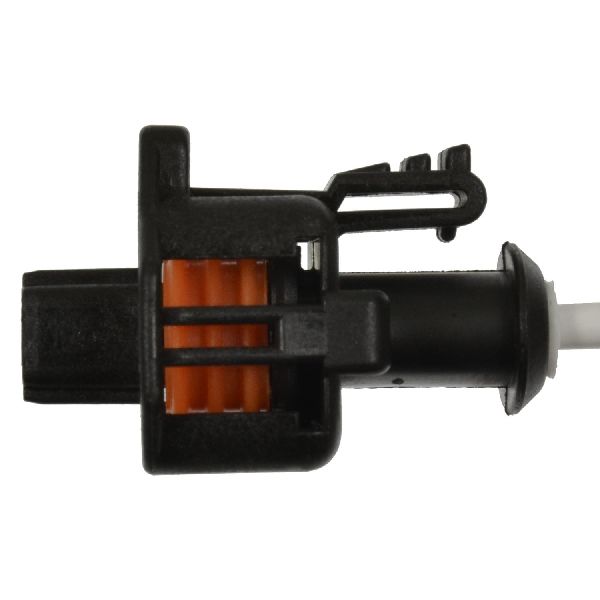
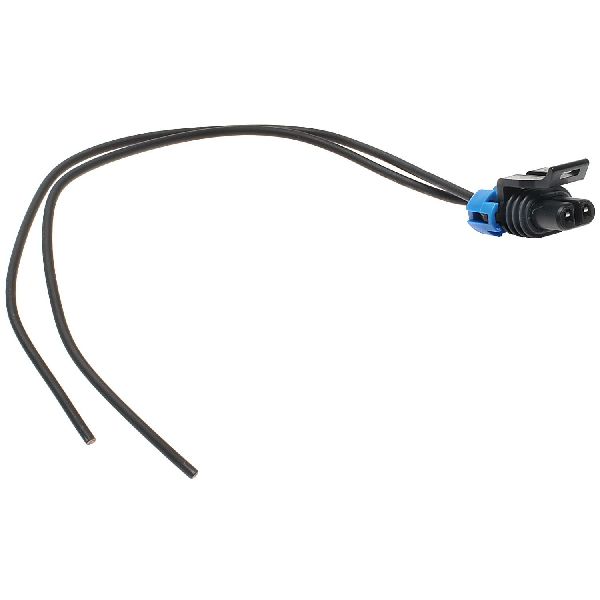
How to confirm: Visually inspect the wiring harness and connector leading to the purge valve for any breaks, corrosion, or loose pins. Use a multimeter or test light to check for 12V power on one wire and a pulsing ground signal from the PCM on the other with the engine running.
Typical fix: Repair the damaged section of wiring or clean/replace the electrical connector.
Est. part cost: $5-$25 - Blown Fuse ⚪ Low Probability
How to confirm: Check the fuse box diagram for the fuse related to the emissions system or ECU. Visually inspect the fuse and test for continuity with a test light.
Typical fix: Replace the blown fuse and investigate the cause of the overcurrent, which could be a shorted purge valve.
Est. part cost: $1-$5
Rare But Worth Checking
- Faulty Powertrain Control Module (PCM): This is extremely rare. The PCM should only be considered after all other possibilities, including the valve and wiring, have been thoroughly tested and ruled out.
Diagnosis Steps
- Confirm the P0443 code is present using an OBD-II scanner.
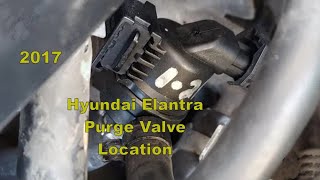
- Locate the EVAP purge control valve. On the 2011-2016 Elantra, it is mounted on the side of the intake manifold, making it easily accessible after removing the plastic engine cover.
- Inspect the electrical connector and wiring harness attached to the valve. Look for any signs of cracking, corrosion, or loose pins.
- Disconnect the connector. With the ignition on, use a multimeter to verify that one pin has 12V power. The other pin is the ground side, controlled by the PCM.
- With the valve disconnected, measure the resistance between the two electrical terminals on the valve itself. A healthy valve should read between 15 and 35 ohms. A reading of infinity (OL) indicates an open circuit, and a reading near zero indicates a short circuit. Either means the valve is bad.
- If the wiring and valve resistance check out, you can perform a functional test. Apply 12V directly to the valve's pins; you should hear a distinct click as it opens. You can also try to blow through it; it should be closed by default and open only when voltage is applied.
- If the valve clicks and holds vacuum correctly, and the wiring is good, the problem may be intermittent or, in very rare cases, with the PCM driver circuit.
Parts You'll Likely Need
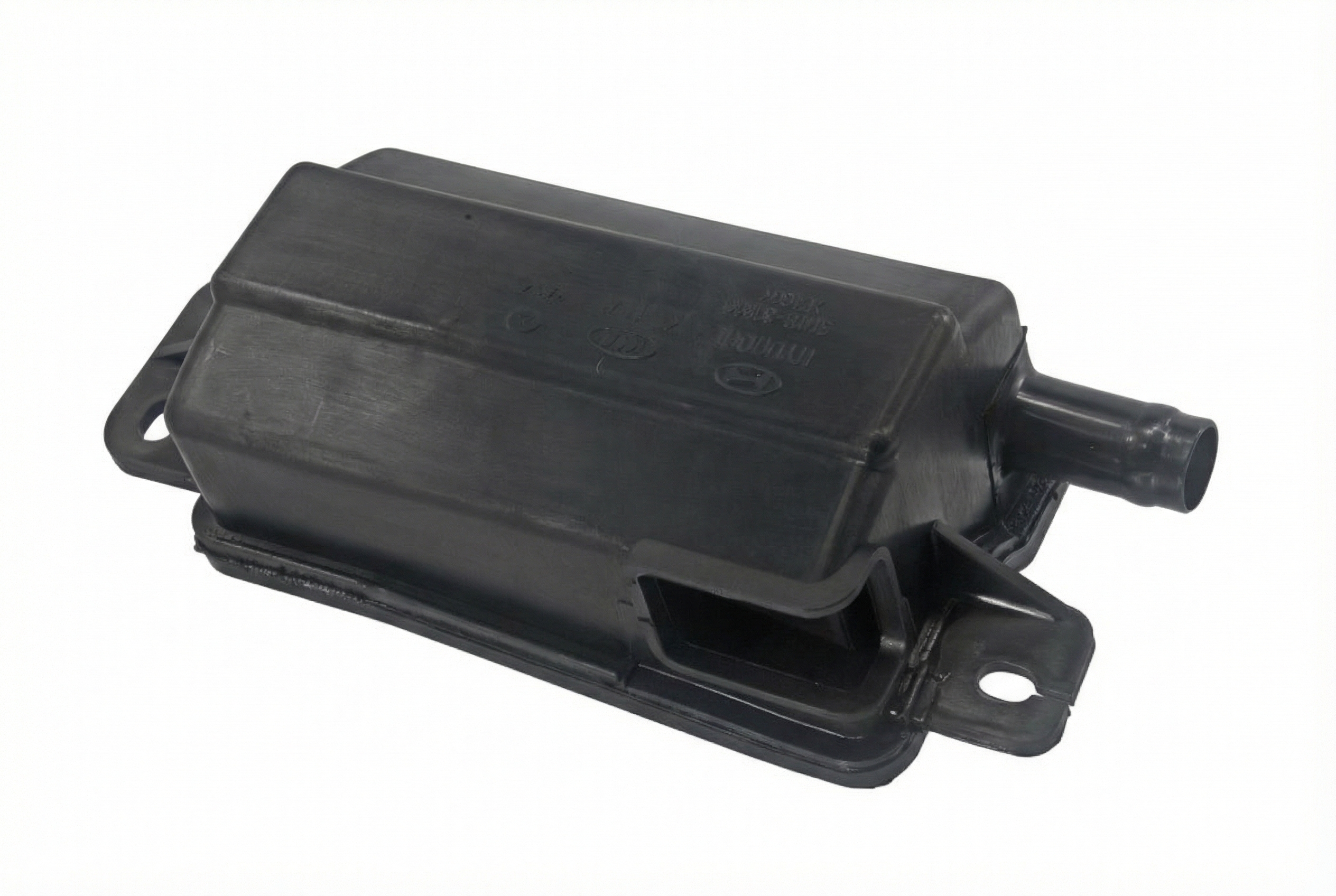
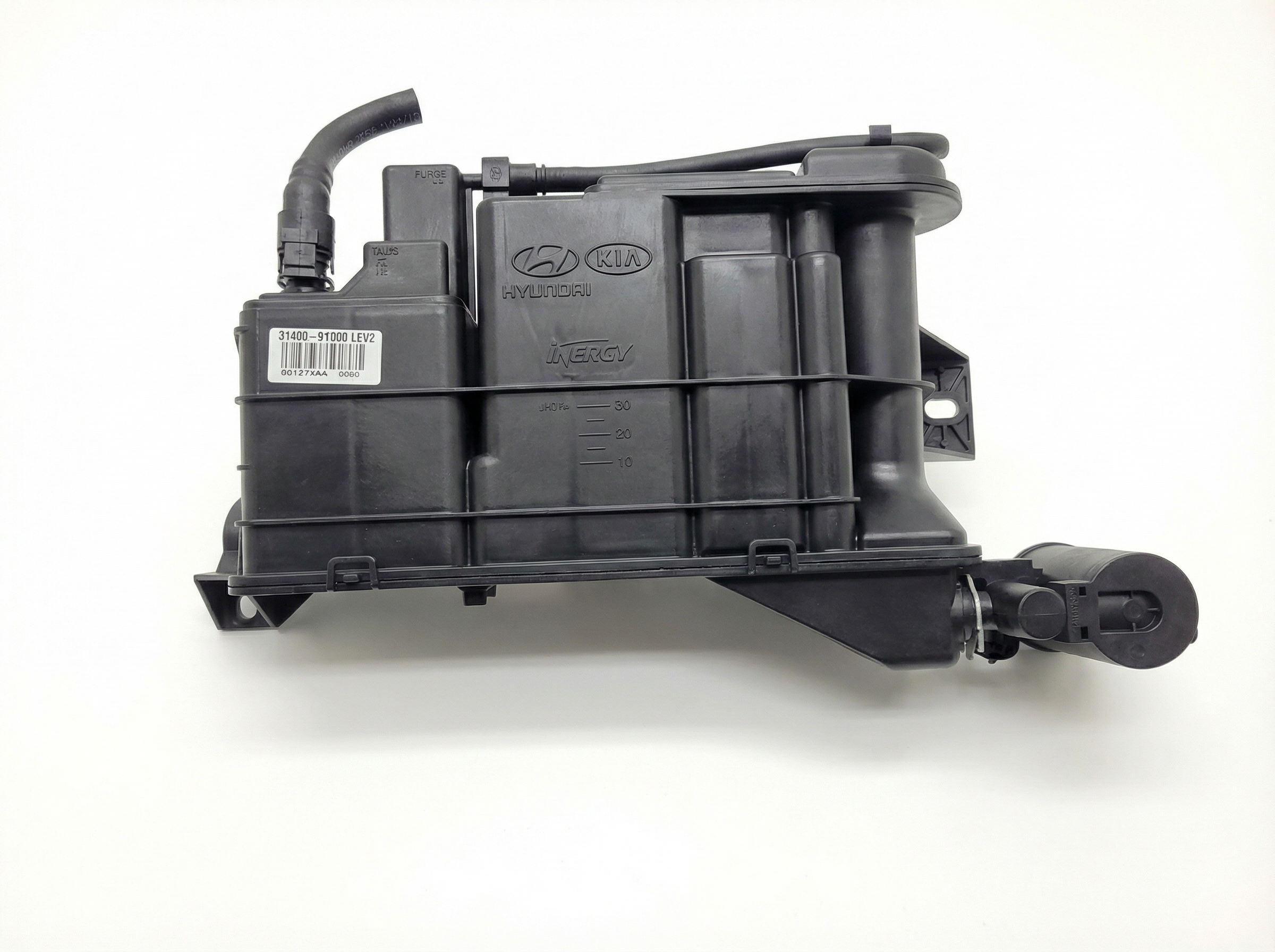
- Vapor Canister Purge Control Valve
(OEM #28910-2E000)— This is the most common failure point for code P0443. The internal solenoid fails electrically, causing the circuit malfunction.
Trusted brands: Hyundai (OEM), Dorman, Standard Motor Products (SMP)
OEM price range: $60-$90
Aftermarket price range: $30-$60
Related Codes That Often Appear With This One
- P0444 — This is a more specific version of P0443, indicating the purge valve circuit is open.
- P0445 — This is a more specific version of P0443, indicating the purge valve circuit is shorted.
Platform-Specific Known Issues
- Video Guide for Replacement: Multiple YouTube videos demonstrate the replacement process on a 2011-2016 Elantra, confirming its simplicity. The job involves 🎬 Watch: A quick guide to fixing the P0443 circuit code removing the engine cover, disconnecting one electrical connector, two hoses, and sliding the valve off a metal bracket.
Mechanic-Grade Diagnostic Values
- Purge Control Valve Solenoid Resistance — expected: 15-35 Ohms. Failure: A reading of infinity (OL) indicates an open coil, while a reading near zero ohms indicates a shorted coil. One user reported a new OEM valve measured exactly 29.1 Ω.
- Purge Valve Connector - Power Supply Pin Voltage — expected: Battery Voltage (~11-14 V) with Key On, Engine Off. Failure: No voltage or significantly low voltage suggests a blown fuse or a break in the power supply wire from the fuse box.
- Purge Valve Connector - Control Pin Voltage (Back-probed) — expected: Near battery voltage when commanded OFF; near 0V when commanded ON by a scan tool.. Failure: Voltage does not change when the valve is commanded by a scan tool, indicating a wiring issue between the valve and the PCM, or a faulty PCM driver.
Scan Tool Commands That Help
- Hyundai GDS (or equivalent bidirectional scanner): EVAP Purge Test / Actuation Test — This function allows the technician to manually command the purge valve solenoid to open and close. It is used to verify if the valve clicks audibly and if the PCM driver and control circuit wiring are functioning correctly by observing voltage changes at the connector.
Wiring & Ground Locations
- Purge Valve Connector — On the EVAP purge control valve, located on the side of the intake manifold on the 1.8L Nu engine.. This is the primary connection to test for power, ground signal, and resistance. One pin is for 12V power supply, the other is the control (ground) wire from the PCM.
- Engine Bay Fuse Box — Located in the engine compartment, typically on the driver's side.. Contains the fuse that supplies power to the EVAP purge valve circuit. A blown fuse here will cause a P0443 and must be investigated, as it points to a short circuit (often in the valve itself).
Model Year Variations Within This Range
- 2011-2015: The purge valve on earlier models of this generation slides onto a flat metal bracket on the side of the intake manifold, rather than being secured with a bolt.
Diagnostic Flowchart
Other Known Issues on This Vehicle
Issues unrelated to this code that are worth knowing about as an owner of this generation:
- 1.8L Nu Engine Piston Slap / Ticking Noise 🔴 High — Widespread issue, particularly noticeable on cold starts. Can lead to excessive oil consumption and eventual engine failure. A class-action lawsuit was settled, extending the powertrain warranty for this issue in certain states. (Ref: Canadian TSB 14-20-002 acknowledged the issue was due to piston skirt and connecting rod defects. US owners have had more difficulty getting coverage outside of the lawsuit settlement.)
- MDPS Steering Coupler Failure 🟠 Medium — Very common. The flexible rubber coupler in the Motor Driven Power Steering (MDPS) disintegrates over time, causing a clicking or 'thud' noise in the steering column when turning. (Ref: Hyundai extended the warranty for this part to 10 years/100,000 miles under TSB 17-ST-002. It is not a formal recall, but a well-documented service campaign.)
- Premature Brake Wear 🟡 Low — Often reported by owners. Brake pads and rotors may wear out faster than expected, sometimes in under 30,000 miles, attributed to the choice of friction material from the factory.
- Suspension Noises (Sway Bar Links) 🟡 Low — A common source of clunking or knocking sounds from the front suspension when going over bumps are worn sway bar end links or bushings. This is a relatively inexpensive repair.
Used vs. New Parts: Buying Guide for This Vehicle
When a used part is the smart pick: Given the low cost of new aftermarket parts (around $25-$40) and the high failure rate of this specific component due to internal electrical failure, buying a used purge valve from a junkyard is generally not recommended. The risk of the used part failing soon after installation is high.
Donor-vehicle mileage cap: roughly under 30000 miles for the part to have meaningful remaining life.
What to inspect on the donor part:
- If considering used, test the part's resistance with a multimeter before purchase. It must be within the 15-35 Ohm range.
- Visually inspect the plastic housing for cracks or heat damage.
- Ensure the electrical connector pins are clean and not corroded.
Aftermarket brands forum-validated for this vehicle:
- Dorman
- Standard Motor Products (SMP)
- Bosch
Brands owners have reported issues with on this vehicle:
- Unbranded, no-name parts from online marketplaces may have inconsistent quality control. One user measured resistance on several junkyard and cheap valves and found wild variations from 12Ω to 47Ω, while a new OEM part was precisely 29.1Ω.
Real Owner Stories
Aggregated from forums and TSBs cited above. Mileages and costs reflect what owners reported in those sources.
2012 Hyundai Elantra
Symptoms: Check engine light came on with code P0443.
What fixed it: Replacing the purge valve (part 28910-2E000).
Cost: $45-$45
Source hint: hyundai-forums.com thread titled 'P0443 on 2012 Elantra'
2013 Hyundai Elantra
Symptoms: Check engine light (P0443) present; technician noted these are almost always the valve.
What fixed it: Replacement of the purge valve.
Source hint: reddit.com (r/mechanicadvice) thread about a 2013 Elantra with P0443
5th Generation (MD) Hyundai Elantra
Symptoms: Check engine light came on, scanned it and got P0443.
What fixed it: Ordered the purge valve online and took 15 minutes to swap.
Source hint: elantraclub.com discussions in the 5th generation (MD) section
Related OBD-II Codes
Frequently Asked Questions
Where is the purge control valve located on my 2011-2016 Hyundai Elantra?
What is the specific Hyundai part number I need to fix code P0443?
Can I test the purge valve myself with a multimeter?
Why does my Elantra have trouble starting specifically after I fill up the gas tank?
Is there a TSB for the clicking noise in my steering column while I'm dealing with this P0443 code?
Are there any aftermarket brands recommended for the Elantra purge valve?
Helpful Videos

Used OEM Parts in Stock

New Aftermarket Parts Available


The information in this article is provided for general reference and educational purposes only. Vehicle specifications, procedures, and part compatibility can vary by production date, trim level, and region. Always consult your vehicle's factory service manual and verify part numbers before purchasing or performing repairs. Safety-critical components such as airbags, seat belts, and braking systems should be installed by a qualified professional.
- Hyundai Elantra:
- 🎬 Helpful Videos
- 🛍️ Shop This Part
- What's Unique About the 2011-2016 Hyundai Elantra
- Symptoms You May Notice
- Most Likely Causes
- Rare But Worth Checking
- Diagnosis Steps
- Parts You'll Likely Need
- Related Codes That Often Appear With This One
- Platform-Specific Known Issues
- Mechanic-Grade Diagnostic Values
- Scan Tool Commands That Help
- Wiring & Ground Locations
- Model Year Variations Within This Range
- Diagnostic Flowchart
- Other Known Issues on This Vehicle
- Used vs. New Parts: Buying Guide for This Vehicle
- Real Owner Stories
- 2012 Hyundai Elantra
- 2013 Hyundai Elantra
- 5th Generation (MD) Hyundai Elantra
- Related OBD-II Codes
- Frequently Asked Questions
- 🎟️ Get 5% Off