

P0443 on 2013-2020 Ford Fusion Hybrid: EVAP Purge Valve Circuit Fixes
For a 2013-2020 Ford Fusion Hybrid, code P0443 almost always points to a failed EVAP Purge Valve. It's a simple and common repair, with the part costing between $35 and $80. This issue is also common on its platform mates, the Lincoln MKZ Hybrid and Ford C-Max.
- P0443 is an electrical circuit code, not a system leak code.
- The most likely cause on a 2013-2020 Fusion Hybrid is a faulty EVAP purge valve.
- This is a simple, low-cost repair that a DIYer can typically complete in under 30 minutes with basic tools.
- Always verify the electrical circuit (power, ground, wiring) before condemning a part, though in this case, the valve itself is the most probable failure.
- Do not waste money on a new gas cap for this specific code.
What's Unique About the 2013-2020 Ford Fusion Hybrid

The 2.0L Atkinson Cycle engine in the Fusion Hybrid uses a common and well-documented EVAP system. The P0443 code is a frequent issue as the vehicle ages, and the failure pattern is consistent with other Ford models from this era, including the Lincoln MKZ and Ford C-Max which share the same powertrain. The purge valve is the most common point of failure, a trend seen across many Ford vehicles using similar components. While the hybrid powertrain is complex, this particular fault lies within the conventional emissions control system of the gasoline engine.
Symptoms You May Notice
- Check Engine Light is on.
- Slightly rough idle, especially if the valve is stuck open.
- Minor decrease in fuel economy.
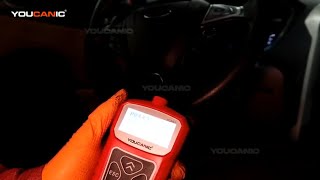
- Difficulty starting immediately after refueling. 🎬 Watch: Diagnosing P0443 and P0456 codes on a Ford Fusion. The engine may crank for an extended period before starting, or stall shortly after.
- A faint fuel odor in some cases.
- In rare cases, a failing purge valve has been anecdotally linked to bizarre electrical issues, causing multiple unrelated warning lights (ABS, Airbag) to appear as the faulty component interferes with the vehicle's data network.
- Inaccurate or erratic fuel gauge indications and inaccurate distance to empty (DTE) readings have also been documented in related Ford EVAP failures (NHTSA ODI #11443669).
- Replacing the gas cap. While a loose gas cap can cause other EVAP codes (like P0455 or P0457 for leaks), it does not cause a P0443 electrical circuit code.
- Replacing the charcoal canister. The canister is part of the EVAP system, but it is not part of the purge valve's electrical circuit and will not cause a P0443 code.
Most Likely Causes

- Failed EVAP Purge Valve/Solenoid 🔴 High Probability This is the most common failure point for this code on most modern Ford vehicles. The internal solenoid coil can fail, creating an open or shorted circuit, or the valve can become mechanically stuck open or closed.
How to confirm: With the engine off, disconnect the valve's electrical connector. Use a multimeter to measure the resistance across the two pins on the valve. A reading of infinite resistance (open) or zero resistance (short) indicates a bad valve. A good valve typically reads between 14-30 ohms. To check for a mechanically stuck valve, disconnect the EVAP hoses from it. With the engine running, there should be no vacuum felt on the valve's intake manifold port if the electrical connector is unplugged. If vacuum is present, the valve is stuck open and must be replaced.
Typical fix: Replace the EVAP purge valve.
Est. part cost: $35-$80 - Damaged Wiring or Connector 🟡 Medium Probability The wiring harness in the engine bay is exposed to heat and vibration, which can cause wires to chafe, break, or corrode over time, especially at the connector.
How to confirm: Visually inspect the wiring harness and connector leading to the purge valve for any signs of damage, melting, or corrosion. Use a multimeter to check for 12V power on one wire (with ignition on) and a pulsing ground signal from the PCM on the other wire when the engine is running.
Typical fix: Repair the damaged section of wire or replace the connector pigtail.
Est. part cost: $5-$25 - Blown Fuse ⚪ Low Probability
How to confirm: Check the owner's manual to identify the fuse that protects the EVAP system or related engine control components. Visually inspect the fuse or test it for continuity with a multimeter.
Typical fix: Replace the blown fuse. If it blows again immediately, this indicates a short circuit in the system that must be found.
Est. part cost: $1-$5
Rare But Worth Checking
- Faulty Powertrain Control Module (PCM): This is extremely rare. The PCM's internal driver for the purge valve circuit can fail. This should only be considered after all other possibilities (valve, wiring, fuses) have been exhaustively tested and ruled out.
Diagnosis Steps

- Retrieve the code from the PCM using an OBD-II scanner to confirm P0443 is present.
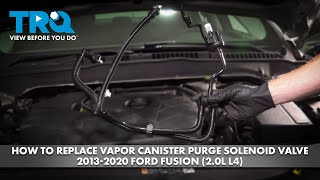
- Locate the EVAP purge valve. On the 2.0L engine, it is typically mounted on the side of the intake manifold, 🎬 Watch: Step-by-step replacement walkthrough for the 2.0L engine. easily accessible.
- Visually inspect the valve, its connector, and the wiring harness for any obvious signs of damage, such as cracks, melting, or frayed wires.
- Check the fuse for the EVAP system in the vehicle's fuse box. Replace if blown.
- Disconnect the electrical connector from the purge valve. With the ignition on, use a multimeter to verify that one pin has 12V power.
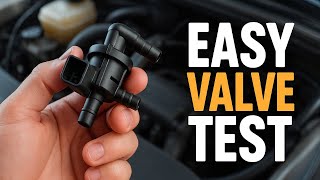
- Test the valve itself. Measure the resistance between the two pins on the valve. Compare this to the manufacturer's specification (typically between 14-30 ohms). 🎬 See this DIY guide for testing your EVAP purge valve. An out-of-spec reading confirms a bad valve.
- If the valve's resistance is good, test for a stuck valve. With the valve disconnected electrically and the engine running, feel for vacuum on the valve's port that leads to the intake manifold. There should be no vacuum. If there is, the valve is stuck open and needs replacement.
- If the valve and power supply are good, the final step is to check for continuity on the ground wire between the valve's connector and the PCM.
Parts You'll Likely Need
- Vapor Canister Purge Valve
(OEM #CU5A-9G866-AA)— This is the component that fails most frequently, either electrically or mechanically, triggering the P0443 code.
Trusted brands: Motorcraft (OEM), Bosch (OEM supplier, P/N 0280142519), Dorman
OEM price range: $50-$80
Aftermarket price range: $35-$60
Related Codes That Often Appear With This One
- P0456 — A P0456 (Very Small Leak Detected) can sometimes appear with P0443 if the purge valve is stuck partially open, creating a leak that the system detects during its self-test.
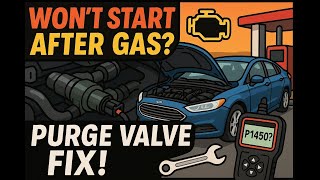
- P1450 — This code for 'Unable to Bleed Up Fuel Tank Vacuum' is another common companion to a failing purge valve on Fords. A stuck-open purge valve can apply constant engine vacuum to the fuel tank, preventing it from bleeding up correctly during the EVAP monitor test.
- P0420, P0452, P0460, and P2196 — These codes have been reported to appear simultaneously with P0443 in manufacturer records (NHTSA ODI #11427851).
Platform-Specific Known Issues
- A Reddit user with a 2017 Fusion reported that a bad purge valve caused a cascade of seemingly unrelated error codes and warning lights, including for the ABS, airbags, and RCM (Restraint Control Module). Replacing the purge valve resolved all issues, suggesting the failing electronic component was creating electrical noise on the car's data bus.
Technical Service Bulletins (TSBs) & Recalls
- Bulletin #TSB 16-0163 — While issued for the Transit Connect, this manufacturer bulletin notes that P0443 can occur alongside a wide array of other DTCs (such as P0103, P0201, and U0109) and requires following specific service procedure steps to correct the electrical condition.
Mechanic-Grade Diagnostic Values
- EVAP Purge Valve Solenoid Resistance — expected: 14 to 30 Ohms. Failure: A reading of infinite resistance (open circuit) or near-zero resistance (short circuit).
- EVAP Purge Valve Connector - Power Pin Voltage (Key On, Engine Off) — expected: Should be approximately equal to battery voltage (12V).. Failure: No voltage indicates an open in the power supply circuit or a blown fuse.
- EVAP Purge Valve Connector - Control Pin Voltage (Valve Commanded Closed) — expected: Approximately equal to battery voltage.. Failure: Voltage significantly lower than battery voltage may indicate a short to ground.
- EVAP Purge Valve Connector - Control Pin Voltage (Valve Commanded Fully Open) — expected: A voltage drop of at least 3 volts from the closed-state reading.. Failure: Little to no voltage drop indicates a problem with the PCM driver or wiring.
- Scan Tool PID - EVAPCP (or EVMV) Commanded State — expected: 0% duty cycle (or 0 mA) when closed, up to 100% (or 1000 mA) when commanded fully open.. Failure: PID value not matching the commanded state points to a circuit or PCM issue.
Scan Tool Commands That Help
- Ford IDS (Integrated Diagnostic System) or equivalent (e.g., FORScan): Active Test / Output Test Mode for EVAP Purge Valve (EVAPCP/EVMV) — This command allows the technician to manually open and close the purge valve while monitoring circuit voltage and system pressure. It is used to confirm if the valve is responding to PCM commands and to check for mechanical failures (stuck open/closed) without having to physically remove the valve.
- Advanced OBD-II Scanner with Live Data and Active Test capability: Command EVAP Purge Valve ON/OFF and monitor Fuel Tank Pressure (FTP) PID. — To test for a mechanically stuck-open purge valve. With the engine running, command the purge valve OFF and the vent valve ON (closed). If the Fuel Tank Pressure value begins to drop (indicating a vacuum is being pulled), the purge valve is leaking engine vacuum into the EVAP system and is faulty.
Wiring & Ground Locations

- Engine Compartment Fuse Box — Located in the engine compartment.. Contains fuses critical to the powertrain control module and emissions components. Specifically, for a 2017 model, fuse F25 (15A) powers 'Powertrain control module vehicle power 2. Emission components', and fuse F32 (5A) powers 'Powertrain and hybrid powertrain control module keep active power'. A failure of these can cause P0443.
- Purge Valve Connector — Directly on the EVAP purge valve, mounted to the side of the intake manifold.. This is the primary point for electrical testing. One pin is the 12V power supply (VPWR) and the other is the control signal (ground-side switched) from the PCM. Damage or corrosion here is a common cause of the code.
Real Owner Repair Stories
- Reddit user on r/fordfusion (2016 Ford Fusion) — Car would not start immediately after refueling. Check Engine Light came on.
❌ Tried (didn't work) Replaced the EVAP purge valve, but the P0443 code returned two weeks later.
✅ What actually fixed it The user replaced both the vapor canister purge valve (in the engine bay) and the vapor canister vent valve (near the fuel tank) to finally resolve the issue. - NHTSA ODI #11725076 — An owner reported that the check engine light comes on often after getting fuel, with a mechanic confirming the P0443 EVAP purge control valve "A" circuit code.
- NHTSA ODI #11633558 — A diagnostic test on a similar Ford platform revealed P0443 alongside P0456 and P1450; upon inspection, the dealership identified a disconnected line in the EVAP system.
OEM Part Supersession History
CU5A-9G866-AA→Motorcraft CX2349 is often the service part number for the original.— Standard part lifecycle and updates.
Heads up: The Bosch part number 0280142519 is listed as a direct OEM supplier equivalent for CU5A-9G866-AA and is fully compatible.
Diagnostic Flowchart
Other Known Issues on This Vehicle
Issues unrelated to this code that are worth knowing about as an owner of this generation:
- Shifter Cable Bushing Failure 🟠 Medium — Very common. The bushing degrades, causing the shifter cable to detach from the transmission. The shifter may indicate 'Park' when the transmission is not, leading to a rollaway risk. (Ref: Recall 19S16 (NHTSA 19V362000))
- Steering Gear Motor Bolt Corrosion 🔴 High — Common in regions using road salt. Bolts corrode and can fracture, leading to a loss of power steering assist. (Ref: Recall 19S26 (NHTSA 19V632000) and others.)
- Front Brake Hose Rupture 🔴 High — A significant number of vehicles are affected, leading to a recall. Hoses can rupture and leak brake fluid, causing a loss of braking performance. (Ref: Recall 23S12)
- Engine Coolant Intrusion (Related 2.0L Engines) 🔴 High — While more documented on the 2.0L EcoBoost (non-hybrid) engines, it's a known issue in the engine family. A design flaw can allow coolant to leak into the cylinders, requiring engine replacement. (Ref: TSB 19-2208, TSB 20-2234 (for EcoBoost versions, but relevant to the engine family).)
- eCVT/Transmission Reliability Concerns 🟠 Medium — Owners report a notable number of transmission-related issues, though less frequent than the shifter bushing problem.
Used vs. New Parts: Buying Guide for This Vehicle
When a used part is the smart pick: A used OEM (Motorcraft/Bosch) purge valve from a low-mileage donor vehicle is a reasonable choice. The part is not a major wear item, and failure is often due to an electrical fault in the solenoid coil rather than mechanical wear. Given the low cost of a new aftermarket part, the savings may be minimal.
Donor-vehicle mileage cap: roughly under 60000 miles for the part to have meaningful remaining life.
What to inspect on the donor part:
- Check for cracks or damage to the plastic housing and hose connections.
- Ensure the electrical connector pins are clean, straight, and free of corrosion.
- If possible, test the resistance with a multimeter before purchase; it should be within the 14-30 ohm range.
- Avoid parts from vehicles that show signs of major engine bay damage or fire.
OEM-only on this vehicle (don't cheap out):
- For this specific repair, OEM (Motorcraft) or the OEM supplier (Bosch) is highly recommended but not strictly required. The key is a quality part.
Aftermarket brands forum-validated for this vehicle:
- Bosch (OEM supplier)
- Standard Motor Products (SMP)
Brands owners have reported issues with on this vehicle:
- Some users on forums have reported mixed results or premature failures with certain Dorman purge valves, though others have used them successfully.
Real Owner Stories
Aggregated from forums and TSBs cited above. Mileages and costs reflect what owners reported in those sources.
2017 Ford Fusion Hybrid SE
Symptoms: Check Engine Light came on with code P0443 after replacing a dead 12v battery. The code was cleared but returned shortly after.
What fixed it: The purge valve solenoid was identified as the underlying issue (confirmed by the code returning after a reset).
Source hint: reddit.com/r/fordfusion - Thread: '2017 FF Hybrid SE code P0443'
2016 Ford Fusion
Symptoms: The car would not start properly specifically after refueling.
What fixed it: Replacement of the EVAP purge valve.
Source hint: reddit.com/r/fordfusion - Thread: 'engine code p0443 for my 2016 ford fusion'
2017 Ford Fusion
Symptoms: A bad purge valve caused a cascade of seemingly unrelated error codes and warning lights, including for the ABS, airbags, and RCM (Restraint Control Module).
What fixed it: Replacing the purge valve resolved all issues, including the unrelated electrical warnings.
Source hint: vehicle_specific_issues - Reddit user report
Related OBD-II Codes
Frequently Asked Questions
Where is the EVAP purge valve located on the 2.0L Atkinson Cycle engine in my Fusion Hybrid?
Can a bad purge valve cause other warning lights like ABS or Airbag to turn on in my 2017 Fusion?
Why does my Fusion Hybrid struggle to start only after I fill up the gas tank?
What resistance should I look for when testing the purge valve solenoid with a multimeter?
Is the P0443 code common on other Ford hybrids like the C-Max?
Could a dead 12V battery cause a false P0443 code on my 2017 Fusion Hybrid SE?
Helpful Videos
Used OEM Parts in Stock
New Aftermarket Parts Available


The information in this article is provided for general reference and educational purposes only. Vehicle specifications, procedures, and part compatibility can vary by production date, trim level, and region. Always consult your vehicle's factory service manual and verify part numbers before purchasing or performing repairs. Safety-critical components such as airbags, seat belts, and braking systems should be installed by a qualified professional.
- Ford Fusion Hybrid:
- 🎬 Helpful Videos
- 🛍️ Shop This Part
- What's Unique About the 2013-2020 Ford Fusion Hybrid
- Symptoms You May Notice
- Most Likely Causes
- Rare But Worth Checking
- Diagnosis Steps
- Parts You'll Likely Need
- Related Codes That Often Appear With This One
- Platform-Specific Known Issues
- Technical Service Bulletins (TSBs) & Recalls
- Mechanic-Grade Diagnostic Values
- Scan Tool Commands That Help
- Wiring & Ground Locations
- Real Owner Repair Stories
- OEM Part Supersession History
- Diagnostic Flowchart
- Other Known Issues on This Vehicle
- Used vs. New Parts: Buying Guide for This Vehicle
- Real Owner Stories
- 2017 Ford Fusion Hybrid SE
- 2016 Ford Fusion
- 2017 Ford Fusion
- Related OBD-II Codes
- Frequently Asked Questions
- 🎟️ Get 5% Off