

P0443 on 2015 Dodge Journey: EVAP Purge Solenoid Circuit Fault Causes and Fixes
On a 2015 Dodge Journey, code P0443 most often means the EVAP purge solenoid has failed or its wiring is damaged. Before replacing parts, check if your vehicle's computer software is up to date, as multiple Technical Service Bulletins (TSBs) address this code with a PCM flash. This is a well-documented issue for this model year and should be the first diagnostic step.
- Before buying any parts for a P0443 code on a 2015 Dodge Journey, check with a dealer if your vehicle needs a PCM software update, as specified in TSBs.
- The most common failed part is the EVAP purge solenoid itself, which is a relatively inexpensive and accessible part for DIY replacement.
- P0443 is an electrical circuit code, so diagnosis should focus on wiring, connectors, fuses, and the solenoid, not on EVAP system leaks.
- Symptoms are minor, mainly a Check Engine Light, but the issue should be fixed to pass emissions tests and maintain optimal fuel economy.
What's Unique About the 2015-2015 Dodge JOURNEY
For the 2015 Dodge Journey, this code is noteworthy because Dodge issued multiple Technical Service Bulletins (TSBs) related to it. These bulletins suggest that the cause is not always a failed hardware component but can be due to the PCM's software logic. In many cases, a simple software update (reflash) at a dealership can resolve the code, making it a crucial first diagnostic step before any parts are replaced. The TSBs specifically mention P0443 in a list of codes that can be fixed with a PCM reflash for both the 2.4L and 3.6L engines.
🎬 Watch: Diagnostic steps for P0443 on the 2.4L engineDiagnostic Flowchart
Tap your situation to follow the diagnostic path that matches what you're seeing on this vehicle.
Symptoms You May Notice
- Check Engine Light is on
- Slightly reduced fuel economy
- Rough idle, especially if the valve is stuck open
- Difficulty starting the engine, particularly right after refueling
- A faint smell of fuel near the vehicle
- Hesitation or surging during acceleration
- Failure to pass an emissions inspection
- Replacing the gas cap. A loose or faulty gas cap typically causes large or small leak codes (like P0455 or P0456), not a circuit code like P0443.
- Replacing the charcoal canister or vent solenoid without proper diagnosis. P0443 specifically points to the purge solenoid's electrical circuit, not other mechanical components of the EVAP system unless they have caused the solenoid to fail (e.g., charcoal debris).
Most Likely Causes
- Outdated Powertrain Control Module (PCM) Software 🔴 High Probability Dodge released multiple TSBs (#18-081-17, #18-033-16, #18-014-15 REV-A) indicating that a PCM software update is required to correct the logic that falsely triggers this and other EVAP codes for both 2.4L and 3.6L engines.
How to confirm: A Dodge dealership or a qualified shop with access to OEM software (like wiTECH) can check the current PCM calibration against the latest available version using your vehicle's VIN.
Typical fix: Flashing the PCM with the latest software version. This procedure usually takes less than an hour.
Est. part cost: $0 - Faulty EVAP Purge Solenoid/Valve 🔴 High Probability The purge solenoid is an electromechanical part that can fail over time by getting stuck open, closed, or failing electrically. It is a very common failure point across many Dodge/Chrysler/Jeep vehicles.
How to confirm: Use a multimeter to check the solenoid's resistance; typical values are between 20-30 Ohms. You can also use a scan tool to command the valve to open and close while listening for an audible click. A simple mechanical test is to remove the valve and try to blow through it; it should be closed (no air passes) when no power is applied.
Typical fix: Replace the EVAP purge solenoid.
Est. part cost: $25-$60 - Damaged Wiring or Loose Connector 🟡 Medium Probability The wiring harness to the purge solenoid is in the engine bay and can become brittle or damaged from heat and vibration, or the connector pins can corrode.
How to confirm: Visually inspect the wiring harness for any signs of cracking, melting, or breaks. Unplug the connector and check for corrosion or bent/spread pins. Use a multimeter to check for battery voltage on one wire and a pulsed ground signal from the PCM on the other when the engine is running.
Typical fix: Repair the damaged section of wire or clean/replace the connector.
Est. part cost: $5-$25 - Blown Fuse ⚪ Low Probability An electrical short in the purge solenoid or its circuit can cause the corresponding fuse to blow, cutting power to the solenoid.
How to confirm: Locate the fuse for the EVAP system in the vehicle's fuse box (check the owner's manual for location) and check for continuity with a multimeter or test light.
Typical fix: Replace the blown fuse after diagnosing the cause of the short.
Est. part cost: $1-$5
Rare But Worth Checking
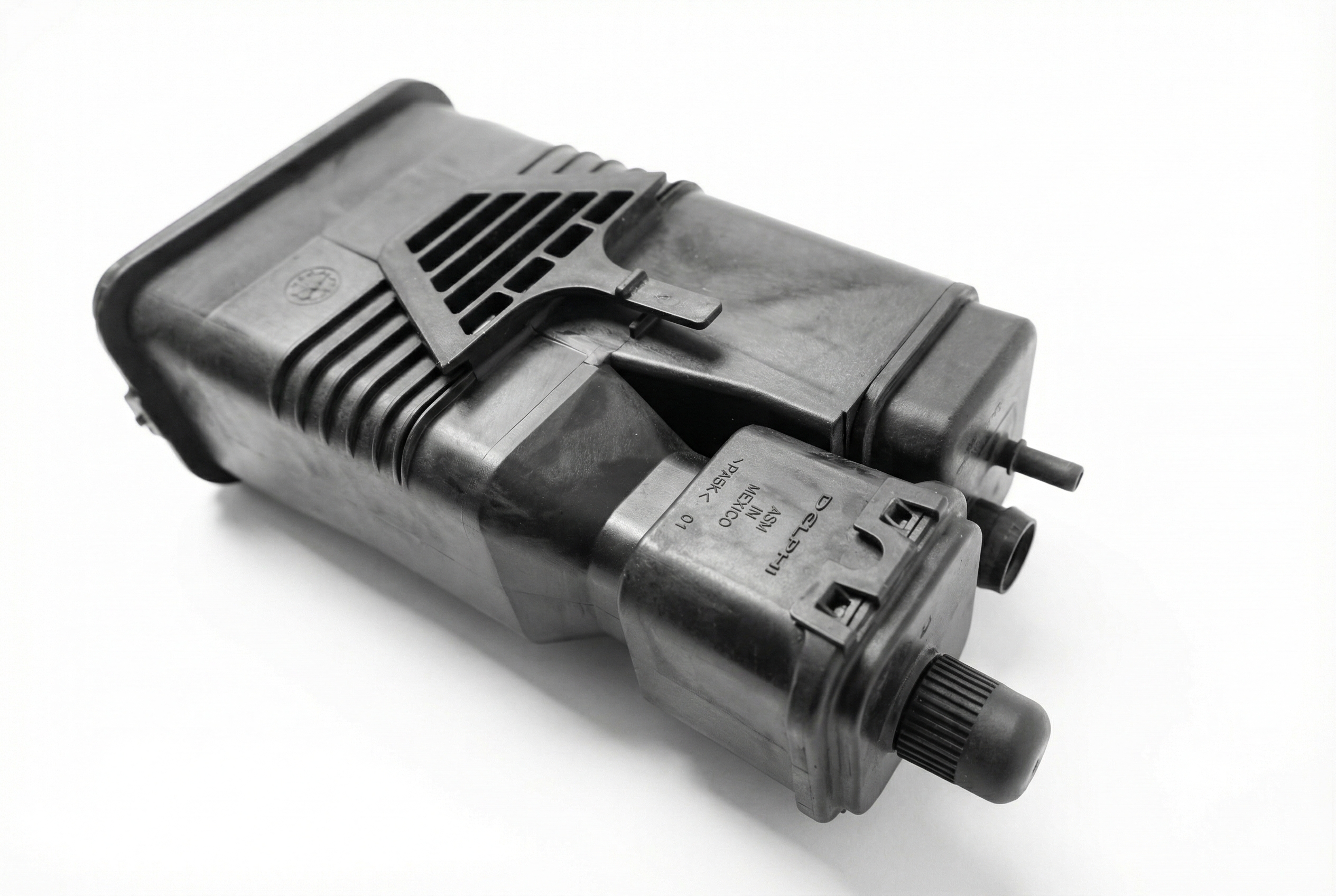
- Charcoal Canister Disintegration: In some cases, particularly after overfilling the gas tank, the charcoal canister can become saturated with liquid fuel and break down. Debris (charcoal pellets) can then travel up the purge line and jam the purge solenoid, holding it open. This may require replacing the solenoid, cleaning the lines, and replacing the charcoal canister.
- Faulty Powertrain Control Module (PCM): This is very rare. Before condemning the PCM, all other possibilities, including software updates, the solenoid itself, and the entire circuit wiring, must be thoroughly tested and ruled out.
Diagnosis Steps
- Check for Technical Service Bulletins (TSBs). This is the most important first step for this vehicle. Contact a Dodge dealer with your VIN to see if the software updates from TSBs #18-081-17, #18-033-16, or #18-014-15 REV-A apply and have not been performed.
- Scan for other codes. Use an OBD-II scanner to check for any other related trouble codes to get a complete picture.
- Inspect the fuse. Locate and check the fuse for the EVAP system in the fuse box.
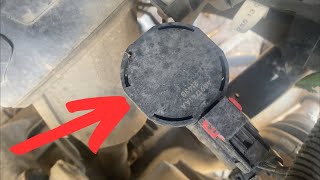
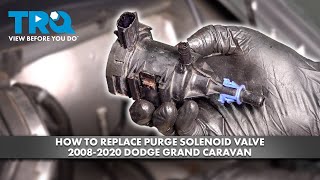
- Locate the EVAP purge solenoid. On the 2015 Journey (both 2.4L and 3.6L), it is typically found on the rear/side of the engine, mounted near the intake manifold, with two hoses and an electrical connector. 🎬 See this walkthrough for locating and replacing the 3.6L solenoid
- Inspect the electrical connector and wiring. Check for any visible damage, corrosion, or loose connections at the solenoid.
- Test the circuit for power. With the ignition on (engine off), unplug the connector. Use a multimeter to verify that one of the pins has battery voltage. The other pin is the control wire that the PCM pulses to ground.
- Test the solenoid's resistance. Disconnect the solenoid and measure the resistance across its two pins with a multimeter. A normal reading is typically between 20-30 Ohms. An infinite reading means an open circuit, and a very low reading means a short. In either case, the solenoid is bad. 🎬 Watch: How to test and replace the purge control solenoid
- Test the solenoid's operation. If you have a bidirectional scan tool, command the purge solenoid to cycle on and off. You should hear an audible clicking sound. Alternatively, you can apply 12V directly to the solenoid pins to see if it clicks.
- Check for blockages. Remove the solenoid and try to blow through it. It should be closed when de-energized. If air passes through, it's stuck open, possibly due to internal failure or debris from the charcoal canister.
- If all tests pass, the issue is likely a faulty PCM driver or an intermittent wiring problem, but given the known TSBs, a software issue remains the most probable cause if not already ruled out.
Parts You'll Likely Need
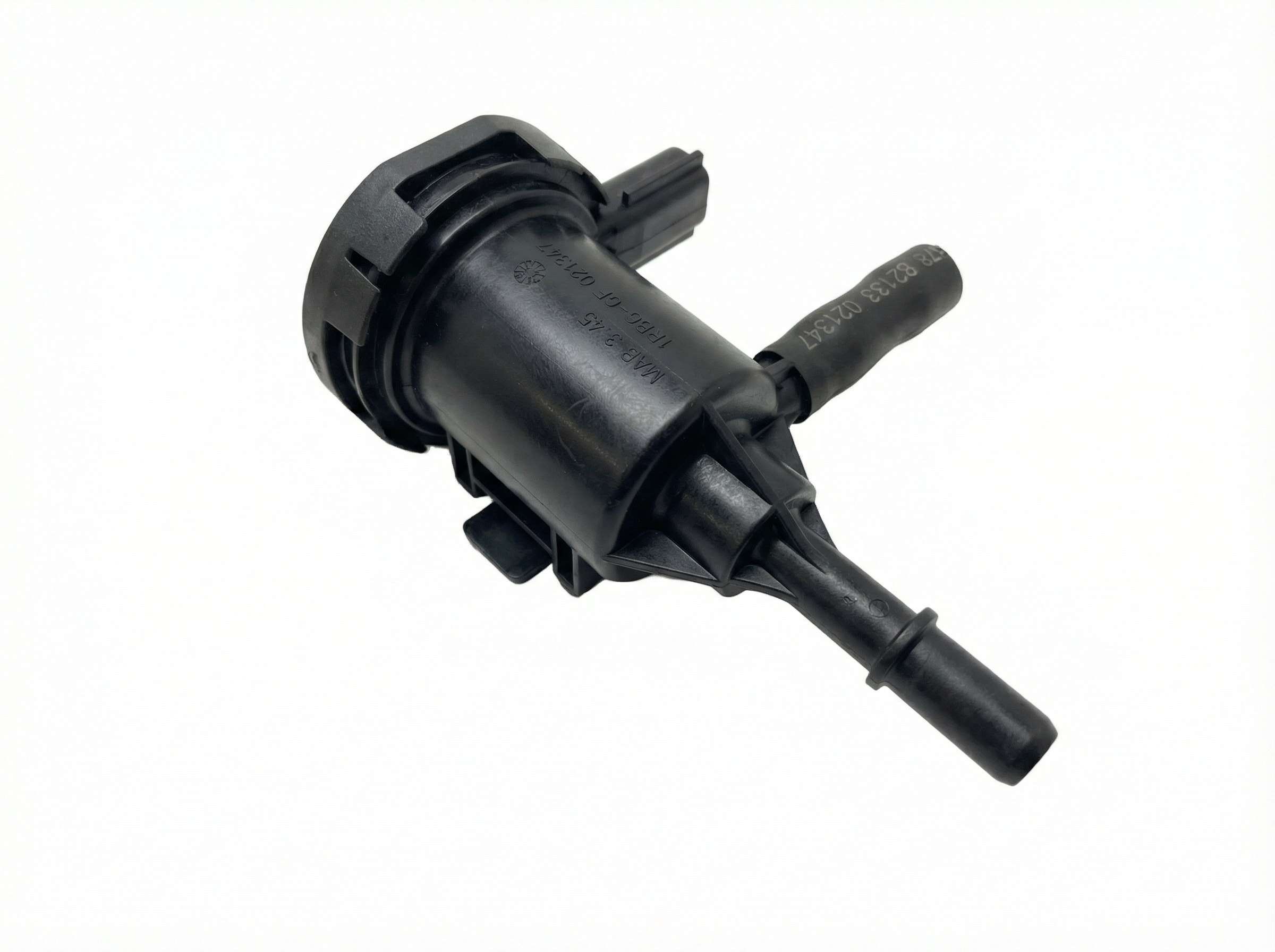
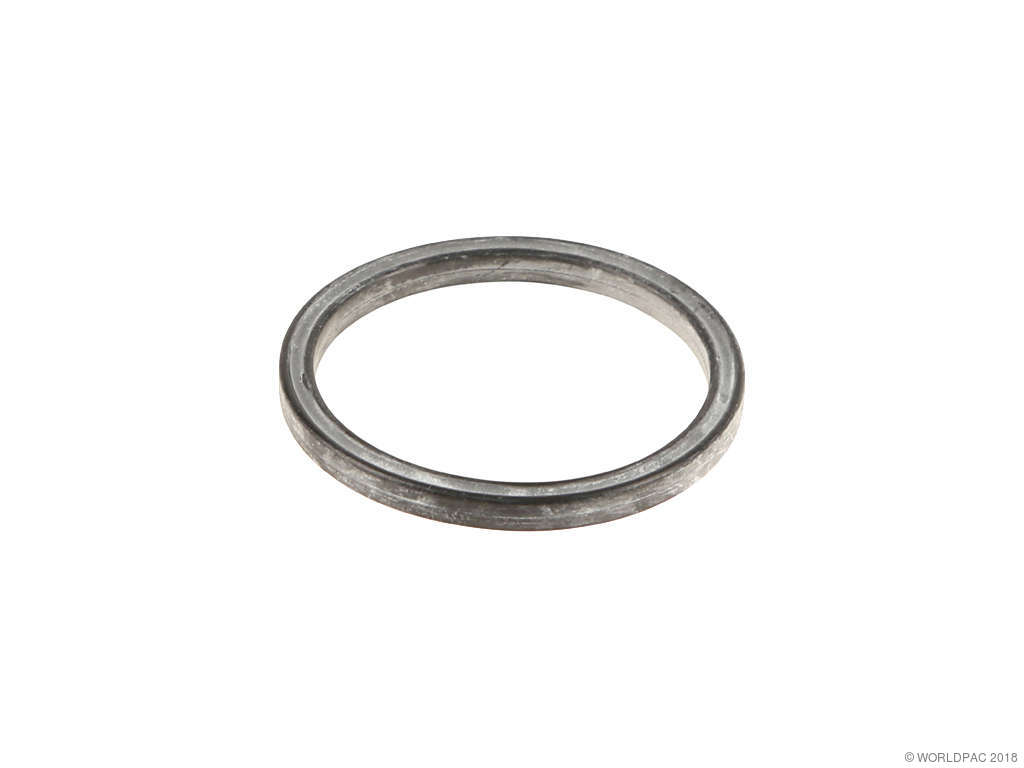
- Vapor Canister Purge Solenoid / Valve
(OEM #4891741AA)— This is the most common hardware component to fail for this code. It can become electrically faulty or mechanically stuck. The original part 4891741AA has been superseded by part number 4891741AC.
Trusted brands: Mopar, Dorman, Standard Motor Products (SMP)
OEM price range: $50-$85
Aftermarket price range: $25-$50
Related Codes That Often Appear With This One
- P0441 — This code for 'EVAP Purge System Incorrect Flow' often appears with P0443 because a faulty purge solenoid circuit (P0443) will prevent the purge system from operating correctly, leading to an incorrect flow condition (P0441). The TSBs for the Journey list these codes together.
- P0456 — 'EVAP System Small Leak' can also be triggered alongside P0443. The PCM software updates issued by Dodge address these codes as a group, suggesting a potential software logic link where the PCM misinterprets a circuit fault as a system leak.
- P0444 — 'EVAP Purge Control Valve Circuit Open' is a more specific version of P0443. If the PCM detects a complete break in the circuit, it may set P0444 instead of or in addition to the general circuit fault code.
Technical Service Bulletins (TSBs) & Recalls
- 18-081-17: Addresses P0443 among other codes for both 2.4L and 3.6L engines, fixed by a PCM software update. Also addresses symptoms like stalling or hesitation.
- 18-033-16: Also lists P0443 as a code that can be resolved with a PCM reflash.
- 18-014-15 REV-A: Specifically calls out P0443 on the 2.4L engine as a code that may be resolved with a PCM software update.
Platform-Specific Known Issues
- A primary issue for the 2015 Dodge Journey is the existence of multiple TSBs (18-081-17, 18-033-16, 18-014-15 REV-A) that address code P0443 with a PCM software update. This should be the first item checked with a dealer to avoid unnecessary parts replacement. The TSBs cover both 2.4L and 3.6L engines.
- The 3.6L Pentastar and 2.4L Tigershark engines used in the Journey are shared across a wide range of Chrysler, Dodge, and Jeep vehicles, making this a widespread issue with a well-documented fix.
Mechanic-Grade Diagnostic Values
- EVAP Purge Solenoid Coil Resistance — expected: 20 - 40 Ohms. Failure: A reading of infinite Ohms (open circuit) or near zero Ohms (short circuit) indicates a faulty solenoid.
- EVAP Purge Solenoid Connector Power Supply Voltage — expected: Greater than 10.0 Volts (typically battery voltage). Failure: Voltage significantly below 10.0V indicates a problem with the power supply circuit, such as a blown fuse or wiring issue.
- EVAP Purge Solenoid Ground Circuit Voltage Drop — expected: Less than 0.5 Volts. Failure: Voltage greater than 0.5V indicates a high resistance or poor ground connection.
Scan Tool Commands That Help
- wiTECH or other professional bidirectional scanner: Actuate EVAP Purge Solenoid — This command allows a technician to manually cycle the solenoid on and off to listen for an audible click, confirming mechanical operation without having to apply voltage manually.
- OBD-II Scanner with Live Data: View EVAP Purge Live Data (e.g., 'Purge Mode', 'Purge Air Flow') — Used to monitor the PCM's commanded state (On/Off) and, on some systems, the resulting air flow to see if the system is responding as expected during operation.
Wiring & Ground Locations
- EVAP Purge Solenoid Connector — On the purge solenoid itself, located at the rear corner of the engine compartment on the 2.4L engine.. This 2-pin connector is the primary point for electrical testing. One pin is the Fused Ignition Switch Output (power supply, should have >10V with key on), and the other is the control circuit that the PCM grounds to activate the solenoid.
Real Owner Repair Stories
- YouTube channel 'electrical car repair life' (Dodge Journey (year not specified, but same generation)) — Check Engine Light with stored code P0443.
❌ Tried (didn't work) The video focuses directly on the successful repair.
✅ What actually fixed it The owner diagnosed the P0443 code using a scanner, located the purge solenoid on the engine, replaced it with a new part, and then successfully erased the fault code.
OEM Part Supersession History
4891741AA→4891741AC— Standard part revision by the manufacturer for improvements or supplier changes.
Heads up: The new part number (4891741AC) is the correct service replacement for the original.
Helpful Videos

Used OEM Parts in Stock
New Aftermarket Parts Available


The information in this article is provided for general reference and educational purposes only. Vehicle specifications, procedures, and part compatibility can vary by production date, trim level, and region. Always consult your vehicle's factory service manual and verify part numbers before purchasing or performing repairs. Safety-critical components such as airbags, seat belts, and braking systems should be installed by a qualified professional.
- Dodge JOURNEY:
- 🎬 Helpful Videos
- 🛍️ Shop This Part
- What's Unique About the 2015-2015 Dodge JOURNEY
- Diagnostic Flowchart
- Symptoms You May Notice
- Most Likely Causes
- Rare But Worth Checking
- Diagnosis Steps
- Parts You'll Likely Need
- Related Codes That Often Appear With This One
- Technical Service Bulletins (TSBs) & Recalls
- Platform-Specific Known Issues
- Mechanic-Grade Diagnostic Values
- Scan Tool Commands That Help
- Wiring & Ground Locations
- Real Owner Repair Stories
- OEM Part Supersession History
- 🎟️ Get 5% Off