

P0442 on 2009-2016 Volkswagen Jetta: EVAP Small Leak Causes and Fixes
For a 2009-2016 VW Jetta, the P0442 code is most often caused by a faulty gas cap or a failing EVAP purge valve (N80 valve). Start by checking the gas cap seal; if that's not the issue, the N80 valve is the next likely culprit and is a relatively inexpensive part to replace.
- Always start with the simplest fix: check that your gas cap is tight and its seal is intact. This resolves a large number of P0442 codes.
- If the gas cap isn't the problem, the EVAP Purge Valve (N80) is the next most likely culprit on a 2009-2016 Jetta and is an affordable, DIY-friendly replacement.
- While you can drive the car with this code, you will not pass an emissions inspection until the leak is fixed.
- For leaks that are not obvious, a professional smoke test is the fastest and most accurate way to locate the source of the problem.
What's Unique About the 2009-2016 Volkswagen JETTA

On this generation of Volkswagen Jetta (spanning the late Mk5 and most of the Mk6), the EVAP system components, particularly the purge valve (N80) and the Leak Detection Pump (LDP), are known weak points that fail more frequently than on some other vehicles. While a loose gas cap is always the first suspect for any car, on these Jettas, a faulty N80 valve is a very high-probability cause for P0442, sometimes even without other related codes. Owners often find themselves replacing this valve as a key step in resolving persistent EVAP leak codes.
Diagnostic Flowchart

Tap your situation to follow the diagnostic path that matches what you're seeing on this vehicle.
Generation note: This year range covers two Jetta generations: the Mk5 (2009-2010) and the Mk6 (2011-2016). While the fundamental causes of P0442 are the same, the exact location and part numbers for components like the EVAP purge valve and Leak Detection Pump can differ. Always verify parts for your specific model year and engine before purchasing.
Symptoms You May Notice
- Check Engine Light is on
- A faint fuel smell, particularly around the rear of the car
- Difficulty starting the engine immediately after refueling (if the purge valve is stuck open)
- Rough or unstable idle
- Replacing the oxygen (O2) sensors, as they are not related to the EVAP system.
- Replacing the catalytic converter, which is a costly repair for exhaust issues, not fuel vapor leaks.
Most Likely Causes

- Loose or Faulty Gas Cap 🔴 High Probability The gas cap is a frequently used part and its rubber O-ring seal can dry out, crack, or get dirty over time, preventing a proper seal.
How to confirm: Remove the gas cap and inspect the rubber seal for any visible cracks, brittleness, or debris. Ensure the cap clicks when tightened. If the seal is damaged, the cap needs replacement.
Typical fix: Tighten the cap until it clicks. If the seal is bad, replace the entire gas cap with a new OEM or high-quality aftermarket part.
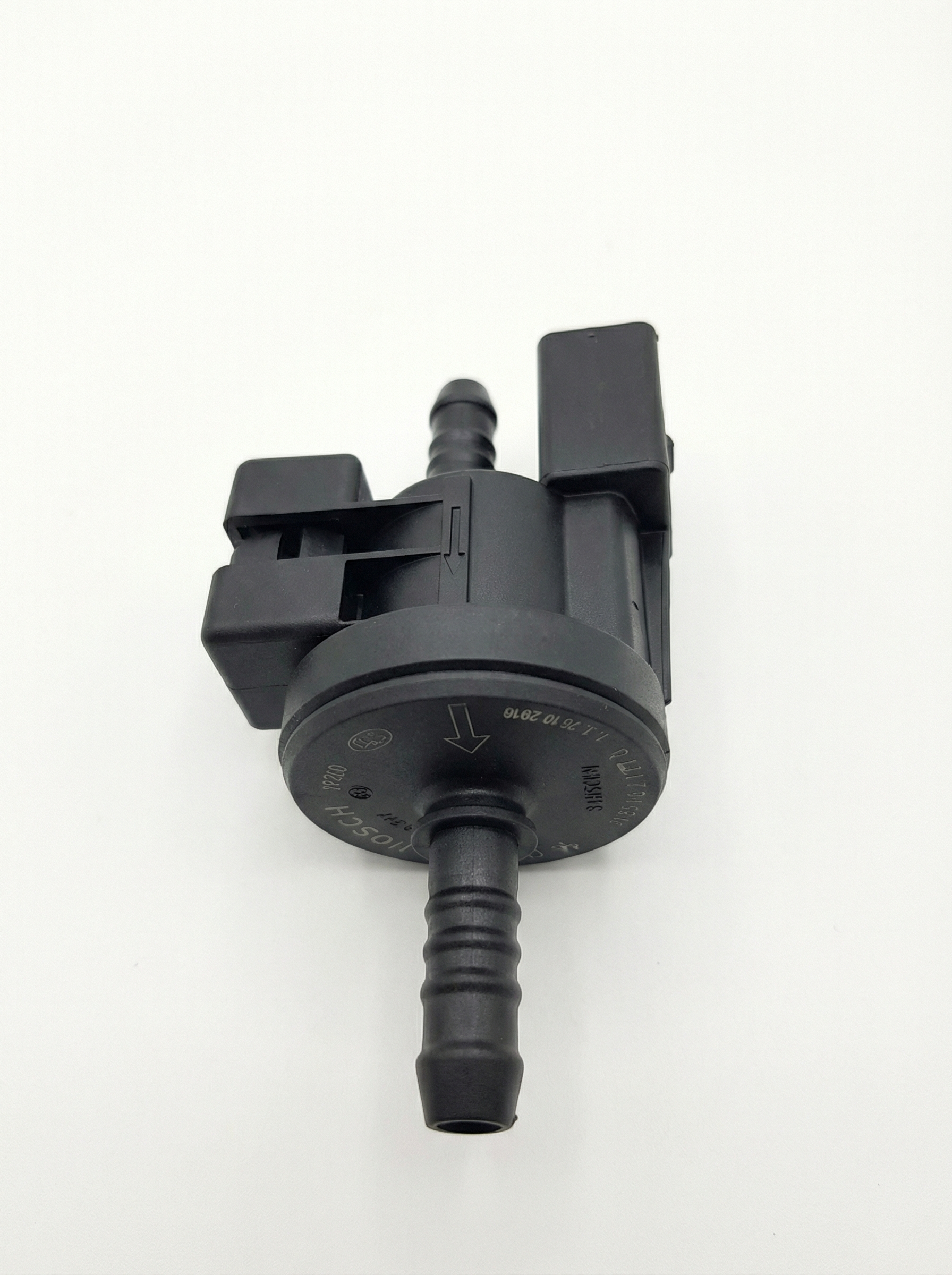
Est. part cost: $15-$30 - Failing EVAP Purge Valve (N80 Valve) 🔴 High Probability This valve is a known common failure item on VWs of this era. It gets stuck open or closed, or develops an internal leak, preventing the EVAP system from sealing correctly for its self-test.
How to confirm: With the engine off, remove the valve and try to blow through it. It is a 'normally closed' valve, so if air passes through, it has failed. You can also test it with a scan tool that can actuate the valve, listening for a click.
Typical fix: Replace the N80 purge valve. It's typically located in the engine bay and is accessible for DIY replacement on most engines.
Est. part cost: $20-$50 - Cracked or Disconnected EVAP Hoses 🟡 Medium Probability Over time, the plastic and rubber hoses in the EVAP system can become brittle from heat and age, leading to small cracks, especially at connection points.
How to confirm: Visually inspect all accessible EVAP lines running from the engine bay to the charcoal canister and fuel tank. The definitive method is to have a mechanic perform a smoke test, which forces smoke into the system to reveal the exact location of any leaks.
Typical fix: Replace the cracked section of hose or the entire hose assembly. Secure any loose connections.
Est. part cost: $10-$60 - Faulty Leak Detection Pump (LDP) ⚪ Low Probability The LDP is responsible for pressurizing the system for the leak test. The internal diaphragm or seals can fail, causing a leak within the pump itself.
How to confirm: This is best diagnosed with a smoke test. Smoke leaking directly from the LDP housing indicates failure. The LDP is typically located in the rear passenger-side wheel well.
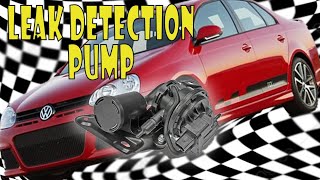
Typical fix: Replace the Leak Detection Pump. This requires removing the rear wheel and fender liner for access. 🎬 See this walkthrough for replacing the leak detection pump
Est. part cost: $70-$150
Rare But Worth Checking
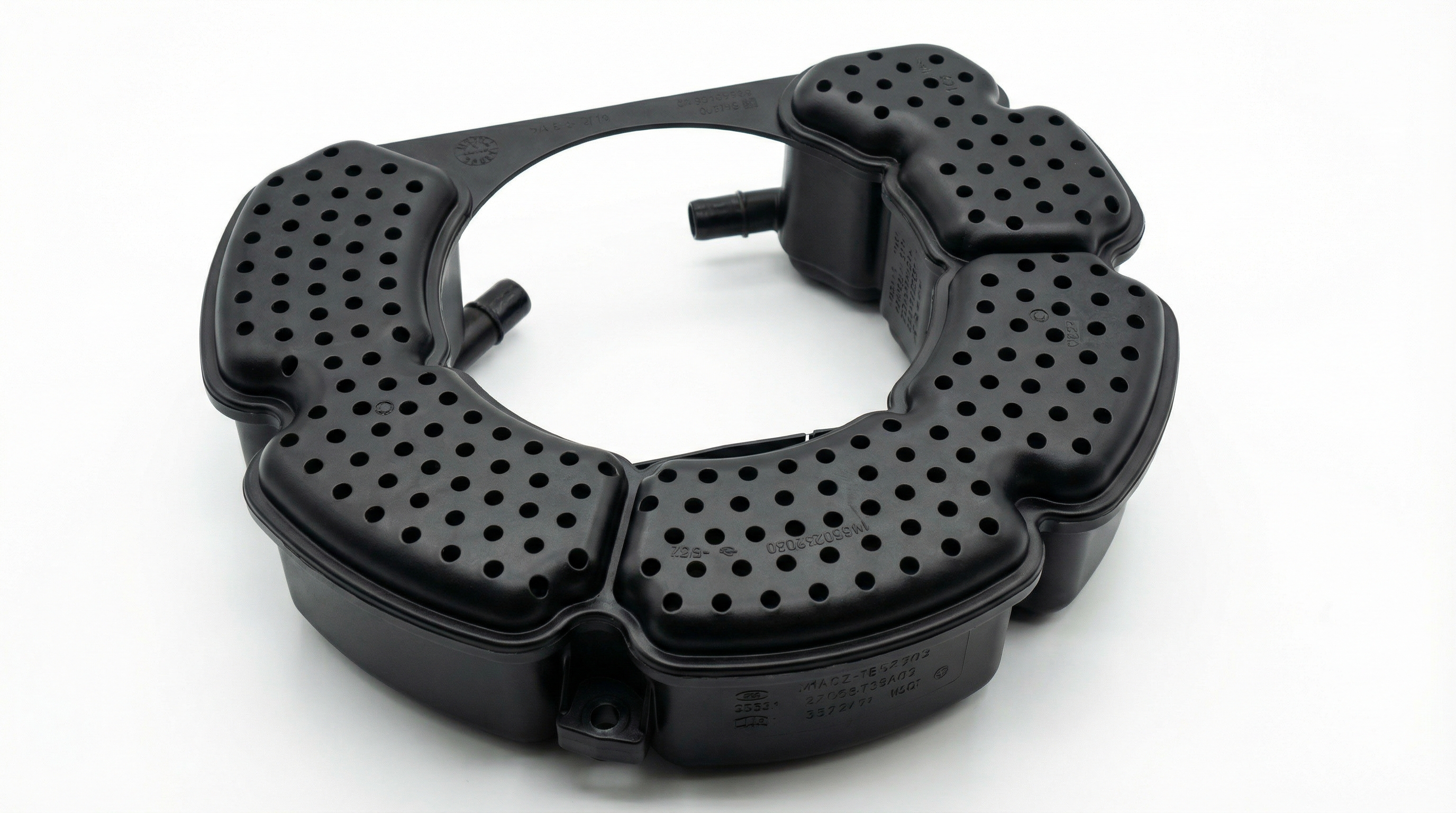
- Cracked Charcoal Canister: The plastic housing of the charcoal canister can develop hairline cracks from age or impact from road debris. This is usually found during a smoke test.
- Leaking Fuel Tank Filler Neck: Rust or corrosion on the metal filler neck where the gas cap seals can create an uneven surface, preventing a proper seal and causing a small leak.
Diagnosis Steps
- Check the Gas Cap: Ensure it is tight and clicks at least once. Remove it and inspect the rubber seal for cracks or damage. If in doubt, it's an inexpensive first part to replace.
- Clear the Code: After checking the cap, clear the P0442 code with an OBD-II scanner and drive for a few days to see if it returns.
- Inspect the EVAP Purge Valve (N80): Locate the valve in the engine bay. Disconnect it and try to blow through it. If air passes, the valve is bad and must be replaced.
- Visual Inspection of Hoses: Carefully inspect all visible EVAP hoses in the engine bay and under the car for obvious cracks, loose connections, or signs of perishing.
- Perform a Smoke Test: This is the most effective way to find small leaks. A smoke machine is connected to the EVAP system's service port. Smoke is pumped in, and any leaks will be visible as smoke escapes from the faulty component (hose, canister, LDP, etc.). This is often best performed by a professional shop. 🎬 Watch: How to find a small EVAP leak using smoke
- Inspect Leak Detection Pump (LDP): During the smoke test, pay close attention to the LDP (in the rear wheel well) to see if smoke is leaking from its housing.
Parts You'll Likely Need

- Fuel Cap — This is the most common and easiest fix. The seal wears out over time, causing a leak.
Trusted brands: Volkswagen OE, Blau
OEM price range: $25-$40
Aftermarket price range: $15-$25 - EVAP Canister Purge Valve
(OEM #06H906517H)— Also known as the N80 valve, this is a very frequent failure point on VWs, getting stuck internally and causing a leak.
Trusted brands: Bosch, Volkswagen OE
OEM price range: $40-$60
Aftermarket price range: $20-$40 - EVAP System Leak Detection Pump — Fails less often than the N80 valve but is a known issue. It can develop internal leaks, causing the system to fail its pressure test.
Trusted brands: Bosch, Dorman
OEM price range: $120-$180
Aftermarket price range: $70-$150
Related Codes That Often Appear With This One
- P0456 — This code indicates a 'Very Small Leak,' which is a smaller leak than P0442. They often appear together as the system tries to classify the size of the leak. A failing component can trigger either code depending on the test conditions.
- P0441 — This code means 'Incorrect Purge Flow.' It often points directly to a malfunctioning N80 purge valve that is either stuck open or closed, which can also cause the system to fail a leak test and set P0442.
Technical Service Bulletins (TSBs) & Recalls
- VIN4APIN20200728: Notes customer complaints of MIL-on with P0442.
- VIN4APIN20200720: Lists P0442 as a stated customer issue.
- VIN4APIN20200624: Confirms customer reports of the check engine light being on with code P0442.
Platform-Specific Known Issues
- The N80 EVAP Purge Valve is a notoriously common failure point on the 2.5L 5-cylinder and 2.0T engines 🎬 Watch: Diagnosing a small EVAP leak on the 2.5L engine found in this Jetta range, often causing P0442.
- The Leak Detection Pump (LDP), located in the passenger rear wheel well, is prone to failure and can be the source of the leak, sometimes accompanied by code P2402.
Mechanic-Grade Diagnostic Values
- N80 Purge Valve Resistance (2.5L Engine) — expected: 15 to 25 Ohms. Failure: A reading outside this range, or infinite resistance (open circuit).
- N80 Purge Valve Resistance (2.0T FSI Engine) — expected: 22 to 30 Ohms (official spec), though a reading of ~17-34 Ohms has been observed on working and failing valves.. Failure: While a specific range is given, a valve can have correct resistance but still be mechanically stuck open. A physical blow-through test is more definitive.
- N80 Purge Valve Connector Voltage (Key On, Engine Off) — expected: Battery Voltage (~12V) at Pin 1 to a good ground.. Failure: Significantly low voltage (e.g., 1.25V) suggests a problem with the wiring or the Engine Control Module (ECM) driver circuit, not the valve itself.
Scan Tool Commands That Help
- VCDS (VAG-COM): Engine -> Basic Settings -> Group 071 — To command the Leak Detection Pump (LDP) to run and perform a system leak test. The screen will display the test status and results, such as 'Syst. OK' or 'Small leak'.
- VCDS (VAG-COM): Engine -> Basic Settings -> Group 070 — To test the function of the N80 purge valve. The tool cycles the valve and reports the result as 'Fuel tank ventilation OK' or 'not OK'.
- VCDS (VAG-COM): Engine -> Output Tests — To manually cycle the N80 purge valve on and off. This allows you to listen for an audible 'click' from the valve to confirm the solenoid is activating, which helps test the electrical circuit and the valve's coil.
Wiring & Ground Locations
- Leak Detection Pump (LDP) — In the right rear wheel well, near the fuel filler door, typically behind the felt liner.. This is a key component for the EVAP self-test. Knowing its location is critical for smoke testing and replacement.
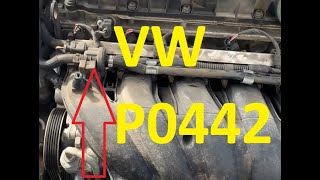
- N80 Purge Valve — On 2.5L engines, it is easily accessible in the engine bay, mounted near the intake manifold. On some 1.4T engines, it is located under the intake manifold and is significantly harder to access.. This is the most common electrical component to fail. Its location dictates the difficulty and cost of replacement.
- Engine Control Module (ECM) — Located in the front left of the engine compartment.. The ECM provides the power and ground signal to the N80 valve. If voltage tests at the N80 connector fail, the wiring back to the ECM must be checked.
Real Owner Repair Stories
- Reddit user NeedleworkerOwn4496 on r/jetta (VW Jetta (year not specified)) — P0442 code, car doesn't start right after filling up with gas, gas cap doesn't 'click' right.
❌ Tried (didn't work) Initial diagnosis
✅ What actually fixed it The user was advised that a faulty gas cap seal is a very common cause for these exact symptoms. They ordered a new gas cap as the first step in the repair. - VWVortex forum user (VW GTI (engine similar to Jetta)) — Check Engine Light with code P0444 (EVAP Purge Control Valve Circuit Open).
❌ Tried (didn't work) Assuming the N80 valve was bad.
✅ What actually fixed it The user tested the N80 valve and found its resistance was correct (~34 Ohms). However, they measured only 1.25V at the connector, while a known-good car showed 9-10V. This correctly pointed the diagnosis away from the part and towards a wiring or ECM ground path issue.
"I Checked Everything" — The Actual Cause
- A Ross-Tech forum expert noted that it's possible for the VCDS N80 valve test (Basic Settings 070) to pass even with the gas cap completely off if the N80 valve is mechanically stuck open. The system may not flag the N80 but the un-metered air entering the intake manifold can cause other issues, such as setting a MAP sensor fault code. This can misdirect diagnosis if the technician relies solely on the EVAP test result without considering how components interact.
OEM Part Supersession History
06H906517H→06H906517K, 06H906517T— Standard part revision and improvement by the manufacturer.
Heads up: These part numbers are generally interchangeable for the specified applications.
Model Year Variations Within This Range
- 2009-2016: The location of the N80 Purge Valve varies by engine. On the common 2.5L 5-cylinder engine, it is easily accessible on top of the engine. On some 1.4T engines, it is located under the intake manifold, making replacement a much more labor-intensive job.
Helpful Videos
Used OEM Parts in Stock
New Aftermarket Parts Available

The information in this article is provided for general reference and educational purposes only. Vehicle specifications, procedures, and part compatibility can vary by production date, trim level, and region. Always consult your vehicle's factory service manual and verify part numbers before purchasing or performing repairs. Safety-critical components such as airbags, seat belts, and braking systems should be installed by a qualified professional.
- Volkswagen JETTA:
- 🎬 Helpful Videos
- 🛍️ Shop This Part
- What's Unique About the 2009-2016 Volkswagen JETTA
- Diagnostic Flowchart
- Symptoms You May Notice
- Most Likely Causes
- Rare But Worth Checking
- Diagnosis Steps
- Parts You'll Likely Need
- Related Codes That Often Appear With This One
- Technical Service Bulletins (TSBs) & Recalls
- Platform-Specific Known Issues
- Mechanic-Grade Diagnostic Values
- Scan Tool Commands That Help
- Wiring & Ground Locations
- Real Owner Repair Stories
- "I Checked Everything" — The Actual Cause
- OEM Part Supersession History
- Model Year Variations Within This Range
- 🎟️ Get 5% Off