

P0442 on 2010-2017 Volkswagen Golf: EVAP Small Leak Causes and Fixes
For a 2010-2017 VW Golf, P0442 most often points to a loose or faulty gas cap, or a failing N80 purge valve. Always check the gas cap first—it's a free fix. If that doesn't work, the N80 valve is the next likely culprit, costing around $20-$50 for the part and is a common failure on this platform.
- P0442 on a VW Golf means a small leak has been detected in the fuel vapor (EVAP) system.
- Always check the gas cap first. Make sure it's tight and the seal is in good condition. This is the most common and cheapest fix.
- The N80 purge valve is the second most likely culprit, especially on 2010-2014 Mk6 models. It's an affordable and relatively easy part to replace for a DIYer.
- If the cap and purge valve are good, the leak is likely in a hose. A smoke test is the best way to find it without guessing.
- Do not ignore the code, as your car will fail an emissions test and is polluting the air.
What's Unique About the 2010-2017 Volkswagen GOLF

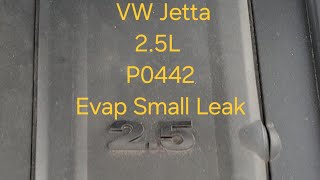
On VW Golfs from this era, particularly the Mk6 (2.5L and 2.0T engines), the N80 purge valve 🎬 See this walkthrough for P0442 diagnosis on the 2.0 turbo engine. is a notoriously common failure point that can cause this code. While a loose gas cap is the first thing to check on any car, Golf owners frequently find the N80 valve to be the root cause. The vehicle's Leak Detection Pump (LDP) is what performs the pressure test to identify these leaks. It's also worth noting that consistently overfilling the gas tank after the pump clicks off is a known way to damage EVAP components like the charcoal canister by saturating it with raw fuel, which can lead to this code.
Diagnostic Flowchart
Tap your situation to follow the diagnostic path that matches what you're seeing on this vehicle.
Generation note: This range covers two generations: the Mk6 (2010-2014) and Mk7 (2015-2017). While the EVAP system's function is the same, the Mk6 is particularly known for N80 purge valve failures. Some later Mk6 models feature a revised N80 valve that is integrated with hard vacuum lines, making replacement more complex than the simple, standalone valve found on earlier models. The Mk7 uses a more modern platform (MQB) with refinements, but the common causes for P0442 remain largely the same.
Symptoms You May Notice
- Check Engine Light is on.
- A faint smell of fuel, especially after refueling or when parked in a garage.
- Slightly reduced fuel economy.
- Difficulty starting immediately after filling the gas tank (if the purge valve is stuck open).
- Rough or low idle if the leak is significant enough to create a vacuum leak.
- Replacing the oxygen sensor. O2 sensors are not part of the EVAP system and will not fix a P0442 code.
- Immediately replacing the charcoal canister. This is an expensive part and should only be replaced after a proper diagnosis (like a smoke test) confirms it is the source of the leak.
Most Likely Causes

- Loose or Faulty Gas Cap 🔴 High Probability This is the most common cause across all vehicles. The rubber O-ring on the cap can crack, harden, or get dirty over time, preventing a proper seal. Using a non-OEM cap can also cause sealing issues.
How to confirm: First, ensure the cap is tightened until it clicks multiple times. Inspect the rubber seal for any visible cracks, stiffness, or debris. Clean the seal and the filler neck surface. If the code returns after clearing, the cap is likely faulty.
Typical fix: Tighten the cap. If the seal is damaged, replace the gas cap. It is highly recommended to use an OEM or equivalent quality cap, as some aftermarket caps do not seal correctly. After replacement, the code may need to be cleared with a scanner, or it may clear itself after several drive cycles.
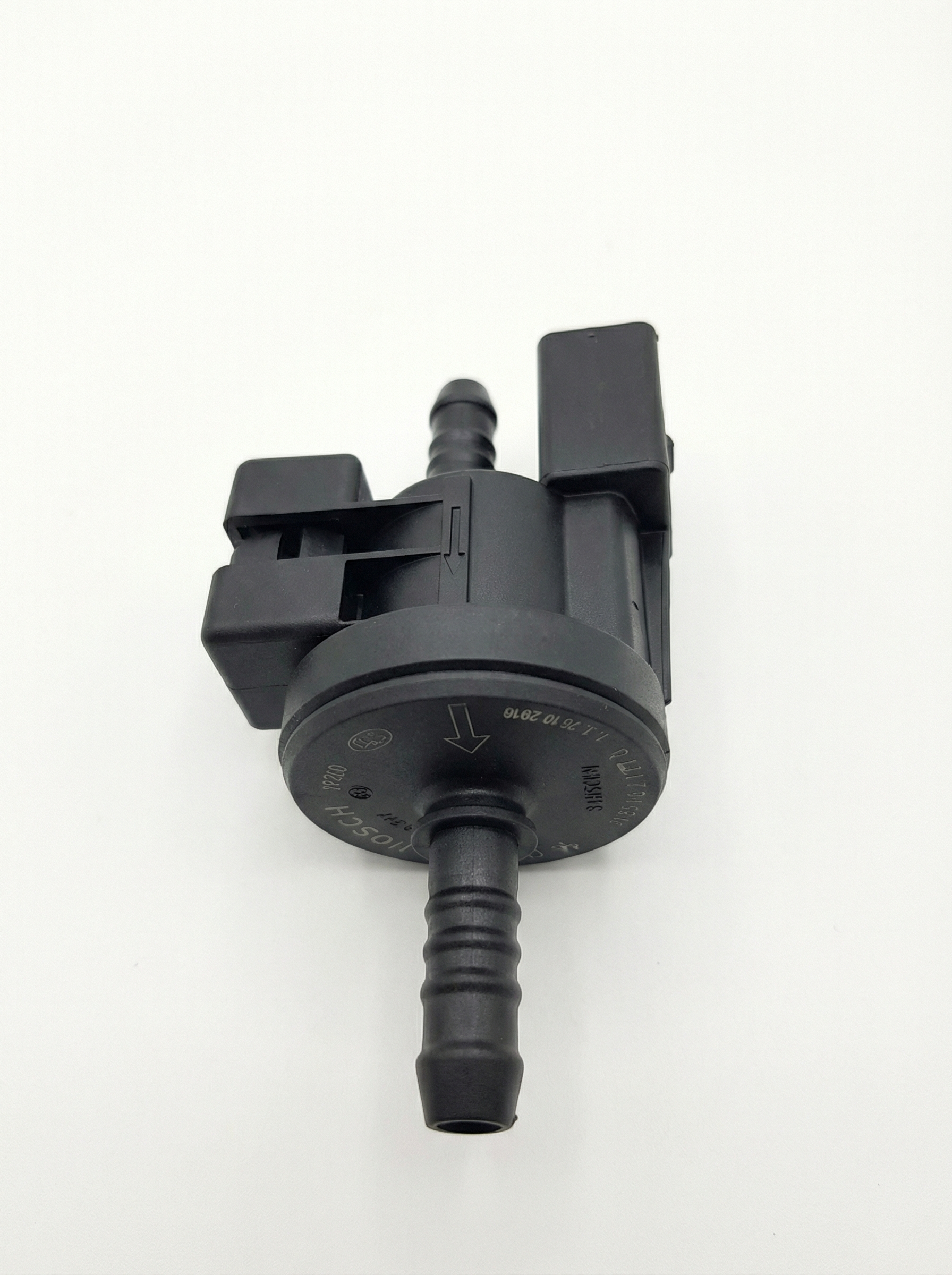
Est. part cost: $15-$40 - Faulty EVAP Purge Valve (N80 Valve) 🔴 High Probability The N80 valve is a very common failure item on VWs of this era, especially the Mk6. It can get stuck open, closed, or fail to seal properly, often due to internal wear or clogging from charcoal canister debris.
How to confirm: Remove the valve (located in the engine bay). When de-energized, you should not be able to blow air through it or pull a vacuum on it. If air passes through, the valve is leaking internally and is bad. A multimeter can also be used to check for resistance across the two pins, which should be between 15-35 ohms.
Typical fix: Replace the N80 purge valve. 🎬 Watch: How to diagnose and replace the N80 valve on a 2.5L engine. It is typically a simple replacement involving disconnecting two hoses and an electrical connector. Ensure the arrow on the new valve points toward the engine/intake manifold.
Est. part cost: $20-$50 - Cracked or Disconnected EVAP Hoses 🟡 Medium Probability Over time, rubber and plastic hoses in the engine bay and under the car can become brittle and crack, especially at connection points and fittings.
How to confirm: Visually inspect all accessible EVAP lines running from the gas tank, to the charcoal canister, and up to the purge valve in the engine bay. A smoke test is the most effective professional method to find small, hard-to-see leaks. Soapy water can also be sprayed on connections while the system is pressurized to look for bubbles.
Typical fix: Replace the cracked section of hose or the entire hose assembly. Ensure clamps are secure.
Est. part cost: $10-$100
Rare But Worth Checking
- Faulty Leak Detection Pump (LDP) or DMTL Pump: The LDP (or DMTL pump on newer models) is what pressurizes the system for the leak test. While it can fail, it's less common than the purge valve or a simple leak. A failure here might also trigger other specific LDP-related codes. VW issued a Tech Tip (01-19-09TT) suggesting to check the LDP wiring and module if other tests pass.
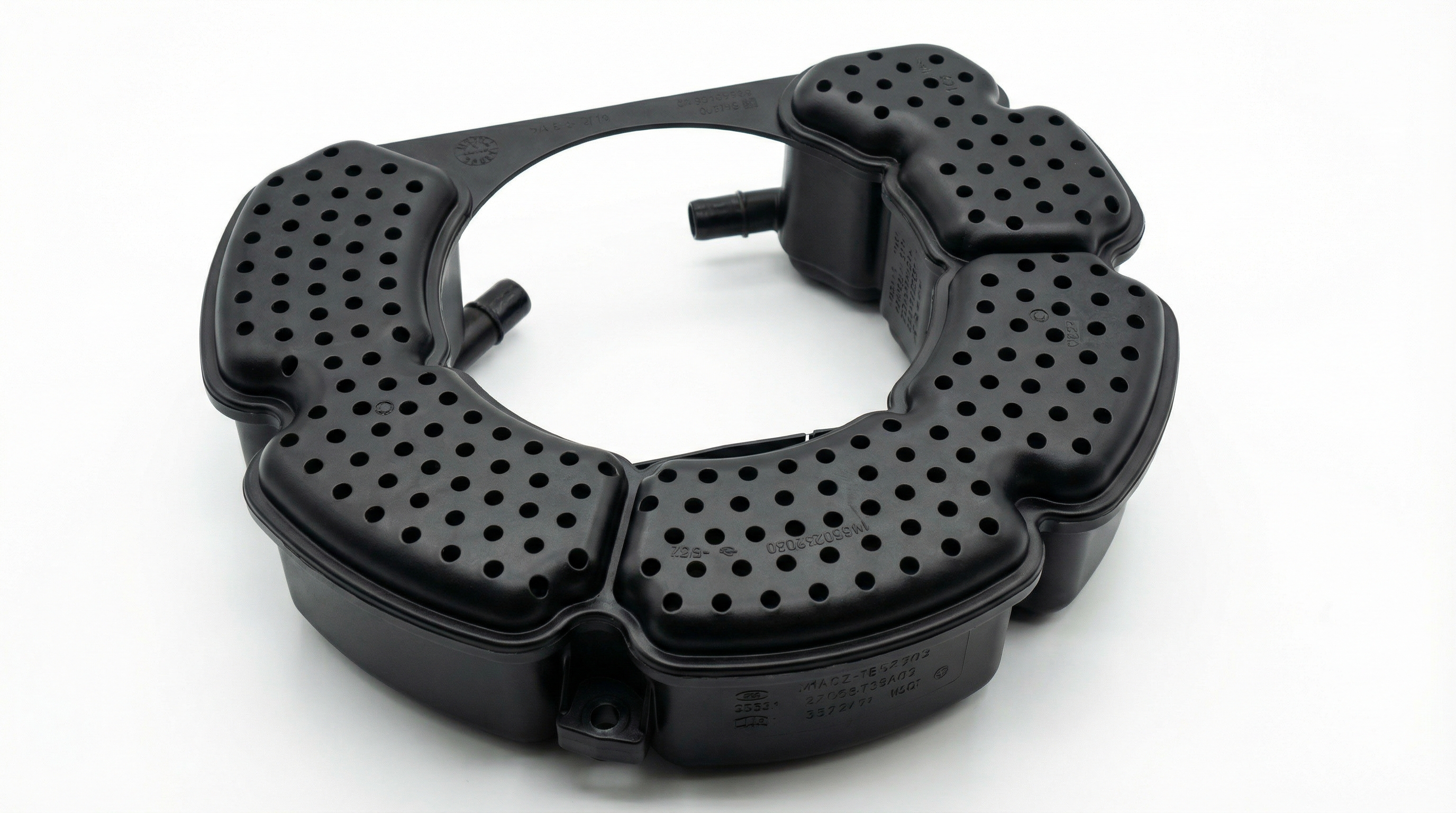
- Cracked Charcoal Canister: Physical damage from road debris or saturation from consistently overfilling the fuel tank can cause the canister to crack and leak. Shaking the canister to check for rattling (loose charcoal) is a common diagnostic step. A VW Tech Tip (20-23-01TT) for newer models identified manufacturing defects in some canisters causing leaks at the seams.
- Leaking Fuel Tank or Filler Neck: Rust or physical damage can cause small leaks in the fuel tank or the filler neck where the gas cap seals. This is less common but can be found with a smoke test. One VW Tech Tip advises checking the connections behind the rubber boot in the fuel filler door.
Diagnosis Steps

- Retrieve the code with an OBD-II scanner.
- Check the gas cap. Remove it, inspect the seal for cracks or damage, and clean it. Reinstall it, ensuring it clicks at least once. Clear the code and drive for a few days to see if it returns.
- If the code returns, locate the N80 purge valve in the engine bay. It will have two hoses and an electrical connector.
- With the engine off, disconnect the hoses and electrical connector from the N80 valve.
- Try to blow air through the valve. If air passes through, the valve is stuck open and must be replaced. Alternatively, with the engine running, use a vacuum gauge on the disconnected EVAP line; if vacuum is present, the valve is leaking and bad.
- If the gas cap and purge valve are good, perform a visual inspection of all EVAP hoses for obvious cracks, breaks, or loose connections, paying close attention to fittings.
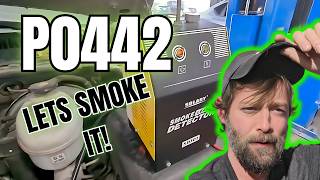
- If no visible leaks are found, the most reliable next step is a smoke test. This involves feeding low-pressure smoke into the EVAP system (often via the service port) to pinpoint the exact location of the leak. 🎬 Watch: How to find a small EVAP leak using a smoke test. Watch for smoke escaping from hoses, the charcoal canister, the fuel filler neck, or the N80 valve itself.
Parts You'll Likely Need

- Fuel Cap
(OEM #1K0201550AJ (Mk6), 5Q0201550L (Mk7))— The seal wears out over time, causing it to lose its ability to hold pressure. This is the simplest and most common fix. It is critical to use an OEM or high-quality aftermarket cap.
Trusted brands: Volkswagen (OEM), Blau, Carquest Premium
OEM price range: $30-$40
Aftermarket price range: $15-$25 - EVAP Purge Valve (N80)
(OEM #06E906517A)— A very common failure point on this platform. It gets stuck or leaks internally, preventing the EVAP system from sealing correctly. The Bosch part is often the original equipment manufacturer.
Trusted brands: Bosch (OEM Supplier), Volkswagen (OEM), Standard Motor Products
OEM price range: $40-$60
Aftermarket price range: $20-$40
Related Codes That Often Appear With This One
- P0455 — Indicates a large EVAP leak. If a small leak (P0442) worsens, it can become a large leak. Sometimes both codes appear if the leak size is on the borderline.
- P0456 — Indicates a very small EVAP leak. This is closely related and the diagnostic process is nearly identical. A bad gas cap is a very common cause for this code as well.
- P0441 — Indicates incorrect purge flow, often pointing directly to a malfunctioning N80 purge valve that is stuck open or closed.
Technical Service Bulletins (TSBs) & Recalls
- VW Tech Tip 01-19-06TT: Provides a procedure for testing the N80 purge valve for leaks when it is located under the intake manifold (as on some Jetta 1.4T models), which can be adapted for Golfs. It details checking for vacuum with the engine idling.
- VW Tech Tip 01-19-09TT: While for an Atlas, it provides a relevant diagnostic path for P0442, advising to check for charcoal particles in the EVAP line near the N80 valve. If particles are found, it recommends replacing both the N80 valve and the charcoal canister.
- VW Tech Tip 20-23-01TT: Notes that on some newer VW models, manufacturing defects in the EVAP canister itself can cause leaks along the seams, triggering P0442 or P0456.
Platform-Specific Known Issues
- The N80 purge valve is a well-documented weak point on the Mk6 Golf (2010-2014), frequently causing P0442 and P0441 codes.
- On some later Mk6 GTI models with the CBFA engine, the N80 valve was revised into a harness with integrated tubing that wraps around the intake manifold, making it much harder to replace than the earlier standalone valve.
Mechanic-Grade Diagnostic Values
- N80 EVAP Purge Valve Resistance — expected: 15-35 Ohms. Failure: A reading of infinite resistance (open circuit) or zero resistance (short circuit) indicates a failed valve coil.
- EVAP Canister Vent Valve Resistance — expected: 20-30 Ohms. Failure: A reading outside this range suggests the solenoid winding is damaged and the valve needs replacement.
- EVAP Canister Vent Valve Power Supply — expected: ~12 Volts (Battery Voltage). Failure: No voltage at the connector (with ignition on) points to a wiring issue, blown fuse, or ECM problem, not a faulty valve.
Scan Tool Commands That Help
- VCDS (VAG-COM) or equivalent professional scanner: Engine (01) -> Basic Settings -> Group 071 — This command initiates the Leak Detection Pump (LDP) test sequence. A technician can use this to force the system to run its self-test on demand to check the function of the LDP and see if the system can hold pressure. It's a critical step before resorting to a smoke test.
- VCDS (VAG-COM) or equivalent professional scanner: Engine (01) -> Output Tests — This function allows a technician to cycle individual components, including the N80 Purge Valve and the EVAP Canister Vent Valve. You can command the valve to open and close while listening for an audible click or checking for vacuum/pressure changes, confirming if the solenoid is functional.
Wiring & Ground Locations
- Leak Detection Pump (LDP) / EVAP Canister — Typically located under the wheel housing liner in the right rear wheel well.. This area is exposed to road debris and moisture, making the LDP, canister, and associated hoses and wiring susceptible to physical damage, corrosion, or cracks that cause leaks.
- EVAP System Ground — While specific ground points vary by exact model and year, a common engine block or chassis ground point is used. For example, on some 2.0L engines, a ground is located on the center of the firewall, designated G608.. A poor ground for the LDP or N80 valve can cause intermittent or incorrect operation, leading the ECM to misinterpret sensor data and falsely set a P0442 code.
Real Owner Repair Stories
- 2CarPros Forum User (2000-2005 Mitsubishi Eclipse (Concept applies to other vehicles in rust-prone areas)) — Persistent P0442 code and a visible fuel leak only while actively pumping gas.
❌ Tried (didn't work) Unable to identify the leak through standard visual inspection when the car was not being refueled.
✅ What actually fixed it The metal fuel filler neck had rusted through on the bottom. Replacing the entire filler neck (OEM Part MR573836) resolved both the fuel leak and the P0442 code. - YouTube video by DIY Jonathan (2008 Volkswagen Eos 2.0T) — P0442 (Evaporative emission system leak detected small)
❌ Tried (didn't work) Cleaning the original N80 valve with carburetor cleaner did not solve the internal leak.
✅ What actually fixed it The N80 purge valve was confirmed to be leaking internally using a hand vacuum pump. Replacing the N80 valve with a new part for $30 fixed the issue.
"I Checked Everything" — The Actual Cause
- On some vehicles, a check ball is located at the bottom of the fuel filler neck. During a standard smoke test where pressure is applied, this ball can be forced into a position that seals the filler neck, preventing smoke from escaping and giving a false 'no leak found' result. However, the leak is actually at the gas cap or top of the filler neck. To properly test, a technician should verify smoke is reaching the gas cap area by removing the cap and seeing if smoke comes out. If not, the check ball may be masking the true leak location.
OEM Part Supersession History
06H906517T→06H906517AE— Likely an internal revision for improved reliability or manufacturing process.
Heads up: These parts are generally interchangeable for the specified applications, but it is always best to verify by VIN.N/A→06E906517A— This is a widely used N80 valve across many VW/Audi platforms for many years.
Heads up: While this part fits many 2.0T FSI and 2.5L engines in the 2010-2014 range, it is crucial to verify the part number on the existing valve, as some later models used a different valve integrated into a hose assembly.
Model Year Variations Within This Range
- 2008+ (including early Mk6): On 2.0TSI engines (CCTA/CBFA), the vacuum supply for the Leak Detection Pump (LDP) comes from a 'T' fitting off the brake vacuum pump. This fitting has small, integrated orifices that can become clogged, leading to EVAP codes like P0442. This is different from systems that pull vacuum directly from the intake manifold without such orifices.
Helpful Videos

Used OEM Parts in Stock

New Aftermarket Parts Available


The information in this article is provided for general reference and educational purposes only. Vehicle specifications, procedures, and part compatibility can vary by production date, trim level, and region. Always consult your vehicle's factory service manual and verify part numbers before purchasing or performing repairs. Safety-critical components such as airbags, seat belts, and braking systems should be installed by a qualified professional.
- Volkswagen GOLF:
- 🎬 Helpful Videos
- 🛍️ Shop This Part
- What's Unique About the 2010-2017 Volkswagen GOLF
- Diagnostic Flowchart
- Symptoms You May Notice
- Most Likely Causes
- Rare But Worth Checking
- Diagnosis Steps
- Parts You'll Likely Need
- Related Codes That Often Appear With This One
- Technical Service Bulletins (TSBs) & Recalls
- Platform-Specific Known Issues
- Mechanic-Grade Diagnostic Values
- Scan Tool Commands That Help
- Wiring & Ground Locations
- Real Owner Repair Stories
- "I Checked Everything" — The Actual Cause
- OEM Part Supersession History
- Model Year Variations Within This Range
- 🎟️ Get 5% Off