

P0442 on 2004-2010 Saturn VUE: EVAP Small Leak Causes and Fixes
For a P0442 code on a Saturn VUE, the most likely and cheapest fix is replacing the gas cap. If that doesn't work, the leak is likely a cracked or rusted EVAP hose, or a faulty purge or vent valve. Diagnosing these requires visual inspection and often a smoke test to pinpoint the exact source of the small leak.
- First, check your gas cap. Make sure it's tight and the seal isn't cracked. This fixes the problem more than half the time.
- The 2004-2007 and 2008-2010 VUE models are different. Know your year and engine before buying parts like the purge or vent valve.
- If the gas cap isn't the issue, the leak is likely a cracked rubber hose or a bad vent/purge valve.
- Finding the exact source of a small leak without a smoke machine is very difficult. A professional diagnosis with a smoke test is often the quickest path to a correct repair.
- You can continue to drive the car with this code, but it needs to be fixed to pass an emissions test.
What's Unique About the 2004-2010 Saturn VUE

The 2004-2010 Saturn VUE spans two distinct generations with different engines and platforms, which means the location and specific parts of the EVAP system can vary. The first generation (2004-2007) used GM and Honda engines on the GM Theta platform, shared with the Chevy Equinox and Pontiac Torrent. The second generation (2008-2010) was a rebadged Opel Antara, also on the Theta platform but with different powertrain options like the 3.6L V6. This makes it crucial to identify your specific year and engine before purchasing parts like the purge or vent valve, as their locations and part numbers differ significantly between generations.
Diagnostic Flowchart

Tap your situation to follow the diagnostic path that matches what you're seeing on this vehicle.
Generation note: Yes, this range covers two generations of the Saturn VUE. * First Generation (2004-2007): Built on the GM Theta platform. The EVAP purge solenoid is typically found on the engine's intake manifold; on the 3.5L V6 (a Honda engine), it's under the intake manifold. The EVAP vent solenoid is located on or near the charcoal canister, which is under the vehicle near the fuel tank, roughly below the driver's side rear area. * Second Generation (2008-2010): A rebadged Opel Antara. On the 3.6L V6, for example, the purge valve is located on the back of the engine near the firewall. Component locations can differ significantly from the first generation.
Symptoms You May Notice
- Check Engine Light is on.
- A faint smell of fuel may be noticeable, especially when parked in an enclosed space like a garage.
- Your vehicle will fail an emissions inspection.
- In some cases related to a faulty vent valve, you may have difficulty refueling, with the gas pump nozzle clicking off repeatedly.
- Replacing the oxygen sensor. O2 sensors are part of the exhaust system and have no connection to the EVAP system.
- Replacing the catalytic converter. This is a costly exhaust component and is unrelated to fuel vapor leaks.
Most Likely Causes

- Loose, Worn, or Incorrect Gas Cap 🔴 High Probability The gas cap is a frequently used and handled part. Its seal can wear out, crack, or stiffen over time, or it can be simply forgotten to be tightened properly after refueling. Using a non-OEM cap can also lead to sealing issues.
How to confirm: Remove the gas cap and inspect the rubber O-ring or seal for cracks, stiffness, or damage. Ensure the cap clicks at least 3 times when tightened. Check the fuel filler neck for rust or debris that could prevent a good seal.
Typical fix: Tighten the cap until it clicks multiple times. If the seal is damaged or the cap is suspect, replace it with a new, high-quality OEM or equivalent cap. It's often recommended to use an OEM cap to ensure a proper seal.
Est. part cost: $15-$35 - Cracked or Rusted EVAP Hoses/Lines 🟡 Medium Probability Over time, the rubber and plastic hoses in the EVAP system are exposed to heat and the elements, causing them to become brittle and crack. On GM platforms of this era, the metal EVAP lines running along the undercarriage are also highly susceptible to rust, which can create small pinhole leaks.
How to confirm: Visually inspect all accessible EVAP hoses running from the fuel tank to the charcoal canister and up to the engine. Look for obvious cracks, splits, or loose connections. Pay close attention to the metal lines for signs of heavy rust or flaking. A definitive diagnosis requires a smoke test, which forces smoke into the EVAP system to reveal the exact location of small leaks. 🎬 Learn how to find small EVAP leaks without a smoke machine.
Typical fix: Replace the cracked section of hose or the rusted metal line. Small rubber connectors are often the culprit and are inexpensive to replace. Rusted lines may need to be replaced with a new OEM assembly.
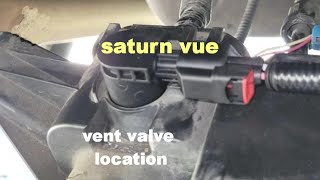
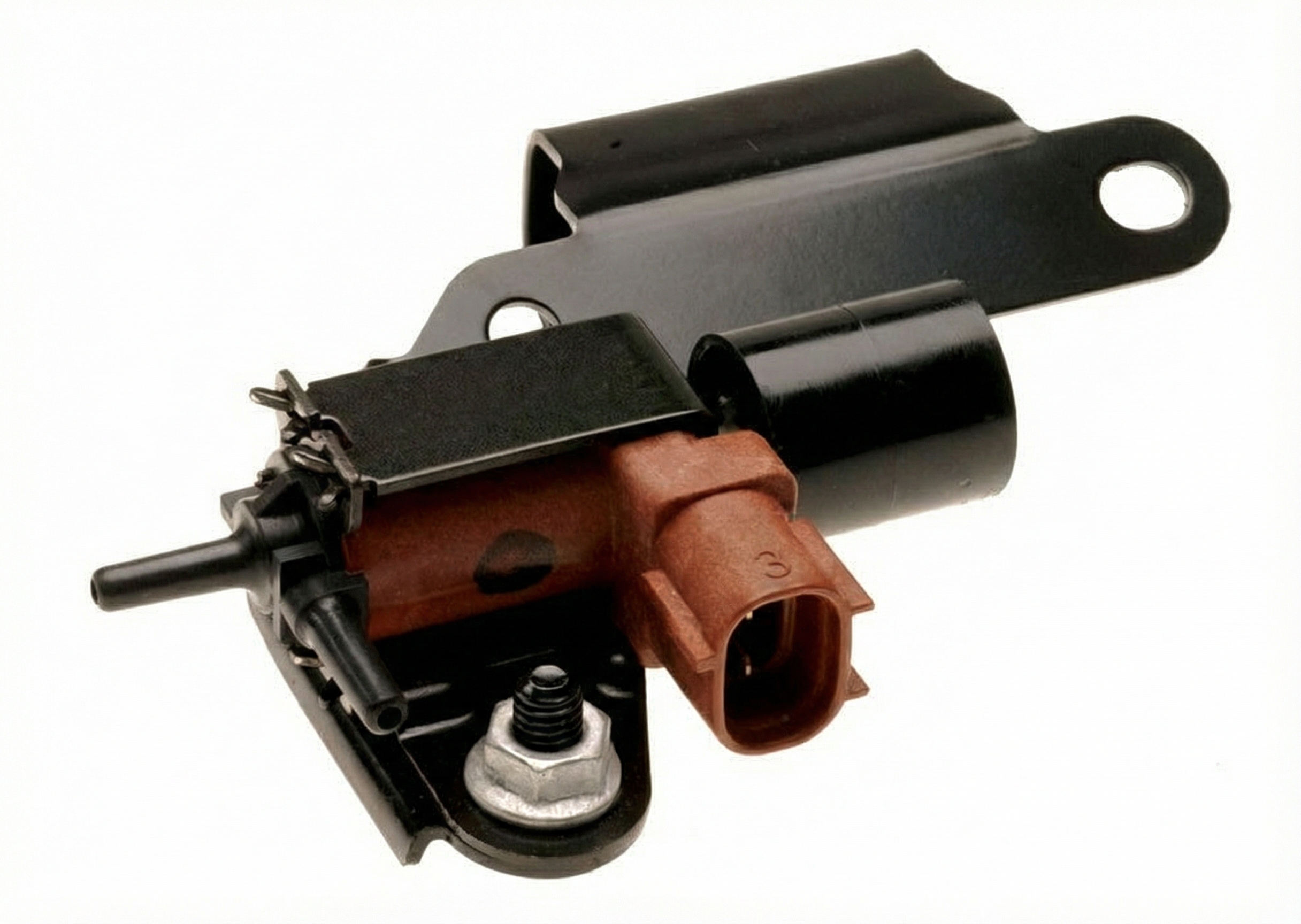
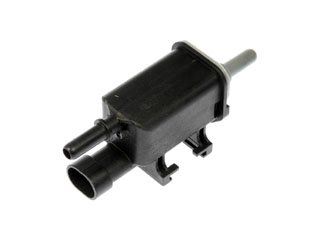
Est. part cost: $10-$160 - Faulty EVAP Vent Solenoid/Valve 🟡 Medium Probability The vent solenoid is located under the vehicle and is exposed to road grime, moisture, and dust, which can cause it to fail, get stuck, or become clogged. This prevents it from sealing properly during the EVAP system self-test.
How to confirm: A scan tool can command the valve to close during a smoke test to see if it's leaking. You can also test it by applying 12V to see if it actuates (clicks). On a Gen 1 VUE, it's located near the charcoal canister under the vehicle. A stuck-closed valve can also make refueling difficult.
Typical fix: Replace the vent solenoid. On many GM vehicles, the replacement part is an updated design and may come with a new wiring harness adapter that must be used.
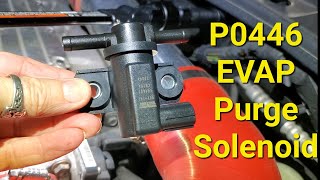
Est. part cost: $25-$70 - Faulty EVAP Purge Valve/Solenoid ⚪ Low Probability The purge valve controls the flow of fuel vapors from the canister to the engine. It can get stuck slightly open due to carbon buildup or wear, creating a small, constant leak. This is a very common failure on many GM vehicles.
How to confirm: With the engine off, remove the hose leading from the canister and try to blow through the valve; it should be closed and not allow air to pass. A classic symptom of a stuck-open purge valve is difficulty starting the engine immediately after refueling. A scan tool can also be used to command it open and closed while checking for flow.
Typical fix: Replace the purge valve. On Gen 1 models, it's on or near the engine's intake manifold. On Gen 2 models with the 3.6L V6, it is located between the engine and the firewall.
Est. part cost: $20-$60
Rare But Worth Checking
- Cracked Charcoal Canister: The plastic body of the charcoal canister itself can develop small cracks from age or impact from road debris. This is usually found during a smoke test when smoke is seen seeping from the canister body itself.
- Leaking Fuel Tank Pressure Sensor Seal: The sensor that measures pressure in the tank has a seal that can degrade over time, creating a small leak. This is often located on top of the fuel tank as part of the fuel pump module.
- Rusted Fuel Filler Neck: The metal fuel filler neck, where the gas cap seals, can rust over time, especially in regions that use road salt. The rust creates an uneven surface that prevents the gas cap from sealing properly, causing a P0442 code. In severe cases, the neck can rust through completely, causing a visible fuel leak during refueling.
Diagnosis Steps
- Check the Gas Cap: This is the most common cause. Remove, inspect the seal for damage, and retighten it until it clicks several times. Clear the code and drive for a few days. Consider replacing it with an OEM cap if it's old, as aftermarket caps can be problematic.
- Visual Inspection: Carefully inspect all visible EVAP hoses and lines, especially rubber elbows and connectors, for any signs of cracking, brittleness, or disconnection. Pay special attention to the metal EVAP lines running under the car for severe rust.
- Inspect Fuel Filler Neck: Check the metal surface where the gas cap seals for any rust or corrosion that could compromise the seal. Sanding it smooth may help temporarily, but replacement is the correct fix if it's badly corroded.
- Perform a Smoke Test: This is the most effective way to find a small leak. A smoke machine is connected to the EVAP service port, filling the system with visible vapor. Look for smoke escaping from any component, hose, or seal. This will pinpoint the leak's location.
- Test Solenoids: During the smoke test, use a bi-directional scan tool to command the vent and purge solenoids to close. If smoke starts or stops when a valve is actuated, you've found the faulty component. You can also test the purge valve for being stuck open by checking for vacuum at its inlet port when the engine is cold and running.
- Consider ECM Update (Early Models): For 2002-2003 VUEs with the 2.2L engine, TSB #04-06-04-033A notes that false P0442 codes could be set due to fuel splash affecting the tank pressure sensor. If no leak is found, an ECM reprogram with an updated calibration may be the solution.
Parts You'll Likely Need

- Fuel Cap
(OEM #ACDelco GT355 (Covers most 2004-2010 models))— This is the most frequent failure point and the easiest to fix. The seal wears out over time. Using an OEM cap is highly recommended for a reliable seal.
Trusted brands: ACDelco, Stant, Gates
OEM price range: $20-$35
Aftermarket price range: $10-$25 - EVAP Vapor Canister Vent Solenoid
(OEM #ACDelco 214-2149 (or newer revisions like 22865590))— This valve is exposed to the elements under the car and is prone to failure from dirt and corrosion. It is a common failure point that prevents the system from sealing for its self-test.
Trusted brands: ACDelco, Dorman, Standard Motor Products (SMP)
OEM price range: $40-$70
Aftermarket price range: $25-$50 - EVAP Vapor Canister Purge Solenoid/Valve
(OEM #ACDelco 214-1473 (For 3.6L V6, 2008-2009))— This valve, located on the engine, can get stuck open, creating a constant small vacuum leak that the system interprets as a P0442. A classic symptom is difficulty starting after refueling.
Trusted brands: ACDelco, Dorman, TRQ
OEM price range: $35-$60
Aftermarket price range: $20-$45
Related Codes That Often Appear With This One
- P0455 — A large leak (P0455) might be fixed, but a smaller secondary leak (P0442) was also present and is now being detected.
- P0446 — This code points specifically to a fault in the EVAP vent control circuit. A problem with the vent valve can sometimes manifest as a small leak code (P0442) as well.
- P0496 — This code indicates 'EVAP Flow During a Non-Purge Condition,' which almost always points to a faulty purge valve that is stuck open. A stuck-open purge valve can also be interpreted by the system as a small leak, triggering a P0442.
Technical Service Bulletins (TSBs) & Recalls
- Bulletin #PIT4943D: A general GM bulletin for diagnosing P0442. It advises technicians on the proper use of an Evaporative Emissions System Tester (smoke machine) and a scan tool. It warns that leaks may only appear under vacuum and that temperature differences can affect test accuracy. It also cautions against using aftermarket test equipment which may not be accurate enough for small leaks.
- Bulletin #04-06-04-033A: Specific to 2002-2003 Saturn VUEs with the 2.2L engine, this TSB addresses false P0440 (large leak) and P0442 (small leak) codes. It states that fuel splash can cause an inaccurate reading from the fuel tank pressure sensor. If diagnostics find no physical leak, the recommended fix is to reprogram the Engine Control Module (ECM) with an updated calibration.
Platform-Specific Known Issues
- Rusted Underbody EVAP Lines: Like their platform mates (Chevy Equinox, Pontiac Torrent), Saturn VUEs operated in rust-belt states are prone to the metal EVAP lines rusting through. A smoke test often reveals a leak from a rusted line running along the frame rail, which can be difficult to spot with just a visual inspection.
- False Codes on Early 2.2L Models: TSB #04-06-04-033A was issued for 2002-2003 VUEs with the 2.2L engine for setting P0440 or P0442 with no actual leak present. The cause was identified as fuel slosh affecting the pressure sensor. The fix, if no leak is found, is to reprogram the ECM with updated software. While this TSB is for slightly earlier models, it highlights a potential software sensitivity that could persist in early 2004 models.
Mechanic-Grade Diagnostic Values
- EVAP Canister Vent Solenoid Resistance — expected: 20-30 Ohms (Honda-based 3.5L V6) or 48-65 Ohms (GM engines). Failure: A reading outside of the specified range, or an open/infinite resistance, indicates a failed solenoid coil.
- EVAP Canister Purge Valve Resistance — expected: 20-30 Ohms (varies by specific part, some GM electronic valves are lower at 2.5-6 ohms). Failure: A reading significantly outside the 12-130 ohm general range, or infinite resistance, points to a bad coil.
Scan Tool Commands That Help
- Tech2 / GDS2 (GM Factory Tool): EVAP System Test > System Seal — This bidirectional command allows the technician to manually seal the EVAP system by closing both the vent and purge solenoids. While monitoring the Fuel Tank Pressure (FTP) sensor data, the technician can see if the system holds a vacuum or pressure, confirming the integrity of the system or the function of the individual solenoids.
- Tech2 / GDS2 (GM Factory Tool): Engine Output Controls > EVAP Purge Solenoid — Allows the technician to command the purge solenoid open and closed (or vary its duty cycle) to check for a response. It can be used with a smoke machine to see if the valve is leaking internally when commanded closed, or with a vacuum gauge to confirm it opens and allows flow when commanded.
- Tech2 / GDS2 (GM Factory Tool): Engine Output Controls > EVAP Vent Solenoid — This command forces the normally-open vent valve to close. It is essential for performing a smoke test, as it seals the back of the system. If smoke is seen exiting the vent area after this command is sent, the vent solenoid is faulty or there is a leak in the vent line.
Real Owner Repair Stories
- Reddit user on r/MechanicAdvice (2007 Saturn VUE V6) — P0455 (Large EVAP Leak) and poor gas mileage.
❌ Tried (didn't work) Replaced fuel cap (OEM), Replaced purge solenoid valve, Replaced charcoal canister with vent valve sensor, Replaced fuel pressure sensor
✅ What actually fixed it The issue remained unresolved even after a professional smoke test of the EVAP lines and fuel tank found no leaks. The user was considering a second opinion, highlighting that even replacing all common components does not guarantee a fix and points toward a more complex or hidden issue.
"I Checked Everything" — The Actual Cause
- In some cases, a vehicle can pass a smoke test but still have a P0442 code. This often points to an intermittent failure of a component that only occurs under specific conditions (e.g., temperature, vibration). The most common culprit in this scenario is a purge valve that is not leaking at rest but gets stuck slightly open during operation, or a vent valve that fails to seal completely when commanded by the computer but appears to seal during a manual test.
OEM Part Supersession History
Varies (Original factory vent solenoid)→ACDelco 214-2149 (and subsequent revisions like 25932571)— The original vent solenoid design was prone to failure from moisture and debris. The updated part often has improved sealing and durability.
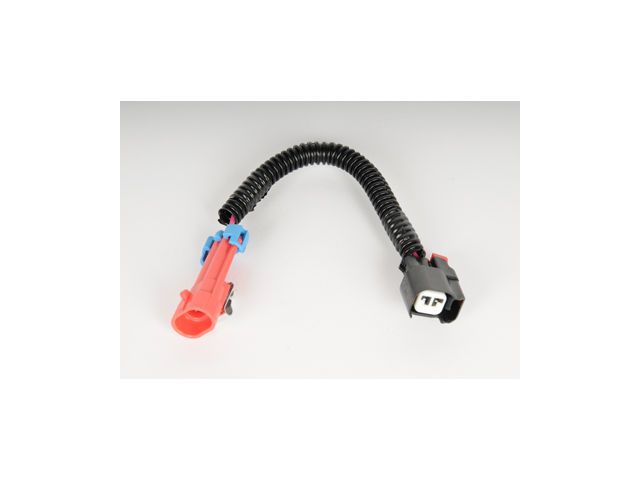
Heads up: Crucially, many replacement vent solenoids (like ACDelco 214-2149) use a different connector than the original part on the vehicle's harness. The new part MUST be installed with a corresponding pigtail adapter that is spliced into the vehicle's wiring. Many aftermarket kits include this adapter. Failure to use the adapter will make installation impossible.
Model Year Variations Within This Range
- 2004-2007 (Gen 1) vs. 2008-2010 (Gen 2): The location of the EVAP Purge Solenoid is a key difference. On the Gen 1 3.5L V6, it is under the intake manifold. On the Gen 2 3.6L V6, it is located on the back of the engine, between the engine and the firewall. The vent solenoid remains in a similar location under the vehicle near the charcoal canister for both generations.
Helpful Videos
Used OEM Parts in Stock
New Aftermarket Parts Available


The information in this article is provided for general reference and educational purposes only. Vehicle specifications, procedures, and part compatibility can vary by production date, trim level, and region. Always consult your vehicle's factory service manual and verify part numbers before purchasing or performing repairs. Safety-critical components such as airbags, seat belts, and braking systems should be installed by a qualified professional.
- Saturn VUE:
- 🎬 Helpful Videos
- 🛍️ Shop This Part
- What's Unique About the 2004-2010 Saturn VUE
- Diagnostic Flowchart
- Symptoms You May Notice
- Most Likely Causes
- Rare But Worth Checking
- Diagnosis Steps
- Parts You'll Likely Need
- Related Codes That Often Appear With This One
- Technical Service Bulletins (TSBs) & Recalls
- Platform-Specific Known Issues
- Mechanic-Grade Diagnostic Values
- Scan Tool Commands That Help
- Real Owner Repair Stories
- "I Checked Everything" — The Actual Cause
- OEM Part Supersession History
- Model Year Variations Within This Range
- 🎟️ Get 5% Off