

P0442 on 2007-2009 Nissan Quest: EVAP Small Leak Causes and Fixes
For a 2007-2009 Nissan Quest, code P0442 is most often caused by a loose or faulty gas cap. Before buying parts, tighten the cap, clear the code, and drive. If it returns, the next most likely cause is a failed EVAP canister vent control valve, located near the fuel tank. Always use a genuine OEM Nissan gas cap for replacement, as aftermarket caps are a known cause of this code returning.
- Always check the gas cap first for code P0442. Ensure it's tight and the seal is intact. If replacing, use a genuine Nissan OEM part.
- The second most common cause is a faulty EVAP canister vent control valve located at the rear of the vehicle, which is a known weak point on this platform.
- A smoke test is the most reliable method for finding the exact source of a small leak if the gas cap is not the issue.
- Do not trust cheap aftermarket gas caps; they are a frequent cause of the code returning.
What's Unique About the 2007-2009 Nissan QUEST
The 2007-2009 Nissan Quest, part of the third generation (V42) and equipped with the VQ35DE engine 🎬 Watch: Locate the EVAP and EGR components on your Quest., is highly susceptible to this code due to two primary factors highlighted by both owner experiences and manufacturer bulletins. First, as noted in Nissan TSB #NTB09020F, a loose fuel filler cap is a very common trigger. Second, like many Nissans of this era (including the Altima, Maxima, and Murano), the EVAP canister vent control valve is mounted under the vehicle near the charcoal canister, where it is exposed to road debris and moisture, leading to frequent failures where it becomes stuck open or closed.
Diagnostic Flowchart
Tap your situation to follow the diagnostic path that matches what you're seeing on this vehicle.
Symptoms You May Notice
- Check Engine Light is on
- A faint fuel smell may be noticeable, though this is less common.
- Difficulty starting immediately after refueling (in rare cases, often points to a stuck-open purge valve).
- Replacing the purge valve when the vent valve is the actual problem. The vent valve fails more frequently on this platform.
- Using a cheap, aftermarket gas cap which fails to seal properly, causing the code to return within weeks or months.
- Declaring the system 'leak-free' after a smoke test. If the vent valve is stuck closed, smoke cannot fill the entire system, leading to a false negative. 🎬 Watch: How to find a leak when smoke tests fail. A proper test involves verifying that smoke flows through the system by removing the gas cap to see if smoke exits the filler neck.
Most Likely Causes
- Loose or Faulty Fuel Filler Cap 🔴 High Probability Nissan explicitly identifies this as a primary cause in Technical Service Bulletin NTB09020F for 2007-2011 vehicles. The rubber O-ring on the cap can crack, dry out, or get dirty, preventing a proper seal. Forum users and mechanics overwhelmingly report that aftermarket caps often fail to seal correctly, causing the P0442 code to return.
How to confirm: Inspect the gas cap's rubber seal for any cracks, stiffness, or debris. Clean the seal and the filler neck. Reinstall the cap, ensuring it clicks several times. If the seal is damaged, replacement is necessary.
Typical fix: Tighten or replace the fuel filler cap. It is highly recommended to use a genuine Nissan (OEM) cap to ensure a proper, long-lasting seal.
Est. part cost: $20-$45 - Faulty EVAP Canister Vent Control Valve 🔴 High Probability This is a notoriously common failure point on Nissans of this era. The valve is located under the vehicle by the charcoal canister, making it vulnerable to corrosion and dirt, which causes it to stick open or closed. The part has been redesigned by Nissan multiple times, indicating known issues with the original design.
How to confirm: A definitive diagnosis is done with a smoke test, which will show smoke exiting the valve if it's stuck open. You can also test it electrically by applying 12V to its pins; a healthy valve will produce a distinct click. A visual inspection may reveal a cracked plastic housing.
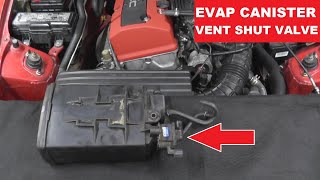
Typical fix: Replace the EVAP canister vent control valve. It is typically mounted on or near the charcoal canister at the rear of the vehicle. Applying a small amount of silicone lubricant to the new O-ring can make installation easier. Be aware that the mounting bolts are often rusted 🎬 See this walkthrough on testing and replacing the vent valve. and may break during removal.
Est. part cost: $50-$100 - Cracked or Disconnected EVAP Hoses 🟡 Medium Probability Over time, the rubber and plastic hoses in the EVAP system can become brittle and crack, especially those exposed to the elements under the vehicle or heat in the engine bay. The small vacuum lines connected to the purge valve are common culprits.
How to confirm: Visually inspect all accessible EVAP lines from the engine bay to the fuel tank area. Squeeze rubber hoses to reveal hidden cracks that are not visible otherwise. A smoke test is the most effective way to find small, hard-to-see leaks.
Typical fix: Replace the specific section of cracked or broken hose. Some owners opt for more durable silicone vacuum lines as a replacement.
Est. part cost: $10-$50 - Faulty EVAP Purge Valve/Solenoid ⚪ Low Probability While less common than the vent valve, the purge valve can fail by getting stuck slightly open, creating a small leak. This failure often presents with a unique symptom: a long crank or difficulty starting after refueling.
How to confirm: The purge valve is located in the engine bay. With the engine off, remove the valve and try blowing through it. It should be normally closed and not allow air to pass. If you can blow through it, it is stuck open and needs replacement.
Typical fix: Replace the purge valve.
Est. part cost: $40-$90
Rare But Worth Checking
- Leaking Charcoal Canister: The plastic housing of the canister itself can develop hairline cracks over time from age or debris impact, causing a leak. This is usually found with a smoke test after all other common components have been checked.
- Cracked Fuel Filler Neck: Rust and corrosion can create small holes or a rough surface on the metal fuel filler neck, preventing the gas cap from sealing properly. This is more common in regions that use road salt and can be confirmed with a smoke test showing smoke escaping from around the gas cap area.
- Leaking Vent Valve O-Ring: Sometimes the vent valve itself is functional, but the O-ring that seals it to the charcoal canister has become dry, cracked, or compressed, creating a small leak. This is often discovered during a smoke test.
Diagnosis Steps
- Retrieve the P0442 code using an OBD-II scanner and check for any other related codes.
- Inspect the fuel filler cap. Remove it, check the seal for cracks or damage, and clean any debris from the cap and filler neck. Reinstall it tightly until it clicks several times.
- Clear the code and drive the vehicle for a few days to see if the light returns. If it does, and you suspect the cap, replace it with a genuine OEM Nissan part before proceeding.
- Visually inspect all visible EVAP hoses and lines in the engine bay and under the vehicle. Pay close attention to the small vacuum lines near the purge solenoid in the engine bay. Squeeze the hoses to check for hidden cracks.
- If a visual inspection reveals no issues, the next step is to perform a smoke test. This involves injecting low-pressure smoke into the EVAP system's service port to pinpoint the exact location of the leak.
- During the smoke test, pay close attention to the EVAP canister vent control valve (at the rear, near the fuel tank), the purge valve (engine bay), all hose connections, and the area around the gas cap/filler neck.
- Test the purge valve in the engine bay. Disconnect it and attempt to blow through it; it should be closed when not energized. If air passes through, it's faulty.
- Test the vent control valve. Apply 12V power to its terminals and listen for a click. Lack of a click indicates an electrical failure.
- If no leaks are found in hoses or valves, the smoke test will help identify less common issues like a cracked charcoal canister or a leak in the fuel tank or filler neck.
Parts You'll Likely Need
- Fuel Filler Cap
(OEM #17251-1JA0A)— This is the most common cause, as identified by Nissan TSBs and countless owner reports. The seal wears out over time, and aftermarket caps are notoriously unreliable.
Trusted brands: Nissan (OEM)
OEM price range: $25-$45
Aftermarket price range: $15-$30 - Vapor Canister Vent Control Valve
(OEM #14935-JF02C (supersedes 14935-JF00E, 14935-JF00D, 14935-JF00C, 14935-JF00B, 14935-JF00A))— A very common failure item on this generation of Nissan vehicles due to its exposed location under the car, leading to corrosion and sticking. The part has been revised multiple times by Nissan to improve reliability.
Trusted brands: Nissan (OEM), Bosch, Dorman
OEM price range: $70-$110
Aftermarket price range: $40-$80
Related Codes That Often Appear With This One
- P0455 — Indicates a large EVAP leak. A component failure might initially be detected as a small leak (P0442) but worsen over time, triggering a large leak code. Both codes often point to the same faulty parts, like the gas cap or vent valve.
- P0456 — Indicates a very small EVAP leak. P0442 and P0456 are very similar, pointing to the same types of failures but differing only in the leak size detected by the computer. TSBs often group these codes together.
Technical Service Bulletins (TSBs) & Recalls
- NTB09020F: States that for 2007-2011 Nissan vehicles, EVAP codes P0442, P0455, or P0456 may be caused by a loose fuel fill cap and provides diagnostic resources.
Platform-Specific Known Issues
- Rusted Vent Valve Bolts: A common complaint during the replacement of the EVAP canister vent control valve is that the bolts securing it to the canister are heavily rusted. They frequently shear off during removal, requiring the old bolt to be drilled out and the hole re-tapped, which can add significant time and complexity to the repair.
Mechanic-Grade Diagnostic Values
- EVAP Canister Vent Control Valve Solenoid Resistance — expected: 20 - 50 Ohms. Failure: A reading of 0 Ohms (short circuit) or infinite Ohms (open circuit) indicates a failed solenoid coil.
- EVAP Purge Volume Control Solenoid Valve Resistance — expected: Approximately 14 - 22 Ohms. Failure: A reading significantly outside this range, or showing an open/short circuit, points to a faulty valve.
- Fuel Tank Pressure (FTP) Sensor Voltage (Key On, Engine Off) — expected: Approximately 2.5V at atmospheric pressure (with the gas cap removed).. Failure: Voltage that is stuck high (near 5V) or low (near 0V), or does not change when pressure/vacuum is applied to the tank, indicates a faulty sensor.
- EVAP Canister Vent Control Valve Power Supply — expected: Battery voltage (approx. 12V) at the harness connector with the ignition ON.. Failure: No voltage suggests a wiring issue or a blown fuse (typically a 15A fuse).
Scan Tool Commands That Help
- Nissan CONSULT-II / CONSULT-III: "PURG VOL CONT/V" in "ACTIVE TEST" mode — This command allows the technician to manually operate the EVAP canister purge volume control solenoid valve to check if the engine speed varies, confirming the valve's mechanical operation.
- Nissan CONSULT-II / CONSULT-III: EVAP System Self-Test — After a repair, this function in the 'Active Test' tab can be used to run the EVAP readiness monitor to confirm the fix without extensive road testing.
Wiring & Ground Locations
- EVAP Canister Vent Control Valve — Under the left rear of the vehicle, mounted on or near the charcoal canister, which is located above the rear subframe.. This is the physical location of the most common component to fail (after the gas cap). Its connector and wiring are exposed to road debris and moisture, making them points of inspection for damage or corrosion.
- EVAP Canister Purge Solenoid Valve — In the engine bay, typically near the rear firewall, with two hoses and an electrical connector.. This valve controls the flow of vapors to the engine. A failure here can cause a leak. Its location in the hot engine bay can lead to hose and connector degradation over time.
- EVAP Control System Pressure Sensor — Under the right rear of the vehicle.. This sensor monitors the pressure in the EVAP system to detect leaks. A faulty sensor can provide incorrect data to the ECM, falsely triggering a P0442 code.
- Ground Points E9, E24 — Located in the right side/right rear of the engine compartment.. These are primary ground points for the ECM and related engine components. A poor ground connection can cause erratic sensor readings or prevent solenoids from actuating correctly, potentially mimicking a leak.
"I Checked Everything" — The Actual Cause
- A faulty Fuel Tank Pressure (FTP) sensor can give the ECM incorrect readings, causing it to believe there is a leak when the system is actually sealed. This will result in a P0442 code even though a smoke test shows no leaks.
OEM Part Supersession History
14935-JF00A, 14935-JF00B, 14935-JF00C, 14935-JF00D, 14935-JF00E→14935-JF02C— Multiple revisions by Nissan to improve the reliability and durability of the EVAP canister vent control valve, which is prone to failure from environmental exposure.
Model Year Variations Within This Range
- 2007: The EVAP Control System Pressure Sensor part number (22365-AM601) was used until June 2007, after which it was superseded by part number 22365-AM60A. Both are now replaced by 22365-1TV1D.
Helpful Videos
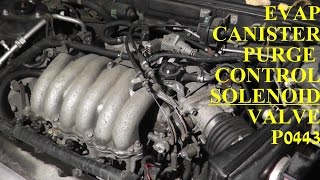
Used OEM Parts in Stock

New Aftermarket Parts Available



The information in this article is provided for general reference and educational purposes only. Vehicle specifications, procedures, and part compatibility can vary by production date, trim level, and region. Always consult your vehicle's factory service manual and verify part numbers before purchasing or performing repairs. Safety-critical components such as airbags, seat belts, and braking systems should be installed by a qualified professional.
- Nissan QUEST:
- 🎬 Helpful Videos
- 🛍️ Shop This Part
- What's Unique About the 2007-2009 Nissan QUEST
- Diagnostic Flowchart
- Symptoms You May Notice
- Most Likely Causes
- Rare But Worth Checking
- Diagnosis Steps
- Parts You'll Likely Need
- Related Codes That Often Appear With This One
- Technical Service Bulletins (TSBs) & Recalls
- Platform-Specific Known Issues
- Mechanic-Grade Diagnostic Values
- Scan Tool Commands That Help
- Wiring & Ground Locations
- "I Checked Everything" — The Actual Cause
- OEM Part Supersession History
- Model Year Variations Within This Range
- 🎟️ Get 5% Off