

P0442 on 2007-2014 Nissan Frontier: EVAP Small Leak Causes and Fixes
For a 2007-2014 Nissan Frontier, the P0442 code is most often caused by a loose or faulty gas cap, or a failed EVAP vent control valve located at the rear of the truck. Start by checking the gas cap; if that's not the issue, the vent valve is the next most likely culprit, a known weak point on this platform.
- Always start with the simplest solution: check and tighten your gas cap. If the seal is cracked, replace it with an OEM part.
- If the gas cap isn't the issue, the EVAP vent control valve at the rear of the truck is the next most likely part to have failed.
- This code will not stop you from driving the truck, but it will cause an automatic failure on an emissions test.
- While visual inspection can sometimes find a cracked hose, a smoke test is the most reliable method to find the exact source of a small EVAP leak.
- The three main components to investigate for a P0442 code are the gas cap, the rear vent control valve, and the purge valve in the engine bay, in that order of probability.
What's Unique About the 2007-2014 Nissan FRONTIER

The second-generation (D40) Nissan Frontier is well-known for issues with its EVAP vent control valve. This valve is mounted near the charcoal canister at the rear of the truck, where it is exposed to road debris, moisture, and corrosion. This exposure often leads to the valve sticking open or failing to seal, which is a very common cause for the P0442 code on this specific platform. Many owners on forums for the Frontier and its platform-mate, the Xterra, report this valve as the primary failure point after the gas cap.
Diagnostic Flowchart

Tap your situation to follow the diagnostic path that matches what you're seeing on this vehicle.
Symptoms You May Notice
- Check Engine Light is on
- Possible faint fuel smell, though less common
- Vehicle will not pass an emissions inspection
- In rare cases of a stuck-open purge valve, difficulty starting the engine immediately after refueling.
- Replacing the oxygen sensors or catalytic converter without proper diagnosis.
- Replacing the purge valve in the engine bay when the more common failure point is the vent valve at the rear of the truck.
- Using a cheap aftermarket gas cap which fails to seal properly, leading to a belief that the cap was not the problem.
Most Likely Causes

- Loose or Faulty Gas Cap 🔴 High Probability As highlighted in Nissan Technical Service Bulletin NTB09-020F, a loose fuel fill cap 🎬 Watch: How to troubleshoot small EVAP leaks on your Nissan is a primary and frequent cause for EVAP codes on 2007-2011 Nissan vehicles. The cap's rubber O-ring can crack, stiffen, or get nicked over time, preventing a proper seal.
How to confirm: Ensure the gas cap is tightened until it clicks several times. Inspect the rubber seal on the cap for cracks, stiffness, or damage. Also, check the metal filler neck surface for rust or debris that could prevent a good seal.
Typical fix: Tighten or replace the gas cap. It is highly recommended to use a genuine OEM Nissan cap, as aftermarket caps are notorious for failing to seal correctly and causing the code to return.
Est. part cost: $15-$40 - Failed EVAP Canister Vent Control Valve 🔴 High Probability The valve is located at the rear of the truck near the spare tire, making it highly susceptible to damage from road debris, water, and corrosion, causing it to stick or fail. This is a widely documented failure on D40 platform forums.
How to confirm: Visually inspect the valve for cracks or heavy corrosion. A scan tool can command the valve to close; if it doesn't click, it has failed. You can also test it manually by applying 12V power to its terminals; it should click audibly. If it's stuck open, a smoke test will show smoke exiting the valve.
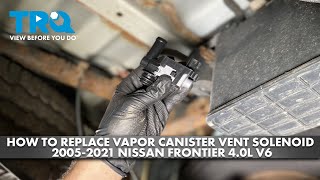
Typical fix: Replace the EVAP canister vent control valve. Nissan has superseded the original part number multiple times; the latest version often includes a filter kit 🎬 See this walkthrough for replacing the canister vent solenoid to help prevent future contamination.
Est. part cost: $60-$90 - Cracked or Disconnected EVAP Hoses 🟡 Medium Probability Rubber and plastic hoses become brittle over time with exposure to heat cycles and the elements, leading to small cracks, especially at connection points.
How to confirm: Visually inspect all accessible EVAP lines running from the fuel tank to the charcoal canister and up to the engine bay. Pay close attention to the small vacuum lines around the purge valve in the engine bay. A smoke test is the most effective way to pinpoint a small hose leak.
Typical fix: Replace the cracked section of hose or reconnect a loose fitting. Silicone vacuum lines can be a durable replacement for brittle rubber hoses.
Est. part cost: $5-$20 - Failed EVAP Canister Purge Volume Control Solenoid Valve ⚪ Low Probability This valve, located in the engine bay on the VQ40DE engine, can fail by sticking open, creating a constant vacuum leak into the EVAP system.
How to confirm: With the engine off, disconnect the hose leading from the valve to the intake manifold and apply vacuum with a hand pump; it should hold vacuum. If it doesn't, the valve is leaking internally. Another symptom is a long crank/hard start after refueling. The valve is located on top of the engine near the intake manifold. 🎬 Watch: Step-by-step guide to replacing the engine bay purge valve
Typical fix: Replace the purge valve.
Est. part cost: $40-$70
Rare But Worth Checking
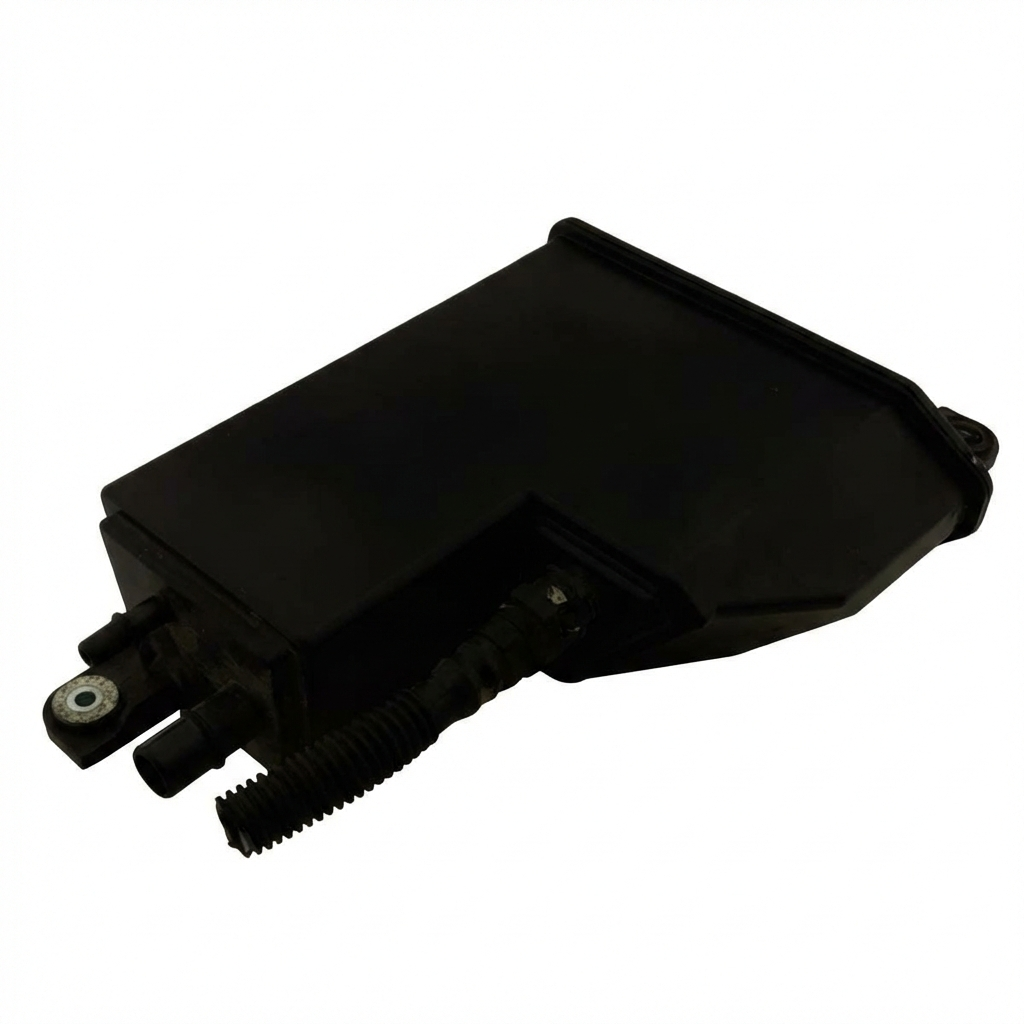
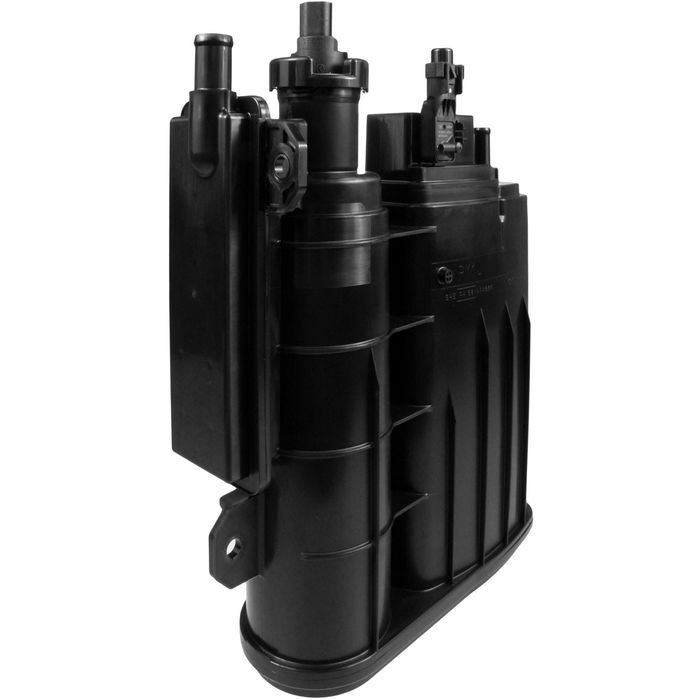
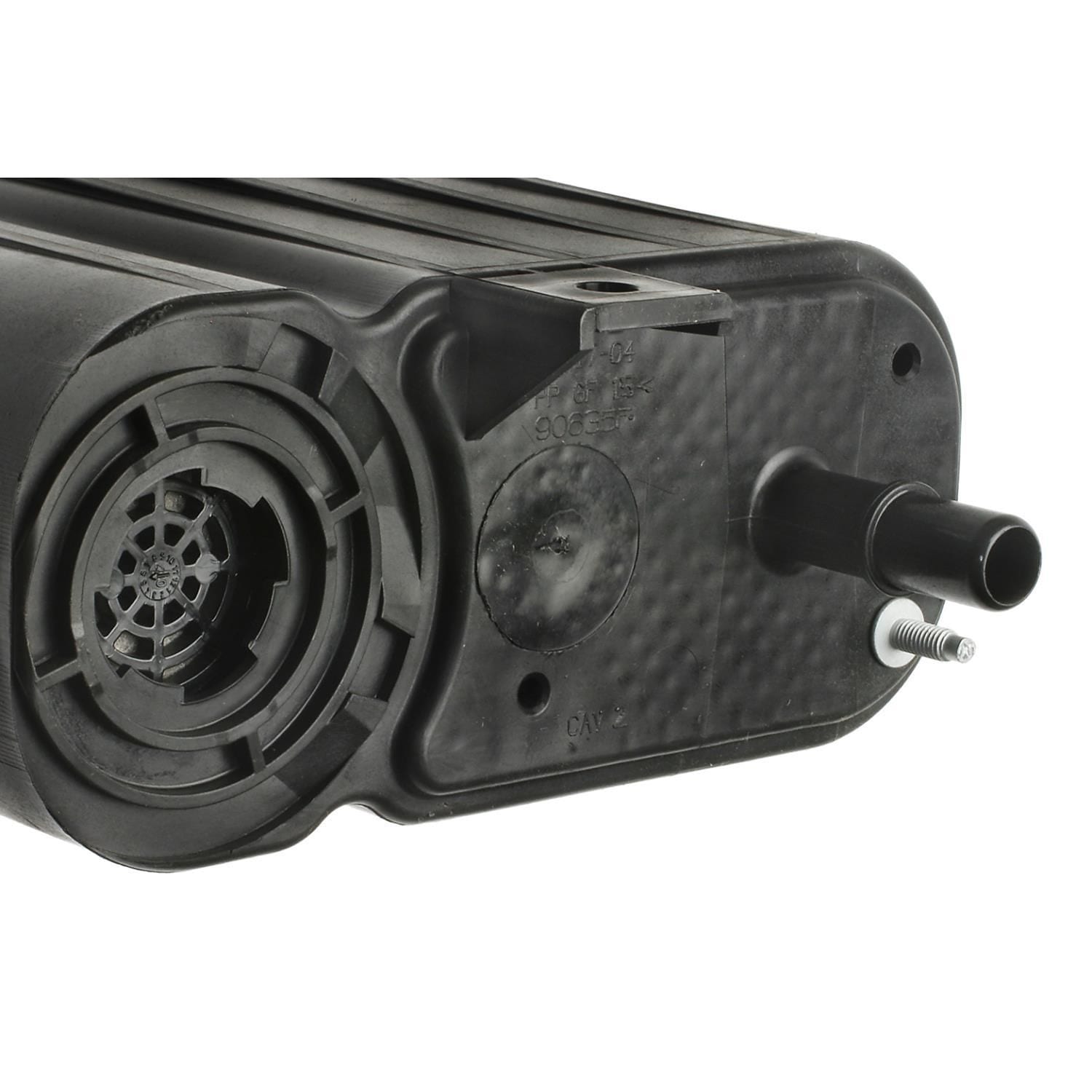
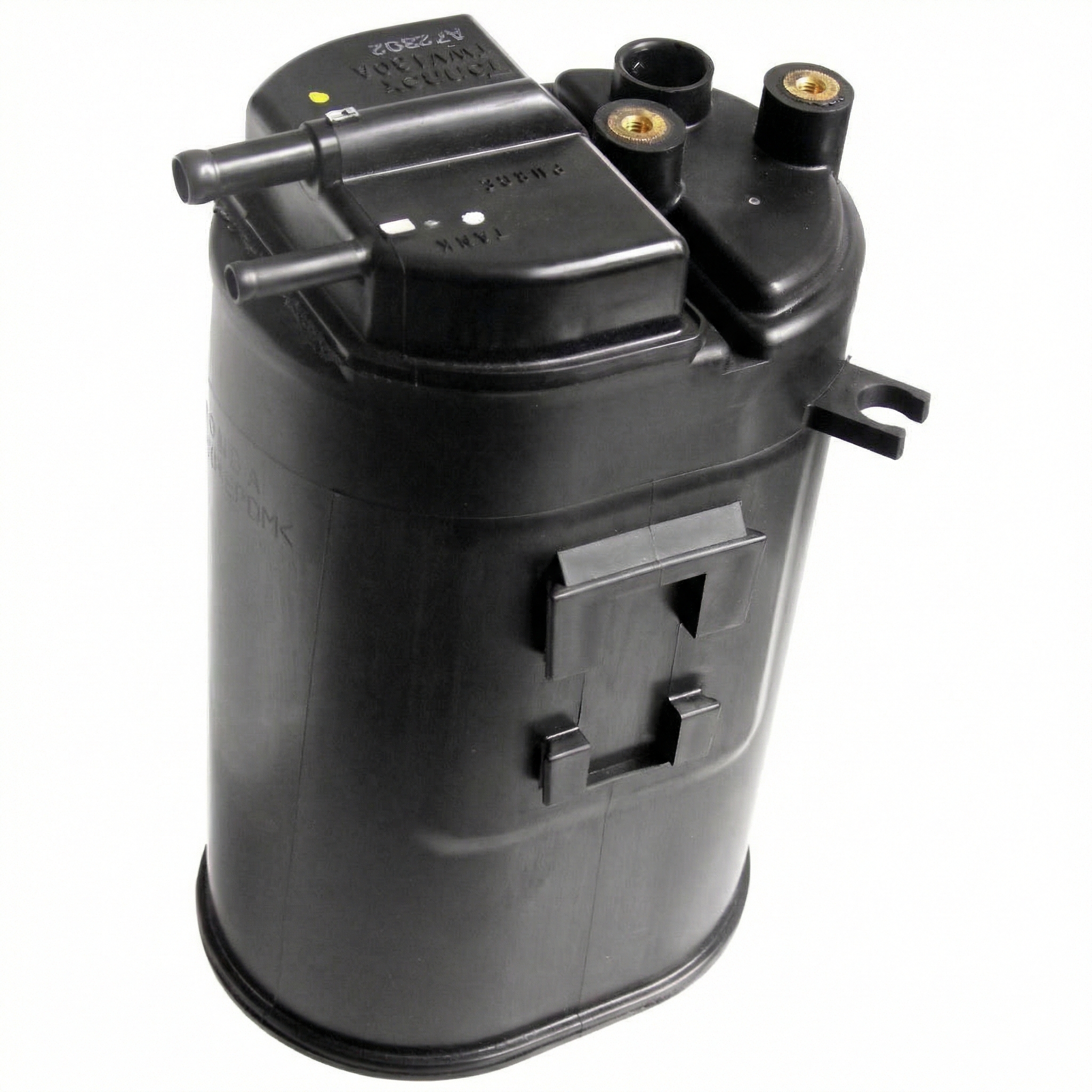
- Leaking Charcoal Canister: The plastic housing of the canister itself can develop hairline cracks from age or impact, causing a leak. This is usually found with a smoke test and is less common than the attached vent valve failing.
- Cracked Fuel Filler Neck: Rust or physical damage can cause small cracks in the metal tube leading to the gas tank, creating a leak that is difficult to spot without a smoke test. The area where the cap seals can also corrode, preventing a good seal.
Diagnosis Steps
- Verify the Check Engine Light is on and code P0442 is present using an OBD-II scanner.
- Inspect the gas cap. Remove it, check the seal for damage, and reinstall it, ensuring it clicks multiple times. Clear the code and drive for a few days to see if it returns.
- If the code returns, visually inspect all accessible EVAP hoses and lines from the engine bay to the rear of the vehicle for obvious cracks, disconnections, or damage. Pay special attention to the lines connected to the purge valve on top of the engine.
- Locate the EVAP canister and vent control valve. On the D40 Frontier, this is typically mounted to the frame rail near the spare tire. Inspect the valve and its connector for corrosion or physical damage.
- Test the vent control valve. You can use a scan tool to command it shut or apply 12V power to its pins and listen for a click. If it doesn't operate, it needs replacement.
- The most definitive diagnostic step is to perform a smoke test. A smoke machine injects low-pressure smoke into the EVAP service port (located on the engine bay purge valve). The leak will be revealed by wherever smoke is seen escaping.
- If a smoke machine is not available, carefully inspect and consider replacing the EVAP vent control valve, as it is the most common failure point after the gas cap for this vehicle.
- Test the purge valve in the engine bay to ensure it is not stuck open, which can cause similar symptoms.
Parts You'll Likely Need
- Fuel Cap
(OEM #17251-7996C)— This is the most common and easiest fix. The seal wears out, causing a leak. Nissan TSBs specifically call this out as a primary cause. Owner forums strongly advise using only genuine Nissan caps.
Trusted brands: Nissan OEM
OEM price range: $25-$40
Aftermarket price range: $15-$25 - EVAP Canister Vent Control Valve
(OEM #14935-JF02C)— A very common failure point on the D40 Frontier due to its exposed location at the rear of the vehicle, leading to corrosion and malfunction. The original part number 14935-JF00A has been superseded multiple times by improved designs.
Trusted brands: Nissan OEM, Hitachi, Bosch, Dorman
OEM price range: $70-$90
Aftermarket price range: $40-$60 - EVAP Canister Purge Valve
(OEM #14930-EN20A)— Less common than the vent valve, but can stick open and cause this code. Located in the engine bay.
Trusted brands: Nissan OEM, Delphi
OEM price range: $50-$70
Aftermarket price range: $30-$50
Related Codes That Often Appear With This One
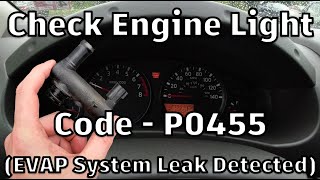
- P0455 — Indicates a large EVAP leak. The same faulty component (like a very stuck vent valve or a completely loose gas cap) can sometimes trigger a P0455 instead of, or along with, a P0442.
- P0456 — Indicates a very small EVAP leak. These three codes (P0442, P0455, P0456) are often grouped in TSBs as they all point to leaks of different sizes within the same system.
Technical Service Bulletins (TSBs) & Recalls
- NTB13-097J: General information for diagnosing EVAP leak codes P0442, P0455, and P0456. Stresses that a test drive is not needed and a specific diagnostic flow chart should be used.
- NTB09-020F: Specifically notes that a loose fuel fill cap may be the cause for P0442, P0455, and P0456 on 2007 through 2011 Nissan vehicles and recommends using a smoke machine for diagnosis if the cap is not the issue.
Platform-Specific Known Issues
- The EVAP vent control valve's location at the rear of the truck makes it highly prone to failure from dirt, water, and road salt, a well-documented issue on the 2007-2014 Frontier.
- Nissan has released updated versions of the vent control valve to improve durability. The newest part number is 14935-JF02C, which replaces several previous versions like 14935-JF00A, B, C, D, and E.
Mechanic-Grade Diagnostic Values
- EVAP Canister Vent Control Valve Solenoid Resistance — expected: 20 - 50 Ohms. Some sources specify 32 Ohms as a target.. Failure: A reading of 0 Ohms (short) or infinite/OL (open circuit) indicates a failed solenoid coil.
- EVAP Canister Purge Valve Solenoid Resistance — expected: 20 - 50 Ohms. Some service data suggests a tighter range of 30 - 38 Ohms.. Failure: A reading outside the expected range, especially an open or shorted circuit, points to a faulty coil.
- Fuel Tank Pressure (FTP) Sensor Signal Voltage (Key On, Engine Off, Gas Cap Open) — expected: Approximately 2.5 Volts. Some sources state a normal range of 1.3V to 1.7V.. Failure: A reading stuck high (near 5V) or low (near 0V) can indicate a faulty sensor or a wiring issue.
- Fuel Tank Pressure (FTP) Sensor Reference Voltage — expected: 5 Volts.. Failure: No voltage indicates a problem with the ECM or the wiring providing power to the sensor.
Hidden / Shadow Codes Worth Checking
- P0450, P0451, P0452, P0453, P0454: These codes relate specifically to the Fuel Tank Pressure (FTP) sensor circuit performance, range, and input (low/high/intermittent). While P0442 indicates a general small leak, one of these codes can point more directly to a faulty FTP sensor or its wiring as the root cause, rather than a physical leak. (see via Standard OBD-II scanner.)
Scan Tool Commands That Help
- Nissan CONSULT or advanced bidirectional scanner: EVAP System Leak Test / Self-Test — Used to command the vehicle's onboard diagnostic to perform a full EVAP system test after a repair to confirm the fix, without having to wait for the system to run the monitor during normal driving.
- Nissan CONSULT or advanced bidirectional scanner: Purge Volume Control Valve & Vent Control Valve Actuation Test — Allows the technician to manually command the purge and vent valves open and closed. This is used to listen for an audible click from the valve to confirm mechanical operation and to seal the system for a smoke or vacuum test.
Wiring & Ground Locations
- EVAP Canister Vent Control Valve — Under the rear of the vehicle, mounted on or next to the charcoal canister, typically above the spare tire area.. This is the location of the most common electronic component to fail. The connector and wiring are exposed to road debris and moisture, making them prone to corrosion and damage.
- EVAP Canister Purge Valve — In the engine bay, typically near the intake manifold for the 4.0L V6.. This valve can stick open. Knowing its location is key for testing. The EVAP service port for smoke testing is usually located on or near this valve.
- E15 / E24 — Wiring diagrams indicate these are key ground points located in the right front of the engine compartment.. Poor grounding can cause erratic behavior in electronic components. The ECM and related sensors for the EVAP system rely on these grounds. A corroded ground can cause resistance issues that mimic component failure.
- Main Body Ground — On the passenger-side inner fender panel, where the negative battery cable is strapped to the body.. Corrosion at this primary ground point can affect the entire vehicle's electrical system, including the sensitive EVAP monitoring components.
Real Owner Repair Stories
- Reddit user in r/nissanfrontier (2016 Nissan Frontier SE CC) — Fuel overflows and splashes when trying to refuel; the pump clicks off constantly as if the tank is full.
❌ Tried (didn't work) Considering checking the charcoal canister.
✅ What actually fixed it Another user with a 2019 model reported the same symptoms were due to a known issue requiring the fuel vent valve to be replaced. The original poster acknowledged this was the likely path for a fix. This indicates a clogged or stuck-closed vent valve preventing air from escaping the tank during refueling.
"I Checked Everything" — The Actual Cause
- In some cases, a smoke test will not reveal any leaks, yet the P0442 code persists. This often happens when a valve is not sealing correctly but only under specific vacuum or pressure conditions, or is failing electrically. The most common culprit in this scenario is the EVAP canister purge valve (in the engine bay). It may hold a vacuum when tested cold but leak intermittently during operation. A technician would confirm this by using a scan tool to monitor fuel tank pressure while commanding the purge valve closed, or by testing the valve's ability to hold vacuum after being warmed up.
OEM Part Supersession History
14935-JF00A→14935-JF00B, 14935-JF00C, 14935-JF00D, 14935-JF00E, and finally 14935-JF02C.— The EVAP canister vent control valve is a high-failure part due to its exposure to dirt and moisture. The multiple revisions were made by Nissan to improve the valve's durability and resistance to contamination.
Heads up: The newest part number, 14935-JF02C, is the recommended replacement for all previous versions and is broadly compatible with many Nissan models, including the 2007-2014 Frontier.
Model Year Variations Within This Range
- 2007-2014: There are no significant documented variations in the design or common failure points of the EVAP system within this specific model year range for the D40 Frontier. The primary issues related to the gas cap and the rear-mounted vent control valve are consistent across these years.
Helpful Videos
Used OEM Parts in Stock
New Aftermarket Parts Available



The information in this article is provided for general reference and educational purposes only. Vehicle specifications, procedures, and part compatibility can vary by production date, trim level, and region. Always consult your vehicle's factory service manual and verify part numbers before purchasing or performing repairs. Safety-critical components such as airbags, seat belts, and braking systems should be installed by a qualified professional.
- Nissan FRONTIER:
- 🎬 Helpful Videos
- 🛍️ Shop This Part
- What's Unique About the 2007-2014 Nissan FRONTIER
- Diagnostic Flowchart
- Symptoms You May Notice
- Most Likely Causes
- Rare But Worth Checking
- Diagnosis Steps
- Parts You'll Likely Need
- Related Codes That Often Appear With This One
- Technical Service Bulletins (TSBs) & Recalls
- Platform-Specific Known Issues
- Mechanic-Grade Diagnostic Values
- Hidden / Shadow Codes Worth Checking
- Scan Tool Commands That Help
- Wiring & Ground Locations
- Real Owner Repair Stories
- "I Checked Everything" — The Actual Cause
- OEM Part Supersession History
- Model Year Variations Within This Range
- 🎟️ Get 5% Off