

P0442 on 2011-2016 Kia Optima: EVAP Small Leak Causes and Fixes
For a 2011-2016 Kia Optima, a P0442 code almost always points to a loose gas cap, a faulty purge control valve, or a bad canister close valve. Checking the gas cap is free, while replacing a valve can cost between $75 and $200. A smoke test is the most reliable way to find the leak.
- Start with the simplest fix: check that your gas cap is tight and its seal is intact. This resolves the issue a surprising amount of the time.
- If the gas cap isn't the problem, the purge valve (in the engine bay) and the canister close valve (at the rear of the car) are the next most likely culprits.
- For vehicles driven in snowy climates, pay close attention to rust and corrosion on under-vehicle EVAP components, as highlighted by a Kia TSB.
- If a visual inspection doesn't reveal the leak, a professional smoke test is the fastest and most accurate way to find the source of a P0442 code.
What's Unique About the 2011-2016 Kia OPTIMA
 🎬 See this video to locate all EVAP system components. of a Kia Optima." loading="eager" fetchpriority="high" style="max-width:100%;height:auto;border-radius:6px;display:block;box-shadow:0 2px 8px rgba(0,0,0,0.1);" />
For the 2011-2016 Kia Optima, a notable issue is corrosion affecting the EVAP system, particularly for vehicles in "salt belt" states. A Technical Service Bulletin (TSB-SC135R1) specifically mentions that vehicles sold or registered in these states are more prone to developing EVAP leaks that trigger codes like P0442. This suggests that components like the canister close valve and associated lines are susceptible to premature failure from rust and corrosion. The fuel filler neck sealing surface can also corrode, preventing the gas cap from sealing properly.
Diagnostic Flowchart
Tap your situation to follow the diagnostic path that matches what you're seeing on this vehicle.
Generation note: This range covers the end of the third generation (TF, 2011-2015) and the first year of the fourth generation (JF, 2016). While the EVAP system components are similar, part numbers and specific locations may vary slightly between these generations. For example, a detailed video guide for a 2015 Optima shows the purge valve located under the air intake box.
Symptoms You May Notice
- Check Engine Light is on
- A faint smell of fuel, especially around the rear of the car or after refueling
- Difficulty starting immediately after refueling (in rare cases, associated with a stuck-open purge valve)
- Vehicle may require a drive cycle to clear the code even after the fix is performed.
- Replacing the charcoal canister when only a less expensive valve (purge or vent) has failed.
- Replacing O2 sensors, which are not related to the EVAP system.
- Repeatedly replacing parts without performing a smoke test to definitively locate the leak.
Most Likely Causes

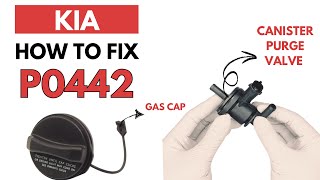
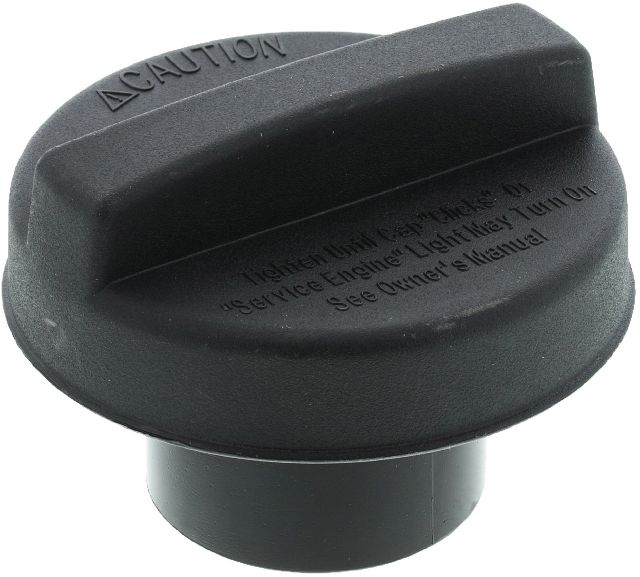
- Loose or Faulty Gas Cap 🔴 High Probability The gas cap is a frequently used part and its seal can wear out over time. This is the most common and easiest-to-fix cause for a P0442 code on any vehicle. It is highly recommended to use an OEM replacement cap, as aftermarket caps are known to cause sealing issues.
How to confirm: Ensure the gas cap is tightened until it clicks. Inspect the rubber O-ring on the cap for cracks, dirt, or signs of wear. Also, inspect the fuel filler neck for rust or debris that could prevent a good seal, especially on cars from salt-belt states.
Typical fix: Tighten the cap. If the seal is damaged or the filler neck is corroded, clean the neck surface and replace the gas cap with a new OEM part to ensure a proper seal.
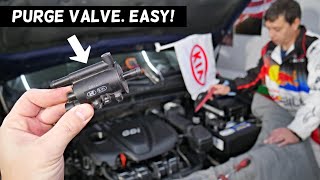
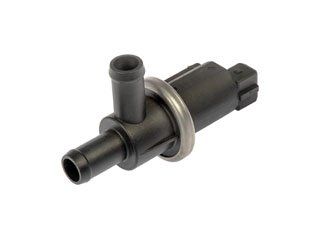
Est. part cost: $15-$40 - Faulty Purge Control Solenoid Valve (PCSV) 🟡 Medium Probability This valve is a common failure point on many Kia and Hyundai models. It can get stuck open or closed, causing a leak or flow issue in the EVAP system.
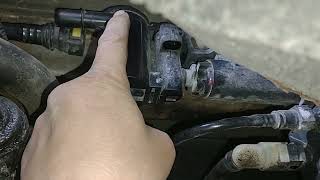
How to confirm: The PCSV is located in the engine bay, under the air intake box, which may need to be removed for access. With the engine running at idle, disconnect the vacuum line coming from the canister and place your finger over the port on the valve; there should be no suction. If you feel a vacuum, the valve is stuck open and needs replacement. A professional can also command it open and closed with a scan tool.
Typical fix: Replacement of the purge valve. This is generally an accessible part in the engine bay once the airbox is moved, held by a bracket and connected by two hoses and an electrical connector.
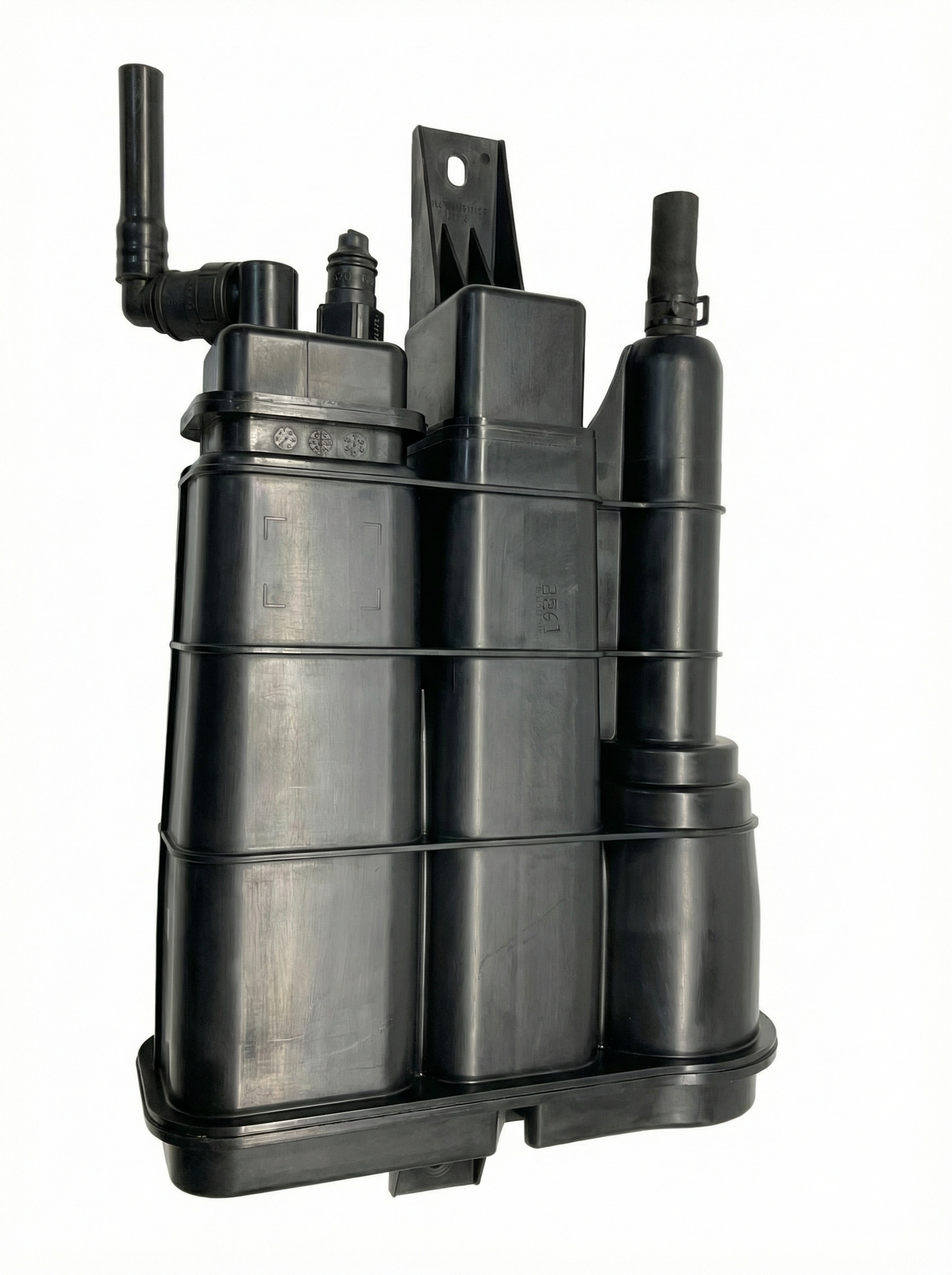
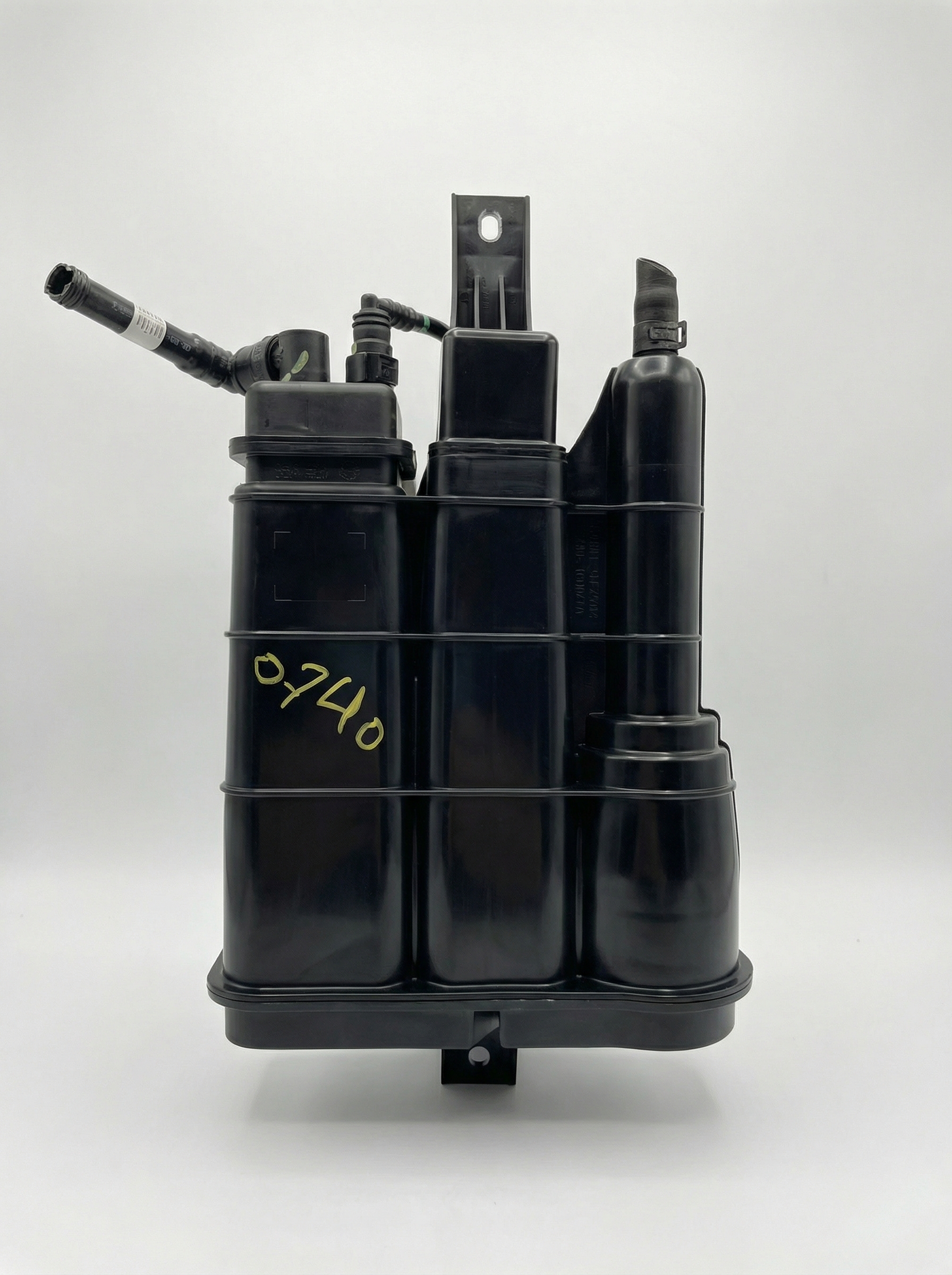
Est. part cost: $65-$95 - Faulty Canister Close Valve (CCV) / Vent Valve 🟡 Medium Probability As mentioned in TSB-SC135R1, vehicles in salt belt states are prone to EVAP leaks. The CCV is located at the rear of the vehicle with the charcoal canister, making it highly susceptible to corrosion and road debris, which can cause it to fail or its connector to degrade.
How to confirm: The valve is located on the charcoal canister assembly, under the car just forward of the rear bumper. It should be normally open and close when voltage is applied. A visual inspection may reveal heavy rust or damage. A smoke test is the most definitive way to confirm a leak at the valve, as this is a very common failure point found during professional diagnosis.
Typical fix: Replace the canister close valve. This may involve lowering the charcoal canister assembly for access.
Est. part cost: $50-$100 - Cracked or Disconnected EVAP Hose ⚪ Low Probability Rubber hoses become brittle over time with exposure to heat and the elements, leading to small cracks that are hard to see.
How to confirm: A thorough visual inspection of all EVAP lines from the engine bay to the fuel tank is the first step. However, small leaks are often invisible, making a smoke test the most effective diagnostic method.
Typical fix: Replace the cracked section of the hose and secure it with new clamps.
Est. part cost: $10-$50
Rare But Worth Checking
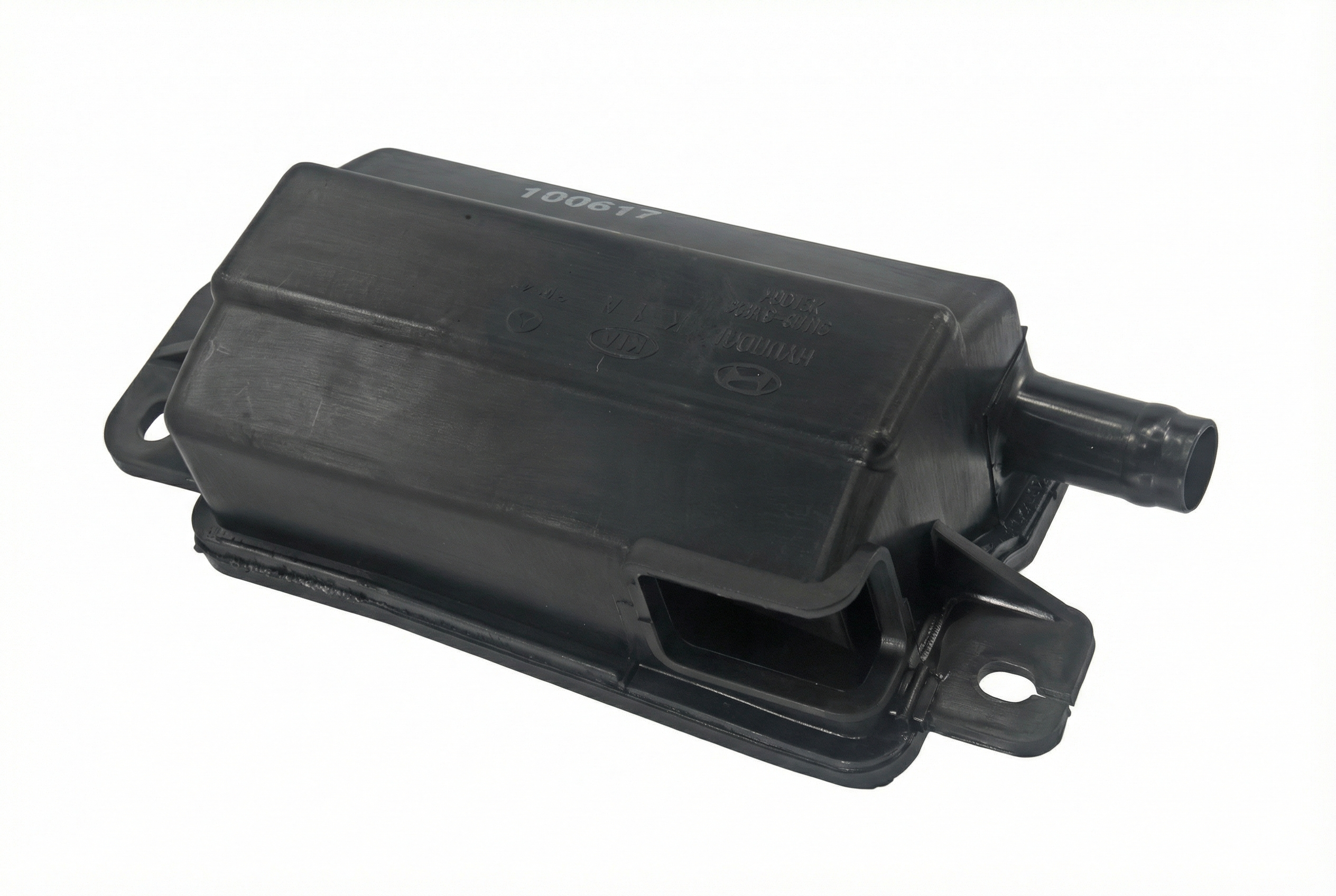
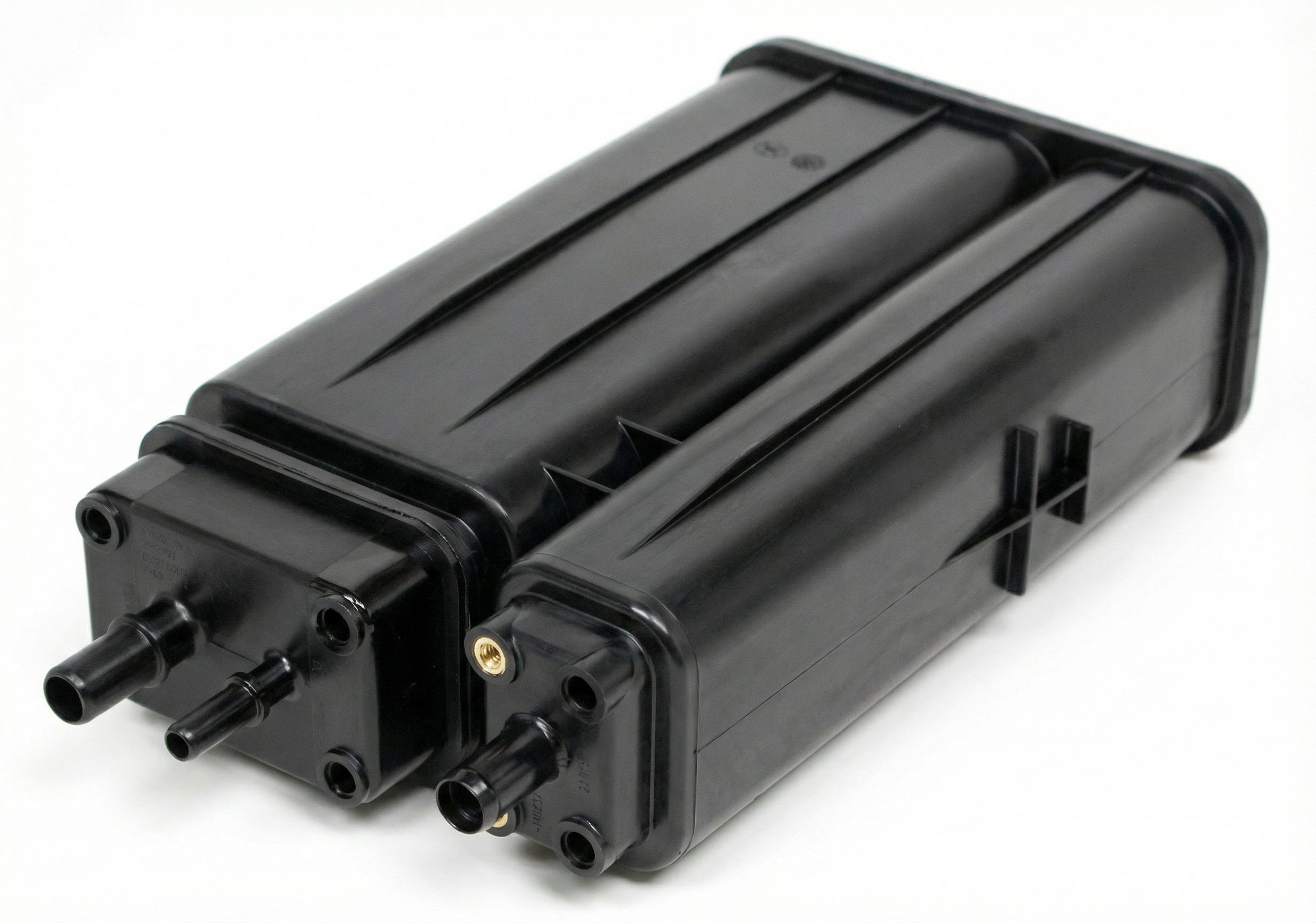
- Cracked Charcoal Canister: The plastic housing of the canister can develop hairline cracks from age or impact from road debris. A specific failure mode noted by owners is the development of cracks around the mounting bolt holes, which are not visible without removing the canister. This is usually found only with a smoke test after all other components have been checked.
- Faulty Fuel Tank Pressure Sensor: A faulty sensor can give an incorrect reading to the PCM, tricking it into thinking there is a leak when there isn't one. On the Optima, this sensor is located on top of the fuel pump assembly, which is accessed from under the rear seat. This is uncommon but possible.
Diagnosis Steps

- Check the Gas Cap: Remove the gas cap, inspect the seal for damage or debris, and inspect the filler neck for corrosion. Retighten the cap until it clicks at least three times. Clear the code and drive for a few days to see if it returns.
- Visual Inspection: Inspect all visible EVAP hoses in the engine bay and under the vehicle for obvious cracks, disconnections, or damage. Pay close attention to the hoses connected to the purge valve and charcoal canister.
- Test the Purge Valve (PCSV): Locate the purge valve under the air intake in the engine bay. With the engine idling, disconnect the hose from the canister side and feel for vacuum. There should be none. If there is, the valve is faulty.
- Inspect the Canister Close Valve (CCV): Locate the CCV on the charcoal canister at the rear of the vehicle. Inspect it and its connector for corrosion or damage, which is common on these vehicles, especially in salt-belt states.
- Perform a Smoke Test: If the leak is not obvious, the most effective method is to use an EVAP smoke machine. This involves feeding low-pressure smoke into the system's test port. Smoke will exit from the location of the leak, making it easy to pinpoint whether it's a hose, valve, canister, or even the fuel tank seal. This is the procedure recommended by Kia in TSB #PS469 for hard-to-find leaks and is the definitive way to avoid replacing unnecessary parts.
Parts You'll Likely Need

- Gas Cap
(OEM #31010-3L600U)— This is the most frequent cause of small EVAP leaks due to a worn or damaged seal. Using an OEM cap is strongly advised.
Trusted brands: Kia (OEM)
OEM price range: $25-$40
Aftermarket price range: $15-$25 - Vapor Canister Purge Valve
(OEM #28910-25100)— A very common failure point on Kia vehicles that causes various EVAP codes, including P0442.
Trusted brands: Kia (OEM), Bosch, Dorman (911-222), Standard Motor Products, ACDelco
OEM price range: $70-$90
Aftermarket price range: $45-$75 - Canister Close Valve / Vent Valve
(OEM #31453-3Q500, 31453-3K600)— Located under the car, this valve is prone to failure from corrosion and road debris, especially in salt-belt states as noted in TSB-SC135R1.
Trusted brands: Kia (OEM), Dorman
OEM price range: $75-$100
Aftermarket price range: $50-$80
Related Codes That Often Appear With This One
- P0456 — This code indicates a 'very small leak', and can appear alongside or instead of P0442 as the system tries to classify the leak size. TSB #PS469 groups these codes together.
- P0455 — This indicates a 'gross leak'. If a component fails completely (e.g., a hose disconnects or the gas cap is left off), you may see this code instead of or with P0442. TSB #TSB-SC135R1 also groups these codes.
- P0441 — This code means 'Incorrect Purge Flow' and often points directly to a malfunctioning purge valve, a common cause for P0442 as well.
Technical Service Bulletins (TSBs) & Recalls
- PS469: Recommends a manual EVAP smoke test for hard-to-find small leaks when codes like P0442, P0455, or P0456 are present.
- TSB-SC135R1: Notes that vehicles in salt belt states may experience P0442 or P0455 due to EVAP system leaks, pointing towards corrosion of under-vehicle components.
Platform-Specific Known Issues
- Salt Belt Corrosion: TSB #TSB-SC135R1 specifically calls out that vehicles in 28 'salt belt' states are more likely to experience P0442 or P0455 due to corrosion-related leaks in the EVAP system. This makes inspecting under-vehicle components like the canister close valve and fuel filler neck critical for cars in those regions. A wire brush can be used to clean rust from the filler neck sealing surface to ensure the gas cap seals properly.
Mechanic-Grade Diagnostic Values
- Canister Purge Solenoid Valve (PCSV) Coil Resistance — expected: 15 to 38 ohms (measured across the two pins of the valve connector). Failure: A reading of infinity (open circuit) or zero (short circuit) indicates a failed coil.
- Canister Close Valve (CCV) / Vent Valve Coil Resistance — expected: 48 to 65 ohms (measured across the two pins of the valve connector). Failure: A reading significantly outside this range indicates a failed internal coil.
- Fuel Tank Pressure Sensor (FTPS) Power Supply — expected: 5-volt reference signal at the connector with Key On, Engine Off (KOEO). Failure: No voltage indicates a wiring issue, a blown fuse, or a problem with the PCM's 5V reference circuit.
Hidden / Shadow Codes Worth Checking
- Mode $06 Data: This is not a trouble code, but a diagnostic function on advanced scan tools that shows the results of the PCM's self-tests. Before a P0442 code becomes 'hard set' and turns on the light, the EVAP leak test may fail in Mode $06. A technician can view the raw test values for Test ID ($82 for 0.020" leak test on many vehicles) and compare them to the manufacturer's maximum allowable limit to see if the system is on the verge of failing. (see via Advanced OBD2 Scan Tool or dealer-level tool like Kia GDS.)
Scan Tool Commands That Help
- Kia GDS (Global Diagnostic System): EVAP Leakage Test — This function forces the vehicle to perform the entire EVAP system self-test on demand in the service bay, without needing to perform a full drive cycle. It's used to verify a repair is successful or to confirm a leak exists under controlled conditions.
- Kia GDS or Advanced Bidirectional Scanner: Actuation Test: Purge Control Solenoid Valve (PCSV) — This command manually opens and closes the PCSV. A technician can listen for an audible click and check if vacuum is allowed to pass only when commanded open. This definitively tests the valve's electrical and mechanical function without removing it from the vehicle.
- Kia GDS or Advanced Bidirectional Scanner: Actuation Test: Canister Close Valve (CCV) — This command energizes the CCV to close it (it is normally open). This is a critical step in sealing the system for a smoke or pressure test. If the valve doesn't close when commanded, it is faulty.
- Kia GDS: Resetting Adaptive Values — After replacing a major engine or emissions component, resetting the PCM's learned adaptive values can help the system relearn faster with the new part, although it is not always strictly required for EVAP components.
Wiring & Ground Locations
- Fuse: SENSOR 2 (10A) — In the main fuse and relay box in the engine compartment.. For the 2010-2015 (TF) generation, this 10-amp fuse provides power to the EVAP system, including the canister close valve. A blown fuse will cause EVAP components to be inoperative and can set various codes.
- PCSV Connector — In the engine bay, on the Purge Control Solenoid Valve, located under the air intake box.. This 2-pin connector is where voltage and resistance tests are performed for the purge valve. One pin should receive battery voltage with the key on, while the other is a ground-side control from the PCM.
- CCV Connector — Under the rear of the vehicle, on the Canister Close Valve which is attached to the charcoal canister.. This connector is highly exposed to road salt and moisture, making it a prime location for corrosion and wiring faults, as noted in TSB-SC135R1. Checking for power and a clean connection here is critical, especially on salt-belt vehicles.
Real Owner Repair Stories
- 2CarPros Forum User 'KIWASABI1' (2000-2005 Mitsubishi Eclipse (Note: Different vehicle, but identical failure mode applicable to Optima)) — Persistent P0442 code, followed by visible fuel leaking from under the car only when actively pumping gas.
❌ Tried (didn't work) Prior unspecified attempts to identify the leak.
✅ What actually fixed it The metal fuel filler neck was found to be completely rusted out on the bottom. Replacing the entire fuel filler neck assembly resolved both the fuel leak and the P0442 code. - Reddit user 'DiziTECguy' (Kia Optima (JF Generation, 2016+)) — P0456 (very small leak) and P0442 (small leak) codes.
❌ Tried (didn't work) Replacing the gas cap.
✅ What actually fixed it The user, a technician, noted a common failure is corrosion on the fuel filler neck *bracket* where it bolts to the vehicle frame. Salt sits on this bracket and rots the metal of the filler neck pipe itself, causing pinhole leaks that are very difficult to see. The fix is to replace the entire fuel filler neck assembly or attempt to seal the corroded area with JB Weld. - 2CarPros Forum User 'NLAKE1991' (2007 Kia Optima, 105,000 miles) — P0442 code.
❌ Tried (didn't work) Replacing the gas cap, replacing the canister purge valve.
✅ What actually fixed it The user was still diagnosing, but the story highlights a critical point: after the two most common parts were replaced without success, the definitive next step recommended by a professional was to perform a smoke test to avoid wasting more money on parts.
"I Checked Everything" — The Actual Cause
- A smoke test will only find physical leaks in the EVAP hoses, seals, and components. If a smoke test comes back clean (no smoke visible anywhere) but the P0442 code persists, the cause is likely not a physical leak. The two most probable causes in this scenario are: 1) A faulty Fuel Tank Pressure Sensor (FTPS) that is sending incorrect data to the PCM, making it believe a leak exists when one does not. 2) An electrical issue, such as a lack of power or ground to a component like the FTPS or a valve, preventing the system from testing correctly.
When the Usual Fixes Don't Work
- While the most common causes are the gas cap and purge valve, multiple owner and technician reports for the Kia Optima platform emphasize the need to thoroughly inspect the entire fuel filler neck for corrosion, not just the gas cap sealing surface. In salt-belt states, a P0442 code that isn't resolved by a new gas cap or purge valve is very frequently caused by a pinhole leak in the metal filler neck pipe, often hidden by its mounting bracket. Technicians recommend a smoke test as the next step after checking the gas cap, before replacing any other parts, to avoid the common pitfall of replacing the purge valve unnecessarily.
OEM Part Supersession History
31453-3K600→Appears to be interchangeable with 31453-3Q500 for many applications.— Part consolidation or minor revision.
Heads up: Both part numbers are listed for the 2011-2016 Optima. 31453-3K600 is explicitly named 'Valve-Canister Close'. 31453-3Q500 is also called 'Vacuum Valve' or 'Relief Valve'. While they appear to fit, it is critical to verify the correct part number for your specific vehicle's VIN, as Hybrid and non-Hybrid models may differ.
Model Year Variations Within This Range
- 2011-2015 (TF Generation): This generation was subject to a service campaign for EVAP canister issues in some cases. The 'SENSOR 2' fuse in the engine bay fuse box is documented as the power source for the EVAP system on these models.
- 2016 (JF Generation): While sharing many components with the previous generation, the JF platform has a specifically noted issue with corrosion forming on the fuel filler neck mounting bracket, leading to pinhole leaks in the neck itself.
Helpful Videos
![How to Fix KIA P0442 Engine Code in 3 Minutes [2 DIY Methods / Only $4.67]](https://img.youtube.com/vi/g0DfzEcXoJA/mqdefault.jpg)

Used OEM Parts in Stock

New Aftermarket Parts Available


The information in this article is provided for general reference and educational purposes only. Vehicle specifications, procedures, and part compatibility can vary by production date, trim level, and region. Always consult your vehicle's factory service manual and verify part numbers before purchasing or performing repairs. Safety-critical components such as airbags, seat belts, and braking systems should be installed by a qualified professional.
- Kia OPTIMA:
- 🎬 Helpful Videos
- 🛍️ Shop This Part
- What's Unique About the 2011-2016 Kia OPTIMA
- Diagnostic Flowchart
- Symptoms You May Notice
- Most Likely Causes
- Rare But Worth Checking
- Diagnosis Steps
- Parts You'll Likely Need
- Related Codes That Often Appear With This One
- Technical Service Bulletins (TSBs) & Recalls
- Platform-Specific Known Issues
- Mechanic-Grade Diagnostic Values
- Hidden / Shadow Codes Worth Checking
- Scan Tool Commands That Help
- Wiring & Ground Locations
- Real Owner Repair Stories
- "I Checked Everything" — The Actual Cause
- When the Usual Fixes Don't Work
- OEM Part Supersession History
- Model Year Variations Within This Range
- 🎟️ Get 5% Off