

P0442 on 2011-2016 Kia Forte: EVAP Small Leak Causes and Fixes
The P0442 code on a 2011-2016 Kia Forte indicates a small leak in the evaporative emissions (EVAP) system. The most common and easiest fix is to inspect and tighten or replace the gas cap with an OEM part. If that doesn't solve it, the next most likely causes are a faulty canister purge valve (PCSV) located on the engine, or a cracked charcoal canister found underneath the car near the fuel tank.
- Always check the gas cap first for P0442. Ensure it's tight and the seal is not cracked. An OEM replacement is recommended if it's faulty.
- If the gas cap is not the issue, the canister purge valve in the engine bay is the next most likely and affordable part to inspect and replace.
- For persistent leaks that are not obvious, a professional smoke test is the most reliable way to find the source, which could be a cracked charcoal canister or a rusted fuel filler neck.
- The 2011-2016 Forte covers two generations; always confirm part numbers with your vehicle's VIN before ordering.
What's Unique About the 2011-2016 Kia FORTE
The 2011-2016 Kia Forte spans two generations (TD: 2011-2013, YD: 2014-2016), which use slightly different EVAP components and layouts. While the causes are similar, part numbers for items like the purge valve and canister can differ. A notable issue on Kias and Hyundais of this era, especially in 'salt belt' regions, is corrosion causing cracks in the charcoal canister or the fuel filler neck, leading to persistent EVAP leak codes. A Kia Technical Service Bulletin (TSB PS469) acknowledges that these small leaks can be difficult to find without a manual test procedure, like a smoke test, especially when the system's self-test reports No Trouble Found (NTF).
Diagnostic Flowchart
Tap your situation to follow the diagnostic path that matches what you're seeing on this vehicle.
Generation note: The 2011-2016 range covers the end of the first generation (TD, 2011-2013) and the beginning of the second generation (YD, 2014-2016). While the operating principles of the EVAP system are the same, the physical parts like the charcoal canister and valves may have different designs and part numbers. For example, the charcoal canister for a 2012 Forte (TD) may be P/N 31410-1M551-DS, while a 2014 Forte (YD) may use 31410-3X450DS. Always verify the part with your vehicle's VIN.
Symptoms You May Notice
- Check Engine Light is on
- A faint smell of fuel, particularly around the gas cap or rear of the vehicle.
- Slightly reduced fuel efficiency.
- Replacing the oxygen sensor, as it has no connection to the EVAP system.
- Replacing the fuel tank pressure sensor (FTPS) without proper testing. While a faulty sensor can cause EVAP codes, it's less common than a physical leak for P0442.
Most Likely Causes
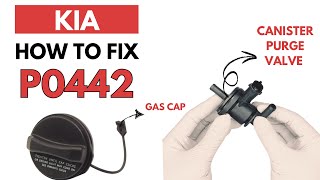
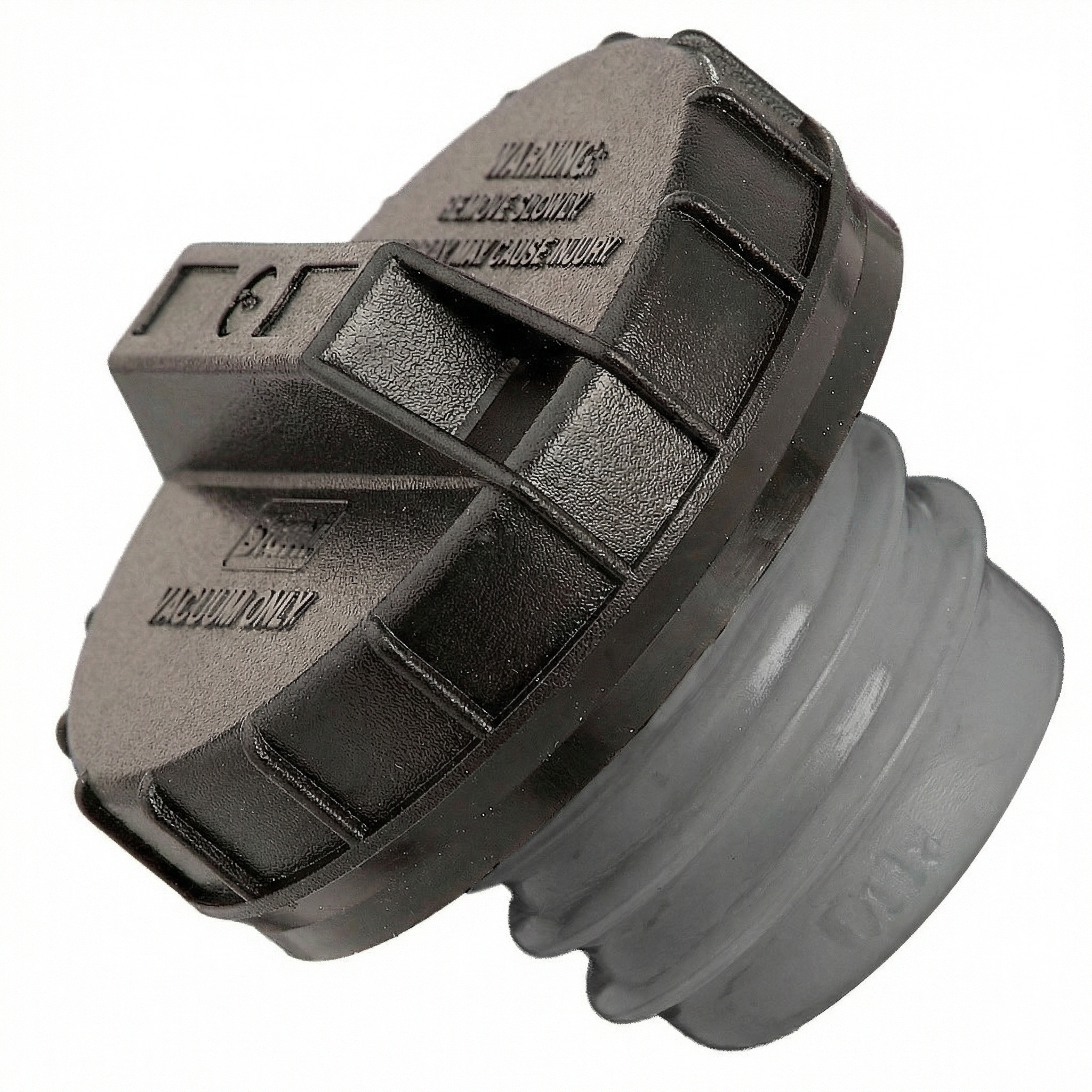
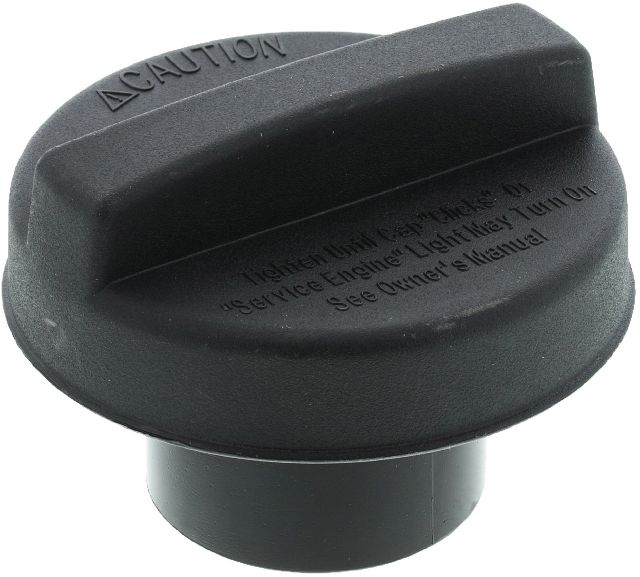
- Loose or Faulty Gas Cap 🔴 High Probability The gas cap seal is a rubber component that degrades over time from exposure to fuel vapors and weather, causing it to lose its sealing ability. Many owners and mechanics report that using non-OEM (aftermarket) caps can cause sealing issues, making an OEM cap a recommended fix. In some cases, rust on the filler neck can prevent even a good cap from sealing properly.
How to confirm: Ensure the cap is tightened until it clicks. Inspect the rubber seal for cracks, stiffness, or damage. Clean the cap and the fuel filler neck surface with a cloth.
Typical fix: Tighten the cap. If the seal is damaged or the code returns, replace the gas cap with a genuine OEM part (P/N 31010-3L600 or the updated 31010-3L600U) for the best results.
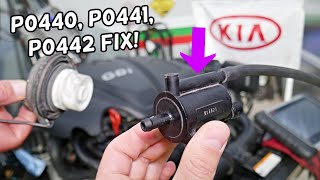
Est. part cost: $20-$40 - Faulty Canister Purge Valve (PCSV) 🟡 Medium Probability This solenoid valve is located in the engine bay and cycles frequently, leading to wear. It can get stuck partially open, creating a small leak path that the system detects when it's supposed to be sealed. This is a very common failure on both Kia and Hyundai platforms.
How to confirm: With the engine running at idle (when cold), disconnect the EVAP hose from the purge valve. There should be no vacuum felt at the valve port. If suction is present, the valve is stuck open. A scan tool can also be used to command the valve closed and check for flow.
Typical fix: Replace the canister purge valve. It is typically mounted on or near the intake manifold and is relatively easy to access. The common part number is 28910-2E000 for many models in this year range.
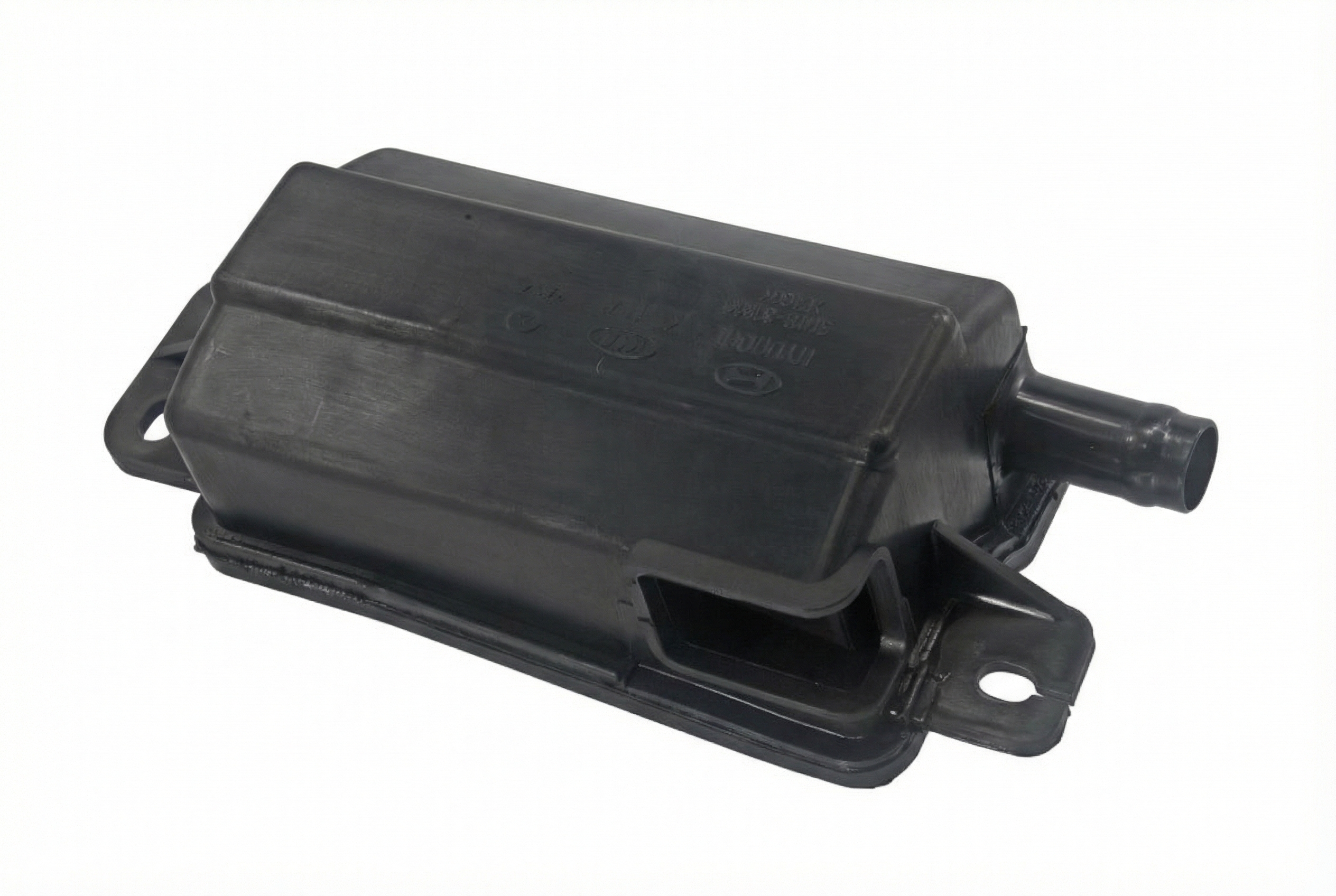
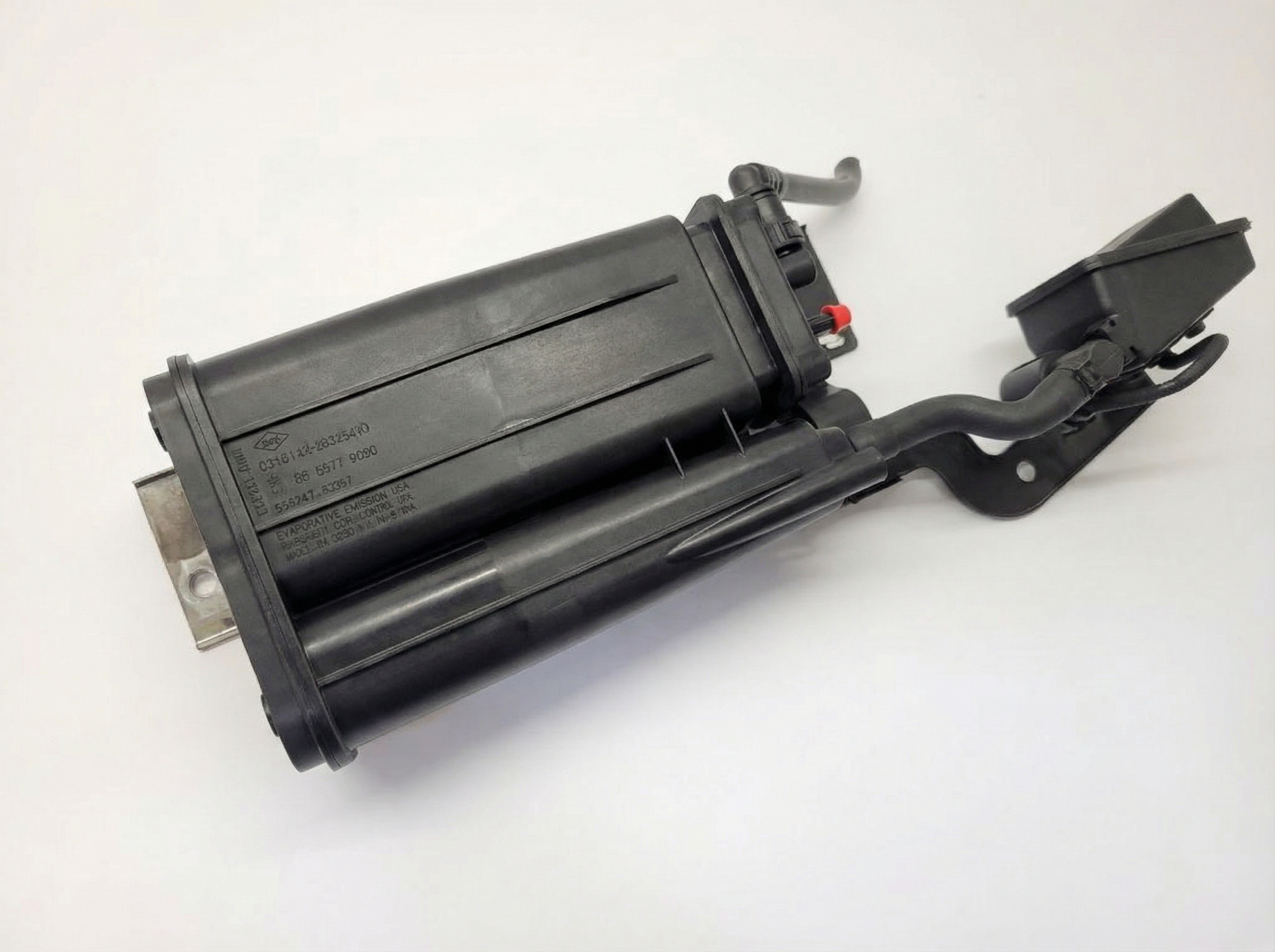
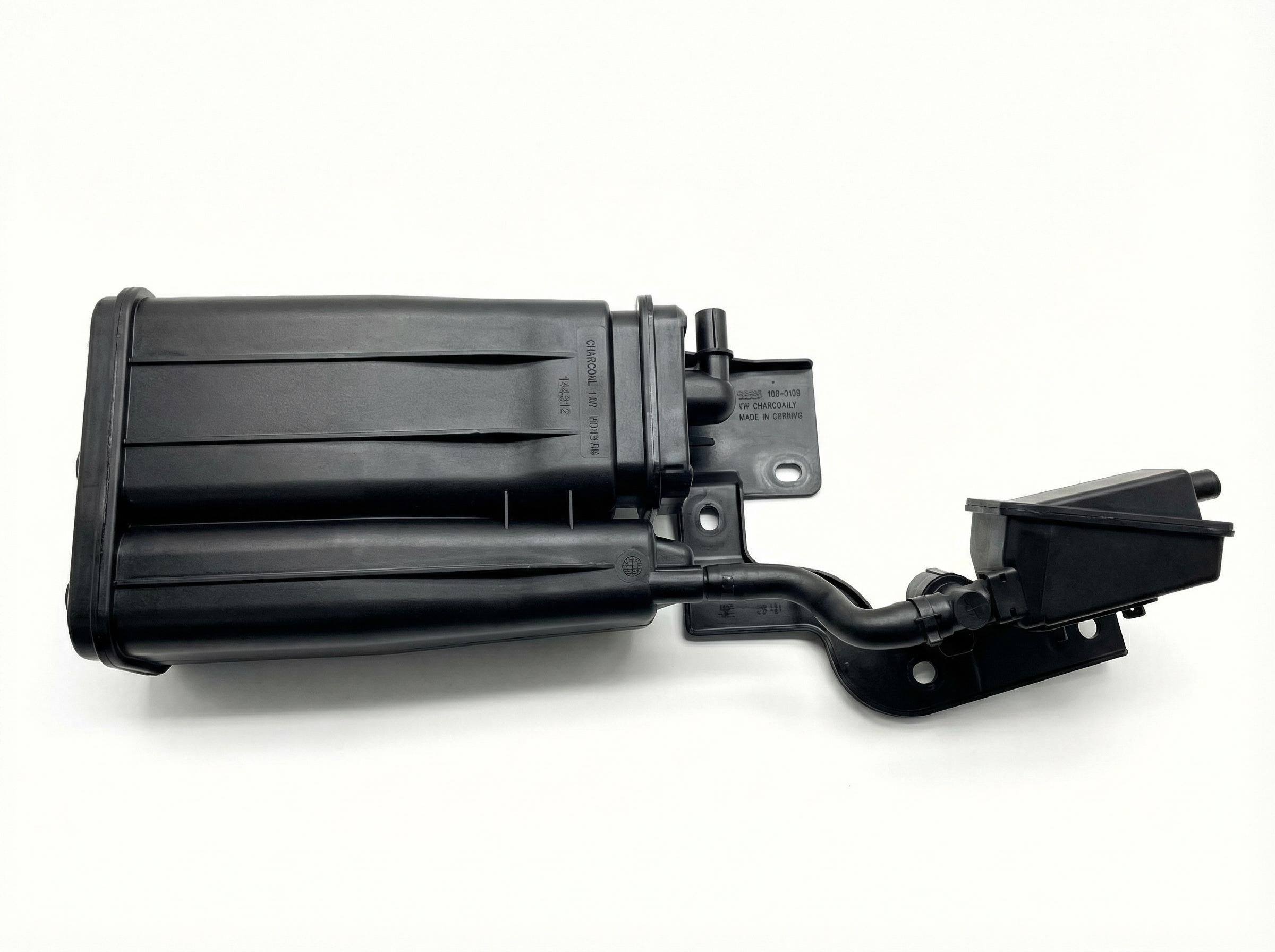
Est. part cost: $35-$85 - Cracked or Leaking Charcoal Canister 🟡 Medium Probability On some Kia models, the plastic housing of the charcoal canister, located under the car near the fuel tank, can develop cracks. A specific failure mode seen in owner forums and mechanic videos involves corrosion of the canister's metal hose fittings; as they rust and expand, they crack the plastic housing, creating a leak. This is often hard to see without removing the canister for inspection.
How to confirm: A smoke test is the most effective method. Smoke is injected into the EVAP system, and leaks will be visible where smoke escapes. Visual inspection may reveal cracks, especially around mounting points or hose fittings, but the cracks can be hidden.
Typical fix: The charcoal canister must be replaced. In some cases, the canister close valve (CCV) is replaced at the same time. Part numbers vary by year, for example: 31410-1M551-DS for some 1st gen models and 31410-3X450DS for some 2nd gen models.
Est. part cost: $250-$350 - Faulty Canister Close Valve (CCV) / Vent Valve ⚪ Low Probability This valve is located near the charcoal canister and is exposed to road debris and moisture, which can cause it to fail or get stuck. It is normally open and closes only when the system runs a leak test.
How to confirm: Use a scan tool to command the valve to close; you should hear it click. You can also apply 12V directly to its terminals to test for operation. If it's stuck open, it will cause a leak during the test cycle.
Typical fix: Replace the canister close valve. It is often attached directly to the charcoal canister and may be sold with it.
Est. part cost: $75-$120 - Cracked or Disconnected EVAP Hoses ⚪ Low Probability Rubber hoses can become brittle and crack with age and exposure to heat and elements. This can happen in the engine bay near the purge valve or underneath the vehicle near the canister.
How to confirm: Visually inspect all accessible EVAP lines for obvious cracks, loose connections, or deterioration. A smoke test is the definitive way to find small, hard-to-see hose leaks.
Typical fix: Replace the damaged section of the hose and secure the clamps.
Est. part cost: $10-$50
Rare But Worth Checking
- Rusted Fuel Filler Neck: In regions with heavy road salt use, the metal fuel filler neck can rust and develop pinhole leaks, which can be very difficult to see without a smoke test. The rust often forms where the cap seals or under a mounting bracket, preventing a good seal.
Diagnosis Steps
- Check the gas cap. Remove it, inspect the seal for cracks or damage, and clean the mating surface on the filler neck. Reinstall it, ensuring it clicks at least once. Clear the code and drive for a few days to see if it returns.
- If the code returns, consider replacing the gas cap with a new OEM part (P/N 31010-3L600U), as aftermarket caps are known to cause sealing issues.
- Visually inspect the engine bay for any cracked or disconnected vacuum and EVAP hoses, particularly around the canister purge valve near the intake manifold.
- Inspect the canister purge valve. With the engine idling from a cold start, disconnect the hose coming from the charcoal canister. There should be no suction at the valve's port. If there is, the valve is stuck open and needs replacement.
- Visually inspect the charcoal canister, canister close valve, and associated hoses underneath the vehicle (near the fuel tank) for any obvious cracks or damage. Pay close attention to the areas around the canister's mounting bolts and hose fittings.
- If no obvious issues are found, the most effective next step is to have a smoke test performed. A mechanic will inject low-pressure smoke into the EVAP system. Smoke will escape from the location of the leak, making it easy to pinpoint whether it's a cracked hose, a faulty canister, a leaking fuel filler neck, or a bad valve.
Parts You'll Likely Need
- Gas Cap
(OEM #31010-3L600U)— This is the most common cause. The seal wears out over time. Using an OEM cap is highly recommended as aftermarket versions are known to cause sealing problems.
Trusted brands: Genuine Kia
OEM price range: $20-$40
Aftermarket price range: $15-$25 - Canister Purge Valve / Solenoid
(OEM #28910-2E000)— A very common failure point that gets stuck open, causing a constant small leak. This part number fits a wide range of Kia/Hyundai vehicles from this era.
Trusted brands: Genuine Kia, Dorman, Standard Motor Products (SMP), Wells
OEM price range: $40-$85
Aftermarket price range: $25-$60 - Charcoal Canister
(OEM #31410-1M551-DS (Gen 1), 31410-3X450DS (Gen 2))— The plastic housing can crack, often due to corrosion of the metal fittings embedded in the plastic, which expand and break it. This is a known issue that is difficult to diagnose without a smoke test or removing the part.
Trusted brands: Genuine Kia
OEM price range: $250-$400
Aftermarket price range: Not Recommended
Related Codes That Often Appear With This One
- P0456 — This code indicates a 'very small leak.' It shares the same causes and diagnostic process as P0442; the only difference is the size of the leak detected by the computer.
- P0455 — This indicates a 'large leak.' If a small leak worsens, or if the gas cap is left very loose or off, the system may register it as a large leak.
- P0441 — This indicates 'incorrect purge flow.' It often points directly to a malfunctioning canister purge valve, which can also cause a P0442 leak if it's stuck partially open.
Technical Service Bulletins (TSBs) & Recalls
- TSB #PS469 (2017-01-18): Recommends a manual EVAP test procedure for technicians when a P0442, P0455, or P0456 code is present but the automatic system self-test results in 'No Trouble Found'. This involves manually activating valves and monitoring the fuel tank pressure sensor to isolate hard-to-find leaks.
Platform-Specific Known Issues
- Charcoal Canister Cracking from Corroded Fittings: A well-documented failure on the 2014-2016 (YD) Forte involves the metal fittings for the EVAP hoses on the charcoal canister. These fittings, made of steel, corrode and expand over time, which exerts pressure on the plastic housing of the canister, causing it to crack and create a small leak that triggers P0442. A mechanic demonstrated this failure in a video, showing how the corroded fitting had physically pushed itself out of the canister body.
Mechanic-Grade Diagnostic Values
- Fuel Tank Pressure Sensor (FTPS) Voltage — expected: ~2.5V at atmospheric pressure (gas cap off). Failure: Voltage significantly different from 2.5V, or stuck high (near 5V) or low (near 0.5V) regardless of pressure.
- Canister Purge Control Solenoid Valve (PCSV) Coil Resistance — expected: ~26 Ohms. Failure: An open circuit (infinite resistance) or a short (near zero resistance) indicates a failed coil.
- Canister Close Valve (CCV) Function Test — expected: Valve should click audibly and close when 12V is applied to its terminals.. Failure: No click or failure to seal when voltage is applied indicates a faulty valve.
Hidden / Shadow Codes Worth Checking
- Mode $06, Test ID $81-$84 (varies by specific ECU): These are not DTCs but raw data from the onboard EVAP leak test monitor. A failing value in the EVAP test ID can indicate a borderline leak before the P0442 code is set. (see via An advanced OBD2 scanner capable of displaying Mode $06 data.)
Scan Tool Commands That Help
- Kia GDS (Global Diagnostic System): EVAP System Leakage Test (Actuation Test) — This dealer-level function forces the EVAP system into a sealed state by commanding the Canister Close Valve (CCV) shut and the Purge Valve (PCSV) shut. The tool then monitors the Fuel Tank Pressure Sensor (FTPS) to check if the system holds vacuum, allowing a technician to confirm a leak without a smoke machine or to verify a repair.
- Kia GDS (or advanced bidirectional scanner): Canister Close Valve (CCV) On/Off — Used to manually command the CCV shut during a smoke test to isolate the canister and vent side of the system. If smoke only appears after commanding the valve shut, it confirms the valve itself is not sealing properly.
Wiring & Ground Locations
- Engine Bay Ground Point — Commonly found on the driver's side inner fender or strut tower. Look for a bolt with multiple black wires attached.. A poor ground connection for the ECM or related sensors can cause erratic sensor readings and incorrect diagnostic results for the EVAP system.
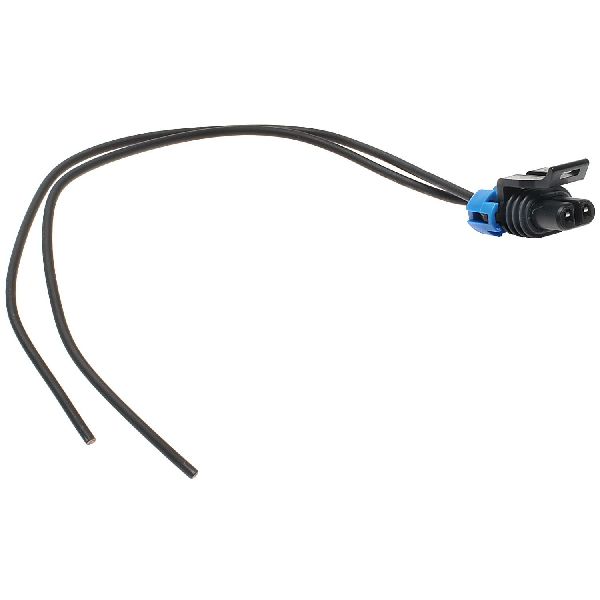
- PCSV Connector — On the Canister Purge Solenoid Valve, mounted to or near the intake manifold.. This 2-pin connector provides power and the ECM ground signal to operate the valve. Check for 12V+ with key-on, and test the control wire for a signal from the ECM during bidirectional tests.
- FTPS Connector — On the Fuel Tank Pressure Sensor, typically located on the fuel pump assembly or on the charcoal canister.. This 3-pin connector provides the sensor with a 5V reference, a ground, and returns the signal voltage to the ECM. Corrosion or damage here will directly cause incorrect pressure readings.
Real Owner Repair Stories
- YouTube channel 'Pine Hollow Auto Diagnostics' (2014 Kia Forte 1.8L) — P0442 small EVAP leak code.
❌ Tried (didn't work) Initial assumption was a bad gas cap., A temporary epoxy fix on the charcoal canister failed.
✅ What actually fixed it A smoke test revealed a leak directly from the plastic housing of the charcoal canister. The leak was caused by corroded metal hose fittings that had expanded and cracked the plastic body of the canister. Replacing the entire charcoal canister with a new OEM part resolved the code. - ForteForums user (2012 Kia Forte) — P0442 code
❌ Tried (didn't work) Replacing the gas cap., Replacing the purge valve solenoid.
✅ What actually fixed it After the common parts were replaced without success, a smoke test was performed. It revealed a crack in the seam of the charcoal canister itself. Replacing the charcoal canister was the final fix. - Kia-Forums user (2012 Kia Forte) — P0442 code
❌ Tried (didn't work) Visual inspection showed no obvious issues.
✅ What actually fixed it The owner tested the Canister Close Valve (CCV) by applying voltage from a 9V battery and found it was non-responsive (dead). Replacing the CCV fixed the problem.
"I Checked Everything" — The Actual Cause
- In some cases, the EVAP system can pass a smoke test, yet the P0442 code persists. A documented cause for this is a faulty Fuel Tank Pressure Sensor (FTPS). The sensor itself provides incorrect voltage readings to the ECU, making the computer believe there is a pressure drop (a leak) when the physical system is perfectly sealed. The sensor might be reading 1.8V at atmospheric pressure instead of the correct ~2.5V, tricking the system into flagging a leak.
OEM Part Supersession History
31010-3L600→31010-3L600U— Updated design for better sealing and durability.
Heads up: While older aftermarket versions might fit, they are a known cause of P0442 codes. Always use the latest OEM revision.
Model Year Variations Within This Range
- 2011-2013 (TD Generation): These models seem more prone to the charcoal canister cracking due to corroding metal fittings, as documented in multiple repair stories. The canister part number is specific to this generation (e.g., 31410-1M551-DS).
- 2014-2016 (YD Generation): Features a redesigned chassis and some different EVAP components, including a different charcoal canister (e.g., 31410-3X450DS). While the failure principles are the same, part numbers must be verified by VIN.
Helpful Videos

Used OEM Parts in Stock

New Aftermarket Parts Available


The information in this article is provided for general reference and educational purposes only. Vehicle specifications, procedures, and part compatibility can vary by production date, trim level, and region. Always consult your vehicle's factory service manual and verify part numbers before purchasing or performing repairs. Safety-critical components such as airbags, seat belts, and braking systems should be installed by a qualified professional.
- Kia FORTE:
- 🎬 Helpful Videos
- 🛍️ Shop This Part
- What's Unique About the 2011-2016 Kia FORTE
- Diagnostic Flowchart
- Symptoms You May Notice
- Most Likely Causes
- Rare But Worth Checking
- Diagnosis Steps
- Parts You'll Likely Need
- Related Codes That Often Appear With This One
- Technical Service Bulletins (TSBs) & Recalls
- Platform-Specific Known Issues
- Mechanic-Grade Diagnostic Values
- Hidden / Shadow Codes Worth Checking
- Scan Tool Commands That Help
- Wiring & Ground Locations
- Real Owner Repair Stories
- "I Checked Everything" — The Actual Cause
- OEM Part Supersession History
- Model Year Variations Within This Range
- 🎟️ Get 5% Off