

P0442 on 2014-2018 Kia Cadenza: EVAP Small Leak Causes and Fixes
For a 2014-2018 Kia Cadenza, code P0442 is most often caused by a loose gas cap or a damaged fuel pump seal, an issue noted in Kia Technical Service Bulletins. Always check the gas cap first. If the cap is tight and in good condition, the fuel pump seal is the next likely culprit, especially on 2017-2018 models, as detailed in TSB PS567_R2.
- Always check that the gas cap is tight and its seal is intact before attempting any other repairs; this is the most common fix.
- For 2017-2018 Cadenza models, be aware of the specific TSB regarding a faulty fuel pump seal causing this code. This is a highly likely culprit if the gas cap is not the issue.
- A smoke test is the most reliable professional method to accurately locate the source of a small EVAP leak.
- Using an OEM (original) gas cap for replacement is highly recommended, as aftermarket caps can sometimes fail to seal properly.
- The P0442 code will not stop you from driving the car, but it will cause an automatic failure on an emissions test.
What's Unique About the 2014-2018 Kia CADENZA
While many cars can get a P0442 from a loose gas cap, the 2017-2018 Kia Cadenza is specifically called out in manufacturer technical service bulletins for an issue with a damaged fuel pump seal causing this exact code. This means that after checking the gas cap, owners should be aware of this documented weakness as a highly probable cause, potentially saving time on diagnosing other less likely components.
Diagnostic Flowchart
Tap your situation to follow the diagnostic path that matches what you're seeing on this vehicle.
Generation note: The 2014-2018 year range covers two generations of the Kia Cadenza: the first generation (VG, 2014-2016) and the second generation (YG, 2017-2018). The Technical Service Bulletin (TSB) specifically mentioning a faulty fuel pump seal applies to the second generation (2017-2018 models). For first-generation models, a faulty gas cap or purge valve are more common starting points.
Symptoms You May Notice
- Check Engine Light is on
- A faint smell of fuel, particularly around the rear of the car.
- Failure to pass an emissions inspection.
- Difficulty starting the car immediately after refueling (this is a classic sign of a stuck-open purge valve).
- Replacing the charcoal canister when the leak is actually a small, inexpensive cracked hose connected to it.
- Replacing other EVAP components before checking for the known fuel pump seal issue on 2017-2018 models.
- Using a cheap aftermarket gas cap which fails to seal properly, leading the owner to believe the problem is more complex.
Most Likely Causes
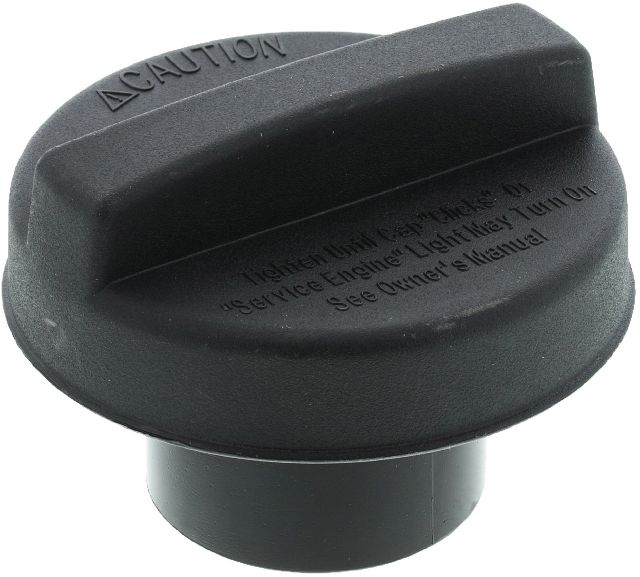
- Loose or Faulty Gas Cap 🔴 High Probability This is the most common cause for a P0442 on almost all vehicles. The rubber O-ring on the cap can wear out, crack, or get dirty, preventing a proper seal. It is highly recommended to use an OEM cap if a replacement is needed, as aftermarket caps are known to cause sealing issues.
How to confirm: Ensure the gas cap is tightened until it clicks at least once. Inspect the rubber seal for any visible cracks, stiffness, or damage.
Typical fix: Tighten the cap. If the seal is damaged, replace the gas cap. It is often recommended to use an OEM (Original Equipment Manufacturer) part to ensure a perfect seal.
Est. part cost: $20-$40 - Damaged Fuel Pump Seal 🔴 High Probability Kia issued Technical Service Bulletin PS567 and its revisions specifically for 2017-2018 Cadenza models, indicating the fuel pump seal can be torn or split, causing a P0442 or P0456 code. This is the most likely cause after the gas cap has been ruled out on these specific model years.
How to confirm: This requires a smoke test. A mechanic will pump smoke into the EVAP system; if smoke emerges from the top of the fuel tank area (under the rear seat), the fuel pump seal is the likely leak source. Visual inspection after removing the fuel pump access cover is also possible.
Typical fix: The fuel pump must be accessed (typically under the rear seat 🎬 Watch: How to access and replace the fuel pump assembly.) and the seal replaced. The TSB advises following the shop manual procedure for replacing the low-pressure fuel pump seal.
Est. part cost: $15-$50 - Faulty Canister Purge Valve (PCSV) 🟡 Medium Probability The purge valve is an electronic solenoid that frequently cycles, leading to eventual failure. It can get stuck open, creating a constant small leak which can also cause hard starting after refueling.
How to confirm: With the engine off, disconnect the valve and try to blow through it. If air passes through, the valve is stuck open and is faulty, as it should be normally closed. You can also test for vacuum at the valve's port while the engine is running; constant vacuum indicates it's stuck open.
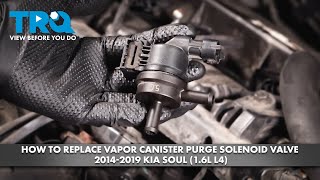
Typical fix: Replace the canister purge valve. It is typically located in the engine bay on or near the intake manifold and is relatively easy to access. 🎬 Watch: Step-by-step guide to replacing the canister purge valve.
Est. part cost: $50-$85 - Cracked or Disconnected EVAP Hose 🟡 Medium Probability Rubber hoses become brittle over time due to heat and age, leading to small cracks. This is common on any vehicle as it gets older. A user on a forum with a P0442 on their Kia replaced the gas cap and purge valve with no success, indicating the next step was a smoke test to find a likely hose leak.
How to confirm: Visually inspect all accessible EVAP lines running from the engine bay to the charcoal canister near the fuel tank. A smoke test is the most reliable method to find 🎬 See how a smoke test identifies hidden EVAP leaks. a small, hard-to-see crack.
Typical fix: Replace the cracked section of the hose and secure it with clamps.
Est. part cost: $10-$30
Rare But Worth Checking
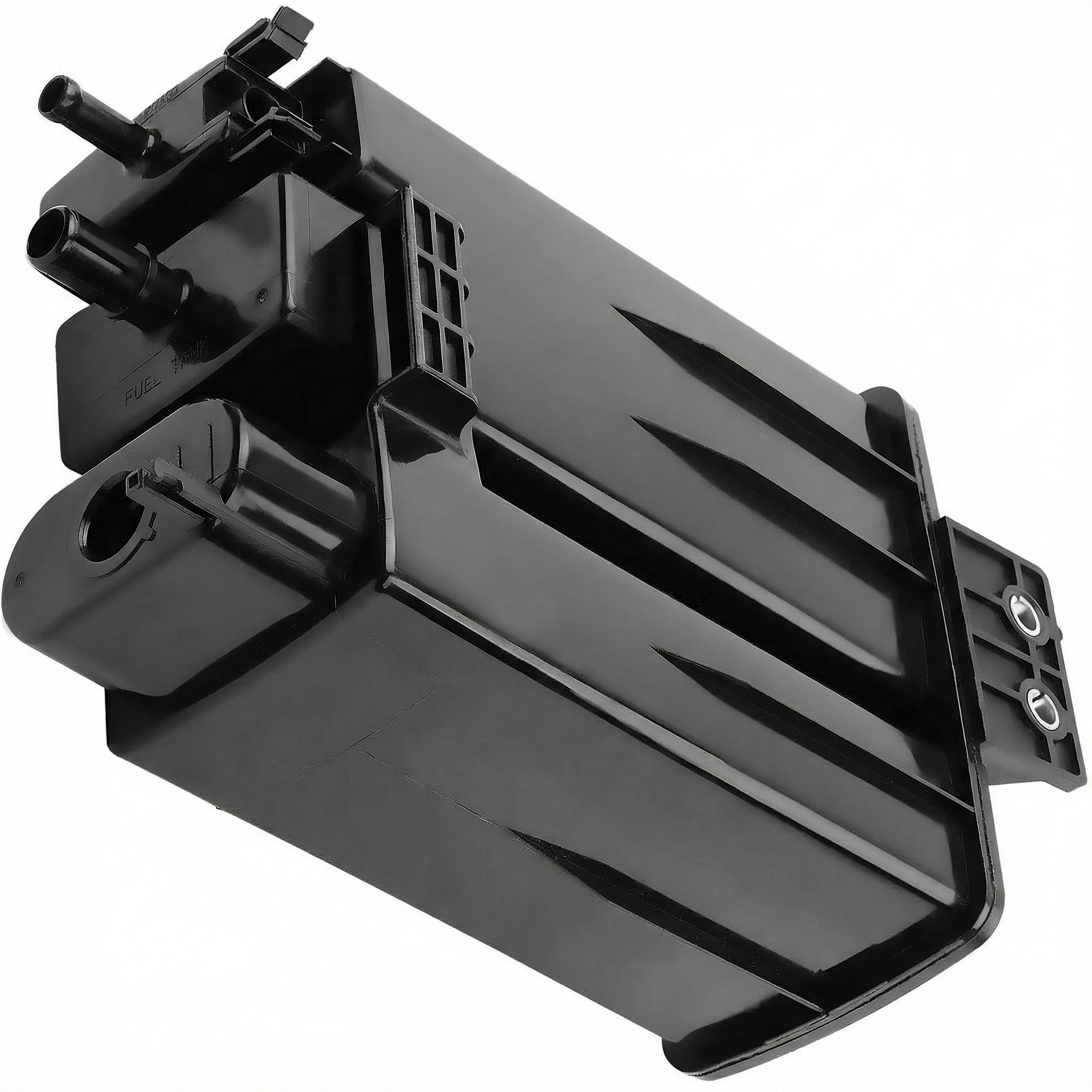
- Cracked Charcoal Canister: The plastic housing of the canister can be damaged by road debris or develop stress fractures over time, causing a leak.
- Faulty Canister Vent Valve (CVV): This valve, located near the charcoal canister, can fail, but it is less common than the purge valve. It can get stuck, preventing the system from sealing properly for its self-test.
- Faulty Fuel Tank Pressure Sensor (FTPS): The sensor that monitors EVAP system pressure can fail and send incorrect data to the ECM, falsely triggering a leak code. This sensor is often located on the fuel pump assembly.
Diagnosis Steps
- Check the Gas Cap: Remove the gas cap, inspect the seal for damage, and retighten it until it clicks several times. Clear the code and drive for a few days to see if it returns. If replacing, use an OEM cap.
- Visual Inspection: Carefully inspect all visible EVAP hoses in the engine bay and under the vehicle for obvious cracks, disconnections, or damage.
- Test the Purge Valve: Locate the purge valve in the engine bay. Disconnect it and attempt to blow through it. If air passes, it's faulty and needs replacement. Also check for hard starting after refueling, a key symptom of a bad purge valve.
- Perform a Smoke Test: This is the most effective way to find the exact source of a small leak. A smoke machine is connected to the EVAP system, and smoke will exit from any cracks or bad seals. Pay close attention to the fuel pump area (under the rear seat) for the seal issue, the charcoal canister, and all hose connection points.
- Inspect Fuel Pump Seal: If the smoke test points to the top of the fuel tank, or if all other components check out on a 2017-2018 model, access the fuel pump via the panel under the rear seat and visually inspect the seal for tears or damage as per TSB PS567.
Parts You'll Likely Need
- Gas Cap
(OEM #31010-3L600)— This is the most common and easiest fix for a P0442 code. The seal wears out over time.
Trusted brands: Genuine Kia
OEM price range: $25-$40
Aftermarket price range: $15-$25 - Fuel Pump Seal / Gasket
(OEM #31112-C9000)— A known issue on 2017-2018 models as documented by Kia TSBs PS567, PS567_R1, and PS567_R2, causing P0442. This part is sometimes referred to as a fuel pump filter or is included with the filter assembly.
Trusted brands: Genuine Kia / Hyundai
OEM price range: $15-$50
Aftermarket price range: $10-$30 - Canister Purge Valve
(OEM #28910-3C200)— A common failure point in the EVAP system that can get stuck open, creating a leak and potentially causing hard starts after fueling.
Trusted brands: Genuine Kia, Dorman, Standard Motor Products (SMP)
OEM price range: $70-$100
Aftermarket price range: $40-$70
Related Codes That Often Appear With This One
- P0456 — This code indicates a 'very small leak'. The same faults, like a failing seal, can initially be detected as a very small leak before worsening and triggering a P0442. The TSBs for the Cadenza group these two codes together.
- P0455 — This indicates a 'large leak'. If a component fails completely, such as leaving the gas cap off, the system will register a large leak instead of a small one.
- P0441 — This code indicates 'Incorrect Purge Flow' and often points directly to a malfunctioning canister purge valve, which can also cause a P0442 if it's stuck partially open.
Technical Service Bulletins (TSBs) & Recalls
- PS567_R2: PITSTOP: DTC P0456/P0442 WITH FUEL PUMP SEAL DAMAGE - Revised bulletin that expands coverage to include 2017-2018 Cadenza and some 2017 Optima Hybrid models.
- PS469: PITSTOP: MANUAL EVAPORATIVE EMISSIONS TEST FOR HARD TO FIND/SMALL LEAKS - Describes manual testing procedures for codes including P0442.
- PS567_R1: PITSTOP: DTC P0456/P0442 WITH FUEL PUMP SEAL DAMAGE - Provides information on the fuel pump seal issue.
- PS567: PITSTOP - DTC P0456/P0442 WITH FUEL PUMP SEAL DAMAGE - Initial bulletin about the fuel pump seal issue on 2017 Cadenza models.
Platform-Specific Known Issues
- On 2017-2018 Cadenza models, a torn or split fuel pump seal is a documented cause for codes P0442 and P0456. This should be investigated after confirming the gas cap is good, as per TSB PS567.
Mechanic-Grade Diagnostic Values
- Fuel Tank Pressure Sensor (FTPS) signal voltage, Key On Engine Off, gas cap OFF — expected: Approx. 2.5V (exact spec on KGIS), with 5V reference and ground present at the connector.. Failure: Voltage is out of specification, or the 5V reference/ground is missing, indicating a faulty sensor or wiring issue.
- FTPS signal voltage during manual purge test (engine running, PCSV control wire grounded for 25s) — expected: Greater than 1.5V. Failure: Voltage drops below 1.5V, indicating a restriction in the EVAP system (e.g., charcoal canister, rollover valve).
- FTPS signal voltage during system leak-down test (after pulling vacuum to 1.0-1.4V) — expected: Voltage should not change more than 0.300V over one minute.. Failure: Voltage increases by more than 0.300V, confirming a small leak is present in the sealed system.
Scan Tool Commands That Help
- Kia GDS / Professional Scan Tool: EVAP System Seal / Vent Solenoid Close — This command is used to close the canister vent valve, which is normally open. This is a required step before performing a smoke or pressure test to ensure the system is sealed for an accurate test.
- Kia GDS / Professional Scan Tool: EVAP System Leak Test — This is an automated test sequence run by the scan tool that commands the various EVAP solenoids and monitors the fuel tank pressure sensor to check for leaks, simulating the test the ECM runs automatically.
Wiring & Ground Locations
- Fuel Tank Pressure Sensor (FTPS) Connector — On top of the fuel pump assembly, accessed by removing the rear seat cushion and the fuel pump service cover.. This connector provides the 5V reference, ground, and signal wire for the sensor that detects leaks. A wiring fault or corrosion here can mimic a leak and set a P0442 code even if the system is mechanically sealed.
- Canister Purge Valve (PCSV) Connector — In the engine bay, typically mounted on or near the intake manifold.. This is the connector for the most frequently failing solenoid. Checking for power and control signal here is a key diagnostic step.
- SENSOR 2 Fuse (10A) — Likely located in the engine compartment fuse box.. On similar Kia models, this fuse provides power to EVAP system components. A blown fuse will cause a system failure and can lead to a P0442 or other EVAP codes.
Real Owner Repair Stories
- Forum user with a similar Kia platform (2016 Kia Optima 2.4L) — Intermittent codes for small and very small EVAP leaks (P0442/P0456).
❌ Tried (didn't work) Initial diagnosis pointed towards common component failures.
✅ What actually fixed it The owner discovered there was no 5V power at the Fuel Tank Pressure Sensor (FTPS) connector with the key on, engine off. The A/C pressure sensor, which shared a power source from the ECM, did have power. This confirmed the issue was not a leak, but a wiring fault between the ECM and the FTPS, which prevented the sensor from reporting pressure correctly.
"I Checked Everything" — The Actual Cause
- In cases where a smoke test shows no visible leaks, the root cause can be electrical. A faulty Fuel Tank Pressure Sensor (FTPS) or a break in its wiring can prevent the sensor from accurately reporting system pressure to the ECM. The ECM interprets this incorrect data as a leak, setting code P0442 even though the system is physically sealed. This is diagnosed by following the electrical test steps in TSB PS469, not with a smoke machine.
When the Usual Fixes Don't Work
- While common causes like the gas cap and fuel pump seal (on 2017-18 models) should be checked first, they are not the only possibilities. There are documented cases where the P0442 code was triggered by an electrical fault, not a physical leak. In one instance, a wiring issue prevented the Fuel Tank Pressure Sensor (FTPS) from receiving power, causing it to send incorrect data to the computer. A smoke test in this scenario would find no leak, and replacing common parts like the purge valve or gas cap would not solve the problem. This highlights the importance of performing electrical checks as outlined in TSB PS469 if the initial, more common fixes fail.
Model Year Variations Within This Range
- 2017-2018: These second-generation models are specifically cited in TSBs (PS567 and its revisions) for having a high probability of a torn or damaged fuel pump seal as the cause for P0442/P0456. This should be a primary suspect after the gas cap.
- 2014-2018: The general EVAP diagnostic procedure, including the manual electrical tests outlined in TSB PS469, is applicable across the entire model year range as it covers all models 2011 and newer. Core components like the purge valve are also consistent.
Helpful Videos
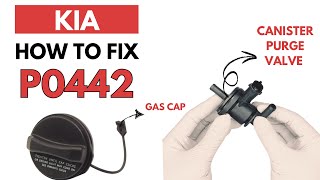
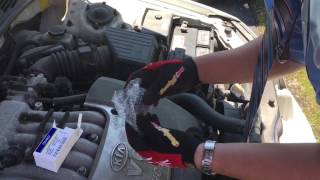
![How to Fix KIA P0442 Engine Code in 3 Minutes [2 DIY Methods / Only $4.67]](https://img.youtube.com/vi/g0DfzEcXoJA/mqdefault.jpg)

Used OEM Parts in Stock



New Aftermarket Parts Available


The information in this article is provided for general reference and educational purposes only. Vehicle specifications, procedures, and part compatibility can vary by production date, trim level, and region. Always consult your vehicle's factory service manual and verify part numbers before purchasing or performing repairs. Safety-critical components such as airbags, seat belts, and braking systems should be installed by a qualified professional.
- Kia CADENZA:
- 🎬 Helpful Videos
- 🛍️ Shop This Part
- What's Unique About the 2014-2018 Kia CADENZA
- Diagnostic Flowchart
- Symptoms You May Notice
- Most Likely Causes
- Rare But Worth Checking
- Diagnosis Steps
- Parts You'll Likely Need
- Related Codes That Often Appear With This One
- Technical Service Bulletins (TSBs) & Recalls
- Platform-Specific Known Issues
- Mechanic-Grade Diagnostic Values
- Scan Tool Commands That Help
- Wiring & Ground Locations
- Real Owner Repair Stories
- "I Checked Everything" — The Actual Cause
- When the Usual Fixes Don't Work
- Model Year Variations Within This Range
- 🎟️ Get 5% Off