

P0442 on 2000-2002 GMC Sonoma: EVAP Small Leak Causes and Fixes
For a 2000-2002 GMC Sonoma, code P0442 almost always points to a loose or faulty gas cap. This is a very cheap part and the first thing you should check. If a new gas cap doesn't fix it, the leak is likely in a rubber hose, the EVAP vent solenoid under the truck, or the purge solenoid in the engine bay. Rust on the fuel filler neck is also a common culprit.
- P0442 on your Sonoma means there's a small leak in the emissions system, not a major engine problem.
- Always start with the simplest fix: check that your gas cap is tight. If it's old, replace it; it's the most likely culprit.
- You can continue to drive the truck, but you will fail an emissions test until the leak is repaired.
- If the gas cap isn't the issue, the most efficient way to find the leak is with a smoke test, which may require a trip to a mechanic.
- Common failure points after the gas cap are the EVAP vent solenoid near the tank and old, cracked rubber hoses.
What's Unique About the 2000-2002 Gmc SONOMA
For the second-generation GMC Sonoma and its sibling, the Chevrolet S-10, the P0442 code is a very common issue as these trucks age. The EVAP systems are relatively simple, but the rubber and plastic components are now over two decades old and prone to drying out, cracking, and becoming brittle. A particularly common failure point on these trucks is rust forming on the fuel filler neck, which prevents the gas cap from sealing properly. The provided NHTSA technical service bulletins (TSBs) confirm that GM has issued specific diagnostic advice for technicians dealing with this exact code on these vehicles, underscoring the need for proper testing, like a smoke test, to find the leak's source.
Diagnostic Flowchart
Tap your situation to follow the diagnostic path that matches what you're seeing on this vehicle.
Symptoms You May Notice
- Check Engine Light is on.
- A faint smell of gasoline, particularly around the rear of the truck.
- Difficulty starting immediately after refueling in some rare cases if the purge valve is stuck open.
- Slightly reduced fuel efficiency or a rough idle in some cases.
- Replacing the O2 sensors. P0442 is strictly an EVAP system code and has no connection to the oxygen sensors.
- Replacing the fuel pump. While the fuel tank pressure sensor may be part of the fuel pump module, the pump itself is not a cause for this code. The pressure sensor itself is a rare cause.
Most Likely Causes
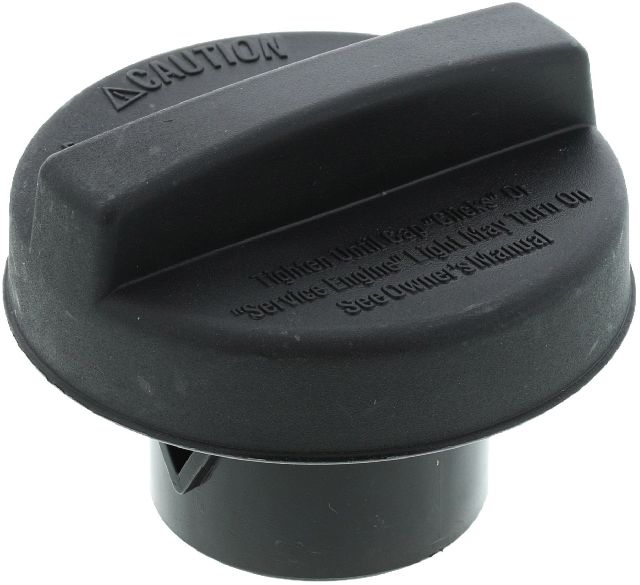
- Loose or Faulty Gas Cap 🔴 High Probability The rubber seal on the gas cap is the most common failure point in any EVAP system. Over time, the seal dries out, cracks, or gets dirty, preventing a proper seal. It is highly recommended to use an OEM or high-quality aftermarket cap, as cheaper versions may not seal correctly.
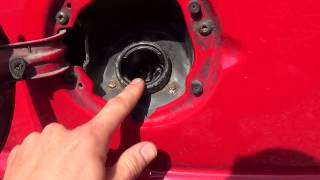
How to confirm: First, ensure the cap is tightened until it clicks. Inspect the rubber O-ring on the cap for cracks, stiffness, or damage. Crucially, check the fuel filler neck sealing surface for rust or debris that could prevent a good seal, as this is a known issue.
Typical fix: Clean the filler neck sealing surface with a wire brush and replace the gas cap. It's recommended to use an OEM ACDelco cap for best results.
Est. part cost: $15-$35 - Cracked or Disconnected EVAP Hoses 🟡 Medium Probability The rubber and plastic hoses used in the EVAP system become brittle and crack with age and exposure to engine heat and the elements. The rubber elbows and connectors are particularly susceptible.
How to confirm: Perform a thorough visual inspection of all accessible EVAP lines running from the gas tank, to the charcoal canister, and up to the engine. The most definitive method is to use a smoke machine, which fills the system with visible smoke to reveal the exact location of any leaks.
Typical fix: Replace the cracked section of hose. This may involve using bulk vacuum hose of the correct diameter or a pre-formed OEM hose.
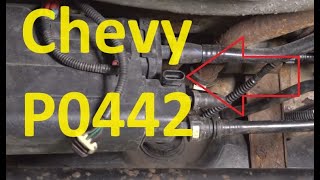
Est. part cost: $5-$50 - Failed EVAP Vent Solenoid 🟡 Medium Probability The vent solenoid is located near the gas tank and charcoal canister, typically mounted on a cross-member near the spare tire. Its exposed location makes it vulnerable to road grime, moisture, and corrosion, which can cause it to fail to close completely, creating a leak.
How to confirm: A smoke test will often show smoke exiting the vent solenoid when it should be commanded closed by a scan tool. It can also be removed and bench-tested: with the solenoid de-energized, you should be able to blow through it. When 12V power is applied to its two pins, it should click shut and you should not be able to blow through it.
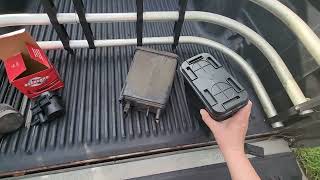
Typical fix: Replace the vent solenoid. It is often located on or near the charcoal canister under the truck bed.
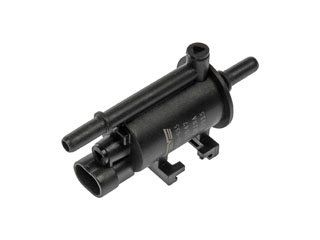
Est. part cost: $25-$75 - Failed EVAP Purge Valve/Solenoid ⚪ Low Probability The purge valve, located in the engine bay, can get stuck partially open, causing a small, constant vacuum leak that the system detects during its self-test.
How to confirm: With the engine off, disconnect the valve and try to blow through it. If air passes, it's stuck open and faulty, as it should be normally closed. A scan tool can also command the valve to cycle while checking for function.
Typical fix: Replace the purge valve. This is typically an easy part to access on or near the intake manifold.
Est. part cost: $20-$60
Rare But Worth Checking
- Cracked Charcoal Canister: The plastic housing of the canister itself can develop cracks from age or impact, creating a leak. This is less common than valve or hose failures but should be checked during a smoke test if no other leak is found.
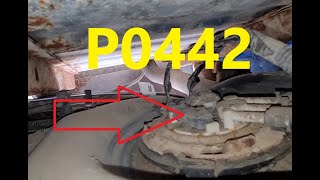
- Leaking Fuel Tank or Filler Neck: Rust is a significant problem for these trucks, especially in regions that use road salt. It can perforate the fuel filler neck or even the top of the fuel tank. A very common leak source is the seal between the metal filler neck and the collar where the gas cap seats. A smoke test is the best way to identify such a leak.
Diagnosis Steps
- Read the code with an OBD-II scanner to confirm P0442 is the primary code.
- Inspect the gas cap. Ensure it is tight (clicked multiple times). Remove it and check the seal for cracks or damage.
- Thoroughly inspect the metal lip of the fuel filler neck for any rust, corrosion, or pitting that would prevent the cap from sealing. Clean it with a wire brush if necessary.
- If the gas cap looks old or the filler neck was rusty, replace the cap with a quality OEM part (like ACDelco), clear the code, and perform a drive cycle over a few days to see if the light returns.
- If the light returns, perform a thorough visual inspection of all EVAP hoses and components from the engine bay to the fuel tank. Look for obvious cracks, breaks, or loose connections, especially at rubber elbows.
- The most effective next step is to have the EVAP system professionally smoke tested. This involves injecting a harmless, visible smoke into the system and watching for where it escapes. This is the method recommended in GM TSBs and has a high success rate.
- Based on the smoke test results, replace the leaking component, which could be a hose, the vent solenoid, the purge valve, or the canister.
- If a smoke machine is not available, you can test the purge and vent valves individually. The purge valve (engine bay) should be closed with no power. The vent valve (by the tank) should be open with no power and close when 12V is applied.
- After any repair, clear the code and perform a complete drive cycle to allow the vehicle's computer to re-test the EVAP system and confirm the fix.
Parts You'll Likely Need
- Gas Cap
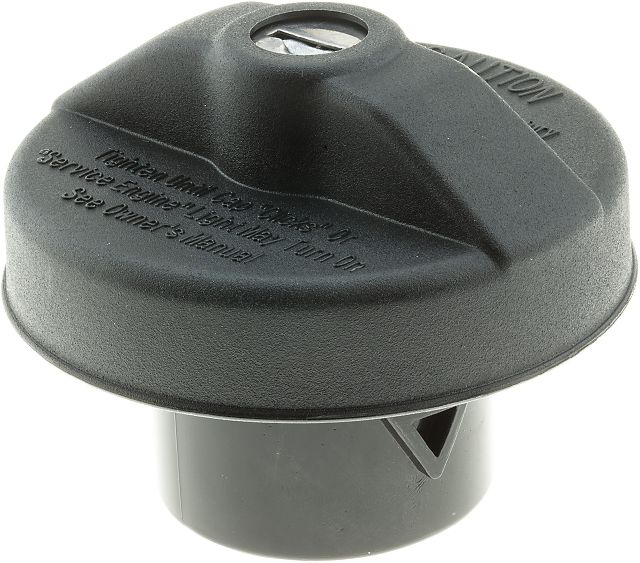
(OEM #ACDelco GT261 or 19432733)— This is the most frequent cause of a P0442 code due to the seal wearing out or the filler neck rusting. It's the cheapest and easiest part to replace first.
Trusted brands: ACDelco, Gates, Stant
OEM price range: $20-$35
Aftermarket price range: $10-$25 - EVAP Vent Solenoid
(OEM #ACDelco 214-633)— This valve is located under the truck and is prone to failure from dirt and moisture, causing it to stick or fail to seal, creating a leak.
Trusted brands: ACDelco, Dorman, Standard Motor Products
OEM price range: $40-$80
Aftermarket price range: $25-$50 - EVAP Purge Valve/Solenoid
(OEM #ACDelco 214-640 (for 4.3L V6) or 214-641 (for 2.2L I4))— Located in the engine bay, this valve can get stuck open, causing a leak. It's a common failure point, though less so than the gas cap or vent solenoid for this specific code.
Trusted brands: ACDelco, Bosch, Standard Motor Products
OEM price range: $30-$70
Aftermarket price range: $20-$60
Related Codes That Often Appear With This One
- P0455 — P0455 indicates a large EVAP leak. If a component fails significantly or a hose becomes completely disconnected, you may see both codes or P0455 instead of P0442. The NHTSA TSB #21-NA-124 explicitly mentions P0442 and/or P0455 occurring together.
- P0446 — This code points specifically to a malfunction in the EVAP vent control circuit. If the vent solenoid is electrically faulty or clogged, it can sometimes accompany a P0442.
Technical Service Bulletins (TSBs) & Recalls
- 21-NA-124: Provides diagnostic tips for EVAP leaks causing P0442 and/or P0455.
- PIT4943D: Recommends using
Platform-Specific Known Issues
- GM issued Technical Service Bulletin #21-NA-124 which provides diagnostic tips for technicians to test for EVAP leaks related to codes P0442 and P0455.
- Technical Service Bulletin #PIT4943D directs technicians to a specific article on using an EVAP system tester (smoke machine), highlighting that this is the proper procedure for finding the source of a P0442 code.
- A very common, non-part-failure cause for P0442 on these trucks is rust and corrosion on the fuel filler neck where the gas cap O-ring is supposed to seal. This must be cleaned thoroughly before assuming the cap itself is bad.
Mechanic-Grade Diagnostic Values
- Fuel Tank Pressure (FTP) Sensor Voltage — expected: 1.3V to 1.7V with the gas cap off (atmospheric pressure), Key On, Engine Off. A normal reading is often around 1.45V.. Failure: A reading of 0V, 5V, or a value that is stuck and does not change when vacuum is applied to the system indicates a faulty sensor or wiring issue.
- EVAP Purge Valve Solenoid Resistance — expected: General range for many vehicles is 15 to 30 Ohms. Specific values for the Sonoma are not readily published, but a reading far outside this range or an open circuit (infinite resistance) indicates a failed coil.. Failure: Infinite resistance (open) or zero resistance (short).
Scan Tool Commands That Help
- GM Tech 2 or equivalent professional scanner: EVAP System Test / Output Control — This is critical for accurate diagnosis. The command allows the user to manually close the normally-open EVAP Vent Solenoid to seal the system for a smoke or vacuum test. It also allows for cycling the EVAP Purge Solenoid to confirm it is actuating correctly.
Wiring & Ground Locations
- EVAP Vent Solenoid — At the rear of the truck, near the fuel tank and charcoal canister, often on a frame crossmember.. This component must be commanded closed to seal the system for testing. Its location makes it and its wiring vulnerable to corrosion and damage.
- EVAP Purge Solenoid (4.3L V6) — Top right rear of the engine.. This valve can stick open, causing a leak. Knowing its location is key for testing.
- EVAP Purge Solenoid (2.2L I4) — On the right side of the engine.. This valve can stick open, causing a leak. Knowing its location is key for testing.
- G416 — Ground point on the left rear frame rail or crossmember.. This is a likely ground point for rear-mounted components like the EVAP Vent Solenoid and the fuel pump/pressure sensor module. A poor ground here can cause erratic component behavior.
- G117 / G119 — Ground points on the right rear (G117) and right front (G119) of the engine.. These are primary engine grounds that can affect the operation of engine-mounted sensors and solenoids, including the EVAP Purge Solenoid.
- Filler Neck Ground — A ground strap often runs from the chassis to the fuel filler neck.. While not directly causing a P0442, this ground is critical for preventing static buildup during refueling and is part of the overall fuel system integrity.
"I Checked Everything" — The Actual Cause
- A known scenario on GM vehicles is passing a smoke test (which uses pressure) but still setting a P0442 because a valve (typically the purge or vent solenoid) leaks under vacuum, which is how the PCM performs its self-test. The valve seals against positive pressure from the smoke machine but fails to hold a vacuum. The correct diagnosis in this case is to remove the suspect valve and test it with a hand-held vacuum pump to see if it holds vacuum when it's supposed to be closed.
OEM Part Supersession History
16217059, 16257276, and others→19540725— Part has been updated by GM over time.12559015→ACDelco 214-633— Part has been updated by GM/ACDelco.
Helpful Videos
![How to Fix P0442 Engine Code in 3 Minutes [2 DIY Methods / Only $4.67]](https://img.youtube.com/vi/73AR8Tl6YZU/mqdefault.jpg)

We Have This Part in Stock


The information in this article is provided for general reference and educational purposes only. Vehicle specifications, procedures, and part compatibility can vary by production date, trim level, and region. Always consult your vehicle's factory service manual and verify part numbers before purchasing or performing repairs. Safety-critical components such as airbags, seat belts, and braking systems should be installed by a qualified professional.
- Gmc SONOMA:
- 🎬 Helpful Videos
- 🛍️ Shop This Part
- What's Unique About the 2000-2002 Gmc SONOMA
- Diagnostic Flowchart
- Symptoms You May Notice
- Most Likely Causes
- Rare But Worth Checking
- Diagnosis Steps
- Parts You'll Likely Need
- Related Codes That Often Appear With This One
- Technical Service Bulletins (TSBs) & Recalls
- Platform-Specific Known Issues
- Mechanic-Grade Diagnostic Values
- Scan Tool Commands That Help
- Wiring & Ground Locations
- "I Checked Everything" — The Actual Cause
- OEM Part Supersession History
- 🎟️ Get 5% Off