

P0442 on 2012-2016 GMC Sierra Denali: EVAP Small Leak Causes and Fixes
P0442 on a 2012-2016 GMC Sierra Denali indicates a small leak in the EVAP system. The most common fix is replacing a worn or loose gas cap. If that doesn't work, the next most likely culprits are the EVAP purge valve on the engine or the vent solenoid near the fuel tank. A smoke test is the most accurate way to find the leak.
- P0442 is a minor issue that won't stop you from driving, but it will cause an emissions test failure.
- Always start with the simplest fix: check that the gas cap is tight. If that doesn't work, a new OEM-spec gas cap is an inexpensive next step.
- The two most likely parts to fail after the gas cap are the purge valve (on the engine) and the vent valve (near the tank).
- Diagnosing the exact leak location without a smoke machine can be difficult. If a new gas cap and purge valve don't solve the issue, a smoke test is the most efficient way to find the leak.
- Be aware of your truck's model year, as parts for 2012-2013 models may differ from 2014-2016 models.
What's Unique About the 2012-2016 Gmc SIERRA DENALI
The 2012-2016 GMC Sierra Denali spans two vehicle generations (GMT900 for 2012-2013 and K2XX for 2014-2016), which have slightly different EVAP system layouts and components. While the causes are similar, the specific part numbers and locations for components like the vent solenoid can differ. GM has issued several Technical Service Bulletins (TSBs) for these trucks related to P0442. TSB 15-06-04-002 specifically addresses the vent solenoid, noting that water intrusion can cause corrosion and failure, leading to P0442, P0446, and P0449 codes. TSB 15-NA-019 points to a potential fracture in the fuel filler neck recirculation line, causing a fuel odor and P0442/P0455 codes.
Diagnostic Flowchart
Tap your situation to follow the diagnostic path that matches what you're seeing on this vehicle.
Generation note: This range covers two generations: the GMT900 platform (2012-2013 models) and the K2XX platform (2014-2016 models). The function of the EVAP system is the same, but the physical location and part numbers for the purge valve and vent solenoid may differ. For example, the vent solenoid on the K2XX platform is a common failure point. Always verify the correct part for your specific model year before purchasing.
Symptoms You May Notice
- Check Engine Light is on
- A faint smell of fuel, particularly after refueling or while idling. TSB 15-NA-019 directly links this symptom to a possible fracture in the fuel filler neck line.
- Difficulty filling the fuel tank (tank clicks off before full). TSB 15-06-04-002 notes this symptom is often caused by a restricted or failed EVAP vent valve.
- Replacing the charcoal canister when only a valve is bad. The vent and purge valves are much more common failure points than the canister itself.
- Replacing parts without confirming the leak location. Many owners replace the gas cap and purge valve only to find the issue was the vent solenoid or a cracked hose, which a smoke test would have identified first.
Most Likely Causes
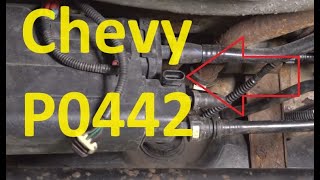
- Loose or Worn Gas Cap 🔴 High Probability The gas cap is the most frequently removed and re-installed part of the emissions system. Its rubber O-ring seal can dry out, crack, or get dirty over time, preventing a proper seal. It is the most common and easiest fix for a P0442 code. 🎬 Watch: A quick overview of common P0442 causes and fixes.
How to confirm: First, ensure the cap is tightened until it clicks several times. Inspect the rubber seal for any visible cracks, stiffness, or damage. If the seal looks worn, it's best to replace it. Many owners recommend using an OEM cap, as some aftermarket caps have been reported to not seal correctly.
Typical fix: Replace the gas cap with a new, high-quality OEM or equivalent part. After replacement, clear the code and drive for a few days to see if it returns.
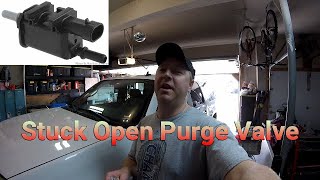
Est. part cost: $15-$35 - Faulty EVAP Purge Solenoid/Valve 🟡 Medium Probability This valve, located on the engine's intake manifold, controls the flow of stored fuel vapors to the engine. It can get stuck open or closed, or develop a small internal leak over time, causing a constant small leak path.
How to confirm: Remove the valve. With the valve disconnected from power, try to blow air through it. If any air passes, the valve is stuck open and is faulty. A scan tool can also be used to command the valve open and closed to check its operation and listen for a clicking sound.
Typical fix: Replace the purge solenoid valve. This is typically a straightforward repair on the top 🎬 See this walkthrough on how to replace the purge valve. of the engine with basic hand tools.
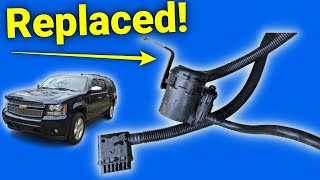
Est. part cost: $45-$70 - Faulty EVAP Vent Solenoid/Valve 🟡 Medium Probability Located near the charcoal canister by the fuel tank, this valve allows fresh air into the system during testing. It's exposed to road debris, dirt, and moisture, which can cause it to fail or its filter to clog. GM TSB 15-06-04-002 specifically calls this part out as a common failure point due to water intrusion and corrosion.
How to confirm: Diagnosis often requires a smoke machine to see if the valve is leaking when commanded closed by a scan tool. Visual inspection for heavy corrosion or a filter clogged with dirt is also recommended. A user on silveradosierra.com fixed their P0442 by replacing this part after other attempts failed.
Typical fix: Replace the vent valve solenoid assembly. On some models, this part is located on top of the fuel tank, which may require lifting the truck bed or lowering the tank for access. For many Sierra models, it is located near the spare tire.
Est. part cost: $40-$160 - Cracked or Disconnected EVAP Hose ⚪ Low Probability The rubber and plastic hoses that connect the EVAP system components can become brittle and crack with age and exposure to heat and elements. A forum user reported finding a cracked hose on top of the fuel tank, which was only discoverable after dropping the tank.
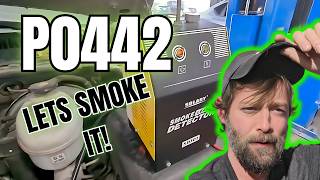
How to confirm: A thorough visual inspection of all accessible EVAP lines between the engine, charcoal canister, and fuel tank is the first step. The most effective method is to use an automotive smoke machine, which fills the system with a visible vapor to pinpoint the exact location of any small leaks.
Typical fix: Replace the damaged section of hose and secure it with new clamps.
Est. part cost: $10-$50
Rare But Worth Checking
- Cracked Charcoal Canister: The canister itself can develop hairline cracks from road debris impact or age, causing a leak. This is less common than valve failure but should be inspected if other causes are ruled out.
- Leaking Fuel Tank Pressure (FTP) Sensor: The FTP sensor, usually located on top of the fuel tank as part of the fuel pump module, can develop an internal leak or fail electrically. A Reddit user noted that a bad sensor can cause false leak codes by sending incorrect pressure readings to the ECM.
- Cracked Fuel Tank: In a rare case documented on YouTube, a 2014 Silverado had a small crack in the plastic fuel tank itself near a molded seam, which was found using a smoke machine. This is an uncommon but possible source for a persistent P0442 code.
Diagnosis Steps
- Read the code with an OBD-II scanner and check for any other related codes like P0455, P0449, or P0446.
- Inspect the gas cap. Ensure it's tight and the seal is not cracked or worn. If in doubt, replace it with an OEM part (e.g., ACDelco GT294 or GT364), clear the code, and drive for a few days.
- If the code returns, perform a visual inspection of the EVAP purge valve on the engine and the vent valve and hoses near the fuel tank. Look for obvious cracks or loose connections.
- Test the purge valve. Remove it and try to blow through it. If air passes, it's faulty. Alternatively, use a scan tool to command the valve to cycle and listen for a click.
- If the purge valve is good, the next step is to test the vent valve and the rest of the system. The most effective method is with an automotive smoke machine. Connect the smoke machine to the EVAP service port. Use a scan tool to command the vent valve closed to seal the system. Look for vapor escaping from any component, hose, or the canister.
- If no leaks are found with a smoke test, and valves appear to function electrically, consider the possibility of a faulty Fuel Tank Pressure (FTP) sensor providing inaccurate data to the ECM.
- If a leak is traced to the top of the fuel tank area, you may need to lower the tank or lift the bed for access to inspect hoses, the FTP sensor, or the fuel pump module seal.
Parts You'll Likely Need
- Fuel Cap
(OEM #ACDelco GT294 (2012-2013, GMT900) / ACDelco GT364 (2014-2016, K2XX))— This is the most common cause due to frequent use and seal degradation. It's the cheapest and easiest first step in diagnosis.
Trusted brands: ACDelco (GM OE), Motorad
OEM price range: $20-$35
Aftermarket price range: $15-$25 - Vapor Canister Purge Valve / Solenoid
(OEM #ACDelco 214-2291 (or 12610560) - Fits most 2012-2016 V8s)— A common failure item that gets stuck open, causing a constant small leak. It's located on the engine and is relatively easy to access and replace.
Trusted brands: ACDelco, Dorman, Standard Motor Products
OEM price range: $50-$70
Aftermarket price range: $30-$55 - Vapor Canister Vent Valve / Solenoid
(OEM #ACDelco 214-2149 (or 19207763) for GMT900 (2012-2013) / ACDelco 23481275 for K2XX (2014-2016))— This valve is exposed to the elements under the truck and is prone to failure from corrosion and debris. TSB 15-06-04-002 specifically addresses this part.
Trusted brands: ACDelco, Dorman, Standard Motor Products
OEM price range: $40-$110
Aftermarket price range: $30-$80
Related Codes That Often Appear With This One
- P0455 — P0455 indicates a large EVAP leak. If a component fails significantly, you might see this code instead of, or along with, P0442. TSB 21-NA-124 discusses diagnosing both codes together.
- P0449 — This code specifically points to a fault in the EVAP vent solenoid control circuit. If you have P0442 and P0449 together, the vent solenoid is almost certainly the culprit, as confirmed by TSB 15-06-04-002.
- P0446 — This code indicates a fault in the EVAP vent control system (often a blockage). It frequently appears with P0442 when the vent solenoid is clogged or failing, as mentioned in TSB 15-06-04-002.
Technical Service Bulletins (TSBs) & Recalls
- Bulletin #21-NA-124: Provides diagnostic tips for EVAP leaks causing DTCs P0442 and/or P0455.
- Bulletin #15-NA-019: Connects a fuel odor concern with P0442 or P0455 codes.
- Bulletin #PIT4943D: Advises technicians on using an EVAP system tester for diagnosing P0442.
- Bulletin #15-06-04-002: Addresses customer concerns of MIL on, fuel tank hard to fill, and DTCs including P0442, often related to the vent system.
Platform-Specific Known Issues
- A known issue, referenced in TSB #15-06-04-002, involves the EVAP system causing the fuel tank to be hard to fill, which is often tied to a faulty vent solenoid.
- TSB #15-NA-019 directly links P0442 with a noticeable fuel odor during filling or at idle, pointing to a leak in the system that allows vapors to escape. [Bulletin #15-NA-019]
Mechanic-Grade Diagnostic Values
- Fuel Tank Pressure (FTP) Sensor Voltage at atmospheric pressure — expected: 1.3V to 1.7V with key on, engine off, and fuel cap removed.. Failure: A voltage that is static (e.g., stuck at 0.5V or 2.5V) and does not change, or is significantly outside the expected range, indicates a faulty sensor or wiring.
- FTP Sensor Connector Voltages — expected: With the connector unplugged and key on, you should find: ~5V on the reference wire, 0V (continuity to ground) on the ground wire, and 0V on the signal wire.. Failure: Missing 5V reference or a bad ground indicates a wiring or ECM issue, not a sensor failure.
- EVAP Purge Solenoid Mechanical Test — expected: With the valve removed from the vehicle and de-energized (not connected to power), no air should pass through it.. Failure: If you can blow air through the valve when it is not energized, it is stuck open and faulty.
Hidden / Shadow Codes Worth Checking
- Mode $06, TID $3C, CID $C2: EVAP Monitor 0.020" (Small Leak) Test. This is the specific monitor that runs to detect the leak that sets P0442. Viewing the raw test data can show if the vehicle is borderline failing before the code sets. (see via An advanced OBD-II scan tool capable of displaying Mode $06 data.)
- Mode $06, TID $3C, CID $C9: Canister Vent Valve 'stuck closed' test. Provides data on the vent valve's ability to seal. (see via An advanced OBD-II scan tool capable of displaying Mode $06 data.)
- Mode $06, TID $3C, CID $CB: Canister Purge Valve 'stuck open' test. Provides data on the purge valve's ability to seal when commanded closed. (see via An advanced OBD-II scan tool capable of displaying Mode $06 data.)
Scan Tool Commands That Help
- GDS2 / Tech 2 or equivalent professional scan tool: EVAP Vent Solenoid Control — This bidirectional command is essential for performing a smoke test. The vent solenoid is normally open, so it must be commanded closed to seal the EVAP system and allow it to be filled with smoke to find a leak.
- GDS2 / Tech 2 or equivalent professional scan tool: EVAP Purge Solenoid Control — Used to command the purge valve open and closed to check for an audible click, confirming electrical function. It can also be used with a smoke machine or vacuum gauge to verify it's sealing properly when commanded closed.
- GDS2 / Tech 2 or equivalent professional scan tool: EVAP Service Bay Test — This is an automated function that runs the vehicle's own internal EVAP leak test on demand, rather than waiting for the drive cycle criteria to be met. It can quickly confirm if a repair was successful or if a leak is still present.
Wiring & Ground Locations
- G103 — On the front of the right-side (passenger side) cylinder head.. This is a primary engine ground. A poor connection here could affect the operation of engine-mounted components, including the EVAP Purge Solenoid.
- G104 — On the rear of the left-side (driver side) cylinder head, where the main ground strap from the body connects.. This is another critical engine ground point. Intermittent or poor grounding can cause erratic sensor readings and solenoid operation.
- EVAP Canister Vent Solenoid Control Wire — Pin 67 in the X1 connector at the ECM on some 2014 models.. The wire is typically Violet/Dark Blue. Knowing the pin and color is crucial for diagnosing a circuit fault (open/short) between the ECM and the vent solenoid if the solenoid itself tests good.
Real Owner Repair Stories
- Commenter on YouTube video 'Causes and Fixes P0442 Code' (2007 Silverado 1500 4x4 (GMT900 platform, shared with 2012-2013 Sierra)) — Persistent P0442 code.
❌ Tried (didn't work) Replaced purge valve, Replaced purge solenoid (vent solenoid), Replaced gas cap multiple times, Performed a smoke test which found no leaks
✅ What actually fixed it The user was still diagnosing, but the next suggested step after all common causes were eliminated and a smoke test passed was to test or replace the Fuel Tank Pressure Sensor (FTPS), as it could be sending bad information to the computer.
"I Checked Everything" — The Actual Cause
- A faulty Fuel Tank Pressure (FTP) sensor. The system may be perfectly sealed, but if the sensor is stuck on a specific voltage and doesn't report the pressure change when the ECM runs its test, the computer will incorrectly interpret this as a leak and set a P0442 code.
- A weak EVAP purge or vent valve. The valve may be strong enough to seal against the low pressure of a typical smoke machine (~1 PSI), but may fail to hold the slight vacuum (~7-12 inches of H2O) that the ECM pulls during its self-test. This can be diagnosed by testing the valve with a hand-held vacuum pump.
- A hard-to-start or rough idle condition immediately after refueling. This is a classic symptom of a purge valve that is stuck open, allowing raw fuel vapors to flood the intake manifold. Even if it seems to pass a smoke test, this symptom strongly points to a faulty purge valve.
When the Usual Fixes Don't Work
- In many frustrating cases, owners and technicians find that a P0442 code persists even after replacing the most common culprits: the gas cap, the purge valve, and the vent solenoid. Often, a smoke test will also show no visible leaks. In these instances, the root cause is frequently not a 'leak' in the traditional sense, but a failure of the system's self-monitoring. The two most likely causes are a faulty Fuel Tank Pressure (FTP) sensor that is providing incorrect readings to the computer, or a valve that holds pressure during a smoke test but fails under the vacuum applied during the ECM's internal test cycle.
OEM Part Supersession History
Multiple, including 10382080, 15893884, 20995471, 25932566→ACDelco 23481275— This is the Vapor Canister Vent Valve for the K2XX platform (2014-2016). The long list of superseded part numbers indicates multiple design revisions by GM over the years to improve reliability and address issues like water/debris intrusion.
Heads up: While this part may look similar to earlier versions, using the correct part number for the specific model year and platform (GMT900 vs K2XX) is critical for proper function and fitment.
Model Year Variations Within This Range
- 2012-2013 (GMT900): These models use the older GMT900 chassis and carry-over V8 engines. EVAP components like the vent solenoid (ACDelco 214-2149) are specific to this generation.
- 2014-2016 (K2XX): This is a new platform (K2XX) with a redesigned frame, cab, and the introduction of the EcoTec3 family of V8 engines with Direct Injection. While EVAP system principles are the same, the physical location and part numbers for components like the vent solenoid (ACDelco 23481275) are different from the previous generation.
Helpful Videos
We Have This Part in Stock


The information in this article is provided for general reference and educational purposes only. Vehicle specifications, procedures, and part compatibility can vary by production date, trim level, and region. Always consult your vehicle's factory service manual and verify part numbers before purchasing or performing repairs. Safety-critical components such as airbags, seat belts, and braking systems should be installed by a qualified professional.
- Gmc SIERRA DENALI:
- 🎬 Helpful Videos
- 🛍️ Shop This Part
- What's Unique About the 2012-2016 Gmc SIERRA DENALI
- Diagnostic Flowchart
- Symptoms You May Notice
- Most Likely Causes
- Rare But Worth Checking
- Diagnosis Steps
- Parts You'll Likely Need
- Related Codes That Often Appear With This One
- Technical Service Bulletins (TSBs) & Recalls
- Platform-Specific Known Issues
- Mechanic-Grade Diagnostic Values
- Hidden / Shadow Codes Worth Checking
- Scan Tool Commands That Help
- Wiring & Ground Locations
- Real Owner Repair Stories
- "I Checked Everything" — The Actual Cause
- When the Usual Fixes Don't Work
- OEM Part Supersession History
- Model Year Variations Within This Range
- 🎟️ Get 5% Off