

P0442 on 2008-2010 GMC Sierra 2500: EVAP Small Leak Causes and Fixes
For a 2008-2010 GMC Sierra 2500, a P0442 code is most often caused by a loose or faulty gas cap. If tightening or replacing the cap doesn't work, the next most common culprits are the EVAP vent solenoid near the spare tire or the purge valve on the engine. A professional smoke test is the most accurate way to find the leak's source.
- P0442 means your truck has a small leak in the fuel vapor recovery system.
- Always start by checking the gas cap; a loose or worn-out cap is the most common cause.
- If the gas cap is good, the EVAP vent solenoid (by the spare tire) or the purge valve (on the engine) are the next most likely parts to have failed.
- While you can drive with this code, you will fail an emissions test.
- For leaks that are not obvious, a smoke test is the fastest and most reliable way to find the source of the problem.
What's Unique About the 2008-2010 Gmc SIERRA 2500

On these GMT900 generation trucks, the EVAP system components, particularly the vent solenoid, are exposed to significant road grime, dust, and moisture, especially since it's located near the rear of the vehicle by the spare tire. This exposure is a primary contributor to component failure, causing the valve to get stuck. GM has issued technical service bulletins (TSBs) that provide diagnostic advice for these leaks, indicating it's a recognized issue requiring a methodical approach rather than a single, universal design flaw. Some owners have had success installing a relocated filter kit to move the air intake for the vent solenoid to a cleaner location.
Diagnostic Flowchart
Tap your situation to follow the diagnostic path that matches what you're seeing on this vehicle.
Symptoms You May Notice
- Check Engine Light is on
- A faint fuel smell, particularly around the rear of the truck (in some cases)
- No noticeable change in drivability
- Difficulty starting the truck immediately after refueling (if the purge valve is stuck open).
- Replacing the O2 sensors. Oxygen sensors are not part of the EVAP system and will not cause a P0442 code.
- Replacing the catalytic converter. This is a costly and incorrect repair for an EVAP system leak.
- Repeatedly replacing the gas cap with aftermarket versions. Often, only an OEM cap will provide the correct seal.
Most Likely Causes

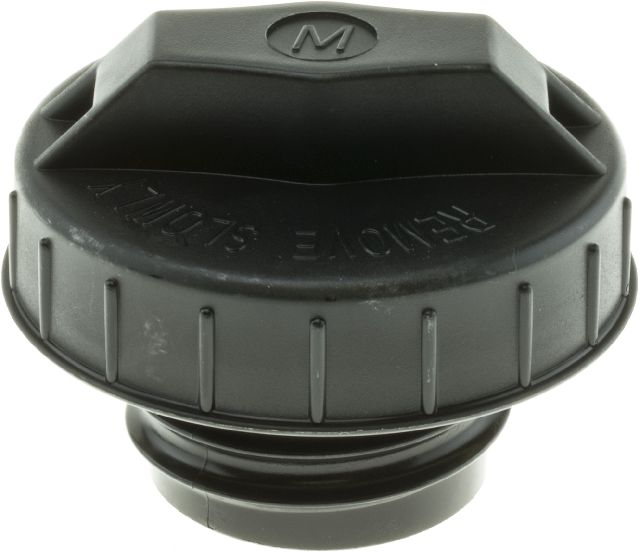
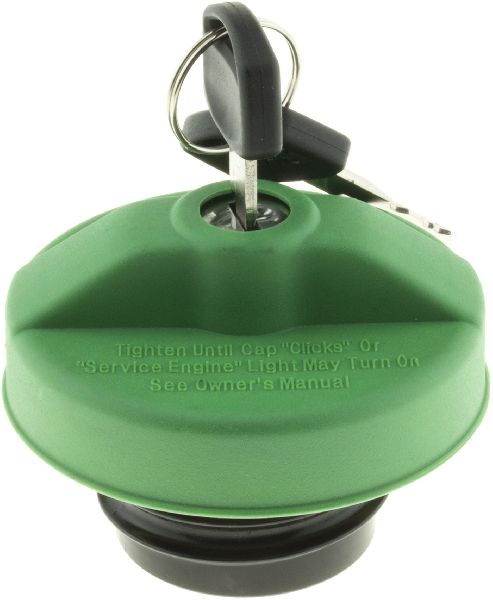
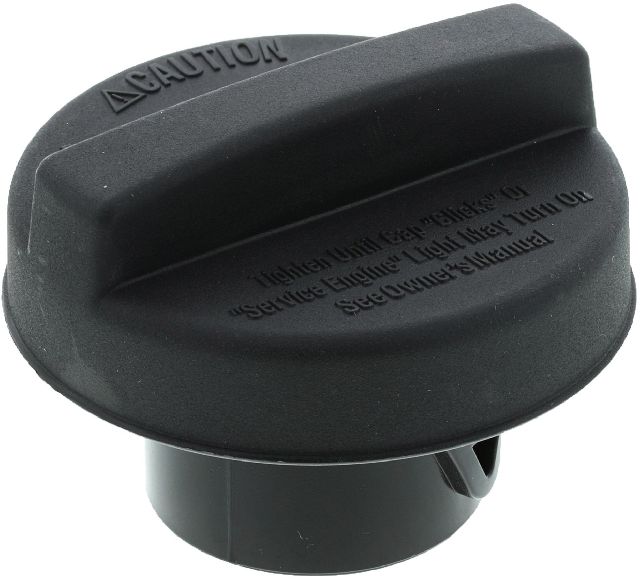
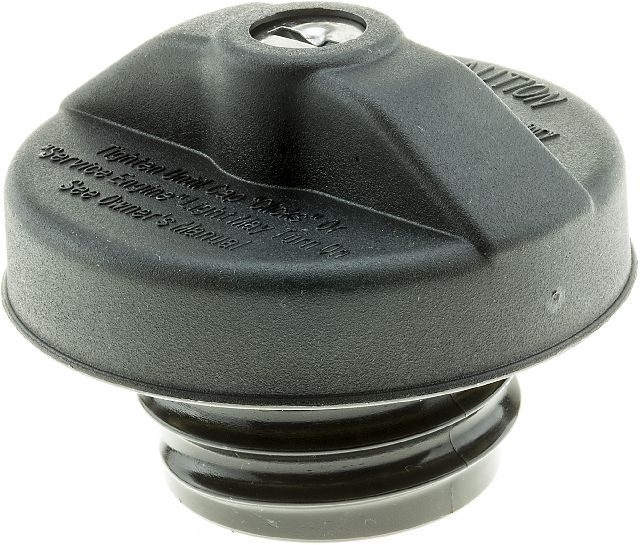
- Loose or Faulty Gas Cap 🔴 High Probability The gas cap is the most frequently removed and re-installed part of the emissions system. Its seal can easily wear out, get dirty, or simply not be tightened correctly. Many owners in forums report that using an aftermarket gas cap failed to solve the code, which only went away after installing a genuine OEM cap.
How to confirm: Inspect the gas cap for cracks in the rubber O-ring seal. Ensure it is tightened until it clicks at least once. If the seal is damaged or you hear a 'whoosh' of air when opening it long after fueling, the cap may be faulty.
Typical fix: Replace the gas cap. It is highly recommended to use an OEM part from a brand like ACDelco, as some aftermarket caps may not seal properly.
Est. part cost: $15-$30 - Failed EVAP Vent Solenoid 🟡 Medium Probability This component is located near the charcoal canister by the spare tire, where it is exposed to road debris, water, and salt, which can cause it to fail or get stuck open with dirt. This is a very common failure point on GM trucks.
How to confirm: A mechanic can command the valve to close with a scan tool during a smoke test to see if it seals. A DIY method is to remove the valve and try to blow through it; in its resting (unpowered) state, it should be open. Applying 12V should cause it to close, and you should not be able to blow through it. If it doesn't close, it's faulty.
Typical fix: Replace the EVAP vent solenoid and inspect its wiring connector for corrosion. Some owners proactively install a filter relocation kit to move the valve's air source to a cleaner location, like higher up in the engine bay.
Est. part cost: $30-$60 - Failed EVAP Purge Valve/Solenoid 🟡 Medium Probability This valve is located on the engine's intake manifold and can get stuck open or leak internally over time due to carbon buildup or simple wear.
How to confirm: With the engine off, disconnect the hose leading from the valve to the charcoal canister and apply vacuum with a hand pump; the valve should hold vacuum. Another test is to remove the valve and try to blow through it. In its resting, unpowered state, it should be closed. If you can blow through it, it's stuck open and faulty.
Typical fix: Replace the purge valve. This is typically a straightforward repair involving one bolt and two hose connections. 🎬 See this walkthrough for replacing the purge valve on your truck.
Est. part cost: $25-$50 - Cracked or Disconnected EVAP Hoses ⚪ Low Probability The rubber and plastic lines that make up the EVAP system can become brittle and crack with age and exposure to heat and cold cycles. Connections at the charcoal canister and valves are common places for leaks.
How to confirm: A visual inspection may reveal obvious cracks, especially at bends or connection points. The most reliable method is to have a smoke test performed, which will force smoke through the system and make even the smallest leaks visible.
Typical fix: Replace the damaged section of hose or the entire line assembly if necessary.
Est. part cost: $10-$100
Rare But Worth Checking
- Cracked Charcoal Canister: While not a common failure point for a *small* leak, a hairline crack in the canister body or at a hose fitting can occur, often from road debris impact or stress over time.
- Leaking Fuel Tank Pressure (FTP) Sensor: The sensor itself can fail, but more relevant to this code, the seal where it mounts to the fuel tank or fuel pump module can degrade and cause a small leak. A faulty sensor can also send incorrect data, falsely triggering the code.
- Rusted Fuel Filler Neck: In regions with heavy road salt use, the metal fuel filler neck can rust and develop pinhole leaks that trigger the P0442 code. This can sometimes be mistaken for a bad gas cap seal.
Diagnosis Steps

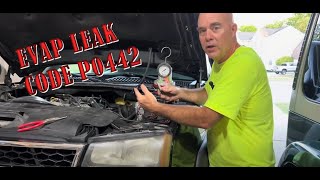
- Read the code with an OBD-II scanner to confirm P0442 is present and note any other codes. 🎬 Watch: A complete guide to diagnosing and fixing P0442 codes.
- Inspect the gas cap. Ensure it's tight. Remove it and check the rubber seal for cracks or brittleness. If in doubt, replace it with an OEM cap, clear the code, and drive for a few days to see if the light returns.
- If the light returns, perform a thorough visual inspection of all accessible EVAP hoses and lines running from the engine bay to the fuel tank. Look for any obvious cracks, damage, or loose connections, paying close attention to the connections at the purge and vent valves.
- Locate the EVAP purge valve on the intake manifold. With the engine off, remove it and try to blow through it. It should be sealed shut. If air passes through, it needs to be replaced.
- Locate the EVAP vent solenoid near the charcoal canister (usually mounted near the spare tire). Inspect it for cracks and check its wiring for damage or corrosion. Remove it and apply 12V power to its terminals; you should hear a click as it closes. It is normally open when unpowered.
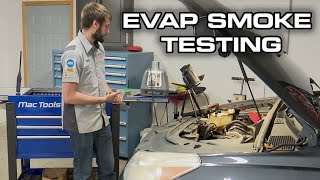
- If no obvious issues are found, the most effective next step is a professional smoke test. A mechanic will inject low-pressure, UV-dyed smoke into the EVAP system's service port. Smoke will escape from the leak's location, making it easy to pinpoint, whether it's a tiny hose crack, a faulty valve, or a bad seal.
Parts You'll Likely Need

- Gas Cap
(OEM #GT295 (ACDelco))— This is the most common failure point and the easiest and cheapest part to replace first. Using an OEM cap is strongly recommended as aftermarket versions frequently fail to seal properly.
Trusted brands: ACDelco
OEM price range: $20-$30
Aftermarket price range: $15-$25 - EVAP Vent Valve Solenoid
(OEM #25932571)— This part is a frequent cause of P0442 on GM trucks due to its vulnerable location. It gets stuck open, causing a constant small leak. The ACDelco equivalent part number is 214-2149. This part number supersedes older versions like 10382105 and 15750484.
Trusted brands: ACDelco, Dorman
OEM price range: $40-$60
Aftermarket price range: $25-$45 - EVAP Canister Purge Valve Solenoid
(OEM #12610560)— This valve, located on the engine, can fail to seal properly, allowing fuel vapors to leak into the intake manifold when the engine is off. This can sometimes cause hard starting after refueling. This part has been superseded by GM part number 12737252.
Trusted brands: ACDelco, Bosch
OEM price range: $35-$55
Aftermarket price range: $20-$40
Related Codes That Often Appear With This One
- P0455 — This indicates a 'Large EVAP Leak'. You might see both if a small leak worsens or if the system has multiple leaks of different sizes.
- P0449 — This code specifically points to a fault in the EVAP Vent Solenoid control circuit. If you have P0442 and P0449 together, the vent solenoid or its wiring is almost certainly the problem.
Technical Service Bulletins (TSBs) & Recalls
- 21-NA-124: Provides diagnostic tips for finding EVAP leaks causing P0442 and P0455. It advises technicians to check for unseated tube connections, damaged tubes, and malfunctioning purge or vent valves in a specific order: 1) Check EVAP lines are seated, 2) Inspect for damage, 3) Test vent valve, 4) Test purge valve.
- PIT4943D: Directs technicians to use an Evaporative Emissions System Tester (smoke machine) to diagnose a P0442 code, reinforcing the need for proper diagnostic procedures rather than just replacing parts.
Platform-Specific Known Issues
- Owner Experience with Vent Solenoid: An owner on a Chevrolet forum with a 2009 Silverado Z71 reported having a P0442 code even after replacing the vent valve and filter box, suspecting a leak in the spliced hose connection that is part of the relocation kit. This highlights the importance of checking all connections carefully, even after a repair.
- Aftermarket vs. OEM Gas Cap: A recurring theme in owner forums is the failure of aftermarket gas caps to resolve a P0442 code. In a thread on BobIsTheOil
Mechanic-Grade Diagnostic Values
- EVAP Canister Purge Valve Solenoid Resistance — expected: 14 to 30 Ohms. Failure: A reading outside of this range indicates a faulty internal coil in the solenoid.
- Fuel Tank Pressure (FTP) Sensor Voltage — expected: Approximately 1.45V - 1.5V (Key On, Engine Off, gas cap removed). Failure: A voltage that is stuck and does not change when vacuum is applied to the system, or a reading that is irrational for the condition (e.g., showing pressure with the cap off).
Scan Tool Commands That Help
- Tech 2 / GDS2: EVAP Service Bay Test — To command the vehicle's ECM to run the entire EVAP leak test sequence while the vehicle is stationary. This allows a technician to monitor system parameters and verify the integrity of the system after a repair or during diagnosis.
- Tech 2 / GDS2: EVAP Purge/Seal — This bidirectional command allows a technician to manually close the EVAP vent solenoid and command the purge solenoid on or off. This is critical for sealing the system before performing a smoke test, allowing the technician to test the solenoids' function individually.
- Generic OBD-II Scanner with Actuation Tests: EVAP Vent Valve Activation — To command the vent valve closed to seal the system for a smoke test. This confirms if the valve is responding to electrical commands and is necessary to pressurize the system to find leaks. If the valve doesn't close, it's faulty.
Wiring & Ground Locations
- EVAP System Fuses — In the under-hood fuse block, typically fuses #4 and #5 in the GMT900 platform.. These fuses provide power to the EVAP system components. A blown fuse will cause components like the vent or purge solenoid to be inoperative, potentially setting codes.
- G304 / G305 — G304 is on the right side B-pillar behind trim. G305 is under the vehicle to the rear of the left B-pillar, at the third body mount on the frame.. These are body and frame grounds in the vicinity of the EVAP canister and lines. Poor grounding can cause erratic behavior or failure of the nearby vent solenoid.
- G400 / G401 — Located on the rear of the frame, behind the left rear tire.. This is a primary rear chassis ground. The EVAP vent solenoid and fuel tank pressure sensor are grounded through the chassis harness, and corrosion at G400/G401 can cause intermittent electrical issues for these components.
- Fuel Filler Neck Ground — A small ground strap connecting the metal fuel filler neck to the frame or body.. While primarily for static electricity dissipation during refueling, a corroded or broken ground here can be an indicator of overall corrosion in the area which could also affect the filler neck itself, potentially causing a pinhole leak.
Real Owner Repair Stories
- YouTube Commenter on 'Causes and Fixes P0442 Code' (2007 Silverado 1500 4x4) — Persistent P0442 code.
❌ Tried (didn't work) Replaced purge valve, Replaced vent solenoid (purge solenoid), Replaced gas cap multiple times, Performed a smoke test which showed no leaks
✅ What actually fixed it The final cause was a faulty Fuel Tank Pressure Sensor (FTPS). The commenter noted that even though a smoke test showed no leaks, the bad sensor was providing incorrect information to the computer, triggering the P0442 code. - YouTube video 'How To Fix P0442 Engine Code - Chevy Silverado' (2005 Chevrolet Silverado) — P0442 Check Engine Light.
❌ Tried (didn't work) Initial diagnosis pointed towards common causes.
✅ What actually fixed it The owner replaced the entire charcoal canister and vent solenoid assembly. The original setup had a remote filter line running to the front of the truck which was deleted during the installation of the new, updated canister design. This resolved the code.
"I Checked Everything" — The Actual Cause
- In one documented case for a similar GM truck, a persistent P0442 code was present even after a smoke test came back clean. The owner had already replaced the purge valve, vent solenoid, and gas cap. The root cause was ultimately determined to be a faulty Fuel Tank Pressure Sensor (FTPS). The sensor was sending incorrect data to the ECM, causing it to believe there was a leak when the physical integrity of the system was actually fine.
Model Year Variations Within This Range
- 2009-2010: Starting in 2009, GM began implementing a Fuel System Control Module (FSCM) near the spare tire. While this module's primary job is fuel pump control, its introduction adds another electronic component and associated wiring in the same physical area as the EVAP canister and vent valve, increasing diagnostic complexity slightly compared to earlier models that used a simple under-hood relay.
Helpful Videos
Used OEM Parts in Stock

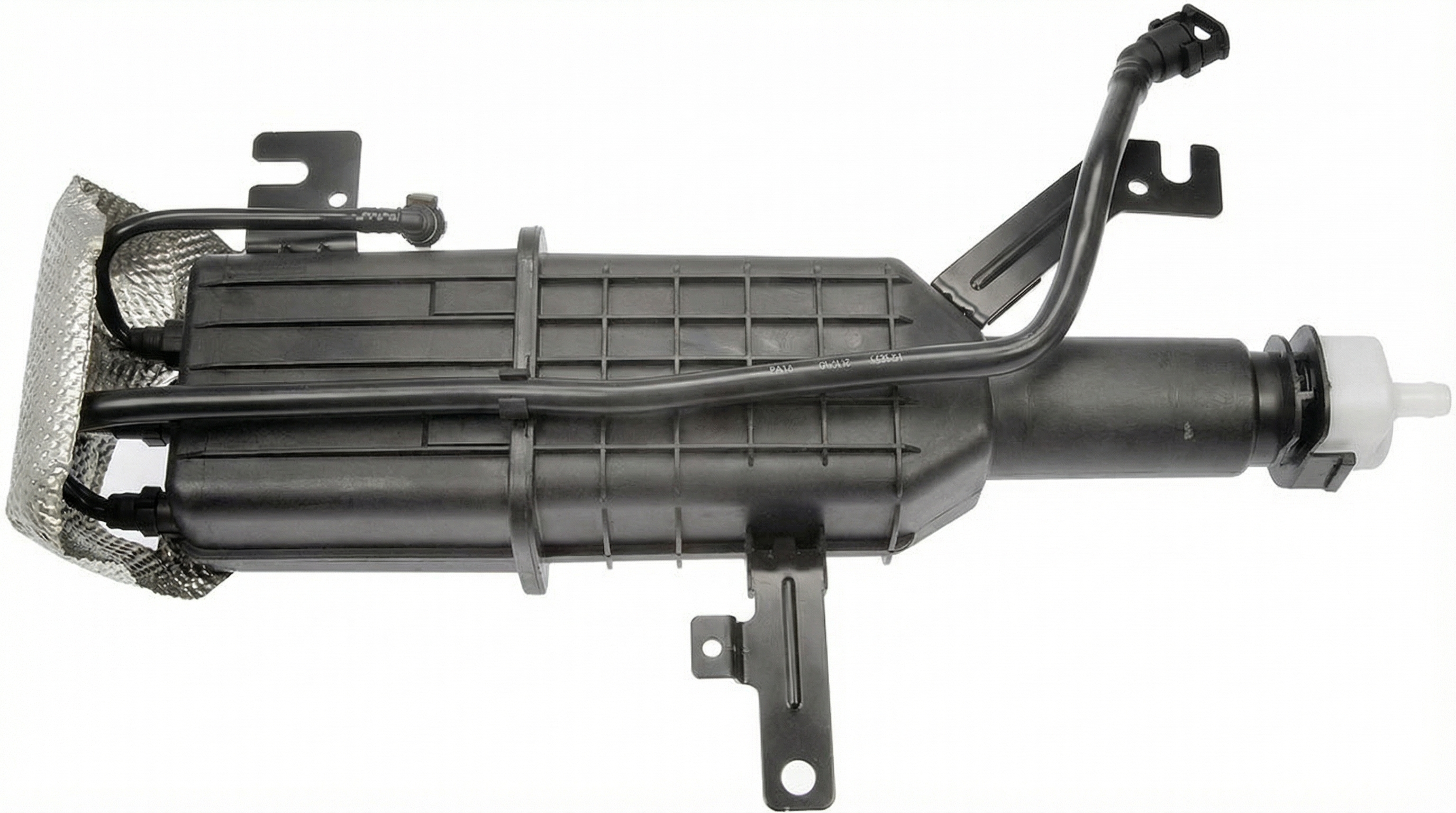
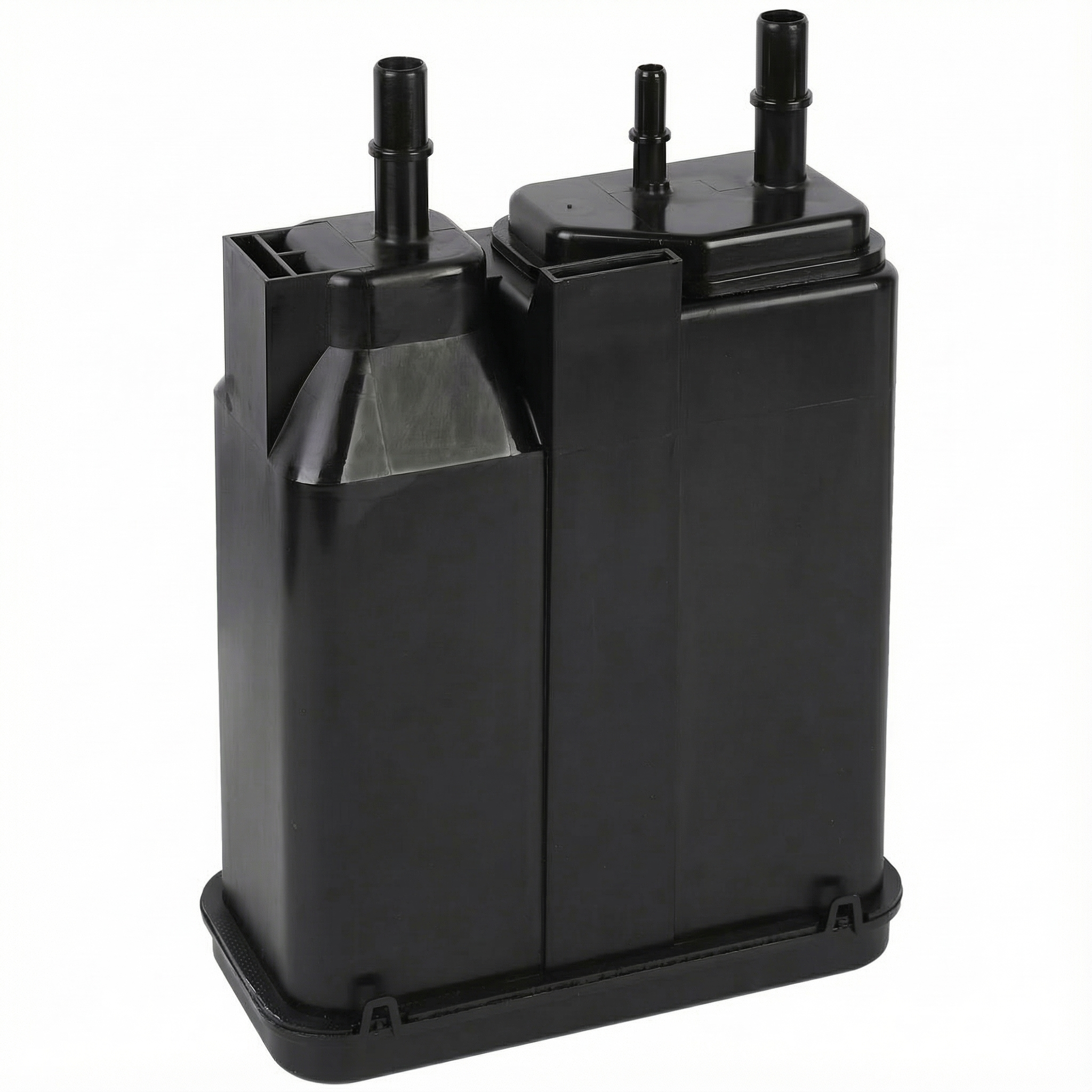
New Aftermarket Parts Available


The information in this article is provided for general reference and educational purposes only. Vehicle specifications, procedures, and part compatibility can vary by production date, trim level, and region. Always consult your vehicle's factory service manual and verify part numbers before purchasing or performing repairs. Safety-critical components such as airbags, seat belts, and braking systems should be installed by a qualified professional.
- Gmc SIERRA 2500:
- 🎬 Helpful Videos
- 🛍️ Shop This Part
- What's Unique About the 2008-2010 Gmc SIERRA 2500
- Diagnostic Flowchart
- Symptoms You May Notice
- Most Likely Causes
- Rare But Worth Checking
- Diagnosis Steps
- Parts You'll Likely Need
- Related Codes That Often Appear With This One
- Technical Service Bulletins (TSBs) & Recalls
- Platform-Specific Known Issues
- Mechanic-Grade Diagnostic Values
- Scan Tool Commands That Help
- Wiring & Ground Locations
- Real Owner Repair Stories
- "I Checked Everything" — The Actual Cause
- Model Year Variations Within This Range
- 🎟️ Get 5% Off