

P0442 on 2016-2023 GMC Sierra 1500: Causes and Fixes for Small EVAP Leaks
For a P0442 code on a 2016-2023 GMC Sierra, the most likely cause is a loose or faulty gas cap or an issue with the capless fuel filler neck seal. If tightening or replacing the cap doesn't work, the next most common failures are the EVAP purge valve (on the engine) or vent solenoid (near the tank). A new gas cap is under $30, while valves can range from $30 to $150.
- Always check your gas cap first. Make sure it's tight and the seal isn't cracked. This solves the problem more often than not.
- If the gas cap isn't the issue, the EVAP purge valve (on the engine) and vent valve (by the tank) are the next most likely culprits.
- For 2019-2023 models, especially if driven on dirt roads, the issue may be dust clogging the EVAP canister and vent valve, as documented in a GM Technical Service Bulletin.
- While you can drive with this code, you won't pass an emissions test until the leak is fixed.
- A smoke test is the fastest and most accurate way for a mechanic (or a well-equipped DIYer) to find a leak that isn't obvious.
What's Unique About the 2016-2023 Gmc SIERRA 1500

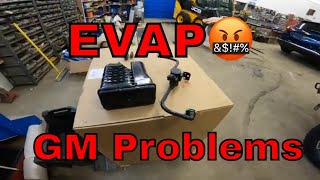
On these GMC Sierra models, especially the 2019-2023 T1XX platform, P0442 can be more than just a loose gas cap. GM has issued a Technical Service Bulletin (TSB #23-NA-073) acknowledging that dust and debris, particularly from driving on dirt roads, can get into the EVAP system and cause issues with the canister and vent valve, triggering this code. The bulletin outlines a procedure to install an auxiliary filter to prevent this. While the purge and vent valves are common failure points on many vehicles, this specific vulnerability to dust is a known issue for these trucks and their platform mates like the Silverado.
🎬 Watch: A breakdown of common P0442 causes and fixes for GMC trucks.Diagnostic Flowchart

Tap your situation to follow the diagnostic path that matches what you're seeing on this vehicle.
Generation note: This range covers the end of the third generation (2016-2018, K2XX platform) and the beginning of the fourth generation (2019-2023, T1XX platform). While the causes are similar, some parts like the vent solenoid may have different locations or designs. The 2016-2018 models use a traditional gas cap, while many 2019+ models feature a capless fuel filler system, which can also be a source of the leak if the seal is dirty or worn. TSB #23-NA-073 regarding dust intrusion specifically applies to 2019 and newer models.
Symptoms You May Notice

- Check Engine Light is on
- A faint fuel smell may be noticeable, though this is not always present.
- Vehicle will fail an emissions inspection.
- In rare cases, a long crank time after refueling if the purge valve is stuck open.
- Replacing the oxygen sensors. O2 sensors are not related to the EVAP system.
- Replacing the catalytic converter. This is a costly repair for exhaust issues (like P0420/P0430), not EVAP leaks.
- Replacing the fuel pump. Unless the fuel pump's top seal was damaged during a previous repair, the pump itself is not a typical cause of an EVAP leak.
Most Likely Causes

- Loose or Faulty Gas Cap / Capless Fuel Filler Seal 🔴 High Probability This is the most common cause for any EVAP leak code. Seals can wear out over time, or the cap may not have been tightened properly. On 2019+ models with a capless system, the spring-loaded door's seal can fail or get debris in it, preventing a proper seal.
How to confirm: Ensure the gas cap is tightened until it clicks several times. Inspect the cap's rubber O-ring for cracks or damage. For capless systems, inspect the seal in the filler neck for debris or damage and clean it carefully.
Typical fix: Tighten or replace the gas cap. Clean the capless filler neck seal. Always use a quality OEM-spec cap, as aftermarket caps are a known source of issues.
Est. part cost: $15-$30 - Failed EVAP Vent Valve/Solenoid 🟡 Medium Probability Located near the fuel tank and spare tire, this valve is exposed to road debris, water, and dirt. It can get stuck open, causing a persistent small leak. TSB #23-NA-073 notes that dust intrusion is a specific problem for 2019-2023 models, often affecting this component. It's a very common failure on GM trucks.
How to confirm: A smoke test is the most effective method; smoke will exit the valve if it's stuck open. A technician can also command the valve closed with a bi-directional scan tool to test its operation. A corroded frame ground near the rear of the vehicle can also cause electrical failure of this valve.
Typical fix: Replace the EVAP vent solenoid. It is often located on or near the charcoal canister. On some models, an updated kit is available to relocate the air filter to a cleaner location.
Est. part cost: $40-$100 - Failed EVAP Purge Valve/Solenoid 🟡 Medium Probability This valve is located in the engine bay and controls the flow of vapors to the engine. It can fail by not closing completely, creating a small leak path back to the intake manifold. This is a very common failure across all GM platforms.
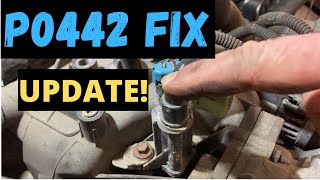
How to confirm: With the engine off, disconnect the valve and try to blow air through it; if air passes, it's stuck open and faulty. A symptom of a stuck-open purge valve can be difficulty starting the engine immediately after refueling. 🎬 See how to test the purge valve yourself with this update. A smoke test may also show smoke entering the intake manifold through the valve.
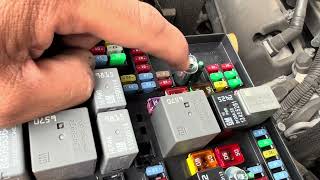
Typical fix: Replace the purge valve. This is typically an easy repair located on top of the engine, often requiring no tools or just a screwdriver.
Est. part cost: $30-$90 - Cracked or Disconnected EVAP Hose ⚪ Low Probability The plastic and rubber hoses that make up the EVAP system can become brittle over time and develop small cracks, especially at connection points or bends. Owners have reported finding cracked hoses near the vent valve by the spare tire.
How to confirm: A thorough visual inspection of all lines from the fuel tank to the engine may reveal damage. A smoke test is the definitive way to find a small hose leak, as smoke will be visible at the crack.
Typical fix: Replace the damaged section of hose or the entire line assembly.
Est. part cost: $10-$75
Rare But Worth Checking
- Cracked EVAP Charcoal Canister: While less common to crack, the canister can be damaged from road debris or become saturated with fuel from overfilling the tank. TSB #23-NA-073 also points to dust intrusion clogging the canister on 2019-2023 models, which can lead to system faults.
- Faulty Fuel Tank Pressure (FTP) Sensor: Rarely, the sensor that monitors system pressure can fail and send incorrect readings to the computer, falsely triggering a P0442 code when no leak exists. This is usually considered after all other potential leak sources have been ruled out.
- Leaking Fuel Filler Neck: On older or high-mileage trucks, the metal fuel filler neck can rust and develop small pinhole leaks, causing a P0442 code. One owner reported sealing an aftermarket filler neck with RTV sealant to fix a persistent leak.
Diagnosis Steps
- Check the gas cap or capless filler. Remove the gas cap, inspect the seal for cracks, and retighten it until it clicks multiple times. For a capless system, inspect the filler neck seal for debris and clean it. Clear the code and drive for a few days to see if it returns.
- Perform a visual inspection. Look for any obvious cracks, damage, or loose connections in the EVAP hoses running from the tank, to the charcoal canister (usually near the spare tire), and up to the purge valve in the engine bay.
- Test the purge valve. Locate the purge valve on the engine. With the engine off, disconnect it and try to blow through it. If air passes, the valve is stuck open and needs replacement. A long crank time after refueling is another strong indicator.
- If no obvious issues are found, perform a smoke test. This is the most effective next step. A smoke machine injects low-pressure smoke into the EVAP service port. The smoke will escape from the location of the leak, making it easy to pinpoint whether it's a hose, the vent valve, the canister, or another component.
- Test the vent valve. Using a bi-directional scan tool, a technician can command the vent valve to close. If the system still won't hold pressure during a smoke test, and smoke is seen exiting the vent valve, the valve is faulty. Also check for corroded ground wires near the valve.
- Consult Technical Service Bulletins (TSBs). TSB #21-NA-124 provides a general diagnostic flow for P0442/P0455, recommending checking lines, then the vent valve, then the purge valve. TSB #23-NA-073 addresses dust intrusion on 2019+ models.
- If all components and lines appear to be sealed, the Fuel Tank Pressure (FTP) sensor may be faulty, though this is uncommon.
Parts You'll Likely Need
- Gas Cap
(OEM #ACDelco GT360 (for 2016-2018 models))— This is the most frequent and simple fix for a P0442 code on models with a cap. The seal wears out over time.
Trusted brands: ACDelco, Stant, Motorad
OEM price range: $20-$30
Aftermarket price range: $15-$25 - Vapor Canister Purge Valve (Solenoid)
(OEM #ACDelco 12690512 (or equivalent))— A very common failure point. It can get stuck partially open, causing a small, constant leak. It's usually located on the engine and is easy to replace.
Trusted brands: ACDelco, Dorman (p/n 911-032), Standard Motor Products (SMP)
OEM price range: $50-$90
Aftermarket price range: $30-$60 - Vapor Canister Vent Valve (Solenoid)
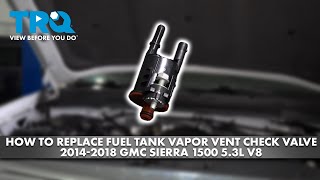
(OEM #ACDelco 23481275 (K2XX) / 84613138 (T1XX))— This valve is exposed to the elements under the truck and frequently fails, either by getting stuck or due to electrical issues. It's a primary suspect after the gas cap.
Trusted brands: ACDelco, Dorman, Standard Motor Products (SMP)
OEM price range: $60-$120
Aftermarket price range: $40-$80
Related Codes That Often Appear With This One
- P0455 — Indicates a large EVAP leak. If a component fails intermittently or a small crack grows, it might first register as a small leak (P0442) and later as a large one (P0455). Both codes are addressed in TSB #21-NA-124.
- P0449 — This code specifically points to a fault in the EVAP vent valve solenoid circuit. If you see P0442 and P0449 together, the vent valve is almost certainly the problem.
- P0496 — Indicates 'EVAP Flow During a Non-Purge Condition.' This code almost always points directly to a faulty purge valve that is stuck open, allowing fuel vapors into the intake at the wrong time.
Technical Service Bulletins (TSBs) & Recalls
- 23-NA-073 — Addresses customer concern of EVAP DTCs P0442, P0446, P0455 or P0449, caused by dust intrusion into the evaporative canister on 2019-2023 models. Provides a service procedure to install an auxiliary filter. (June 19, 2023)
- 21-NA-124 — Provides diagnostic tips for technicians for MIL on with DTCs P0442 and/or P0455. Recommends a chronological investigation of EVAP lines, vent valve, and then purge valve. (December 14, 2022)
Platform-Specific Known Issues
- TSB #23-NA-073: For 2019-2023 models operated in dusty conditions, dust can enter the EVAP system through the canister vent. This can clog the canister or damage the vent valve, leading to codes P0442, P0446, P0455, or P0449. The bulletin provides a procedure for installing an auxiliary in-line filter to prevent recurrence.
- TSB #21-NA-124: Provides general diagnostic advice for technicians to trace EVAP leaks for codes P0442 and P0455. It advises a specific order of operations: check lines for proper connection and damage, then test the vent valve, and finally test the purge valve.
- Capless Fuel Filler Neck: On 2019+ models, the capless system's seal is a common point for small leaks if it becomes dirty or worn, replacing the traditional gas cap as a primary suspect.
Mechanic-Grade Diagnostic Values
- EVAP Purge Valve Solenoid Resistance — expected: 15 to 30 Ohms. Failure: A reading significantly outside this range (e.g., infinite for an open circuit, or near zero for a short) indicates a faulty solenoid coil.
- Fuel Tank Pressure (FTP) Sensor Voltage (Key On, Engine Off, Gas Cap Removed) — expected: 1.3 to 1.7 Volts (approx. 1.5V is ideal). Failure: A voltage stuck low (e.g., 0.2V - 0.3V) or high (near 5V) when the tank is at atmospheric pressure points to a faulty sensor or wiring issue.
Scan Tool Commands That Help
- GDS2 (GM Dealer Software): EVAP Vent Solenoid Valve Control — To command the vent valve from its normally open state ('Venting') to closed ('Not Venting'). This is critical for sealing the system before performing a smoke test to check for leaks.
- Bi-directional Scan Tool: EVAP Purge Solenoid Valve Control — To command the purge valve open and closed to check for a response (an audible click). This verifies the electrical circuit and solenoid activation, but does not confirm if the valve is sealing properly.
- Scan Tool Live Data: Fuel Tank Pressure (FTP) Sensor Data — To monitor the sensor's voltage in real-time. Removing the gas cap should cause the voltage to settle near 1.5V. If it doesn't change or stays at an illogical value, the sensor is suspect.
Wiring & Ground Locations
- Engine Harness (Driver's Side) — In the driver's side wheel well area on 2019-2021 models. The harness can rub against the ECM/TCM bracket, the upper control arm, and the shock tower bolt.. Chafing can damage the insulation on any wire within the harness, including circuits for EVAP components. This can cause a short to ground or an open circuit, triggering various codes, potentially including P0442 or related circuit codes like P0449.
- FTP Sensor Connector — On top of the fuel pump module, which is on top of the fuel tank.. This 3-wire connector provides the FTP sensor with a 5V reference, ground, and returns a signal to the ECM. A quick diagnostic check is to jump the 5V reference pin to the signal pin; a scan tool should then show a 5V reading, confirming the wiring from the ECM is intact.
Real Owner Repair Stories
- YouTube channel 'Cars, Crafts, & Drafts' (Chevrolet Silverado (platform mate)) — P0442 code returned after replacing the purge valve.
❌ Tried (didn't work) Replacing the purge valve with a new part.
✅ What actually fixed it The new replacement purge valve was faulty from the factory. The owner tested it with a hand vacuum pump and found it leaked down slowly. A second new purge valve was tested, confirmed to hold vacuum, and installed, which finally resolved the code. - YouTube channel 'NiX FiX' (General GM vehicle) — P0442 code and a long crank time after refueling.
❌ Tried (didn't work) Initially suspecting other EVAP components.
✅ What actually fixed it The purge valve was stuck open internally. Even though it clicked when 12V was applied, it failed a physical test where air could be blown through it when it was supposed to be closed. Replacing the faulty purge valve fixed both the code and the hard starting issue. - YouTube channel 'Turbo Dan' (2019 Chevrolet Silverado (platform mate)) — EVAP codes and issues filling the fuel tank, caused by driving on gravel roads.
❌ Tried (didn't work) Clearing the code.
✅ What actually fixed it Replaced both the EVAP Vapor Canister (GM P/N 84050713) and the Vent Solenoid (GM P/N 84613138). The old components were visibly clogged with dust, consistent with TSB #23-NA-073.
"I Checked Everything" — The Actual Cause
- A faulty purge valve that is stuck slightly open. A smoke test may not clearly show the leak as the smoke passes into the engine's intake manifold. The key symptom is a long crank after refueling. The definitive diagnosis is removing the valve and being able to blow air through it when it should be closed.
- A failing Fuel Tank Pressure (FTP) sensor. The EVAP system can be perfectly sealed and pass a smoke test, but the sensor provides an incorrect voltage reading to the ECM, falsely indicating a leak. This is diagnosed by observing the sensor's live data on a scan tool.
When the Usual Fixes Don't Work
- While a loose gas cap is a common fix, on 2019+ trucks driven in dusty conditions, the actual cause is often a design issue addressed by TSB #23-NA-073. In these instances, the vent solenoid and/or canister get clogged with dirt, and simply replacing the gas cap will not resolve the P0442 code. The proper fix involves replacing the affected components and potentially installing an auxiliary filter kit.
- In cases where replacing a common part like the purge valve doesn't fix the code, the new part itself can be the culprit. One owner documented that a brand-new purge valve was leaking vacuum slowly, causing the P0442 to persist. The issue was only resolved after testing and installing a second new valve, proving that assuming a new part is good can be a misstep in diagnosis.
OEM Part Supersession History
12610560→12690512— Part revision for the common Vapor Canister Purge Valve.
Heads up: Further superseded by 12737252 in some catalogs.20995471 (and others)→23481275— Part revision for the Vapor Canister Vent Valve on K2XX (pre-2019) platforms.
Model Year Variations Within This Range
- 2019-2023 (T1XX Platform): These models are subject to TSB #23-NA-073 for dust intrusion clogging the EVAP canister/vent valve. They are also noted in TSB #21-NA-149 for potential engine harness chafing in the driver's side wheel well, which can cause various electrical faults.
- 2016-2018 (K2XX Platform): These models use a traditional screw-on gas cap and are less susceptible to the specific dust intrusion issue outlined in the TSB for newer models. The vent solenoid is typically located on the frame rail under the driver's side.
Helpful Videos
Used OEM Parts in Stock
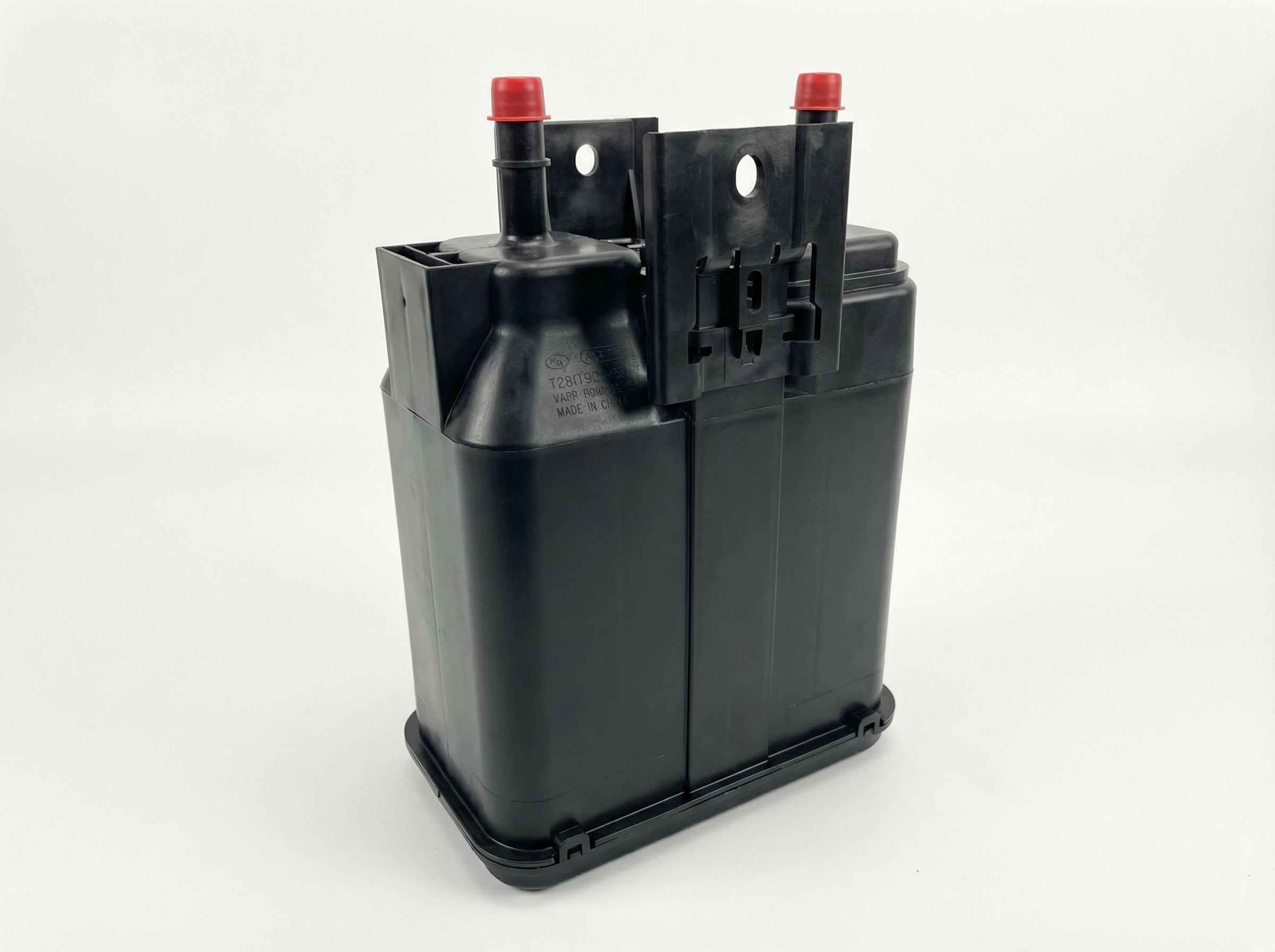
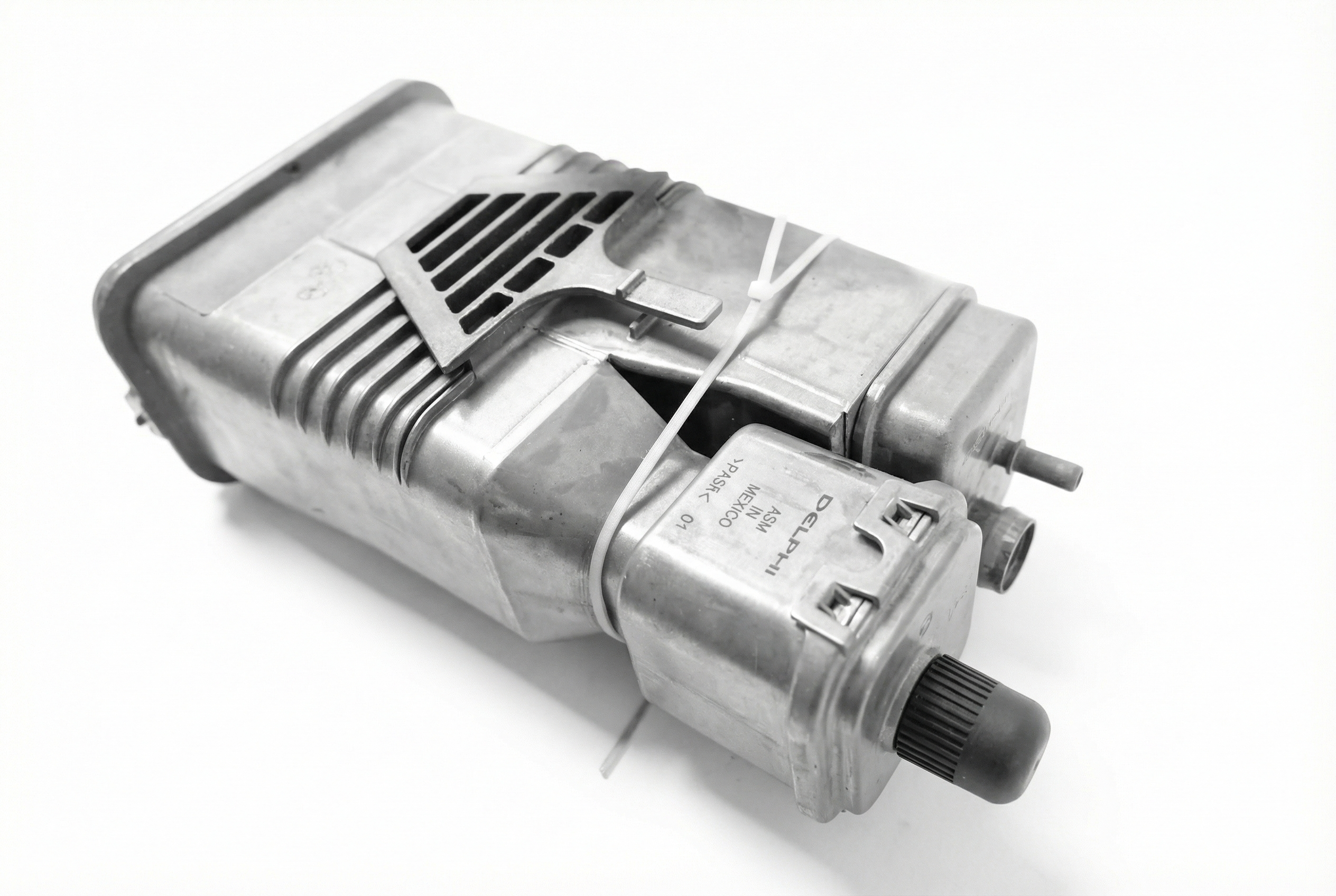


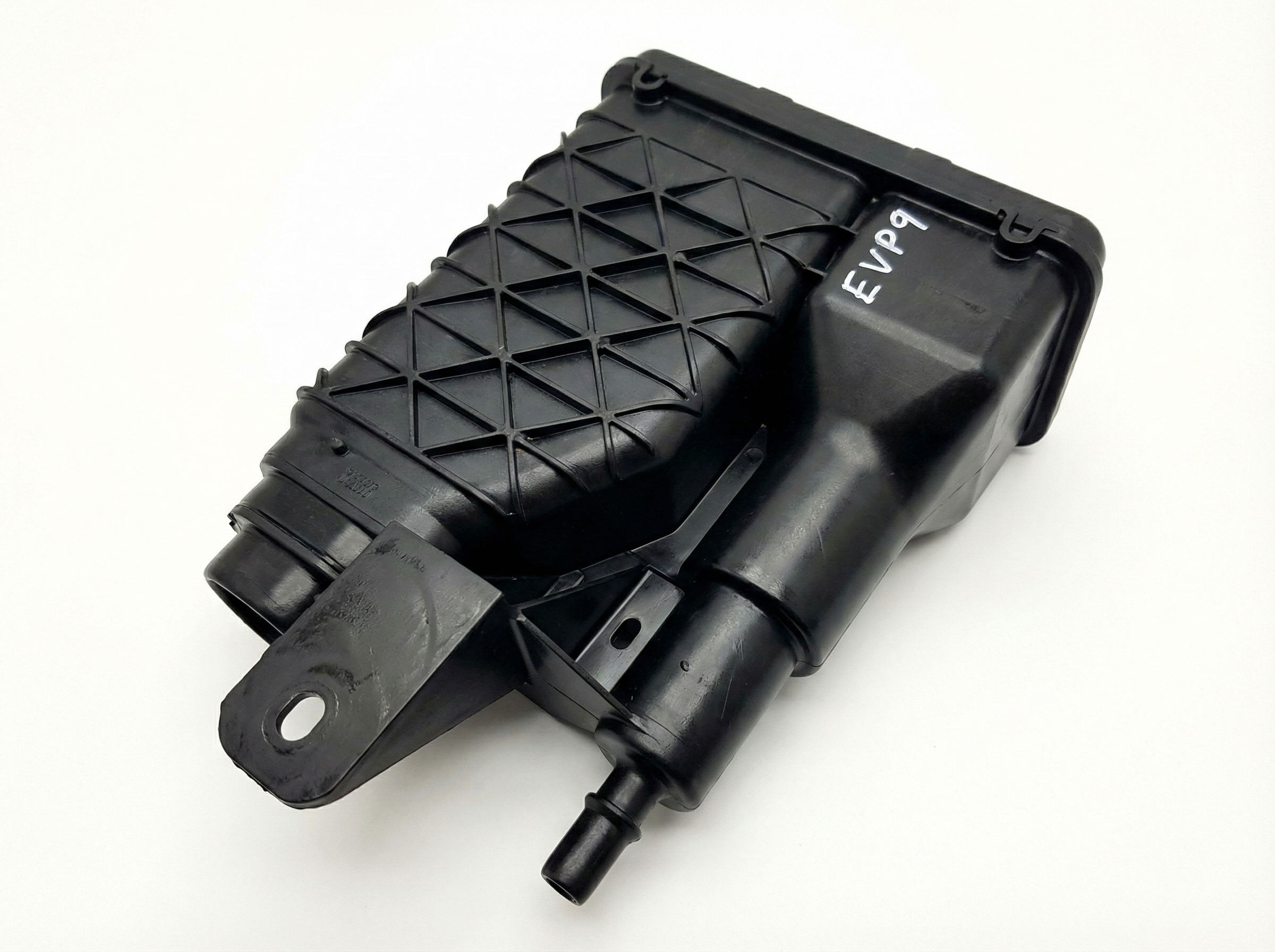
New Aftermarket Parts Available


The information in this article is provided for general reference and educational purposes only. Vehicle specifications, procedures, and part compatibility can vary by production date, trim level, and region. Always consult your vehicle's factory service manual and verify part numbers before purchasing or performing repairs. Safety-critical components such as airbags, seat belts, and braking systems should be installed by a qualified professional.
- Gmc SIERRA 1500:
- 🎬 Helpful Videos
- 🛍️ Shop This Part
- What's Unique About the 2016-2023 Gmc SIERRA 1500
- Diagnostic Flowchart
- Symptoms You May Notice
- Most Likely Causes
- Rare But Worth Checking
- Diagnosis Steps
- Parts You'll Likely Need
- Related Codes That Often Appear With This One
- Technical Service Bulletins (TSBs) & Recalls
- Platform-Specific Known Issues
- Mechanic-Grade Diagnostic Values
- Scan Tool Commands That Help
- Wiring & Ground Locations
- Real Owner Repair Stories
- "I Checked Everything" — The Actual Cause
- When the Usual Fixes Don't Work
- OEM Part Supersession History
- Model Year Variations Within This Range
- 🎟️ Get 5% Off