

P0442 on 2000-2004 GMC Safari: Causes and Fixes for Small EVAP Leaks
For a P0442 code on a 2000-2004 GMC Safari, the most likely cause is a loose or worn-out gas cap. If that doesn't fix it, suspect a rusted fuel filler neck, which prevents a good seal, or a faulty EVAP vent solenoid located on the driver's side frame rail. These issues are extremely common due to the van's age and are shared with its twin, the Chevrolet Astro. A smoke test is the best way to find the exact leak source.
- Always start with the simplest fix: inspect and tighten the gas cap. If the seal is cracked or old, replace it.
- If a new gas cap doesn't solve the problem, the next most likely cause on a Safari of this age is a rusted fuel filler neck. Inspect it carefully before buying other parts.
- A professional smoke test is the fastest and most reliable way to find the exact source of a persistent EVAP leak.
- The most commonly replaced parts for this code, after the gas cap, are the EVAP vent solenoid (by the tank) and the purge solenoid (in the engine bay).
- This code will not affect how your van drives, but it will cause an automatic failure on an emissions test.
What's Unique About the 2000-2004 Gmc SAFARI (GMC)
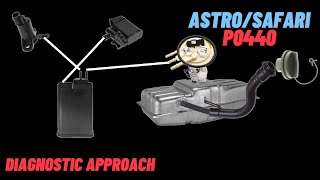
For the GMC Safari and its twin, the Chevrolet Astro, the P0442 code is a very common issue, largely due to 🎬 Watch: A diagnostic overview of EVAP codes on these vans. the vehicle's age. The long van platform means there are extensive runs of EVAP hoses susceptible to cracking. A frequently cited problem on owner forums for these specific vans is rust forming on the fuel filler neck, which prevents even a new gas cap from sealing properly. The primary EVAP components (charcoal canister and vent solenoid) are located together on the driver's side frame rail, just in front of the rear axle, making them more accessible than on many other vehicles. A key difference is that the EVAP vapor canister is different for Rear-Wheel Drive (RWD) and All-Wheel Drive (AWD) models and the parts are not interchangeable.
Diagnostic Flowchart
Tap your situation to follow the diagnostic path that matches what you're seeing on this vehicle.
Symptoms You May Notice
- Check Engine Light is on
- A faint smell of gasoline, particularly near the rear of the van or after refueling
- Difficulty filling the gas tank (fuel nozzle clicks off repeatedly), which can point to a clogged canister or a stuck-closed vent valve
- Rough idle or long crank time after refueling, which can occur if the purge valve is stuck open, allowing fuel vapors to flood the engine.
- Replacing the gas cap but failing to inspect the fuel filler neck for rust, which is the actual source of the leak.
- Replacing the expensive charcoal canister when the much cheaper and more common failure is the vent solenoid attached to it.
- Assuming a smoke test that shows no leaks means there is no leak. A purge valve can leak intermittently under vacuum while driving but seal perfectly during a static test.
Most Likely Causes
- Loose or Faulty Gas Cap 🔴 High Probability This is the most common cause on all vehicles. The rubber seal on the cap hardens and cracks over time, preventing a proper seal. It's the cheapest and easiest first step in any P0442 diagnosis.
How to confirm: Inspect the gas cap's rubber O-ring for cracks, stiffness, or damage. Ensure it is tightened until it clicks several times. Check the sealing surface on the filler neck for dirt or rust.
Typical fix: Replace the gas cap with a new, high-quality OEM or equivalent part. An ACDelco cap is recommended to ensure a proper seal.
Est. part cost: $15-$35 - Rusted or Damaged Fuel Filler Neck 🔴 High Probability Vehicles of this age, especially those in regions where road salt is used, are very prone to rust on the metal fuel filler neck. The rust creates an uneven, pitted surface that the gas cap cannot seal against, causing a persistent leak even with a new cap.
How to confirm: Remove the gas cap and carefully inspect the metal lip of the filler neck. Look and feel for rust, pitting, or flaking metal that would prevent a smooth seal. A leak here may also become visible during refueling.
Typical fix: The fuel filler neck must be replaced. This is a more involved repair but is often the permanent solution. Aftermarket 🎬 Watch: How to replace a rusted fuel filler neck. replacements from brands like Dorman are widely available. Some owners have successfully cleaned the rust with a wire brush and applied a sealant as a temporary fix.
Est. part cost: $80-$150 - Faulty EVAP Vent Solenoid 🟡 Medium Probability The vent solenoid is located under the vehicle on the driver's side frame rail, mounted to the charcoal canister. Its exposed location makes it highly susceptible to road debris, moisture, and corrosion, causing it to fail or get stuck open. This is a very common failure point on many 🎬 See this walkthrough on replacing the vent valve yourself. GM vehicles of this era.
How to confirm: A mechanic can command the valve to open and close with a scan tool during a smoke test. It can also be removed and tested by applying 12V power to see if it clicks. If it's stuck open, it will cause a leak. The coil should have a resistance between 48 and 65 ohms.
Typical fix: Replace the EVAP vent solenoid. It is often sold as a unit with a new hose assembly. This is a common DIY repair that can be done in about an hour. An updated service kit (GM P/N 19207763) was released to address this common failure.
Est. part cost: $25-$70 - Cracked or Disconnected EVAP Hoses 🟡 Medium Probability After 20+ years, the rubber and plastic hoses in the EVAP system become brittle and are prone to cracking, especially at connection points, elbows, and bends.
How to confirm: A visual inspection may reveal obvious cracks. The definitive method is a smoke test, which forces visible smoke through the EVAP system to reveal the exact location of any leaks.
Typical fix: Replace the cracked section of hose or the entire hose assembly. Hoses are often sold by the foot or in pre-formed kits.
Est. part cost: $10-$50 - Faulty EVAP Purge Solenoid/Valve ⚪ Low Probability This valve is located in the engine bay, typically on the intake manifold, and is generally less exposed to the elements. However, it cycles frequently and can fail internally by not closing completely, creating a small leak path.
How to confirm: Can be tested with a hand-held vacuum pump to see if it holds vacuum when de-energized. A simple test is to remove it and try to blow through it; if air passes, it's stuck open and faulty. A scan tool can also command it closed during a smoke test. The coil resistance should be between 30 and 38 ohms.
Typical fix: Replace the purge solenoid. This is typically an easy 10-minute repair located on top of the engine.
Est. part cost: $20-$60
Rare But Worth Checking
- Cracked Charcoal Canister: While less common for a small leak (more often associated with a large leak code P0455), a hairline crack can develop from age or road debris impact, causing a P0442.
- Leaking Fuel Tank Pressure Sensor Gasket: The sensor itself rarely fails in a way that causes a leak, but the gasket or O-ring where it mounts to the fuel pump module can degrade and cause a small leak.
- Spider Webs in Vent Hose: A peculiar but documented issue on some GM vehicles involves spiders building webs inside the EVAP vent hose outlet, typically near the frame rail. This obstruction can cause the system to fail its pressure test, sometimes triggering a P0442 or P0446. Clearing the hose is the fix.
Diagnosis Steps
- Check the Gas Cap: Remove the gas cap, inspect the rubber seal for cracks or damage, and clean the sealing surfaces on both the cap and the filler neck. Reinstall it, ensuring it clicks several times. Clear the code and drive for a few days to see if it returns.
- Inspect the Fuel Filler Neck: If the code returns, use a flashlight and your finger to carefully inspect the metal lip of the filler neck for any signs of rust, pitting, or corrosion that would prevent a good seal.
- Visual Inspection: Visually inspect all accessible EVAP hoses running from the fuel tank to the engine bay. Pay close attention to rubber elbows and plastic connections, looking for any obvious cracks, brittle sections, or loose connections.
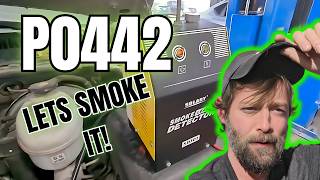
- Perform a Smoke Test: This is the most effective way to find the leak. A smoke machine injects low-pressure, visible smoke into the EVAP system's service port. Smoke will escape from the source of the leak, whether it's a hose, valve, or filler neck. The NHTSA TSBs for this vehicle recommend this diagnostic procedure. [Bulletin #21-NA-124, Bulletin #PIT4943D]
- Test Solenoids: As per TSB PIT4943D, a scan tool can be used to command the vent valve closed and monitor the Fuel Tank Pressure (FTP) sensor. If pressure changes, it may indicate a leaking purge valve. The solenoids can also be tested individually with a 12V source to check for an audible click and with a vacuum pump to ensure they seal.
Parts You'll Likely Need
- Fuel Cap
(OEM #ACDelco GT248 (or superseding part numbers))— This is the most frequent cause of a P0442 code due to seal degradation. It's an inexpensive and simple first step in diagnosis.
Trusted brands: ACDelco, Stant
OEM price range: $20-$35
Aftermarket price range: $15-$25 - Fuel Tank Filler Neck
(OEM #Spectra Premium FN539 (aftermarket equivalent))— Rust on the filler neck is a very common problem on these vans, preventing the gas cap from sealing and causing a persistent P0442 code.
Trusted brands: Dorman (e.g., 577-903, check specific fitment), Spectra Premium
OEM price range: $150-$250
Aftermarket price range: $80-$150 - EVAP Vent Solenoid
(OEM #ACDelco 214-2149 (GM 19207763, 25932571))— This valve is a common failure point due to its exposed location under the vehicle, leading to corrosion and sticking. GM issued an updated part to address this.
Trusted brands: ACDelco, Dorman, Standard Motor Products
OEM price range: $40-$70
Aftermarket price range: $25-$50
Related Codes That Often Appear With This One
- P0455 — This code indicates a large EVAP leak. A small leak (P0442) can worsen over time, or a component like the vent solenoid can fail completely, triggering the P0455 code.
- P0440 — This is a general EVAP system malfunction code. It can appear with P0442 as the computer flags a general system fault before identifying the specific leak size.
- P0446 — This code points to a fault in the EVAP vent control circuit. It often appears with P0442 if the vent solenoid is clogged, stuck, or has an electrical fault, as this can prevent the system from sealing correctly for its self-test.
Technical Service Bulletins (TSBs) & Recalls
- Bulletin #21-NA-124: Provides general diagnostic tips for testing EVAP leaks related to P0442 and P0455.
- Bulletin #PIT4943D: Details a specific diagnostic procedure for P0442 when a leak is not obvious. It advises using a scan tool to monitor the fuel tank pressure sensor and a specific method for smoke testing the purge solenoid.
Platform-Specific Known Issues
- Fuel Filler Neck Rust: The most notorious issue for this code on the Safari/Astro platform. The metal neck rusts where the cap seals, creating an imperfect surface. Many owners report chasing the P0442 code by replacing multiple parts, only to find the filler neck was the root cause all along.
- Vent Solenoid Location: The EVAP canister and vent solenoid are mounted on the inside of the driver's side frame rail, ahead of the rear axle. While this makes it accessible without dropping the fuel tank, it is directly in the path of road spray, leading to corrosion and failure of the solenoid's electrical connector and internal valve.
- RWD vs AWD Canister Differences: It is important to note that the charcoal canister and some associated hoses may differ between Rear-Wheel Drive (RWD) and All-Wheel Drive (AWD) models. Ensure you order the correct parts for your specific drivetrain configuration.
Mechanic-Grade Diagnostic Values
- Fuel Tank Pressure (FTP) Sensor Voltage — expected: ~1.5 Volts (typically 1.3V to 1.7V) with the gas cap off at atmospheric pressure.. Failure: A voltage reading that is stuck high (e.g., 5V), low (e.g., 0.3V), or does not change when vacuum/pressure is applied indicates a faulty sensor or wiring issue.
- EVAP Vent Solenoid Coil Resistance — expected: 48 to 65 Ohms.. Failure: A reading of infinite resistance (open circuit) or near-zero resistance (short circuit) indicates a failed solenoid coil.
- EVAP Purge Solenoid/Valve Coil Resistance — expected: 30 to 38 Ohms.. Failure: A reading significantly outside this range indicates a faulty coil.
Scan Tool Commands That Help
- GM Tech 2 or equivalent bidirectional scanner: EVAP System Test / Vent Solenoid Control — This function is used during a smoke test to seal the EVAP system. The technician commands the normally-open vent solenoid to close, allowing the system to be pressurized with smoke to find leaks. The scan tool can also be used to monitor the FTP sensor's voltage in real-time to confirm it responds to pressure changes.
Real Owner Repair Stories
- Chevrolet Forum user 'Becca Mitchell' and moderator 'tech2' (2007 Chevy Silverado 1500 LTZ (similar GM platform)) — Recurring P0442 code and fuel nozzle clicking off early when refueling.
❌ Tried (didn't work) Replaced gas cap, Replaced purge valve, Replaced charcoal canister, Repaired a loose fuel filler neck
✅ What actually fixed it The likely cause, after all other parts were replaced and a smoke test would have passed, was a faulty Fuel Tank Pressure (FTP) sensor. The sensor was not correctly reporting pressure changes to the computer during the EVAP self-test, causing the computer to incorrectly flag a leak. - YouTube channel 'briansmobile1' (Older vehicle with P0442, demonstrating a common fix.) — P0442 Check Engine Light.
❌ Tried (didn't work) Replacing the gas cap alone did not fix the issue.
✅ What actually fixed it The sealing surface of the metal fuel filler neck was rusted and pitted. The fix was to thoroughly clean the rust off the filler neck lip with a wire brush and then apply a light coat of silicone paste to help the gas cap seal against the now-clean surface.
"I Checked Everything" — The Actual Cause
- If a smoke test is performed correctly (with the vent valve commanded shut) and the flow meter indicates no leak, the P0442 code can still be set by a faulty Fuel Tank Pressure (FTP) sensor. The sensor may not be accurately reading the small pressure changes during the EVAP monitor's test cycle, leading the computer to believe a leak exists when the system is actually sealed.
- An EVAP purge valve may seal correctly under the positive pressure of a smoke machine but fail to seal under the vacuum applied by the engine during the EVAP self-test, causing an intermittent leak that is difficult to diagnose with a smoke test alone.
OEM Part Supersession History
Multiple, including 10357992, 15077742, 15105998, etc.→GM 19207763 (ACDelco 214-2149)— This is a revised and updated EVAP Canister Vent Valve service kit. The original designs were prone to failure from dust and moisture. The updated part addresses this known issue.
Model Year Variations Within This Range
- 2000-2004: The EVAP Vapor Canister is different for Rear-Wheel Drive (RWD) and All-Wheel Drive (AWD) models. The parts are not interchangeable, so care must be taken to order the correct canister for the specific drivetrain.
- 2004: Starting in 2004, GM specifies a revised EVAP vent solenoid service kit (P/N 19207763) to fix recurring issues, suggesting a design change from earlier years in the range.
Helpful Videos

We Have This Part in Stock


The information in this article is provided for general reference and educational purposes only. Vehicle specifications, procedures, and part compatibility can vary by production date, trim level, and region. Always consult your vehicle's factory service manual and verify part numbers before purchasing or performing repairs. Safety-critical components such as airbags, seat belts, and braking systems should be installed by a qualified professional.
- Gmc SAFARI (GMC):
- 🎬 Helpful Videos
- 🛍️ Shop This Part
- What's Unique About the 2000-2004 Gmc SAFARI (GMC)
- Diagnostic Flowchart
- Symptoms You May Notice
- Most Likely Causes
- Rare But Worth Checking
- Diagnosis Steps
- Parts You'll Likely Need
- Related Codes That Often Appear With This One
- Technical Service Bulletins (TSBs) & Recalls
- Platform-Specific Known Issues
- Mechanic-Grade Diagnostic Values
- Scan Tool Commands That Help
- Real Owner Repair Stories
- "I Checked Everything" — The Actual Cause
- OEM Part Supersession History
- Model Year Variations Within This Range
- 🎟️ Get 5% Off