

P0442 on 2009-2014 Ford F-150: EVAP Small Leak Causes and Fixes
For the 2009-2014 F-150, code P0442 is most often caused by a faulty EVAP canister purge valve (Motorcraft part number varies by engine, e.g., CX-2349) located on the engine or a problem with the capless fuel filler neck. The purge valve is a common failure item and is relatively easy to replace, costing between $30 and $70 for the part. Before replacing parts, always clean the capless fuel filler neck seal with the provided funnel and some lubricant, as this is a frequent and free fix.
- P0442 means your truck has a small leak in the fuel vapor system.
- Before buying parts, always inspect and clean the capless fuel filler neck first, as this is a common and free fix.
- The most likely part to have failed is the canister purge valve on the engine, which is a relatively inexpensive and easy part to replace yourself.
- You can continue driving the truck, but you won't be able to pass an emissions test until the leak is repaired.
- If a visual inspection doesn't find the leak, a professional smoke test is the best way to find the source without guessing.
What's Unique About the 2009-2014 Ford F-150

The 2009-2014 Ford F-150 (12th generation) uses a capless fuel filler system. Unlike older trucks with a traditional gas cap, this design can be a unique source of EVAP leaks if the sealing flap becomes dirty, worn, or damaged. Forum users frequently report that cleaning the seal with a funnel and lubricant resolves the issue. While the canister purge valve is a common failure on many Ford vehicles, the capless filler neck is a specific area to inspect on this generation of F-150 before replacing parts.
Symptoms You May Notice
- Check Engine Light is on
- A faint fuel smell, particularly around the rear of the vehicle near the fuel tank.
- Slight decrease in fuel economy
- Audible pressure release or 'whoosh' sound when opening the fuel filler door after the truck has been running
- "Check Fuel Fill Inlet" message on the dashboard information center.
- Replacing the charcoal canister without confirming it's the source of the leak. It's an expensive part and rarely the cause of a small leak code compared to valves and hoses.
- Assuming any EVAP leak must be a bad purge valve without first checking the capless fuel filler neck, which is a free and common fix on this specific truck.
Most Likely Causes


- Faulty EVAP Canister Purge Valve 🔴 High Probability This valve is a known common failure item across many Ford models. It can get stuck open or closed, creating a leak in the EVAP system. It is often the primary suspect if code P1450 is also present.
How to confirm: Locate the purge valve on the engine. Disconnect it and try to blow air through it. A healthy valve is normally closed; if air passes through, it is faulty and needs replacement. You can also test it with the engine running by placing a finger on the vacuum port; if you feel suction at idle, it's stuck open.
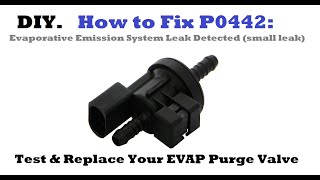
Typical fix: Replace the canister purge valve. This is typically a straightforward DIY job requiring minimal tools. 🎬 Watch: Step-by-step purge valve replacement on a 5.0L F-150.
Est. part cost: $30-$70 - Dirty or Faulty Capless Fuel Filler Neck 🟡 Medium Probability The 2009-2014 F-150 uses a capless system. Debris, dirt, or corrosion can prevent the spring-loaded flap from sealing correctly, creating a small leak. This is a widely discussed issue in owner forums.
How to confirm: Visually inspect the fuel filler opening for any debris, dirt, or damage. Use the white plastic funnel that came with the truck to cycle the flap 10-15 times to dislodge debris. Spraying a small amount of WD-40 or silicone lubricant on the seal while cycling the funnel can improve the seal.
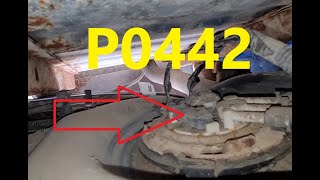
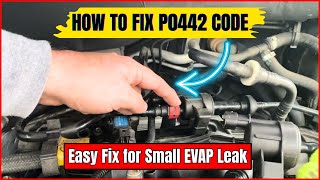
Typical fix: Clean the fuel filler neck opening. If the seal is damaged or the assembly is corroded, the entire filler neck may need to be replaced. 🎬 See common leak locations and easy fixes for small EVAP leaks.
Est. part cost: $0 for cleaning, $100-$250 for filler neck replacement - Cracked or Disconnected EVAP Hoses 🟡 Medium Probability Over time, rubber hoses and plastic lines can become brittle, crack, or disconnect, especially those exposed to engine heat or underbody elements. The small rubber elbows are particularly susceptible.
How to confirm: Visually inspect all accessible EVAP hoses, particularly the rubber elbows and connections near the purge valve in the engine bay and the lines running to the charcoal canister near the fuel tank. A smoke test is the most effective way to find a hard-to-see crack.
Typical fix: Replace the damaged section of hose or reconnect the line. Small sections of vacuum hose are inexpensive.
Est. part cost: $10-$50
Rare But Worth Checking
- Faulty EVAP Canister Vent Solenoid: This valve, located near the charcoal canister under the driver's side of the vehicle, can get stuck open, especially in dusty environments or after off-roading. It's less common than the purge valve but a known failure point.
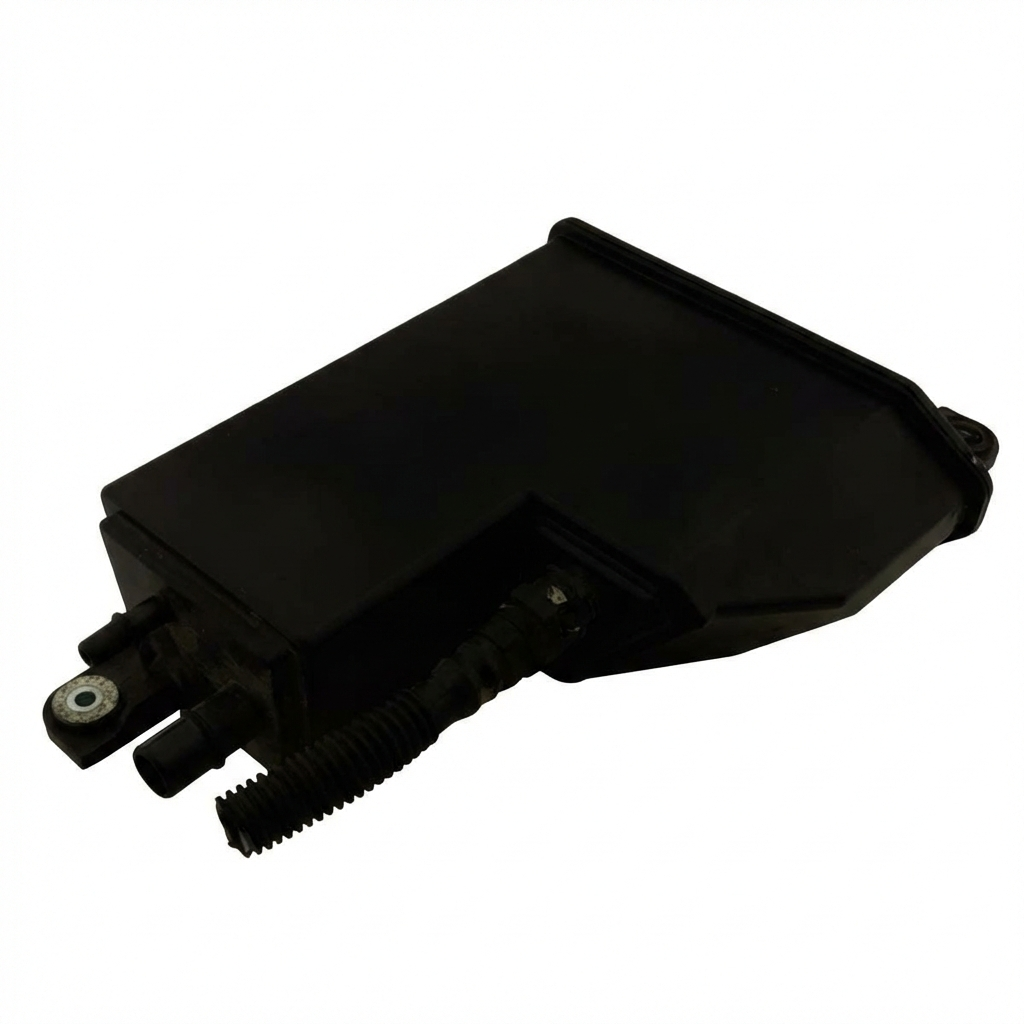
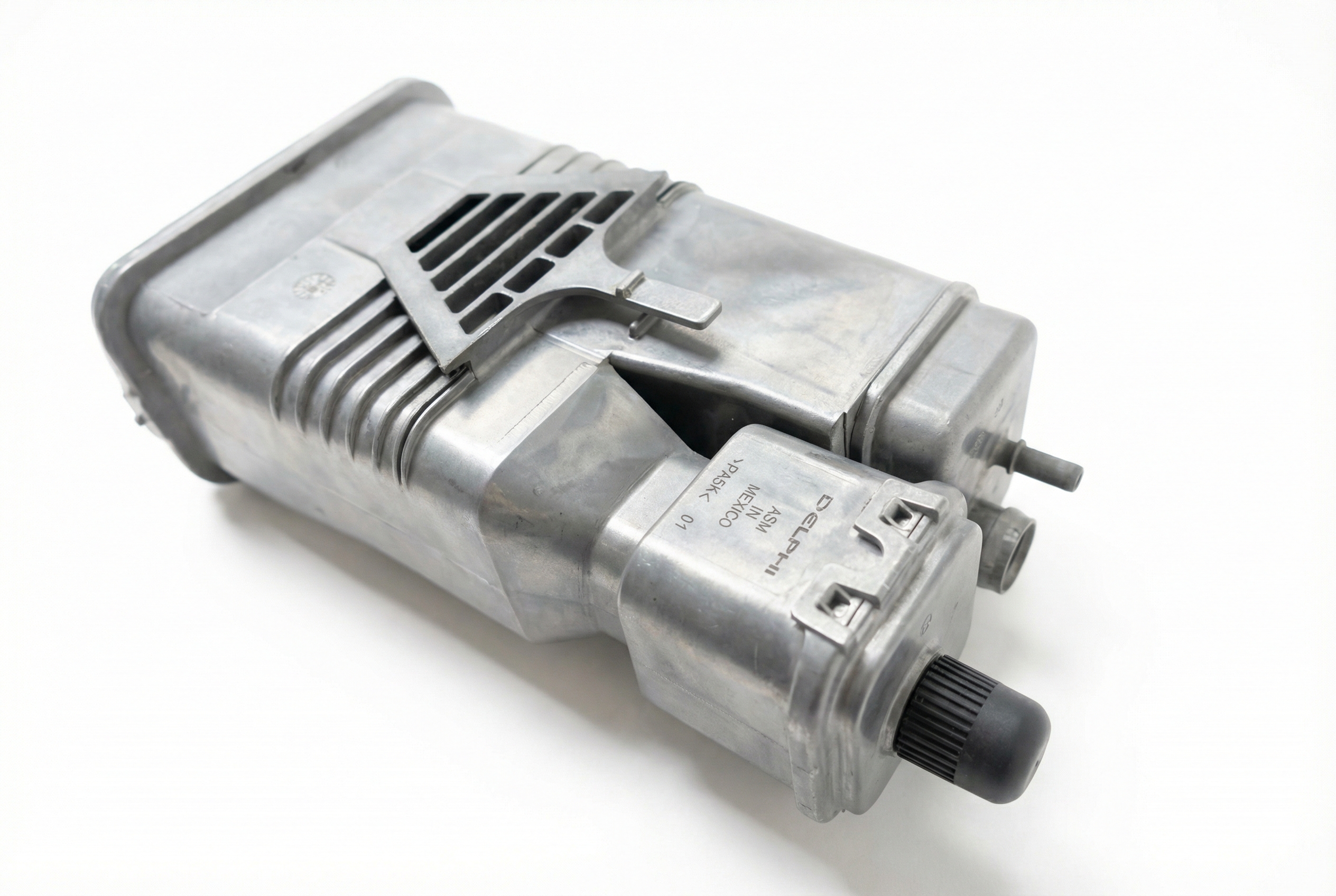
- Damaged Charcoal Canister: The canister itself can develop cracks from road debris or age, causing a leak. A manufacturer service bulletin, SSM 49313, notes that P0442 can be caused by damage to the carbon canister that may occur during vehicle transportation.
- Damaged or Chewed Wiring: Rodents can chew through the wiring for the vent or purge solenoid, causing it to malfunction and trigger a code. One owner found packrat damage to the wiring harness on top of the fuel tank, which required dropping the tank to repair.
- Chaffing Fuel Lines: Manufacturer bulletin TSB 25-2308 indicates that P0442 may be due to a chaffing or rubbing condition between the fuel vapor canister line and the air vent hose.
Diagnosis Steps

- Confirm the P0442 code is present using an OBD-II scanner. Note if P1450 is also present, as this heavily implicates the purge valve.
- Inspect the capless fuel filler neck. Open the fuel door and check for debris. Use the emergency fuel funnel provided with the truck to push the internal flap open and closed 10-15 times. For better results, spray a small amount of lubricant like WD-40 on the seal and work it in with the funnel. Clear the code and drive to see if it returns.
- Locate the canister purge valve on the engine. With the engine off, disconnect the electrical connector and hoses. Attempt to blow through the valve. If air passes, the valve is stuck open and must be replaced.
- Visually inspect all visible EVAP hoses and lines for obvious cracks, disconnections, or damage. Pay close attention to rubber elbows in the engine bay and lines near the fuel tank and charcoal canister (located under the truck, typically on the driver's side frame rail).
- If the above steps do not reveal the issue, the most reliable next step is to have a professional smoke test performed. This involves injecting a harmless, visible smoke into the EVAP system to pinpoint the exact location of the small leak without replacing parts unnecessarily. 🎬 Watch: How to perform a smoke test to find small leaks. NHTSA ODI #10351913 describes a case where a smoke test successfully found a severed fuel line on top of the tank.
Parts You'll Likely Need

- EVAP Canister Purge Valve
(OEM #CX-2349 (Motorcraft - for 5.0L, check specific engine for correct part))— This is the most common failure point for P0442 on this platform. It's a solenoid that frequently gets stuck open over time, often triggering code P1450 as well.
Trusted brands: Motorcraft, Bosch, Dorman
OEM price range: $50-$90
Aftermarket price range: $30-$70 - Fuel Filler Neck
(OEM #9L3Z-9927936-B (Motorcraft - verify with VIN))— Required if the capless fuel filler's sealing surface is damaged, corroded, or will not seal after cleaning, causing a persistent small leak. The seal is not serviced separately.
Trusted brands: Motorcraft
OEM price range: $150-$250
Aftermarket price range: $100-$180
Related Codes That Often Appear With This One
- P0455 — Indicates a large EVAP leak. If both are present, it could mean an intermittent issue that the computer is struggling to classify, or a component like a purge valve is failing dramatically by being stuck wide open.
- P1450 — Stands for 'Unable to Bleed Up Fuel Tank Vacuum'. This Ford-specific code appearing with P0442 strongly points to a stuck-open canister purge valve, as the system cannot hold a vacuum.
- P0456 — Indicates a very small EVAP leak. Seeing this with P0442 suggests an intermittent or borderline leak that the system is having trouble classifying.
Platform-Specific Known Issues
- Purge Valve Location Varies by Engine: The EVAP canister purge valve is in a different location depending on the engine. On the 5.0L V8, it's on the top passenger side of the engine. On the 3.5L EcoBoost, it's on top of the intake manifold. On the 3.7L V6, it is on the front top of the engine. On the 5.4L V8, it's typically on the firewall, making it harder to access. Always verify the location for your specific engine before starting work.
Mechanic-Grade Diagnostic Values
- Canister Purge Valve Solenoid Resistance — expected: 30-50 Ohms. Failure: A reading of zero (short) or infinite/OL (open) indicates a faulty valve coil.
- Fuel Tank Pressure (FTP) Sensor Voltage (KOEO, system at atmospheric pressure) — expected: Approximately 2.6V - 2.7V. Failure: A significantly different voltage at rest can indicate a biased sensor. If the voltage immediately drops when the engine starts, it can indicate a purge valve stuck open.
- Canister Vent Solenoid Voltage (KOEO) — expected: Battery voltage (approx. 12V) on the Yellow/Red wire at the connector.. Failure: A low voltage reading, such as 2.6V as reported by one user, indicates an electrical issue in the circuit, not necessarily a bad solenoid.
- EVAP System Test Target Vacuum (via IDS Scan Tool) — expected: Approximately -8.0 in-H2O. Failure: If the system fails to reach this vacuum level during the test, it indicates a leak. If the vacuum level does not decay after the test, it may indicate a stuck-closed vent valve.
Scan Tool Commands That Help
- Ford IDS (Integrated Diagnostic System): On-Board EVAP System Leak Test — This is a guided, automated test that commands the purge and vent solenoids to seal the system, pulls a vacuum, and monitors the FTP sensor for decay. It can confirm if a leak is present at the time of testing without needing a smoke machine immediately. It can differentiate between a 0.040" (P0442) and 0.020" (P0456) leak.
- Ford IDS (Integrated Diagnostic System): Manual EVAP Component Control (Datalogger) — Allows a technician to manually command the canister vent solenoid closed and the purge valve open/closed while watching live FTP sensor voltage. This is used to isolate a specific component. For example, if you command the vent solenoid closed and the system still won't hold pressure (or vacuum), the vent solenoid itself is likely leaking.
Wiring & Ground Locations
- Main Engine Bay Ground Lug — Located on the vertical frame rail behind the headlight area, accessible from the engine bay. There is one on each side (driver and passenger). It is an 8mm bolt.. While not a direct cause of P0442, a poor ground connection here can cause a variety of electrical issues. The EVAP purge and vent solenoids rely on a solid ground to function correctly. A faulty ground could cause intermittent solenoid operation, leading to failed EVAP tests.
- Firewall Ground Strap — A ground strap located on the firewall, often above the heater hoses, that connects the body to the engine block.. A loose or corroded main engine-to-body ground can cause unpredictable electrical behavior in engine-mounted sensors and solenoids, including the EVAP purge valve. One forum user was chasing multiple sensor codes and a hard start, which can be related to EVAP issues, that were potentially caused by a bad ground.
- Passenger Kick Panel Ground — Near the interior fuse box by the front passenger's feet, there is a factory ground bolt on the wall, accessible by removing the kick panel.. This is a primary interior grounding point. The PCM and other interior modules rely on these grounds. A problem here could theoretically affect the PCM's ability to correctly interpret signals from the EVAP system sensors or control the solenoids, though it is an unlikely cause for an isolated P0442.
Real Owner Repair Stories
- f150forum.com user post (2018 F-150 Platinum 3.5L EcoBoost) — P0442 code, also previously had P0451 and P1450.
❌ Tried (didn't work) Replaced charcoal canister and vent valve., Replaced purge valve., Shop replaced FTP sensor and performed a smoke test which found no leaks.
✅ What actually fixed it The user found a vacuum line running from the purge valve to the intake tube was missing its retaining clip on the intake side, causing a small, unsealed connection that a smoke test apparently missed. Replacing the clip resolved the P0442 code. - YouTube video by 'F150 Vids' (2012 F-150 XLT 3.7L) — Struggles to start after refueling, requiring two or three tries. Runs fine otherwise.
❌ Tried (didn't work) Initial diagnosis pointed towards the capless fuel filler, but the primary symptom was hard starting after fueling.
✅ What actually fixed it Replacing the EVAP purge valve (vapor management valve) on top of the engine completely resolved the hard starting issue after refueling. The user confirmed the fix after six weeks and multiple fill-ups. - NHTSA ODI #11540072 — An owner reported that their check engine light came on due to code P0442, which was caused by a faulty purge valve.
- NHTSA ODI #10852382 — An owner reported a scent of gas was present along with the P0442 code. Despite changing the fuel cap (on a cap-equipped model), the issue remained, highlighting that the leak often lies deeper in the EVAP system.
"I Checked Everything" — The Actual Cause
- In one documented case, a smoke test performed by a professional shop came back clean, but the P0442 code persisted. The owner later discovered a vacuum line from the purge valve to the intake was not fully seated and was missing its clip. This created a leak small enough or positioned in such a way that the smoke test did not reveal it, highlighting the importance of physically checking all connections even after a passed smoke test.
OEM Part Supersession History
9L3Z-9927936-A→9L3Z-9927936-B— This is the part number for the fuel filler neck housing. Ford often updates parts to improve durability or resolve known issues. In this case, aftermarket versions claim to have a redesigned housing to last longer than the factory part, suggesting the original may have had a weakness.
Heads up: This part is for Styleside beds only and will not fit Flareside (stepside) models.
Diagnostic Flowchart
Other Known Issues on This Vehicle
Issues unrelated to this code that are worth knowing about as an owner of this generation:
- 5.4L 3V Cam Phaser Failure 🔴 High — Very common on 2009-2010 models with the 5.4L engine, often appearing after 70,000 miles. Characterized by a diesel-like rattle at idle.
- 6R80 Transmission Molded Lead Frame Failure 🔴 High — Common enough to trigger multiple recalls and customer satisfaction programs (e.g., 19N01). Affects 2011-2013 models, causing sudden, unexpected downshifts to first gear. (Ref: Recall 19S07, Customer Satisfaction Program 19N01)
- 3.5L EcoBoost Intercooler Condensation 🟠 Medium — Affects 2011-2014 EcoBoost models, especially in humid climates. Can cause stumbling or misfires during hard acceleration after highway cruising. Owners sometimes drill a small 'weep hole' in the intercooler as a workaround. (Ref: TSB 12-6-4, TSB 13-8-1)
- 5.0L Coyote Engine Coolant Leaks / Water Pump Failure 🟠 Medium — The water pump can fail prematurely (some as early as 50k-70k miles), and leaks from the upper radiator hose O-ring and various plastic cooling system connectors are common.
- Integrated Wheel End (IWE) Actuator Failure 🟠 Medium — Common across 4x4 models. A loss of vacuum causes the front hubs to partially engage, resulting in a grinding noise from the front wheels, especially during light acceleration.
- Spark Plug Breakage / Ejection (5.4L 3V) 🔴 High — While improved from the previous generation, the 2009-2010 5.4L 3V can still have issues with spark plugs. The design was changed to reduce breakage upon removal, but they can still be problematic.
Used vs. New Parts: Buying Guide for This Vehicle
When a used part is the smart pick: For a part like the fuel filler neck, a used OEM part from a junkyard can be a cost-effective option, especially if sourced from a vehicle in a dry, salt-free climate. Since the failure mode is often physical damage or corrosion, a visually inspected used part can be perfectly serviceable.
Donor-vehicle mileage cap: roughly under 80000 miles for the part to have meaningful remaining life.
What to inspect on the donor part:
- For a Fuel Filler Neck: Inspect the spring-loaded flap for smooth operation. Check the metal sealing surface for any pitting, rust, or damage. Ensure the plastic housing is not cracked or brittle.
- For Hoses/Lines: Squeeze the rubber sections to ensure they are still pliable and not hard or crunchy. Look for any visible cracks or abrasions.
- Source vehicle from a southern or western state (less rust) if possible.
OEM-only on this vehicle (don't cheap out):
- While not strictly 'OEM-only', it is highly recommended to use an OEM (Motorcraft) or a top-tier aftermarket brand for electronic solenoids like the Purge Valve and Vent Solenoid. Cheaper, no-name electronic parts have a higher rate of premature failure.
Aftermarket brands forum-validated for this vehicle:
- Dorman (For solenoids and filler neck)
- Bosch (For solenoids)
- Standard Motor Products (SMP)
Brands owners have reported issues with on this vehicle:
- Unbranded, ultra-low-cost solenoids from online marketplaces are frequently cited in forums as being dead-on-arrival or failing within a few months.
Real Owner Stories
Aggregated from forums and TSBs cited above. Mileages and costs reflect what owners reported in those sources.
2010 Ford F-150 5.4L V8
Symptoms: Got a P0442 code regarding the evaporative system.
What fixed it: Found the filler neck was the issue; cleaning it or replacing the assembly is the standard fix for this model's capless system.
Source hint: F150Forum.com owner report in article context
2014 Ford Expedition (Platform Mate)
Symptoms: P0442 code; the filler neck was not sealing properly.
What fixed it: Addressed the capless fuel filler neck seal, though the purge valve was also noted as a common first suspect.
Source hint: bobistheoilguy.com: P0442 and Capless Fuel Filler
2009-2014 Ford F-150
Symptoms: P0442 code appearing only when the fuel tank was between 1/4 and 3/4 full.
What fixed it: Confirmed as a small EVAP leak during the specific window when the EVAP monitor test runs.
Source hint: ford-trucks.com: 2004 Navigator P0442 Small Evap Leak (referenced for testing parameters)
Related OBD-II Codes
Frequently Asked Questions
Why does my F-150 dashboard say 'Check Fuel Fill Inlet' when I have code P0442?
Is there a specific TSB for the transmission issues mentioned in the known issues section?
Where is the purge valve located on my 3.5L EcoBoost engine?
Can I use WD-40 to fix the P0442 code on my capless fuel system?
Does the P0442 code only trigger under certain driving conditions on the F-150?
Is the P0442 code related to the 'whoosh' sound I hear when opening my fuel door?
Helpful Videos



Used OEM Parts in Stock


New Aftermarket Parts Available


The information in this article is provided for general reference and educational purposes only. Vehicle specifications, procedures, and part compatibility can vary by production date, trim level, and region. Always consult your vehicle's factory service manual and verify part numbers before purchasing or performing repairs. Safety-critical components such as airbags, seat belts, and braking systems should be installed by a qualified professional.
- Ford F-150:
- 🎬 Helpful Videos
- 🛍️ Shop This Part
- What's Unique About the 2009-2014 Ford F-150
- Symptoms You May Notice
- Most Likely Causes
- Rare But Worth Checking
- Diagnosis Steps
- Parts You'll Likely Need
- Related Codes That Often Appear With This One
- Platform-Specific Known Issues
- Mechanic-Grade Diagnostic Values
- Scan Tool Commands That Help
- Wiring & Ground Locations
- Real Owner Repair Stories
- "I Checked Everything" — The Actual Cause
- OEM Part Supersession History
- Diagnostic Flowchart
- Other Known Issues on This Vehicle
- Used vs. New Parts: Buying Guide for This Vehicle
- Real Owner Stories
- 2010 Ford F-150 5.4L V8
- 2014 Ford Expedition (Platform Mate)
- 2009-2014 Ford F-150
- Related OBD-II Codes
- Frequently Asked Questions
- 🎟️ Get 5% Off