

P0442 on 2000-2004 Chevrolet Venture: EVAP Small Leak Causes and Fixes
This code means your Venture has a small leak in the evaporative emissions (EVAP) system. The most common cause is a loose or worn-out gas cap. If not the cap, the EVAP vent valve or purge valve are the next most likely culprits, often due to corrosion or wear.
- P0442 means your Venture has a small leak in the fuel vapor system.
- Always check the gas cap first; a loose or bad cap is the most common and cheapest fix.
- If the gas cap is good, the EVAP vent valve or purge valve are the next most likely parts to have failed.
- Diagnosing the exact leak location without a smoke machine can be difficult.
- Be aware that replacing the vent valve on this van is more involved than on other vehicles and may require lowering the fuel tank.
What's Unique About the 2000-2004 Chevrolet VENTURE
On this generation of GM U-body minivans (including the Venture, Pontiac Montana, and Oldsmobile Silhouette), the EVAP components are subjected to significant road spray and debris. The vent valve and charcoal canister, located near the rear of the vehicle, are especially vulnerable. This exposure leads to cracked hoses and corroded electrical connections. Accessing the EVAP vent valve can be particularly challenging, often requiring the fuel tank to be partially lowered for replacement. Some owners report success by only removing the front two tank straps and loosening the rear one to gain enough clearance.
Diagnostic Flowchart
Tap your situation to follow the diagnostic path that matches what you're seeing on this vehicle.
Symptoms You May Notice
- Check Engine Light is on
- A faint smell of gasoline, especially after parking in a garage.
- Slight decrease in fuel economy
- Difficulty starting the engine right after filling the gas tank (points towards a stuck-open purge valve).
- Vehicle may fail an emissions test.
- Replacing the oxygen sensors, as they are not related to the EVAP system.
- Replacing the catalytic converter, which would trigger different codes like P0420 or P0430.
Most Likely Causes
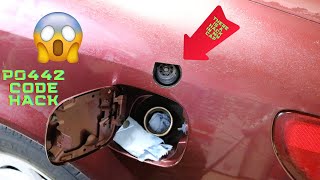
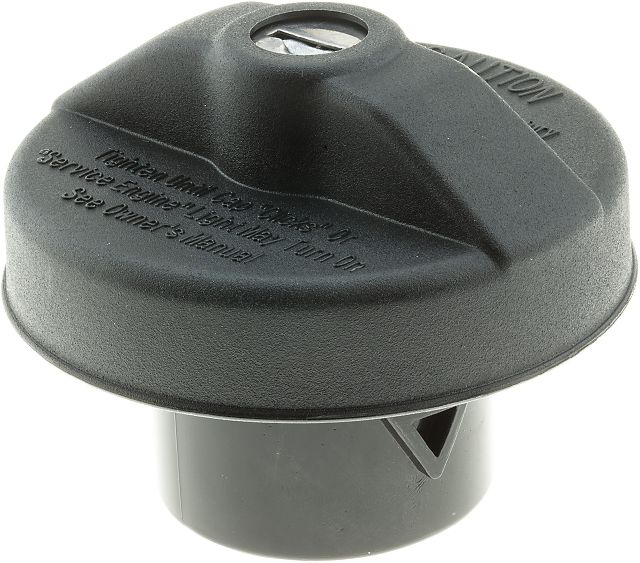
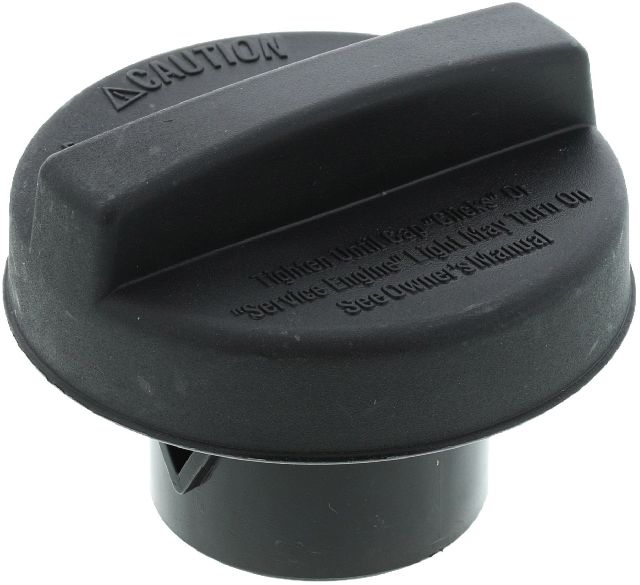
- Loose or Worn Gas Cap 🔴 High Probability The gas cap is the most frequently handled part of the EVAP system, and its seal can degrade over time or it may not be tightened correctly after refueling. It is the most common cause for a P0442 code.
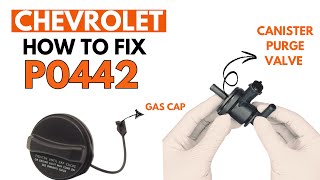
How to confirm: First, ensure the gas cap is tightened until it clicks several times. Inspect the rubber O-ring on the cap for any cracks, hardening, or visible damage. If the seal is damaged, the cap needs replacement. An OEM cap is highly recommended as some aftermarket caps do not seal correctly.
Typical fix: Tighten the existing cap or replace it with a new one. It is often recommended to use an OEM-spec cap (like ACDelco) to ensure a proper seal.
Est. part cost: $10-$25 - Faulty EVAP Vent Valve/Solenoid 🟡 Medium Probability The vent valve is located near the charcoal canister at the rear of the vehicle, where it is exposed to road salt and moisture, causing it to fail or its electrical connector to corrode. It can get stuck open or closed, creating a leak or a blockage.
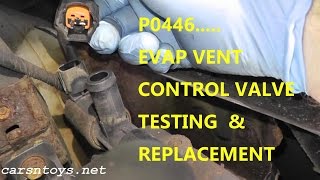
How to confirm: The valve is normally open. A scan tool can command it closed to test its function. It can also be removed and tested with a 12V power source to see if the solenoid actuates. On the Venture, this often requires partially dropping the fuel tank for access, making it a more involved diagnosis.
Typical fix: Replace the EVAP vent valve and inspect the wiring connector for corrosion. On some GM vehicles, a TSB (02-06-04-037) was issued for a related code (P0446) that involved replacing the valve with a kit that relocates the air filter to a cleaner location to prevent dust intrusion.
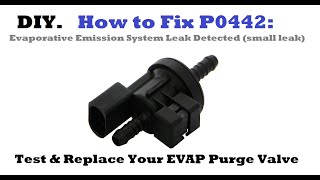
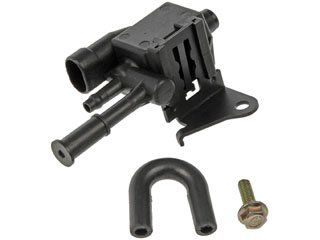
Est. part cost: $25-$60 - Faulty EVAP Purge Valve/Solenoid 🟡 Medium Probability This valve is located in the engine bay and cycles frequently, leading to wear. It can get stuck open or closed over time, or develop a small internal leak.
How to confirm: The purge valve is normally closed. With the engine off, disconnect the vapor line and apply vacuum; it should hold. You can also remove it and try to blow through it; no air should pass. A common symptom of a stuck-open purge valve is difficulty starting the vehicle after refueling. A mechanic can also command it open and closed with a scan tool.
Typical fix: Replace the purge valve. This is generally an easy repair as the valve is accessible in the engine compartment.
Est. part cost: $20-$50 - Cracked or Disconnected EVAP Hoses ⚪ Low Probability Rubber hoses become brittle and crack with age and exposure to heat and cold cycles. Connections can also become loose. The lines running along the frame to the rear of the vehicle are susceptible to damage.
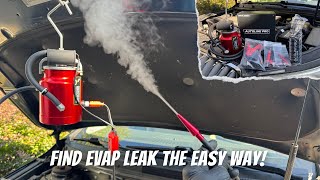
How to confirm: Perform a visual inspection of all accessible EVAP lines between the engine, charcoal canister, and fuel tank. The most effective method is to use a smoke machine, which fills the system with a visible vapor to pinpoint the exact location of the leak.
Typical fix: Replace the cracked section of hose or the entire hose assembly. Ensure all connections are secure.
Est. part cost: $5-$30
Rare But Worth Checking
- Cracked Charcoal Canister: The plastic housing of the canister can be damaged by road debris, causing a leak. Shake the canister; if you hear rattling, the internal charcoal media has broken apart, and it needs replacement. A cracked canister can also cause a strong fuel odor.
- Leaking Fuel Tank Filler Neck: The metal pipe where you insert the fuel nozzle can rust and develop small holes, creating an EVAP leak. This is more common in regions with heavy road salt use and can be a definite cause of a P0442 code if a leak is present.
- Faulty Fuel Tank Pressure Sensor: This sensor tells the computer the pressure within the EVAP system. If it provides an incorrect reading, the computer may falsely believe there is a leak. On the Venture, this sensor is located on the fuel pump module inside the tank, making replacement more labor-intensive. A faulty sensor may not allow the system pressure to change as expected during the self-test, triggering the code even without a leak.
Diagnosis Steps
- Check the gas cap. Remove it, inspect the seal for cracks, and reinstall it, ensuring it clicks multiple times. Clear the code and drive for a few days to see if it returns. Consider replacing with an OEM cap as a cheap first step.
- If the code returns, perform a thorough visual inspection of all visible EVAP hoses and lines running from the engine bay to the fuel tank. Look for obvious cracks, disconnections, or damage.
- Locate the EVAP purge valve in the engine bay. With the engine off, check if it's properly sealed by removing it and trying to blow through it (it should be closed). Also listen for a click when applying 12V power.
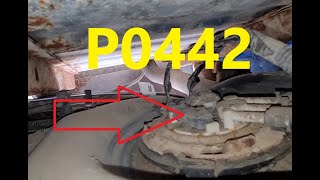
- Locate the EVAP vent valve near the charcoal canister. On the Venture, this may require lowering the front of the fuel tank. Check the valve and its electrical connector for damage or corrosion.
- The most definitive diagnostic method is to have a smoke test performed. A mechanic injects pressurized smoke into the EVAP system, and any leaks will be revealed by escaping smoke.
- If no leaks are found, the fuel tank pressure sensor may be faulty, which requires more advanced diagnostics to confirm.
Parts You'll Likely Need
- Gas Cap
(OEM #GT248 (ACDelco))— This is the most common failure point due to frequent use and seal degradation. It's the first, easiest, and cheapest part to replace.
Trusted brands: ACDelco, Stant
OEM price range: $15-$30
Aftermarket price range: $10-$20 - EVAP Vent Valve Solenoid
(OEM #214-2149 (ACDelco), supersedes 25932571)— Its location makes it prone to failure from corrosion and debris. It's a very common cause for P0442 on many GM vehicles of this era.
Trusted brands: ACDelco, Dorman (911-062), Delphi, Standard Motor Products (CVS114)
OEM price range: $40-$70
Aftermarket price range: $25-$60 - EVAP Canister Purge Valve
(OEM #214-641 (ACDelco), supersedes 01997278)— This valve cycles frequently and can wear out, getting stuck open and causing a constant small leak. Often causes hard starting after refueling when it fails.
Trusted brands: ACDelco, Bosch, Dorman (911-017)
OEM price range: $30-$60
Aftermarket price range: $20-$50
Related Codes That Often Appear With This One
- P0455 — This code indicates a large EVAP leak. If a small leak (P0442) worsens, it can trigger a P0455. Both codes can appear if the gas cap is left off entirely.
- P0446 — This code points specifically to a fault in the EVAP vent control circuit. A failing vent valve can sometimes trigger both a leak code (P0442) and a circuit code.
- P0496 — Indicates 'EVAP Flow During a Non-Purge Condition,' which often points directly to a purge valve that is stuck open or leaking. It's very common to see this code alongside P0442.
Technical Service Bulletins (TSBs) & Recalls
- 21-NA-124: Provides diagnostic tips for testing EVAP leaks related to DTCs P0442 and/or P0455.
- PIT4943D: Directs technicians to a specific article on using an EVAP system tester for diagnosing code P0442.
Platform-Specific Known Issues
- Accessing the EVAP vent valve on the 2002-2004 Venture often requires lowering the fuel tank. A forum user noted that removing the front two tank straps and loosening the rear one allows enough clearance to replace the valve without fully dropping the tank.
- Due to the vent valve's vulnerability to dust and debris, GM issued TSB 02-06-04-037 for similar truck platforms, which involved installing a relocation kit for the valve's air filter. While not specifically for the Venture, the principle applies and highlights the known design weakness.
Mechanic-Grade Diagnostic Values
- EVAP Canister Purge Valve Solenoid Resistance — expected: 20 to 38 ohms. Failure: A reading outside this range (e.g., infinite for an open circuit, or near zero for a short) indicates a faulty solenoid coil.
- EVAP Canister Vent Valve Solenoid Resistance — expected: 48 to 65 ohms. Failure: A reading outside this range indicates a faulty solenoid coil.
- Fuel Tank Pressure (FTP) Sensor Voltage — expected: Signal voltage varies between 0.1 - 4.9 volts. The sensor operates on a 5-volt reference from the PCM.. Failure: Voltage that is stuck high or low, or does not change when the system is tested (e.g., during a smoke test or when commanding valves), points to a faulty sensor or wiring issue. On this system, high pressure corresponds to low voltage.
- EVAP System Self-Test Enable Conditions — expected: Fuel level between 15-85%, system voltage 10-18V, ambient and coolant temps between 4-30°C (39-86°F), and BARO pressure >75 kPa.. Failure: The EVAP monitor will not run if these conditions are not met. A faulty sensor (e.g., fuel level sender) can prevent the test from initiating, masking the true state of the EVAP system.
Scan Tool Commands That Help
- GM Tech2 or equivalent professional scanner: EVAP Service Bay Test — This is a forced, comprehensive test to verify the integrity of the entire EVAP system after a repair or when a standard drive cycle is difficult to complete. It allows the technician to command the PCM to run its internal leak checks in the service bay. The test will command the vent solenoid closed and the purge solenoid open to create a vacuum and then monitor for pressure decay. Be aware that some versions of this test require holding the engine RPM steady between 1800-2200 for several minutes to complete successfully.
- GM Tech2 or equivalent professional scanner: EVAP Purge/Seal — This function is used during a smoke test. It commands the EVAP vent valve to close, sealing the system. This allows the technician to introduce smoke and pressurize the system to find the physical location of a leak without the vent being open to the atmosphere.
Wiring & Ground Locations
- G111 / G113 — In the engine compartment, located on the same bolt on the engine block, near the starter.. These grounds are crucial for various engine sensors and modules. A corroded or loose connection at this point can cause intermittent or incorrect readings from EVAP system components like the purge valve or fuel tank pressure sensor, leading to false codes or erratic behavior.
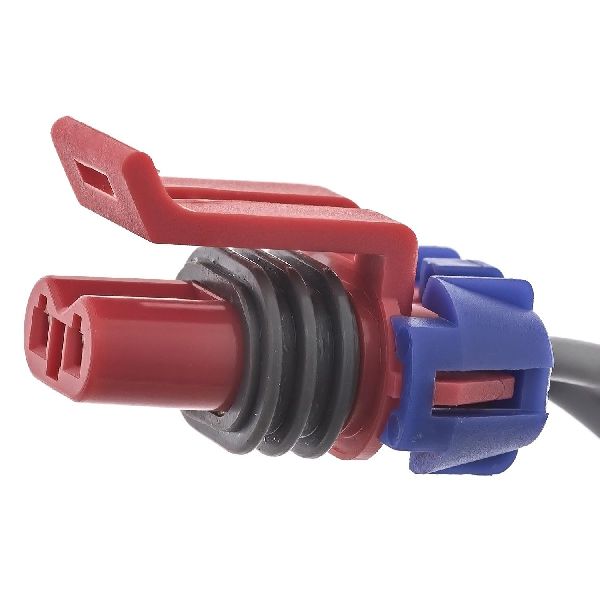
- EVAP Vent Valve Connector — Under the center of the vehicle, in front of the fuel tank, connected to the vent valve solenoid.. Due to its exposed location, this connector is highly susceptible to corrosion from road salt and moisture. A corroded connector can prevent the vent valve from closing properly during the EVAP self-test, directly causing a P0442 leak code.
Real Owner Repair Stories
- GM Forum user (Buick (GM Platform sibling)) — Persistent P0442 code and a gasoline smell.
❌ Tried (didn't work) Replaced vapor canister purge valve, Replaced canister vent solenoid
✅ What actually fixed it The final fix was replacing the fuel tank pressure sensor and the fuel pump 'sending unit' gasket. The user noticed a strong gas odor when they gained access to the top of the fuel tank, indicating the gasket was the source of the vapor leak. - 2CarPros Forum user (Unknown, but demonstrates a common issue) — Persistent P0442 code and fuel leaking onto the ground only when actively refueling.
❌ Tried (didn't work) Initial diagnosis was inconclusive before the fuel leak was noticed.
✅ What actually fixed it The fuel filler neck was completely rusted out on the bottom, creating both a liquid fuel leak during filling and a constant vapor leak for the EVAP system. Replacing the rusted fuel filler neck resolved the code.
"I Checked Everything" — The Actual Cause
- A leak from the fuel pump sending unit gasket at the top of the fuel tank can sometimes be missed by a standard smoke test. The leak is often only apparent when the tank is full, or the gasket may only fail to seal under specific vacuum conditions not replicated by the test. In one documented case, the technician only found the leak's source by smelling gasoline after removing the interior access cover to the fuel pump module, after already replacing the common EVAP valves.
Helpful Videos
![How to Fix P0442 Engine Code in 7 Minutes [6 DIY Methods / Under $3.67]](https://img.youtube.com/vi/KISPTedKJmQ/mqdefault.jpg)
We Have This Part in Stock


The information in this article is provided for general reference and educational purposes only. Vehicle specifications, procedures, and part compatibility can vary by production date, trim level, and region. Always consult your vehicle's factory service manual and verify part numbers before purchasing or performing repairs. Safety-critical components such as airbags, seat belts, and braking systems should be installed by a qualified professional.
- Chevrolet VENTURE:
- 🎬 Helpful Videos
- 🛍️ Shop This Part
- What's Unique About the 2000-2004 Chevrolet VENTURE
- Diagnostic Flowchart
- Symptoms You May Notice
- Most Likely Causes
- Rare But Worth Checking
- Diagnosis Steps
- Parts You'll Likely Need
- Related Codes That Often Appear With This One
- Technical Service Bulletins (TSBs) & Recalls
- Platform-Specific Known Issues
- Mechanic-Grade Diagnostic Values
- Scan Tool Commands That Help
- Wiring & Ground Locations
- Real Owner Repair Stories
- "I Checked Everything" — The Actual Cause
- 🎟️ Get 5% Off