

P0442 on 2005-2009 Chevrolet Uplander: EVAP Small Leak Causes and Fixes
On a 2005-2009 Chevrolet Uplander, code P0442 is most often caused by a loose or faulty gas cap. If that's not the issue, the next most likely culprit is a failing EVAP purge valve on the engine, which is an easy and affordable DIY fix. A failing vent solenoid on the fuel tank is also common but much harder to replace.
- First, check that your gas cap is tight and its seal is not cracked. This is the easiest and most common fix.
- If the gas cap is good, the EVAP purge solenoid on the engine is the next most likely cause and is an easy DIY replacement.
- Symptoms like difficulty filling the tank with gas point to the vent solenoid, which is a difficult repair requiring the fuel tank to be lowered.
- A professional smoke test is the best way to find the exact source of a small leak before buying and replacing expensive or hard-to-reach parts.
What's Unique About the 2005-2009 Chevrolet UPLANDER

For the 2005-2009 Uplander and its U-body siblings (Terraza, Montana SV6, Relay), the key challenge with EVAP codes is identifying which component has failed. There are two common solenoid failures with very different repair difficulties. The EVAP purge solenoid is located on top of the engine, behind the throttle body, making it very easy to replace with a single bolt and two connections. However, the EVAP vent solenoid is located on top of the fuel tank, exposed to the elements, and replacing it is a much more involved job that requires lowering the tank for access. Diagnosing the correct part first can save significant time and money.
Diagnostic Flowchart
Tap your situation to follow the diagnostic path that matches what you're seeing on this vehicle.
Symptoms You May Notice
- Check Engine Light is on.
- A faint smell of fuel may be present.
- Difficulty starting the engine, especially right after refueling (a classic symptom of a bad purge valve stuck open).
- Rough or unstable idle (can be caused by a bad purge valve).
- Gas pump nozzle clicks off repeatedly while filling the tank (points to a bad or stuck-closed vent valve or a blocked vent path).
- Replacing the O2 sensors. Oxygen sensors are not part of the EVAP system and will not cause a P0442 code.
- Replacing the catalytic converter. This is an expensive exhaust component and is unrelated to the EVAP system.
Most Likely Causes


- Loose or Faulty Gas Cap 🔴 High Probability This is the most common cause for P0442 on nearly all vehicles due to user error or simple wear of the cap's rubber O-ring seal. Always try this first.
How to confirm: Ensure the gas cap is tightened until it clicks several times. Inspect the rubber O-ring on the cap for cracks, stiffness, or damage. An OEM replacement is often recommended as some aftermarket caps may not seal correctly.
Typical fix: Tighten the cap correctly. If the seal is damaged, replace the gas cap. After replacement, the code may take a few drive cycles to clear.
Est. part cost: $15-$30 - Failing EVAP Purge Solenoid/Valve 🔴 High Probability This is a very common failure item on GM vehicles of this era. It can get stuck open, causing a constant vacuum leak and often triggering a P0496 code alongside P0442.
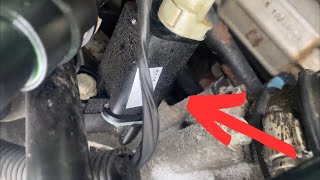
How to confirm: The valve is located on top of the engine, behind the throttle body. With the engine off, remove the valve and try to blow through it; if air passes, it's stuck open and needs replacement. A hard start immediately after fueling is a very strong indicator of a stuck-open purge valve.
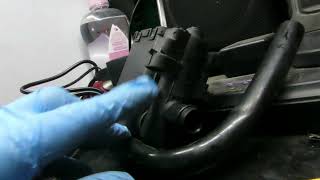
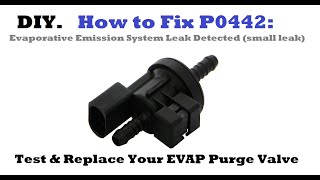
Typical fix: Replace the purge solenoid. It is held by one 10mm bolt and has one electrical connector and two hoses, making for a simple 15-minute repair. 🎬 Watch: Step-by-step purge solenoid replacement walkthrough for your Uplander.
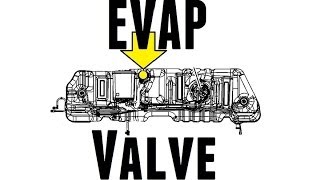
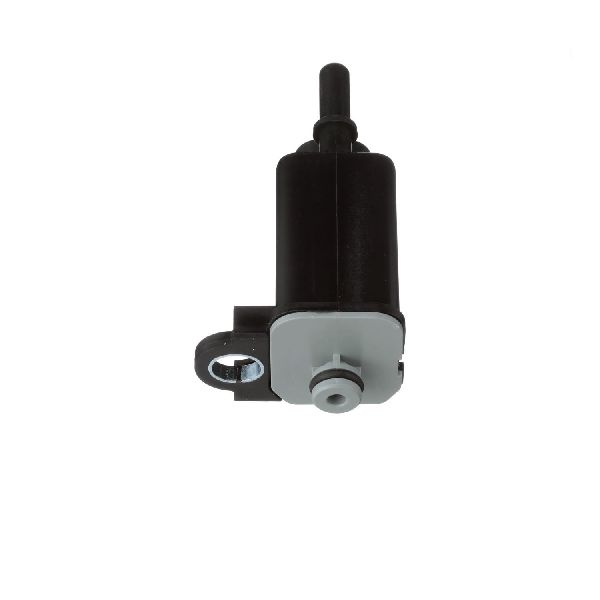
Est. part cost: $25-$60 - Failing EVAP Vent Solenoid/Valve 🟡 Medium Probability The vent solenoid on the Uplander is located on top of the fuel tank, where it is exposed to road salt and moisture, causing corrosion and cracks in the plastic housing. This is a well-documented issue on the GM U-body platform.
How to confirm: This part is difficult to access. A professional would use a scan tool to command the valve closed and perform a smoke test. Difficulty filling the fuel tank is a common symptom of a stuck-closed vent valve, which may also be accompanied by code P0449. 🎬 See how to diagnose and fix the vent solenoid.
Typical fix: Replacement of the vent solenoid is required. This is a difficult job as it requires lowering the fuel tank for access.
Est. part cost: $40-$80 - Cracked or Disconnected EVAP Hoses 🟡 Medium Probability
How to confirm: Visually inspect all accessible EVAP lines running from the engine bay to the fuel tank for obvious cracks, splits, or loose connections. The small plastic lines can become brittle with age. A definitive diagnosis for very small leaks requires a smoke test, where smoke is injected into the system to see where it escapes.
Typical fix: Replace the cracked section of hose or the entire hose. Ensure all connections are secure.
Est. part cost: $5-$30 - Cracked EVAP Charcoal Canister ⚪ Low Probability
How to confirm: Visually inspect the black plastic canister (located near the fuel tank) for any physical cracks or damage, often from road debris. Overfilling the fuel tank can also saturate the canister with raw fuel, causing it to fail.
Typical fix: Replace the charcoal canister.
Est. part cost: $150-$270
Rare But Worth Checking
- Leaking Fuel Tank Filler Neck: The metal pipe where you insert the gas nozzle can rust and develop small holes, causing an EVAP leak. This is more common in regions with heavy road salt usage. A smoke test will quickly reveal a leak in this area.
- Faulty Fuel Tank Pressure Sensor (FTPS): The sensor that monitors pressure in the EVAP system can fail, causing the computer to mistakenly believe there is a leak when there isn't one. This is uncommon and should be considered after a smoke test reveals no physical leaks.
Diagnosis Steps

- Check the Gas Cap: Remove and reinstall the gas cap, ensuring it clicks multiple times. Inspect the cap's seal for any cracks or damage. If it looks worn, replace it with an OEM part.
- Clear the Code: Use an OBD-II scanner to clear the code. Drive for a few days to see if the light returns. The EVAP monitor runs under specific conditions (fuel tank between 1/4 and 3/4 full), so it may take time.
- Visual Inspection: If the light returns, visually inspect the EVAP purge valve and hoses in the engine bay. Look for any obvious cracks or loose connections.
- Test the Purge Valve: The purge valve is on the engine. With the vehicle off, disconnect the hose on the intake side and try to blow through it. If air passes, the valve is stuck open and must be replaced. This is a very common failure.
- Inspect Under the Vehicle: Check the hoses around the charcoal canister and vent solenoid near the fuel tank for damage. Check for rust on the fuel filler neck.
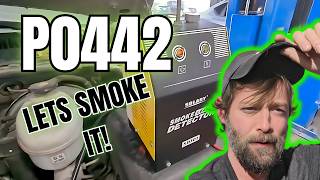
- Perform a Smoke Test: If no obvious issues are found, the most effective way to find a small leak is with a smoke test. This involves feeding pressurized smoke into the EVAP system's service port and watching for where it escapes. This test will definitively locate the source of the leak and is recommended before replacing difficult-to-access parts 🎬 Watch: How to find a small EVAP leak using smoke. like the vent solenoid.
Parts You'll Likely Need
- Gas Cap
(OEM #ACDelco GT284 (or GM 20915842))— This is the most frequent cause of a P0442 code, due to being loose or having a worn-out seal. Using an OEM cap is highly recommended for a proper seal.
Trusted brands: ACDelco, Stant, Gates
OEM price range: $20-$35
Aftermarket price range: $15-$25 - Vapor Canister Purge Solenoid
(OEM #ACDelco 214-1091 (or GM 12597567))— A very common failure point on GM vehicles that gets stuck open, causing P0442 and often P0496. It is located on the engine and is easy to replace.
Trusted brands: ACDelco, Dorman, Standard Motor Products (SMP)
OEM price range: $40-$60
Aftermarket price range: $25-$50 - Vapor Canister Vent Solenoid
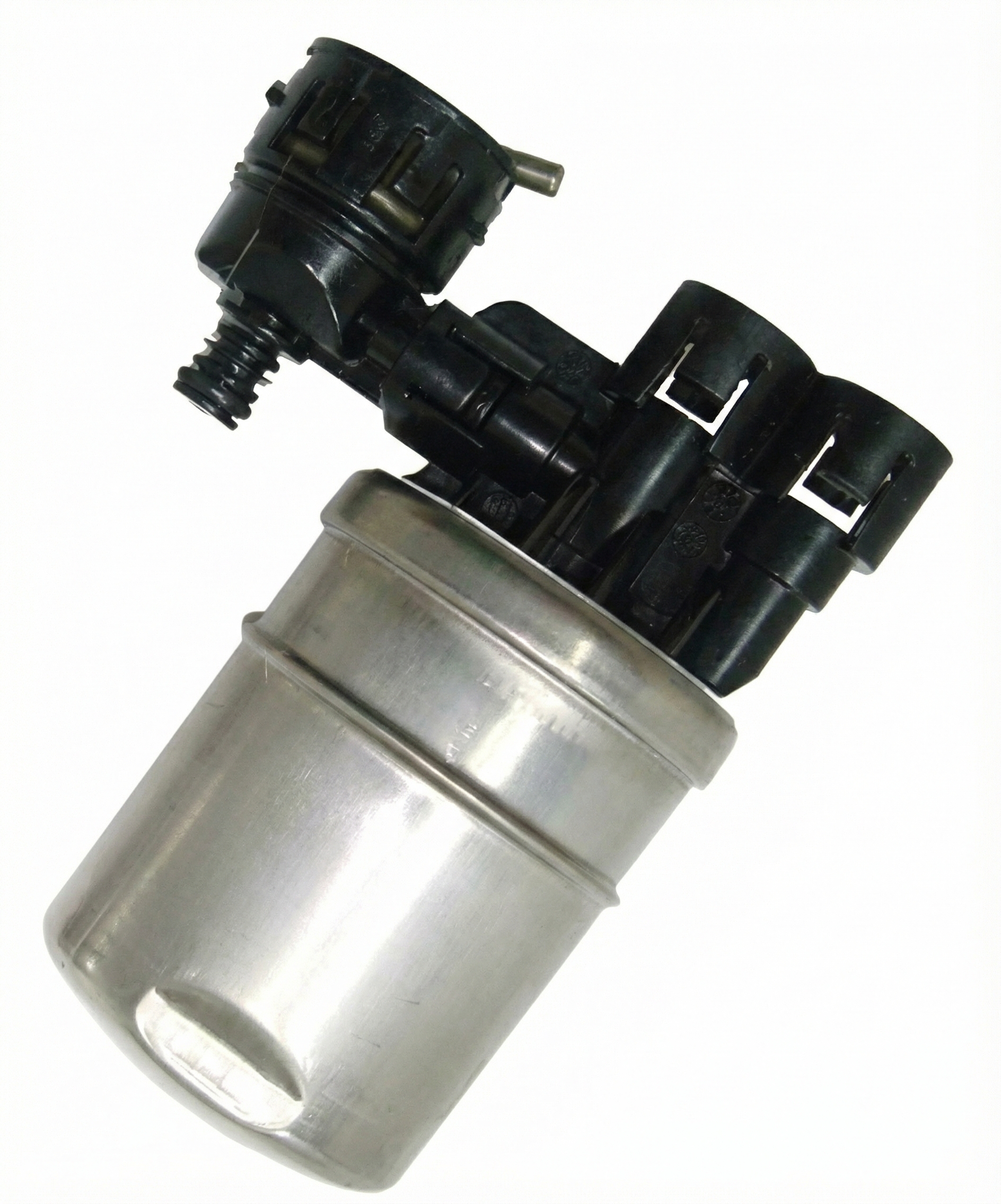
(OEM #ACDelco 214-2149 (or GM 25932571))— Fails due to its exposed location on top of the fuel tank. Replacement is labor-intensive as the fuel tank must be lowered. Often fails along with code P0449.
Trusted brands: ACDelco, Dorman, Standard Motor Products (SMP)
OEM price range: $60-$90
Aftermarket price range: $40-$80
Related Codes That Often Appear With This One
- P0455 — Indicates a large EVAP leak. If both P0442 and P0455 are present, it suggests a significant leak, such as a very loose gas cap or a component that has become completely disconnected.
- P0449 — This code specifically points to a fault in the EVAP vent solenoid circuit. It is very common on the Uplander and often appears if the vent solenoid itself is the source of the leak or has failed electrically.
- P0496 — This code indicates 'EVAP Flow During a Non-Purge Condition,' which almost always points directly to a purge valve that is stuck open. If you see this code with P0442, the purge valve is the prime suspect.
Technical Service Bulletins (TSBs) & Recalls
- 21-NA-124
- PIT4943D
- 08-06-04-037
Platform-Specific Known Issues

- The EVAP vent solenoid is highly prone to failure on the Uplander due to its location on top of the fuel tank, which exposes it to road debris and corrosion. A video for the Buick Terraza shows the exact location under the passenger side, on top of the tank.
- A hard start after filling the gas tank is a tell-tale sign of a failed purge valve on these vans, as discussed by owners.
- GM Technical Service Bulletin #08-06-04-037 addresses various EVAP codes including P0442 for these vehicles, providing updated diagnostic procedures for technicians.
- GM Technical Service Bulletin #21-NA-124 provides diagnostic tips for finding EVAP leaks related to codes P0442 and P0455.
- GM Technical Service Bulletin #PIT4943D notes that technicians may find code P0442 and should refer to a specific Techlink article for testing the EVAP system.
Mechanic-Grade Diagnostic Values
- Fuel Tank Pressure (FTP) Sensor Voltage — expected: Approximately 1.45V - 1.47V with Key On, Engine Off (KOEO) and the gas cap removed.. Failure: A significantly different voltage may indicate a faulty sensor, which could falsely trigger a P0442 code even if no leak is present.
Scan Tool Commands That Help
- Tech2 or similar professional scan tool: EVAP Vent Solenoid - Command Closed (or 'Not Venting') — This command is essential when performing a smoke test. The vent solenoid is normally open, so it must be commanded closed electronically to seal the EVAP system and allow it to be pressurized with smoke to find a leak.
Wiring & Ground Locations
- Connector C305 — Bulkhead pass-through connector located under the vehicle, just behind the driver's front door area.. This connector supplies wiring to the fuel tank, including the vent solenoid and fuel tank pressure sensor. It is highly susceptible to water intrusion and corrosion, which can cause an open circuit and trigger EVAP codes like P0449, often seen with P0442. Inspecting this connector for green corrosion is a critical diagnostic step if electrical EVAP codes are present.
- EVAP Vent Solenoid Wiring — At the vent solenoid connector on top of the fuel tank.. For a P0449 code, one wire (often red) receives power from a 10A fuse in the I/P fuse block, and the other wire (often white) is the control circuit grounded by the ECM. A break or corrosion in either wire can cause the code.
Real Owner Repair Stories
- Chevrolet Forum user (2005 Uplander) — Check engine light with EVAP code.
❌ Tried (didn't work) Dealer performed a smoke test which found no leaks. The code was cleared.
✅ What actually fixed it The check engine light returned 1,600 miles later, indicating an intermittent issue not present during the initial smoke test. The final fix was not posted, highlighting the frustrating nature of intermittent EVAP leaks.
"I Checked Everything" — The Actual Cause
- In a forum discussion, an owner of a 2005 Uplander reported taking their vehicle to a dealer for an EVAP code. The dealer performed a smoke test, found no leaks, and cleared the code. However, the check engine light returned 1,600 miles later. This indicates that the leak was likely intermittent or only occurred under specific conditions not replicated during the static test, a common scenario with small EVAP leaks that can be caused by temperature fluctuations or component aging.
OEM Part Supersession History
10382105, 15750484, 22728634→GM 25932571 (ACDelco 214-2149)— Standard part evolution and design updates.
Heads up: Some parts vendors note that part 25932571 has been redesigned and advise verifying the correct part with a VIN. This suggests there may be variations requiring a specific harness or fitment, so double-checking is crucial.
Model Year Variations Within This Range
- 2005-2009: The vapor canister assembly is different depending on the vehicle's wheelbase. Short Wheelbase (SWB - 113") vans use a different part (OEM #15107219) than Long Wheelbase (LWB - 121") vans (OEM #15190482). Since the vent solenoid is often integrated or mounted to the canister, ordering the wrong canister assembly for a full replacement will result in it not fitting.
Helpful Videos
Used OEM Parts in Stock
New Aftermarket Parts Available


The information in this article is provided for general reference and educational purposes only. Vehicle specifications, procedures, and part compatibility can vary by production date, trim level, and region. Always consult your vehicle's factory service manual and verify part numbers before purchasing or performing repairs. Safety-critical components such as airbags, seat belts, and braking systems should be installed by a qualified professional.
- Chevrolet UPLANDER:
- 🎬 Helpful Videos
- 🛍️ Shop This Part
- What's Unique About the 2005-2009 Chevrolet UPLANDER
- Diagnostic Flowchart
- Symptoms You May Notice
- Most Likely Causes
- Rare But Worth Checking
- Diagnosis Steps
- Parts You'll Likely Need
- Related Codes That Often Appear With This One
- Technical Service Bulletins (TSBs) & Recalls
- Platform-Specific Known Issues
- Mechanic-Grade Diagnostic Values
- Scan Tool Commands That Help
- Wiring & Ground Locations
- Real Owner Repair Stories
- "I Checked Everything" — The Actual Cause
- OEM Part Supersession History
- Model Year Variations Within This Range
- 🎟️ Get 5% Off