

P0442 on 2009-2016 Chevrolet Traverse: EVAP Small Leak Causes and Fixes
For a 2009-2016 Traverse, code P0442 usually points to a faulty canister purge valve or a loose/worn gas cap. Replacing the purge valve is a common, DIY-friendly fix costing around $25-$60 for the part. This is a very frequent issue on the Traverse and its platform mates (GMC Acadia, Buick Enclave).
- P0442 indicates a small leak in the EVAP (emissions) system.
- The most common cause on a 2009-2016 Traverse is a faulty canister purge valve located on the engine.
- Always check the gas cap first; make sure it's tight and the seal is intact.
- If you also have a P0496 code, the purge valve is almost certainly the problem.
- This issue is not critical and won't stop you from driving, but it will cause a failed emissions test.
What's Unique About the 2009-2016 Chevrolet TRAVERSE

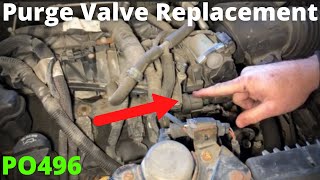
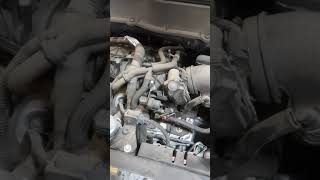
On the first-generation Chevrolet Traverse and its GM Lambda platform siblings (GMC Acadia, Buick Enclave, Saturn Outlook), the P0442 code is overwhelmingly linked to the canister purge valve located on the engine. While EVAP leaks can have many causes, owners and technicians often find this specific valve to be the culprit, sometimes accompanied by code P0496 🎬 Watch: 2016 Traverse purge valve replacement for P0442 and P0496. (EVAP Flow During a Non-Purge Condition). The repair is straightforward and a very common starting point for diagnosis after a quick check of the gas cap.
Diagnostic Flowchart

Tap your situation to follow the diagnostic path that matches what you're seeing on this vehicle.
Symptoms You May Notice
- Check Engine Light is on
- A faint smell of gasoline, particularly around the rear of the vehicle or after parking in a garage
- Difficulty starting the engine immediately after refueling (a symptom strongly pointing to a stuck-open purge valve, which allows fuel vapors to flood the intake).
- When refueling, the gas pump nozzle clicks off repeatedly before the tank is full (this can indicate a blocked EVAP vent path, sometimes related to the vent solenoid or charcoal canister).
- Replacing the EVAP vent solenoid when the purge valve is the actual problem. The purge valve is a much more frequent failure point on the Traverse and easier to access, so it should be checked first.
- Replacing the gas cap without inspecting the filler neck for rust or damage that prevents a good seal.
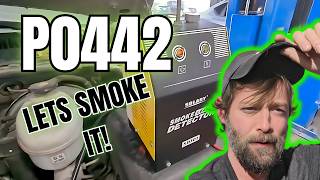
- Replacing parts without confirming the leak via a smoke test. For a P0442 (small leak), visual inspection is often insufficient.
Most Likely Causes

- Faulty EVAP Canister Purge Valve/Solenoid 🔴 High Probability This component is a well-documented, frequent failure point on many GM vehicles of this era, including the Traverse and its platform mates. It can get stuck open or closed, causing a leak or flow issue in the EVAP system. Many owner forums and repair videos cite this as the definitive fix.
How to confirm: With the engine running, disconnect the vapor line from the purge valve and feel for suction with your finger. A normally closed valve should have no vacuum at idle. If suction is present (especially if you also disconnect the electrical connector to be sure), the valve is stuck open and needs replacement. This issue often triggers a P0496 code alongside P0442.
Typical fix: Replace the canister purge valve. It is located on top/rear of the engine and is accessible after removing the plastic engine cover and sometimes the air intake tube. It is held by one 10mm bolt.
Est. part cost: $25-$60 - Loose or Worn Gas Cap 🟡 Medium Probability The gas cap is a critical sealing point for the EVAP system. Its rubber O-ring can dry out, crack, or get damaged over time, preventing a proper seal. It's also common for it to simply not be tightened correctly after refueling.
How to confirm: Inspect the gas cap's rubber seal for any visible cracks, stiffness, or damage. Ensure it clicks several times when tightened. If the seal looks worn or the light returns after tightening, replacement with a quality OEM part is the best test.
Typical fix: Tighten the gas cap until it clicks multiple times. If the light returns, replace the gas cap with a new OEM (ACDelco) or high-quality aftermarket part.
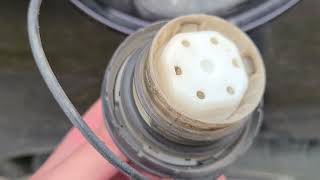
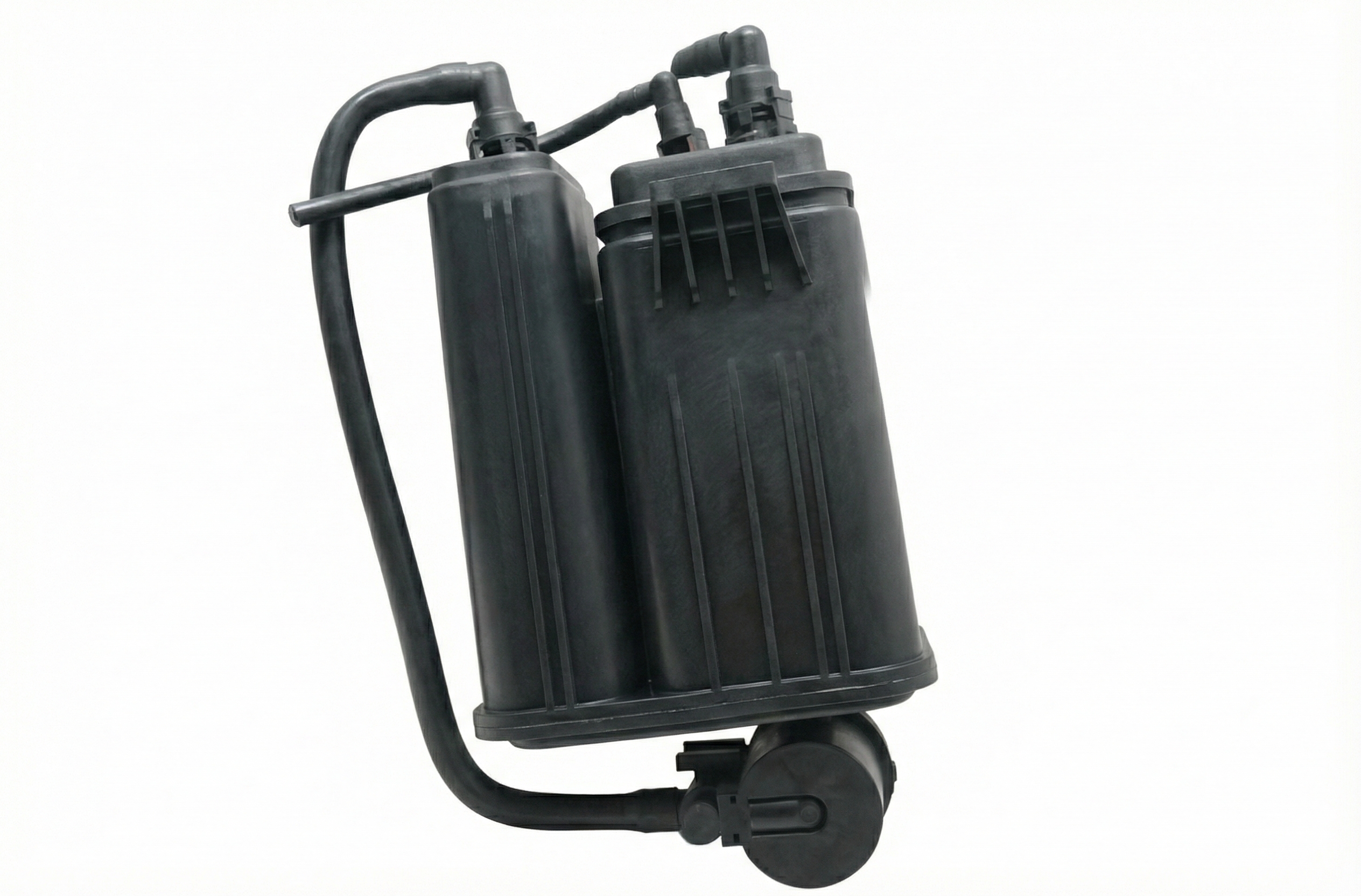
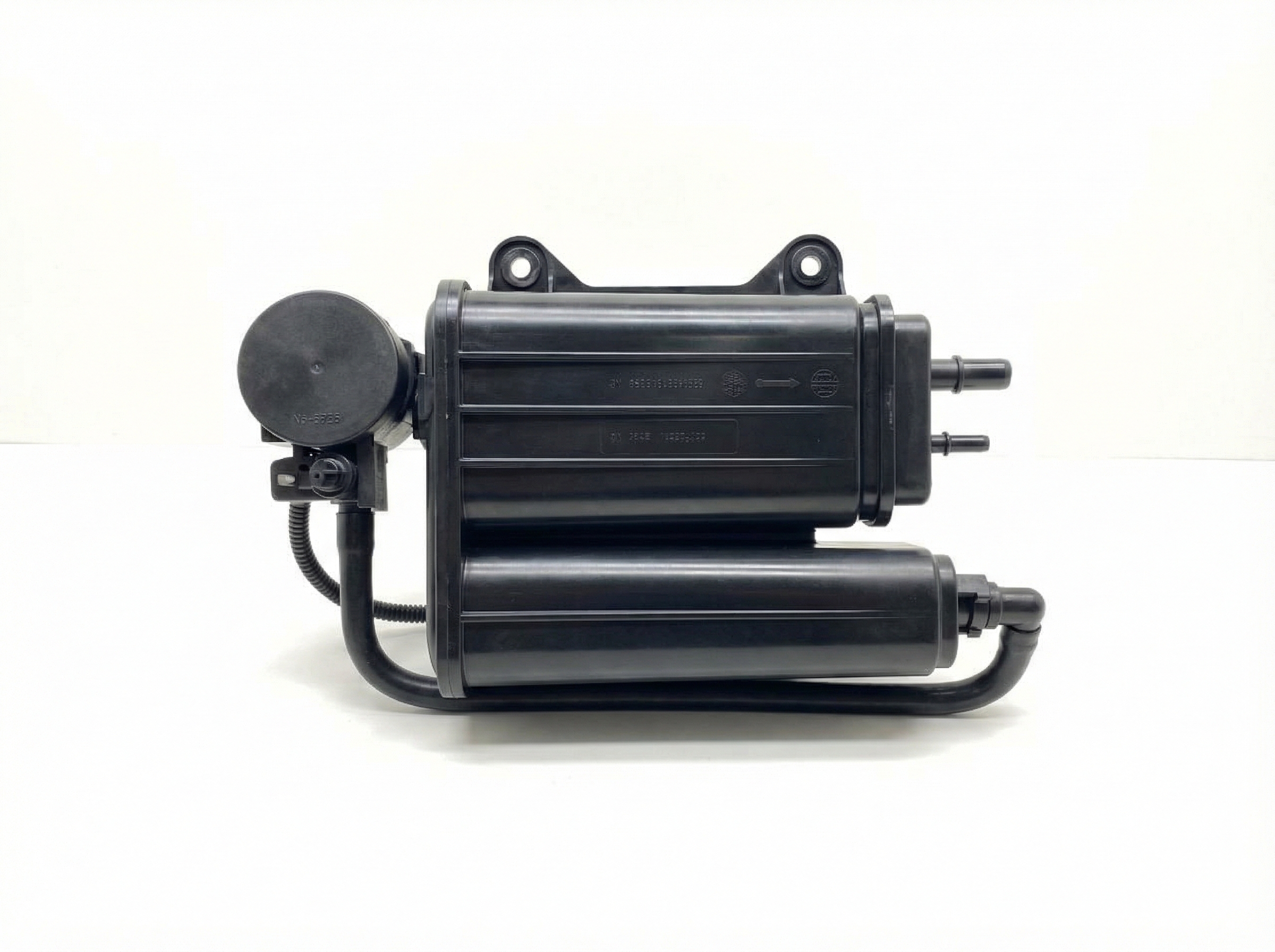
Est. part cost: $15-$30 - Faulty EVAP Vent Valve/Solenoid ⚪ Low Probability Located near the charcoal canister under the vehicle, this valve can get stuck or fail due to exposure to road debris and moisture, preventing the system from sealing properly during its self-test. While less common than the purge valve on the Traverse, it is still a possible cause.
How to confirm: The valve is normally open and should close when voltage is applied. This can be tested with a capable scan tool that can command the valve closed, or by applying 12V directly to the solenoid and checking if it stops airflow. A smoke test will also reveal a stuck-open vent valve.
Typical fix: Replace the vent valve. On many Traverses, this valve is located on top of the fuel tank, which requires dropping the tank for access. It is typically mounted on or near the EVAP charcoal canister.
Est. part cost: $30-$75 - Cracked or Disconnected EVAP Hoses ⚪ Low Probability Over time, the rubber and plastic hoses that make up the EVAP system can become brittle and crack, especially those in the engine bay exposed to heat cycles or under the vehicle exposed to the elements.
How to confirm: A visual inspection may reveal obvious cracks, but small leaks often require a smoke test. A mechanic forces low-pressure smoke into the EVAP system and looks for where it escapes. TSB 21-NA-124 specifically advises checking all line connections for proper seating.
Typical fix: Replace the cracked section of hose or the entire hose assembly. Ensure all quick-connect fittings are fully seated.
Est. part cost: $10-$50
Rare But Worth Checking
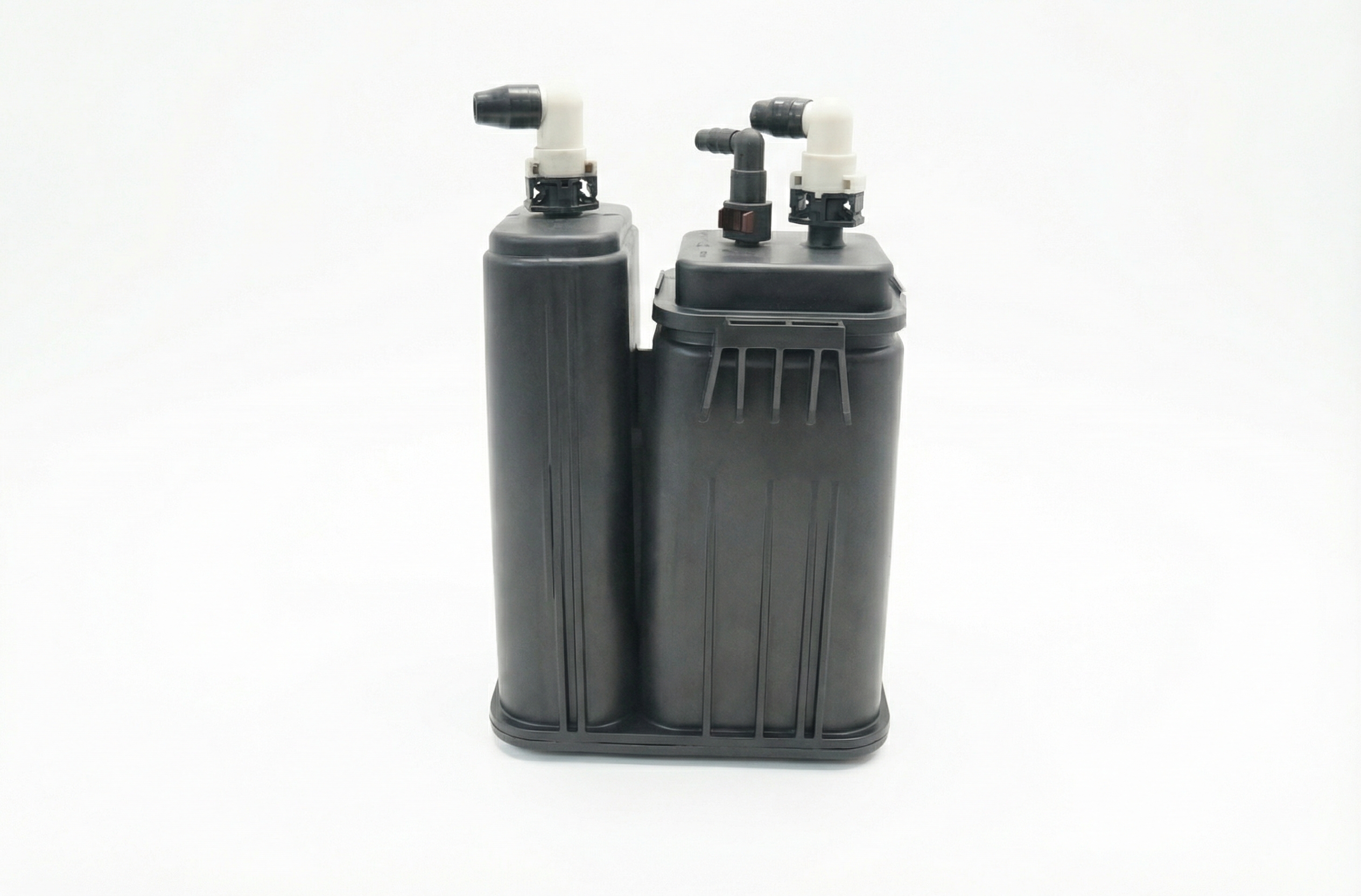
- Cracked EVAP Charcoal Canister: The canister itself can develop hairline cracks from age or impact from road debris, creating a small leak. This is usually found only with a smoke test after other common components have been ruled out.
- Leaking Fuel Tank Filler Neck: Corrosion can form on the filler neck where the gas cap seals, preventing a tight seal even with a new cap. A wire brush can be used to clean the sealing surface.
- Faulty Fuel Tank Pressure Sensor: In rare cases, the sensor that monitors EVAP system pressure can fail, causing the computer to incorrectly believe there is a leak. This is usually considered after all other components and a smoke test show no faults.
Diagnosis Steps

- Check the gas cap. Remove it, inspect the seal for cracks or damage, and reinstall it, ensuring it clicks multiple times. Clear the code and drive for a few days to see if it returns.
- If the code returns, inspect the EVAP canister purge valve on the engine. It's under the plastic engine cover. Check for any obvious cracks in the valve body or its connecting hoses.
- Test the purge valve. With the engine idling, disconnect the hose running from the valve towards the charcoal canister (the 'tank side'). Place your finger over the port on the valve. If you feel suction, the valve is stuck open and must be replaced. For a definitive test, unplug the electrical connector first.
- If the purge valve seems okay, visually inspect all accessible EVAP hoses in the engine bay and under the vehicle for cracks or loose connections. Pay close attention to the quick-connect fittings.
- If no visible issues are found, the next step is a smoke test. This is the most effective way to find a small leak. A mechanic will introduce smoke into the EVAP test port and look for where it escapes. This can reveal tiny cracks in hoses, a bad canister, or a faulty vent valve.
- If a smoke test reveals no leaks, the vent valve and fuel tank pressure sensor should be tested electronically using a capable scan tool or multimeter.
Parts You'll Likely Need
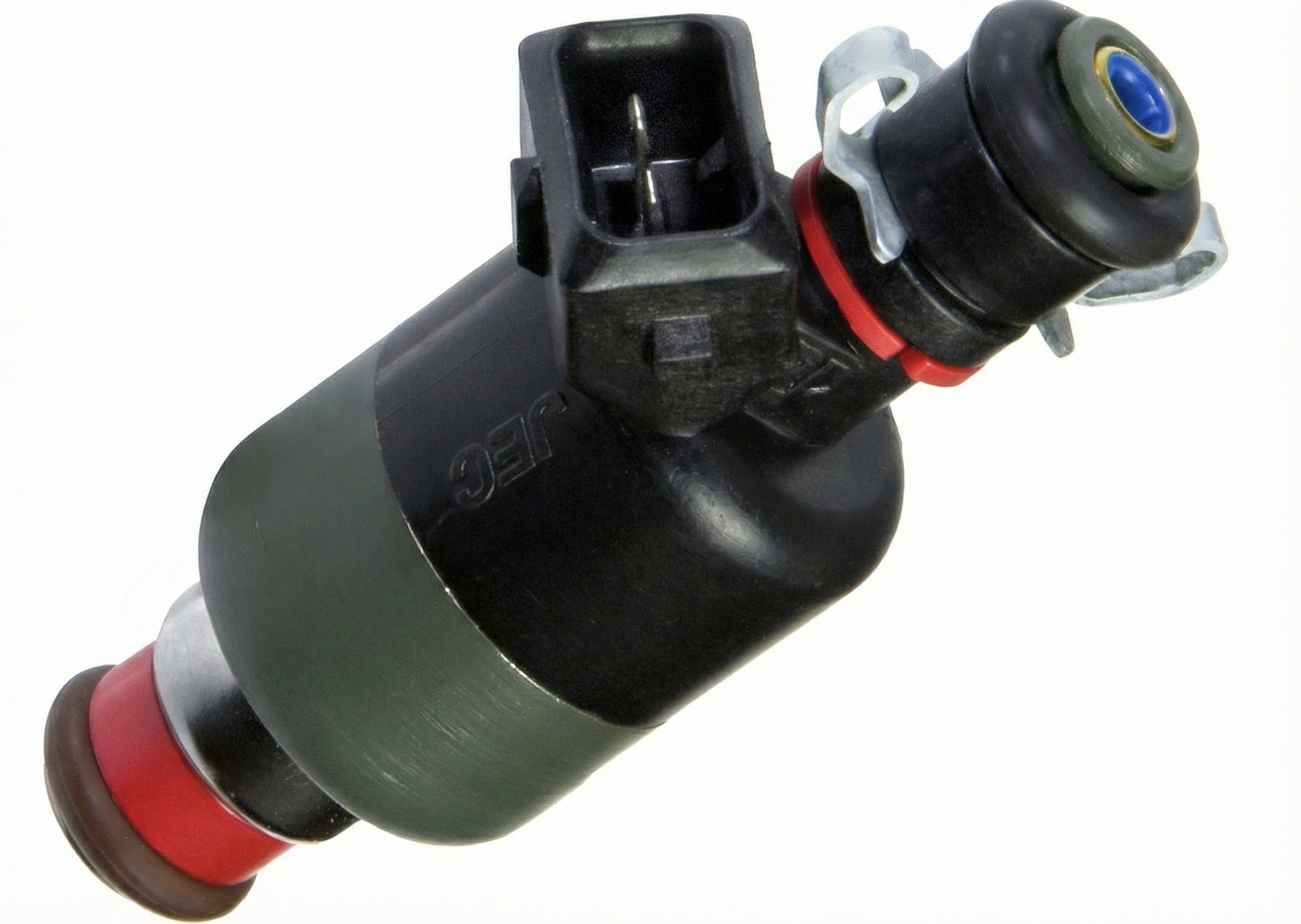
- EVAP Canister Purge Valve
(OEM #12610560)— This is the most frequently reported failure causing a P0442 code on this vehicle, often accompanied by a P0496 code.
Trusted brands: ACDelco (Genuine GM), Bosch, Dorman (911-082), Standard Motor Products (CP612)
OEM price range: $40-$60
Aftermarket price range: $25-$45 - Fuel Cap
(OEM #GT295 or GT330 (Varies by year))— A worn or loose gas cap is a simple and common cause for any EVAP leak code.
Trusted brands: ACDelco, Stant
OEM price range: $20-$30
Aftermarket price range: $15-$25 - EVAP Canister Vent Valve / Solenoid
(OEM #13576005)— This valve can fail due to exposure to road debris and moisture, causing it to stick open and preventing the system from sealing. It's a less common cause than the purge valve for P0442 but is a primary suspect for code P0449.
Trusted brands: ACDelco (Genuine GM), Dorman (911-369), Standard Motor Products (CVS190)
OEM price range: $30-$75
Aftermarket price range: $25-$50
Related Codes That Often Appear With This One
- P0455 — Indicates a large EVAP leak. It can appear with P0442 if the leak is intermittent or on the borderline between small and large. The provided TSB #21-NA-124 mentions diagnosing both codes together.
- P0496 — Indicates 'EVAP Flow During a Non-Purge Condition.' This code very strongly points to a purge valve that is stuck open, a very common cause for P0442 on the Traverse.
- P0449 — Indicates a fault in the EVAP vent valve solenoid circuit. If you see this code with P0442, the vent valve or its wiring is the most likely culprit.
Technical Service Bulletins (TSBs) & Recalls
- 21-NA-124: Provides diagnostic tips for EVAP leaks causing DTCs P0442 and/or P0455. Emphasizes checking connections and testing both vent and purge valves.
- PIT4943D: Points technicians to an article on using an Evaporative Emissions System Tester for hard-to-find P0442 leaks and outlines a procedure for testing a potentially intermittent purge solenoid.
Platform-Specific Known Issues
- The purge valve, located on the engine, is a well-documented weak point. Multiple owner forums and videos specifically for the Traverse show this part being replaced to solve P0442 and P0496 codes.
- GM issued Technical Service Bulletin #21-NA-124 to provide technicians with diagnostic tips for finding EVAP leaks related to codes P0442 and P0455. It advises checking line connections first, then the vent valve, and finally the purge valve.
- An older TSB, #PIT4943D, also addresses P0442 and directs technicians to use a specific EVAP system tester (smoke machine), noting the difficulty in finding small leaks and the potential for a faulty purge solenoid even if it passes initial checks.
Mechanic-Grade Diagnostic Values
- EVAP Vent Valve/Solenoid Coil Resistance — expected: Approximately 20.6 - 20.9 Ohms. Failure: A reading significantly higher (open circuit) or lower (short) than the expected range indicates a faulty solenoid coil.
- Fuel Tank Pressure (FTP) Sensor Voltage — expected: Approximately 1.45 - 1.5V with Key On, Engine Off (KOEO) and the gas cap removed (at atmospheric pressure).. Failure: A voltage that is stuck high or low, or doesn't change as pressure/vacuum is applied to the system, points to a faulty sensor.
Scan Tool Commands That Help
- GDS2 / Tech2 / Professional Scan Tool: EVAP Purge/Seal Test — This is a guided functional test that automatically commands the purge and vent valves to check for leaks. On a Snap-on scanner, it will command the system to seal and pull a vacuum, then monitor for decay. A rapid loss of vacuum indicates a leak.
- GDS2 / Tech2 / Professional Scan Tool: EVAP Canister Vent Valve Command (On/Off) — Use this command to manually close the normally-open vent valve. The status PID should change from 'Venting' to 'Not Venting'. This is required to seal the system before performing a smoke test.
- GDS2 / Tech2 / Professional Scan Tool: EVAP Purge Solenoid Valve Command (%) — With the engine running, you can command the purge valve to open by a certain percentage. As you increase the percentage, you should see vacuum on the Fuel Tank Pressure sensor PID increase (become more negative), confirming the valve is opening and pulling vacuum from the tank.
- GDS2 / Tech2 / Professional Scan Tool: Monitor 'EVAP Vent Solenoid Circuit Status' PID — This specific data PID, available on dealer-level tools, can directly tell you if the ECM sees a circuit problem. It will display 'OK', 'Open', or 'Short to Ground', helping to distinguish a wiring problem from a mechanical valve failure.
Wiring & Ground Locations
- EVAP Vent Solenoid Wiring — At the connector for the vent solenoid, located on or near the fuel tank.. On 2013 models, the control wire from the ECM is White, and the power feed wire is Red with a White stripe. Knowing these colors is critical for testing for power, ground, and signal at the component.
- G110 — On the right rear of the engine, mounted to the back of the cylinder head.. This is a primary engine ground. The engine-mounted purge valve relies on a solid engine ground. A loose or corroded G110, sometimes occurring after major engine or transmission work, can cause intermittent electrical issues for any sensor or solenoid grounded to the engine block.
- G305 — In the engine compartment, near the battery.. This is another major ground point in the engine bay that provides a ground path for various components. While not directly tied to the EVAP system in documentation, checking all major engine bay grounds is a good practice when diagnosing electrical faults.
Real Owner Repair Stories
- YouTube video by 'Codemans auto' (2016 Chevrolet Traverse) — Check Engine Light with codes P0442 and P0496.
❌ Tried (didn't work) Inspecting and re-tightening the gas cap., Clearing the codes (they returned after a short drive).
✅ What actually fixed it Replacing the EVAP canister purge valve solenoid located on the engine. After replacement and clearing the codes, the Check Engine Light did not return after several days of driving. - YouTube video by 'The Auto Teacher' (2012 Chevrolet Traverse 3.6L) — Check Engine Light with code P0496, poor gas mileage, imperfect idle, and difficulty starting after refueling.
❌ Tried (didn't work) The video directly proceeds to the most likely cause.
✅ What actually fixed it Replacing the EVAP canister purge valve on the engine fixed the P0496 code and associated symptoms. The video identifies these symptoms as classic signs of a failed purge valve. - YouTube video by 'Pine Hollow Auto Diagnostics' (2013 Chevrolet Traverse) — Check Engine Light with code P0449 (EVAP Vent Solenoid Circuit).
❌ Tried (didn't work) The technician methodically diagnosed the circuit rather than replacing parts randomly.
✅ What actually fixed it After testing the circuit and finding the wiring to be good, the technician condemned the vent solenoid itself. The solenoid was located on top of the fuel tank, requiring the tank to be dropped to access and replace the part. This fixed the circuit code.
"I Checked Everything" — The Actual Cause
- A common scenario, especially when P0442 is paired with P0496, is for a smoke test to pass with no visible leaks, yet the code persists. The actual cause is often the purge valve leaking internally. A smoke test checks for external leaks to the atmosphere, but it cannot detect if the purge valve is failing to seal against engine vacuum. The valve may be closed enough to prevent low-pressure smoke from escaping, but not strong enough to prevent engine vacuum from pulling fuel vapors through when it should be closed. This is confirmed by testing for vacuum at the valve's inlet port at idle, as described in the 'how_to_confirm' section for the purge valve.
OEM Part Supersession History
12610560→12690512, 12661763, 12737252— Standard part evolution and revision by the manufacturer.
Heads up: These part numbers are generally interchangeable for the 2009-2016 Traverse. Always confirm with VIN, but issues are rare. The Dorman equivalent is 911-082.
Model Year Variations Within This Range
- 2009-2010: When replacing the original EVAP Canister Vent Valve, a wiring harness adapter may be required to connect the new style valve to the old style vehicle harness. Dorman, for example, lists harness 645-216 for this purpose when using their replacement valve.
- 2009-2016: The EVAP Canister Vent Valve is frequently located on top of the fuel tank. Unlike the easily accessible purge valve in the engine bay, replacing the vent valve is a labor-intensive job that requires the fuel tank to be partially or fully dropped for access.
Helpful Videos
Used OEM Parts in Stock


New Aftermarket Parts Available


The information in this article is provided for general reference and educational purposes only. Vehicle specifications, procedures, and part compatibility can vary by production date, trim level, and region. Always consult your vehicle's factory service manual and verify part numbers before purchasing or performing repairs. Safety-critical components such as airbags, seat belts, and braking systems should be installed by a qualified professional.
- Chevrolet TRAVERSE:
- 🎬 Helpful Videos
- 🛍️ Shop This Part
- What's Unique About the 2009-2016 Chevrolet TRAVERSE
- Diagnostic Flowchart
- Symptoms You May Notice
- Most Likely Causes
- Rare But Worth Checking
- Diagnosis Steps
- Parts You'll Likely Need
- Related Codes That Often Appear With This One
- Technical Service Bulletins (TSBs) & Recalls
- Platform-Specific Known Issues
- Mechanic-Grade Diagnostic Values
- Scan Tool Commands That Help
- Wiring & Ground Locations
- Real Owner Repair Stories
- "I Checked Everything" — The Actual Cause
- OEM Part Supersession History
- Model Year Variations Within This Range
- 🎟️ Get 5% Off