

P0442 on 2000-2007 Chevrolet Impala: EVAP Small Leak Causes and Fixes
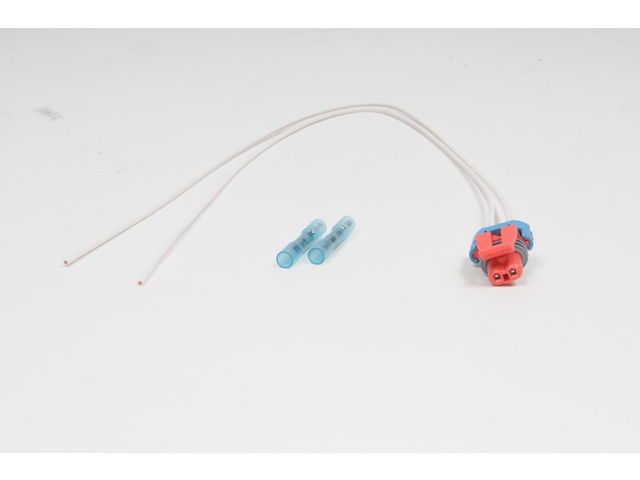
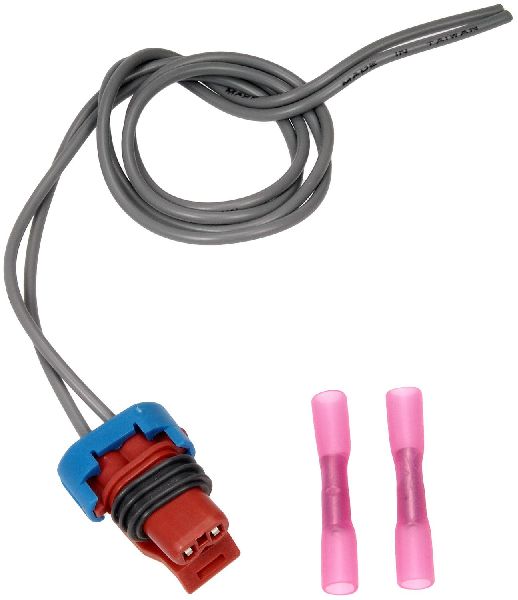
For a 2000-2007 Impala, code P0442 most often means you have a loose or faulty gas cap or a bad EVAP vent solenoid. First, tighten or replace the gas cap (~$25), preferably with an OEM ACDelco part. If the light returns, the next most likely culprit is the EVAP vent solenoid located near the rear driver's side wheel. The original part is often superseded by ACDelco #20907779, which requires a wiring harness adapter. This repair costs about $30-$80 in parts.
- Code P0442 on a 2000-2007 Impala means a small leak has been detected in the emissions system.
- Always check the gas cap first. A loose or worn-out cap is the most common cause and the cheapest fix.
- If the gas cap isn't the problem, the EVAP vent solenoid near the rear driver's side wheel is the next most likely culprit.
- You can continue to drive the car, but the Check Engine Light will stay on and you will fail an emissions test.
- A smoke test is the most reliable way for a mechanic to find the exact source of a persistent leak.
What's Unique About the 2000-2007 Chevrolet IMPALA
On this generation of Chevrolet Impala and its GM W-body platform mates, the EVAP components, particularly the vent solenoid located near the rear wheel, are highly susceptible to corrosion and failure from road debris and moisture. Its location behind the driver's side rear wheel exposes it to water, salt, and grime, leading to a very high failure rate for this specific part. While a loose gas cap is always the first suspect for any car, a faulty vent solenoid is a very close second on these Impalas. Manufacturer service bulletins have been issued to help technicians diagnose these common EVAP leaks.
Diagnostic Flowchart
Tap your situation to follow the diagnostic path that matches what you're seeing on this vehicle.
Generation note: This range covers two Impala generations: the 8th (2000-2005) and the 9th (2006-2007). While the core EVAP system function is the same, the 9th generation introduced different engines (like the 3.5L, 3.9L, and the LS4 V8) and updated body styling. Part numbers for components like the purge and vent solenoids can differ between these generations, so always verify the part with your vehicle's specific year and engine.
Symptoms You May Notice
- Check Engine Light is on.
- A faint smell of fuel, especially around the gas cap area or after parking.
- A 'whoosh' sound when opening the gas cap as pressure escapes (less common with small leaks).
- Difficulty starting the car immediately after refueling (this often points more specifically to a stuck-open purge valve).
- Rough or low idle if the leak is from a stuck-open purge valve, which creates a vacuum leak.
- Replacing the purge or vent solenoid without first checking the gas cap. Always start with the simplest and most common fix.
- Replacing parts without a proper diagnosis. Many owners replace multiple parts when a simple smoke test would have identified a single cracked hose or rusted filler neck.
- Using a cheap aftermarket gas cap, which may not seal correctly and cause the code to persist or return.
Most Likely Causes
- Loose or Faulty Gas Cap 🔴 High Probability The gas cap is a simple wear item. Its rubber seal can crack and degrade over time, preventing a proper seal. Owners on forums frequently report that cheap, non-OEM gas caps fail to seal properly and cause the code to return.
How to confirm: Ensure the cap is tightened until it clicks multiple times. Inspect the rubber O-ring on the cap for cracks, stiffness, or damage. Check the fuel filler neck for rust or debris that could prevent a seal.
Typical fix: Tighten the cap. If the seal is bad, replace the gas cap. It is strongly recommended to use an OEM (ACDelco) or high-quality Stant cap, as cheaper ones are a known point of failure.
Est. part cost: $15-$35 - EVAP Vent Solenoid Failure 🔴 High Probability Located behind the driver's side rear wheel, often mounted to the charcoal canister bracket, this part is constantly exposed to water, salt, and road grime, causing internal corrosion and electrical failure. Its failure is a very common issue on this platform, often discussed in owner forums.
How to confirm: A mechanic can command the valve to open and close with a scan tool. A DIY check involves applying 12V power to the solenoid's terminals to see if it clicks with a solid 'thunk'. A failed solenoid may also cause difficulty when filling the gas tank (fuel pump nozzle clicks off repeatedly).
Typical fix: Replace the vent solenoid. The replacement part often has an updated electrical connector, requiring a small wiring harness adapter that is usually included in the kit. This is a common DIY repair that takes less than 30 minutes. 🎬 Watch: Step-by-step guide to replacing the vent solenoid.
Est. part cost: $30-$80 - EVAP Purge Solenoid/Valve Failure 🟡 Medium Probability This valve, located in the engine bay on or near the intake manifold, can get stuck slightly open due to carbon buildup or internal failure, creating a small, constant vacuum leak.
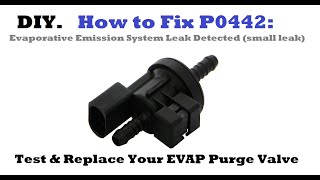
How to confirm: Remove the valve from the engine (it's normally held by one 10mm bolt). Try to blow through it. It should be normally closed, meaning no air should pass through. If you can blow through it, it has failed. 🎬 See how to test and replace the purge valve.
Typical fix: Replacement is straightforward, typically requiring the removal of one bolt and two hose connections. This is a very common DIY fix.
Est. part cost: $25-$60 - Cracked or Disconnected EVAP Hoses ⚪ Low Probability Over time, the rubber and plastic lines that make up the EVAP system can become brittle and crack, especially the rubber elbows and connectors near the engine or canister.
How to confirm: A visual inspection may reveal obvious cracks, especially if you bend the hoses slightly. The most effective method is a smoke test, where a machine fills the EVAP system with visible smoke, making even the smallest leaks from hoses or components easy to spot.
Typical fix: Replace the cracked section of hose or the entire line assembly.
Est. part cost: $10-$50
Rare But Worth Checking
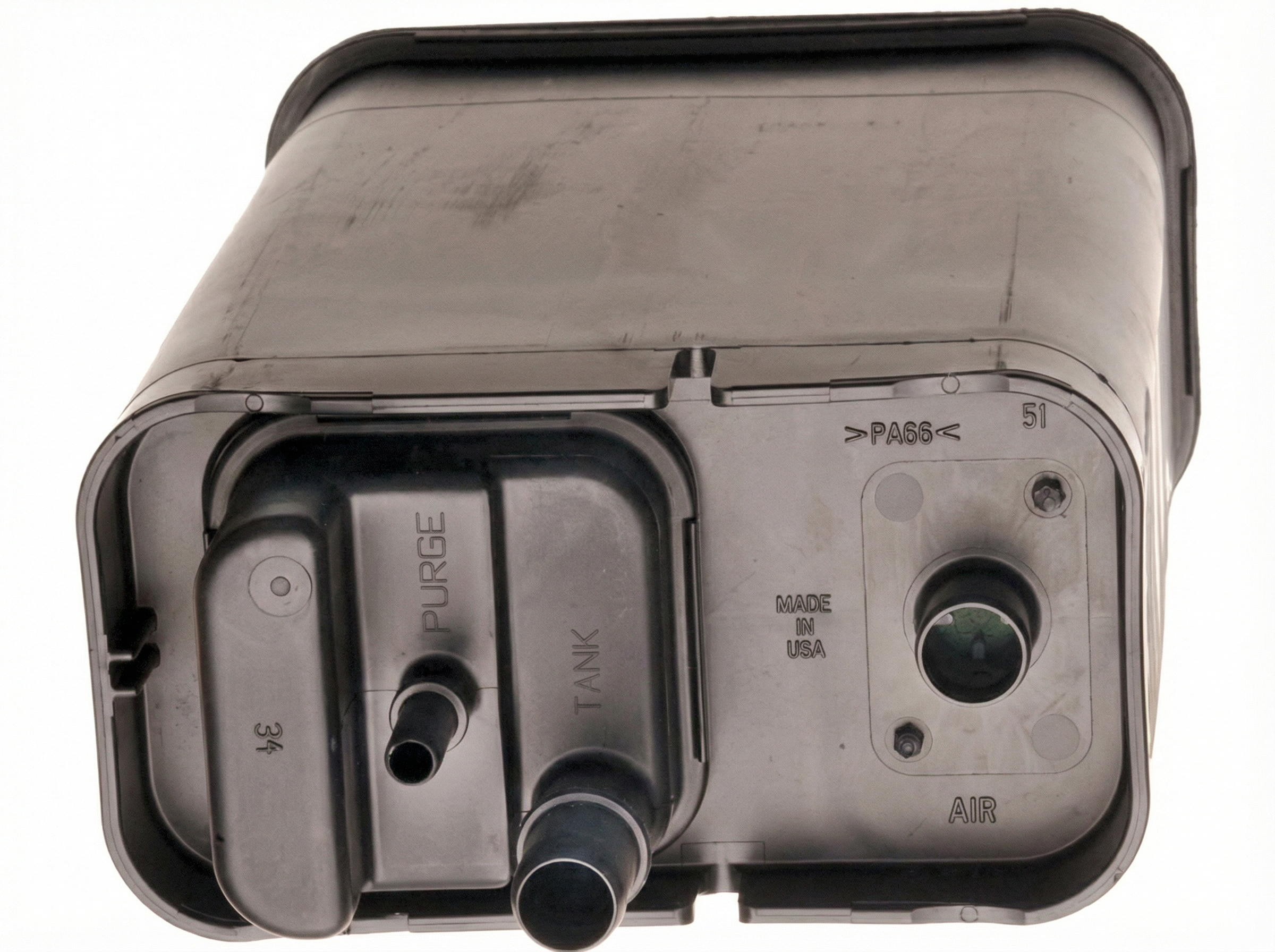
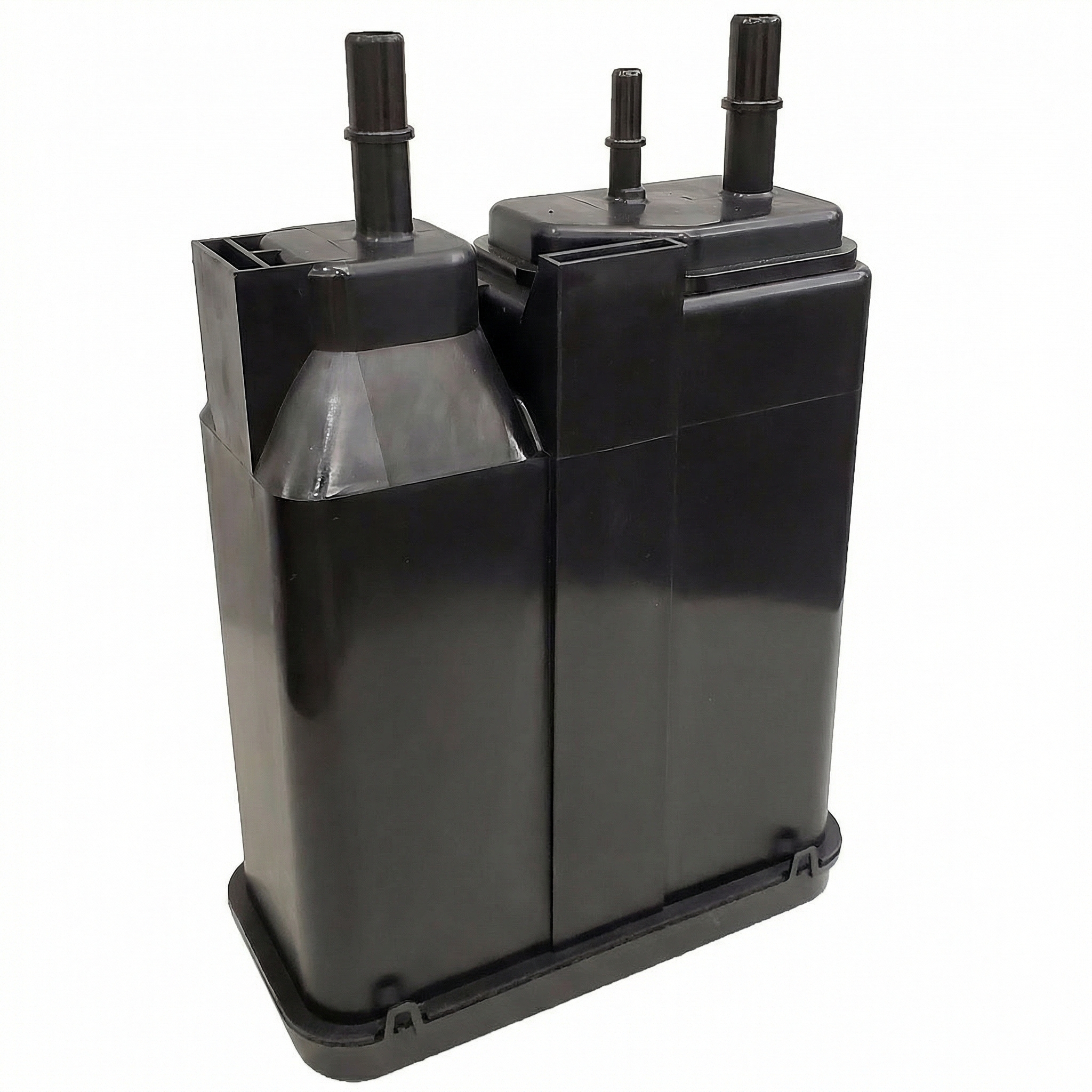
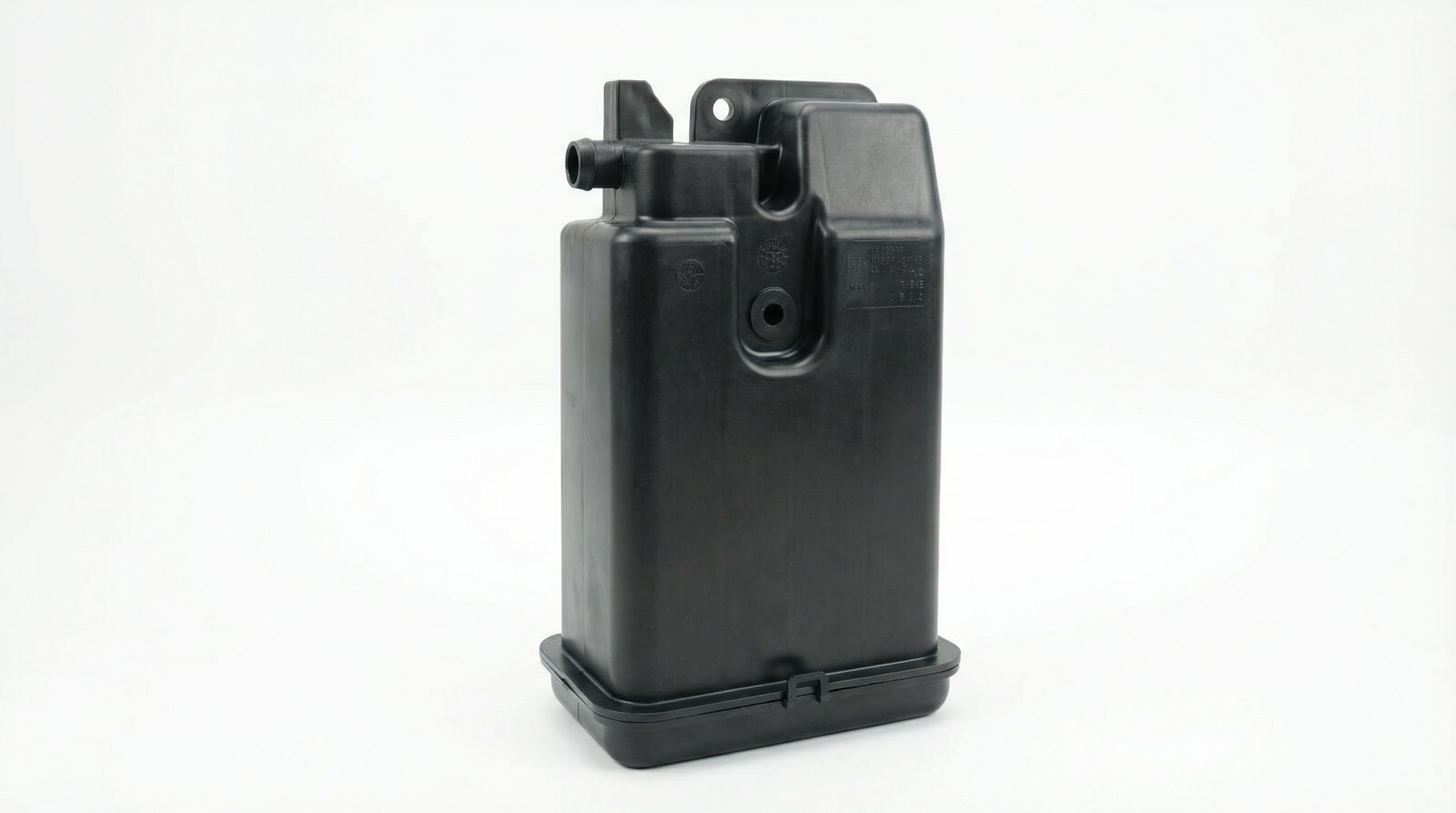
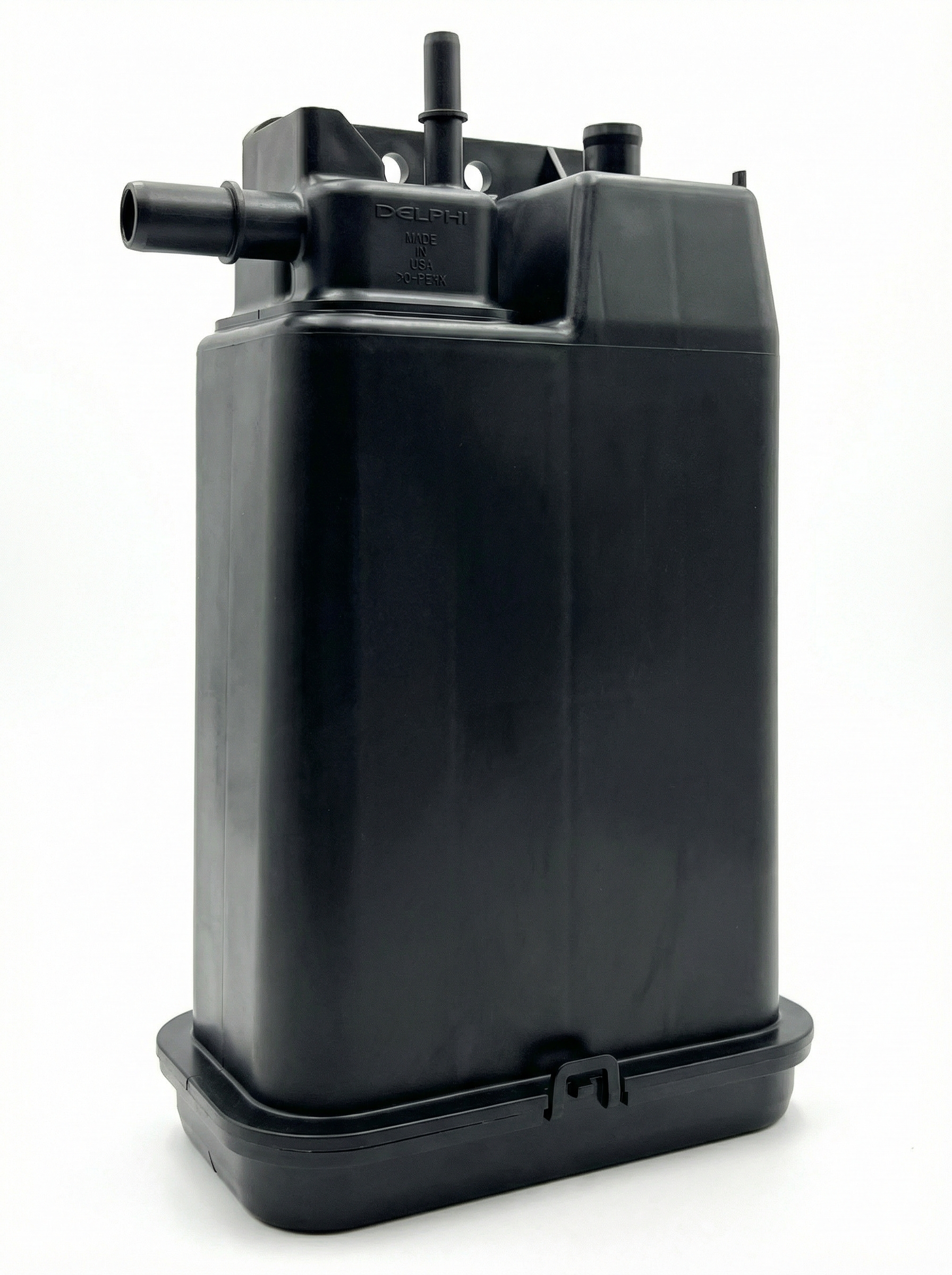
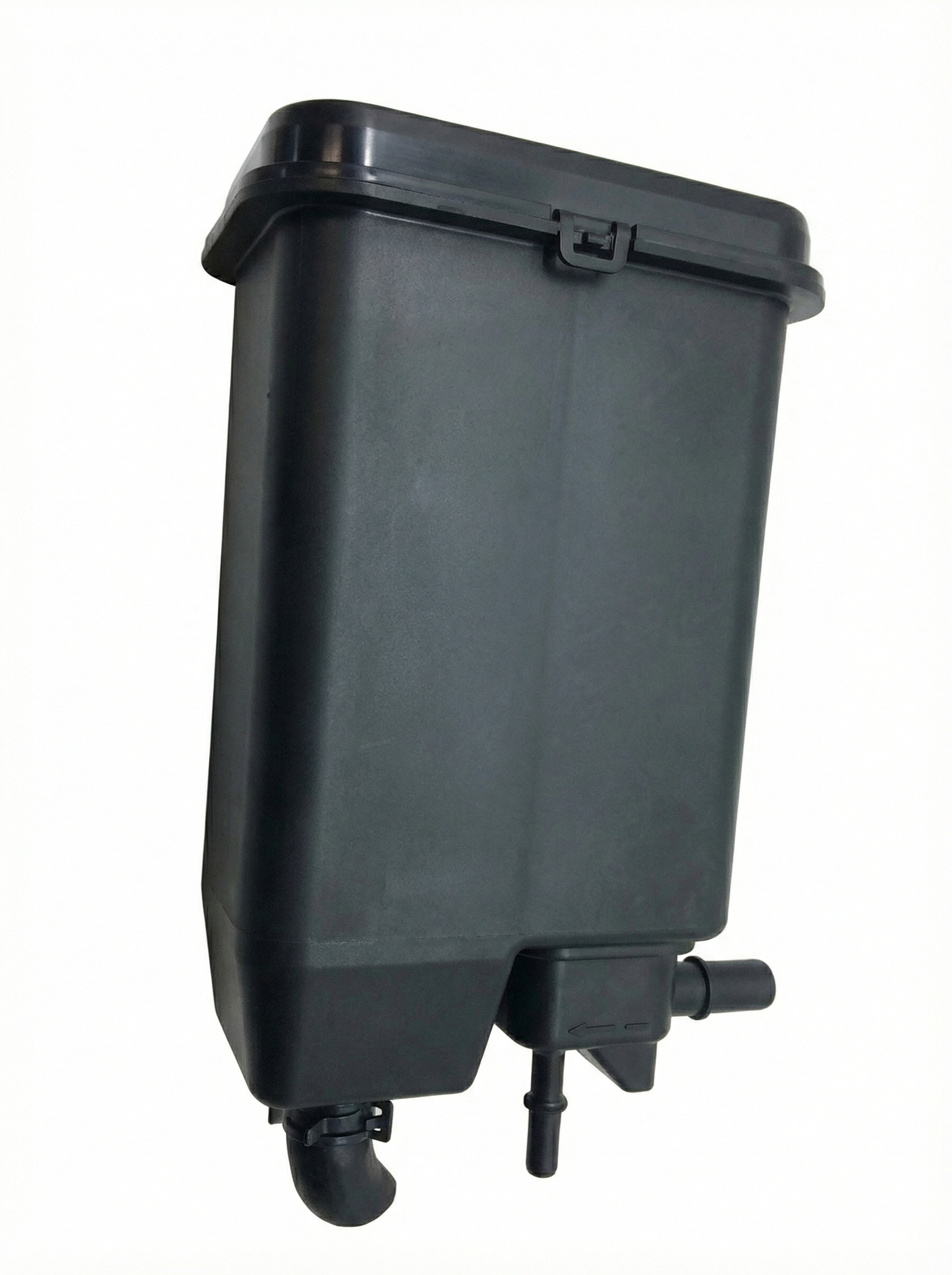
- Cracked Charcoal Canister: The plastic body of the charcoal canister can develop hairline cracks from age or impact from road debris. A smoke test is the best way to confirm a leak from the canister body itself.
- Leaking Fuel Tank Filler Neck: Rust can perforate the metal filler neck, creating a leak that the system will detect. This is more common in regions that use road salt in winter and can be a frustrating source of the P0442 code if not inspected carefully. A smoke test or visual inspection from under the car is needed to find it.
- Faulty Fuel Tank Pressure Sensor: While this sensor usually sets its own specific codes, it can sometimes fail in a way that leads to an incorrect leak reading, though this is uncommon for a P0442.
Diagnosis Steps
- Read the code with an OBD-II scanner to confirm P0442 is present. Note any other codes like P0449 or P0496.
- Inspect the gas cap. Remove it, check the seal for cracks, and clean the filler neck surface. Reinstall the cap until it clicks several times. Many owners recommend buying a new OEM cap as a cheap and effective first step.
- Clear the code with the scanner and drive the vehicle for a few days (completing several drive cycles) to see if the light returns. If it does not, the gas cap was the issue.
- If the light returns, perform a visual inspection of all accessible EVAP hoses in the engine bay and under the car, looking for obvious cracks or disconnections.
- Locate the EVAP purge valve on the engine. With the engine off, disconnect its hoses and try to blow through it. If air passes, the valve is faulty and needs replacement.
- Locate the EVAP vent solenoid by the driver's side rear wheel. Inspect it and its connector for corrosion or damage. You can test it by applying 12V power to its pins and listening for a click.
- If the above steps do not reveal the issue, the most effective next step is a professional smoke test. This test will pressurize the system with smoke and quickly reveal the location of any small leaks in hoses, the vent valve, the filler neck, or the charcoal canister. 🎬 Watch: How to find small leaks using a smoke test.
- Based on the smoke test results, replace the leaking component.
Parts You'll Likely Need
- Gas Cap
(OEM #ACDelco GT284 (for 2006-2007), ACDelco GT261 (for 2000-2005))— This is the most frequent cause of a P0442 code, and the easiest part to replace. The seal wears out over time and aftermarket caps are known to cause issues.
Trusted brands: ACDelco (GM OE), Stant
OEM price range: $20-$35
Aftermarket price range: $15-$25 - EVAP Canister Vent Solenoid
(OEM #ACDelco 20907779 (Supersedes 25932569, 214-2147))— This part is highly prone to failure on the 2000-2007 Impala due to its exposed location under the car. It often fails electrically or gets stuck. The replacement part is an updated design.
Trusted brands: ACDelco, Dorman (911-030)
OEM price range: $50-$80
Aftermarket price range: $30-$60 - EVAP Canister Purge Solenoid/Valve
(OEM #ACDelco 214-1680 (or 12597567, check VIN))— Located on the engine, this valve can get stuck open, causing a persistent small leak that triggers the P0442 code. Often seen with P0496.
Related Codes That Often Appear With This One
- P0455 — This code indicates a large EVAP leak. Sometimes a problem can be intermittent or on the borderline between a small and large leak, causing both codes to appear. A rusted filler neck can also present as both a small and large leak.
- P0449 — This code specifically points to a fault in the EVAP vent solenoid valve control circuit. If you see P0449 along with P0442, the vent solenoid is almost certainly the problem.
- P0496 — This code indicates 'EVAP Flow During a Non-Purge Condition,' which almost always points to a purge valve that is stuck open. A stuck-open purge valve is a leak, which will also trigger P0442. If you have both codes, the purge valve is the primary suspect.
Technical Service Bulletins (TSBs) & Recalls
- 21-NA-124
- PIT4943D
Platform-Specific Known Issues
- TSB #PIT4943D - Diagnostic Guidance: A Technical Service Bulletin (TSB #PIT4943D) was issued to guide technicians on diagnosing P0442. It directs them to a Techlink article on properly using an EVAP smoke tester, reinforcing that a smoke test is the definitive procedure when the cause isn't obvious like the gas cap.
- Owner Experience: The Vent Solenoid is the Real Culprit: Numerous owners on forums like ImpalaForums.com share their experience: after replacing the gas cap to no avail, the P0442 code was finally fixed by replacing the EVAP vent solenoid and its harness near the rear wheel. Many describe it as a 15-30 minute job.
- Owner Experience: Rust Belt Filler Neck Leaks: In areas with heavy road salt use, owners report chasing P0442 for a long time before discovering the leak was from a rusted-out fuel filler neck. A smoke test is the only reliable way to find this leak, as it can be hidden from a casual visual inspection.
Mechanic-Grade Diagnostic Values
- EVAP Canister Vent Solenoid coil resistance — expected: Approximately 15-30 Ohms. A known good part measured 19-20 Ohms.. Failure: A reading in the mega-ohm (MΩ) range or showing 'OL' (Open Loop) indicates an open circuit and a failed solenoid.
- EVAP Canister Purge Solenoid coil resistance — expected: Typically between 15 and 30 Ohms for most vehicles.. Failure: A reading significantly outside this range suggests the internal coil is damaged.
- Fuel Tank Pressure (FTP) Sensor Voltage (Key On, Engine Off) — expected: Approximately 1.5 Volts at atmospheric pressure (system not sealed).. Failure: During a scan tool-commanded test, if vacuum is applied and the voltage does not decrease, the sensor or its circuit may be faulty.
Scan Tool Commands That Help
- GM Tech2 / GDS2 or equivalent professional scanner: EVAP Service Bay Test — Use this to force the vehicle's onboard EVAP leak test to run without performing a full, lengthy drive cycle. The tool commands the vent valve closed and the purge valve open to create a vacuum and test system integrity, providing a pass/fail result in minutes.
- Advanced Bidirectional Scanner: EVAP Purge/Seal — This function allows the user to manually command the purge solenoid ON/OFF and seal the system by closing the vent solenoid. While monitoring the Fuel Tank Pressure (FTP) sensor, a technician can verify if the purge valve opens and if the system holds a vacuum, helping to isolate a faulty component.
Wiring & Ground Locations
- EVAP Purge Valve Control Wire — On 2005 models, this is a Dark Green/White wire located at Pin 76 of the C1 (Blue) connector at the Powertrain Control Module (PCM).. This is the signal wire the PCM uses to command the purge valve to open. A break or short in this wire can prevent the valve from operating, causing test failure.
- EVAP Vent Solenoid Control Wire — On 2005 models, this is a White wire at Pin 2 of the C1 (Blue) connector at the PCM.. This wire carries the signal to close the normally-open vent solenoid to seal the system for a leak test. A fault here will prevent the test from running correctly and can set codes like P0449.
- G113 (Ground) — For 2005 models, this ground point is located on a transaxle stud, near the starter.. While not exclusively for the EVAP system, poor engine and chassis grounds can cause a variety of unpredictable electrical issues and incorrect sensor readings, potentially affecting EVAP test results.
Real Owner Repair Stories
- Chevy HHR Network / 2CarPros Forum user reports (2006 Chevrolet HHR (similar GM platform), 2000-2005 Mitsubishi Eclipse) — Persistent P0442 code, sometimes returning weeks after clearing.
❌ Tried (didn't work) Replacing the gas cap
✅ What actually fixed it Replacing the fuel filler neck, which had rusted through with pinholes, causing a small leak. This is a very common issue in rust-belt states where road salt is used. The repair immediately and permanently resolved the code. - YouTube channel JBroFix (2009 Chevrolet Impala LTZ 3.9L V6) — Check Engine Light with code P0442.
❌ Tried (didn't work) Not specified, went straight to part replacement based on diagnosis.
✅ What actually fixed it The problem was fixed by replacing the EVAP Purge Valve located on the engine. The video shows the process and confirms this resolved the P0442 code.
"I Checked Everything" — The Actual Cause
- A common scenario where a smoke test may not find the leak is with a rusted fuel filler neck. A technician may not thoroughly inspect the entire neck, and small pinholes on the top or back side can be missed. The leak may only be apparent when the chassis flexes or when the tank is full. Several owner reports confirm that after replacing other parts, the rusted filler neck was the final, successful repair.
- If a smoke test shows no leaks, the issue could be a faulty Fuel Tank Pressure (FTP) sensor. The sensor may be giving the computer an incorrect reading, making it believe there is a leak when the system is actually sealed. This is an electronic failure, not a physical leak, so a smoke test would come back clean.
OEM Part Supersession History
GM 25932569 (ACDelco 214-2147)→GM 20907779— The original EVAP Canister Vent Solenoid design was prone to failure. The new part is an updated, more robust design.
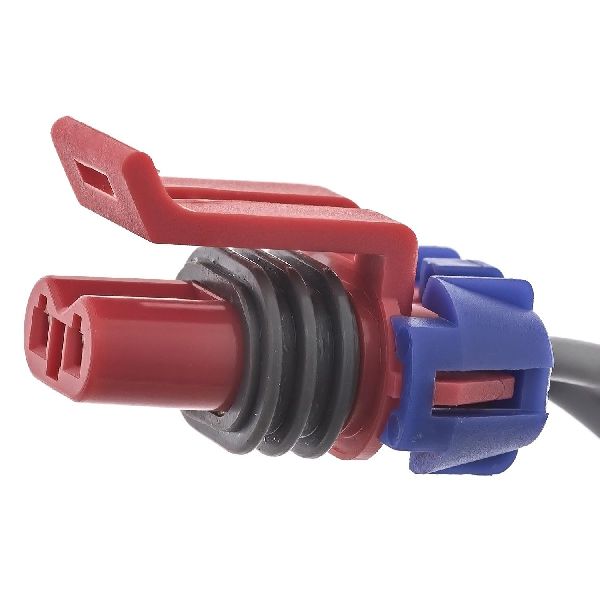
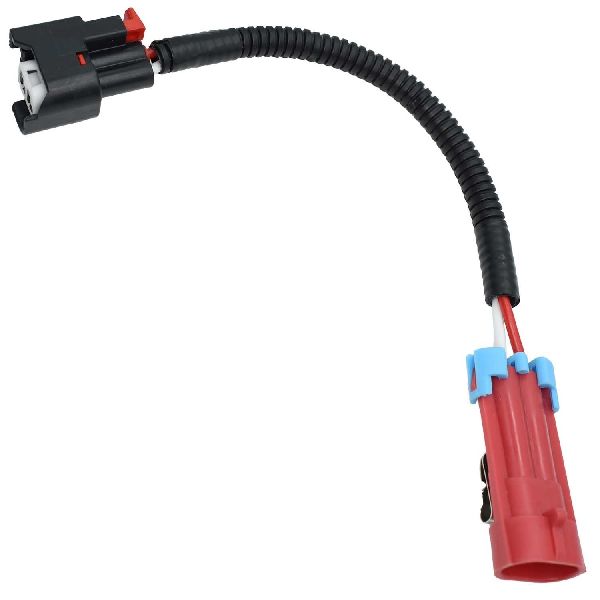
Heads up: The new part (20907779) uses a different electrical connector than some earlier models. Replacement kits typically include a pigtail adapter harness that must be spliced in or plugged into the existing harness to make the new solenoid compatible.
Model Year Variations Within This Range
- 2000-2005 (8th Generation): The EVAP charcoal canister is located on top of the fuel tank, which may require partially dropping the rear of the tank for access. The purge solenoid on the 3.8L V6 is on the top right front of the engine, while on the 3.4L V6 it is at the top center rear.
- 2006-2007 (9th Generation): Introduced new engines (3.5L, 3.9L V6; 5.3L V8) with potentially different purge valve locations and part numbers. The fuel filler neck design and replacement procedure also differ from the previous generation.
Helpful Videos
Used OEM Parts in Stock
New Aftermarket Parts Available


The information in this article is provided for general reference and educational purposes only. Vehicle specifications, procedures, and part compatibility can vary by production date, trim level, and region. Always consult your vehicle's factory service manual and verify part numbers before purchasing or performing repairs. Safety-critical components such as airbags, seat belts, and braking systems should be installed by a qualified professional.
- Chevrolet IMPALA:
- 🎬 Helpful Videos
- 🛍️ Shop This Part
- What's Unique About the 2000-2007 Chevrolet IMPALA
- Diagnostic Flowchart
- Symptoms You May Notice
- Most Likely Causes
- Rare But Worth Checking
- Diagnosis Steps
- Parts You'll Likely Need
- Related Codes That Often Appear With This One
- Technical Service Bulletins (TSBs) & Recalls
- Platform-Specific Known Issues
- Mechanic-Grade Diagnostic Values
- Scan Tool Commands That Help
- Wiring & Ground Locations
- Real Owner Repair Stories
- "I Checked Everything" — The Actual Cause
- OEM Part Supersession History
- Model Year Variations Within This Range
- 🎟️ Get 5% Off